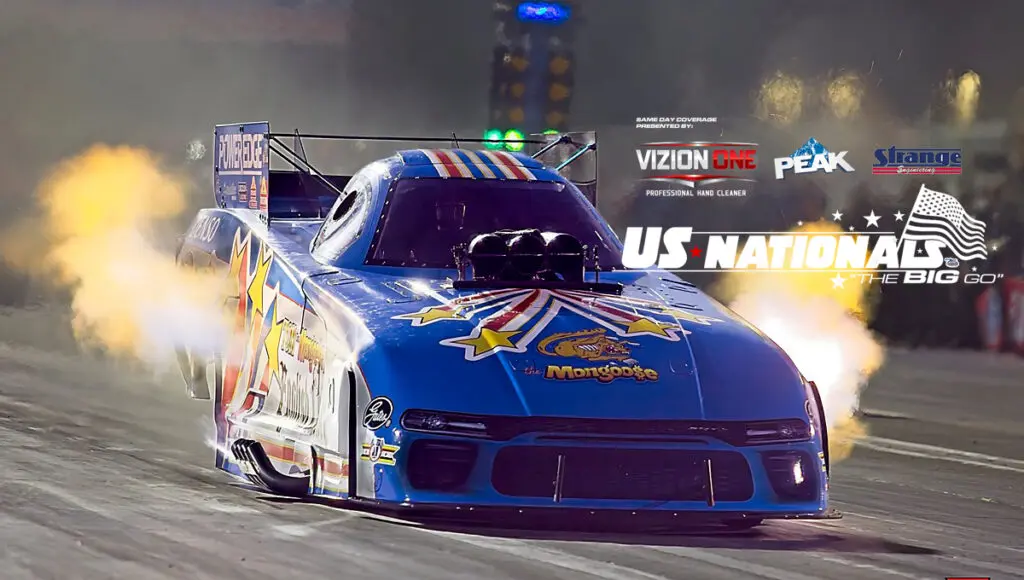


Photos by Ron Lewis, Mike & Jeff Burghardt, Alex Owens, NHRA





SUNDAY NOTEBOOK – BECKMAN KEEPS THE TRIBUTE CAR UNDEFEATED, SPORTSMAN RACING TIGHTENS IN THE BID FOR THE BIG GO

1 – PRESSURE? WE DON’T NEED NO STINKING PRESSURE – Jack Beckman has already climbed one mountain this weekend at Indianapolis. Now he gets a shot Monday at one he has conquered before.
Beckman won the PlayNHRA All-Star Funny Car Callout on Sunday at Lucas Oil Indianapolis Raceway Park, beating Matt Hagan in the final with a 3.980-second pass at 323.19 mph in his John Force Racing PEAK Chevrolet SS.
The victory was Beckman’s fifth in Indy’s Funny Car bonus race, a total even he acknowledged was beyond anything he envisioned. Beckman defeated Chad Green and J.R. Todd before Hagan slowed against him in the final.
“It was special to get one. And then, when you get two there, you’re like, ‘This is awesome,’” Beckman said. “And then, when I got four and then I was done driving, I thought, ‘It’s still a pretty good amount of trophies, more than I ever thought or dreamed I was going to get in here.’”
Beckman’s latest victory came with another layer attached. His Funny Car carries a tribute scheme honoring John Force’s dominant 1996 championship season.
The victory also leaves Beckman with the opportunity to duplicate his 2015 Indy performance, when he won both the specialty race and the U.S. Nationals.
“That was the Mount Everest of drag racing, was to do that,” Beckman said. “That would be a weekend that would be virtually impossible to top, but I could tie it tomorrow.”
There will be no shortage of pressure Monday, although Beckman has a different definition of the word.
“Pressure is 2 o’clock on a Wednesday and the elevator’s not running and the building manager’s screaming at you,” Beckman said. “I’ll take this any day of the week.”
Beckman also enters eliminations knowing John Force Racing has three Funny Cars capable of making noise. Alexis DeJoria made a strong qualifying move Sunday, while Daniel Wilkerson also secured his place in the field.
For Beckman, however, Sunday’s trophy gets put away quickly. Monday offers the bigger prize and a chance to duplicate one of the greatest weekends of his career.
“Our performance is measured in thousandths,” Beckman said. “I’m going to try to get a good night’s rest, and hopefully come back a little bit closer to normal tomorrow because I know we got a car that can repeat.”
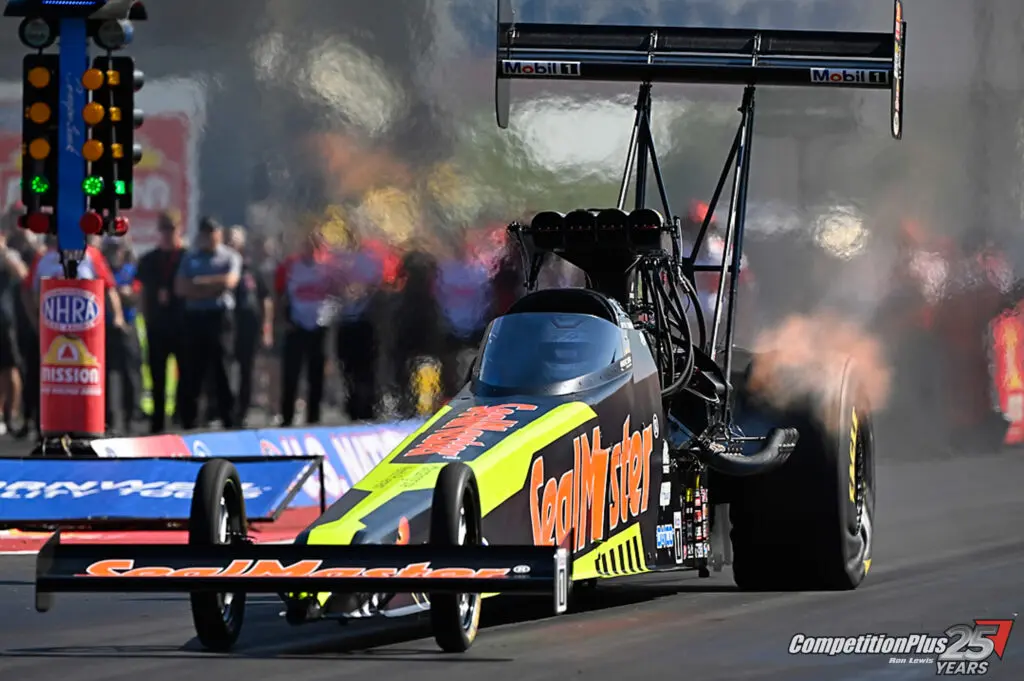
2 – LANGDON DOING ALL HE CAN – Shawn Langdon is challenging his Kalitta Motorsports Top Fuel teammate and points leader Doug Kalitta for the NHRA Mission Foods Drag Racing Series regular-season championship to the very last round or two.
Those drivers, Nos. 1 and 2 in the standings, will find out no later than Monday’s second round of the Cornwell Quality Tools U.S. Nationals which of them will present team boss Connie Kalitta the $150,000 prize.
Langdon relied on Friday’s 3.727-second elapsed time at 334 mph to earn the class’ No. 1 starting position for eliminations for the sixth time this year. He’ll meet Clay Millican in the opening round. Doug Kalitta – Connie’s nephew – qualified third and will face Will Smith in Round 1.
If Kalitta advances to the semifinals or better, he will secure the regular-season championship and top seed for the six-race Countdown that kicks off at Martin, Mich., on Sept. 17-20.
But if Langdon wins and Kalitta is eliminated early, then Langdon earns the distinction.
“Either way, it’s coming back to Connie Kalitta. That’s what matters,” Langdon said. “Obviously, we would like to have the opportunity to do that, but that’s not really our primary focus. We just need to go out there tomorrow and make good runs. And if Doug makes it past the second round, then he’s got it, and then congratulations to them. But our plans are to go out there, win the race, and everything’s going to kind of fall how it will.”
Not a hint of even a friendly rivalry or side bet creeping into his conversation, Langdon was all business about his on-track duel with Kalitta. He simply said, “We’re teammates.” Pressed on the matter, Langdon said, “Connie Kalitta wins. That’s all that matters.”
He said his chart-topping time “was a good run for Friday night, but we weren’t really satisfied with that. We obviously wanted to progress. Do a little bit more, but we were just trying to see what we could get away with and weren’t able to do that Saturday. We felt pretty confident that [in] Q4, we could make a good run and didn’t. So, the last run, we just really had to kind of slow everything down and kind of get everything back in check and just get some information for tomorrow. So, we were able to do that and feel very confident for tomorrow.”
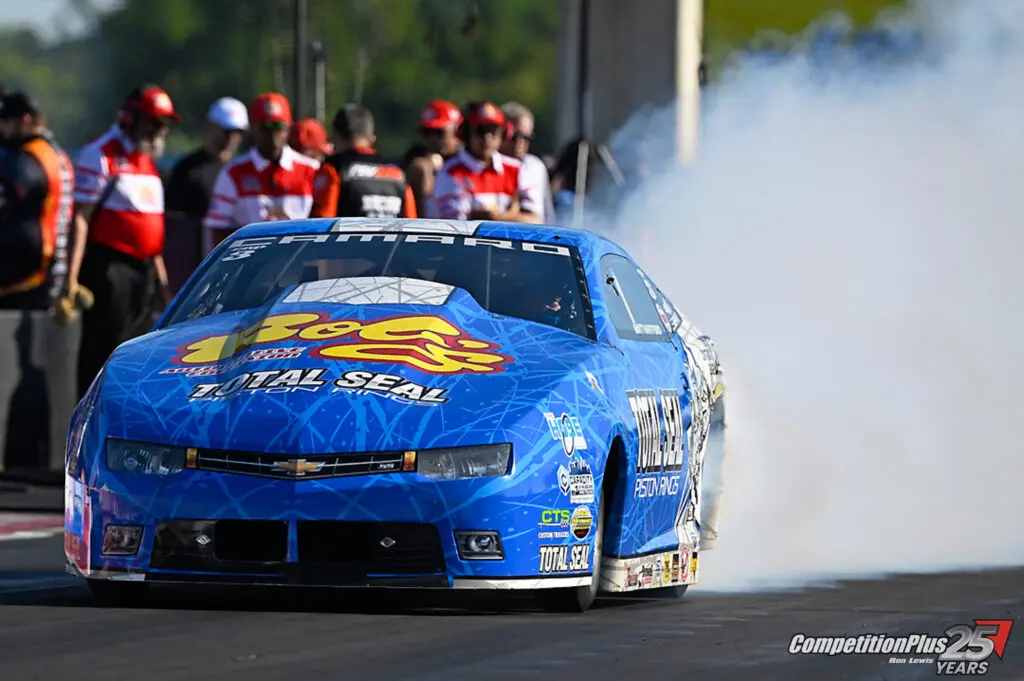
3 – HARTFORD STAYS ATOP PRO STOCK – Matt Hartford saved his best work for when Indianapolis demanded it most.
Hartford closed Pro Stock qualifying at the NHRA U.S. Nationals with the quickest car over the final three sessions, finishing Sunday with a 6.572-second pass at 208.97 mph in his Total Seal Chevrolet Camaro to secure the No. 1 qualifying position.
It was Hartford’s first No. 1 qualifier of the 2026 season and positioned the three-time winner this year for another serious run at Indy. Hartford, who won the U.S. Nationals in 2023, will open Monday’s eliminations against No. 16 Kenny Delco.
More important than the qualifying bonus was the consistency Hartford and his team found as conditions shifted throughout the weekend. The weather changed dramatically from Friday through Sunday, but Hartford’s Camaro continued to improve as the track came around.
“It just feels great that our entire team is making some good decisions in the trailer before we roll up,” Hartford said. “The weather conditions that we started with from Friday to today are completely different, but we knew that when we got here that Sunday Q4 and Q5 were going to be the two best sessions.”
Hartford knew his earlier run would not be enough once the final session began.
“When we went low in Q4, we knew it wasn’t remotely safe, and that E.T. would probably be in the bottom half by the time we got done with Q5,” Hartford said. “I’m just really, really thankful for my team and how hard they’ve worked to allow this to happen.”
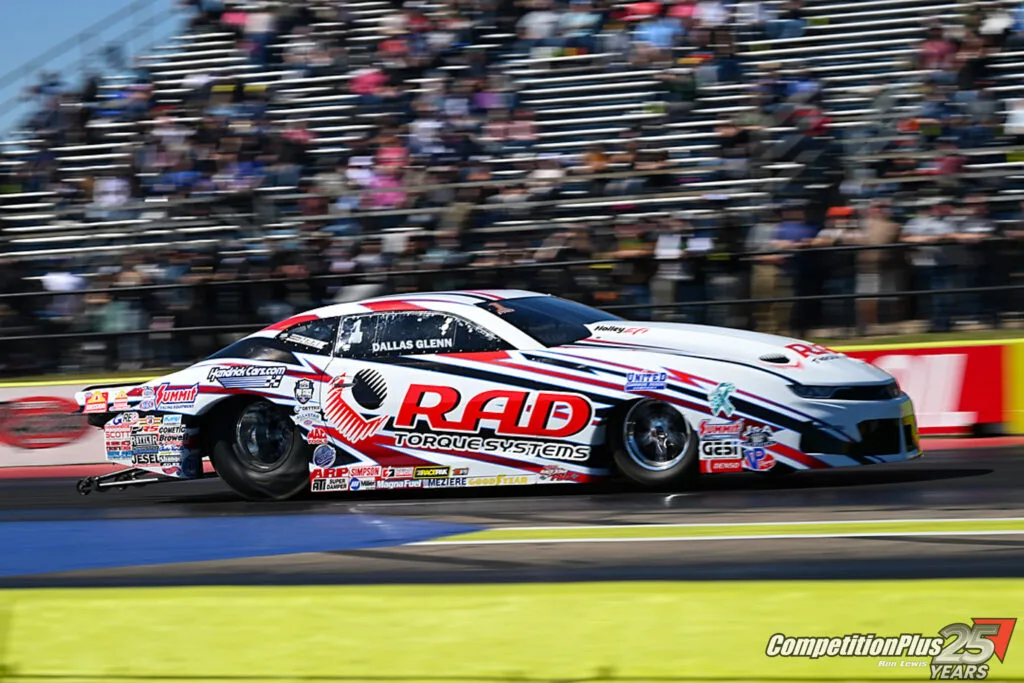
Dallas Glenn kept the pressure on with a 6.574 at 208.01, good enough for the No. 2 position. Rookie Cody Anderson also ran 6.574, posting a 207.91 mph speed to settle into third.
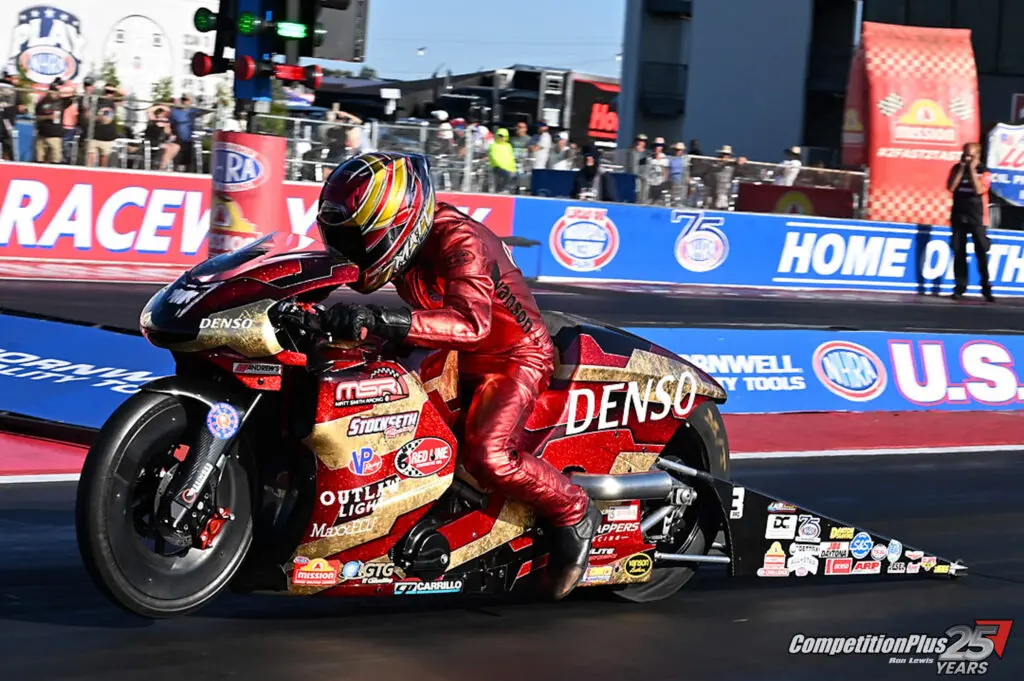
4 – BACK WHERE HE STARTED – Matt Smith started the NHRA U.S. Nationals at the top of the Pro Stock Motorcycle qualifying sheet. Five sessions later, that was exactly where he finished.
Smith reclaimed the No. 1 position Sunday at Lucas Oil Indianapolis Raceway Park with a 6.757-second run at 200.98 mph, giving the six-time champion his third No. 1 qualifier of the 2026 season.
Now comes the part about which Smith cares most.
The three-time U.S. Nationals winner will open Monday’s eliminations against Chris Bostick with a fourth Indy victory as the target. Smith also has strength in numbers, with three of the four Matt Smith Racing motorcycles qualified in the top eight.
“You know, I’ve won this race three times. I’d like to get a fourth one,” Smith said. “If I can’t do it, then I want one of the other three bikes that we have on our camp to do it, and I think we have a really good shot at doing it.”
Smith’s path back to No. 1 required some work.
After leading the opening session, Smith surrendered the top position before getting another opportunity in Sunday’s fifth and final qualifying round. A chassis adjustment provided what he needed.
“We came back in Q5 and put it all together. I made a little axle adjustment and it went right down the track and took the top spot,” Smith said. “I’m totally confident with how we tested at Rockingham coming here with this kind of weather. I felt good. I’ve felt good all weekend. We’ve just got to turn on four win lights tomorrow.”
Gaige Herrera, who had occupied the No. 1 position, slipped to second despite improving to a 6.781 at 198.79. Angie Smith gave Matt Smith Racing another front-running entry with a 6.787 at 198.50 to qualify third.
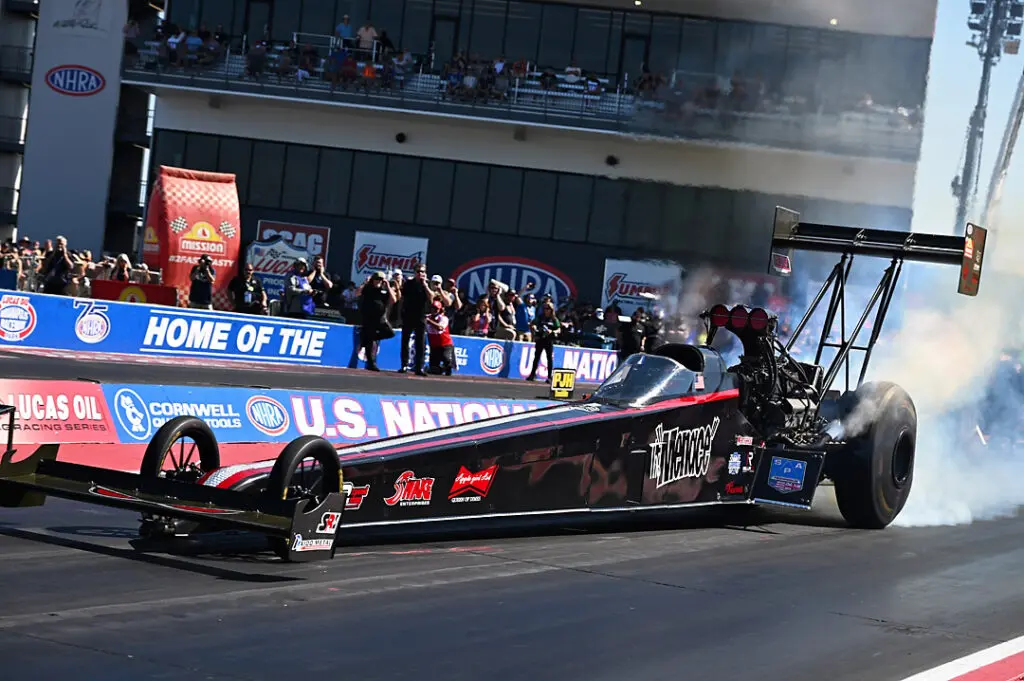
5 – LAST DAY BUMPFEST – One of the greatest things about having an abundance of cars in the nitro divisions is the bumping show that goes on in the final day qualifying sessions. This year’s NHRA U.S. Nationals featured the most nitro entries since 2006.
Sunday provided plenty of bumping action, as Top Fuel and Funny Car racers sitting outside the 16-car fields took repeated shots at breaking into Monday’s field. Some made it. Others watched the bump spot move beyond their reach.
Top Fuel provided the biggest swings, beginning with Krista Baldwin, who entered the fourth session 21st. Her 3.887-second run at 321.65 mph temporarily placed her at No. 15, and was her quickest and fastest run of the season – but the celebration didn’t last.
Shawn Reed was also 21st before unloading a 3.784 that rocketed him all the way to sixth. Will Smith followed the same path, jumping from 19th to 13th with a 3.841.
Billy Torrence delivered the biggest leap of the session. Sitting 20th after struggling through the first three sessions, Torrence hammered out a 3.767 and went straight to No. 3.
The bumping continued until T.J. Zizzo supplied the final blow. Zizzo entered 20th and ran 3.836 to move to No. 14, knocking Jake Sanders out despite Sanders having improved earlier to a 3.862.
Baldwin’s 3.887 ultimately fell to 19th. Sanders finished 17th, followed by Dan Mercier, Baldwin, Tony Schumacher and Lex Joon.
Funny Car delivered its own revolving door during the Q3 session.
John Smith entered Sunday without a qualifying run and put down a 4.089 to move into the field. Blake Alexander climbed from 21st to 17th with a 4.115, putting himself within striking distance but still outside.
Then Bobby Bode changed the equation.
Bode came into the session 19th and fought through a dropped cylinder to run 4.098 at 278.58, grabbing the No. 16 position. That left Chris King on the outside with a 4.112, followed by Alexander’s 4.115.
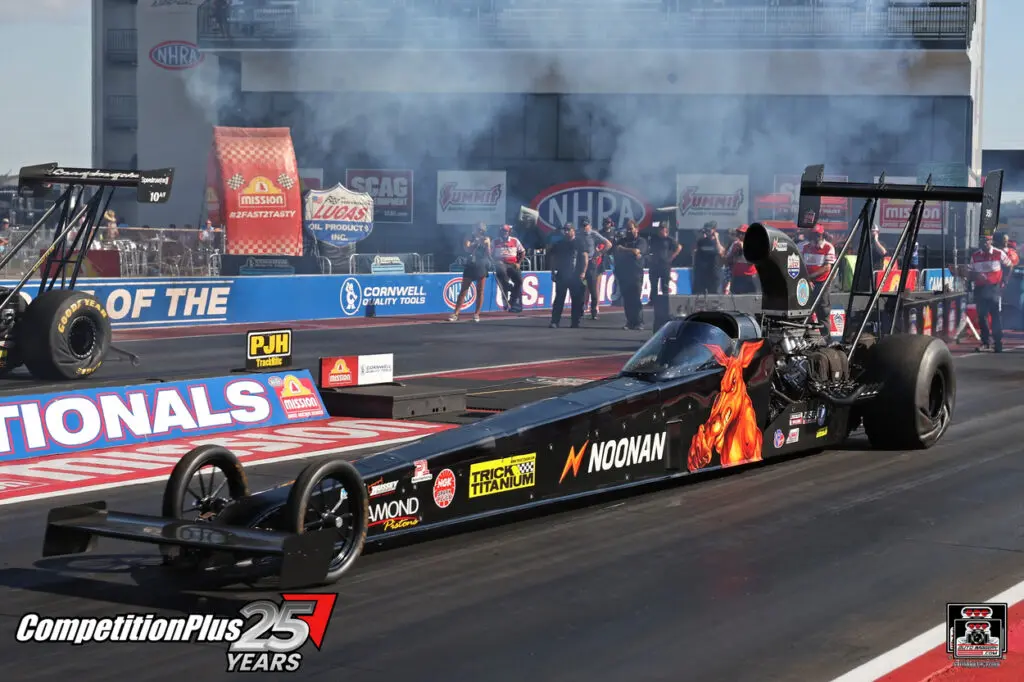
6 – NOT YOUR AVERAGE TAD BINGO CARD – Top Alcohol Dragster qualifying established the pecking order at the NHRA U.S. Nationals. Sunday morning proved the ladder was little more than a suggestion.
Five of the eight first-round races went to the lower-qualified driver, including John Ausherman’s takedown of No. 1 qualifier Anthony Troyer and Angelle Sampey’s victory over No. 3 Shawn Cowie.
Ausherman delivered the biggest bracket-buster. The No. 16 qualifier left first and ran a weekend-best 5.387 at 255.15 mph to beat Troyer, whose 5.583 at 269.78 ended a weekend that began with a 5.227-second qualifying effort.
The upset carried some statistical weight. Before Sunday, the No. 1 Top Alcohol Dragster qualifier had won 40 of 45 first-round races at the U.S. Nationals.
Sampey supplied another heavy hit from the bottom half of the ladder. Qualified No. 14, she used a .041-second reaction time and a weekend-best 5.402 at 269.89 to beat Cowie’s 5.482 at 272.12.
No. 13 Corey Michalek also advanced, beating fourth-qualified Jamie Noonan with a 5.358 at 265.38. Noonan slowed to a 5.896 after his parachute shook loose during the run.
Megan Smith made it four double-digit qualifiers advancing when the No. 12 starter defeated No. 5 Jackie Fricke. Smith ran 5.618 after Fricke’s dragster pulled the front end about 150 feet into the run before coming down hard and forcing her to lift.
T.J. Tindle completed the upset parade in his first Top Alcohol Dragster start. The No. 9 qualifier chased down No. 8 Melanie Johnson and delivered his quickest and fastest run of the weekend, a 5.273 at 271.19.
Not everyone with the quicker qualifying number went home.
No. 2 Shaunda Blinzler advanced with a 5.296 at 269.67 when Sarah Allen smoked the tires immediately.
No. 6 Richie Crampton overcame John Paul Gutierrez’s .011 reaction time, chasing him down with a 5.298 at 269.51.
Brandon Greco, the No. 7 qualifier, completed the second-round field with a 5.300 at 269.73 after Mitch Kalitta smoked the tires at the hit.

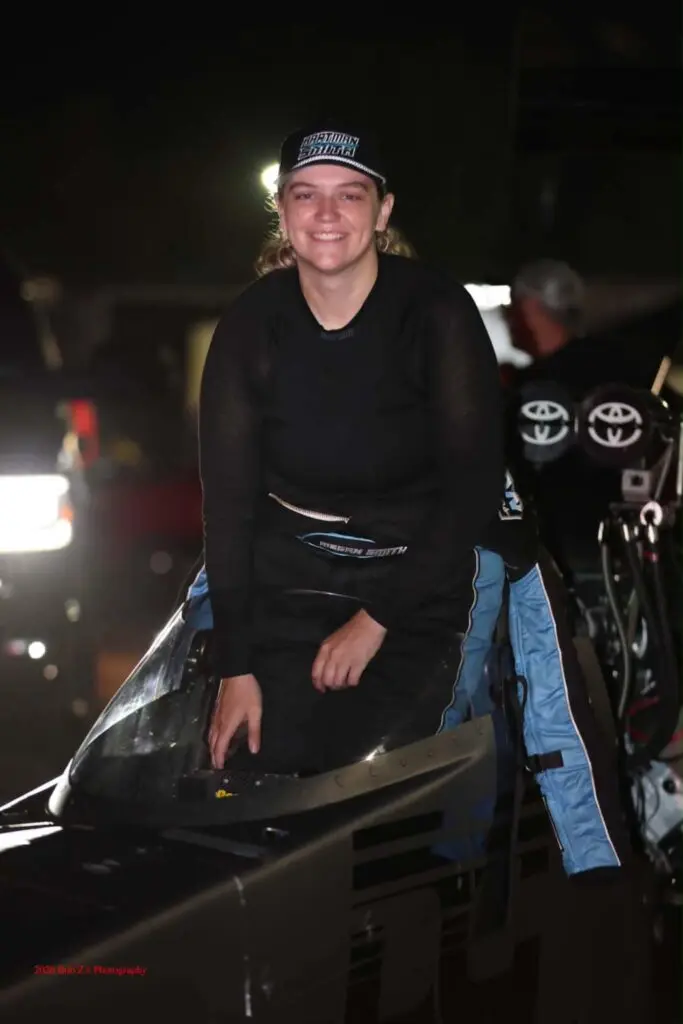
7 – THE THIRD-GEN’S FEAT – Taking out No. 3 qualifier Jackie Fricke might be the second most-exciting thing that happened to Megan Smith, the third generation of the Hartman-Smith lineage.
Smith scored the first-round upset Sunday at the NHRA U.S. Nationals, but even Indy has competition when it comes to the biggest moment of her season. A few weeks earlier, Smith climbed into Del Worsham’s 12,000-horsepower Top Fuel dragster at Cordova Dragway and fulfilled a dream that has been part of her life almost from birth.
And she didn’t exactly ease into it.
Smith’s first Top Fuel pass came before a packed house at the World Series of Drag Racing. Instead of the customary short licensing squirt, she went all the way to 1,000 feet, running 4.00 seconds on her first trip.
“Once I hit the ’chutes and got everything shut down, I was like, ‘Holy bleep,’” Smith said. “Getting out of the car, I just couldn’t wipe the smile off my face.”
Smith made three full runs during the weekend, including a 4.04 at 270 mph. NHRA later reviewed the runs and awarded her a Top Fuel competition license.
For Smith, Top Fuel isn’t some new fascination.
She grew up watching her parents, John “Bodie” Smith and Rhonda Hartman-Smith, race the class. Grandfather Paul Smith made his living around nitro racing, and Megan became the sixth member of the extended family to drive a Top Fuel dragster or nitro Funny Car. She and Rhonda also became the first mother-daughter combination to drive Top Fuel cars.
“I don’t know what the record is for the most family members to drive one, but we could be there,” Smith said.
Six seasons in an A/Fuel dragster gave Smith experience with the controls and procedures. Top Fuel introduced another level of acceleration.
“My mom always said, ‘It’s going to kick you back in the seat compared to your car,’ and it did,” Smith said. “Everything is quicker. It’s an awesome feeling to hit the gas.”
For now, Smith has unfinished business at Indy in Top Alcohol Dragster.
After Cordova, however, she also had something else. A Top Fuel license and an open door.
“The dream has always been to race with the family,” Smith said. “But if someone else asked me to drive a Top Fuel car, I don’t think the answer would be no.”
8 – LUCAS RENEWS – Twenty-five years is a long time to keep anything together in motorsports. Lucas Oil and NHRA apparently aren’t ready to test the alternative.
The two have signed a multiyear extension that keeps Lucas Oil as title sponsor of the NHRA Lucas Oil Drag Racing Series and the “Official Oil of NHRA.” The agreement continues a relationship that began in 2001 and has become especially important to NHRA’s sportsman racing program.
Lucas Oil will also retain naming rights to Lucas Oil Indianapolis Raceway Park, home of the NHRA U.S. Nationals.
For Morgan Lucas, the relationship comes with a perspective few corporate executives can match. Before becoming CEO of Lucas Oil, he raced Top Fuel and won NHRA national events.
“From the drag strip to the bottling line, NHRA has played a very important and meaningful role throughout my career,” Lucas said. “As a former professional drag racer, I have seen firsthand the care and craftsmanship NHRA puts into the sport of drag racing, and it is an honor to now support the organization through Lucas Oil’s industry-leading line of automotive additives and lubricants, built to withstand the elements and the tough conditions drivers face.
“We thank NHRA for its continued partnership with Lucas Oil, which has truly stood the test of time.”
The Lucas Oil footprint in NHRA extends well beyond decals and naming rights. The company has used its involvement with race teams to develop motor oils, gear oils and fuel treatments designed to survive the heat, friction and punishment produced by racing engines.
Its biggest presence remains with the sportsman racers who have carried the Lucas Oil banner across the country for a quarter-century.
The 2026 Lucas Oil Drag Racing Series schedule includes 47 divisional events, with 14 double-divisional races, along with 24 regional events. More than 30 events are also scheduled to stream free through NHRA.tv or NHRA’s YouTube channel this season.
“Lucas Oil has been an extraordinary partner with NHRA for the past 25 years, and we’re absolutely thrilled to extend this partnership,” NHRA Vice President and Chief Development Officer Brad Gerber said. “The Lucas family’s commitment to drag racing and our sportsman racers has been incredible for so many years, forging an incredible legacy in NHRA drag racing.”
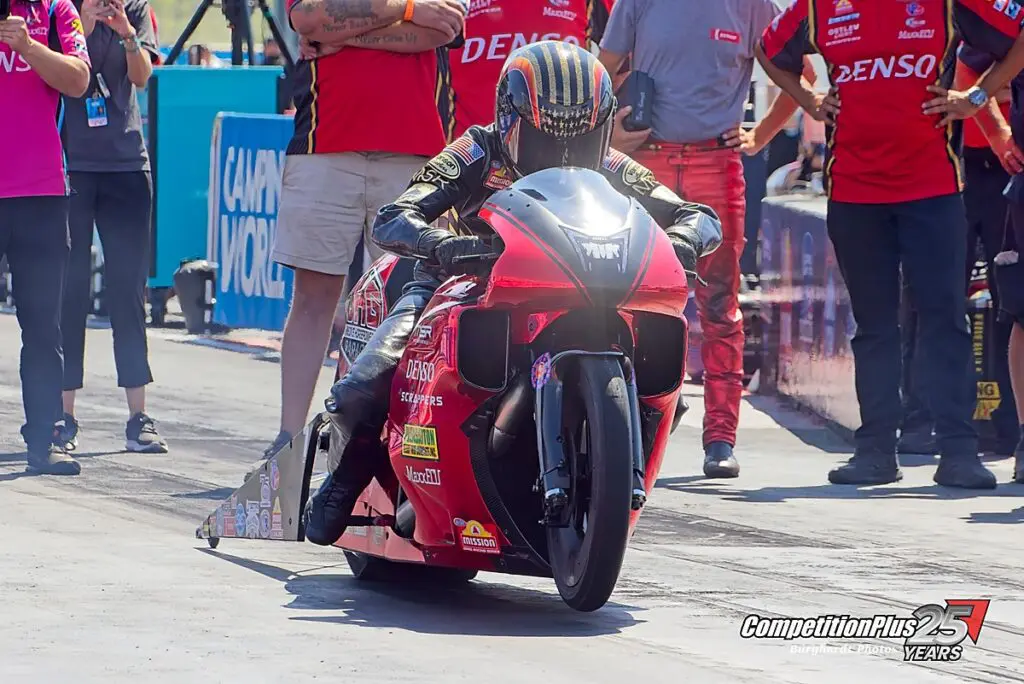
9 – DON’T MOVE THE REMOTE – Michael Ray came to the NHRA U.S. Nationals as a mechanic and tuner for Matt Smith Racing. He suddenly found himself with another job — racing one of the quickest Pro Stock Motorcycles in the pits.
Ray, a three-time NHRA national-event winner, was called on to replace Jianna Evaristo aboard her JHG/Scrappers Buell after she suffered a knee injury earlier in the week. Under NHRA’s Medical Replacement Policy, Ray is competing while earning points on Evaristo’s behalf.
The assignment caught Ray by surprise, especially since he had not raced at Indianapolis in roughly a decade.
“I’m still kind of waiting on somebody to come up and go, ‘Hey, man, we’re going to let her ride. She’s feeling alright,’” Ray said. “Just because it’s Indy, and that’s a really fast motorcycle. A really fast motorcycle.”
Ray knows the motorcycle better than most. He has worked on Evaristo’s Buell since it was built and spends his days at the MSR shop maintaining it.
That familiarity doesn’t make the opportunity any less significant.
“I’ve been with that bike since its inception. I work on it all day, every day at the shop,” Ray said. “So, this is pretty dang cool for somebody who loves doing what he does to work on it full-time and now I get a chance to ride it.”
Ray made his Pro Stock Motorcycle debut in 2007 at the Mile-High Nationals and finished a career-best second in the championship standings in 2013. He also has received seat time this season aboard MSR’s R&D motorcycle.
Ray was 19th after Saturday’s qualifying sessions. He made the show Sunday with solid runs of 6.893 and 6.894 seconds, both at 196-plus mph. He ended in the 10th spot, and will face Angie Smith in Monday’s opening-round action. — Tracy Renck
10 – CHICAGO FIRE?? – One of the few changes in the 2027 NHRA calendar is the date of the Gerber Collision and Glass Route 66 Nationals at Joliet, Ill. It is shifting from its customary May date to July 9-11.
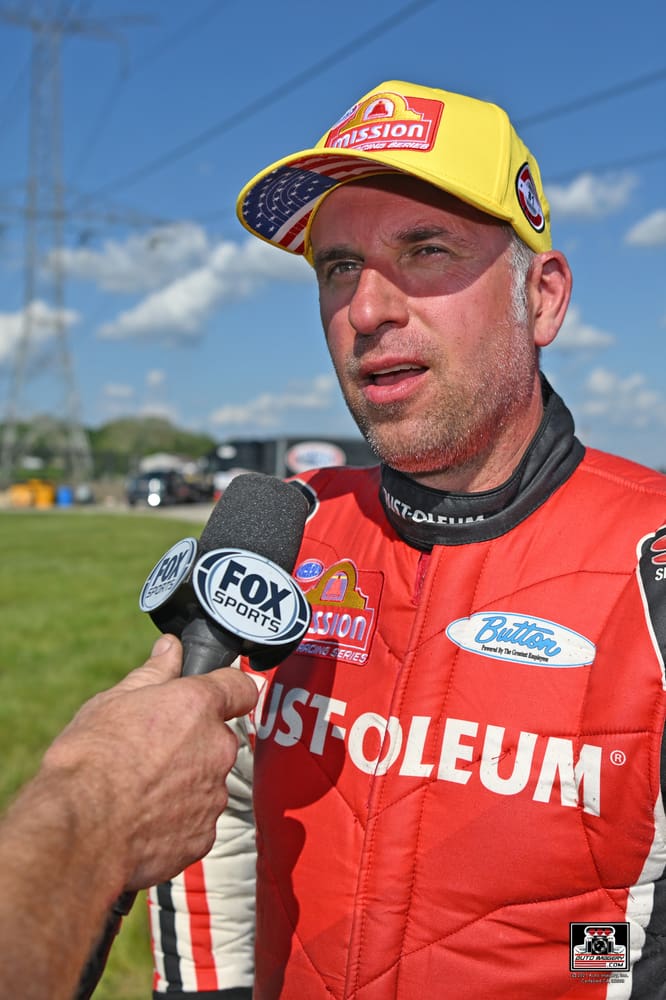
Native Chicagoan T.J. Zizzo has some advice for the sanctioning body: “Race at night.” The spectacle of header flames that come with night racing might just attract a bigger crowd, which the race in this beautiful stadium-style facility deserves. But the July heat in the daytime likely could have the opposite effect.
Zizzo said he noticed the IHRA had night racing and said, “Racing at night, it was beautiful. It’s what this sport needs. And if we go to Chicago next year and we don’t race at night, shame on NHRA, period. Shame on them. Shame on them. Don’t even show up in Chicago if you’re not going to race at night.
“Listen to people that know Chicago. Race at night,” the Top Fuel driver said.
“Try something different. Del Worsham tried something different in Top Alcohol Funny Car. Look at the interesting guy. Look at the spectacle it is. I love that story. That’s what you got to do, something a little bit different. And I am grateful for NHRA because they pay us. I’m grateful for that.”
But, he asked, “Who are they listening to? They’re not going to listen to me. They don’t call me for anything. They don’t call T.J. Zizzo that goes to one race a year and say, ‘Hey T.J., what do you think about it? What should we do to make this sport better now?’”
No schedule in any sports series probably is perfect. But logic says he’s the very person the organization ought to be calling because conditions need to be better for everyone but especially the teams who struggle in general to be able to come and fill the fields. The Zizzo team does that – with quality equipment and talent and is competitive.
Zizzo said, “My family has been in this business for 50 years. We know something. We stay out here because we know something.”
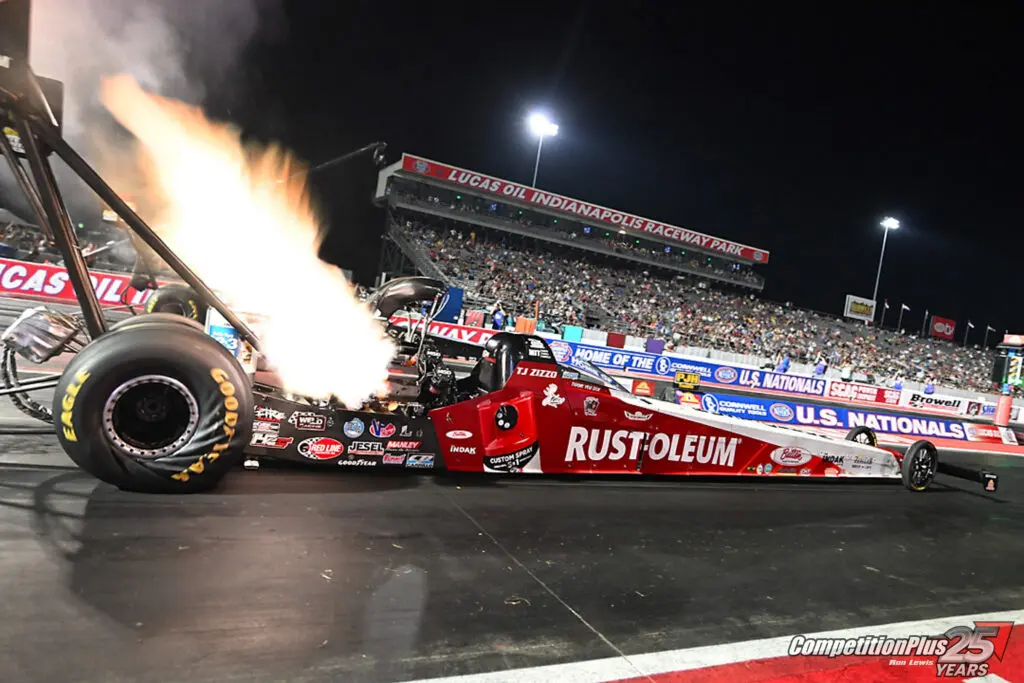
11 – ‘GREAT THINGS COMING’ – Top Fuel driver T.J. Zizzo’s three-word message these days sounds promising: “Great things coming.” That’s all the veteran “super part-timer” will reveal, except to say, “I am blessed by knowing the correct people at the right times in my life. And I’ve always had those opportunities present themselves in the darkest moments. Beautiful situation.”
What dark moments? “This sport is filled with them,” the suddenly mysterious Zizzo said, adding “my dad [Tony Zizzo] and I love this sport. And he spends a lot of money on this sport, and we are the last competitive middle-of-the-road, middle-income competitor out here. We are, what would you call that? We’re not upper-class, we’re middle-class. We are middle-class racers doing this at the highest level and doing it very well. But that takes financial resources. We have to drum up the money to do it. And my dad has taken a lot of financial risks to get us here. We made a lot of investments to get us here. We’ve had great people come into our lives to get us here, and it would be a shame if it all ended. It’d be a shame.”
Sometime between now and the December PRI Show in Indianapolis, Zizzo said, he’ll announce that his operation, his passion, won’t end. “We are certainly not ready to make an announcement. But there will be an announcement made that we will be going to more than two races in the future, because two races doesn’t work,” he said.
“This has to be fun. It’s too much work to not be fun. This has to be fun. The problem is if we go to one race or 20 races, the $22,000 that we spend on insurance on this rig and this race car, try to divvy that up for two races. We’re spending over $10,000 a race just for insurance,” Zizzo said. “So these are things that middle class people might skimp on. We can’t afford to skimp on those things. The rent in the shop, no matter if we go to one race or 20 races, it’s still what it is. The money we owe out and invested in this thing, those bills still come in monthly. All still rolls in monthly – and middle-class people can’t afford that. So we are going to be blessed with an announcement, and our entire team is blessed to have that happen again.”
Zizzo, who’s making his last on-track appearance of 2026, said his goal won’t be to chase points. “But the goal is to absolutely be able to come here and put a better foot forward. When you come out here once, twice, three times a year, we compete at a very high level. I think [National Dragster’s] Tricky Tipster said we’re top four out of 22 cars here. That’s nuts to me, but it’s the truth. But we can’t expect to win that way. You can’t expect to win. When you come out here more frequently, then you have better chances of accumulating time on the racetrack and time here at the track, not on the track, but at the track. And it makes you a better competitor, and it makes all of us better on our team. So we’ll be able to do that.”
12 – FOUR GENERATIONS AT ONE DRAG STRIP – Marion Stephenson has won eight NHRA national events, but there is one trophy conspicuously absent from his collection. His daughter Nichole is still chasing her first.
For the Stephensons, there couldn’t be a more appropriate place to change both situations than Indianapolis.
Marion and Nichole were the family’s two competitors at the 72nd annual Cornwell Quality Tools NHRA U.S. Nationals, and both had opportunities before their weekends ended.
Marion reached the second round of Competition Eliminator before defending world champion Jeff Taylor stopped him. His Super Stock weekend ended in the opening round against Ryan Boniferro.
Nichole stayed alive considerably longer.
Racing Super Comp and Super Gas, she reached the fourth round in both categories, twice working her way through some of the largest and toughest sportsman fields of the season.
Their U.S. Nationals effort came just weeks after the Stephensons turned Indianapolis into a family reunion with race cars.
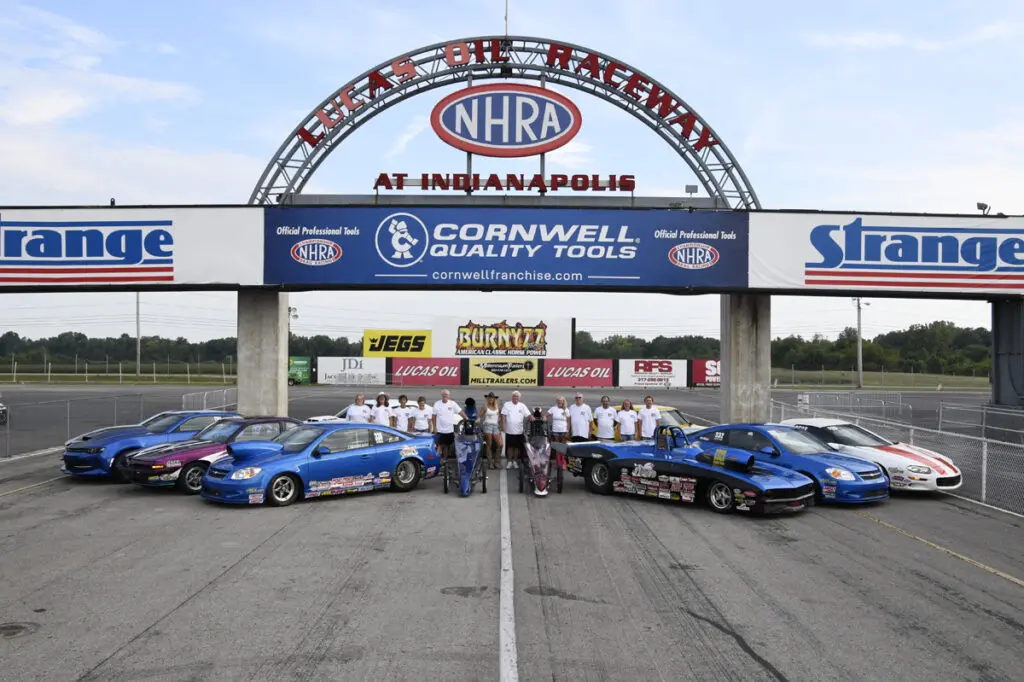
Four generations competed at the same NHRA North Central Division event at Lucas Oil Indianapolis Raceway Park. Longtime NHRA statisticians, including Bob Frey, could not confirm another occurrence of four generations from one family competing at the same divisional event.
Marion’s 81-year-old father, James “J.B.” Stephenson, was part of it. So was 16-year-old grandson Dylan Cioe, along with Marion, Nichole, wife Lisa and nephew Wayne.
The best part might have been J.B.’s ride.
He drove Marion’s original race car, a 1972 Buick GS 455 that J.B. built in 1983.
“It was something we’d been talking about for a long time, and it was a lot of work to get all of the racecars ready, but it was worth it,” Marion said. “My dad drove really well, and when he tested it in Bowling Green, he was just having fun and smiling. We all had fun with it.”
Indy has provided Stephenson with considerably less pleasant memories, too.
He reached the U.S. Nationals Super Stock final in 2017, only to lose to former world champion Kevin Helms. Nearly a decade later, the loss still has teeth.
“It was a tough one, losing Indy in the final. You run that one through your head a few times,” Marion said. “This racetrack is where I started. It’s where I grew up, where Nichole and Dylan started racing, and all my friends are here.”

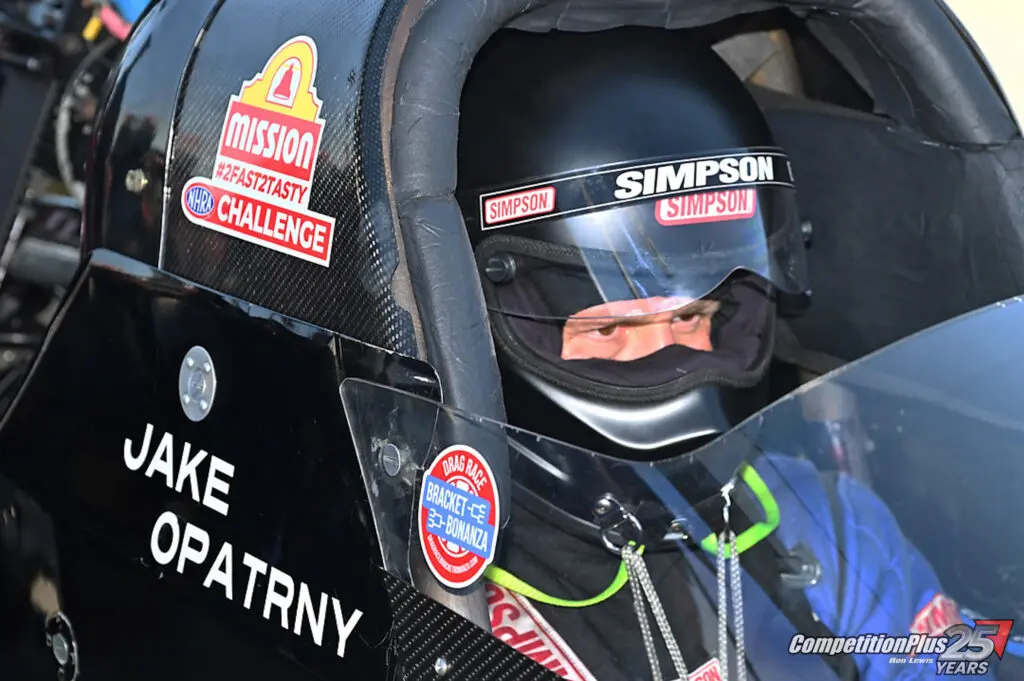
13 – GETTING STARTED TAKES TIME – Top Fuel newcomer Jake Opatrny (pronounced oh-PAT-run-nee) sat in the cockpit of Bernie Plourd’s dragster Saturday morning and had a concerned look on his face. The motor wouldn’t turn over – the blower pulley was acting up. The day before, they missed the one and only qualifying session because of a problem with the clutch cannon. “We got that fixed,” he said, “and right when we were trying to start the car, we ran into another problem with another minor issue. It’s always some little 10- or 20-dollar part that fails at a critical moment.”
Welcome to team ownership. This weekend’s ride belongs to Pacific Northwest veteran Plourd, but Opatrny has his own dragster and is taking baby steps to get his own program up and running. And this is excellent training for him, he knows.
“If it was easy, everybody would be doing it. But when it comes down to getting from point A to point B, you can’t miss anything. You can’t chance anything. You can’t force a situation. All you got to do is just make sure everything’s done the right way,” Opatrny said.
He said the “ultimate goal for this team this weekend is to get the car dialed in for the owner, Bernie Plourd. I’m just the guinea-pig pilot for the weekend, but I wouldn’t be here this weekend if it wasn’t for him. I’m helping him in any way I can with getting the car down the track, and helping him with the media and public relations and stuff like that because the guy’s getting me back in the seat and getting me back on track. I got to show him off to the world. He’s a good friend of mine. Bernie Plourd’s great people. He’ll take care of you if you take care of him.”
Opatrny’s shop is located in Wauconda, Ill., and inside it is the dragster he bought from from a team in Sweden. When he will have it race-ready is uncertain, he said, “given all the work that I got to get done to the shop building and given how the economy’s looking and how hard it is to find investment funding.” He said, “Trying to get sponsors on board to just throw you money to build your car is rather difficult.” He said no one wants to invest thousands of dollars, only to find out that it’s – in his words – “a pile of parts that’s not doing anything, and that’s a very hard thing to sell. I had some investment funding lined up, but when the economy took a shift after the war began, all that dried up. So I’m back at Square One, and it impacted a lot of people in my family, too. And we’re just scraping together, plugging along with the shop building. I’m still shopping around for parts every chance I get to go to a racetrack. I got a clutch for it and I’m going to get my front half done at Attack Race Cars in Michigan. So as soon as the IRS gives me my tax refund, as I’m still waiting on that, believe it or not. I would’ve had my car front-halved already, but it’s just one step forward and 99 steps back.”
While he has had time to observe the races rather than compete in them, Opatrny said, “I’ve done a lot of watching, a lot of paying attention, and I’ve learned a lot of what to do and a lot of what not to do. When it comes down to what this sport needs, from my opinion, to bring more public interest back into it, especially with the younger crowd, is to bring character back. And young people, they understand cookie-cutter interviews and cookie-cutter drivers, but it’ll look good for their sponsors. Driver character is what sells the product, and it’s what attracts attention – like, ‘What did that guy just say on TV?’ Get people to talk about that.
“I mean, there are still a lot of young people that want to do this stuff, but with me, my background in the sport, before I got involved with a team or even started thinking about actually making steps to get my license, I was always just a fan. I was the kid at the ropes collecting autograph cards, and I just one day decided to put my money where my mouth was and actually make a go for it,” he said. “My family never did it. My father’s father never did it. Nobody on my mother’s side ever did it. I’m the first person in my family to branch off and try this. And why not just go straight to the top if you can? I’m not the only driver that’s done it. It’s uncommon, but it’s far from unheard of.”
Fellow Top Fuel racer T.J. Zizzo, who took Opatrny under his wing a bit, said, “You know, there’s all kinds of ways of getting here and being a driver, right? Some want to own a team. Some just want to drive. Some start an alcohol car and then move up to Top Fuel, or some remain sportsman racers forever. Jake has always wanted to drive a Top Fuel car, and he’s living his dream. And I see how excited he is and all those things that reminds me of my youth. I look forward to good things for him. He has a shop about 20 miles from ours. He has a Top Fuel car in that shop. I haven’t stopped by yet. Actually, his shop is about a block from one of my rental properties. So one of these days when I go up there, I will absolutely see him in his shop. He started helping us out and doing things for us and learning the craft a little bit.”
Opatrny said, “When I get my team out there, I want to be as inclusive as possible. Always give the fans somewhere to stand in the shade and feel like they’re a part of my operation by standing close to the car or just being closely associated with the crew, just coming by, hanging out.
“And when it comes to me being an owner in the future, in the near future, running my own car independently for the first time, my goal is to be the most honest, easiest, smoothest guy to work for, but no yelling, no high energy. Instead of pointing fingers and yelling at somebody, just shut up and fix the problem. Let’s all get together, let’s fix this problem instead of pointing fingers and yelling at each other. When I run my car, my job will be to sell my product to the consumers and be available for the fans at all times.”
It’s not daydreaming. He participated in, but failed to qualify for, the U.S. Nationals. But he downplays his status, saying, “I’m just a construction worker with a really expensive hobby. I’m an operating engineer by trade with the International Union of Operating Engineers Local 150. Right now, I’m running a skid loader or a Bobcat on a road-milling crew. I’m just an average Joe with, I would say, a particular social urge.”
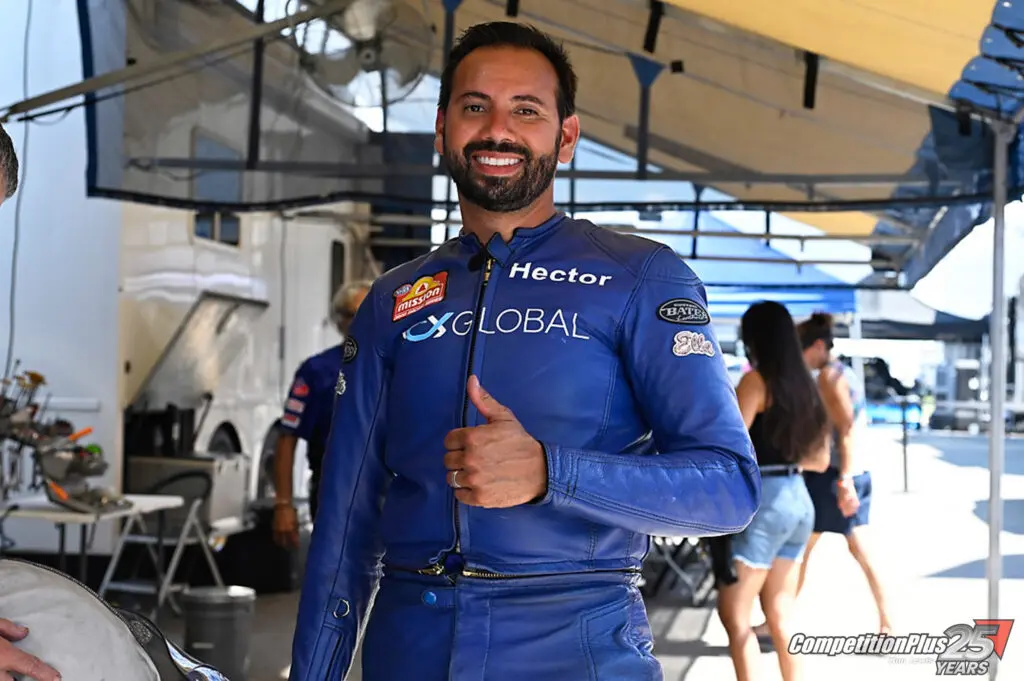
14 – TOGETHER AGAIN ON THE TRACK – The Aranas have accomplished plenty in NHRA’s Pro Stock Motorcycle class. And now, Hector Arana and his son, Hector Jr., are again competing together this weekend at the 72nd annual Cornwell Quality Tools NHRA U.S. Nationals in Indianapolis.
“Well, we were always planning to run Indy. It’s home – a local track for us – home race, biggest race of the year,” Arana Jr. said. For many years, the Aranas lived at Corydon, Ind., and nearly the entire family worked at the Lucas Oil production plant. Arana Sr. works there still.
“We’ve been wanting to come out sooner, but we were having to work on and rebuild the hauler. I needed a new head gasket, and we ended up doing a turbo and everything, that ended up taking up a lot of time to get all back together, waiting on parts, and just to rebuild the truck,” he said. “So now, we got the truck back together, which made it easier to be able to go to races now the truck is back together. Essentially, we could do whatever race we want.”
The bigger surprise in the Arana camp is seeing Hector Sr. back on a Buell. He last competed at the Charlotte (N.C.) Four-Wide Nationals in 2024.
Furthermore, this is his first appearance at the U.S. Nationals since 2019.
“Dystany Spurlock was going to race, so we were prepping both bikes, and we had both bikes ready to go,” Hector Jr. said. “Then when they pulled out and said, ‘Hey, you know, we’re not going to race’ because, you know, they have a pretty big deal [in the Craftsman Truck Series] in NASCAR going on now.
“They didn’t want to take a risk doing the motorcycle [race]. So, I mean, at that point, my dad said, ‘You know what? The bike’s there, everything’s ready to go. I’m going to run.’”
Hector Sr. has an impressive Pro Stock Motorcycle resume, with seven national-event wins and NHRA’s 2009 championship. His most recent win came at Atlanta in 2015, while his last final-round appearance came at Gainesville, Fla., in 2016.
The U.S. Nationals is special to Hector Sr. He made his Pro Stock Motorcycle debut at the 1990 edition, and this marks Arana’s 332nd race overall and his 27th appearance at this event. Arana Sr. won here in 2009 when he defeated Michael Phillips in the final round. He was a runner-up in 2012 to Andrew Hines.
Hector Jr. last competed full-time in the bike class in 2024, finishing fifth in the season points standings and capturing career victory No. 19 at Reading, Pa.
Arana Jr. competing at Indy in 2026 was made easier thanks to a one-race partnership with TCX Global, a global time-critical logistics company.
For TCX Global, the relationship offers an opportunity to introduce its capabilities to race teams, manufacturers, sponsors, and organizations throughout the NHRA community, while further establishing the company as a trusted logistics resource in motorsports in the United States, Italy, and around the world.
The younger Arana has had his share of success at Indianapolis. He won the race in 2011, defeating Jerry Savoie, and finished runner-up in 2016, 2017, and 2023. Arana Jr. has a stellar 27-14 career elimination-round record at Indianapolis.
This weekend marks Arana Jr.’s first race since this event in 2025. And he’s thrilled to be competing against his dad again.
“Oh, man, it’s awesome. You know what? He’s having a good time,” Junior said. “The bikes are running, the bike left good, didn’t do anything silly. He puts in a lot of hard effort and work and now he gets to enjoy it, as well.
“He enjoys it when he’s racing with me and watching me, he gets to have some fun, as well. So, it’s perfect. We got the rig, the rig’s coming here. Really, for us, we’re at the point, it’s like, we have all the stuff, so it’s really, we can run one bike or run two bikes here and there. If anything, it pays more to run two because hopefully both bikes qualify, and then you bring more money home.”
In Q1 Friday, neither racer had much luck. Arana Sr. had a TPS sensor connector issue, and Junior’s motor broke a rocker arm, but didn’t incur too much damage. Both Aranas are running Generation 1 Buells.
“It’s the same stuff we’ve always run,” Junior said. “I mean, it’s an awesome race, and for us, it’s an extra qualifying shot. It’s a home track. It’s a good track. I mean, we love it. Everybody’s been so welcoming and glad to have us back, so it’s just been awesome.”
Arana Jr. didn’t hesitate when asked about his expectations for the U.S. Nationals.
“If you’ve been following my [social media] posts, I’m on the hunt for Wally No. 20,” he said. “We are talking about running St. Louis [Oct. 2-4] and Dallas [Oct. 16-18]. We’re going to start with this race, see where our performance is at, see how we stack up against the rest of the field, and we’ll go from there.
“With the handful of races that we’re going to, it doesn’t make sense not to run those bikes with my dad running the other one,” he said.
Besides, Dad admittedly isn’t a great spectator.
Not competing in a race, he said, is “not a good feeling. And it even hurts more when I watch it on TV, knowing that we’re not there. My wife said, ‘Why are you so angry?’ And I always notice it that she always tells me that when I was watching the race. So there was time that I didn’t even watch it.”
It’s nothing new that parents make sacrifices for their children’s interests. But Arana Sr. is seeing his chances to relive his glory days diminishing. Not gone completely but getting harder to pull off a bit, but he takes pride in seeing his son and namesake continuing with the family passion.
“I love it. I told him I want to race. I want to pick up events. It gets me excited. It gives me the energy to keep on going,” the father said. But he deferred to the son.
“My choice was, I know if we stick to one bike, we can make it work money-wise. And so my choice was my son. He’s younger, he can do better, and I know it in my heart,” the 2009 champion said. “I know in my heart, he’s going to be a champion. He’s got it. He does. He just needs to be out here all the time. He loves this. And so my choice is him. Let him go forward.”
Arana Jr. made Monday’s field as the No. 15 qualifier. His dad was a non-qualifier, winding up 18th of the 19 riders entered. – Tracy Renck
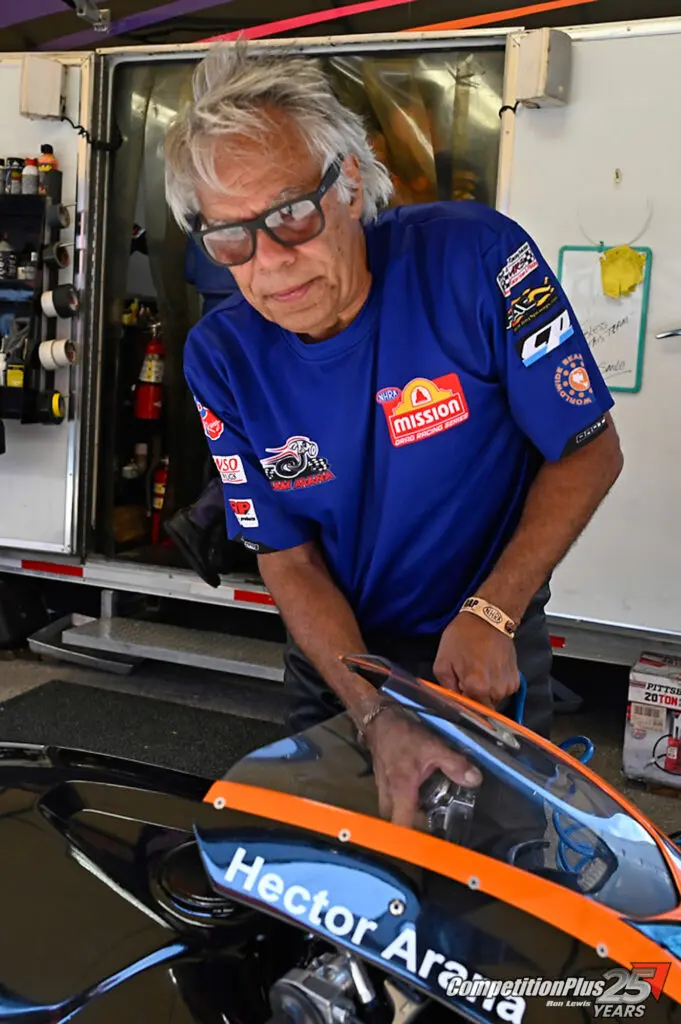
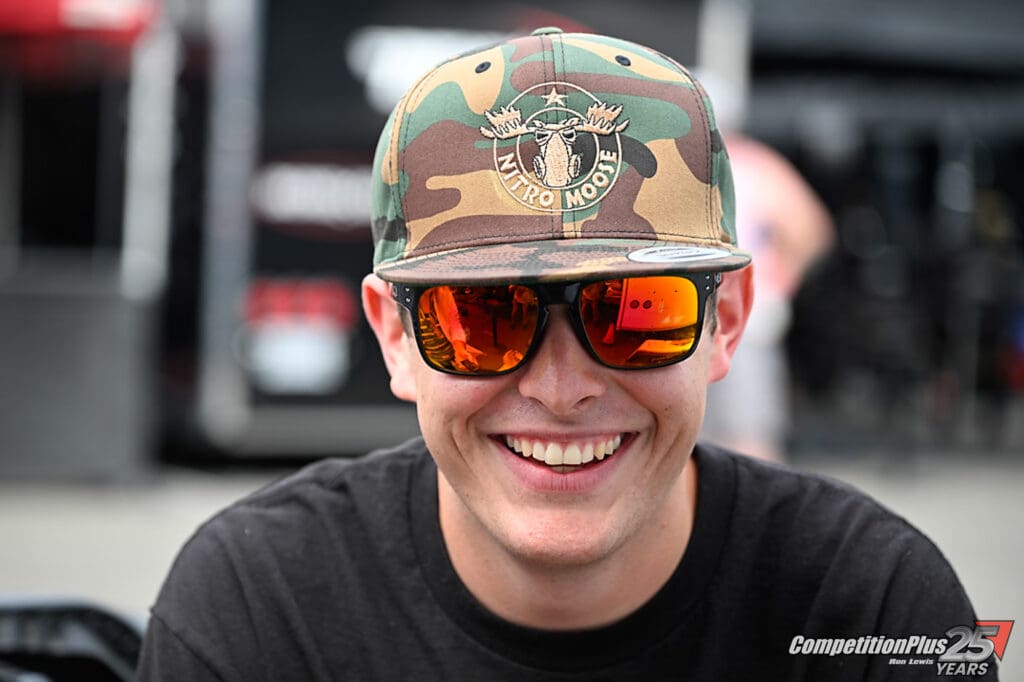
15 – THE OVERWHELMING NATURE OF THE BIG GO – The NHRA U.S. Nationals has a way of making even experienced nitro racers feel like rookies. Dylan Winefsky doesn’t have to pretend — at 22 years old, he is getting his first taste of Funny Car racing at Indy and appears comfortable with the assignment.
Winefsky has put the family-owned Nitro Moose Funny Car into the provisional 16-car field, recording a best of 4.119 seconds at 315.49 mph through Saturday’s qualifying. His opening run was a 4.173 at 305.84 before sitting out the third session.
“It’s pretty cool, and it’s really cool being that it’s the 75th anniversary for NHRA,” Winefsky said. “It’s just really cool all the way around.”
There is another number Winefsky appreciates and it’s 22.
“I have not really had any nerves,” Winefsky said. “It’s definitely pretty cool to be able to say that I got to race at the U.S. Nationals at 22 years old.”
Winefsky isn’t navigating the learning curve alone. Veteran driver and tuner Johnny West is calling the shots on a Funny Car built around something increasingly uncommon in modern nitro racing — a family budget.
West’s résumé stretches back to the 1970s and includes driving for Roland Leong and Johnny Loper before tuning for some of drag racing’s biggest teams and drivers.
“Oh, it’s great because he’s got all the experience in the world,” Winefsky said. “He knows how to run a nitro car on a budget like we are, and he’ll get your car down the track every time and it won’t hurt itself.”
Winefsky’s path began in Jr. Dragster before moving through Super Comp, the family’s de-tuned Fuel Altered and Nostalgia Funny Car competition. Dan Wilkerson and Del Worsham were among those who helped sign off on his licensing.
He competed in three NHRA nitro events in 2025, qualifying at Seattle before engine trouble prevented him from racing Austin Prock. This season has included Phoenix, Pomona and Sonoma before arriving at Indianapolis.
Las Vegas will close Winefsky’s 2026 schedule, but the education continues every time the Nitro Moose fires.
“Each time you go out, you learn something new,” said Winefsky, who ended up 20th of 23 entrants in qualifying for Monday’s 16-car lineup. “You learn more about the car. You learn little different driving techniques here and there that you might not have known. Just all around, you’re always learning something.” – Tracy Renck
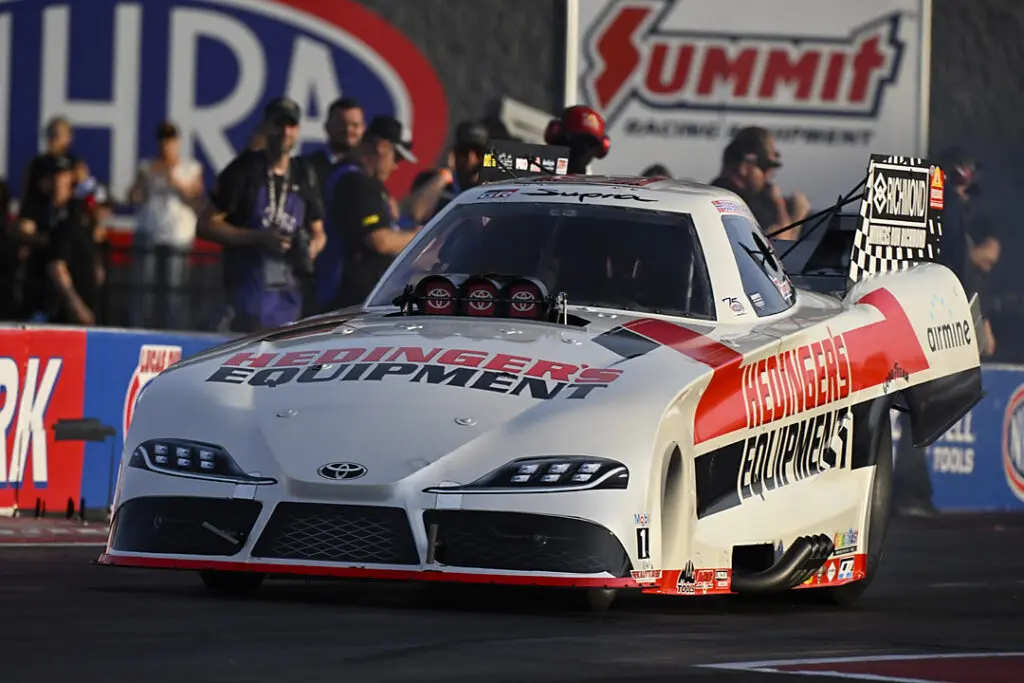
16 – FUNNY CAR HIGHS AND LOWS – Julie Nataas made her way into the No. 15 spot during the final Funny Car session. The former Top Alcohol Dragster champion had run a 4.089, 309.70 to get in the field.
With five drivers outside the field behind her, there was no comforting moment but one by one they fell by the wayside.
First there was Dave Richards in the lane beside her, and his 4.130, 312.42 wasn’t enough.
Four more to go, and then Dylan Winefsky laid down a 4.130 … good enough for 20th. Justin Shriefer ran a 4.124 to end up 22nd. Blake Alexander ran a 4.258 that was good enough for 19th.
Bode ran a 4.181 and his last-ditch effort didn’t move her.
“So many things have happened this weekend,” Nataas said. “I’ve taken out my first couple blocks on two runs here this weekend, which I’m still learning every single time I go down that racetrack, but it’s so much fun driving for Dell [Worsham] and having that Hedinger’s Equipment in the field for tomorrow is everything that we wanted.
“I just want to keep on doing this. So we’re going to hopefully be out here some more at the end of the season, but I can’t wait for it tomorrow.”
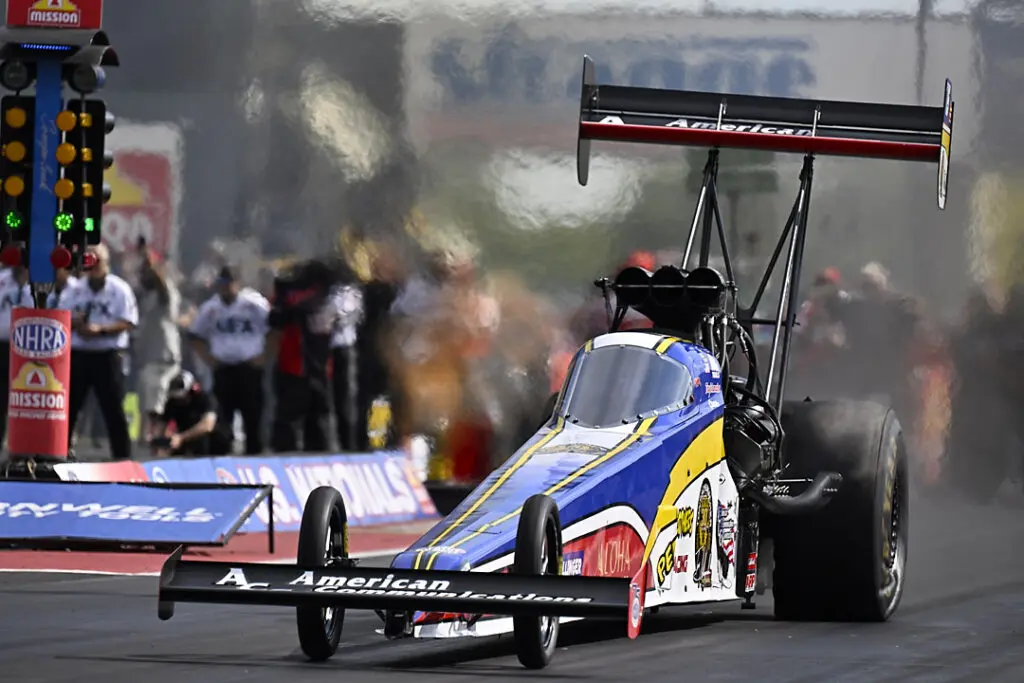
17 – THE 23-YEAR STREAK ENDS – It’s been since June 2003 that the winningest Top Fuel driver in the NHRA failed to qualify for a race. But on Sunday, for the first time since the Englishtown event, Tony Schumacher will not race in final eliminations.
“It’s unfortunate – terrible actually – but in reality, I learned a long time ago, this is entertainment, man,” Schumacher said. “It’s for the fans. And you know what? If you can’t run good enough to get qualified, you don’t deserve to get qualified. So I’m going to sit back tomorrow, maybe go up in the booth, and I’m going to watch a great drag race because Indy’s been so good to me for such a long time. Love the fans, love the people.
“But in reality, we still have to perform. We found some things we did wrong early in the week. We couldn’t catch up in time. We made a decent run there, not a bad run at all. So, hey, tomorrow’s a great race day. I won’t be in it.”
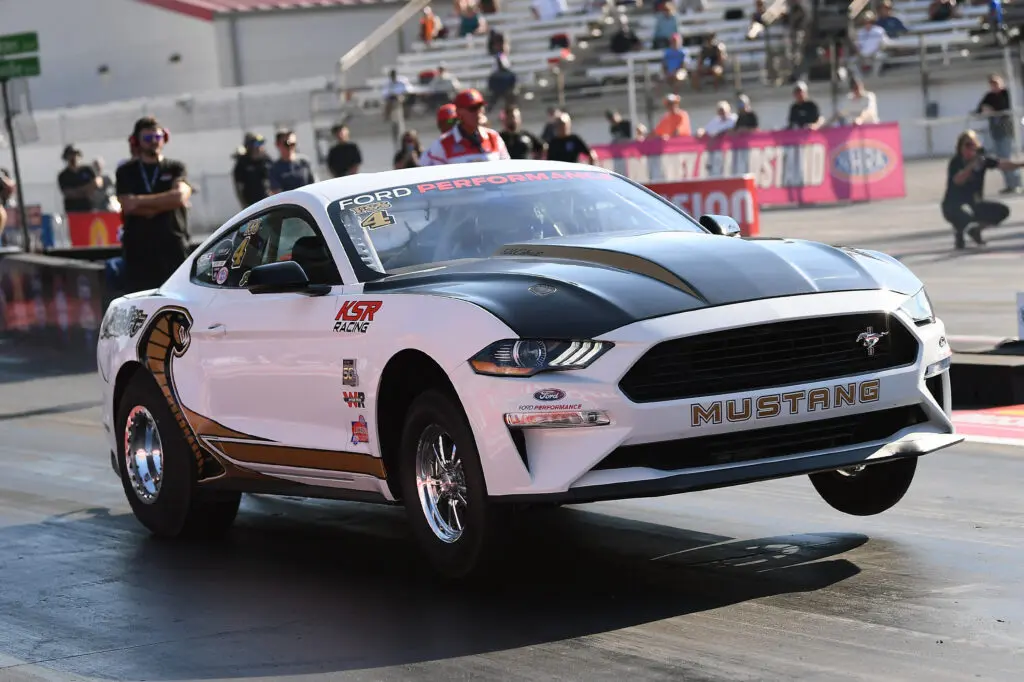
18 – FACTORY STOCK AT INDY – Factory Stock Showdown is down to three racers at the U.S. Nationals, with Scott Libersher already holding a ticket to Monday’s final.
Libersher, James Betz and Jonathan Allegrucci survived Sunday’s third round at Indianapolis Raceway Park. Libersher earned the semifinal bye after defeating Taylor Dietsch with a 7.650-second pass at 179.16 mph.
Dietsch was .031 at the tree compared to Libersher’s .032, but Libersher drove around him after Dietsch posted a 7.693.
Betz survived one of Sunday’s strangest races when defending series champion Mark Pawuk never left with the Christmas Tree, eventually recording a 4.608 reaction time. Betz had problems of his own, moving hard toward the centerline before recovering and staying in his lane.
His 11.586 at 77.87 wasn’t pretty, but the win light was all that counted.
Allegrucci advanced when Jason Dietsch did not make a run. The No. 1 qualifier posted a 9.099 at 112.27 to move into Monday’s semifinal against Betz.
The winner of Allegrucci-Betz will return to face Libersher for the U.S. Nationals title.

19 – WHO IS HEADED TO MONDAY? – More than 700 Sportsman entries began the long march through eliminations Thursday at the NHRA U.S. Nationals. By the time the Indianapolis Raceway Park starting line went quiet Sunday night, only 27 remained in seven categories.
Indy has always been a survival test, and this year’s 72nd running has been no exception. Hundreds have already loaded their trailers, leaving a select group with a Monday appointment and an opportunity to leave drag racing’s biggest race carrying a Wally.
Competition Eliminator is already down to three. Defending world champion Jeff Taylor will meet Doug Engels in one semifinal, while Donald Thomas earned a bye into the final after Mason McGaha fouled against him in the fourth round.
Super Stock has Peter D’Agnolo against Brian Martel and Michael Reynolds against Hayden Trumble in its semifinals.
Stock Eliminator’s final four are Brina Splingaire, Hunter Pierdolla, Ray Thurston and Brad Plourd. Pierdolla meets Splingaire, while Thurston faces Plourd.
The 8.90 Super Comp battle has Brian Harris paired against Colby Fuller, with Nick Smith facing Kevin Thorp. Harris eliminated Sherman Adcock, while Smith advanced when Alaia Isenhower fouled.
Super Gas has also reached its final four. Charlie Stewart faces Jordan Pratt, while Rob Kropfeld draws Nathan Vrooman.
Top Sportsman’s Monday survivors are Doug Gbur, Bryan Richardson, David Scutt and Brandon Baxter. Gbur faces Scutt in one semifinal, with Richardson and Baxter comprising the other.
Top Dragster has Zach Sackman, Al Peavler, Thomas Bayer and Prescott Dean still standing.
20 – ON TAP – Eliminations for the Cornwell Quality Tools NHRA U.S. Nationals begin at 10 a.m. ET on Monday at Lucas Oil Indianapolis Raceway Park.
SATURDAY NOTEBOOK – LOT’S OF MEMORIES, A TOLD-YOU-SO, AND A TORCH STARTING TO FLAME UP

1 – SCHUMACHER REFLECTS – Tony Schumacher didn’t only arrive at the NHRA U.S. Nationals 30 years ago hoping to qualify for his first Top Fuel race. He was hoping the car would start.
Predicting eight championships and 88 national event victories would have been a considerable stretch for a 26-year-old who wasn’t entirely sure how everything in the dragster worked.
Three decades later, Schumacher’s team surprised him at Indianapolis Raceway Park with a throwback paint scheme matching the car he drove at the 1996 U.S. Nationals.
“That’s the honest truth, I was just hoping the darn car would start,” Schumacher said. “To be honest, I had met these guys a week earlier. We were having the time of our life.”
Schumacher’s introduction to Top Fuel came quickly. He went to Denver the week before Indy to license and arrived at the U.S. Nationals having never completed a full Top Fuel run.
“I literally had not made a full pass on a Top Fuel car until we got to this track,” Schumacher said. “And then there were 24, 26 cars. There were quite a few great cars that didn’t qualify at that race.”
Schumacher qualified No. 16 and was scheduled to race No. 1 qualifier Blaine Johnson in the opening round. Johnson was killed in a qualifying accident the previous day, leaving Schumacher with a first-round single.
Schumacher advanced all the way to the final before losing to Cory McClenathan. It was a remarkable debut wrapped around one of the darkest weekends in NHRA history.
“It’s so many things happened that weekend and the weekend before,” Schumacher said. “It was overwhelming for a young kid like myself. The amount of stuff that was thrown at me to see at my first race was incredible.”
Indianapolis eventually became Schumacher’s most successful race. He has won the U.S. Nationals 10 times, including six consecutive victories from 2002-07.
His wife, Summer, helped arrange this year’s surprise, which included having Mike Peek, one of the people Schumacher met during those first Top Fuel days, at the track.
“My wife, Summer, was putting this thing together, and I had no idea,” Schumacher said of the surprise retro theme. “When I saw Mike Peek here, it was great.”
Thirty years have also changed Schumacher’s view of his own career. The kid worried about tomorrow eventually became Top Fuel’s winningest driver, although Schumacher remains reluctant to compare his numbers with racers from different eras.
“If you would have asked me 30 years ago, ‘Your future’s bright,’ I’d have said, ‘Man, I’m not even thinking about a future. I’m thinking about tomorrow,’” Schumacher said. “And I tell all kids this: At the age of 26, you’re not looking into the future. You’re wondering what happened yesterday and what might happen tomorrow, and that is the vision you have.”
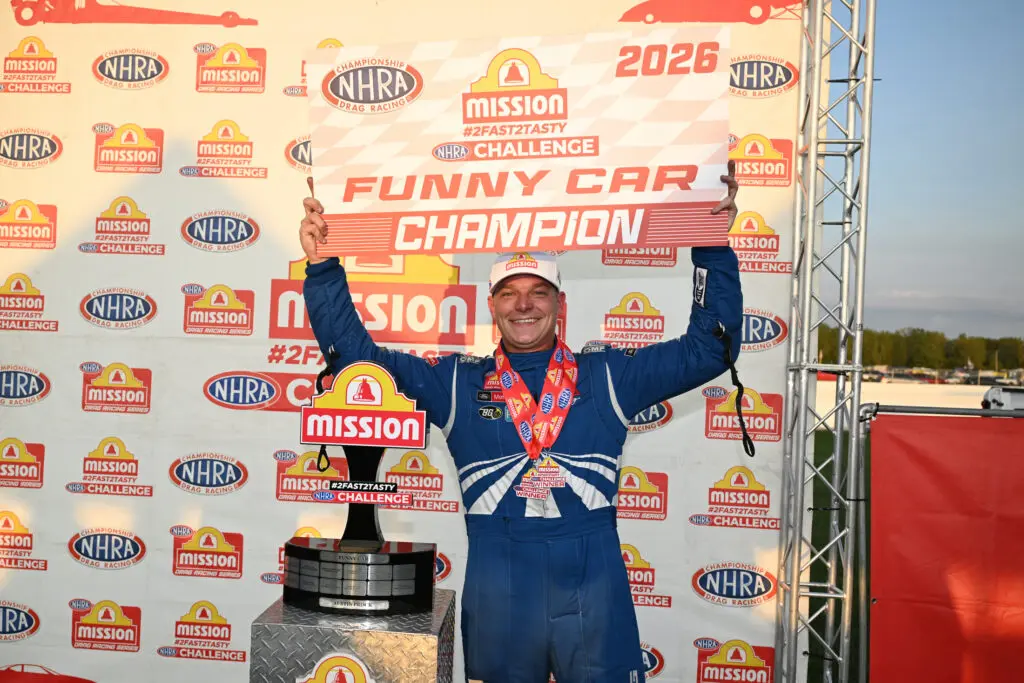
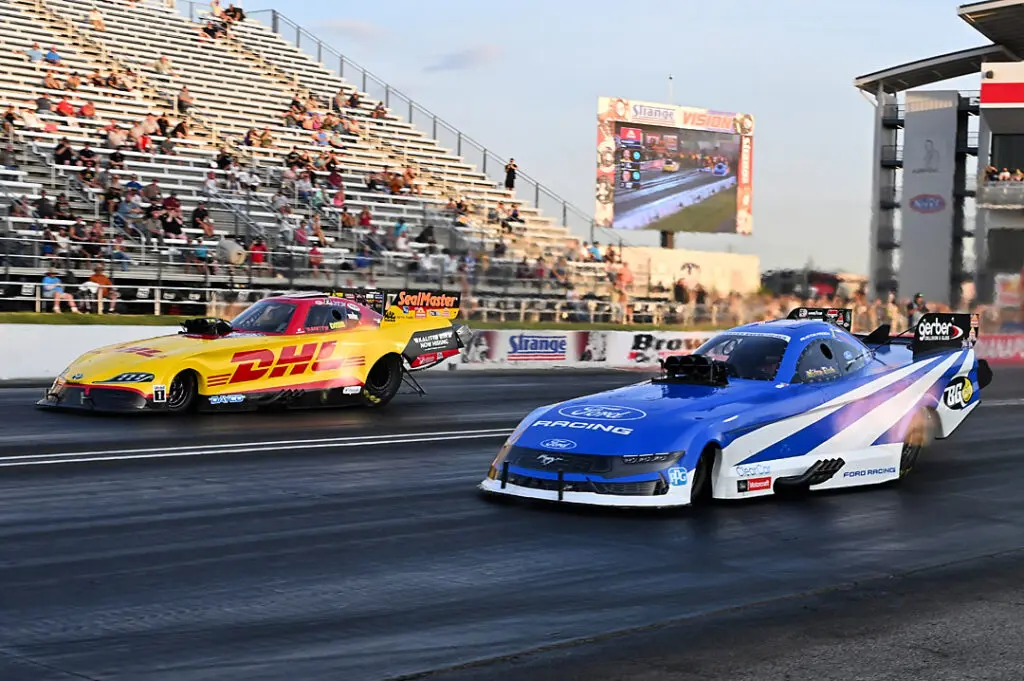
2 – I TOLD YOU SO – Austin Prock has spent much of the season telling anyone who would listen that his new Funny Car program was coming. On Saturday at Indianapolis, he supplied another piece of evidence.
The two-time defending NHRA Funny Car champion defeated J.R. Todd in the Mission #2Fast2Tasty Challenge final at Lucas Oil Indianapolis Raceway Park, running 3.921 seconds at 317.87 mph to Todd’s 4.006, 325.06.
The victory was Prock’s third Mission win of the season and secured the season championship in the specialty series. It also continued a turnaround that seemed unlikely after his team failed to win a Mission round through the first six races.
“We went the first six races without winning a single round,” Prock said. “And then after Chicago, we made it to our first semifinal round, and I think we’ve been in every Mission #2Fast2Tasty Challenge except one. And it just shows how far this team’s come to go to the semifinals week in, week out.”
Prock said the biggest concern for the rest of the Funny Car field might be that the Bob Tasca Ford Mustang still isn’t where the team wants it.
“I think everybody in the pits knows we’re here,” Prock said. “I think we’re running … 85% right now. This Prock Rocket, this Ford Mustang, still isn’t fine-tuned yet. And once we get it fine-tuned, we’ll really start clicking off some impressive numbers.”
Prock said both full runs this weekend included dropped cylinders, yet the car remained among the quickest.
“We’re making impressive runs on six cylinders in this Ford Mustang,” Prock said. “I think that’s pretty impressive.”
Saturday’s victory was another return on the time Prock said the team has invested while building the new combination.
“We’ve put in some hours this year, and we’re just getting started,” Prock said. “It’s nowhere near complete.”
The weekend now moves to Sunday’s PlayNHRA Funny Car All-Star Callout, where Prock will face Todd again in the opening round. Prock, the defending Callout winner, wasn’t selected by another driver and took that as a compliment.
“If they didn’t pick you, they don’t want to race you,” Prock said. “So, yeah, that’s great. It’s going to be a heavyweight first-round matchup.”
Monday carries an even larger opportunity. Prock can become the first Funny Car driver in NHRA history to win the U.S. Nationals three consecutive years. He also believes the car will be better by then.
“It’s still early in the week and there’s a lot of racing to go tomorrow,” Prock said. “And I guarantee you, this Ford Mustang will be dialed in on Monday.”
3 – MY BOY, HE’S A LOT LIKE ME – For most of Cody Anderson’s life, Greg Anderson was the guy doing the winning.
On Saturday at Indianapolis, Dad got to watch.
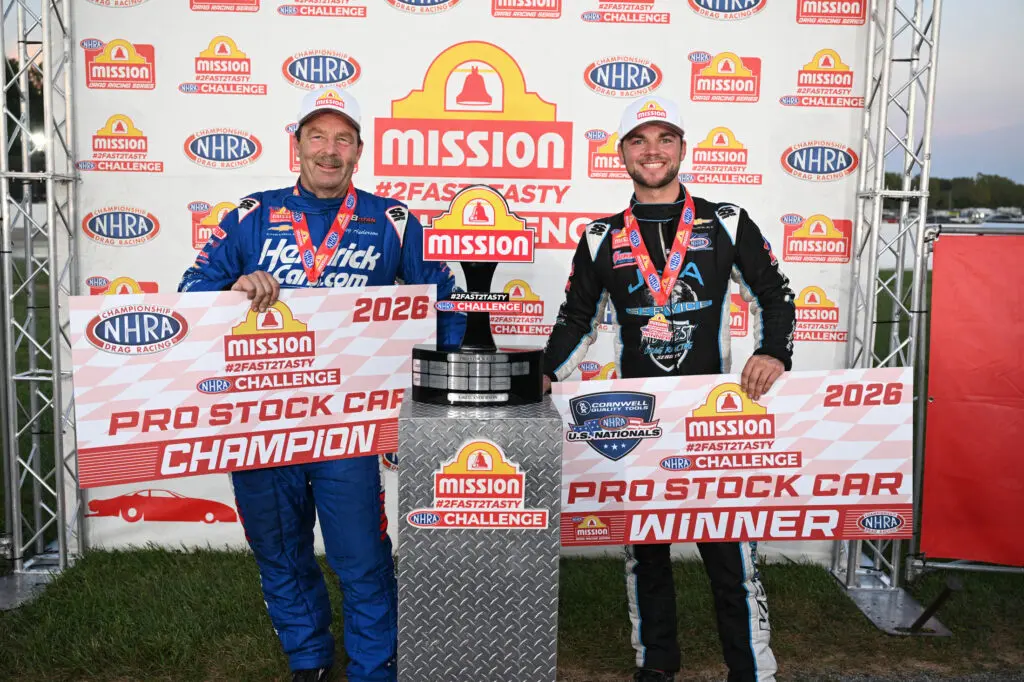
The younger Anderson scored the first victory of his Pro Stock career by beating veteran Greg Stanfield in the final round of the Mission #2Fast2Tasty Challenge, running 6.642 seconds at 204.91 mph in the Troy Humphrey Motorsports/Daiken/HendrickCars.com Chevrolet Camaro.
Anderson did his part immediately, cutting a .020-second reaction time and keeping Stanfield behind him. Two win lights later, the Pro Stock rookie had his first trophy, and he picked a pretty good place to get it.
“It’s super special, and any win feels good,” Cody said. “This place is extra special and iconic since it’s Indy. This win gives me a lot of confidence.
“It’s hard to win one round, especially on race day, and just to get two win lights is a huge confidence boost, and to be able to leave on Greg Stanfield is a big deal. Hopefully I can keep the momentum going for race day.”
There was another Anderson championship wrapped into the afternoon.
Greg, the six-time champion and current Pro Stock points leader, secured the regular-season championship in the Mission #2Fast2Tasty Challenge despite losing Saturday’s opening-round duel.
For once, though, the elder Anderson’s accomplishment took a back seat.
Greg has spent Cody’s lifetime chasing win lights, championships, and Pro Stock records. Cody grew up around all of it, eventually trading his place outside the race car for one behind the wheel.
Now the kid is starting to collect a few win lights of his own.
“It’s pretty damn cool. I felt so bad when I crossed the finish line in the first round of the Mission Foods #2Fast2Tasty round and got my butt whipped,” Greg said. “Cody held up his end of the bargain.
“I’m so very, very proud of the boy. It’s pretty cool to see, and for it to happen at Indy means more since I’ve said all my career, I love this place more than anywhere else.”
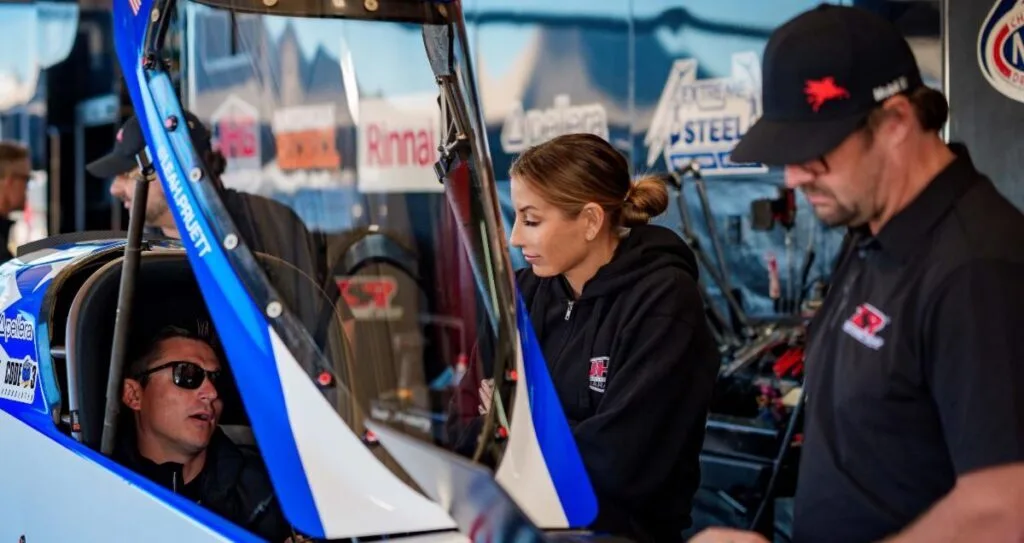
4 – THE COMEBACK IS COMPLETE – Leah Pruett already had an NHRA national-event victory this season to prove her comeback was real. On Saturday at Indianapolis, she delivered another piece of evidence.
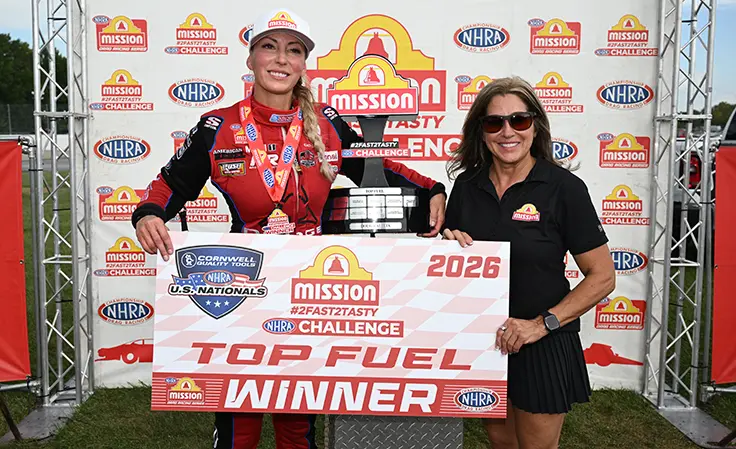
Pruett defeated Top Fuel points leader Doug Kalitta with a 3.873-second run at 319 mph to win the final Mission #2Fast2Tasty Challenge of the season at the NHRA U.S. Nationals. It was her first Mission Challenge victory of the season.
“To get a win like that in Indy with the crowd, with the changing variables, the history, the pageantry, everything about it’s fulfilling,” Pruett said. “I’m so blessed to be in a race car and with a team that is never, ever giving up.”
Pruett wasn’t particularly pleased with her end of the final. She believed her reaction time had given Kalitta an opening and expected the points leader to drive around her.
“As soon as I did barely even hit the light, I was like, ‘That sucked! I am not happy at all,’” Pruett said. “I’m just waiting for Doug to just scream on by at 340 miles an hour. And he didn’t, that car saved that round.”
The winning combination included an unlikely component: mudflaps.
Pruett said four members of the team voted on whether to use them, and the decision was 3-1 in favor.
“That’s why I joked down there, ‘Mud flaps for the win,’” Pruett said.
There was more significance behind the victory. Car chief Ryan McGilvrey had not been present for one of the team’s Mission Challenge victories since 2023, something that had become an ongoing joke within the team.
Pruett also left little doubt about where she believes Tony Stewart Racing stands after her return to competition. She won earlier this season at Bristol and sees the team gaining strength as the Countdown approaches.
“Are we back? Yeah, we are back,” Pruett said. “Our Dodge team is back and stronger, bigger, better than ever – like, ever.”
Beating Kalitta provided another measuring stick. Pruett has considerable respect for the reigning Top Fuel leader, but she sees a genuine organizational battle between Tony Stewart Racing and Kalitta Motorsports.
“We don’t have the beer wars, the cigarette wars and all that stuff anymore, but you sure do have Tony Stewart racing against Kalitta Motorsports,” Pruett said. “And that’s a real thing.”
For Pruett, Saturday’s trophy was valuable. The bigger target remains Monday.
“Indy is the test,” Pruett said, “and then the whole Countdown is like the finals.”
5 – CAPPS RISES TO THE TOP – FOR NOW – Ron Capps found the run he needed Saturday night at Indianapolis, jumping to the top of the Funny Car field while adding valuable points to his pursuit of the NHRA regular season championship.
Capps moved to the provisional No. 1 position in Funny Car, while Shawn Langdon remained atop Top Fuel and Matt Hartford and Gaige Herrera led Pro Stock and Pro Stock Motorcycle qualifying at the Cornwell Quality Tools NHRA U.S. Nationals.
Langdon’s 3.727-second run at 334.98 mph from Friday in the Kalitta Motorsports SealMaster dragster held through Saturday. Tony Stewart is second at 3.744 and Leah Pruett third at 3.772.
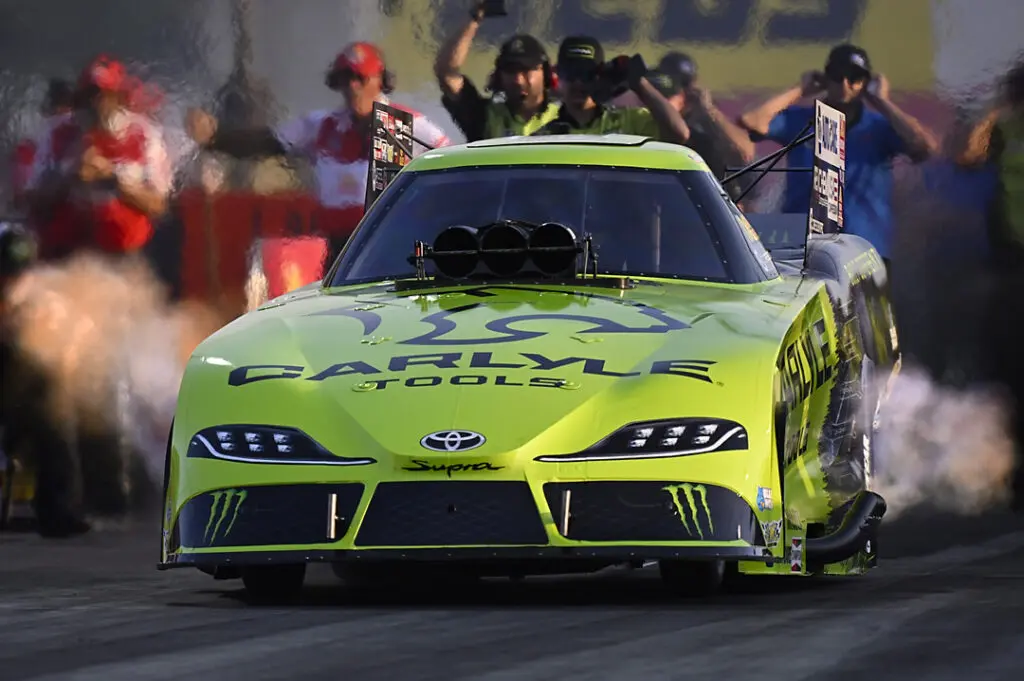
Capps made Saturday’s biggest move, running 3.914 at 332.18 in his Carlyle Tools/NAPA Auto Care Toyota GR Supra after rain and lightning delayed qualifying.
“Obviously, we didn’t want to see the weather come in and cause that delay for the fans with the rain and lightning, but once we got back on track, it was quick,” Capps said. “You’ve got to hand it to Safety Safari and NHRA, they made both of those lanes here at IRP fantastic. It was the best round of racing we’ve seen all weekend.”
Capps, chasing the regular-season championship, came to Indianapolis intent on collecting qualifying bonus points.
“The plan coming in here was to gain those little bonus points in qualifying and so far, we’ve executed that,” Capps said. “It’s going to be fun tomorrow.”
Hartford displaced Friday leader Greg Stanfield in Pro Stock, driving his Total Seal Chevrolet Camaro to a 6.626 at 205.54.
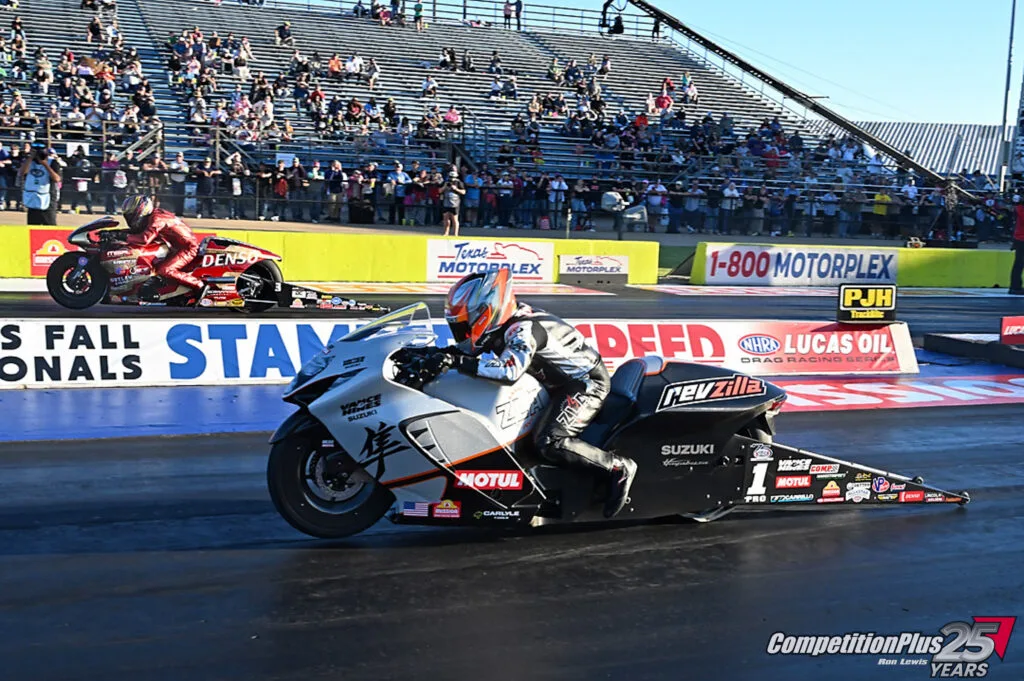
Herrera also made his move Saturday, running 6.842, 196.50 aboard his RevZilla/Vance & Hines Suzuki to replace Matt Smith atop Pro Stock Motorcycle. Herrera made the run while winning the Mission #2Fast2Tasty Challenge and clinching its season championship.
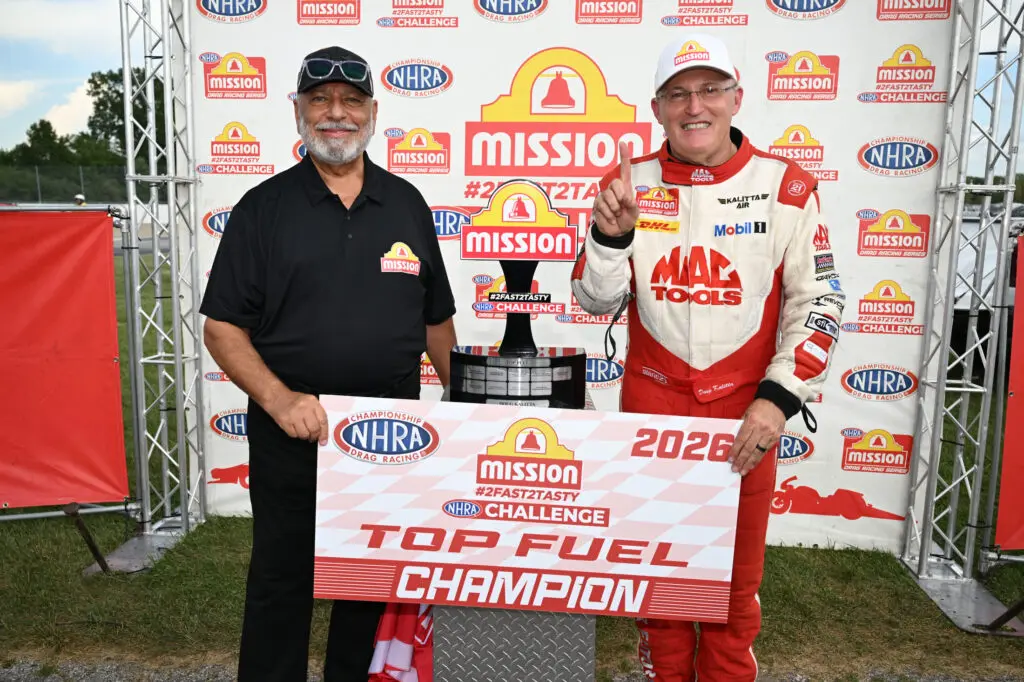
6 – THE #2FAST2TASTY CHAMPIONS – Doug Kalitta clinched the Mission Foods #2Fast2Tasty title on the strength of his five wins this season. The title provided him 22 points in the Countdown. He has won the specialty race 12 times since its inception.

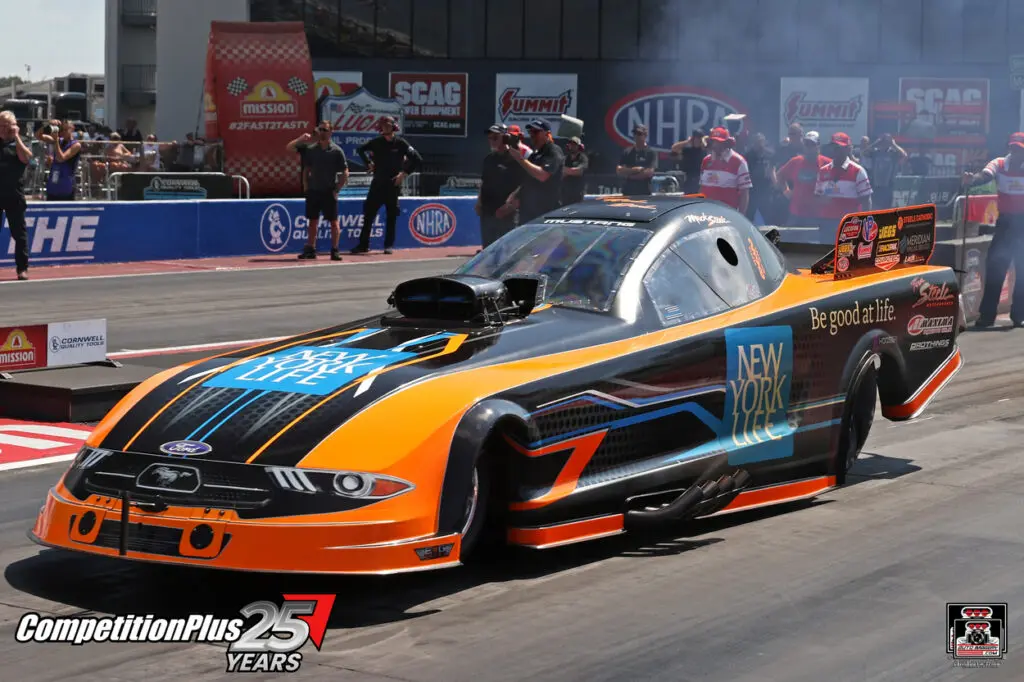
7 – NITRO MAKES INDY HISTORY — Nitro wasn’t supposed to own both ends of the Top Alcohol pits at Indianapolis. Somebody forgot to tell Mick Steele and Anthony Troyer.
For the first time in U.S. Nationals history, injected-nitro combinations will lead both Top Alcohol fields into eliminations, with Steele taking the No. 1 spot in Top Alcohol Funny Car and Troyer doing the same in Top Alcohol Dragster at Lucas Oil Indianapolis Raceway Park.
Steele put his Mustang on top of the Top Alcohol Funny Car field with a 5.494-second run at 254.71 mph, holding off defending world champion Sean Bellemeur’s 5.518, 264.75.
Chris Foster qualified third at 5.550, followed closely by Bob McCosh’s 5.552. Shane Westerfield completed the top five with a 5.565.
The surprise wasn’t that Steele qualified No. 1, it t was how he got there.
Injected-nitro Funny Cars have spent years trying to close the performance gap against the supercharged alcohol combination that has traditionally controlled the class. At Indy, Steele put nitro at the front of the line when it counted.
Troyer completed the double on the dragster side, running 5.227 at 276.75 to claim the No. 1 qualifying position.
Shaunda Blinzler made it an all-nitro top two with a 5.255 at 276.97, while Shawn Cowie qualified third at 5.270. Jamie Noonan was fourth with a 5.276, with Jackie Fricke’s blown-alcohol dragster breaking up the nitro parade in fifth at 5.285.
Richie Crampton qualified sixth, followed by Brandon Greco, Melanie Johnson, TJ Tindle and recent Bowling Green divisional winner Mitch Kalitta.
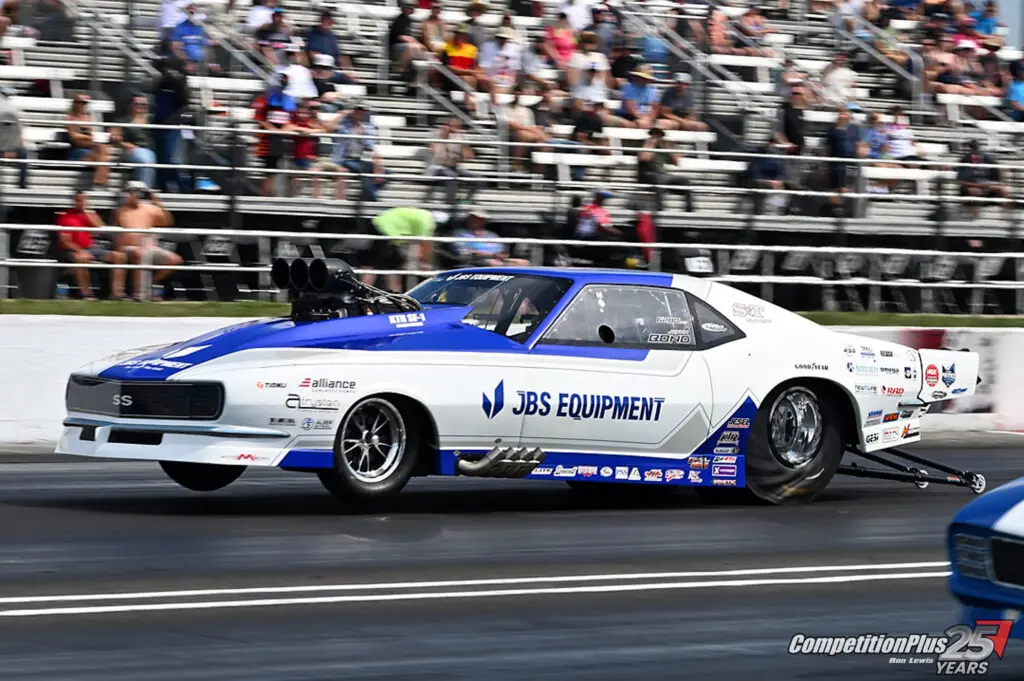
8 – JUSTIN BOND TAKES OVER PM NO. 1 – Justin Bond started Saturday’s Pro Mod qualifying session at the NHRA U.S. Nationals sitting outside the top half of the field. One run later, everybody else was chasing him.
Bond powered his 1968 Camaro to a 5.747-second pass at 252.95 mph at Lucas Oil Indianapolis Raceway Park, vaulting from ninth to the No. 1 qualifying position. His previous best was a 5.837, 247.34.
There was little wasted motion in Bond’s run. He left with a .978-second 60-foot time, covered 330 feet in 2.570 seconds, and reached half-track in 3.798 seconds at 200.26 mph before completing the run at 252.95.
Bond wasn’t the only driver making a major move Saturday. Rickie Smith, who led Friday’s lone qualifying session before being pushed as far back as ninth, answered with a 5.762 at 250.78 mph to climb back to No. 2.
Defending event winner JR Gray was third at 5.787, followed by Mike Thielen with a 5.799. Sidnei Frigo rounded out the top five with a 5.809. Alex Laughlin sat sixth with a 5.811, while Nick Januik was seventh at 5.813.
Kevin Rivenbark delivered one of the more important runs of the session. After entering Saturday 14th with a 5.957, Rivenbark went straight down the groove for a 5.815 to move into the No. 8 position and put himself solidly into the field.
Chip King also recorded a 5.815, placing him ninth behind Rivenbark. Mike Castellana completed the top 10 with a 5.829. Peter Norton sits on the bubble with a 5.918 with two sessions remaining Sunday.
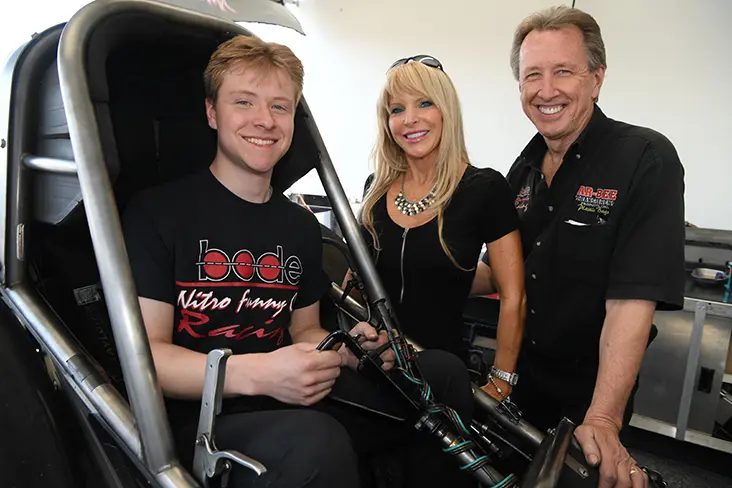
9 – ALICE BODE GETS NEW BOOT – Popular “back-up girl” Alice Bode, famous for her patriotic outfits and go-go boots as she guided husband Bob’s Funny Car and son Bobby’s following their burnouts, is out of commission for a few weeks.
After Bobby Bode’s early-Saturday qualifying pass, Alice Bode was heading back to the tow vehicle along the fan fence that leads to the Top Eliminator Club. “There’s a small ditch there,” she said, “and my foot got in there and I twisted my foot, my left foot, and I broke my foot.”
She quipped, “So I guess I traded in one kind of boot for another kind of boot. Go figure.”
But her accident was no laughing matter – nor was it the only such injury Saturday at Indianapolis Raceway Park.
Bode said that as she was being treated at a nearby urgent care facility, the medical personnel there told her she was the second person to come from the racetrack with exactly the same injury.
The pro pits are notoriously and dangerously uneven and overdue for a fresh paving job. The sportsman racers park on uneven grass.
“They need to resurface that [facility],” Alice Bode said.
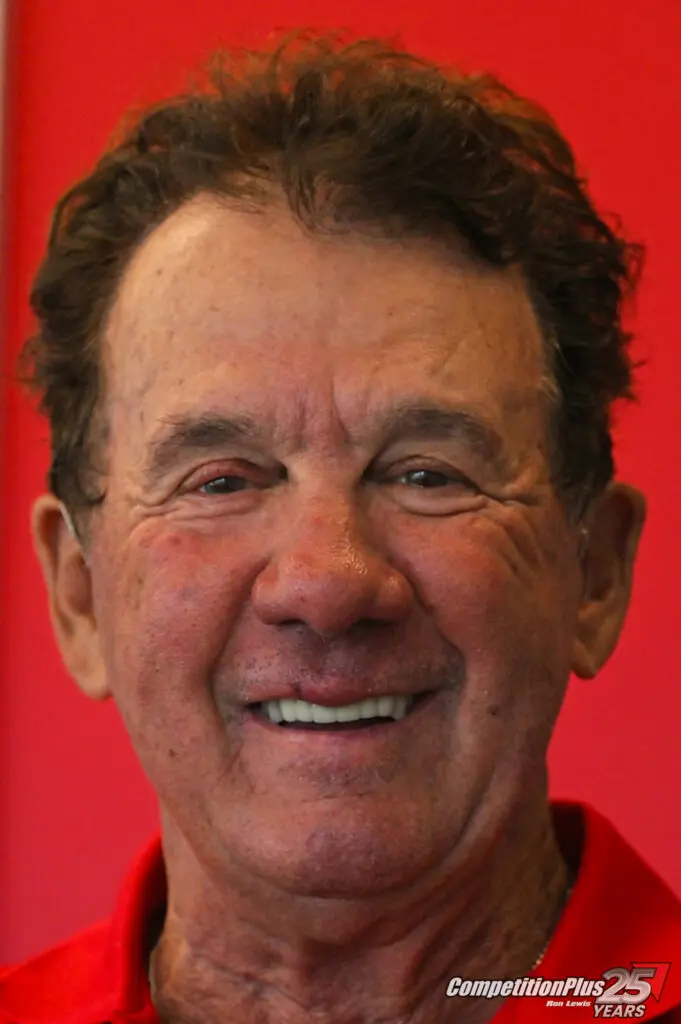
10 – INDYCAR WHIZ GOT START IN DRAG RACING – Chip Ganassi Racing’s Alex Palou clinched his fourth consecutive and fifth overall NTT IndyCar championship in six years last Sunday at Milwaukee. His engineer/strategist, Barry Wanser, happened to get his career start in drag racing working for an NHRA legend. Wanser worked with crew chief Tim Richards on the dragster of five-time NHRA Top Fuel champion Joe Amato.
Amato recalled Wanser as “a good kid – smart” and said, “He learned a lot, and he worked his way up. He left us, and he started playing with roundy-round stuff. Smart people rise to the top, no matter what sport.”
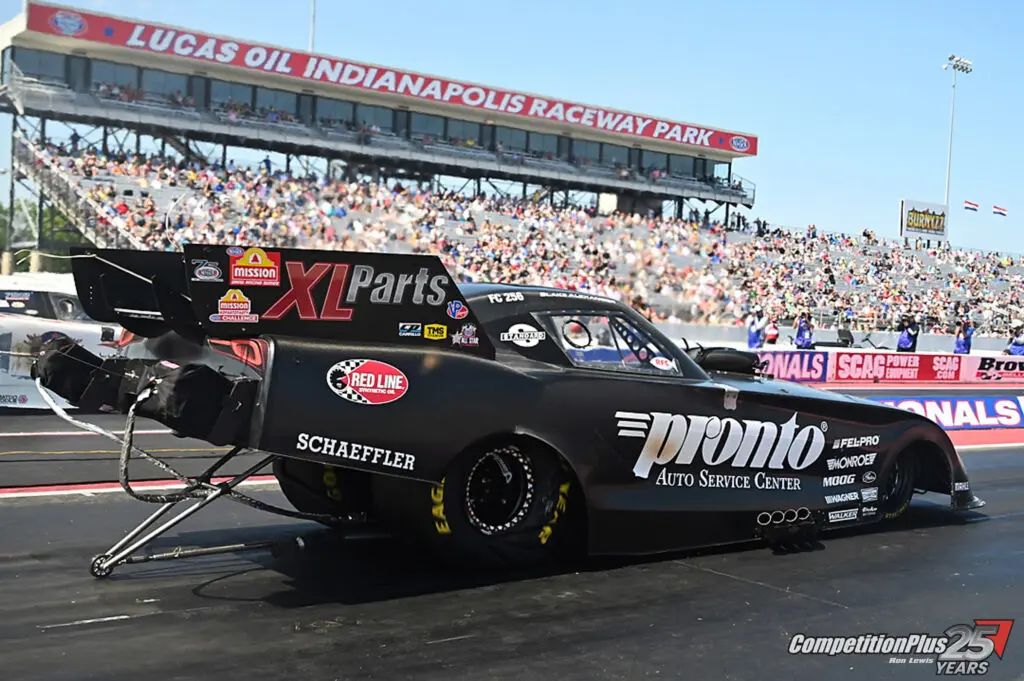
11 – ALEXANDER’S ONE-MAN BAND – Blake Alexander was editing photos of himself and former Funny Car teammate Hunter Green on his phone Saturday. He wasn’t goofing off, and it wasn’t like he had time to spare.
He just separated in July from Chad Green Racing to start his own team, and he doesn’t have a public-relations representative. He knows a strong social-media presence is a key component to a top-of-mind brand and team. The pictures indicate he still is friends with Hunter and his team owner/dad Chad.
“There you go. Everybody’s still friends,” Alexander said, displaying the digital images. “I raced with them because they were my best friends, and I still race out here and that hasn’t changed.”
Team ownership, as NHRA veterans Antron Brown and Ron Capps can attest, is difficult. And right now, with so many start-up tasks on his shoulders, Alexander is overwhelmingly busy. “I can’t even text my wife [who’s at home with the children this weekend]. There’s so much s— going on here.”
He said, “I’ve owned a team before, but this is the first time I’ve ever done this
all on my own, and it’s kind of crazy, but it’s kind of cool. Yesterday was the first day where I was sitting here, building my own clutch packs and trying to get [everything done]. I’m kind of in charge of everything and everyone.”
Alexander traced his steps from concept to the U.S. Nationals. “We built the car, got the car right after Seattle. And we started working on it and there was a lot to do. And we all worked about 12 hours every day and never took off a Saturday or a Sunday at the shop. Even though I travel around and look like I’m being Blake all the time, I still work constantly. Even when my family’s on vacation, I’m working. And there was never a day that went by where my family didn’t have to be interrupted by this process.
“So we apologize to all of our families, in a way. But the race car needed to run at Indy, and we kind of decided that if we were going to, at the end of the year, do this, it might be better now just to start working on what they need to do as a team and what we need to do,” he said. “I wanted to race with my family and kind of reform the team from 2018 that I ran Top Fuel with, and I’ve got a lot of those guys hanging out with me helping on the car.”
Ron Douglas has helped Alexander, as have Tony Stewart Racing and the Prock-Tasca group. “I bought basically the entire engine combination and clutch combo from the Tasca car last year, and that was very helpful,” Alexander said.
He still handles the sponsorship-procurement matters.
“I was working at the shop and then would take time to do sponsorship stuff. I actually made big progress on a deal one day while I was working in the shop, but I was working on the car with the guys while I was here and back on the deal,” Alexander said. “So once I send some of my presentations off or get some of the ideas flowing with some of my partners, I can then go back to work with my hands throughout the day and create value for the race team where I can wear a bunch of different hats – do the marketing and do the hospitality and tune the car and drive the car and just have fun. I like to do all this stuff.”
He said, “Just somewhat of an interesting thing to do is come out here and turn your stuff up all the way at the biggest race of the year, but you can’t be a coward out here doing this. It’s true. It’s really true.”
Friday was the first time he ever ran the car, and he ended that first session at 18th, unqualified for the 16-car grid. So, he said, “I’d imagine it’s going to improve significantly.”
Alexander said he will be trying to incorporate all the information he learned from Jim Head and Dave Leahy. At Jim Head Racing, he said, he learned “to focus on my driving and learn about the finer nuances of these cars and kind of look at it from a different perspective. And he and Dave taught me so much just by me watching them, because they’re so meticulous. They record everything so well that it kind of teaches you some stuff. As you saw with [Jonnie] Lindberg and other people that if you just hang around these guys that are super-smart and listen, there’s a lot that can be learned.
“Then when I went over to Chad’s [team] in 2025, I was basically in charge of the car and Matt [Bynum] and I did everything on our own, and I thought we did pretty well. I still have a lot to learn, and that’s why I have Ron Douglas kind of helping me and my buddy Thomas Prock was over here yesterday, babysitting me a little bit. So we’re all just doing our thing. Today, if you could cruise down the racetrack on Saturday here though when the track’s going to be 130-plus, you’re doing a good job.”
He said he plans to enter the races at St. Louis, Dallas, and Pomona.
“We need to take a month, really, to get everything organized. I bought another rig, and unfortunately, it got remodeled and wasn’t done in time [for this weekend]. So I’m racing out of my hospitality rig at this race and racing out of one rig is really not that fun when you’re all on top of each other around the car and in the trailer when it’s 110 degrees outside like it was yesterday. … I’d be pissed if I didn’t qualify, but also I wouldn’t,” Alexander said.
“It ran 233 to the 330 on the first run ever. It had a hole out at 1.5 seconds, and there was a little bit of a problem with the blower. So we fixed that and I’m just going to fix what I did wrong on the first run – and a lot of it was my fault,” he said. “Not my fault, but it’s just you have to hit the gas, as multiple people told me, and then you can tune the car. You can’t tune the car until you hit the gas. If you know it’s put together right, you need to go up and hit the gas. The best dyno is the racetrack or the best place to test is Indy if you actually think about it. Track’s good.”
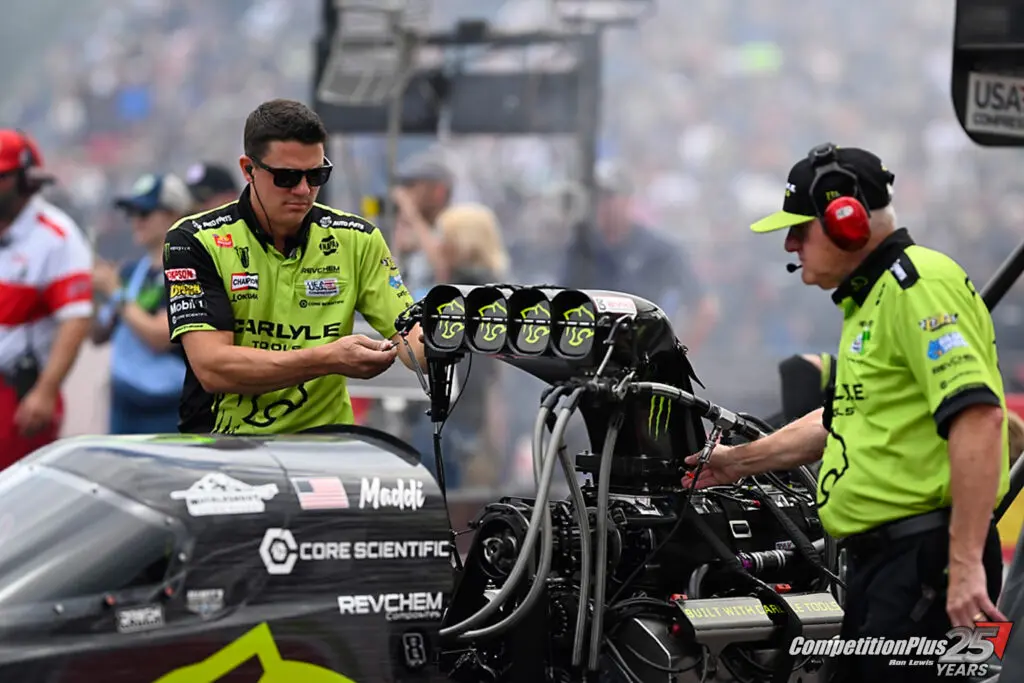
12 – HOW ABOUT SOME FLYNN FRENZY? – Maddi Mania has been rolling through the NHRA maybe even before Maddi Gordon made her first pass in March at the season-starting Gatornationals.
Her crew chief, Rob Flynn, got a chuckle out of the idea of a “Flynn Frenzy.” But the seasoned tuner, at the least, has kept Maddi Mania intense by helping the rookie remain a strong force in the Top Fuel class. She won at Norwalk and was runner-up at Brainerd, and she entered Indy in the top five in the standings. Moreover, she became only the second woman and fourth Top Fuel driver to break the 340-mph barrier, doing so twice at the Southern Nationals.
“Maddi’s a fresh new face out here, and I think it’s awesome for our sport that she’s out here and the excitement she brings for our team and for all the fans. So I think it’s a great thing this year,” Flynn said.
“We started off this team. Ron Capps added another team and our teammates really helped put this all together. We had to hire all new people. We got some really good people here. So I guess from the outside, it looks like it’s been pretty seamless, but it’s not quite that way. And we started off with … we kind of adopted the setup – engine setup – from the Funny Car and we’ve just kind of worked with that all year long, trying to get our clutch and everything to match. This car” Flynn said, with a nod to the Carlyle Tools dragster, “was an unknown. It’s a JFR [John Force Racing] race car. Worked fantastic, but we didn’t know at the time that would be the case. And so everything’s kind of just falling together.”
He said, “It really started in testing when we could recognize how good Maddi was driving the car. And then really she even asked me the other day, ‘Is there anything that you could do to the car to make it faster because I can drive it now.’ And I go, ‘We took the training wheels off after you ran 340, so we know you can drive the car. There’s no issue there at all.’ And once again, she’s doing a fantastic job on the starting line now, too. I mean, she’s all just kind of gelling at the same time here.”
Flynn did admit that he had no idea Gordon would catch on this fast.
“No, I don’t think anyone did,” he said. “If you talk to any driver, they say you do 50 or 60 runs before you’re really comfortable. She’s going 340 miles an hour at the fifth race of the year. And I think that was right around 30-some-odd runs. So, yeah, it was quicker. But in testing and getting her license, the car went out and it spun the tires and it’s a tiny wisp of smoke and she caught it and we’re like, ‘Did we really just see that?’ And a lot of other crew chiefs are up there and they’re going, ‘Dang, that was quick.’ And even to this day, she’s really quick at catching the car when it’s not quite right. She’s just got a natural talent, and I’m glad she’s here.
“She’s just got a lot of charisma, but she’s got a lot of mechanical talent, too. She can weld better than probably anybody on our teams. She’s a great fabricator. We’ve all watched her videos. She’s just got this natural talent, whether it’s with the fans and with the media, with the team – I mean, everyone. It’s just infectious for everybody. And then mechanically, you can go home and build things. She really has an aptitude for it and is pretty amazing, really. What she always says is she was at the racetrack when she was eight days old,” Flynn said.
Talent like that doesn’t come along every day, and Flynn agreed, saying, “It takes a lot to drive these cars, and she’s almost made it look easy for people from the outside. But sometimes I say, ‘Well, it looked really straight.’ She goes, ‘Well, not from my vantage point. I had a lot of steering involved.’ You can’t even tell half the time. So it’s just a testament to her talent.”
Gordon’s presence has perked up the pits and boosted the sport’s appeal, Flynn said: “The fans are I don’t know how many deep at the ropes here when we warm up. And it’s just exciting. It’s exciting to be part of this. Ron Capps and Guido [Dean Antonelli] gave me this opportunity and then Troy [Fasching] and I came over here and we just started assembling people and kept getting more parts. And it’s all working real well.”
That’s a testament to Flynn and what he brings to the sport.
“I think that’s called experience,” Flynn said. “I’m having the time of my life. I mean, this is great. It’s kind of weird. You got a 60-plus-year-old guy and a 22-year-old driver. It’s usually not the match that you have, but it works really well for us.”
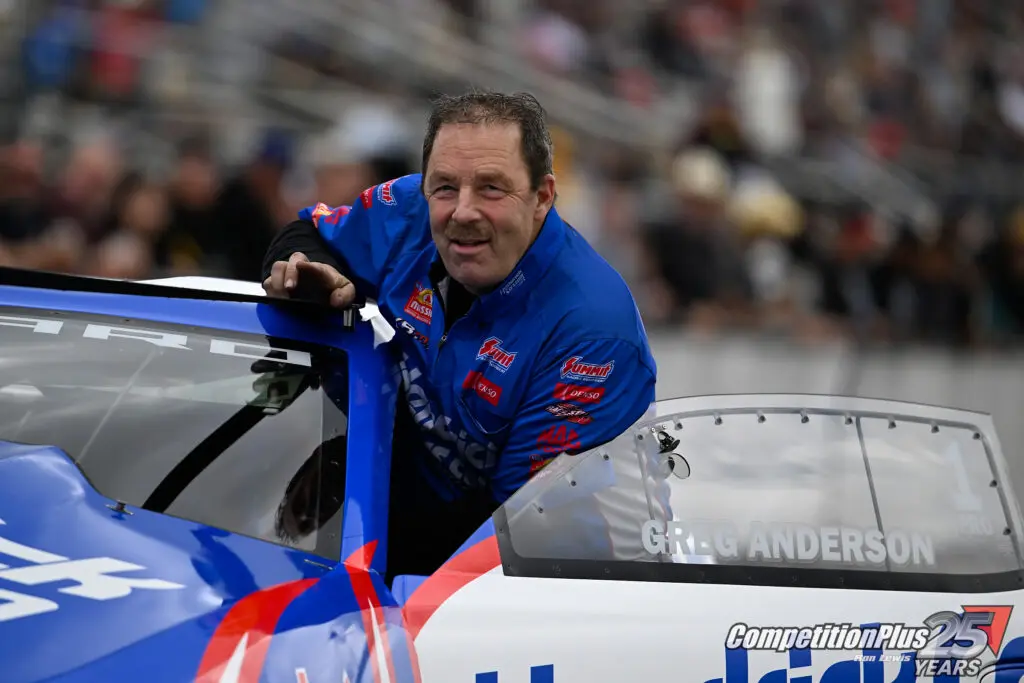
13 – ANDERSON TO THE INTERNATIONAL DRAG RACING HALL OF FAME – Greg Anderson has reached the International Drag Racing Hall of Fame before he has figured out what to do with the idea of being a Hall of Famer.
Anderson, the winningest Pro Stock driver in NHRA history, was announced Aug. 19 as a member of the 2027 induction class. He remains far more interested in winning his next race than reviewing the ones that got him there.
Anderson doesn’t see himself as being at a point where Hall of Fame recognition was on his bingo card.
“Well, the first thing you’d probably think if you didn’t know any better, ‘Well, I wonder how long he stopped racing and what’s he doing with his life these days?’” Anderson said. “I’m still deep into it. I’m still deep into trying to win every single day I go.”
Anderson arrived at the 72nd annual NHRA U.S. Nationals leading the Pro Stock standings with four victories this season. The six-time champion owns an NHRA-record 116 Pro Stock victories.
“Probably retirement is not too far down the road, but right now I’m not thinking about that,” Anderson said. “I’m thinking about winning races and even championships.”
The induction ceremony is scheduled for March 11, 2027, in Gainesville, Florida. Anderson will enter alongside the Bandimere family, Alan and Blaine Johnson, Herb McCandless, and Mike Thermos.
Don Garlits traditionally calls inductees with the news, but Anderson missed his first call. When Anderson called back, his mind went somewhere else entirely.
“I’m like, ‘Is he looking for something to put in his museum?’” Anderson said. “I thought he must want one of my old cars or something put in his museum. So, I was a bit shocked when he told me what he was calling for.”
The honor carries deeper meaning because two men responsible for Anderson’s path — his late father, Rod, and late Pro Stock racer John Hagen — aren’t here to see it. Hagen gave Anderson his first professional racing job, and Anderson credits both with providing the foundation for a career he never envisioned.
“Neither John nor my father did I ever thank enough when they were around, and now it’s too late to thank them,” Anderson said. “All I can do is go out and try and make them proud.” – Tracy Renck
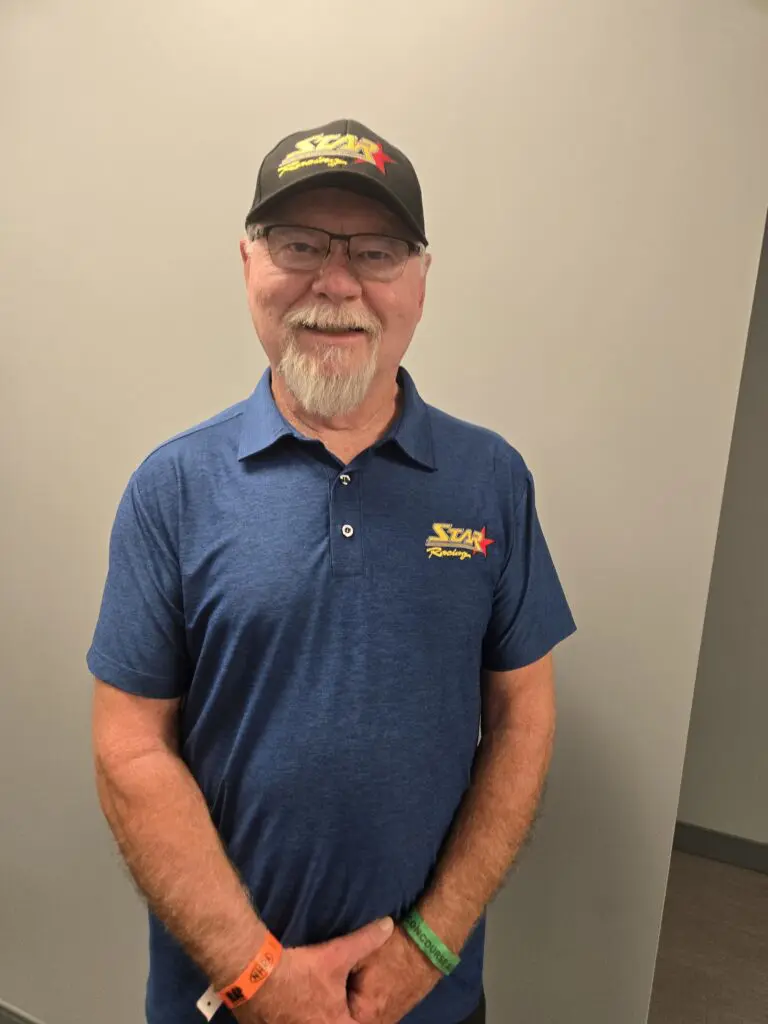
14 – LIVING OUTSIDE THE TORNADO – The legends were out in force during the NHRA U.S. Nationals, and one of Pro Stock Motorcycle’s most successful figures was among them. George Bryce can come to Indianapolis these days without worrying about qualifying, winning rounds or keeping a race team moving.
Bryce, who with his wife Jackie built Star Racing into a powerhouse, won six NHRA championships and 82 national events with riders John Myers and Angelle Sampey. It was a remarkable run for a husband-and-wife team that started by hauling a motorcycle in the back of a Chevrolet van — and even raced the van at Spartanburg Dragway with the motorcycle still inside.
Bryce’s career was recently recognized with induction into the Georgia Racing Hall of Fame in Dawsonville.
“I was really surprised. I didn’t expect to get it,” Bryce said. “It’s all dirt track, and round track, and stuff like that. But they recognized me and my team, and we took all of our stuff up there, and they made a nice display that stays there for a year. We’re really pleased with the way it went.”
Bryce said it took five years before he was voted into the Hall of Fame. The recognition gave him another opportunity to reflect on a career that included eight U.S. Nationals victories.
“We won Indy eight times and it’s been a good place for me,” Bryce said. “I won my first NHRA race ever here in ’84 and I never quit going until just 2016 and I’ve enjoyed my time.”
Does he miss racing?
“No.”
Bryce spent decades consumed by the sport, and that’s precisely why he doesn’t miss running a team.
“Well, the way I raced was all-inclusive, everything. It was my whole world,” Bryce said. “I’ve enjoyed the separation that I’ve got now from it. I’m a big fan. I study it, and I like doing it from 30,000 feet.”
George and Jackie eventually decided it was time to walk away. Bryce has a fitting description for what life looks like from the other side.
“It’s a big tornado that you’re in, and you can be in the tornado,” Bryce said. “But as soon as you get out of the tornado and look at the tornado, there’s a lot going on in there, but there’s a lot more going on outside.”
Not bad for two young racers who once stuffed a motorcycle into a van and headed for Spartanburg.
“Oh, my gosh, I never would have believed this. I mean, there were heroes of mine that were out there, and I all the time loved what they were doing and I might be that to someone else by now. I’m thankful for this time and I’ve been blessed for sure.”
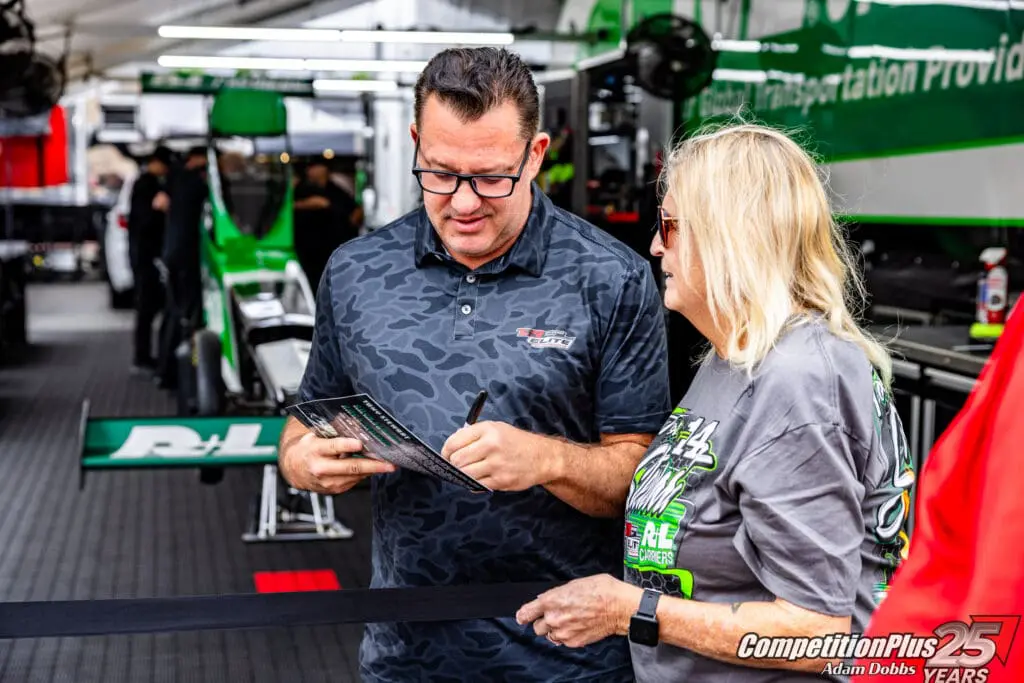
15 – RILEY TO BENEFIT FROM BOWLING – Tony Stewart is becoming the kingpin of charity bowling tournaments. He already has been organizing one to benefit Speedway Children’s Charities when the NHRA visits Texas Motorplex next month.
He put out the word this weekend that he’s planning another tournament the night before the PRI trade show to raise funds for Riley Children’s Foundation. This Rev ’n Roll event is set for 6-9 p.m. Wednesday, Dec. 9, at Royal Pin Western Bowl in Indianapolis. Registration will open Tuesday, Sept. 8. A silent online auction will provide another way to contribute. The first 200 bowlers to sign up will receive free Rev ’n Roll bowling shirts.
Lane sponsorship (which includes four bowlers and lane signage) goes for $500. Race team registration (four bowlers from a race team) is $200, same for a four-team sign-up. The fee for individual bowlers is $50 (and they’ll be placed on a team upon arrival) and $20 for non-bowlers.
All proceeds will go to the Riley Children’s Foundation.
FRIDAY NOTEBOOK – TASCA LETS THE CAT OUT OF THE BAG, BECKMAN’S TRIBUTE SUCCESS AND MORE…
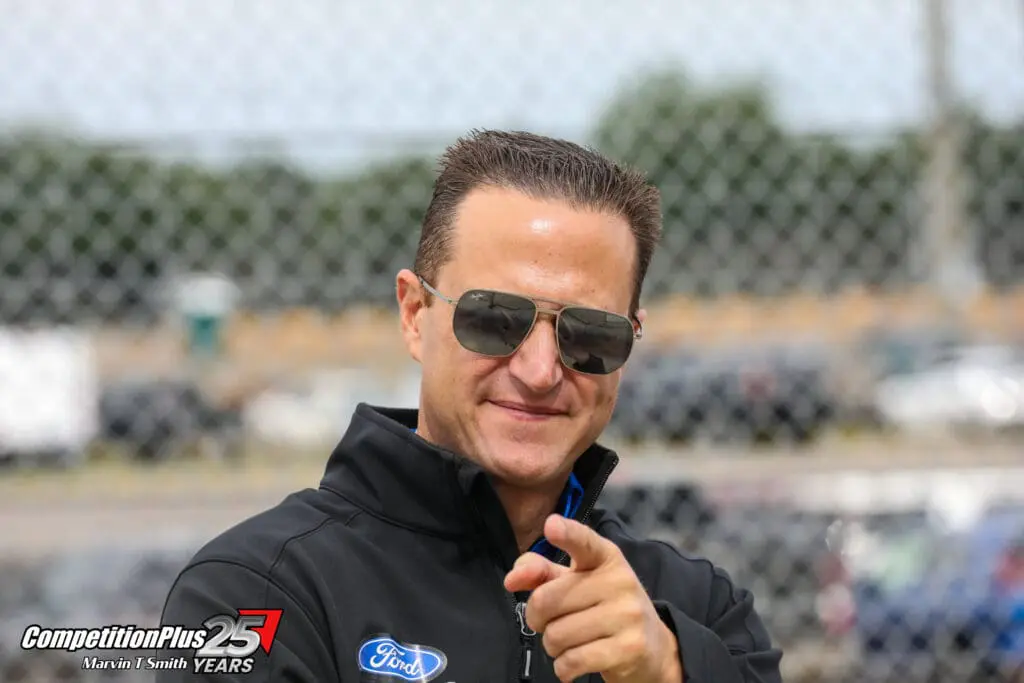
1 – TASCA PLANS, PROCK VS. PROCK – Bob Tasca has never been shy about saying he intends to return to NHRA Funny Car racing. Now he’s putting some names behind the plan.
Tasca told CompetitionPlus.com at the NHRA U.S. Nationals that if the pieces come together for a second Funny Car, he will drive it. He also intends to have Jimmy Prock calling the shots while Austin Prock continues with a car tuned by his brother, Thomas.
That scenario remains a work in progress, with Tasca emphasizing nothing has been finalized. Funding will ultimately determine whether the second car moves from an idea to the starting line.
“We’re working on a whole bunch of stuff, and it is what it is,” Tasca said. “We’re not going to do anything that isn’t funded properly. We got a whole bunch of stuff going on back at the race shop. We’ll be making some big announcements at the end of this year that’s really going to put us even in a stronger position going into next season. But no plans as of right now; nothing finalized, anyways.”
Tasca isn’t waiting for those announcements to get reacquainted with a Funny Car. He has already tested Austin Prock’s car at Norwalk and plans to drive it again following the Las Vegas event, which is to be held Oct. 29-Nov. 1.
For Tasca, working with Jimmy Prock has already produced one of those moments that reminded him why he isn’t ready to leave the driver’s seat behind.
“I think that was one of the coolest days of racing for me, is just to look out the window and see Jimmy Prock pulling in the side line,” Tasca said. “I’m going to test it in Vegas on Monday. So I didn’t forget how to drive, nor will I. But yeah, we’re excited to try to put something together.”
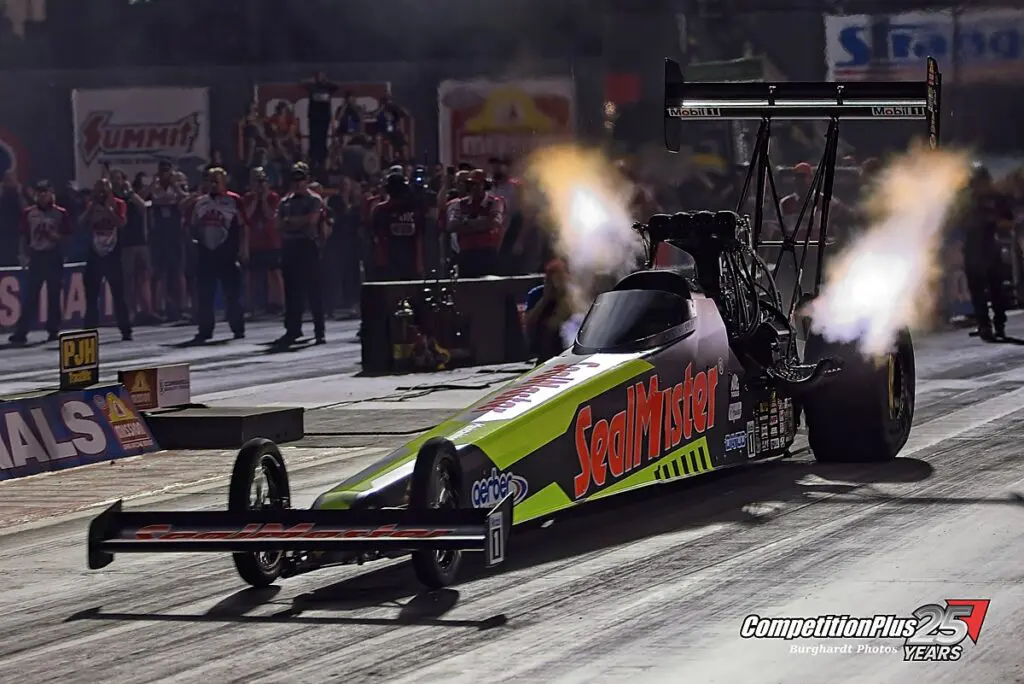
2 – LANGDON GOT WHAT HE WAS LOOKING FOR – Shawn Langdon needed a clean start at Indianapolis. Friday night, he got considerably more than that.
Langdon powered to a 3.727-second run at 334.98 mph to take the provisional No. 1 qualifying position in Top Fuel at the NHRA U.S. Nationals at Lucas Oil Indianapolis Raceway Park. If the run holds through Sunday, it will give the Kalitta Motorsports driver his sixth No. 1 qualifier of the season and 28th of his career.
The timing was useful for a team that had watched its midseason momentum cool during the past two events. Langdon entered Indianapolis second in points, 67 behind teammate and reigning NHRA titleist Doug Kalitta in the battle for the regular-season championship.
“It was definitely a big confidence boost for the team,” Langdon said. “We had a good run in the middle of the season and then the last couple of races things just didn’t really seem to go our way and still had a good car though, but Doug obviously caught fire, and Doug was doing Dougie things.”
Langdon has won the U.S. Nationals twice. He entered the weekend trying to put himself within striking distance of Kalitta before points are reset for the Countdown to the Championship.
“There’s only so much you can do,” Langdon said. “Obviously, with Alan [crew chief Johnson] and Doug, how they have that car running, trying to make up any ground is very difficult to do, but the possibility is there. And obviously, if you can get it within two rounds, it definitely increases your chances. It’s still a tall task, but definitely increases your chances.”
Tony Stewart was second after Friday’s session with a 3.744 at 328.22, while Leah Pruett held third with a 3.772 at 326.24.
There are still four qualifying sessions remaining, and Langdon expects that cooler conditions Sunday could reshuffle the order. For now, the 3.727 gives his team room to concentrate on improving rather than securing a place in Monday’s field.
“It definitely takes a little pressure off,” Langdon said. “I feel like we have good notes from tonight, so we’ll be very prepared for it.”
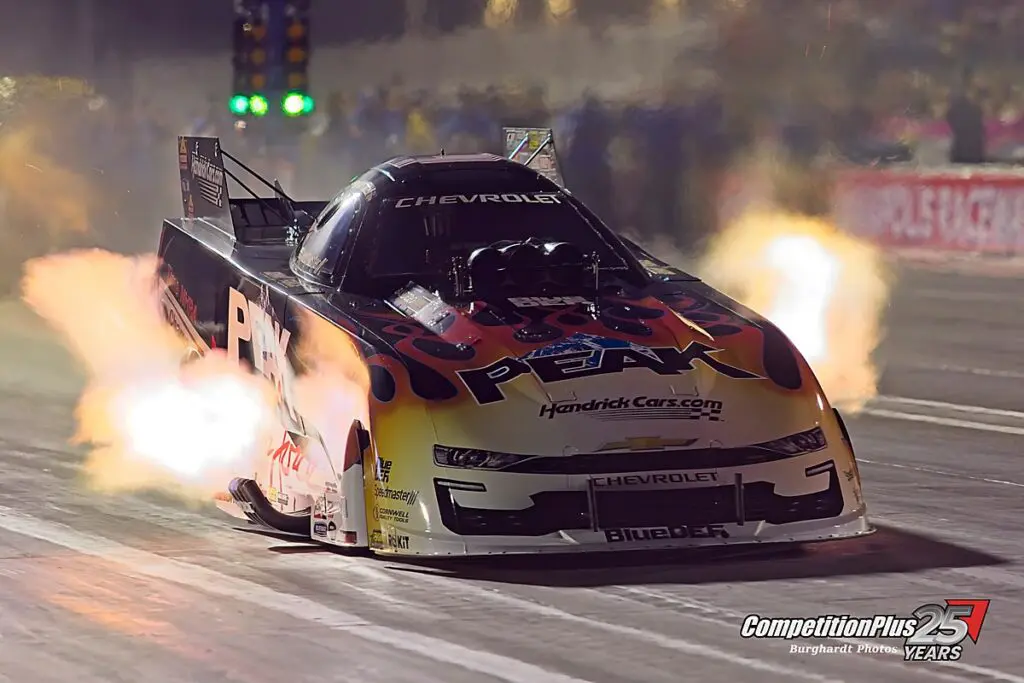
3 – TWO THROWBACKS, TWO NO. 1’S – For two years in a row, it appears when Jack Beckman shows up at Indianapolis with a John Force throwback scheme, the rest of the Funny Car field gets an early look at his rear bumper.
Beckman put the PEAK Chevrolet SS atop the NHRA U.S. Nationals field Friday night, running 3.937 seconds at 326.79 mph at Lucas Oil Indianapolis Raceway Park. The run came with Beckman carrying a paint scheme honoring Force’s dominant 1996 championship season.
A year ago, Beckman also ended Friday as the provisional No. 1 qualifier at Indy while piloting a Force throwback. This time, the tribute celebrates the 30th anniversary of a season in which Force won 13 of 19 races and reached 16 final rounds.
If Beckman’s 3.937 holds through five qualifying sessions, it will give him his third No. 1 qualifier of the season and 36th of his career. More importantly, it put him safely near the top of a 23-car field after the weekend’s lone scheduled night-time qualifying session.
“It’s awesome when there’s 16 cars. I don’t want to say it’s essential when there’s 23 cars,” Beckman said. “It just takes all the stress off of them.”
Beckman believes Sunday’s cooler forecast could give teams another opportunity to take a shot at his 3.937.
“This might be an interesting weekend,” Beckman said. “Sunday, it looks like the forecast is a lot more favorable. Maybe there’s a chance to swing harder than that – and I hope there is.”
Ron Capps finished Friday only .001 seconds behind Beckman, taking second with a 3.938 at 329.10. Back-to-back event winner Austin Prock was third after running 3.943 at 313.37.
Beckman’s weekend carries another assignment Sunday when he enters the PlayNHRA All-Star Callout as the No. 1 seed. He will have first choice of opponents for the opening round, although he made it clear it won’t be his teammate.
“I won’t be calling Alexis [DeJoria] out, but you know who I’m going to call out, whoever [crew chiefs] Tim [Fabrisi] and Dan [Hood] tell me to call out,” Beckman said. “At the end of the day, they’re the ones that are playing the big chess pieces in the crew chief lounge.”
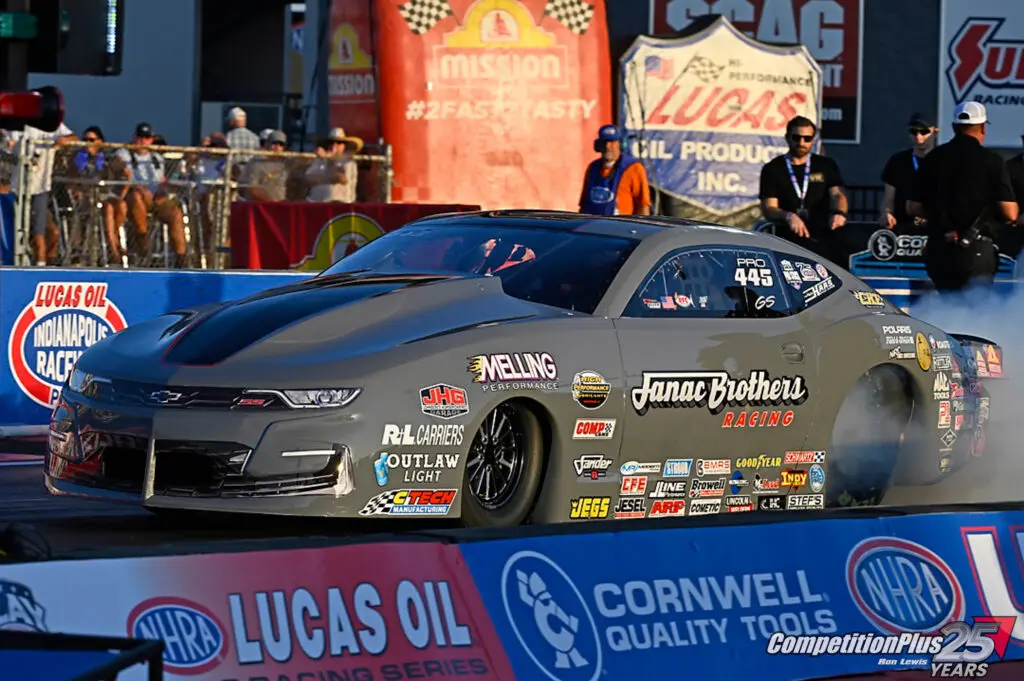
4 – THE NEW FLAGSHIP? – Greg Stanfield has spent much of 2026 carrying the performance flag for Elite Motorsports. Friday night at Indianapolis, he carried it straight to the top of the Pro Stock qualifying sheet.
Stanfield drove the Janac Brothers Racing entry to a 6.650-second run at 206.01 mph to take the provisional No. 1 position at the NHRA U.S. Nationals at Lucas Oil Indianapolis Raceway Park. If the run holds through qualifying, it will give Stanfield his second No. 1 of the season and seventh of his career.
The veteran entered Indianapolis third in the Pro Stock standings and has emerged as Elite’s leading championship contender during the regular season. Stanfield believes there is more performance available as conditions improve through the weekend.
“If you can be No. 1 at the end of the session, it’s a great day for us,” Stanfield said. “So, tickled to death where we are, where we finished up at. But I think looking at the weather Sunday, as the race goes on, I think the weather’s going to get better, so things will kind of get jockeyed around. But it feels good to start out on top, for sure.”
Stanfield knows his way to the U.S. Nationals winner’s circle, having won Pro Stock at Indianapolis in 2010. Sixteen years later, another Indy victory would arrive as he prepares for a championship run in the Countdown.
“I love this race. It’s our best race,” Stanfield said. “So hopefully we can just keep moving forward. We need luck. That’s what we need more than anything.”
Defending U.S. Nationals winner Erica Enders gave Elite Motorsports the first two positions Friday, running 6.661 at 206.67. Points leader Greg Anderson matched Enders’ 6.661 but was third due to a slower speed of 205.60.
Stanfield’s performance comes after what he described as a 10-race process of developing the car he began driving last season. He believes the work has produced Elite’s best current combination.
“To me, it’s the best we’ve got over there right now,” Stanfield said. “And so, if it made the whole team better, great. We just have to get everybody running as good as I am. But I’m really happy with how the car is right now as long as I don’t screw it up.”

5 – TIME SPENT WISELY? – Pro Stock Motorcycle spent more than two months away from NHRA championship competition. Matt Smith Racing apparently spent the time wisely.
Smith led a 1-2-3 team sweep Friday at the NHRA U.S. Nationals, riding his Denso Auto Parts Buell to a 6.864-second run at 198.90 mph at Lucas Oil Indianapolis Raceway Park. Wife Angie Smith followed at 6.905, 196.64, and teammate John Hall was third with a 6.910, 195.65.
The full Pro Stock Motorcycle field had not competed since late June, although eight riders participated in the GETTRX All-Star Callout in July. Friday marked the start of a seven-race stretch to close the season, and Smith arrived prepared after extensive testing close at home in North Carolina.
“I thought it was pretty good. We went to Rockingham and made a bunch of test laps,” Smith said. “We spent two days down there [in conditions] just like this. It was right at 4,000 feet, and hot, humid. … We knew this was probably going to be hot here.”
Smith entered Indianapolis fourth in points and looking for his third No. 1 qualifier of the season and 62nd of his career. The time away was hardly a vacation as his operation prepared for Indy and the approaching Countdown to the Championship.
“We worked really hard preparing motors and getting everybody’s stuff fresh for this race and for this Countdown,” Smith said. “Just tons and tons and tons tested.”
The testing concentrated heavily on developing a combination capable of handling hot racetracks rather than chasing the quickest possible early numbers. That work paid off immediately Friday.
Smith, however, isn’t expecting the running order to remain untouched. Cooler conditions forecast for Sunday could give the field its best opportunity to attack the qualifying sheet.
“I think Sunday will be the session, the first pass,” Smith said. “But that’ll be the session that sets at least the top four or five bikes.”
For now, Smith Racing owns those positions that everyone else is chasing.
“We have a really good team,” Smith said. “You can’t count our [MSR] team out, neither.”
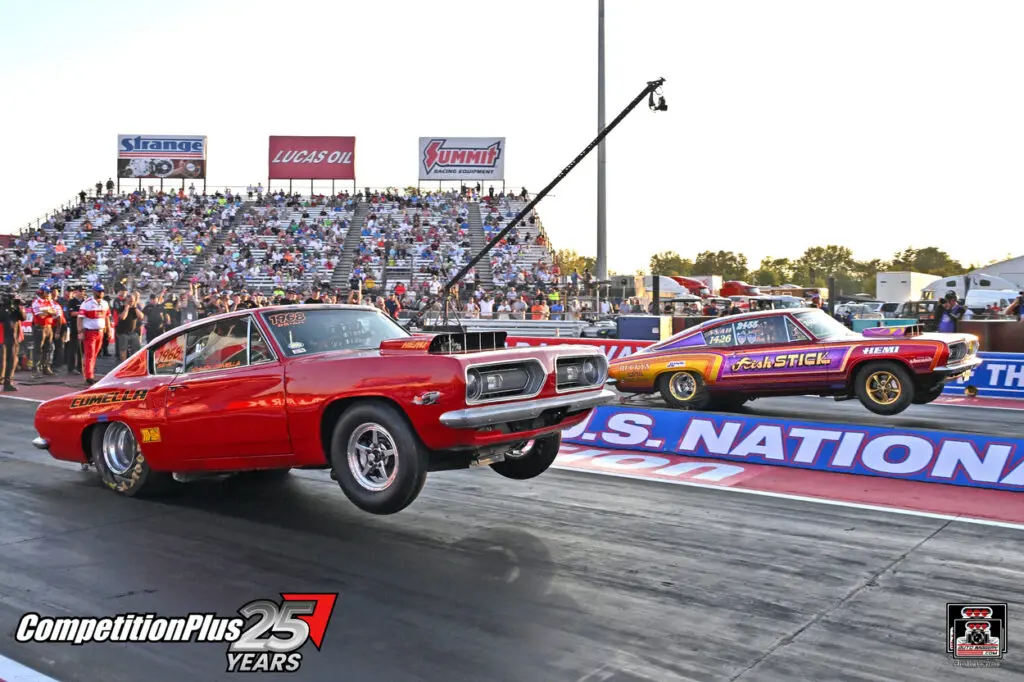
6 – COMELLA PLEADS THE 5TH – Some drag racers spend a lifetime chasing a Sox & Martin HEMI Challenge victory and never get one. Steve Comella now has five.
Comella continued his grip on the specialty race Friday night at the NHRA U.S. Nationals, defeating former NHRA Pro Stock champion Jason Line in the final at Lucas Oil Indianapolis Raceway Park. Line left 13/1,000ths of a second too soon, giving Comella his fifth victory since 2021.
“Pacing myself was everything, and I still did not feel great all day long,” Comella said. “This was it. It was about the weather and not as much about the car, for sure – for me, at least.”
Comella won four consecutive HEMI Challenge titles from 2021 through 2024. He returned to the winner’s circle after last year’s final ended with both competitors disqualified.
Friday’s final paired the two quickest qualifiers, with Comella starting from No. 1 after an 8.415-second run at 159.23 mph. Line qualified second at 8.445, 159.53.
Line’s red-light ended the final immediately, but the scoreboard showed what might have been. Both drivers ran identical 8.430 elapsed times, with Line posting a 159.38 mph speed to Comella’s 158.87.
“I saw his red-light early, so I knew right away that I had won,” Comella said. “Usually don’t run out red lights, but it’s Indy, the finals.”
Comella’s road through eliminations included a competition bye before he defeated Eric Bell in the second round. His .071 reaction time and 8.463, 157.82 beat Bell’s .095 light and 8.471.
Anthony Rhodes went red by .090 in the semifinals, sending Comella into the championship round. Even so, Comella delivered an 8.446 at 158.58, his quickest run of eliminations to that point.
The qualifying performance continued another impressive Comella streak. He has qualified No. 1 for the HEMI Challenge every year since 2021, with 2020 the last time he failed to claim the top spot.
Line gave Comella enough competition throughout the weekend that the five-time winner was perfectly content with seeing the former Pro Stock champion limit his HEMI racing schedule.
“I’m glad he doesn’t run it all year long,” Comella said. “Jason, continue to run it once a year, please.”
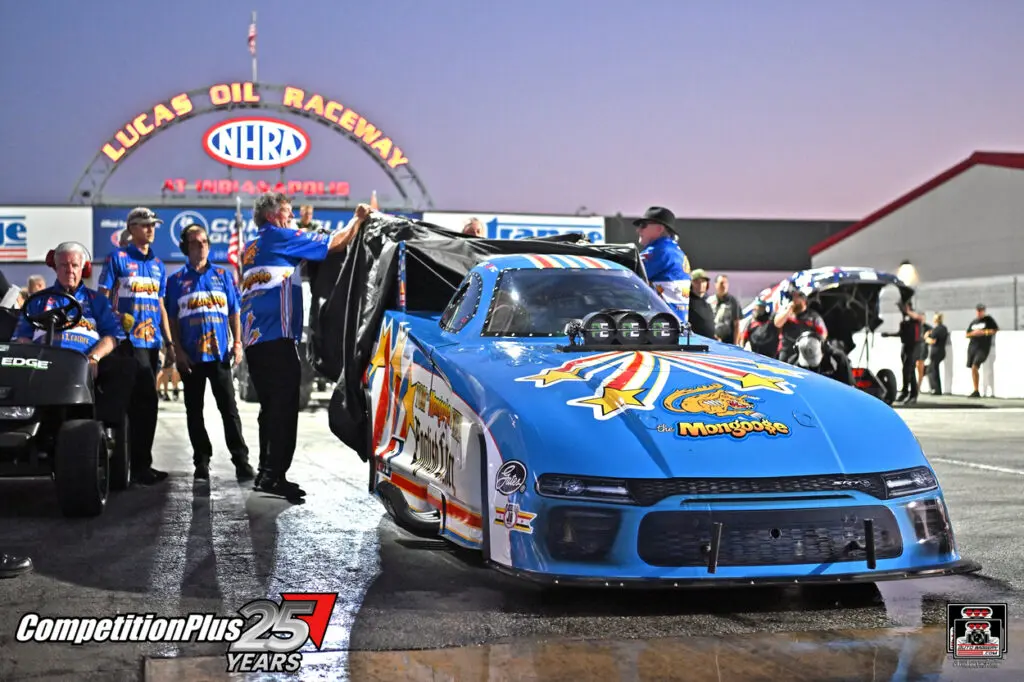
7 – HAS IT REALLY BEEN A HALF-DECADE? – Paul Lee had waited since he was a teenager for this moment. The year was 1976, and Lee, now a successful businessman who races a Funny Car for fun, dreamed of someday driving a fuel car like his hero, Tom “Mongoose” McEwen.
Lee got his chance Friday night at the NHRA U.S. Nationals, unveiling and racing his tribute to McEwen’s 1976 starburst Funny Car 50 years after the original captured his imagination.
The finished car had been kept from Lee until he arrived at Indianapolis Raceway Park on Friday. He had seen photographs during the process, but nothing prepared him for seeing it sitting in front of him.
“Once I saw that car, it’s like – man, I was excited when I saw the pictures, but when I saw the car for the first time literally was today and it looks better than the pictures by 10 times,” Lee said. “If you look at this wrap, it looks like it’s painted.”
For all the emotion attached to the car, Lee wasn’t about to change the routine once he climbed into the cockpit. A nitro Funny Car offers little room for nostalgia once the engine fires.
“Probably just the same as any other run. I’ve been doing this so long, it’s a routine,” Lee said. “It’s just a routine you go through and one thing you don’t want to do is get out of that routine. But the fact that it’s the Mongoose’s car, it’ll give me an extra special feeling of positivity and remembrance of our friend.”
This wasn’t a tribute dreamed up for an anniversary promotion. Lee had wanted to recreate this particular McEwen Funny Car for years and had discussed the idea with McEwen before his death in 2018.
Lee considers the 1976 version his favorite Mongoose car, and there was never much debate over which one he wanted to bring back. More importantly, he had McEwen’s blessing long before the project began.
“This was really the only one that was ever on my mind, was this car and the 1976 car, which was my all-time favorite Mongoose car,” Lee said. “It’s been many years. I mean, even though we just did it this year, it’s actually been many years in the making. Even back when Mongoose was alive, I told him this is what I wanted to do, and he said, ‘Go ahead, kid.’”
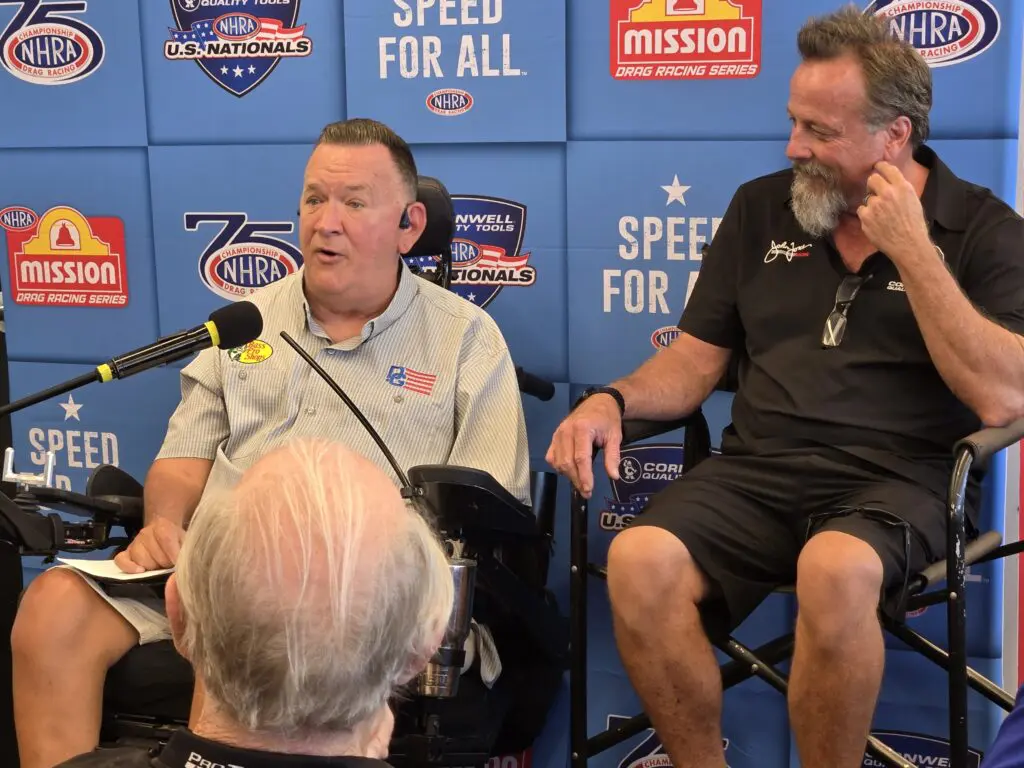
8 – FORTUNE SON ROLLS OUT IN INDY — Darrell Gwynn was 19 when he and Chris Cunningham pulled up to the Canadian border in an 18-wheeler carrying the family race operation. The border agents took one look at the young crew and started asking questions.
“They thought we had stolen everything and they’d never seen this many kids in a tractor before,” Gwynn said Friday during a press conference at the NHRA U.S. Nationals. “And I said to my dad and mom at the Hall of Fame in my speech, I’m like, ‘I don’t see too many 19-year-olds out here doing this. It was pretty normal back then, but what were you thinking, dad? Mom? What were you thinking, literally?’”
Gwynn laughs about it now. It is one of the stories included in “Fortunate Son,” his new book built around photographs and memories from a life spent in drag racing.
Another surfaced when his parents found a letter Gwynn wrote as a 16-year-old. He had been caught doing a burnout in his mother’s car, and his father, Jerry, responded by keeping him home from a race he wanted to attend.
Gwynn pleaded for another chance in the letter. His closing line to his 6-foot-4, 250-pound father was one he probably wouldn’t recommend today.
“Try me,” Gwynn said with a smile.
The book came together after family members began giving Gwynn old photographs, some dating back 60 years. There are pictures of him in diapers around his father’s race car, his teenage bedroom covered with racing photos and the early years traveling with Cunningham.
“And it’s not a racing book, it’s a book about a racer,” Gwynn said.
There is plenty of racing in it. Gwynn became an NHRA champion and one of Top Fuel’s top drivers before an accident during a 1990 exhibition run in England left him paralyzed and ended his driving career.
Gwynn returned to Indianapolis later that year after discharging himself from rehabilitation. He later returned to competition as a team owner, with Frank Hawley and Mike Dunn among his drivers.
“I discharged myself and came here to Indy because I knew it was going to be the best therapy that I could possibly have,” Gwynn said. “And I set that goal for myself.”
His life after driving also included years of charitable work. Gwynn said his organization ultimately provided more than $10 million worth of power wheelchairs.
For Gwynn, the old photographs brought back stories he hadn’t thought about in years.
“This book was a labor of love,” Gwynn said. “It took me a year and a half.”
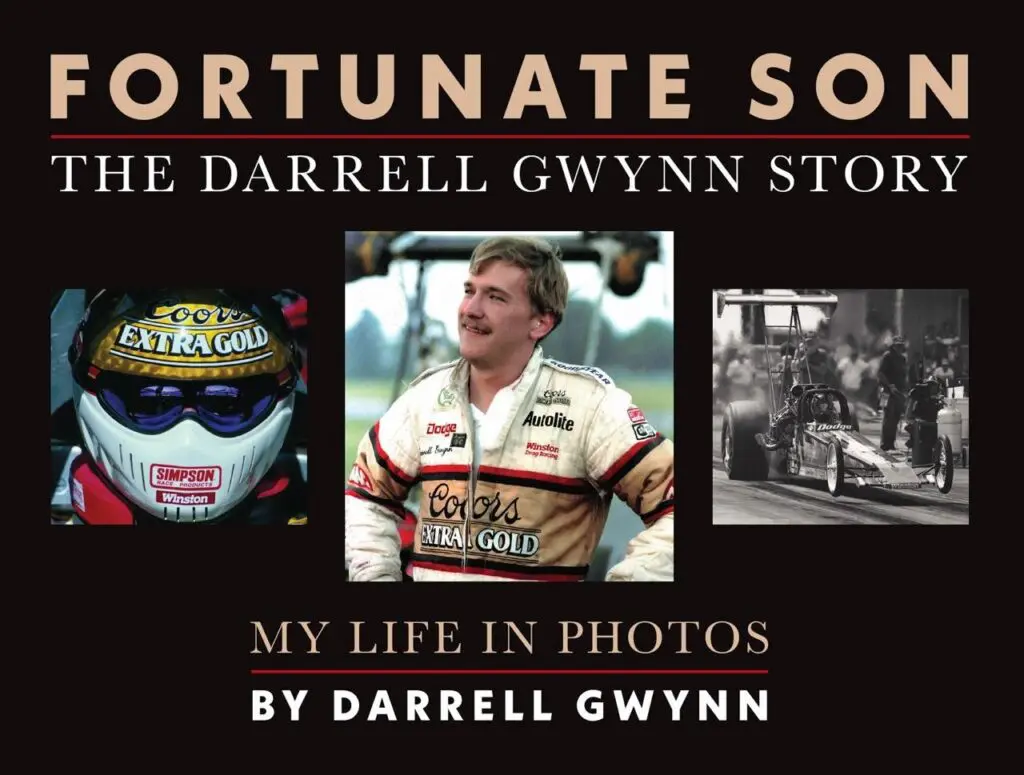
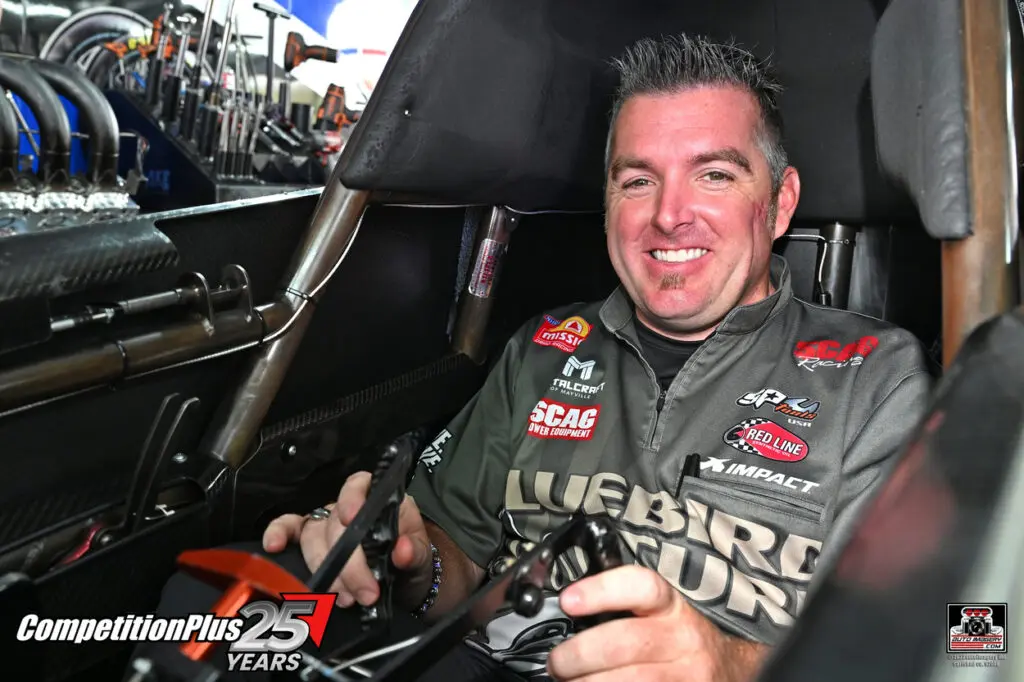
9 – STILL LIVING THE DREAM – It was a dream come true that never seemed like reality.
Top Fuel dreamer Will Smith had attained another opportunity to race the dragster at the NHRA U.S. Nationals. Even after making all five qualifying runs and failing to make the field, there was still something about being at Indy in a Top Fuel car that seemed almost too good to be true.
Four years ago, Smith was still chasing the opportunity he now has with Randy Gloede’s SCAG Racing operation and the Bluebird Turf dragster. The destination never changed, although Smith admits there were moments when he wondered whether he would ever get there.
“It was always the goal. Never took my sights off of it, but there were times I doubted that it would happen,” Smith said. “It’s all about surrounding yourself with good people, the right people, share the same common goal. And man, I’ve done that all along the way and getting the opportunity here with SCAG Racing and Randy Gloede giving me the chance to drive the Bluebird Turf Top Fuel dragster and have such a great team behind us. Anything’s possible.”
Indy has already given Smith both sides of the qualifying bubble. His first Top Fuel appearance at the U.S. Nationals came in 2022, when Smith drove for three-time NHRA Top Fuel champion Larry Dixon. Twenty-six cars showed up, and Smith failed to qualify.
He returned in 2023 and made the field. Smith drew Steve Torrence in the opening round and left first, staying ahead for roughly the first half of the race before Torrence drove around him.
“When we missed the field in 2022 and I tell people, I’m like, ‘Man, we picked the wrong race to come to. There were 26 cars,’” Smith said. “But at the end of the day, Indy’s the Big Go. It’s what dreams are made of.
“And I’ve always been the type of guy, I don’t back down from nothing. So we threw our cards on the table. We came out, battled with the best of the best, and we came up short, but we fought hard. We came back the next year and made the show and raced on Monday. So quitting was never an option for me.”
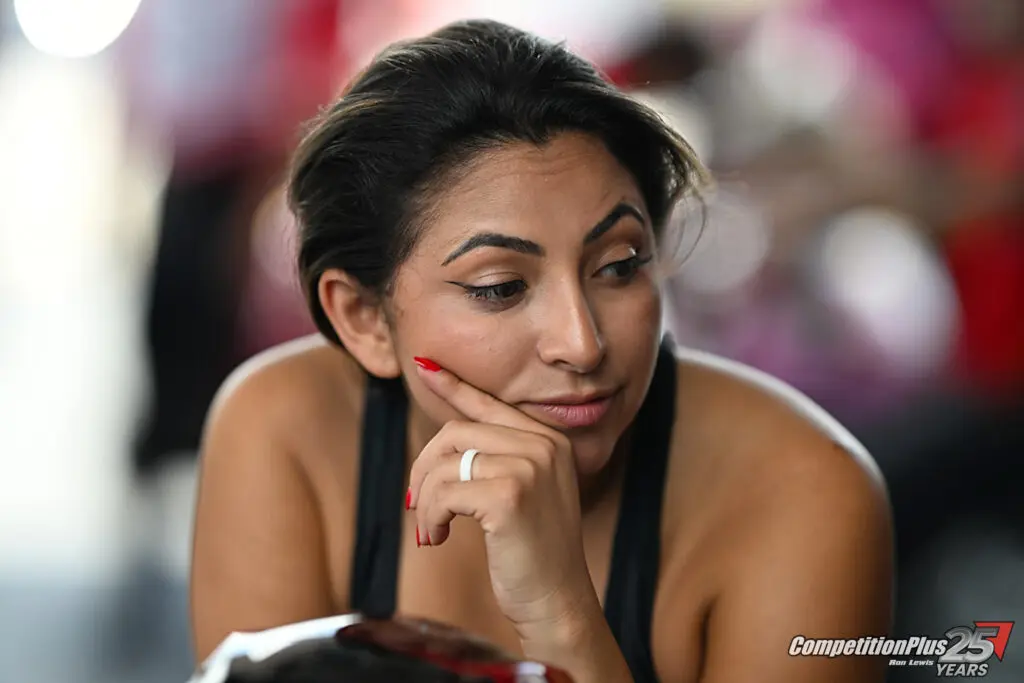
10 – JIANNA EVARISTO SIDELINED – Pro Stock Motorcycle’s Michael Ray is filling in at this race for Jianna Evaristo, who injured her knee earlier this week. Evaristo, who competes with the Matt Smith Racing organization, announced via social media that “unfortunately I’ll be sitting this one out. While, thankfully, I’m still able to get around normally, the injury has limited my ability to bend my knee into the position I need to properly and safely ride the bike. After discussing it with my doctor, the decision was made that racing this weekend just isn’t the right call. As hard as it is for me to sit on the sidelines, the safety of myself and everyone else in the class has to come first.”
It is, she said, “definitely not the update I wanted to be sharing this weekend.” She said she “couldn’t think of a better person to step in” for her and said, “I’ll still be at the track supporting Michael and the team and cheering them on all weekend.” Evaristo said she’ll provide updates when she has any. Meanwhile, she’s “focused on making a speedy recovery and getting back on the bike.”
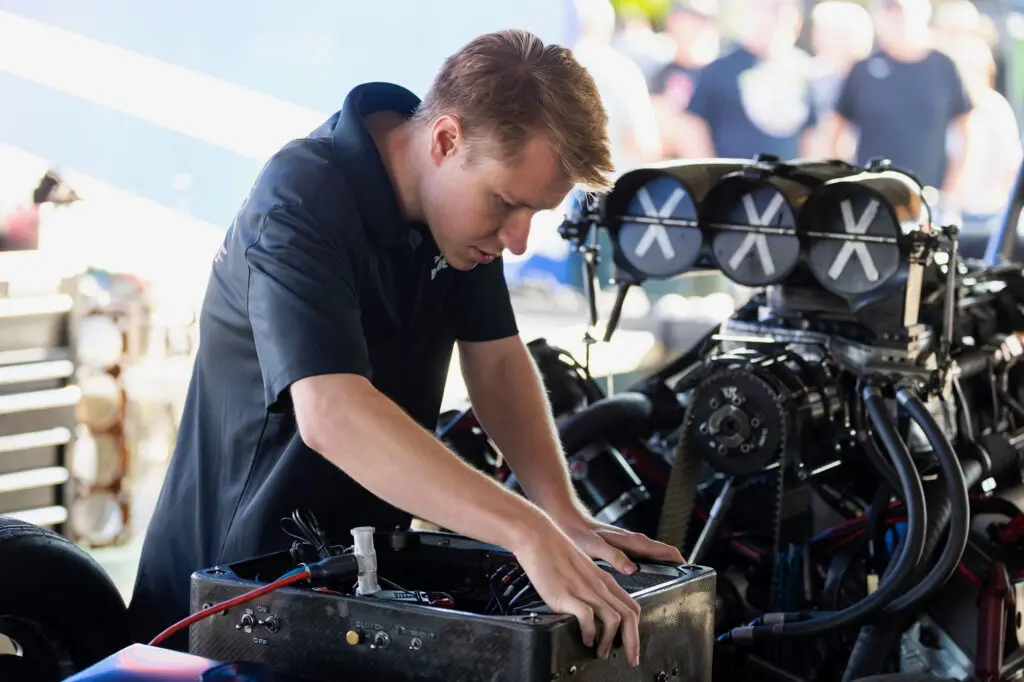
11 – LOTS OF QUALITY HELP – Bobby Bode, who said he likes tuning his Funny Car “almost more” than driving it, is progressing on both fronts. And he says that’s because he’s absorbing all of the lessons he has learned from some of the sport’s elite.
A second-generation racer and Jr. Dragster graduate who started taking an interest in tuning when he was 16, Bode is using the same chassis he got from Tim Wilkerson. And that began his string of legendary mentors.
“He just started showing me stuff. He kind of took me under his wing. And I didn’t really know what I was doing back then,” he said with a laugh. “I slowly started learning more and more. Then when I was 21, I went on the Western Swing with Jim Head’s team, and that was cool. I was more just kind of watching how they were doing everything, but they kind of took me under their wing, too, started showing me everything. When I got to race with Del [Worsham] last year, he kind of took me under his wing, too, and taught me more stuff. And then this year the Procks [Jimmy, Thomas, and Austin] have been pretty cool.”
Few young drivers can attract that caliber and quantity of teachers. Bode said the likely reason it has come to him because “they all see that I like learning about the car, how it works. And they think that’s cool, so they want to help me.
“I’m interested,” he said, differentiating himself from “someone who likes driving the car doesn’t really care how it works.” Bode said, “I try to understand how it does work, and they all see that. And it makes them want to help me, which is pretty cool, because they’re all really smart. So then I get to learn from the smartest guys.”
He said he thinks it makes him a better driver. “I know what’s going on with the car, so they kind of help each other. I can diagnose. When I’m in the seat, I can say, ‘Oh, shoot, that happened,’” knowing the source of a problem.
By his calculation, Bode said, “I’d say I’m a better driver than tuner, for sure. Driving I’ve been doing longer, so I have more experience. I still have a ways to go on the tuning and learning how more stuff works. But I’ve made a lot of progress, I’d say, the last two to three years since I graduated school [Arizona State University], focused more time on this. When I came home from school [to Deer Park, Ill.], I started working on this more – and here we are two years later.”
He said his Ford Mustang is “probably the best car we’ve ever had. The chassis is the same. But all the components … we’ve always had pretty good parts, but they weren’t always the same. Now we have the same of everything. The key out here is rebuilding the car the same every time. That was always our problem. So now we have the same parts, and we’re also paying more attention to how everything goes back together on the car.”
Because he has such a pleasant demeanor and always has a smile on his face, it’s hard to imagine him bossing people. But he contended he’s skilled at it “because they have to do it.”
Bode said, “I’m probably meaner around here than I should be. These are all our friends, and they’re all volunteer guys. And so they do it because they love it. So sometimes I forget that. But when I am hard on them, they’re really receptive, and we usually fix what’s wrong.”

11 – PINK LEMONADE PRINCESSES BACK – Lemonade will be one of the coolest commodities this week at blistering-hot Indianapolis Raceway Park on Sunday, and equally cool will be buying a cup of it from the Princess Pink Lemonade Stand to raise money for Riley Children’s Hospital.
From 9–10 a.m. Sunday at the CAPCO Contractors/Torrence Racing pit, the daughters of some of the sport’s most recognizable drivers and team members once again are coming together at the distinctive pink lemonade stand built by Torrence Racing crew chief Bobby Lagana Jr. and friends.
The young “Ladies of Lemonade” participating in this year’s event are: returnees Aubrey Coughlin, 5, daughter of Pro Stock’s T.J. Coughlin and his wife, Brenna; Londyn Hart, 6, daughter of Top Fuel’s Josh Hart and his wife, Brittanie; Averi Michalek, 5, daughter of Top Alcohol Dragster’s Corey Michalek and his wife, Christine; Vera Wilkerson, 8, daughter of second-generation Funny Car driver Daniel Wilkerson and his wife, Brianne; and Olivia Martin, 8, daughter of Torrence Racing cylinder head specialist Kris Martin and his wife, Amanda.
Also joining the group is Kamy Gadson, daughter of Pro Stock Motorcycle’s current champion Richard Gadson and his wife, Alexis. New, too, are Leah Richards, 12, and Macie Richards, 10, daughters of Funny Car Driver Dave Richards and his wife, Serena.
Haven Charli Torrence and Harper Torrence, the five- and two-year-old daughters of Top Fuel’s Steve Torrence and his wife, Natalie, are involved. Their grandfather/Top Fuel driver Billy Torrence, grandmother and Torrence Racing team owner “Momma Kay” Torrence have played a key role in the fundraising effort. Natalie Torrence’s Innovative Creation Experts company brought the Princess Pink Lemonade Stand concept to the U.S. Nationals in 2024.
“This has become an event of its own,” Natalie Torrence said on the eve of this third-year project. “Our No. 1 goal is to raise money for Riley Children’s Hospital, but this is also a great opportunity to teach our children the importance of giving back, caring for others, and showing them that hard work can still be fun.”
Those unable to attend the event in person can still join the “princesses” in supporting Riley Children’s Hospital by making an online donation through the Princess Pink Lemonade Stand fundraising page.
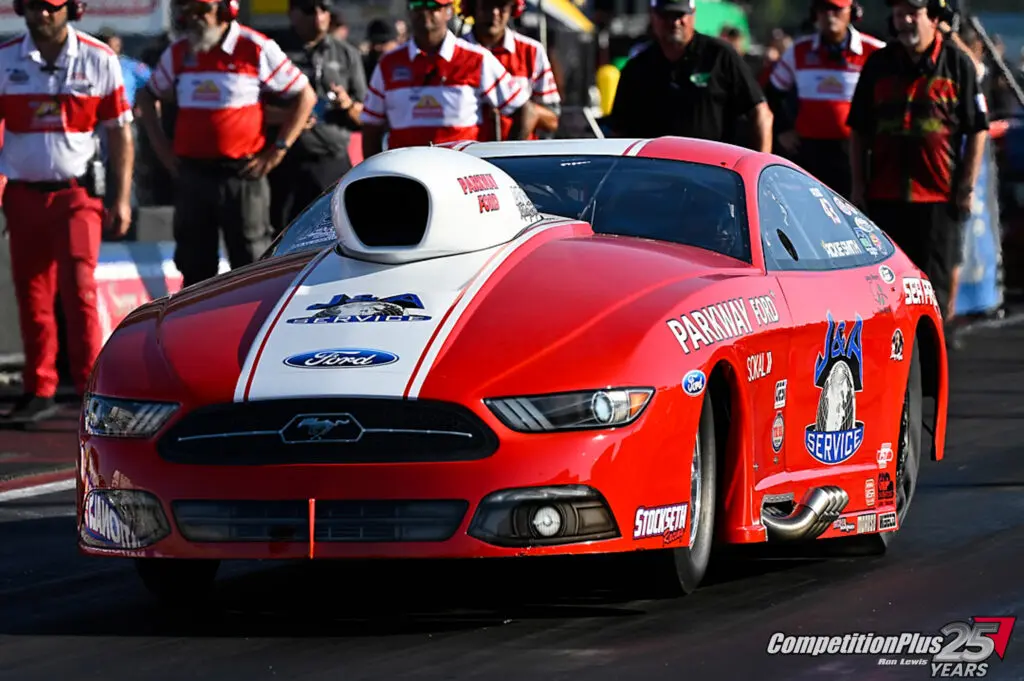
12 – RICKIE DOES RICKIE STUFF — Rickie Smith has been racing long enough to know when to stay with a run, and the three-time Pro Modified champion used that experience Friday to take the provisional No. 1 qualifying position at the NHRA U.S. Nationals.
Smith powered his 2022 Ford Mustang to a 5.823-second run at 249.07 mph at Lucas Oil Indianapolis Raceway Park. The car moved toward the wall after a hard launch, but Smith stayed with it and finished the run atop the qualifying order.
The performance put Smith .014 seconds ahead of Justin Bond, who moved into the No. 2 position with a 5.837, 247.34. Mike Stavrinos was close behind with a 5.840 , 239.10 to secure the third spot.
For Smith, being No. 1 at Indianapolis is familiar territory. The International Drag Racing Hall of Fame member has qualified No. 1 at the U.S. Nationals four times and owns 14 No. 1 starts during his Pro Modified career.
Smith is also efficient on Mondays, having won the U.S. Nationals in 2014, defeating Paul Farber in the final, and was runner-up in 2013 and 2019. He also reached the Pro Stock final at Indianapolis in 1996.
Lyle Barnett qualified fourth Friday with a 5.873, 246.30, followed by Jason Collins at 5.893, 244.87. Kevin Rivenbark was sixth with a 5.957. Mike Castellana, Billy Banaka, Derek Menholt and reigning No. 1-ranked JR Gray completed the top 10.
Smith entered his 16th U.S. Nationals appearance with a 25-14 elimination record at Indianapolis, including a 14-1 mark in the opening round.
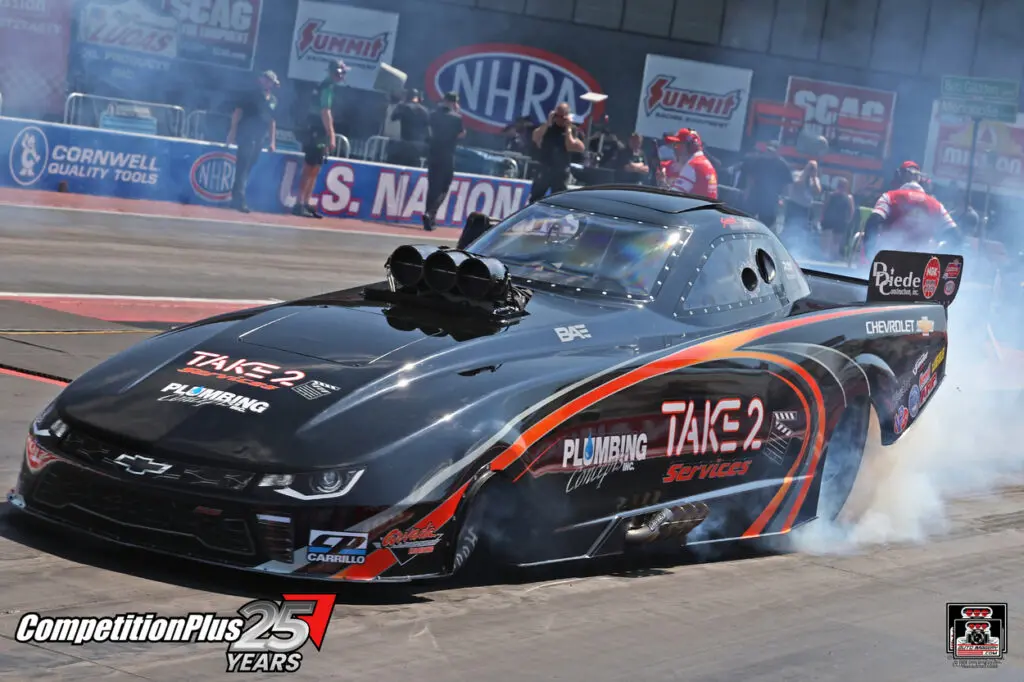
13 – CRAMPTON, WESTERFIELD TOP ALKY FIELDS — Former NHRA Top Fuel winner Richie Crampton made his return to the national event spotlight Friday, taking the provisional No. 1 qualifying position in Top Alcohol Dragster at the NHRA U.S. Nationals at Lucas Oil Indianapolis Raceway Park. Shane Westerfield drove to the top in Top Alcohol Funny Car, putting his Camaro atop the field with a 5.565-second run at 262.39 mph.
Crampton, of neighboring Brownsburg, Ind., delivered his best run during Friday morning’s opening session, covering the quarter-mile in 5.302 seconds at 270.16 mph. The run gave the former Top Fuel national-event winner a .050-second advantage over Melanie Johnson entering the next round of qualifying.
Johnson was second with a 5.352, while TJ Tindle was third at 5.365. Tindle recorded the fastest speed among the top 10 qualifiers at 272.72 mph on another run.
Jamie Noonan was fourth with a 5.368, followed by Mitch Kalitta, who posted a 5.400. Brandon Greco, Shaunda Blinzler, Jackie Fricke, Megan Smith and Angelle Sampey completed the top 10.
Westerfield also did his best work in Friday’s opening session, recording his 5.565 at 262.39 to establish the early Top Alcohol Funny Car standard.
Bob McCosh was Westerfield’s closest challenger with a 5.596, leaving the Columbia, Mo., driver .031 seconds off the lead. Chris Foster was just behind McCosh with a 5.600. Christine Foster placed fourth with a 5.622 at 256.21, giving the Foster entries two spots among the top four.
Bruce Mullins was fifth at 5.754, followed by Tony Bogolo’s 5.764. Jim Whiteley, Mark Billington, Mick Steele and Stan Sipos rounded out the Top Alcohol Funny Car top 10 as qualifying continued at Indianapolis.
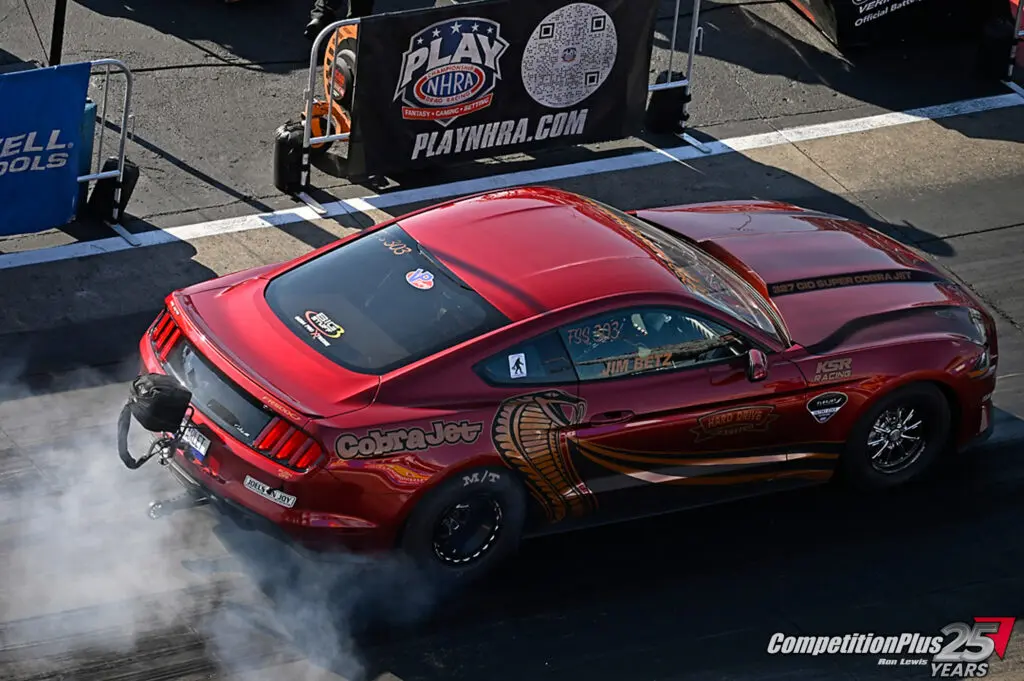
14 – BETZ LEADS FACTORY STOCK – James Betz set the early pace in Factory Stock Showdown qualifying Friday at the NHRA U.S. Nationals, leading one of the largest fields the category has assembled in recent years at Lucas Oil Indianapolis Raceway Park.
Betz drove his 2018 Ford Mustang to a 7.822-second pass at 172.10 mph to take the provisional No. 1 qualifying position. He held a slim .009-second advantage over Tony Scott Jr. after the opening day of qualifying.
Scott put his 2020 Chevrolet Camaro into the No. 2 position with a 7.831. Championship leader Jonathan Allegrucci was another .006 seconds back, qualifying third with a 7.837 in his 2019 Mustang.
Allegrucci came into the event with three victories and a runner-up finish over the previous four events, giving him the Factory Stock points lead. He is seeking his first U.S. Nationals victory.
David Janac put another Mustang into the top four with a 7.846 at 171.62, while Doug Hamp rounded out the top five with a 7.871 in his Camaro. Lee Hartman was sixth with a 7.914 in his Dodge Challenger, giving all three manufacturers representation among the first six qualifiers.
Alex Anderson recorded the quickest run among the remainder of the top 10 with a 7.923 to take seventh. His 176.51-mph speed was the fastest of Friday’s top 10 qualifiers.
Jason Dietsch was eighth with a 7.952, followed closely by Rouven Dawson, whose 7.957 put him ninth. Matt Hartman completed the top 10 with an 8.041 as the large field continued its battle for positions in the Factory Stock Showdown qualifying order.
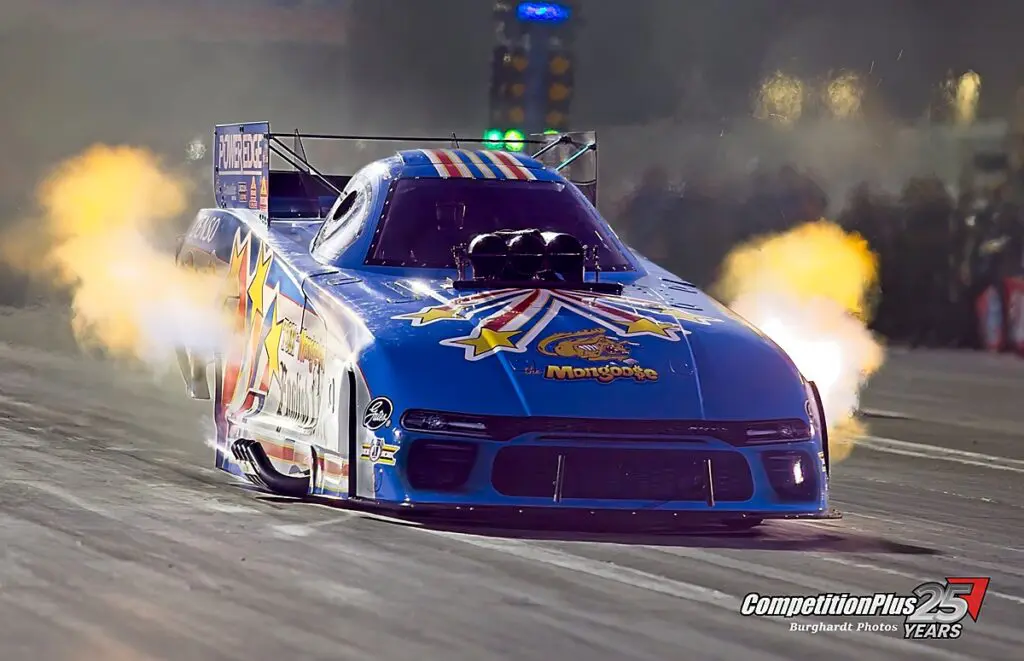
15 – ON TAP – Professional qualifying continues at 12:30 p.m. EDT on Saturday at the Cornwell Quality Tools NHRA U.S. Nationals at Lucas Oil Indianapolis Raceway Park.
Sportsman action begins at 8 a.m.
THURSDAY NOTEBOOK – CLASS RACING RULES THE DAY, COMMELA TAKES HEMI CHALLENGE TOP SPOT, MORE CLASSES JOIN THE PARTY
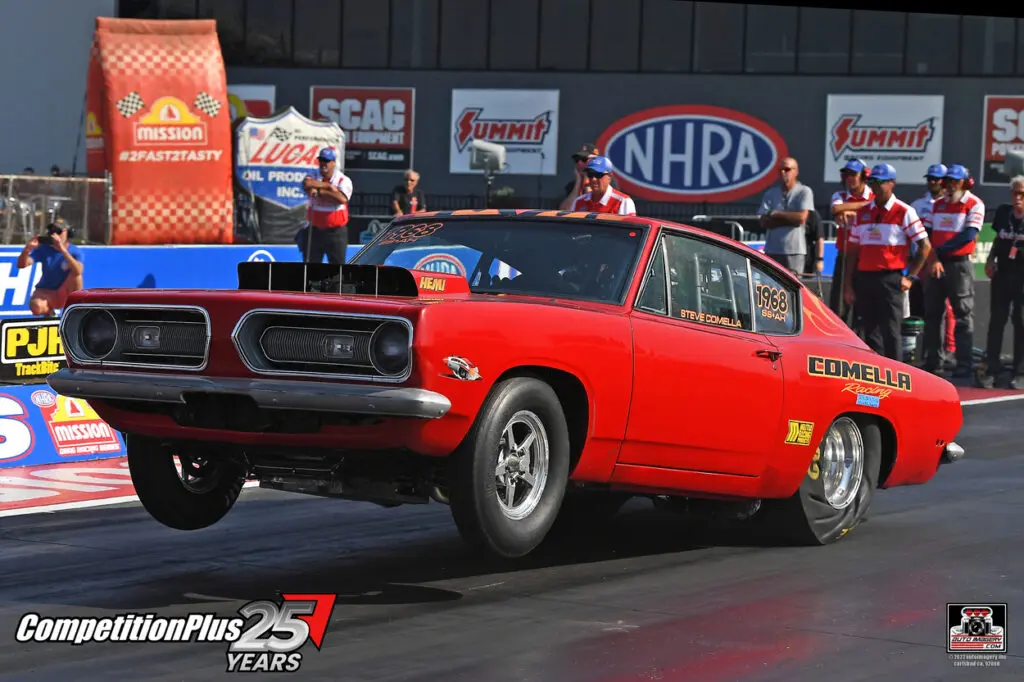
1 – COMELLA GETS THE LAST WORD – Jason Line had the Sox & Martin HEMI Challenge field covered when Wednesday began. Steve Comella made sure Line wouldn’t own the top spot when qualifying ended.
Comella, a multi-time Sox & Martin HEMI Challenge winner, delivered an 8.415-second run at 159.23 mph in the final qualifying session at Lucas Oil Indianapolis Raceway Park, moving around Line to claim the No. 1 qualifying position for the specialty race at the NHRA U.S. Nationals.
Line had established himself as the early target when the three-time NHRA Pro Stock world champion drove his 1968 Plymouth Barracuda to an 8.451 at 159.99 mph in the opening session. He improved to an 8.445 at 159.53, but it wasn’t enough to hold off Comella.
The margin between the two was .030 seconds, setting up another battle between two drivers who have become fixtures near the front of the HEMI Challenge field.
Comella, of Webster, New York, has made a habit of being in the conversation at Indianapolis. His final qualifying shot reinforced that point as he put his ’68 Barracuda solidly atop a field where the first four qualifiers were separated by only .042 seconds.
Anthony Rhodes made a significant move of his own, taking the No. 3 position with an 8.455 at 158.02 mph in his ’68 Barracuda. Charlie Westcott was only two-thousandths behind Rhodes with an 8.457 at 158.95, giving the veteran Michigan racer the fourth starting position.
Eric Bell, who had been third after the opening session, settled into fifth with his earlier 8.478 at 158.58. Jimmy Daniels was the quickest Dodge Dart in the field, improving to an 8.492 at 158.09 to qualify sixth.
Eldon Baum Jr. put another Dart seventh with an 8.509, followed by Stephen Smyth’s Barracuda at 8.527. Jim Pancake and Lenny Lottig completed the top 10 with runs of 8.569 and 8.572, respectively.
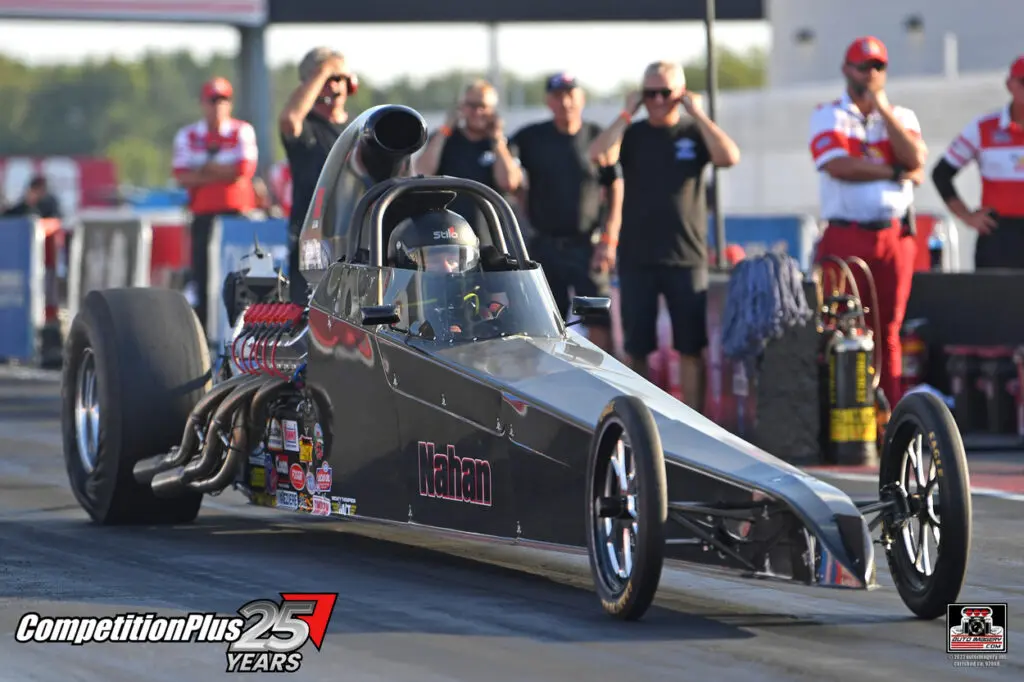
2 – NAHAN SETS THE COMP STANDARD AT INDY – Pat Nahan has the number everyone in Competition Eliminator will be chasing when qualifying resumes at the NHRA U.S. Nationals.
Nahan, of Sartell, Minnesota, drove his E/DA dragster to a 7.375-second run against a 7.98-second index Thursday at Lucas Oil Indianapolis Raceway Park. The run put him .605 under the index and atop the field after two qualifying sessions.
Mason McGaha sits second after taking his B/A 2025 Camaro to a 7.055 against a 7.64 index, putting the Odessa, Texas, driver .585 under. That leaves McGaha only two-hundredths behind Nahan heading into the final qualifying session.
Todd Datweiler is another five-thousandths back in third. The Herscher, Illinois, driver recorded a 6.400 in his AA/AM Ford against a 6.98 index, good for .580 under.
Craig Bourgeois has the No. 4 position with his A/ND dragster after running 6.861 against a 7.43 index, .569 under. Andrew Holt rounds out the top five with a 6.606 against the 7.17 I/D standard, putting him .564 under.
That leaves just .041 seconds separating Nahan from Holt at the top of a field where the qualifying order can change quickly when racers begin leaning harder on their combinations.
Bruno Massel is positioned to make that kind of move. The multi-time Competition Eliminator world champion sits sixth after driving his CC/AT 2010 Cobalt to a 7.004 against a 7.56 index, .556 under the standard.
Doug Engels follows at .545 under in D/DA, with John Clegg eighth at .543 under in CC/A. Chelsea Tindle’s D/DA Toyota MR2 is ninth at .522 under, while Donald Thomas completes the current top 10 with a C/D run of 6.920 against a 7.44 index, .520 under.
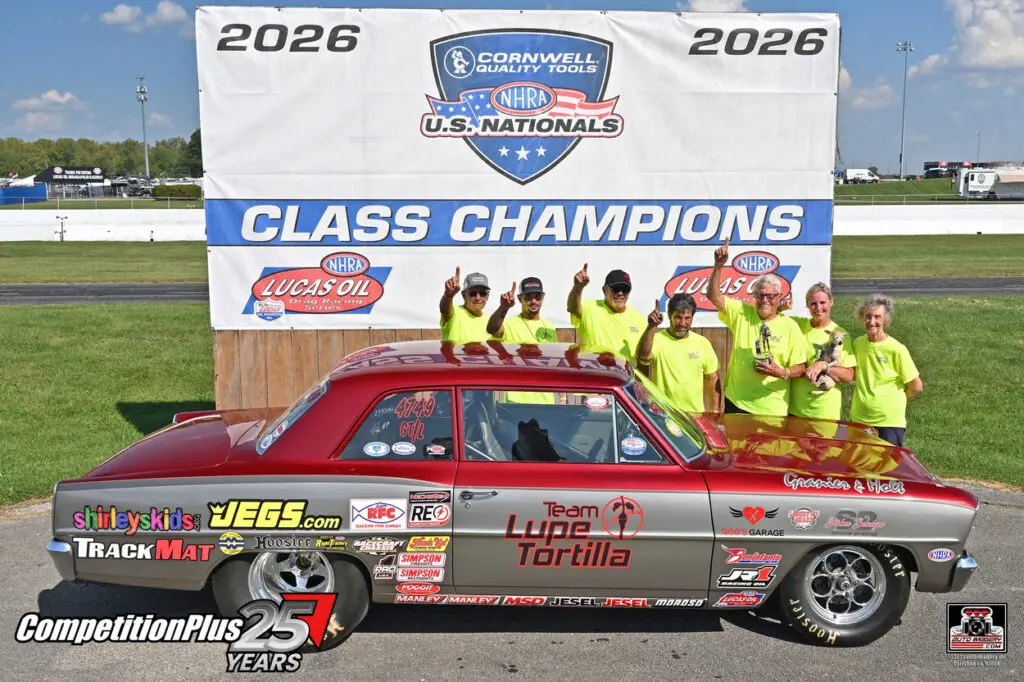
3 – HOLT SHIFTS HIS WAY TO THE TOP OF A CROWDED SUPER STOCK FIELD – There are easier ways to earn the No. 1 qualifying position in Super Stock than rowing the gears yourself. Stan Holt apparently wasn’t interested in any of them.
Holt put his stick-shifted GT/L 1966 Chevrolet Nova atop a massive Super Stock field at the Cornwell Quality Tools NHRA U.S. Nationals, running 9.728 seconds against a 10.85 index to finish 1.122 seconds under the standard.
The Houston driver will enter eliminations as the No. 1 seed in a 128-car field that required some serious trimming before the first round. A total of 146 entries attempted to qualify, leaving 18 racers on the outside when qualifying was completed.
And the quickest racer against the index did it with a clutch pedal.
Holt’s performance gave him a comfortable .059-second advantage over No. 2 qualifier Mike Johnston. The Parker, Ariz., driver wheeled his FSS/F 2012 Camaro to a 9.137 against a 10.20 index, putting him 1.063 under.
Chelsea Tindle claimed the third position in her GT/IA 2004 Cavalier with a 9.618 against a 10.65 index. The Freeport, Fla., racer finished qualifying 1.032 seconds under the index.
Tom Ferruggia gave the Factory Stock contingent another top-five entry by taking fourth in his FSS/F 2013 Camaro. Ferruggia recorded a 9.172 against the 10.20 standard for a run 1.028 under.
Jeff Dona rounded out the top five with his SS/HA 1998 Pontiac Firebird. Dona’s 9.575 against a 10.60 index left him 1.025 seconds under.
Jim Whalen was sixth at 1.022 under with a 9.978 in his SS/JA Firebird, while Jeff Myers placed seventh with a 9.030 in his FSS/E Camaro, 1.020 under the index.
Brandon Daugherty grabbed the eighth spot at 1.017 under, making him the final qualifier to finish more than a second below his class index. Avery McLawhorn was ninth at 1.002 under, and Patrick Glade completed the top 10 at .998 under.
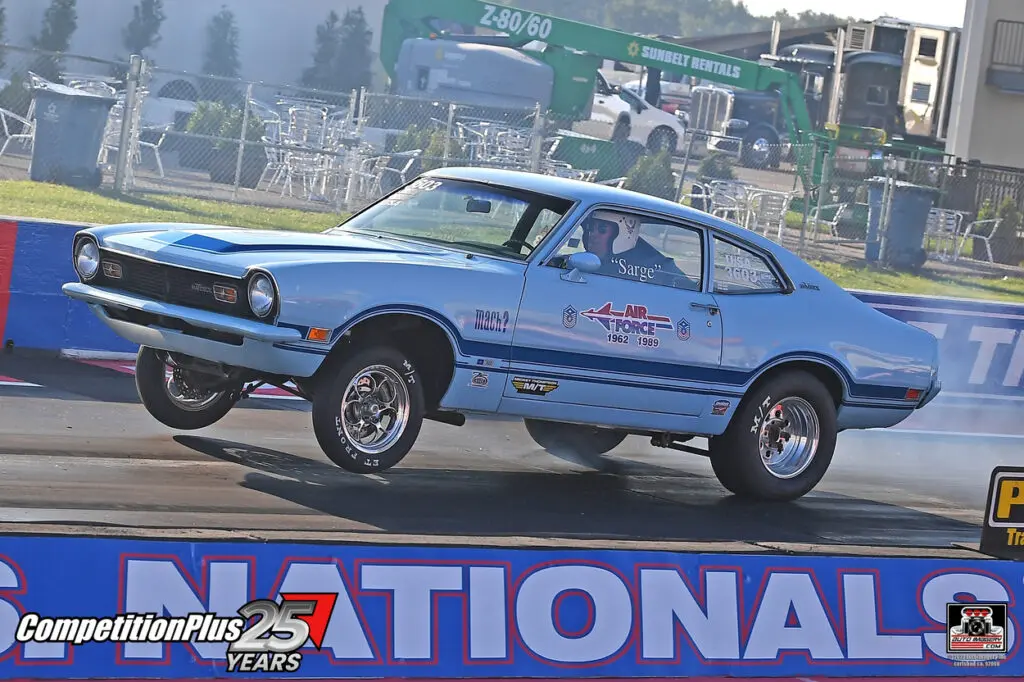
4 – ELSASS’ ’72 MAVERICK MUSCLES PAST THE BIG GUNS TO LEAD STOCK – The horsepower crowd brought plenty of muscle to the top of the Stock Eliminator qualifying sheet. Frederick Elsass brought a 1972 Ford Maverick.
Amid a gaggle of high-horsepower entries rounding out the top 10 qualifiers at the Cornwell Quality Tools NHRA U.S. Nationals, Elsass put his U/Stock Automatic Maverick in a place few probably expected to see it — No. 1.
And he didn’t squeak into the spot.
The North Canton, Ohio, racer covered the Indianapolis Raceway Park quarter-mile in 13.361 seconds against a 14.85 index, a whopping 1.489 seconds under the standard. That left Elsass nearly three-tenths of a second clear of a trio of considerably quicker A/Stock stick-shift entries lined up behind him.
John Korish led that charge with his 2015 Chevrolet Camaro, running 9.749 against a 10.95 A/S index to qualify second at 1.201 seconds under.
Caleb McFarland was just five-thousandths behind Korish with his 2001 Pontiac Firebird. His 9.754 against the same 10.95 index put him third at 1.196 under.
Randy Mans completed the A/Stock blockade near the top with a 9.779 in his 2000 Firebird. The Rogers, Minn., driver qualified fourth at 1.171 under.
Ryan Korish put another stick-shifted entry into the top five with his C/Stock 1999 Camaro. Korish ran 10.186 against an 11.35 index, good for 1.164 under.
From there, the qualifying sheet started looking more like traditional Stock Eliminator territory.
Jim Boudreau qualified sixth in his B/Stock Automatic 1969 Camaro at 1.142 under, followed by Tracy Fairchild’s D/Stock Automatic 1970 AMC AMX at 1.140 under.
Casey Fauss-Johnson interrupted the old-school parade with an FS/D 2015 Challenger, recording a 9.477 against the 10.60 index for the eighth position at 1.123 under.
Jim Marshall put his J/Stock Automatic 1978 Malibu ninth with an 11.332, 1.118 under the 12.45 standard. Darren Robinson matched Marshall’s 1.118-under performance with a 10.432 in his D/Stock Automatic 1970 Plymouth Duster to complete the top 10.
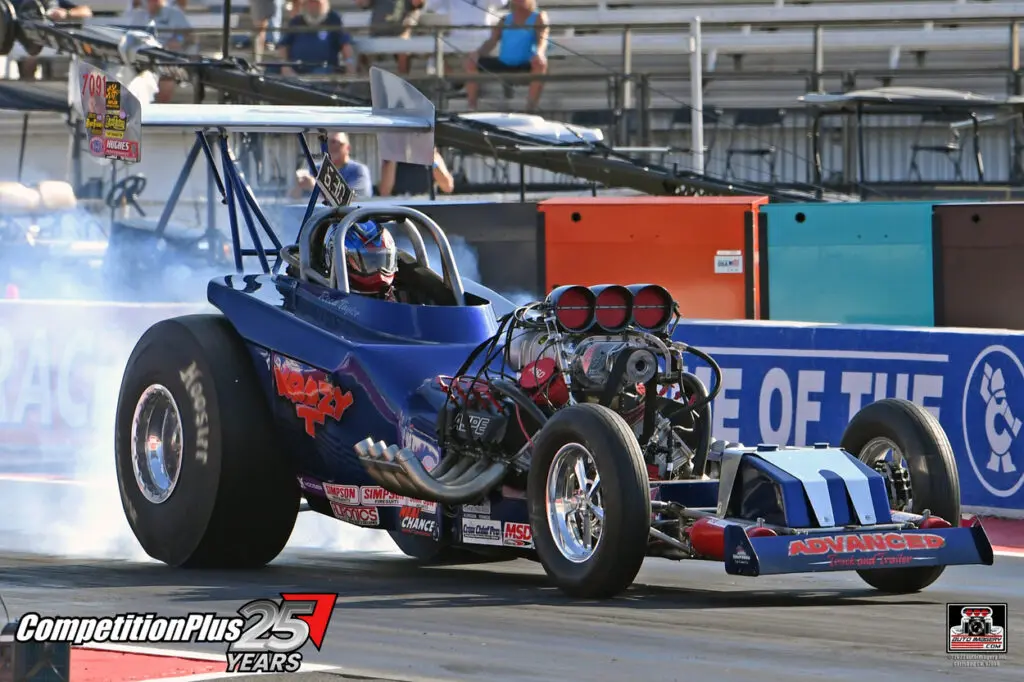
5 – A PRO COMP THROWBACK – Pro Comp eliminator is just a memory to many drag racers, while a younger generation largely doesn’t know about the class that helped spawn Top Alcohol Dragster and Top Alcohol Funny Car.
Reed Taylor is racing his own version of Pro Comp at this weekend’s NHRA U.S. Nationals, wheeling a supercharged, alcohol-burning roadster within the confines of Top Dragster.
Taylor wasn’t around for Pro Comp’s glory days, when blown-alcohol AA/Altereds shared the eliminator with dragsters and Funny Cars. His father, however, was an altered fan, and Taylor inherited the appreciation.
“My dad was an altered fan, and I was always an altered fan growing up,” Reed said. “I just loved the looks of the car, and I love driving it. I tried running a dragster for a little while, and I just didn’t like it. I enjoy driving this.”
Taylor admits there are times when he feels as though he was born a few decades too late. His approach to racing certainly fits another era.
“Absolutely,” Taylor said. “Yeah. The racing these days is a different kind of racing. I enjoy making the car go down the track and making it faster and all that. Today there’s a lot of people that can just go buy cars ready to go. I bought this as a bare chassis and stripped it down, moved the motor around, and put it together the way I wanted it. I love that part of it.”
Driving it provides its own reward, particularly through the opening portion of the run. Taylor said getting the wing and balance sorted also made the roadster considerably more manageable.
“Probably the first, to the 330. It’s a lot of fun,” Taylor said. “I got this one pretty good. I mean, you’re driving it … When I first put it together before I got the wing and the balance right from half track on, it was loose and it’d make you pucker. But once I finally got the wing right and everything right, it’s not so bad now. Now it’s just like cruising in the back half.”
The Las Vegas racer has been to Indianapolis before, but always while helping someone else. Bringing his own race car to the U.S. Nationals checked off something much bigger.
“That’s why I’m here,” Taylor said. “I mean, this is my bucket list race. We’re from Las Vegas and this was … We had to come once to see. I mean, I’ve been here before helping on other cars and stuff, but this is the first time I’ve ever actually got to race here. So I’m going to try just to enjoy this weekend.”
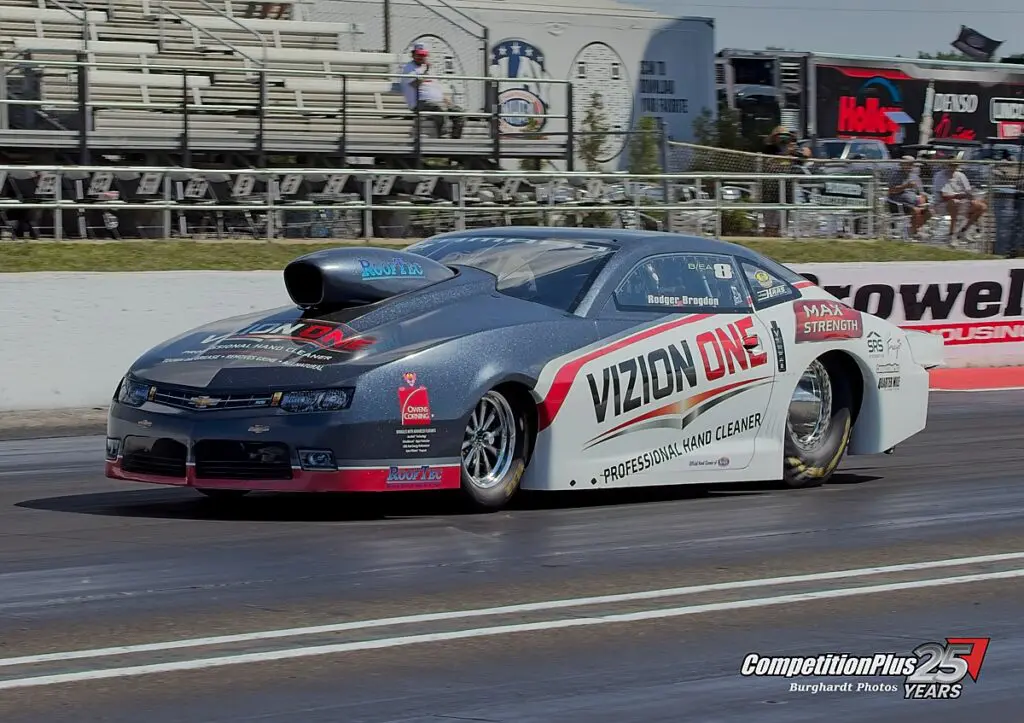
6 – BROGDON’S VIZION FOR SOAP – It’s not every day the owner of Texas’ largest roofing company decides to buy a hand-cleaner company. Then again, Rodger Brogdon wasn’t shopping for one when VizionOne Hand Cleaner caught his attention.
The longtime NHRA Pro Stock racer tried the product, liked what it did, and approached the opportunity the same way he has other business ventures.
“Well, it wasn’t on my radar, I’ll tell you that,” Brogdon said. “But the first time I tried it, I thought, man, this is a hell of a product. Smelled good, kept my hands moist when I got done, and did a heck of a job of cleaning them. And long story short, I liked the product, so I bought the company.”
That sounds impulsive until Brogdon explains that buying businesses isn’t exactly foreign territory for him. VizionOne just happens to be considerably different from the roofing industry where he made his name.
“I’ve done it a few times, to be honest with you,” Brogdon said. “It’s just something in my blood. I’m always trying to come up with ideas to make more money, and I just thought it would be a hell of a venture to do it now. When it gets to the point where it’s making me money, we can redo this article, but it’s a challenge, but I figured a three-year process to get it where I want it to be.”
Brogdon isn’t pretending VizionOne is an overnight success. He sees the first year as the starting point of a three-year build and believes the company has made progress in a relatively short period.
Drag racing provided an obvious place to introduce the product. Brogdon has spent enough time around race cars to know grease, oil and dirty hands don’t require much of a marketing study.
“Because there’s a lot of people out here with dirty hands,” Brogdon said. “Yeah, it’s perfect for it. Any type of racing, and since I’m so involved in drag racing, of course it was natural for me to do this the first time, but we’re going to try to get it in all forms of racing.”
The next move is taking VizionOne deeper into motorsports, including December’s Performance Racing Industry trade show. Brogdon sees PRI as an opportunity to introduce the cleaner beyond drag racing and reach other segments of the racing industry.
For now, Brogdon has a product, a familiar marketplace and three years to find out how far he can take it. His explanation for how he got into the hand-cleaner business remains considerably shorter than the plan.
“And long story short, I liked the product, so I bought the company.”
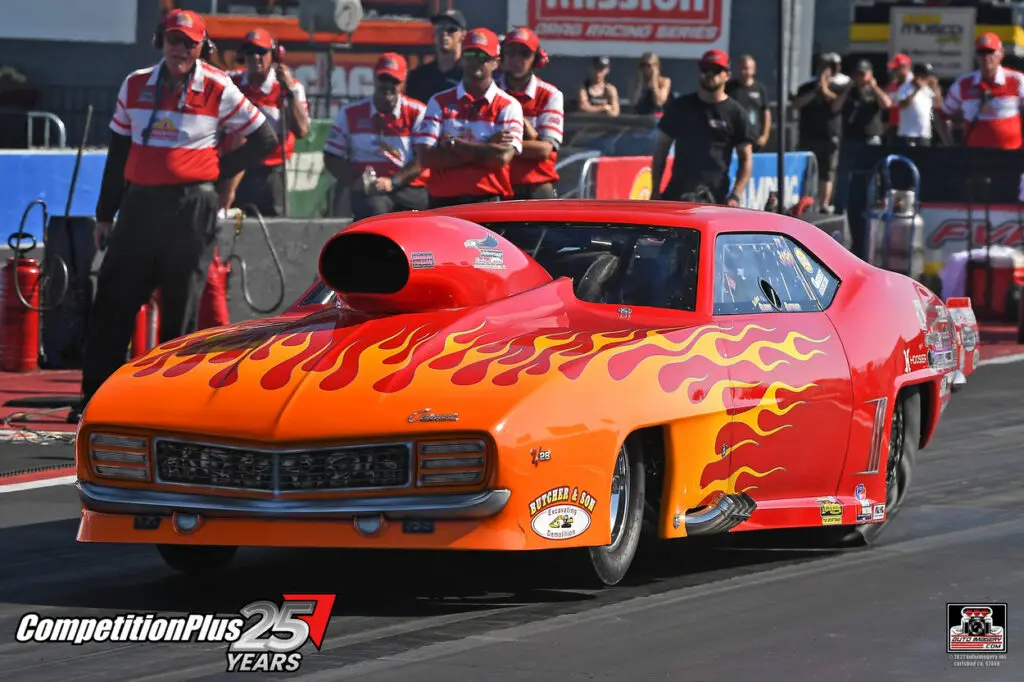
7 – THE TOP SPORTSMEN AND TOP DRAGSTERS – Thirty-eight cars. Thirty-two starting spots. And one qualifying session remaining.
The arithmetic is the same in Top Sportsman and Top Dragster at the Cornwell Quality Tools NHRA U.S. Nationals, where six drivers in each category currently are on the wrong side of the qualifying sheet heading into the final session at Indianapolis Raceway Park.
Glenn Butcher is setting the pace in Top Sportsman, wheeling his 1969 Camaro to a 6.179-second run at 228.58 mph. Darian Boesch sits second with a 6.276 at 226.35 in his 2018 Camaro.
Jim Thorp is third at 6.339, followed closely by Jimmy Lewis at 6.341. Bob Gulitti rounds out the top five with a 6.353 in his 1967 Shelby.
The bigger story, however, is 27 positions farther down the sheet.
Scott Underwood owns the Top Sportsman bump spot entering the final qualifying session. His 2018 Camaro’s 7.188 at 194.63 currently represents the 32nd and final ticket into eliminations.
That number gives the six racers outside the field a target, but it hardly represents a safe haven for Underwood. With 38 entries fighting for 32 positions and another shot at the track remaining, the bottom of the Top Sportsman field is anything but settled.
Top Dragster has an even tighter squeeze from the front of the field to the bump.
Al Peavler leads the 38-car contingent with a 6.126 at 228.92 mph, but Anthony Bertozzi is only nine-thousandths behind with a 6.135 at 226.01. Ed Dudley follows at 6.138, with Daria Vang another thousandth back at 6.139.
Matt Exner and Jim Prevo recorded identical 6.146 elapsed times for fifth and sixth, respectively, while Chad Axford’s 6.152 has him seventh.
At the other end, Robert May currently has the chair everyone outside the field wants.
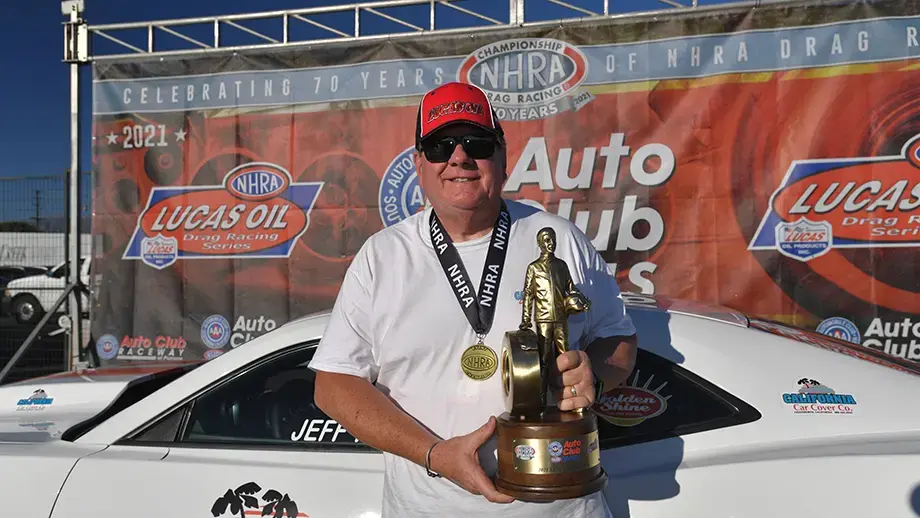
8 – WHEN THE CHAMP PUTS ANOTHER CHAMP ON A PEDESTAL – Jeff Taylor has five NHRA world championships, yet he still has trouble wrapping his head around having more titles than the legendary Reher-Morrison team.
For Taylor, David Reher, Buddy Morrison and driver Lee Shepherd occupied a different level. They were among the racers he measured success against long before he began collecting championships of his own.
“No. Never even dreamed that could happen,” Taylor said. “Well, I just always looked up to them and I just thought they were very tip-top and just to be even mentioned in the same sentence with people like that, it’s an honor to me.”
Taylor puts Reher-Morrison alongside Bob Glidden and Warren Johnson among the giants of his generation. He sees Greg Anderson occupying a similar position for racers coming through Pro Stock today.
“Absolutely. Them and Bob Glidden and Warren Johnson, they ruled the world out here, just kind of like Greg Anderson’s doing right now,” Taylor said. “And you go back and look at the younger people that’s out here now and you go talk to them in 25 years and they’re going to think Greg Anderson was the man, just like I do about Warren and Reher-Morrison and Glidden, even though I do think Greg’s pretty good.”
Taylor’s admiration for Reher-Morrison came with a personal connection. While racing Super Stock during the mid-1980s, Taylor traveled extensively with the team and occasionally became its transporter driver.
When the Texas-based team raced IHRA events closer to Taylor’s North Carolina home, the transporter sometimes stayed at his family’s shop. Taylor would haul it to places such as Bristol, meet the team after they flew in, then bring the rig back afterward.
“And then if Rockingham was next or say an NHRA, anything, whatever made it logistically cost-efficient, it stayed at our house about as much as it did theirs,” Taylor said.
The arrangement also brought Taylor close to Shepherd, whose death more than four decades ago still leaves Taylor wondering what might have been.
“Can you imagine what he would’ve done in this sport?” Taylor asked. “He was so cool and collected and just so good with cylinder heads and stuff. There’s no telling how many races he would’ve won.”
For Taylor, Shepherd’s loss was about considerably more than losing one of Pro Stock’s great drivers. By then, Shepherd had become part of the Taylor household.
“It was like losing a family member,” Taylor said. “I mean, he sat at my mom’s table and eat breakfast, lunch, dinner with us multiple times. So he was part of our family.”

9 – FOUR ROUNDS OF CLASS? SHEESH – Four Stock Eliminator classes required four rounds to settle their class champions at the Cornwell Quality Tools NHRA U.S. Nationals. B/Stock Automatic supplied the biggest fight of the bunch with 14 cars chasing one of Indy’s coveted Class Wallys.
When the racing was finished, Jim Boudreau had another one to add to a collection that is getting crowded. Boudreau defeated Hunter Pierdolla in the B/Stock Automatic final, leaving first with a .019 reaction time to Pierdolla’s .047 and running 10.148 seconds at 128.95 mph. Pierdolla followed with a 10.213 at 128.37.
The victory was Boudreau’s 13th Indy Class Wally and his eighth in Stock Eliminator. Of the four racers who survived four rounds of class eliminations, Boudreau was the only one who had been there before.
Walt Walker, Josh Decker and Rodney Kaekel each left Indianapolis with their first Indy Class Wally.
Walker had to overcome a perfect reaction time to get his in F/Stock Automatic.
Frederick Rowntree drilled the tree with a .000 light in the F/SA final, but Walker chased him down. Walker ran 10.855 at 121.65 mph against the 11.85 index, while Rowntree finished with an 11.345 at 115.67.
Walker reached the stripe .995-second under the index, completing a four-round march that included a 10.772 in the semifinal. The victory delivered his first Indy Class Wally.
Josh Decker’s C/Stock Automatic victory was decided immediately.
Brad Plourd left .005-second too soon, handing the C/SA final to Decker before the race reached the other end. Decker wasn’t waiting around for help, either, cutting a perfect .000 reaction time and running 10.469 at 125.18.
Decker’s first Indy Class Wally came after a remarkably consistent run through C/SA. His three previous elapsed times were 10.435, 10.472 and 10.463 before closing with the 10.469 in the final.
Rodney Kaekel also received some assistance from the red bulb in the D/Stock Automatic final.
Andrew Hill left .014-second early, while Kaekel posted a sharp .007 reaction time to secure his first Indy class victory. Hill had been one of the strongest cars in D/SA, running 10.460 in the semifinal and 10.501 in the final against the 11.55 index.
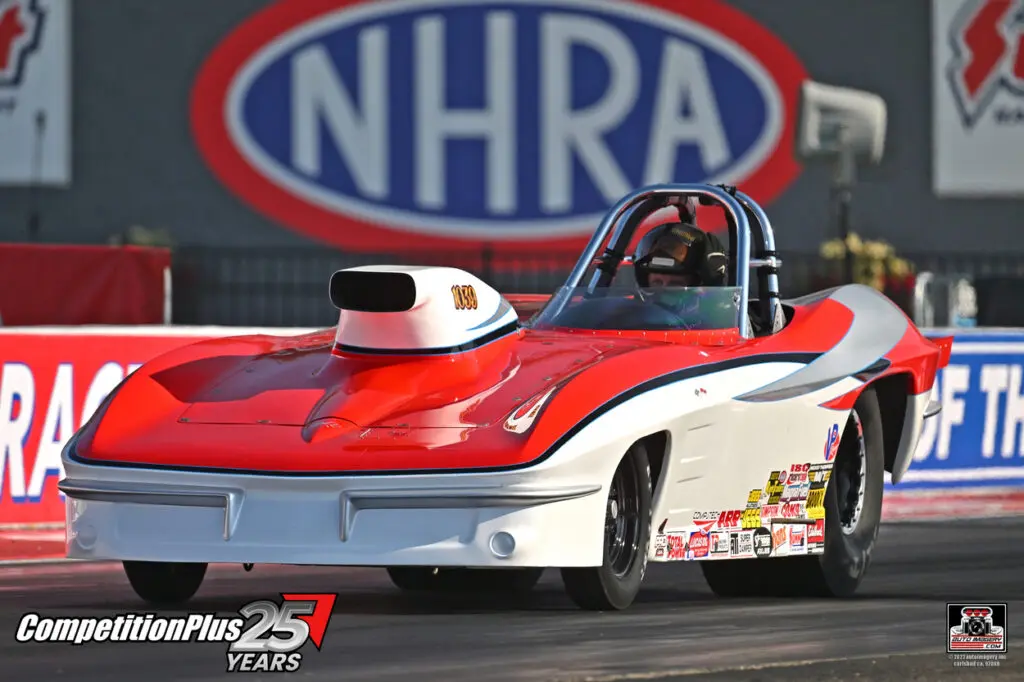
10 – THE SUPER SUPERS AFTER FIRST ROUND – There isn’t much room for error in Super Comp and Super Gas at the Cornwell Quality Tools NHRA U.S. Nationals. Judging by the numbers headed into the second round, some of the best sportsman racers in the country aren’t asking for much room.
Sixty-four cars remain in Super Comp and 62 are still alive in Super Gas at Indianapolis Raceway Park. Before eliminations whittle those numbers further, the qualifying sheets provide a snapshot of just how precise the competition has been against the respective 8.90 and 9.90 indexes.
How precise?
Four racers hit their index dead-on.
Landon Exner and Jason McCandless each recorded an 8.900 in Super Comp, leaving nothing between their elapsed times and the 8.90 standard. Exner claimed the No. 1 position, with McCandless second.
The traffic jam behind them didn’t leave much room for error.
Kevin Wright, Doug Doll, Megan Strassweg, Joey Cambria and Luke Dixon each stopped the Compulink timing system at 8.901. That’s five racers separated from perfection by one-thousandth of a second.
James Cowie was eighth with an 8.902, followed by Nate Kelley at 8.903 and Amanda Boicesco at 8.904.
Put another way, the entire Super Comp top 10 was separated by four-thousandths of a second.
Super Gas wasn’t much more forgiving.
Ronnie Blanks put his 1963 Corvette dead on the 9.90 index with a 9.900, and Larry Bernshausen matched him with his 1977 Vega wagon. Scott Tuttle was next at 9.901 in his 1933 Ford.
Nathan Prose and Thomas Small each recorded 9.902 passes, while Alison Prose followed at 9.903.
Brian Cassin and Phil Jaramillo shared 9.904 performances, with Dustin Richardson and Robert Kropfeld completing the top 10 at 9.905.
That leaves the entire Super Gas top 10 packed inside five-thousandths of a second.
WEDNESDAY NOTEBOOK – THE GO IS WIDE OPEN WITH FIRST DAY QUALIFYING
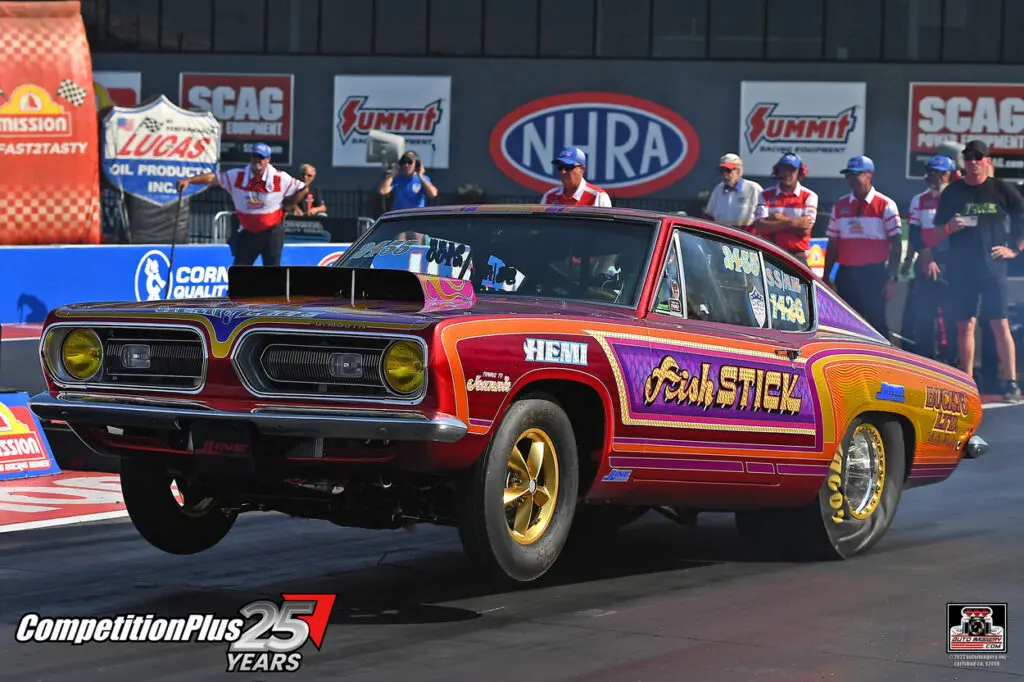
1 – TOP OF THE LINE – After winning, and then losing, last year’s Sox & Martin HEMI Challenge on a disqualification, former NHRA Pro Stock champion Jason Line made his way back to the front of the line during Wednesday’s opening qualifying session at the NHRA U.S. Nationals.
Line drove his 1968 Plymouth Barracuda to an 8.451-second pass at 159.99 mph, taking the provisional No. 1 position in the 17-car field at Indianapolis Raceway Park. This year’s HEMI Challenge winner will collect $10,000.
Steve Comella, another perennial player in the HEMI Challenge, was right behind Line. The Webster, N.Y., driver stopped the clocks at 8.468 and 158.82 in his 1968 Barracuda, leaving him just .017 seconds behind Line.
Eric Bell gave the top of the qualifying sheet an even tighter look with an 8.478 at 158.58. Bell’s run put the Chandler, Ariz., driver third and only .027 seconds behind Line after the opening session.
Anthony Rhodes claimed the No. 4 position with an 8.498 at 158.26, while Stephen Smyth followed with an 8.527 at 158.99. Their runs gave the 1968 Barracuda a sweep of the first five positions.
Jimmy Daniels broke the Barracuda streak by putting his 1968 Dodge Dart sixth with an 8.552 at 157.59. Eldon Baum Jr. followed with another Dart, running 8.560 at 156.92 for seventh.
Charlie Westcott, one of the iconic names in modern SS/AH competition, landed eighth with an 8.585 in his 1968 Barracuda. His position on the qualifying sheet didn’t tell the entire story.
Westcott ran 160.10 mph, the fastest speed of the session and the only driver to crack the 160-mph barrier. With more qualifying ahead, that speed suggests Westcott has something to work with.
The specialty race is celebrating its 25th anniversary at the U.S. Nationals, continuing a tradition that began at Indianapolis in 2001. Bucky Hess won the inaugural race, beginning a run that has made the HEMI Challenge one of the signature Sportsman attractions of the U.S. Nationals.
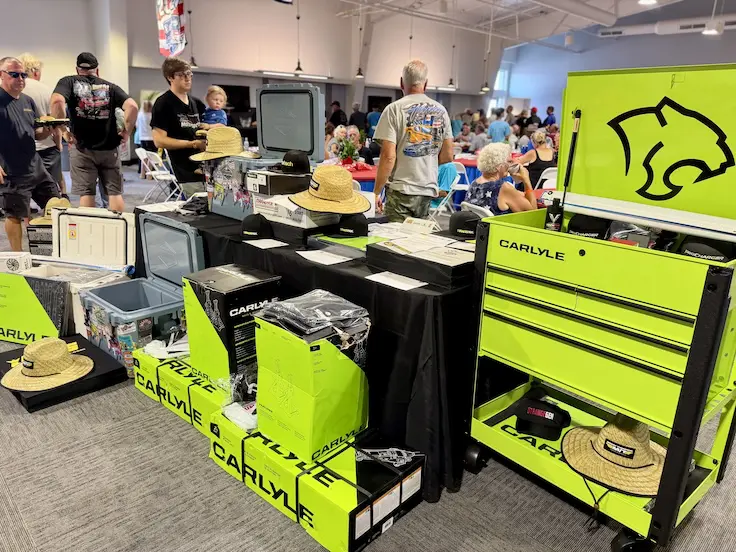
2 – GIVING BACK – Before the first Sportsman cars rolled toward the Indianapolis Raceway Park starting line Wednesday, NHRA took care of something it considers every bit as important.
Roughly 900 people packed the TEC building Tuesday night for NHRA’s annual Sportsman Appreciation Dinner, a U.S. Nationals tradition built around thanking racers before they begin the long haul toward Monday.
Jason Galvin, NHRA Sportsman Racing Manager, estimated about 70% of the entered Lucas Oil Series competitors attended. That came despite a number of teams still traveling to Indianapolis Tuesday night.
“We had a great night at the Sportsman Appreciation Dinner,” Galvin said. “We had basically 70% of the entered Lucas Oil Series competitors who came and inherently that number ends up skewed down a little bit because it’s Tuesday night and so many of our top teams just aren’t here yet.”
The dinner has been part of the U.S. Nationals routine for years, growing under NHRA President Glen Cromwell and former Sportsman Racing Manager Sarah Walker. Galvin said Walker played a major role in building an event racers now expect when they arrive at Indy.
More than 750 Lucas Oil Series entries are competing this week, representing all seven NHRA divisions. For Galvin, getting that many racers in one room creates an opportunity NHRA rarely gets anywhere else.
“It’s so easy to say that our Sportsman racers are the backbone of the company and they are, but how do you show that?” Galvin said.
NHRA fed the racers and distributed tens of thousands of dollars in products supplied by corporate partners. Galvin said the larger purpose went beyond dinner and giveaways.
“There are people from around the country who spend weeks of their lives chasing a Wally on Monday here,” Galvin said. “You have to show those people that you respect them and appreciate them.
“And it’s not just the time and the race cars, it’s the money. It’s the time, it’s the effort, it’s the time away from family, from work. It’s the time that spouses give their husbands to go chase a 13-inch trophy on Monday.”
Galvin, himself a past Sportsman racer who once reached the final 16 at Indy, understands what awaits once racing begins. Long days, staging-lane waits and multiple runs are part of surviving the U.S. Nationals.
That made Tuesday night NHRA’s chance to recognize the racers before the marathon began.
“It’s the single most important thing that we do from an event standpoint all year, as far as I’m concerned,” Galvin said. “It’s the one way that we can touch racers from all seven divisions that we have and beyond and let them know that we see them, we appreciate them, we care about them and we are thankful that they are here to help make this event the most special drag race in the world.”
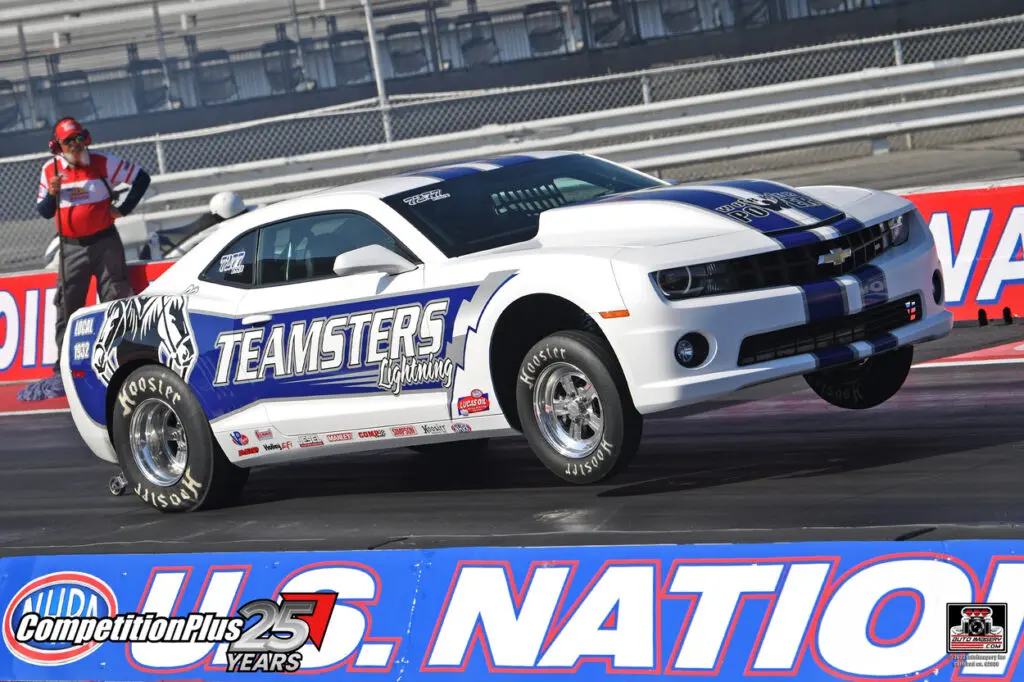
3 – THE SUPER STOCK FIELD – Mike Johnston drove his way to the top of the Super Stock ladder after two qualifying sessions at the NHRA U.S. Nationals, leading a massive field where just getting into the top 128 required running well under the index.
Johnston, of Parker, Arizona, wheeled his FSS/F 2012 Chevrolet Camaro to a 9.137-second run against a 10.20 index. The 1.063-second-under performance put him atop the qualifying order as the Sportsman-heavy opening portion of the U.S. Nationals unfolded at Indianapolis Raceway Park.
There wasn’t much breathing room at the top.
Houston’s Stan Holt sits second after taking his GT/L 1966 Chevrolet Nova to a 9.803 against a 10.85 index, good for 1.047 under. Holt trails Johnston by only .016 second in the qualifying battle.
Tom Ferruggia occupies the third position with another Factory Stock combination. The Menifee, California, racer ran 9.172 against the 10.20 FSS/F index in his 2013 Camaro, finishing the second session 1.028 seconds under.
The rest of the top eight isn’t far behind, either.
Jeff Dona sits fourth after running 9.575 against the 10.60 SS/HA index in his 1998 Pontiac Firebird, a 1.025-under effort. Jim Whalen’s 1998 Firebird is fifth at 1.022 under following a 9.978 against his 11.00 SS/JA index.
Jeff Myers put a third late-model Camaro into the top six, recording a 9.030 against the 10.05 FSS/E index for a 1.020-under run. Chelsea Tindle follows in seventh with a 9.646 in her GT/IA 2004 Chevrolet Cavalier, 1.004 seconds beneath the 10.65 standard.
Avery McLawhorn completed the top eight and gave the group another member on the other side of the one-second-under barrier. McLawhorn drove his GT/QA 1966 Chevrolet to a 10.748 against an 11.75 index, putting him 1.002 under.
The size of the U.S. Nationals Super Stock field puts another number into play beyond who occupies the top spot.
After two sessions, Terry Nolen held the No. 128 position with his SS/HA 1966 Chevrolet. Nolen’s 10.178 against a 10.60 index left him .422 under and, for the
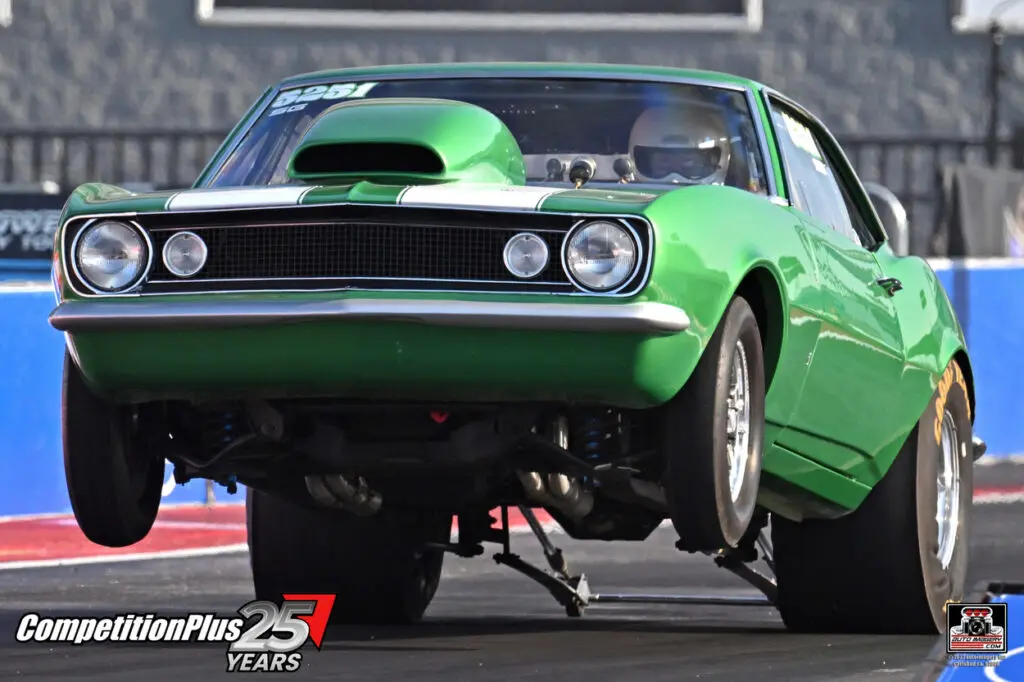
4 – TAKING CARE OF BUSINESS – NHRA’s Senior Director of Competition Mike Rice spends much of Tuesday entering names, numbers and classifications into the NHRA racer database for the U.S. Nationals. Beginning Wednesday, Indianapolis Raceway Park starts eliminating them.
It’s a safe bet more pairs of race cars travel down the Indy drag strip in one day than some local tracks see in a considerable stretch. Rice, NHRA’s senior director of competition, estimates Wednesday alone can approach 600 pairs — and possibly more.
“In a day? Oh, boy,” Rice said. “Just an estimate. … Just pairs of cars, you’re probably close to 600 today. Maybe even a little more than that.”
And Wednesday is only the beginning.
Stock, Super Stock, Super Comp and Super Gas fill a schedule where wasted minutes become expensive. A Super Comp session with more than 100 cars can consume roughly an hour even when NHRA keeps the lanes moving at a blistering pace.
“It’s usually just over a minute a pair when you add it all together,” Rice said. “So basically, we’re right around an hour just of Super Comp today. Just one session.”
Moving that many cars is one thing. Doing it without allowing speed to compromise track safety requires considerably more manpower than what spectators see from the grandstands.
“Well, that’s why we have so many people out there, trackside and everything else,” Rice said. “We’ve got eyes up here obviously, and then the start line and all the trackside people, they’re watching for anything coming off a car, anything leaking, anything like that. So it’s a group effort.”
Then Thursday makes the traffic heavier.
“Today is just Stock, Super Stock, Super Comp, Super Gas,” Rice said. “Now tomorrow we throw in Top Sportsman, Top Dragster and Comp, and then the next day, you throw in everything else.”
That is the U.S. Nationals before most fans consider the weekend fully underway.
At Indy, the challenge isn’t merely putting hundreds of race cars down the same quarter-mile.
“It’s getting one pair off the track and having the next one ready roughly a minute later — then doing it hundreds of times without losing sight of what might be leaking, loose or lying on the racing surface,” Rice explained.
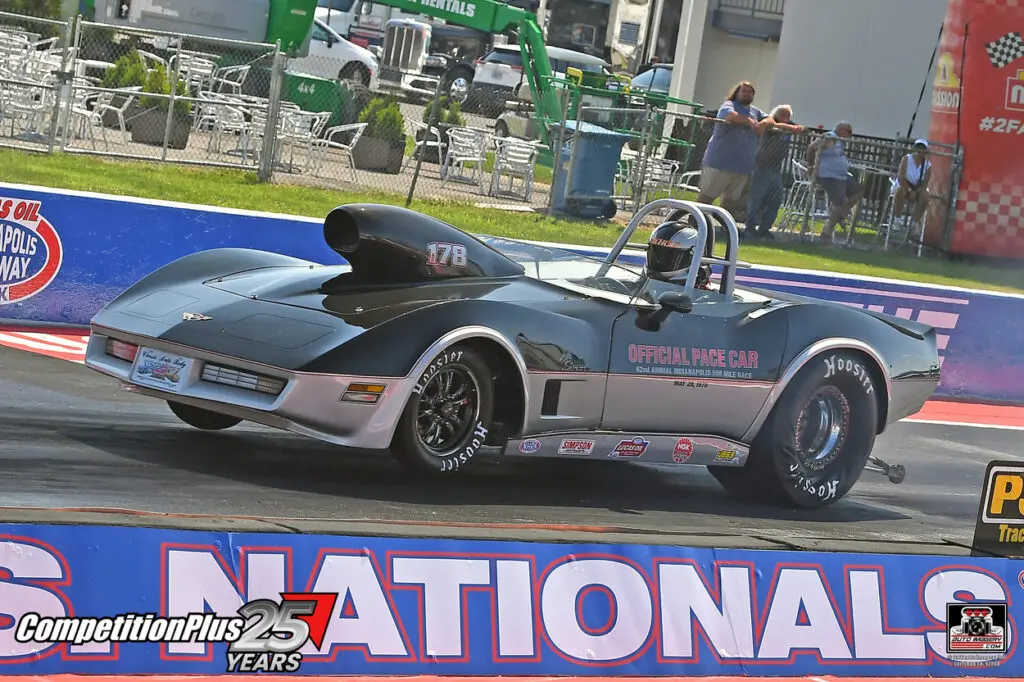
5 – LOOKS CAN BE DECEIVING – There’s one thing about Earl Nichols’ Super Gas roadster. His machine looks fast while sitting still, and old pace cars seem to have that effect.
Nichols’ 1978 Corvette roadster, adorned in Indianapolis 500 Pace Car graphics, is one of those cars that grabs attention in the largely similar Super Gas division. There’s only one problem with the assumption most people make when they see it.
It was never a pace car.
“It’s a real race car, that whole body comes off,” Nichols said. “It’s all tubular chassis, but it is the exact configuration of a real car.”
Nichols, who lives in Fair Hill, Maryland, acquired the Corvette from friend Dave Graytag, a Wilmington, Delaware, Chevrolet dealer who once raced NHRA nitro coupes. Graytag drove the then-roofed Corvette to street rod shows with a supercharged engine before Nichols traded a paint job and some money for it.
Nichols eventually transformed the car as roadsters became more practical for Super-class racing, where visibility at the finish line can be critical. Tom Goldman of Auto Race Specialties handled the tinwork and roll cage, while Classic Auto Body in Wilmington worked on the body.
The result is something Nichols believes stands alone among Corvettes of the 1978-82 body style.
“There’s a lot of Corvette Roadsters, but this is the only one I’ve ever seen that is of this style,” Nichols said.
The Corvette still incorporates legitimate production pieces, including a Corvette rear body panel, hood and bumpers, wrapped around its race chassis. Nichols even retained working doors.
Its Indianapolis Pace Car appearance came later.
Nichols previously raced the Corvette in pearl white with candy-colored flames, including an appearance at the U.S. Nationals 50th anniversary 25 years ago. He made it to Monday eliminations before losing to Ray Conley in the opening round.
After years racing it with the roof, Nichols decided visibility won out over originality and converted it into a roadster. Following a crash at Englishtown during the track’s final season, he rebuilt the front end and eventually repainted the car.
The pace-car treatment was almost an experiment. The reaction convinced him to keep it.
“When everybody in the lanes was coming over, looking at it and a lot of people have stopped, it’s been a pretty neat experience that everybody just seemed to be thrilled with it,” Nichols said. “So that’s cool. There’s a lot of beautiful cars here, so that makes a difference if the other racers think it looks nice too.”
Not everyone gets the joke.
“More than one,” Nichols said when asked how many people have questioned cutting up an original pace car. “I’ve had older gentlemen screaming at me at Maple Grove in the staging lanes, ‘Why would you cut a pace car up?’ But they never made a convertible pace car.
“So if they really knew what they were talking about, they would know that wasn’t true.”
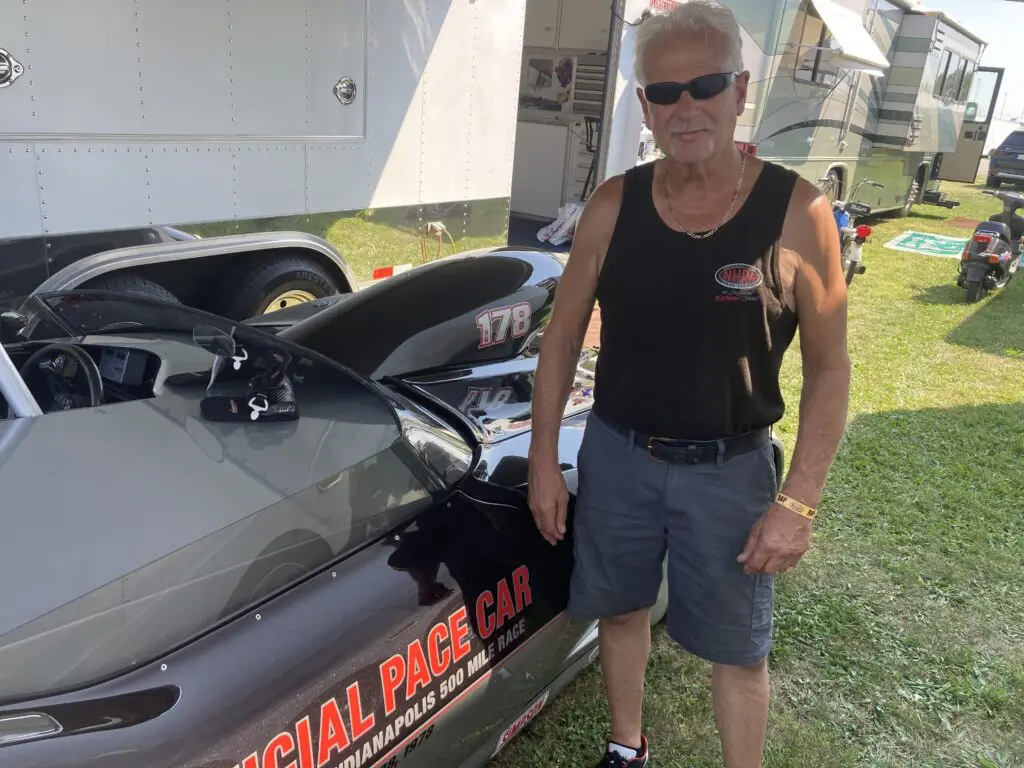
6 – HIS PLACE IN THE EMPIRE – Royce Lee Freeman doesn’t necessarily consider himself the forgotten Freeman in the family. He just hasn’t minded remaining outside the spotlight occupied by his younger brother Richard and their father, Royce Sr., who passed away in 2022.
Freeman couldn’t be more content racing in Competition Eliminator and serving as a driving force behind the family’s Elite Motorsports operation. Richard may be the public face, but Royce has carved out his own piece of the family business.
“Those guys over there have a lot going on and requires a lot of their attention to be at the top of their game like they are,” Freeman said. “And so, I do what I can to try to take care of the sportsman side of things.”
Freeman’s Comp car shares plenty with Elite’s Pro Stock machinery, including engines from the same shop. He’s also learned when those engine builders tell him not to touch something, he should listen.
“My motors are just like the Pro Stock motors,” Freeman said. “And they’ve got me trained well enough to know what to touch and what not to touch. And so, a lot of times I’ll start, they tell me, ‘Don’t touch that.’ I said, ‘Okay, I’m not touching that.’”
That lesson came through experience.
“Well, I’ve actually touched what I wasn’t supposed to and it didn’t turn out well,” Freeman said. “So I have learned by experience to do exactly what they say and things seem to go a lot smoother.”
Sportsman racing also keeps Freeman connected to where the family started, long before Elite became one of NHRA Pro Stock’s powerhouse operations.
“And Richard, sometimes he doesn’t act like it, but his roots come from the sportsman side of things,” Freeman said. “So he knows how important this is to all of us, our business and our family. This is kind of where we started. And so we’re just trying to keep it going as long as we can.”
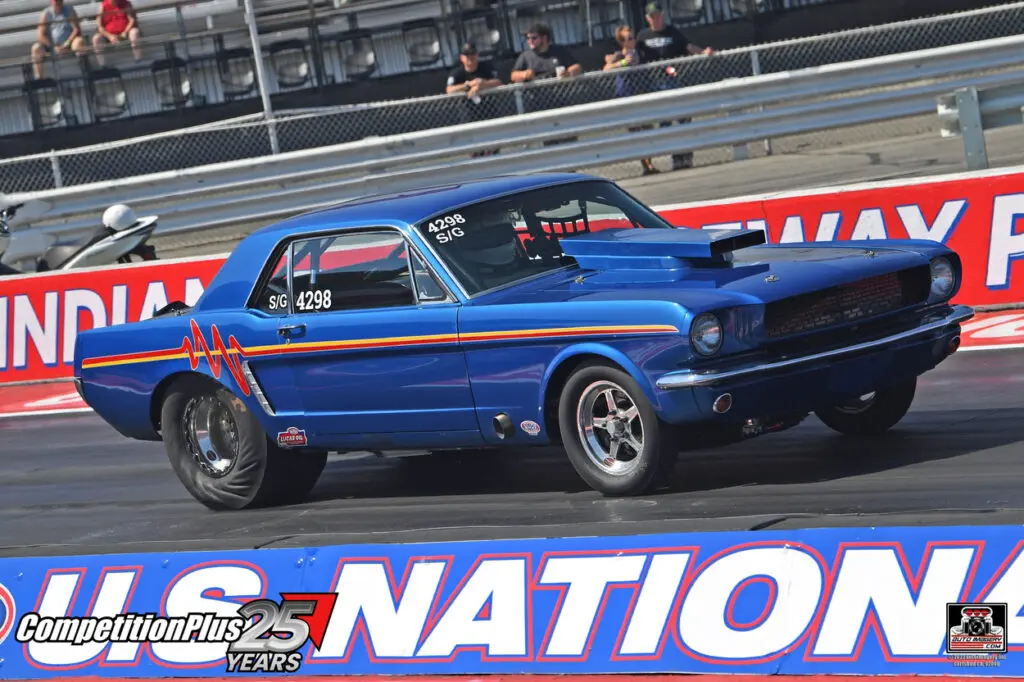
7 – CATCH ALL THE ACTION FOR FREE – The first cars to hit the Indianapolis Raceway Park track Wednesday morning won’t require a subscription to watch. For the third consecutive year, NHRA is opening a sizable portion of U.S. Nationals coverage to fans free of charge.
Free streaming began Wednesday and continues through Friday’s final round of the Sox & Martin HEMI Challenge, giving viewers access through NHRA.tv and NHRA’s YouTube channel. Richmond Auctions is backing the free preview for the 72nd annual NHRA U.S. Nationals.
The coverage puts Sportsman racing front and center during the opening two days. Every pass from Wednesday and Thursday Lucas Oil Drag Racing Series competition will be available, including Stock and Super Stock class eliminations.
Friday expands the menu considerably.
Along with qualifying and eliminations in the Sox & Martin HEMI Challenge, the stream will include Top Alcohol competition, Pro Mod qualifying, Factory Stock Showdown and Outlaw Street. Fans also will get the opening qualifying sessions for Pro Stock and Pro Stock Motorcycle.
Racing begins at 8 a.m. ET Wednesday and Thursday and 9 a.m. Friday.
The free portion concludes following the HEMI Challenge final, scheduled for approximately 7 p.m. Friday.
Mike McCandless has been involved with the free-preview program since it began three years ago, with Richmond Auctions joining the effort for the first time in 2026.
“It’s a pleasure to sponsor once again the NHRA live stream program during the Cornwell Quality Tools NHRA U.S. Nationals,” said McCandless, CEO of the McCandless Collection and co-owner of Richmond Auctions.
“We’ll be highlighting all the Sportsman classes Wednesday through Friday, including Stock and Super Stock Class Eliminations and, of course, the Sox & Martin HEMI Challenge.
“All these sportsman racers are the backbone of the sport we so dearly love, and they deserve the recognition.”
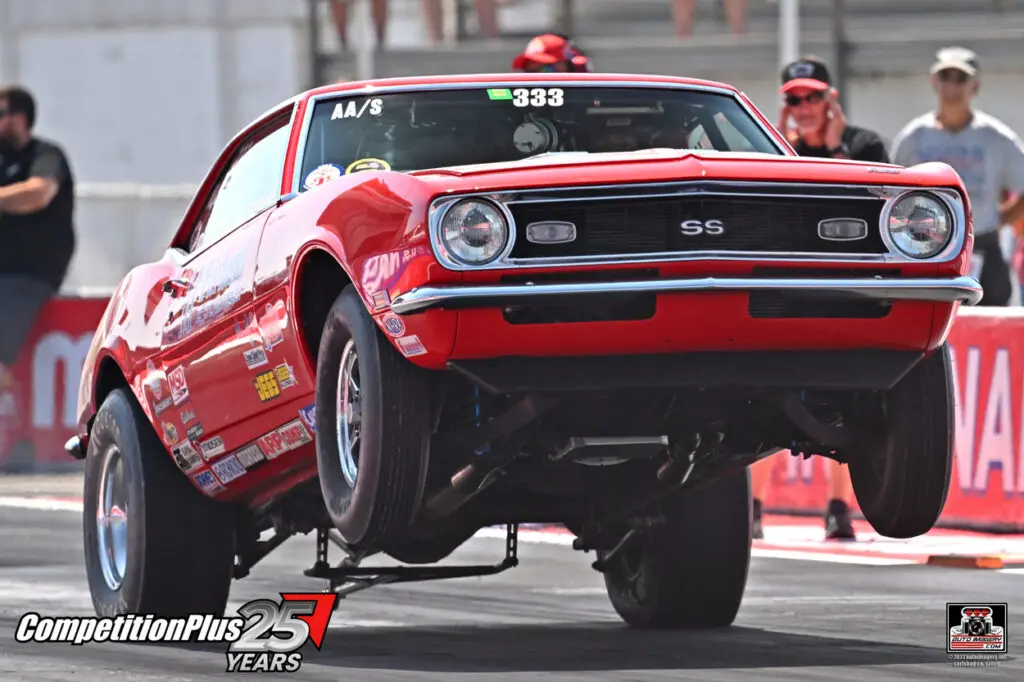
8 – HIGH PERFORMANCE ALPHABET SOUP – There are throwbacks to the days when class racing was king in NHRA, and then there is Thursday at the U.S. Nationals, when Stock Eliminator class eliminations turn the alphabet into a pecking order.
For years, the A-cars occupied the high-rent district. An A/S designation put the stick-shift cars near the top of the food chain, while A/SA represented their automatic counterparts.
Then somebody apparently decided A wasn’t enough.
The AA/S and AA/SA combinations have pushed farther up the alphabet chain, bringing quicker indexes and another layer of muscle to an Indy tradition built around running heads-up for class trophies.
John Korish provided a reminder that the original A/S cars haven’t exactly become tame.
Korish, driving his 2015 Camaro, ripped off a 9.750 against the 10.95 A/S index, running 1.200 seconds under. Randy Mans followed with a 9.798 in his 2000 Firebird, 1.152 under the same index.
Jacob Decker was also more than a second under at 9.937, while Caleb McFarland rounded out the A/S group with a 10.005.
The automatic side brought more players to the game. Brian Martel led A/SA with a 10.034 against an 11.00 index in his 1969 Camaro. Mark Howes followed at 10.093 in his 2019 Challenger, with Jimmy DeFrank, Doug Box, Doug Lambeck, Jim Farrell and Austin Williams completing a class loaded heavily with 1969 Camaros.
Mike Ficacci led AA/S with a 9.789 against the 10.70 index in his 1969 Camaro, putting him .911 under. Brett Saurbaugh’s 1967 Corvette was next at 9.837, followed by Sean Gaffney, Brett McFarland and Dirk Olson.
Justin Hutto paced AA/SA with a 9.853 in his 1969 Corvette, .847 under the 10.70 standard. Rylie Trumble followed at 10.051 in a 1971 Corvette.
9 – BEE STOCK, BEE ALOT – NHRA begins one of its oldest U.S. Nationals traditions Thursday morning, when class eliminations settle the argument over who has the best car in each Stock Eliminator classification.
And if there is one class where winning the trophy figures to require some work, B/Stock Automatic has brought enough gunslingers to make four rounds necessary before anybody can claim it.
Fourteen B/SA entries are on the Indianapolis qualifying sheet, ranging from 1969 muscle cars to a 2024 Camaro. The first three cars went more than a second under the 11.25-second class index Wednesday.
Jim Boudreau fired the biggest shot, wheeling his 1969 Camaro to a 10.159, 1.091 seconds under the index. Chris Howes was only four-thousandths behind with a 10.163 in his 1970 Challenger, 1.087 under.
Sam Reuland made it three members of the one-second-under club with a 10.216 in his 2011 Challenger. Jerry Emmons sits fourth after running 10.264 in his 1969 Camaro, .986 under.
The numbers don’t ease up much from there.
Hunter Pierdolla ran 10.274 in his 1970 Camaro before Allison Doll, Andrew Collins and Thomas Baker produced one of the stranger statistical ties on the sheet. All three ran 10.286 — Doll in a 1998 Firebird, Collins in a 2024 Camaro and Baker in a 1970 Barracuda.
Three cars from three different eras produced exactly the same elapsed time.
Paul Stalba followed at 10.312 in his 2001 Corvette, while Jarrod Granier’s 1999 Trans Am ran 10.349. Ten of the 14 B/SA entries were at least nine-tenths under the index.
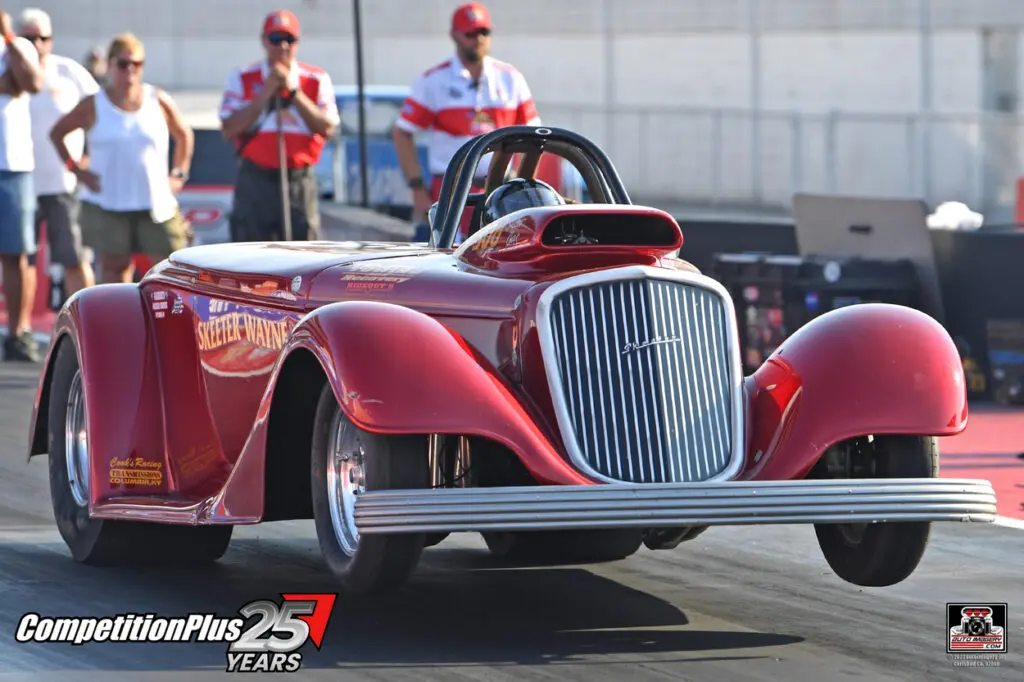
10 – TODAY’S SCHEDULE – More classes are added to the schedule for today including Competition Eliminator which has two sessions and Top Dragster which has two sessions. Top Sportsman also gets in two runs.
Super Comp and Super Gas get one run and it is the first round of eliminations.