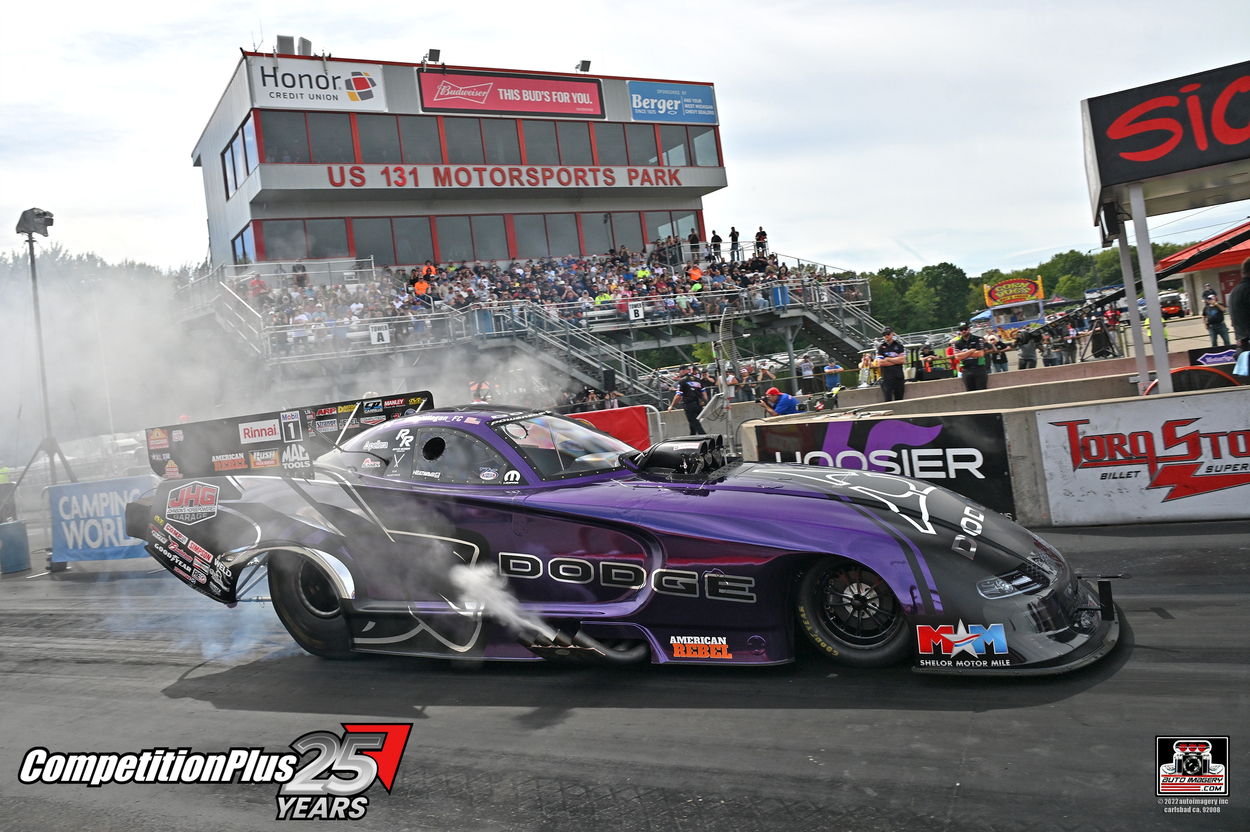
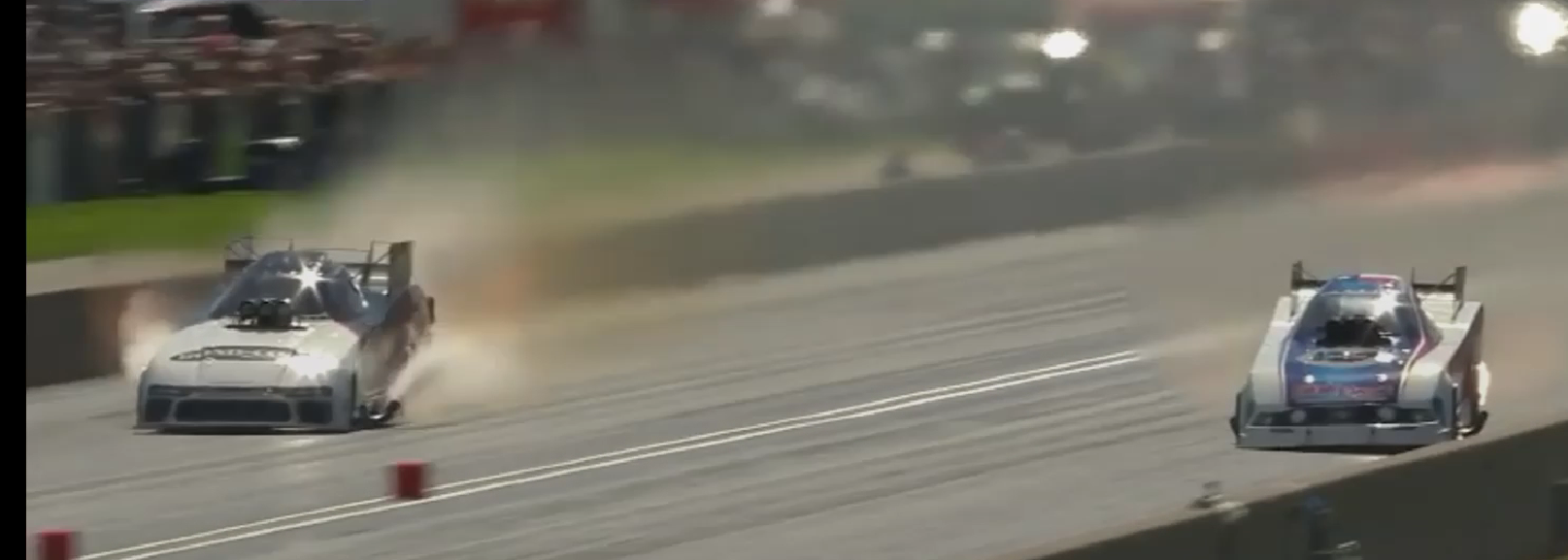

It’s the club no one wants to join, but Hunter Green got his membership card Friday at U.S. 131 Motorsports Park.
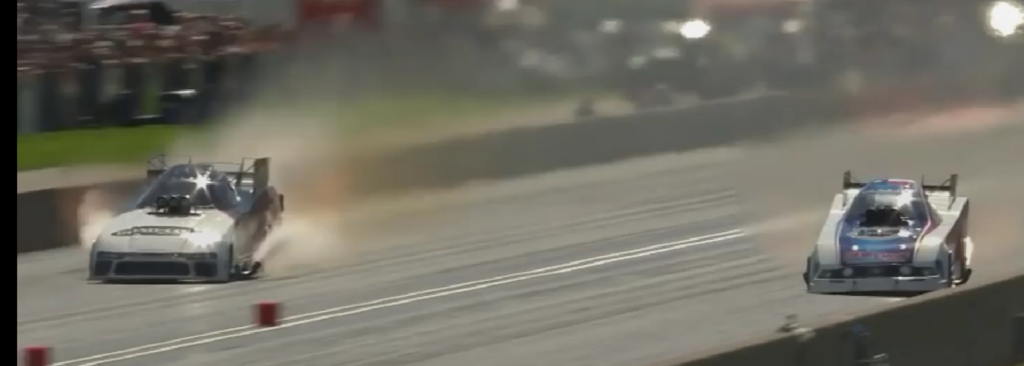
Green, in his sophomore season driving a fuel Funny Car, became the latest driver for his nitro car to experience a rear-end failure when an apparent pinion gear broke just two pairs into nitro qualifying at the inaugural NHRA Great Lakes Nationals. It halted action at the strip for nearly an hour as the Safety Safari worked to clean up the mess.
A rear-end explosion is an oil-down on steroids. The mess is worse, the cleanup is longer and, according to Green, what happens inside the race car bears little resemblance to blowing up a supercharger.
“100%, you feel the difference,” Green said. “It felt like there’s a giant blender full of nuts and bolts right underneath my ass.”
That pretty much covers the technical explanation from the driver’s seat.
“Whenever your supercharger blows up, I mean, you don’t feel anything,” Green said. “You see a pop in front of your face, but this one you feel everything, but you don’t see anything.”
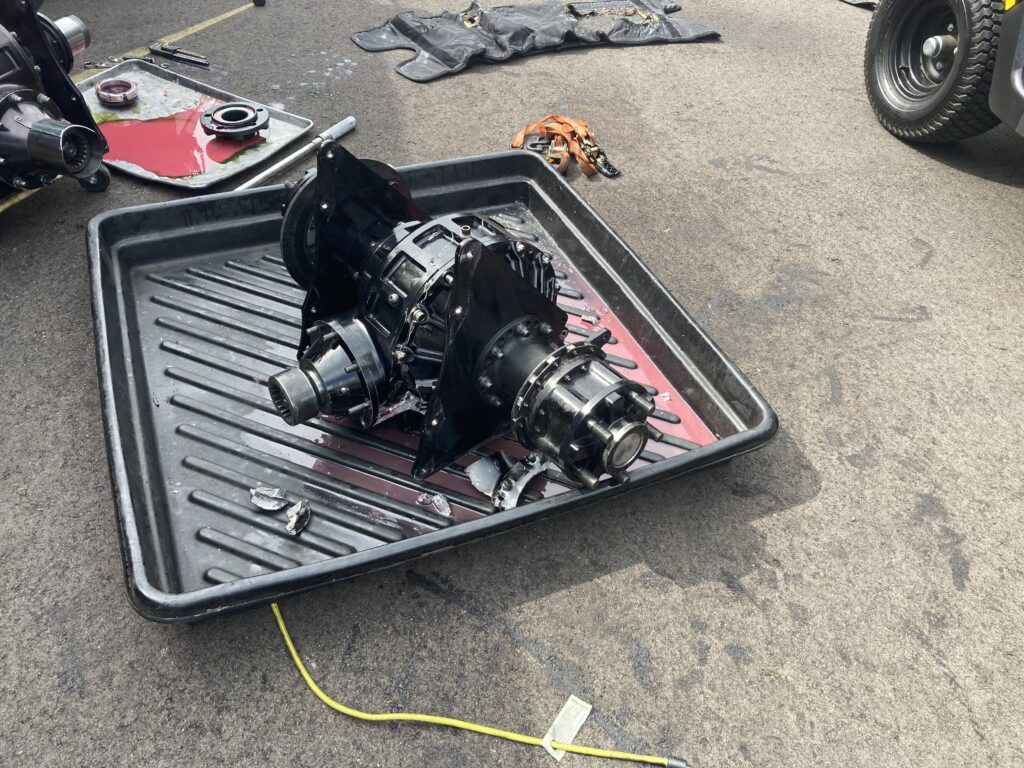
Green could hear the debris underneath him as the Funny Car continued down the track. What he couldn’t see was where any of it might go next.
“I could hear it and you have that fear, sure,” Green said. “I mean, when you’re still going down the track that fast and you can hear all that chaos going on underneath you, yeah, that goes through your head. Like, ‘I hope something doesn’t come up and stick me or something.’”
Nothing did stick Green and he climbed out uninjured, but his team was left with a substantial mess and NHRA’s Safety Safari was handed the unpleasant job of cleaning gear oil from the racing surface.
For Green, there wasn’t much previous experience to lean on. He has already experienced some of the violence that comes with driving a nitro Funny Car, but this was a different animal.
“It’s a whole ‘nother world,” Green said. “I’ve never had anything happen to me like that. I was just asking my dad if he’s ever had that happen. He said he’s never had it happen.”
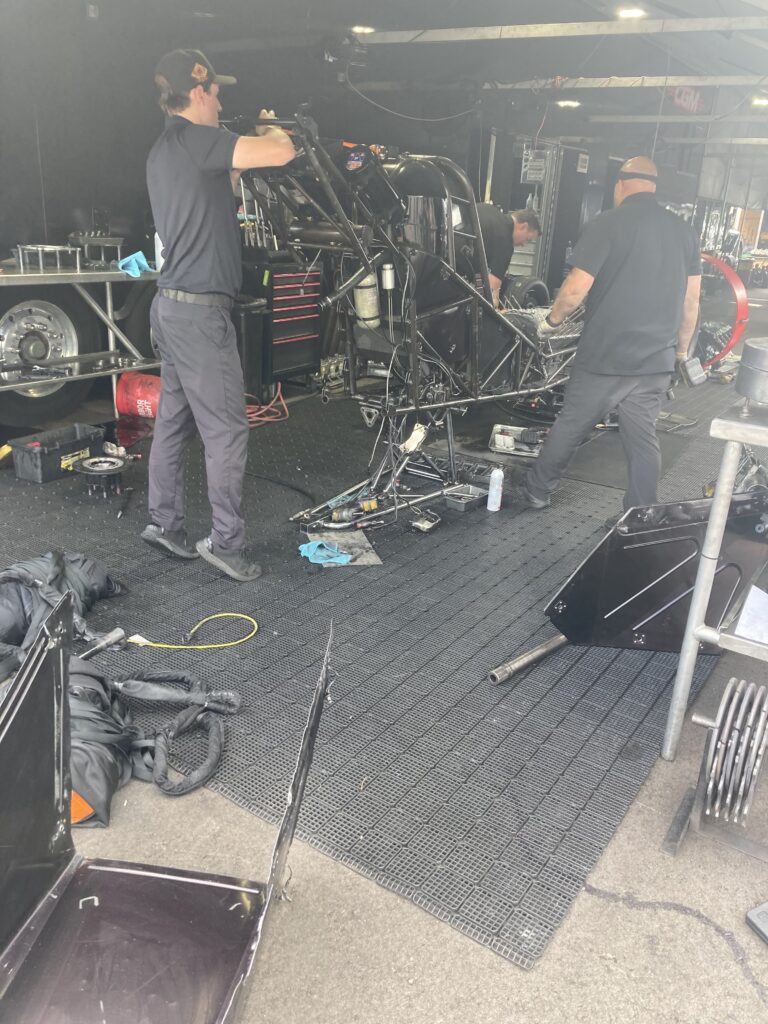
The younger Green was almost as bothered by what happened behind him as what happened underneath him. With only two pairs having run, everybody else was waiting.
“Yeah, it’s a unique scenario that you don’t want to have to go through and it created a huge mess over there for us,” Green said. “It sucks. I feel bad for the fans because it was the second pair out and they’re having to wait. They’ve came out here for this race and they’re having to wait right away and I feel bad for the competitors. It sucks that we were the team that did that and caused that for everybody.”
CompetitionPlus.com examined the problem in depth earlier this season, detailing how increased power, vehicle weight, clutch application and improvements in track preparation have combined to put enormous loads on driveline components. Strange Engineering’s Jeff Stange said at the time that loads can spike beyond 10,000 foot-pounds of torque when the clutch locks up.
The problem isn’t exclusive to one manufacturer, one team or one class. Nor is every failure necessarily caused by the same component; bearings, setup, housing rigidity, alignment and the rest of the driveline can become part of the equation.
Tony Schumacher doesn’t need the technical briefing.
He’s experienced three rear-end failures in the Rick Ware Racing dragster he pilots. Schumacher said the initial violence can happen so quickly that distinguishing it from another nitro explosion isn’t necessarily possible from the cockpit.
“It didn’t,” Schumacher said when asked if his rear-end failures felt different than a supercharger explosion. “I mean, other than after it pops, you can hear it grinding in the back. There’s no way to tell.”
Then everything starts happening at once.
“It’s extremely fast and the cause, it’s unpredictable,” Schumacher said. “Our foot is down. When it goes, it’s usually a rip, pop, rear end brakes, ceases, the motor skyrockets and it just pops everything up. It’s an expensive ordeal. I feel bad for anyone that has to go through it.”
At least one rear-end manufacturer isn’t sitting around waiting for the problem to cure itself.
Strange Engineering has continued making changes to its fuel-racing program, including revisions to its Italian-manufactured gear set. According to information provided to CompetitionPlus.com, the first batch of the revised gears is already in competition, with several Funny Car teams using them since Brainerd, including the team that won Indianapolis.
The gears are being manufactured at a different Italian facility, the same plant Strange used in 2025 for development of its newer 12.75-inch rear-end program. The 12.75-inch all-billet rear represents the next generation of Strange rear ends as nitro teams continue asking more from the driveline.
There is another path, and it costs more.
Over the past two years, Strange has developed its own gear set, giving the company control of the process from raw material through the finished product. Those gears have been used primarily in Top Fuel, where the rear ends generally endure even greater punishment.
The Strange-produced gear set carries a higher price tag at $3,000 over the company’s Italian gear option. Strange considers its own gear the superior piece, while believing the revised Italian gears can provide good service life for Funny Car teams and some Top Fuel combinations at a lower cost.
There have been other changes along the way, too, although Strange isn’t advertising every one of them.
What Green hopes for him, his fellow racers and the race fans who have to sit through the lengthy cleanup is that it never happens again.
“It’s a unique scenario that you don’t want to have to go through,” Green said.