
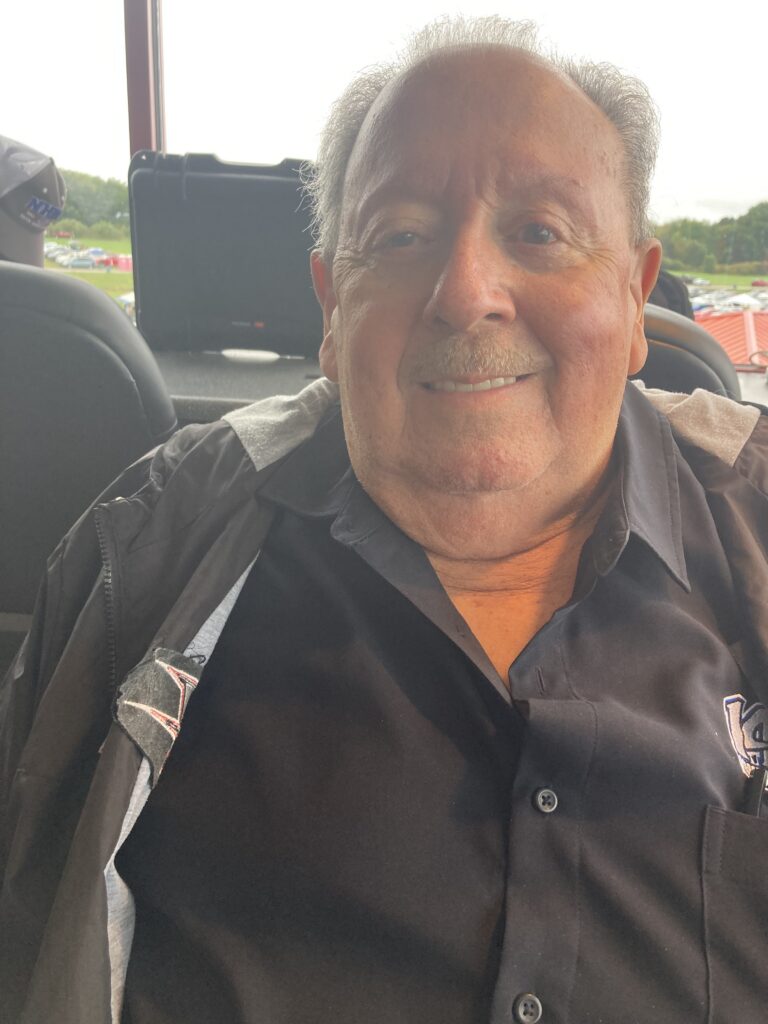
A lot of people believed Jason and Stephanie Peterson owned U.S. 131 Motorsports Park, and that’s kinda-sorta what Alec Pinsonneault had in mind.
Pinsonneault owns the picturesque drag strip outside of Grand Rapids, Michigan. What he wanted, however, were two drag racing people embedded deeply enough in the sport to treat the place as if their names were on the deed.
He found them in the Petersons.
“That’s the key. If it wasn’t for them, I would have never sunk that kind of money in,” Pinsonneault said. “I knew it had to. John Grivins was an excellent operator in his day, but I knew it had to progress to the next level and that’s what they brought, the next level of operation.”
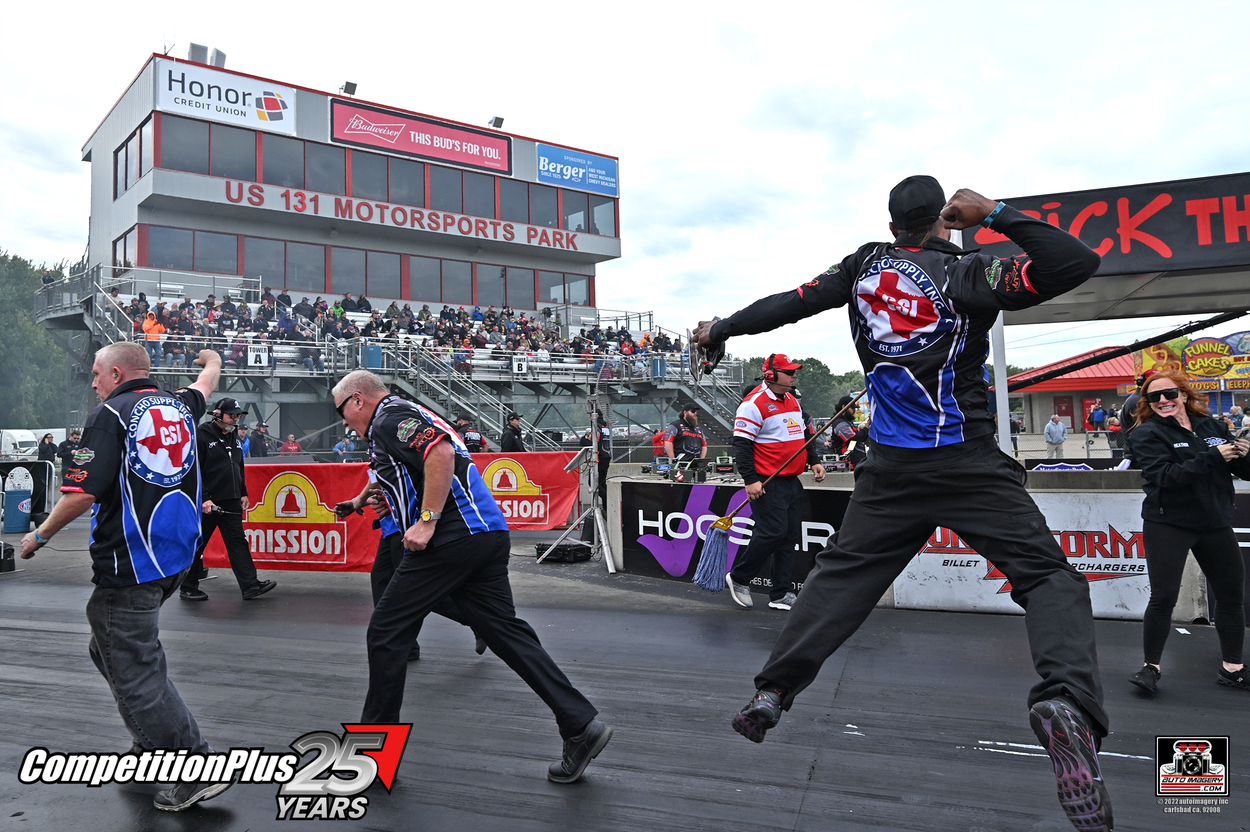
When Pinsonneault watched the response to U.S. 131’s NHRA Mission Foods Drag Racing Series debut with the Great Lakes Nationals, he could smile knowing the plan had worked.
And here is the strange part: Pinsonneault never intended to become a drag strip guy.
In fact, ask him if he was always a drag racing fan and there isn’t even a moment of hesitation.
“Not at all,” Pinsonneault said.
Back in 2000, his vision for the property involved oval-track racing. The facility already had a dirt oval and drag strip when Pinsonneault purchased it, but what followed was essentially a complete reconstruction.
“So the history behind me being here was back in 2000, I was going to build a couple oval tracks,” Pinsonneault said. “This property had a dirt oval on it and a drag strip and it was for sale. So I ended up buying this property and basically tore up every square foot of the property up and rebuilt the whole facility.”
The racers changed the plan before the oval track ever had much of a chance.
“But that took a year and a half,” Pinsonneault said. “And because we were worried about losing the racers, we got back to going on the drag strip and basically put the oval track on hold. Long story short, the oval track never went in because we turned the oval track area into parking and it became pretty popular real quick and we just kept it as a drag strip.”
The rebuilding took place between 2000 and 2001. What was supposed to share the property with Pinsonneault’s oval-track vision instead became the business.
U.S. 131 eventually became an IHRA national-event stop, and Pinsonneault started collecting drag racing memories whether he planned to or not. Some were difficult to forget.
One involved Clay Millican and a set of clippers.
“As a matter of fact, I think maybe 2001 or 2002, Clay Millican won the IHRA championship for I think the seventh time or something,” Pinsonneault said. “And I shaved his head that day.”
So much for not being a drag racing guy.
“Even though I’m not a drag race fan, I’ve been around a little bit,” Pinsonneault said.
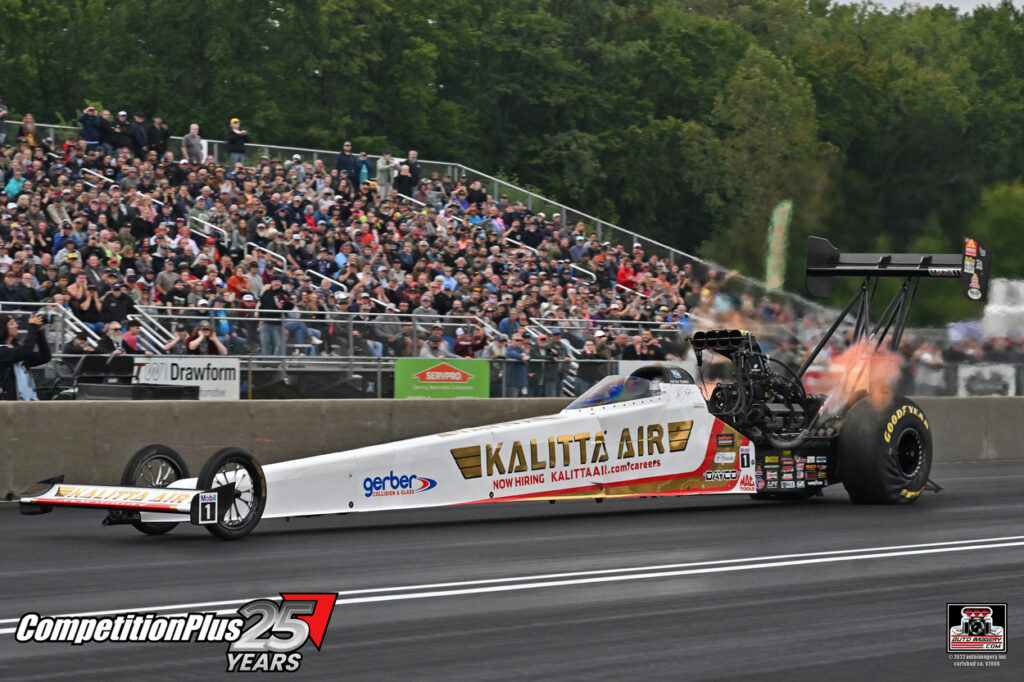
More than two decades later, there isn’t much “little bit” about U.S. 131.
The facility has cultivated a fiercely loyal following, including fans who cross the Canadian border to attend its events.
Those people had been supporting this place long before NHRA finally put a national event on the schedule.
Pinsonneault found out just how deep that loyalty ran when the Great Lakes Nationals arrived with enough lousy weather to test anybody’s devotion.
“Understatement, yep. Yeah. It’s been very committed and loyal fans,” Pinsonneault said. “Yep. Even from Canada, there’s a lot of Canadians coming over to watch this event.”
The crowds were one part of the equation. The Petersons were another.
Pinsonneault had already spent heavily upgrading U.S. 131, but pouring money into concrete, asphalt and grandstands is one thing. Trusting someone else with what happens after you’ve written those checks is another.
That’s where Jason and Stephanie entered the equation.
Pinsonneault didn’t need them to act like employees. He needed them to think like owners.
“I don’t have to worry about it. I trust them, they trust me, and it’s the perfect relationship,” Pinsonneault said. “And because I’m not a drag racer, I cannot put much input into it. So I trust them 100% with their decisions and what they do, and they’ve done a fabulous job.”
That might be the most revealing part of the U.S. 131 story.
Pinsonneault never pretended to be the smartest racer in the room. Instead, he found people who knew the business and then resisted the temptation owners sometimes have to hire experts and tell them how to do their jobs.
The result was a track that kept progressing. Pinsonneault’s relationship with drag racing still carries a healthy dose of irony.
He came from the oval-track world and raced ASA. The drag strip was almost the supporting actor in his original plan, until the supporting actor stole the movie.
“Yeah. But I’m from the oval track side of things. I raced ASA,” Pinsonneault said. “I’m a oval track racer by heart, but a drag racer by business. And now my grandson races, we promote this track, that’s the sponsor on the car, US 131 Motorsports Park. So it’s also an avenue for me to run that through.”
Maybe that’s also why the arrangement with the Petersons works.
Pinsonneault knows which side of the motorsports fence he came from. He also knows U.S. 131 didn’t need him pretending to know something he didn’t.
What he could provide was the facility, the investment and the willingness to keep pushing it forward.
“Whatever I do, I like to do it right,” Pinsonneault said. “So the facility is as good as I could possibly make it. So I hope it meets everybody’s expectation.”
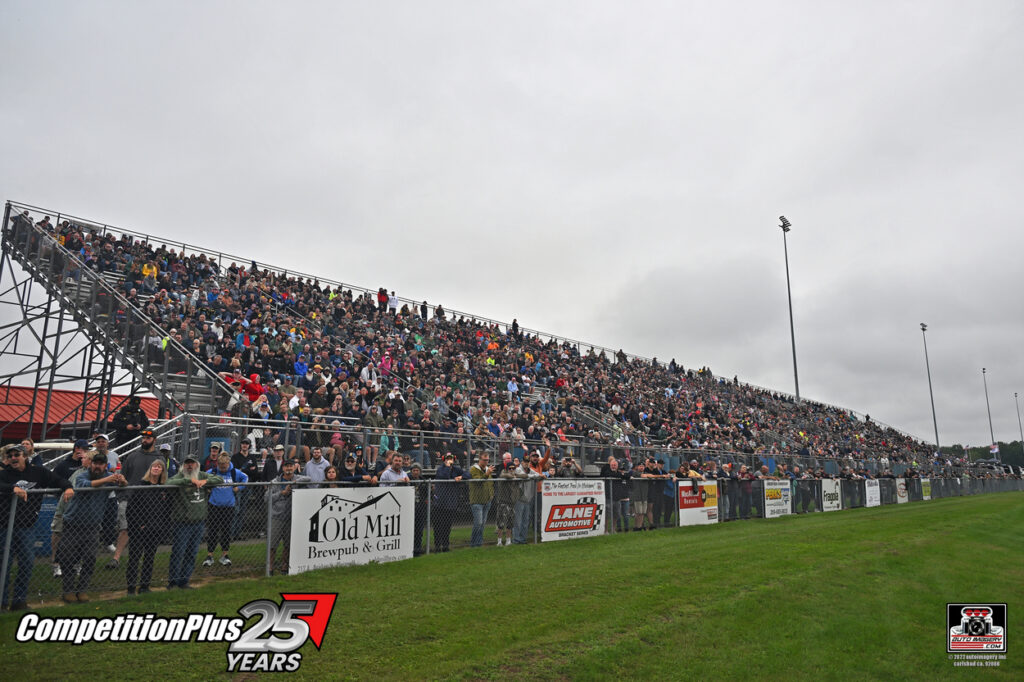
For years, U.S. 131 established its reputation outside NHRA’s national-event tour. It didn’t need an NHRA race to validate what the racers and fans in Michigan already knew about the place.
But getting one provided a very large stage to show everybody else. Then Mother Nature decided to make U.S. 131 earn its debut. Rain and cold pushed eliminations into Monday, the kind of opening act no first-time national-event host would order. Still, people kept coming through the gates.
There were lines of them. For Pinsonneault, who originally bought the property thinking about oval tracks, rebuilt virtually the entire place and eventually entrusted its drag racing future to Jason and Stephanie Peterson, the scene provided a pretty good return on a decision made more than two decades earlier.
The drag strip that wasn’t supposed to become the centerpiece had become an NHRA national-event facility. With rain falling around his first NHRA national event and fans still lining up to get inside, Pinsonneault didn’t need a long speech to describe what he saw.
“I would have to say it’s a success, to sum it up,” he surmised.