Direct Answer
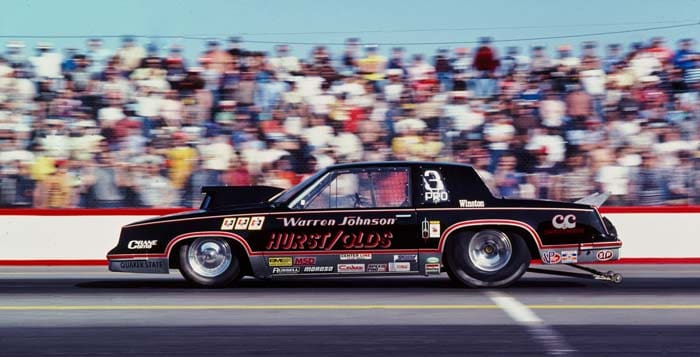
Warren Johnson — known throughout drag racing as “The Professor” — is one of the most successful and technically influential drivers in NHRA Pro Stock history. Born July 7, 1943, in Virginia, Minnesota, he is 83 years old and still alive as of 2026, remaining active in the sport through appearances, engine consulting, and NHRA 75th-anniversary Legends events. Across a driving career spanning 1971 to 2013, Johnson won six NHRA Pro Stock world championships (1992, 1993, 1995, 1998, 1999, 2001) and 97 national events from 151 final-round appearances — for years the all-time record in the class, since surpassed by his own former crew chief, Greg Anderson. He also won two IHRA Mountain Motor Pro Stock championships (1979, 1980) during a brief sabbatical from NHRA competition. He was the first Pro Stock driver to exceed 180, 190, and 200 mph, and his 138 career No. 1 qualifying positions remain the most in Pro Stock history. His nickname reflected an approach to racing built on engineering rigor rather than instinct — an approach that produced the Drag Racing Competition Engine platform still used across the class today.
Warren Johnson: Quick Reference
| Stat | Details |
|---|---|
| Full name | Warren Johnson |
| Nickname | “The Professor” |
| Born | July 7, 1943 |
| Age (2026) | 83 |
| Birthplace | Virginia, Minnesota |
| Status | Effectively retired from driving after 2013; still active in engine consulting and NHRA Legends appearances |
| First NHRA Pro Stock start | September 1971, Indianapolis (1971 Chevrolet Camaro) |
| First NHRA final round | 1976 – runner-up to Larry Lombardo |
| First NHRA national event win | July 1982, Summernationals, Englishtown, NJ – defeated Lee Shepherd (42nd career start) |
| NHRA Pro Stock championships | 6 (1992, 1993, 1995, 1998, 1999, 2001) |
| IHRA Mountain Motor Pro Stock championships | 2 (1979, 1980) |
| NHRA national event wins | 97 (from 151 final rounds) – Pro Stock record for over a decade |
| Career national event entries | 649 |
| Gatornationals wins | 9 – most all-time at the event; first in 1984, last in 2000 |
| No. 1 qualifying positions (poles) | 138 – most in Pro Stock history; first at 1978 Springnationals (28th career start), last at 2008 Bristol |
| Best elapsed time / speed | 6.561 sec / 211.26 mph |
| Speed firsts | First Pro Stock driver to exceed 180, 190, and 200 mph (200.13 mph, 1997, Richmond, VA); first sub-6.9-second pass (6.894 sec, same event) |
| Age record | Oldest professional winner in NHRA history – age 66, May 2, 2010, St. Louis/Madison, IL, defeating Jeg Coughlin Jr. (his 97th and final win) |
| National records set | 36 |
| Technical legacy | Co-developer of the Drag Racing Competition Engine (DRCE) platform with Oldsmobile/GM Performance, still used across Pro Stock |
| Family | Wife Arlene; son Kurt “KJ” Johnson – Pro Stock driver, 1993 NHRA Rookie of the Year |
| Father-son rivalry | 13 career final-round meetings with Kurt – the first father-son final in any NHRA professional class (1993, Atlanta) |
| Rivalry group | Member of Pro Stock’s “Gang of Four” with Bob Glidden, Lee Shepherd, and Frank Iaconio |
| Notable former crew chief | Greg Anderson – tuned WJ to 3 championships (1992, 1993, 1995) before becoming a driver himself and surpassing WJ’s win total in October 2021 |
| Hall of Fame | International Motorsports Hall of Fame (2007); Motorsports Hall of Fame of America (2015); ranked among NHRA’s Top 50 Drivers, 1951-2000 |
| Book | Drag Racing’s Warren “The Professor” Johnson by Kelly Wade (CarTech) |
| 2026 activity | Competed in NHRA 75th-anniversary Legends match race at the Gatornationals alongside Kenny Bernstein, Joe Amato, and Bruce Larson |
Is Warren Johnson Still Alive?
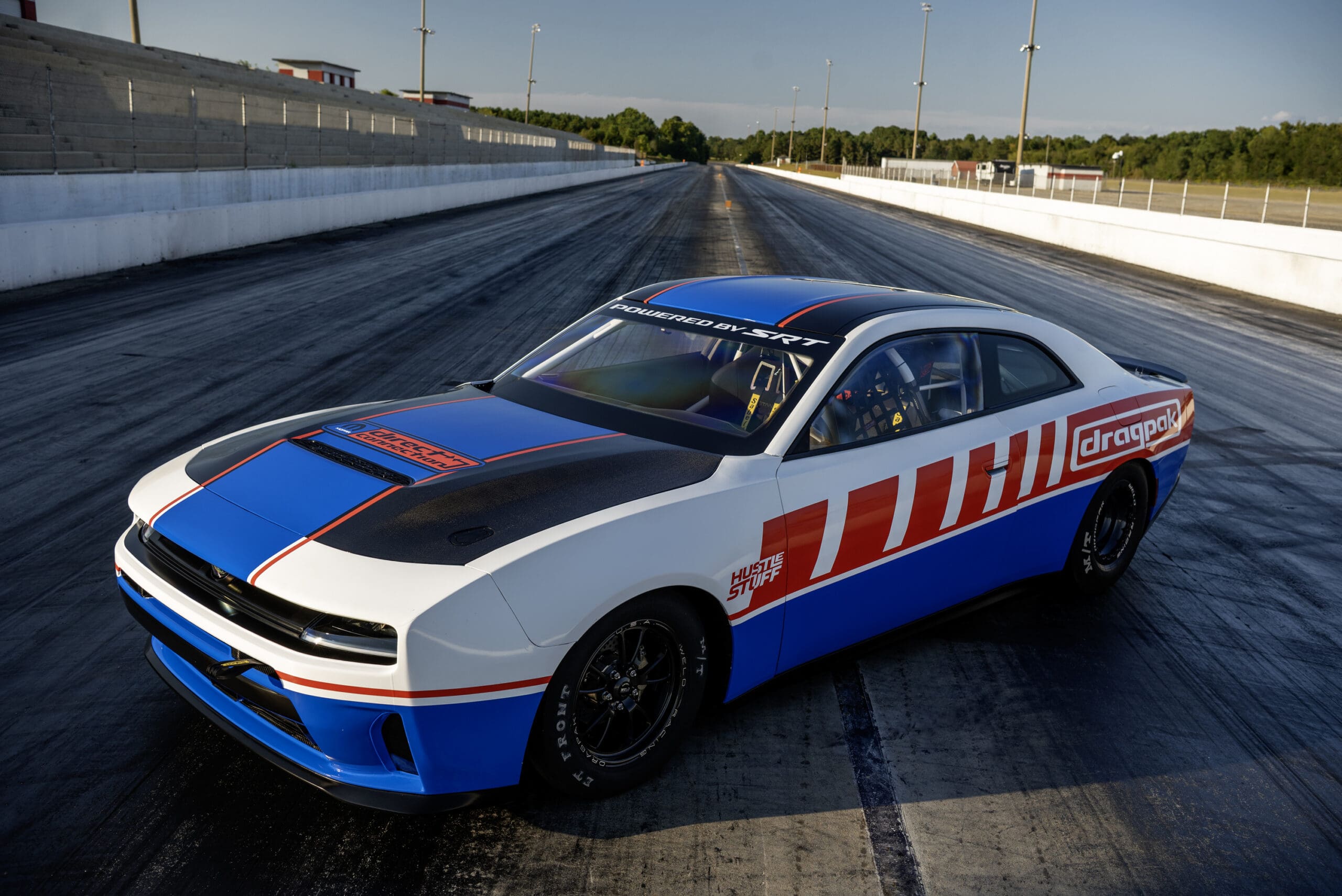
Yes. Warren Johnson was born July 7, 1943, and is 83 years old as of 2026. He remains an active presence in the sport he helped define technically for three decades. In March 2026, as part of the NHRA’s 75th anniversary celebration, Johnson competed in a Legends match race at the Gatornationals in 550-horsepower 2026 Dodge Charger Sixpacks alongside fellow legends Kenny Bernstein, Joe Amato, and Bruce Larson — the same Gainesville weekend where Don Garlits, Don Prudhomme, and Shirley Muldowney also made anniversary appearances. In May 2026, his 1992 championship-winning Pro Stocker was featured as a car spotlight ahead of the release of NHRA Legends of Drag Racing, a video game chronicling the sport’s history. He has also continued speaking engagements at industry events, including the Engine Performance Expo.
Who Is Warren Johnson?
Warren Johnson earned the nickname “The Professor” honestly. In a class where most competitors relied on instinct, tradition, and trial-and-error tuning, Johnson approached Pro Stock like an engineering problem to be solved systematically — studying airflow, combustion efficiency, and chassis dynamics with an academic rigor that set him apart, and that his rivals eventually had no choice but to adopt themselves.
He was, by his own reputation, difficult. Racing officials were, for years, reluctant to visit his pit area — he was never afraid to voice his opinions on a rules change he disagreed with, a sponsor decision he thought was wrong, or a purse structure he considered unfair, a cause he campaigned on from his earliest days in the class. As the years passed and Johnson’s career accumulated championships, his competitors came to understand something about that combativeness: it was often on their behalf. He was willing to say what other drivers wouldn’t. His 2015 induction into the Motorsports Hall of Fame of America was, in the words of the Hall’s own inductee profile, “fitting, well-earned and maybe, just maybe, a little overdue.”
Johnson devoted himself to full-time racing in the mid-1970s, after years of building a reputation as a fierce, resourceful match racer known for stern frugality — a trait that shaped how he built his entire operation. He navigated the world of factory hot rods for more than 45 years, moving from a first Pro Stock entry — a Camaro bought new off a dealership lot and quickly gutted for racing — through decades that established him as one of the most prolific engine builders drag racing has ever produced.
The Career: From Minnesota to the Record Books
The Long Road: First Start to First Win (1971-1982)
Warren Johnson’s NHRA Pro Stock career began far earlier than his rise to prominence suggests. His first-ever NHRA Pro Stock national event start came in September 1971 at Indianapolis, driving a 1971 Chevrolet Camaro to a 9.595-second, 139.31 mph qualifying run. It would be eleven years — and dozens of races — before he won one.
He committed to full-time competition by the mid-1970s, and his first NHRA final-round appearance came in 1976, where he finished runner-up to Larry Lombardo in one of Bill “Grumpy” Jenkins’ Monzas. That same year, at the AHRA race in Tulsa, Johnson challenged defending series champion Ken Dondero to a one-round Saturday night grudge race and lost by a matter of inches. The next day, the two met again in the final round in front of a packed grandstand — Johnson left first this time and never looked back, crossing the line at 8.80 seconds and 155.17 mph to Dondero’s 8.87 at 154.70. Dondero still clinched the AHRA title that season, but Johnson had made him work for it.
Johnson’s rise put him in sustained competition with three other drivers who together became known as Pro Stock’s “Gang of Four”: Johnson, Bob Glidden, Lee Shepherd, and Frank Iaconio, the quartet who defined the class’s competitive frontier through the early 1980s. Of Shepherd — who died in a 1985 testing accident — Johnson later reflected: “Lee was an excellent driver. He seemed very relaxed when he was driving. I think that was when he was having fun.”
Frustrated by NHRA’s shifting engine weight-break rules in the late 1970s, Johnson took what became known as his “lost years” — a self-imposed sabbatical from NHRA competition between 1979 and 1981, during which he won back-to-back IHRA Mountain Motor Pro Stock championships (1979, 1980) driving Jerome Bradford’s Monte Carlo, while barnstorming his big-block Camaro on the match racing circuit. Those years away from NHRA sanction were where Johnson perfected the racecraft that would soon make him the class’s most dominant competitor.
His first NHRA national event victory finally came in July 1982 — his 42nd career start — at the Summernationals in Englishtown, New Jersey. Driving a 1980 Oldsmobile Starfire and qualifying fourth at 7.912 seconds/175.09 mph, he defeated Lee Shepherd in the final. It was his first year racing an Oldsmobile, the manufacturer relationship that would define the rest of his career.
The Gainesville Dynasty: Nine Gatornationals Wins
Johnson’s relationship with the Gatornationals in Gainesville, Florida, became the defining thread of his career at any single venue. He won the event for the first time in 1984, defeating Frank Iaconio in the final, then added eight more Gatornationals victories over the following sixteen years — nine total, making him, in NHRA’s own words, “the winningest driver in Gatornationals history,” a distinction he still holds. He has not won the event since 2000. Among those nine: a 1985 win over Bob Glidden, and a run of four consecutive Gatornationals victories from 1991 through 1994, with the 1992 and 1993 wins serving as a springboard to his first two NHRA world championships.
Six NHRA World Championships (1992, 1993, 1995, 1998, 1999, 2001)
Johnson’s six NHRA Pro Stock titles rank second all-time behind only Bob Glidden’s ten. But the manner in which some of them were won reveals as much about Johnson’s competitive character as the totals themselves.
The 1995 championship stands out as one of the more unusual title runs in NHRA history. Following what was reported at the time as season-ending vandalism to the cars driven by rivals Darrell Alderman and Scott Geoffrion, Johnson began accumulating points at a dramatic pace — building a lead of more than 500 points with the season only half complete, a margin that effectively locked up the title well before the year’s final events.
In 1999, at the O’Reilly Fall Nationals at Texas Motorplex, Johnson clinched his fifth Pro Stock championship the same day John Force clinched his ninth Funny Car title — a rare shared championship-clinching weekend between two of the sport’s most decorated drivers. Johnson’s 79th career win that day came in a national-record-setting performance, running 6.842 seconds at 201.74 mph to edge rival Jim Yates’s 6.892 at 199.24.
His sixth and final NHRA championship came in 2001, closing out a run that had begun nine years earlier and cementing his standing as the most statistically dominant Pro Stock competitor of his era across nearly every meaningful category: career victories, final-round appearances, No. 1 qualifying positions, low elapsed times, and top speeds.
Breaking Every Speed Barrier: 180, 190, and 200 mph
Warren Johnson holds a rarer distinction than simply being first to 200 mph. He was the first Pro Stock driver to exceed 180 mph, the first to exceed 190 mph, and, in 1997 at Richmond, Virginia, the first to exceed 200 mph — running 200.13 mph. At that same event, he also became the first Pro Stock driver to record a sub-6.9-second elapsed time, running 6.894 seconds. Across his career, Johnson set 36 national records — a testament to a program built as much in the engine shop as behind the wheel.
That engineering focus produced Johnson’s most lasting technical contribution to the sport: his long-standing development relationship with Oldsmobile and GM Performance gave rise to the Drag Racing Competition Engine (DRCE) platform — a design still in use, in updated form, by every competitive Pro Stock team today.
The Qualifying Record That Outlasted His Win Record
Johnson’s 138 career No. 1 qualifying positions — his first coming at the 1978 Springnationals, in just his 28th career start; his last at the 2008 Bristol event — remain the most in Pro Stock history. It’s a record separate from, and in some ways more durable than, his win total: across 649 career national event entries, a testament to remarkable longevity in its own right, Johnson also ranks among the all-time leaders in final-round appearances (151) and top speed performances, and his own NHRA retrospective in 2022 confirmed he remained the No. 1 qualifier leader even after Greg Anderson had already surpassed his win total.
The Oldest Winner in NHRA History (2010)
On May 2, 2010, at age 66, Warren Johnson won the AAA Midwest Nationals at Gateway Motorsports Park in Madison, Illinois — becoming the oldest professional winner in NHRA history. It was his 97th and final career win, defeating Jeg Coughlin Jr. in the final round, after which Johnson reportedly joked he could have staged backwards and probably still won. The record stood as a testament to both his enduring competitiveness and the value of the engineering-first approach that had defined his entire career: horsepower and preparation, Johnson had always argued, could compensate for whatever the calendar took away.
The Long Goodbye (2005-2013)
Johnson announced his retirement prior to the 2005 season — then reconsidered, went back to work, and didn’t raise the subject again for years. “When I decide to climb out of the driver’s seat,” he said at the time, “I’ll probably put someone else in there, but it would have to be someone who shares the same work ethic we do.” He continued competing as the Pro Stock field grew more competitive around him — by the mid-2000s, the technological advantages he had spent decades building were no longer his alone, as the entire class caught up using parts and approaches he himself had helped pioneer.
Johnson’s driving career effectively ended after the 2013 season, closing out 42 years since his first NHRA Pro Stock start without a single formal retirement announcement. He simply, eventually, stopped entering cars — the same low-key, matter-of-fact approach that had defined his relationship with the sport throughout.
The Father-Son Rivalry: Warren and Kurt Johnson
One of the most distinctive storylines of Johnson’s career ran through his own family. Son Kurt “KJ” Johnson grew up in the sport, starting by sweeping floors in his father’s shop before working his way up to assembling the 500 cubic-inch engines that powered his father’s championship runs, eventually becoming Warren’s crew chief and guiding the family’s second entry to top-five points finishes in 1991 and 1992.
Sent by his father to Roy Hill’s racing school to improve driver-crew communication, Kurt found himself drawn to competing directly. He made his driving debut at the 1993 NHRA Winternationals, qualifying 15th and winning two rounds before a narrow semifinal loss — a rookie season that produced three wins in seven final-round appearances, a runner-up finish to his own father in the championship standings, and NHRA Rookie of the Year honors. On May 20, 1994, Kurt recorded Pro Stock’s first six-second pass — a 6.988-second run at Englishtown, New Jersey — edging out a field that included his own father and multi-time champion Darrell Alderman.
Warren and Kurt met in 13 career final rounds — the first father-son final-round matchup in the history of any NHRA professional class, dating to 1993 in Atlanta. Their most memorable meeting came in the 2001 Denver final, where Warren left the starting line first and held on for one of the closest father-son finishes on record: 7.283 seconds at 189.71 mph to Kurt’s 7.285 at 189.15 — a margin of two-thousandths of a second between father and son, in a money round, in front of a national audience.
The Student Who Surpassed the Teacher: Warren Johnson and Greg Anderson
One of the more remarkable threads in Pro Stock history connects Warren Johnson directly to the man who would eventually break his all-time wins record. Greg Anderson served as Johnson’s crew chief and tuned him to three of his six NHRA championships — 1992, 1993, and 1995 — before leaving to become a driver himself.
Anderson surpassed Johnson’s 97-win total in October 2021 at the Texas NHRA FallNationals, adding a 99th win at that year’s season finale. He has continued extending the record since, reaching 116 career wins by 2026 — making him Pro Stock’s current all-time wins leader. Johnson’s No. 1 qualifier record of 138, however, outlasted his win record by years, a detail that underscores something important about his legacy: the engineering-driven approach to qualifying speed that Johnson pioneered proved, in some ways, even more durable than his race-day win total.
It is a lineage every bit as significant to Pro Stock’s technical history as any individual championship: the driver who built his dominance on engineering rigor trained the crew chief who would eventually out-win him, using much of the same underlying philosophy Johnson had spent decades proving out. The Professor’s most enduring legacy may not be his own statistics, but the fact that the sport’s current benchmark was built by someone who learned the discipline directly from him.
Hall of Fame Recognitions
| Recognition | Year |
|---|---|
| International Motorsports Hall of Fame | 2007 |
| Motorsports Hall of Fame of America | 2015 |
| NHRA Top 50 Drivers (1951-2000) | Ranked among the sport’s all-time greats |
The Legacy: What Warren Johnson Changed About Pro Stock
Warren Johnson’s influence on Pro Stock extends well past his own win column. He helped shift the class’s entire competitive culture from an instinct-driven pursuit into a data- and engineering-driven discipline — an approach every top Pro Stock program now takes for granted, but one that Johnson had to fight to prove out himself, often against skepticism from a racing establishment more comfortable with tradition than with an outspoken engineer who kept telling them they were doing it wrong.
His DRCE engine platform outlived his own driving career by decades. His son became a champion-caliber driver in his own right. His former crew chief became the man who eventually eclipsed his win record — while his qualifying record stood even longer. And at 83, in the sport’s 75th anniversary season, Warren Johnson was still on a starting line — not because he needed to be, but because, as he demonstrated across more than four decades, walking away was never really part of how he approached the sport.
Frequently Asked Questions
Is Warren Johnson still alive?
Yes. Born July 7, 1943, Warren Johnson is 83 years old as of 2026 and remains active in the sport, including a 2026 NHRA 75th-anniversary Legends appearance at the Gatornationals.
How old is Warren Johnson?
83 years old, born July 7, 1943, in Virginia, Minnesota.
Why is Warren Johnson called “The Professor”?
His nickname reflects his academic, engineering-driven approach to Pro Stock racing — studying trends, evaluating technical changes, and relying on analysis rather than instinct, in a class where most competitors historically favored tradition and feel.
When did Warren Johnson start racing in NHRA Pro Stock?
His first NHRA Pro Stock national event start came in September 1971 at Indianapolis, though he didn’t commit to full-time competition until the mid-1970s and didn’t win his first event until 1982.
How many championships did Warren Johnson win?
Six NHRA Pro Stock world championships (1992, 1993, 1995, 1998, 1999, 2001), plus two IHRA Mountain Motor Pro Stock championships (1979, 1980) during a sabbatical from NHRA competition.
How many races did Warren Johnson win?
97 NHRA national events from 151 final-round appearances — the all-time Pro Stock record for over a decade, since surpassed by his own former crew chief, Greg Anderson, in October 2021.
How many Gatornationals did Warren Johnson win?
Nine — the most of any driver in Gatornationals history, a record he still holds. His first win came in 1984; his last came in 2000.
What was Warren Johnson’s biggest technical achievement?
He was the first Pro Stock driver to exceed 180, 190, and 200 mph, and the first to run a sub-6.9-second pass (1997, Richmond, Virginia). His 138 career No. 1 qualifying positions remain the most in Pro Stock history. He also co-developed the Drag Racing Competition Engine (DRCE) platform with Oldsmobile/GM Performance, still used across the class today.
Is Warren Johnson related to Kurt Johnson?
Yes. Kurt “KJ” Johnson is Warren’s son, a Pro Stock driver in his own right and the 1993 NHRA Rookie of the Year. The two met in 13 career NHRA final rounds — the first father-son final in any NHRA professional class.
When did Warren Johnson retire?
His driving career effectively ended after the 2013 season, though no formal retirement was ever announced.
What is the oldest-winner record Warren Johnson holds?
He won the AAA Midwest Nationals in Madison, Illinois, on May 2, 2010, at age 66 — the oldest professional winner in NHRA history at the time, and his 97th and final career victory.
Internal Links
- Pro Stock: The Complete Guide to Drag Racing’s Factory Hot Rod Class — /pro-stock-the-complete-guide-to-drag-racings-factory-hot-rod-class/
- Don Garlits: Legacy, Career Records — /don-garlits-legacy-career-records-enduring-influence-drag-racing/
- Don Prudhomme: Legacy, Career Records — /don-prudhomme-legacy-career-records-enduring-influence-drag-racing/
- Shirley Muldowney: Legacy, Championships — /shirley-muldowney-legacy-championships-drag-racing/
- Drag Racers: Profiles, Records, and Legacies — /drag-racers-profiles-records-and-legacies-of-nhras-greatest-competitors/