


Imagine Tony Schumacher’s most dominant season in 2008.
Here’s a refresher. Schumacher won 15 of 24 races, reached 18 final rounds, compiled a 76-9 elimination record and qualified No. 1 nine times without losing in the opening round all season.
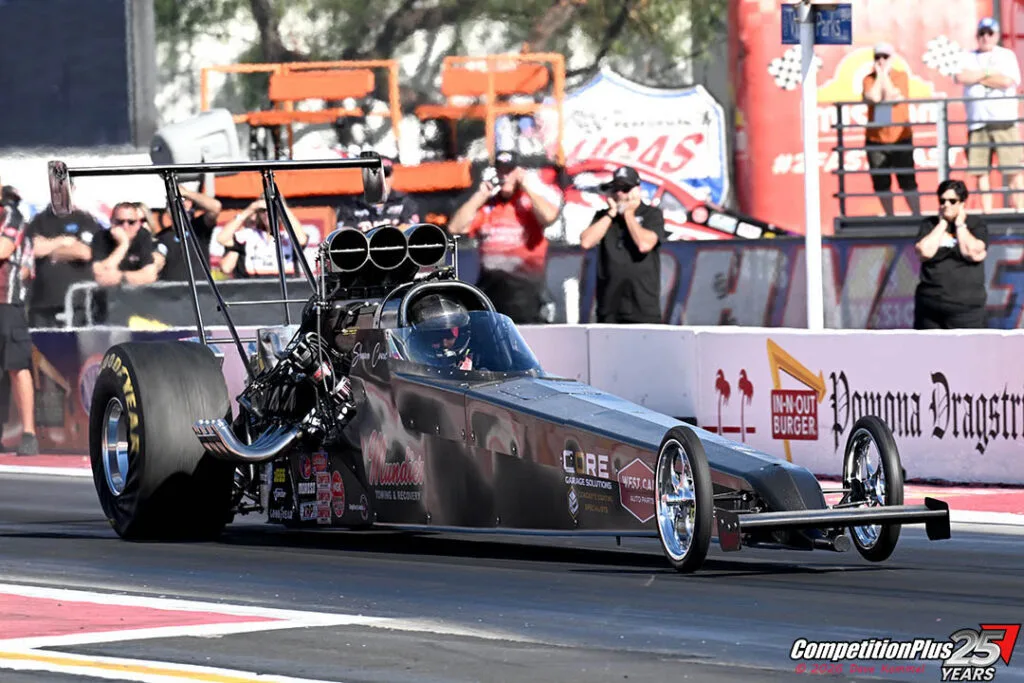
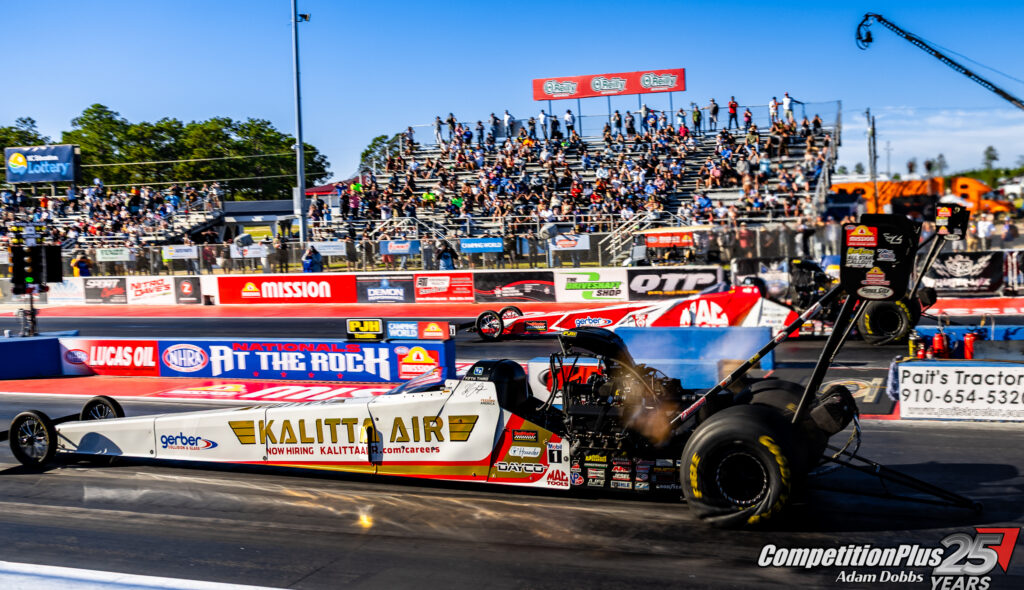
Now take Schumacher’s numbers and spread that kind of success across two cars. That’s pretty much what Shawn Langdon and Doug Kalitta have done in 2026, leaving the rest of the Top Fuel field with precious few opportunities to celebrate on Sunday.
Heading into the In-N-Out Burger NHRA Finals at Pomona, the teammates have combined to win 13 of 19 races and collected 15 No. 1 qualifying positions. Langdon leads the championship standings, while defending world champion Kalitta remains interested in keeping the trophy for himself.
Langdon has eight victories in 11 final rounds, nine No. 1 qualifiers and a 50-11 elimination record. Kalitta counters with five victories in nine finals, six No. 1 qualifiers and a 46-14 record, numbers that would make either driver the envy of most Top Fuel operations.
Four of those final rounds featured the teammates racing each other, and eight of their combined elimination losses came in head-to-head meetings. Apparently, the most effective way to beat a Kalitta Motorsports dragster this season has been to bring another Kalitta Motorsports dragster.
Imagine if these guys had actually applied themselves.
Langdon remembers Schumacher’s 2008 season well. He was still racing Super Comp, watching Schumacher and Alan Johnson beat up on the Top Fuel competition and wondering how anybody was going to stop them.
“Not in a million years would I have ever dreamt that,” Langdon said of experiencing a comparable season. “At the time in 2008, I mean, obviously was a huge fan of the sport, but I was very heavily involved because at the time, my sponsor was Lucas Oil, and in 2008, I was able to win the championship in Super Comp.”
Langdon wasn’t watching from his living room, either. He estimated attending 10 to 12 national events that season, competing in Super Comp and occasionally driving Morgan Lucas’ A/Fuel Dragster.
Langdon got to see plenty of Schumacher’s victories that year. He was still a season away from making his Top Fuel debut, but he knew he was watching something most racers would give anything to experience.
“As much as we all love to see the underdog story and see different winners every week and see everybody, a lot of people get a piece of the pie,” Langdon said, “it’s also great to see a dynasty start, and I’ve always appreciated that because that’s what you always strive for watching.”
Langdon pointed to the Yankees and Patriots as examples of teams that kept winning, whether anybody liked it or not. He wasn’t particularly interested in rooting against them when there was so much to learn from how they operated.
“That’s what you strive for when you’re a competitor, when you’re an athlete is to be great, and not just be good but how to be great,” Langdon said. “And there’s a different level to that, and those guys, they did it, they lived it, and so those years, it was awesome to see.”
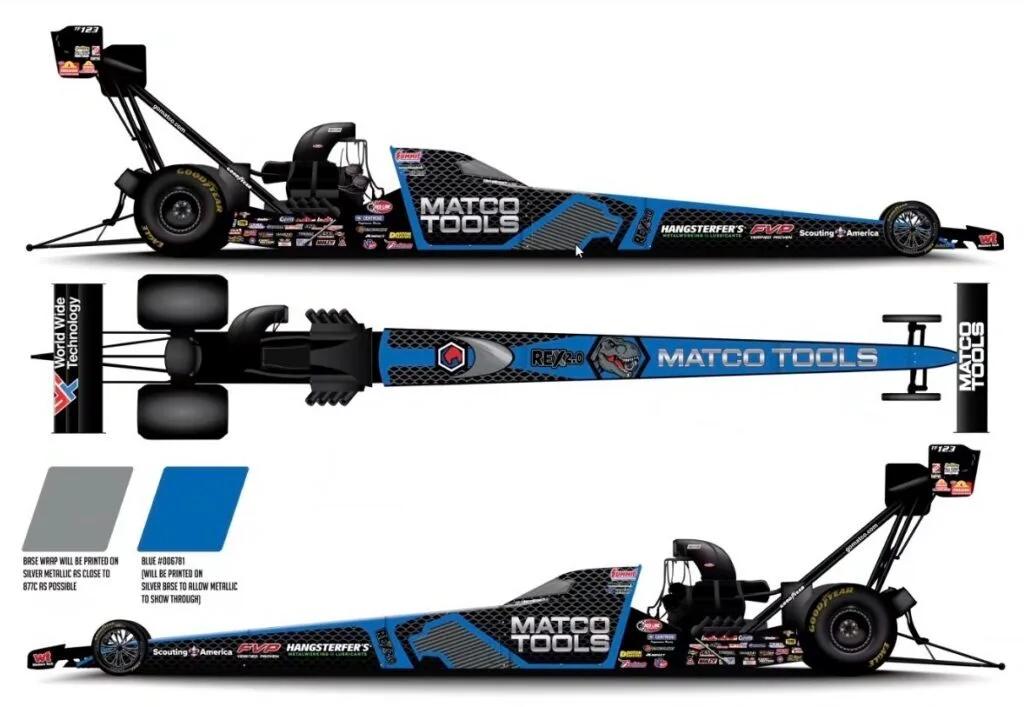
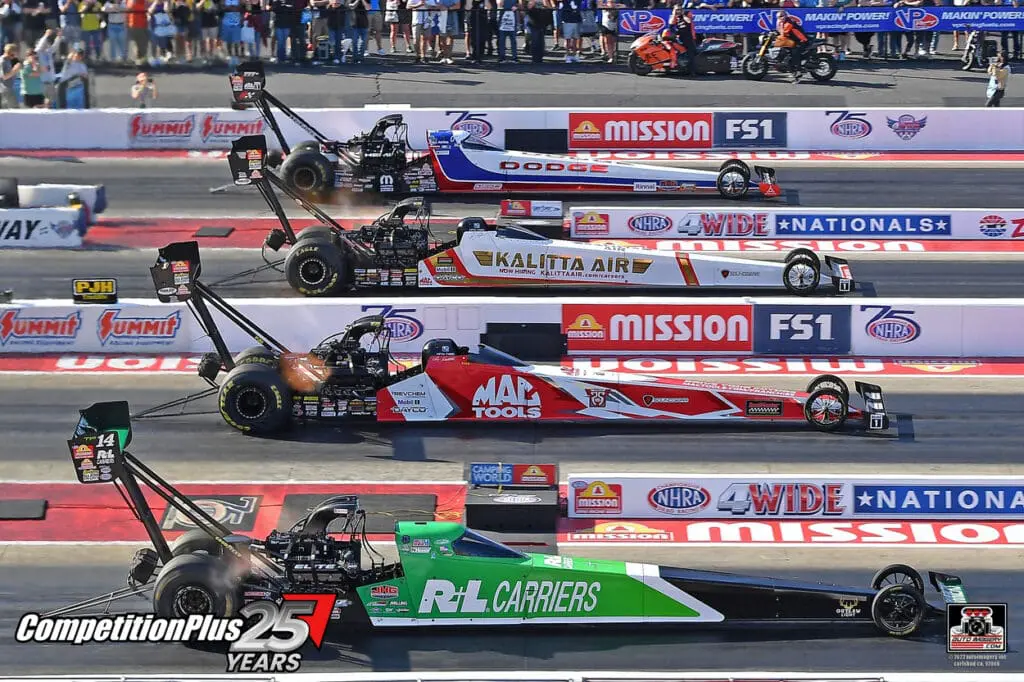
Here’s where Alan Johnson comes back into the picture. He was calling the shots on Schumacher’s dragster in 2008, and now he’s tuning Doug Kalitta’s Mac Tools entry while his former understudy, Brian Husen, is running Shawn Langdon’s operation.
Langdon’s interest in Alan Johnson went back to his Sportsman racing days, when he followed Alan and his brother Blaine as they moved into Top Fuel. The blue-and-yellow Travers Tool dragster was his favorite car growing up, and he never lost track of what the brothers were doing.
Langdon eventually experienced Johnson’s demanding standards firsthand when he joined the Al-Anabi Racing operation. Husen was part of that organization, and Langdon remembers being impressed with his knowledge, preparation and demeanor.
“I always felt like, man, this guy deserves an opportunity at some point,” Langdon said. “He is a crew chief. And so I’m just very fortunate that through the course of time and how things played out, I was able to be his driver and I was able to get the opportunity with him.”
Langdon says Johnson and Husen go about their business differently, but once the race car fires, neither has much interest in anything except winning.
“They’re intense, but they’re out there for one reason and that’s to win races,” Langdon said. “And I mean, they’re out there, they have their fun too. I mean, don’t get me wrong, but when it’s race mode, they go to this other level of just intensity and they’re focused.”
Langdon won seven races, reached 10 finals and finished 54-17 on his way to the 2013 Top Fuel championship with Johnson. Looking back, he admits he spent a good portion of that season scared to death of making a mistake.
His Super Comp years taught him the pressure of needing victories to pay his bills. He drove the transporter, maintained his equipment and understood that a bad weekend meant finding another race where he could earn enough money to keep going.
Joining Al-Anabi Racing introduced a different kind of pressure, complete with a five-year contract, corporate expectations and the responsibility of driving for Johnson. Langdon suddenly worried about mistakes that could affect an entire organization rather than just his bank account.
“I don’t know what I’m doing here. I don’t know how I got here, but I’m paid to perform now,” Langdon recalled of his early experience with the team.
As the victories accumulated in 2013, Langdon became increasingly concerned about making the mistake that could cost him the championship. Instead of trusting the aggressive driving style that carried him through Sportsman racing, he began protecting his position.
“I felt like I really drove defensive the last half of that year,” Langdon said. “Even though we still had a great year, we won the championship and did a lot, but mentally, I always felt like growing up, racing the Super Comp, I always raced aggressive.”
That experience has stayed with Langdon as he pursues another championship, although he no longer views every mistake as a potential disaster.
Langdon learned early that Johnson wasn’t much for sugarcoating a driver’s mistakes. At their second race together, Langdon smoked the tires, pedaled the throttle more than once and nearly put the dragster into the wall.
The conversation afterward was not particularly enjoyable. Johnson made it clear that Langdon’s driving had endangered both the race car and himself, and another performance like it would not be tolerated.
“I remember getting back from the run and I got a pretty big ass chewing about it, and it was pretty aggressive, but it came from a good place though,” Langdon said. “I mean, Alan was upset with me, and rightfully so because at the end of the day, it’s his race car, and at the end of the day, it’s my health.”
Once the chewing-out ended, Johnson sat Langdon down with computer graphs and explained how to properly pedal a Top Fuel dragster. Nobody had previously taken the time to teach him those techniques.
Johnson wasn’t interested in excuses, either. Langdon had made the mistake, and Johnson expected him to learn enough from it that they wouldn’t be having the same conversation again.
“Don’t blame other things or other people,” Langdon said. “At the end of the day, you’re driving the race car. The responsibility is on you, the accountability’s on you, and if you don’t do a good job, you need to get better.”

Another well-known Alan Johnson memory takes up space in the back of his mind. The guy who tuned Schumacher to that remarkable 2008 season is now trying to win another championship with Doug Kalitta, and Pomona happens to be a place where Johnson has broken Kalitta’s heart before.
In 2006, Schumacher stunned Kalitta with his famous 4.428-second, 327.98-mph run at Pomona, stealing the championship in one of the sport’s most unforgettable finishes. Langdon remembers that one, and he’s not particularly interested in finding himself on the wrong end of another Johnson masterpiece.
“I’ve seen this movie before. Guys, let’s relax a little bit,” Langdon said of people already congratulating him on the season. “Yes, we’ve had a great year. Yes, we’re in a good position, but look, at the end of the day, we still got a job to do because if we don’t go do our job, it’s going to open the door for an opportunity.”
Langdon pointed to two first-round losses by his team this season, both on weekends when Kalitta went on to win. He also recalled a stretch when his substantial points advantage began shrinking as Kalitta collected three consecutive victories.
Then there’s the matter of lane choice, a subject that brings back memories of Schumacher’s 2006 championship-winning pass from the right lane at Pomona. Asked whether he would allow Kalitta and Johnson to have that lane if the teammates met in eliminations, Langdon wasn’t particularly interested in helping recreate history.
“Unless if there’s zero rubber left in that right lane, there’s about a 0% chance we’re going to probably give him an opportunity to be in the right lane,” Langdon said. “We got to stay aggressive, do what got us here. At the end of the day, it’s already written. We just got to go do what we do.”