

If it’s all the same to Matt Hagan, he might pass the next time he has a 38-point lead entering the NHRA Finals. If it’s 37 or 39, he might be just fine. Thirty-eight is not his lucky number.
Sixteen years apart, Hagan went into the NHRA Finals race day with the same 38-point lead. John Force took the championship from him in 2010, and J.R. Todd did it again in 2026.
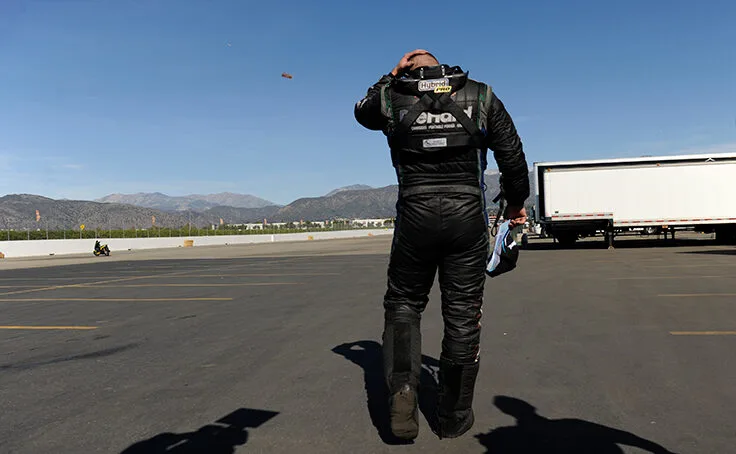
The first time, John Force left Hagan devastated beside his hauler.
In 2026, J.R. Todd completed an improbable comeback, but this time Hagan’s response was considerably different.
The circumstances surrounding both defeats were almost cruelly similar. What separated them was a driver who had gone from chasing his first world championship to becoming a five-time champion who understood that even the most promising season could end in disappointment.
“Oh man, took months,” Hagan said when asked how long the 2010 defeat bothered him. “Still sick about it. But the same exact thing just happened.”
In 2010, Hagan entered the NHRA Finals with three victories in five final-round appearances, four No. 1 qualifiers and a 37-20 round-win record. With Force on the opposite side of the ladder, Hagan needed only two round wins to clinch his first championship, but Bob Tasca III sent him packing in the opening round.
Force defeated Melanie Troxel in the semifinals to secure his 16th championship before beating Jeff Arend in the final. Hagan, still relatively new to Funny Car racing, collapsed beside his hauler, wondering whether he had just squandered the opportunity of a lifetime.
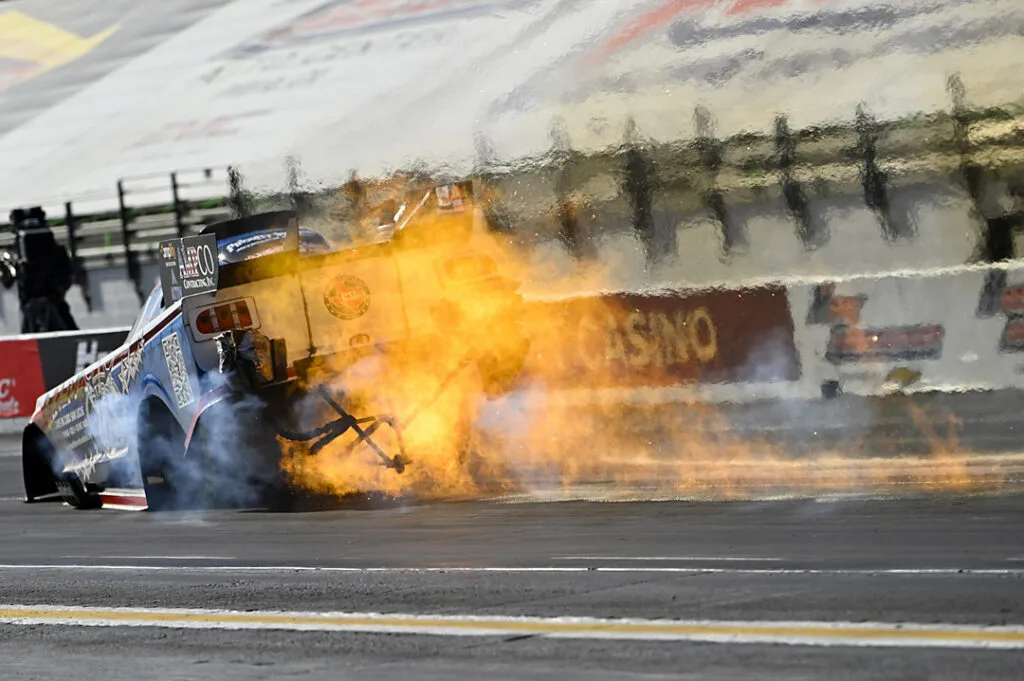
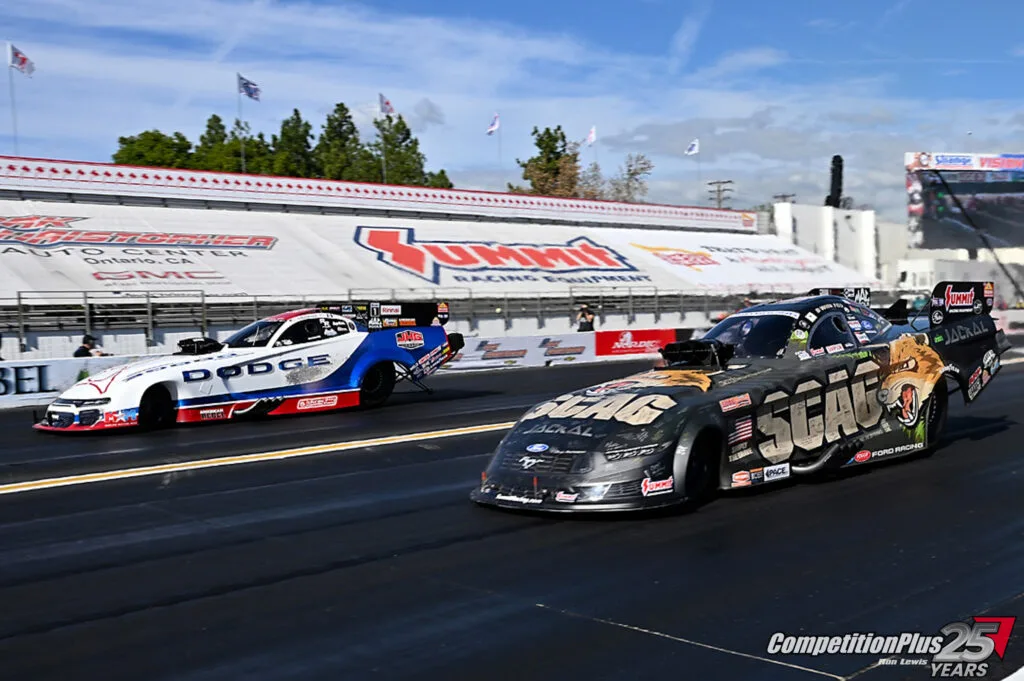
This time, Hagan arrived at Pomona with rookie Jordan Vandergriff 38 points behind him and Todd trailing by 99. The points-and-a-half format gave Todd a fighting chance, and he capitalized by winning the race and completing one of the greatest championship comebacks in Funny Car history.
Hagan admitted that the latest disappointment brought back unpleasant memories, although there was another element to his frustration. He remembered last year, when weather prevented him from having a similar opportunity to overcome a championship deficit.
As Hagan saw it, he could have been last year’s J.R. Todd.
“That’s the same reason I was upset last year that we didn’t get to run this thing out, and I felt like we got robbed, because what just happened to J.R., we were set up in the same situation that we were last year to try to win this thing and we didn’t get our opportunity,” Hagan said.
Watching Todd accomplish what he had hoped to do a year earlier reinforced Hagan’s belief that championship contenders deserve every possible opportunity to settle their differences on the racetrack. Having been on the losing end of two dramatic finishes, Hagan wasn’t about to discount Todd’s accomplishment.
“J.R., he went up there and drove his ass off and the kid’s won on seven, eight whole shots through the countdown,” Hagan said. “I mean, he kept the car alive, and they did what they needed to do.”
Hagan was considerably less complimentary when assessing his own team’s performance over the final two races. He believed the effort was more of racing not to lose than racing to win.
“You hate that we started protecting the lead instead of attacking it, and we just, we pissed away a 104-point lead over two races,” Hagan said.
Hagan wasn’t blaming bad luck or pointing fingers at anyone. He acknowledged that poor qualifying positions left his team facing tough match-ups earlier than it would have preferred.
“Our qualifying position wasn’t what it needed to be, and we put ourself in position to have heavy hitters the last two races and it just didn’t work out, man,” Hagan said. “But that’s why you learn and grow from that.”
For Hagan, losing another championship wasn’t what ate at him as much as knowing how much work had gone into the season and realizing his team failed to finish a job it appeared capable of completing.
“There’s just no easy way to explain swallowing that pill,” Hagan said. “It’s a tough pill to swallow. It’s a year’s worth of work that you go in there thinking that we just got to do a couple things here and we’ll get it done, and that’s the farthest from what happened.”
One experience, though, one experience at Pomona, Hagan wouldn’t have traded for another championship trophy. A 27-year-old fan who used a wheelchair visited his pit area with a birthday wish that had nothing to do with winning a drag race.
The fan’s wish was only to appear on television, and Hagan helped make it happen. Hagan was taken aback, particularly during a weekend when he was struggling with his own disappointment.
“He started crying, I started crying,” Hagan said. “I said, ‘Damn, I still got to go drive a race car.’”
That encounter forced Hagan to rethink what constituted a bad day. He might have lost a championship, but he had also helped someone experience a moment they would likely remember considerably longer than the five-time champion would remember a lost drag race.
Vandergriff’s championship hopes ended when teammate Alexis DeJoria beat him at Pomona. Hagan knew exactly what the rookie was going through, having been down that road before.
Hagan admitted he never expected DeJoria to take out her teammate with so much at stake, but he respected the decision to race heads-up. He was equally convinced Vandergriff wouldn’t have wanted it any other way.
“I know Vandergriff wouldn’t have wanted to win it like that,” Hagan said. “I mean, I got to know the kid a little bit and he’s a straight-up guy and he’s one that’s going to be good for the sport and a good driver.”

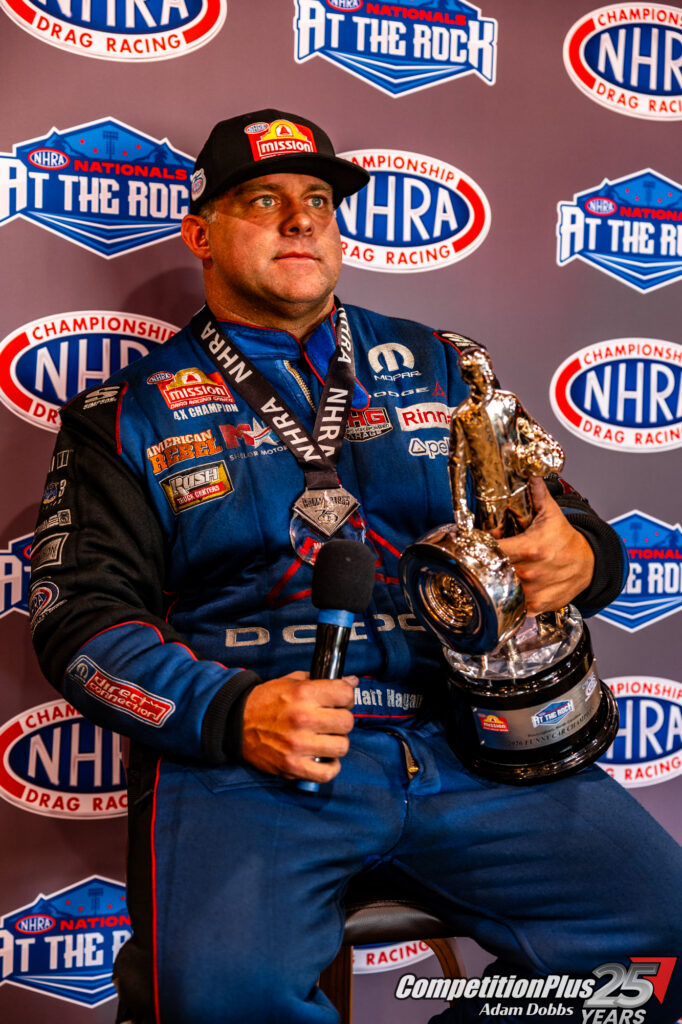
Their friendship had developed before Vandergriff became a Funny Car driver. While working in broadcasting, Vandergriff regularly visited Hagan’s pit area, asking questions about the race car and even studying his pedal arrangement.
Hagan freely became an open book on Funny Car racing, never expecting the young man to become one of his championship rivals. He also maintained regular contact with Todd, describing the three contenders as friends who respected one another despite what was at stake.
After the event, Hagan sent Vandergriff a message encouraging him not to let the disappointment overshadow what had been an incredible season that seasoned veterans would have been envious of. Today’s Hagan never forgot the young Hagan, and believed Vandergriff had to be feeling the same way he did.
“Don’t shove off what you’ve done all year long,” Hagan recalled telling Vandergriff. “You’ve had a great season. You did your job in the race car and it wasn’t in our cards and God will reward you sooner than later. You just got to keep after it.”
Hagan understands now what he couldn’t fully appreciate back then: championships aren’t guaranteed, no matter how many rounds a driver wins or how comfortable the points lead appears entering the final race.
He also understands that congratulating the winner doesn’t erase the pain. Sixteen years and five championships later, he has learned where to take the disappointment when nobody is watching.
“J.R. was up against some unbelievable odds, and they did what they needed to do,” Hagan said. “Dickie Venables did what he needed to do, and they won the championship and you have to shake their hand and tip your cap and you move on, man. You go cry in the shower where nobody can see your tears.”