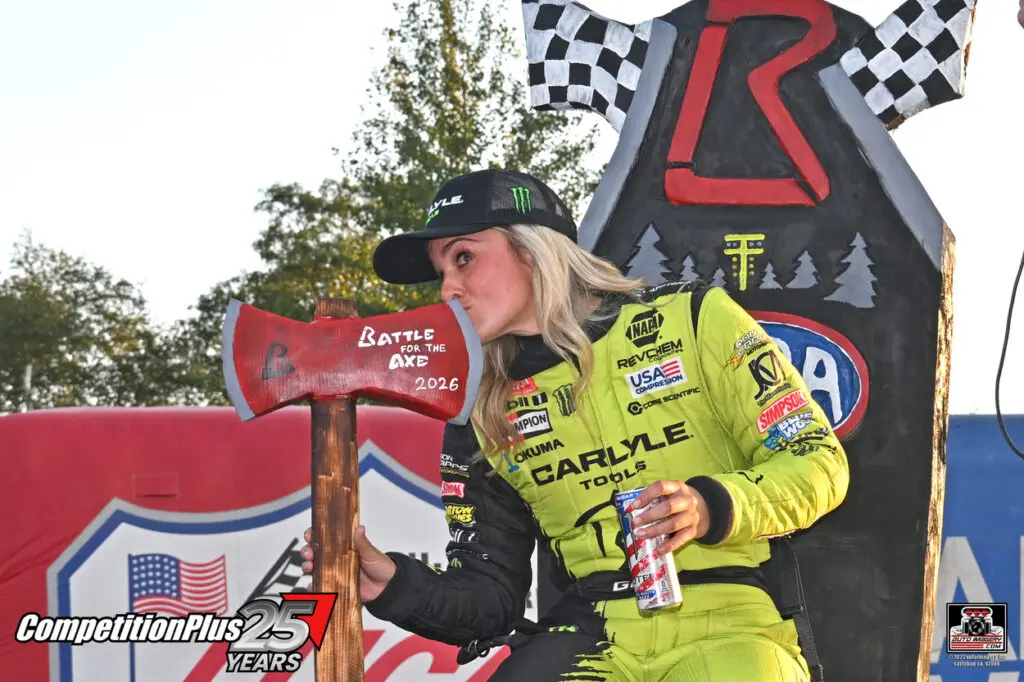


Her welcome to the nitro world was a drag racing legend saying, “I don’t know that I would have put a little girl in my car.”
Eight months later, publications including CompetitionPlus.com were proclaiming her the next face of drag racing.
For a pendulum to swing from one extreme to the other, that’s about as wide as it gets, and for newly crowned NHRA Rookie of the Year Maddi Gordon, it’s no big deal. Petite only in physical stature, Gordon proved you don’t have to be supersized to make a supersized impression on drag racing.
“Of course I was bummed to hear that for sure, but everybody has their opinions and that’s all right,” Gordon said of Don Prudhomme’s remarks.
“Everybody can have an opinion, and it’s up to myself, and our team to either to show them why I’m in the race car, show them why Ron Capps chose myself.”
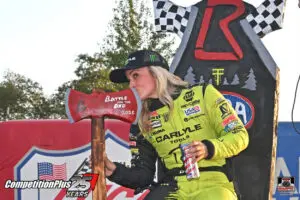
Capps had passed over established drivers, including championship winners, to put Gordon in the Carlyle Tools/Monster Energy Top Fuel dragster. He was even willing to give up his own driving seat to prove his confidence in Gordon.
Gordon understood the irony of Prudhomme questioning her selection, considering his role in launching Capps’ career. She credits Prudhomme with indirectly making her opportunity possible.
“The thing is I don’t drive to prove people wrong and I don’t drive to prove people right,” Gordon said. “I don’t drive like that. That’s not the way I roll.”
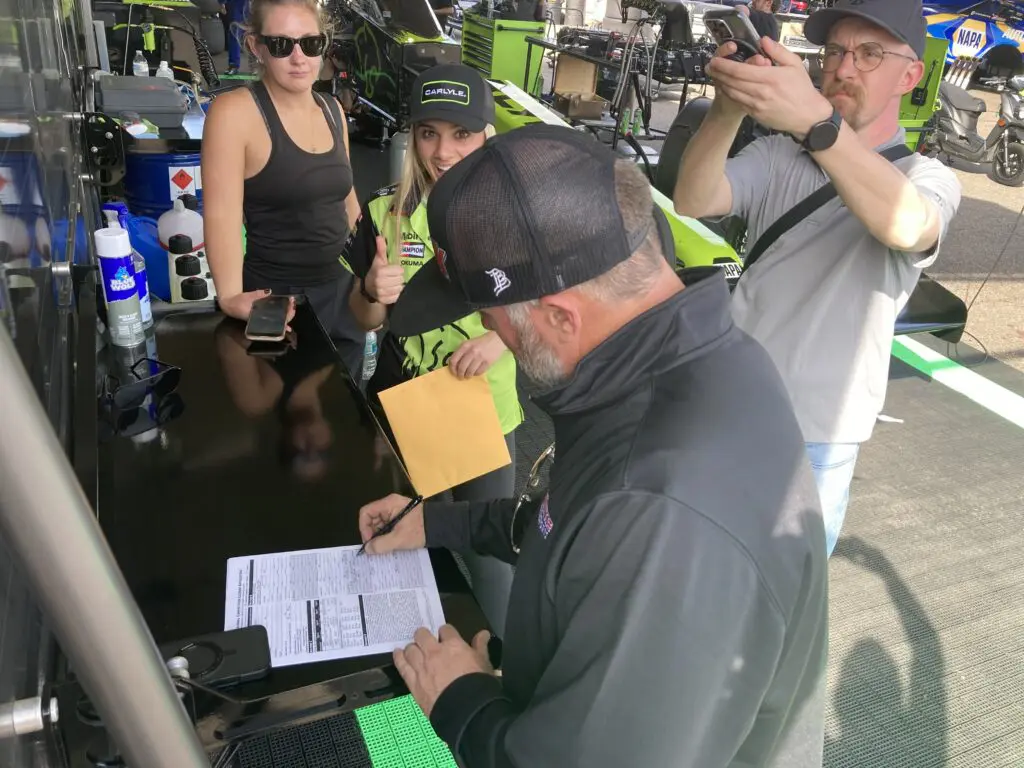
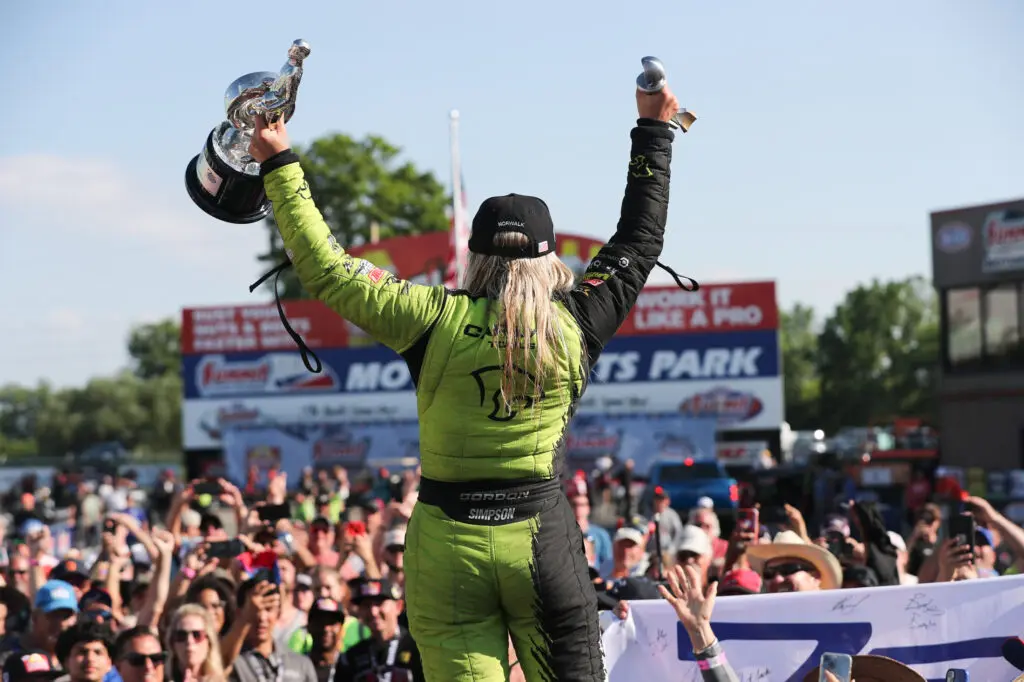
Gordon delivered the hero runs exceeding 340 mph, won her first professional national event at Norwalk, Ohio, and made 147 total runs during her inaugural Top Fuel season. She accomplished all of this while learning how to manage the demands of being a professional driver away from the track.
Before her first qualifying run at Gainesville, Gordon discovered there was apparently a list of prohibited words around the Ron Capps Motorsports pits. She jokingly referred to Capps and some of the Carlyle representatives as the “pressure police.”
“Another one of our Carlyle folks comes over and he’s like, ‘Hey, are you nervous?’” Gordon recalled. “And Jeff goes, ‘You out. Nope, you’re not allowed to hang around us. You can’t say that. Don’t say the nervous word. Get out of here.’ Because everyone’s trying to pretend like what’s about to happen is not huge.”
The autograph line outside Gordon’s pit area at Gainesville stretched past the pits of several established professional racers. Gordon figured people in the alcohol pits would recognize her, but she hadn’t counted on much recognition elsewhere.
While riding a golf cart past the grandstands, Gordon heard the fans cheering and turned around, figuring John Force must have been approaching on his scooter.
“I actually turned around at one point,” Gordon said. “I turned around. Like, ‘Who is behind me? Because no way they know me.’ And I was blown away. I could have never expected that.”
Less than a year earlier, Gordon had been sitting in the grandstands watching Billy Torrence, Shawn Langdon and Capps. She hadn’t forgotten what she wanted from professional racers when she was on the other side of the retaining wall.
“So I put myself as a fan, ‘What would I want as a fan?’” Gordon said. “And that’s what I tried to give to our fans.”
Sometimes that meant wearing a camouflage mouth guard she readily admits looks horrendous. Her parents occasionally informed her that something she’d done was embarrassing, but her sponsors afforded her considerable latitude to express her personality.
The highlight of Gordon’s season at Norwalk nearly ended in the opening round when an airline failed. Crew member Chuck Grospitch improvised a solution using a blower oil line, while opponent Spencer Massey waited for the team to address the problem.
“We were probably three seconds away from them telling us to kill it,” Gordon said.
Later in the her father went on to win in Top Alcohol Funny Car, and Capps won Funny Car immediately before Gordon completed the trifecta.
She considers it the best day of her life.
Dallas, on the other hand, provided the kind of education no rookie particularly wants. Gordon made a mistake in the final round and couldn’t find anybody to blame other than herself.
“I have never been so crushed in my life,” Gordon said. “I was so devastated because it was all my fault. I couldn’t blame anybody else. It was all me. I made the mistake and I let a lot of people down in our team who worked so hard.”
Each crew member approached Gordon afterward with essentially the same message. Given the choice of another driver, they wouldn’t trade her.
Gordon intends to spend part of her offseason studying race broadcasts, and she doesn’t fast-forward through the other professional divisions. She watches the Pro Stock and Pro Stock Motorcycle racers, looking for anything she can incorporate into her own driving, particularly on the starting line.
Perhaps the biggest adjustment for Gordon was leaving the family racing operation. Until Gainesville, she had never staged a race car, even during testing, without her mother, father or grandfather guiding her into the beams.
There were occasions when sponsor commitments prevented her from watching her father race. When she had an opportunity to attend the Las Vegas regional event following the national event, Gordon worked on her sister’s Super Comp and Top Dragster entries and pulled the cylinder heads off the Funny Car.
“Ron’s like, ‘I think you’re more excited for this dang Divisional than you are the Nationals,’” Gordon recalled. “I’m like, ‘No, I promise that’s not the case, but I am pretty excited.’”
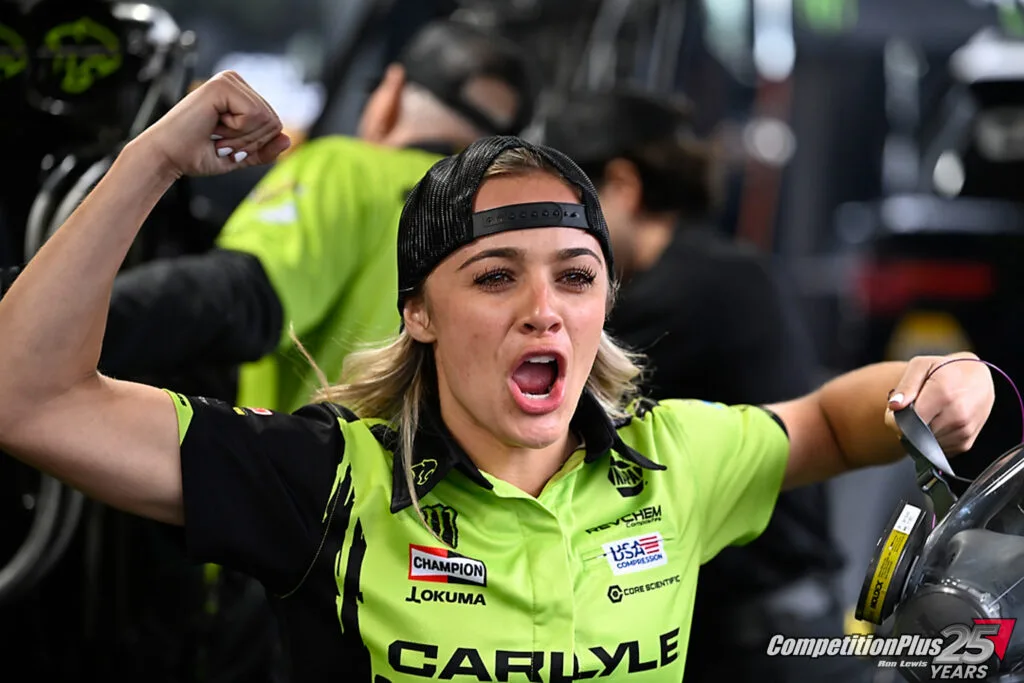
In 2020, Gordon and her younger sister Macy, then 15 and 13, were given the opportunity to work full time on their father’s Top Alcohol Funny Car. Their father and grandfather explained that if the girls couldn’t lift the necessary components, they’d better figure out how to get stronger because nobody was borrowing muscle from the neighboring pit area.
“We can’t get taller,” Gordon recalled. “We can’t get bigger feet, but we can definitely get stronger.”
The sisters went to the gym, and Gordon developed a favorite expression for how they were raised.
“We say we’re American, we’re not Americant,” Gordon said. “You’re not going to get anything done being Americant.”
A young woman named Sammy saw the Gordon sisters working underneath the Funny Car a couple of years ago and told her father she wanted to do the same thing. She had never expressed much interest in automobiles, much less drag racing, but her family subsequently bought a Stock car.
Sammy brought pictures of the car to Gordon this season. She had also written Gordon a letter explaining how the sisters had influenced her decision to race.
Gordon’s own introduction to competitive drag racing came after she broke her collarbone twice participating in gymnastics as well as fast-pitch softball. Her mother figured putting her daughter in a race car might be a safer alternative.
Gordon still remembers beating Peter Kaiser at Sacramento Raceway when she was eight years old, collecting her first trophy and experiencing the winner’s circle. Her friends eventually learned not to count on her attending birthday parties or other social gatherings on Saturdays because she’d either be racing or working on a race car.
“As a little girl, it didn’t matter what it was, whether it was a minivan, whether it was a Junior Dragster, Super Comp car, I just wanted to drag race,” Gordon said. “And to all the little girls out there, and what I would say to myself is, ‘Truly never dream too big,’ but you got to work hard. You got to work hard.”