

Lorraine Bandimere couldn’t take her eyes off the eagle.
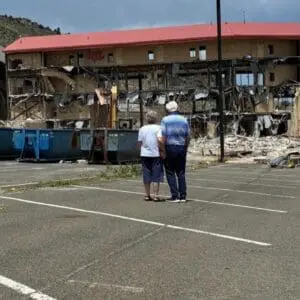
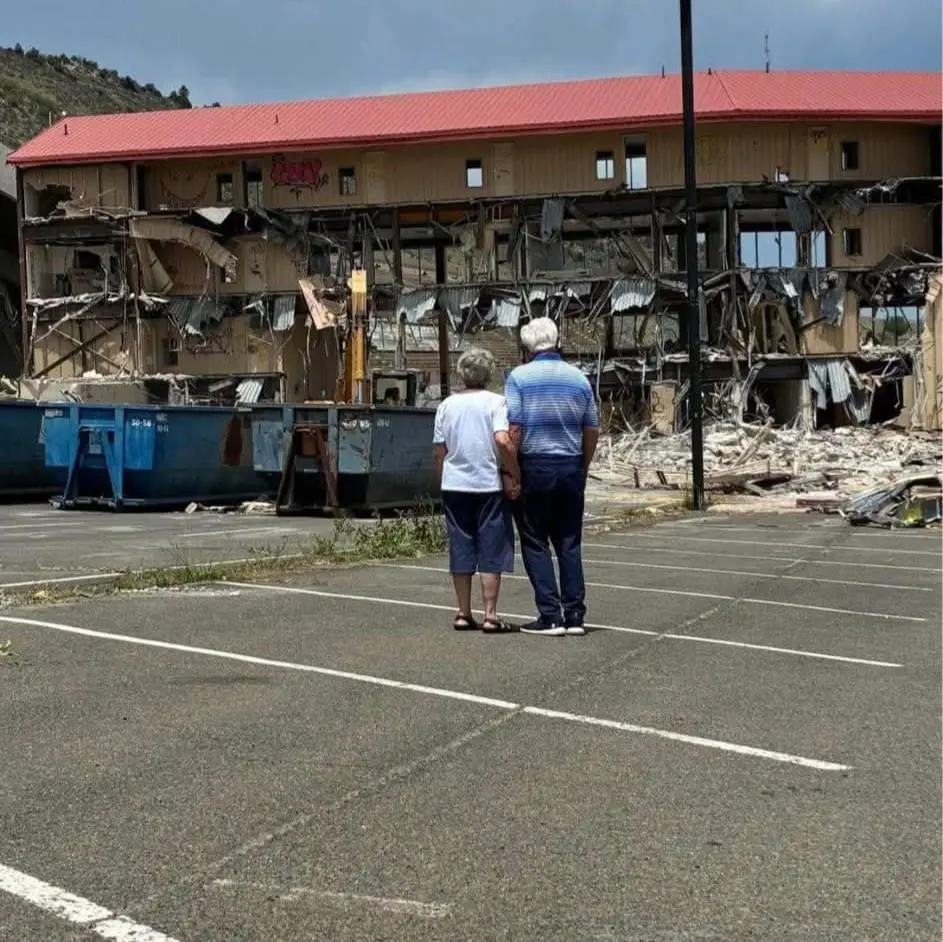
The tower at Bandimere Speedway was coming apart piece by piece. Workers were removing glass, counters and decades of memories from the structure that had become the visual centerpiece of one of drag racing’s most iconic facilities.
Then the eagle appeared, circling the tower before drifting away and returning again. As Lorraine watched the bird make another pass over the building that had stood watch over Thunder Mountain for more than three decades, she found herself focusing less on the demolition and more on what she believed the moment represented.
“I looked up and there’s an eagle circling around the tower and it circled and then it kind of flew off to a distance and then it came back and then it circled around over the tower again and then it just kind of went real slow and then it just kind of feathered off and went south as to kind of just tell me that, Lorraine, it’s going to be okay. Don’t look back, look ahead,” she said. “So I just thought that was kind of a sign from God.”
For Lorraine and her husband John, demolition day wasn’t simply another construction project. It was the latest chapter in saying goodbye to the drag strip their family had owned since 1958 and the facility that became known around the racing world as Thunder Mountain. By the time demolition crews arrived, most of the property had already disappeared.
“Today when she was out there, they took down all of the garages behind the main office building,” John Bandimere said. “And then they took down that master drive building. But everything now on the premises, every building that we had except for the tower is gone.”
Lorraine found herself standing in front of the tower, taking photographs of the hospitality suite, the office and the clock operator station where she had spent countless race weekends over the years.
“So I turned on my video and I took a picture of them pulling out all the glass and the counters and everything and pulling it out,” Lorraine said. “And I thought, okay, I want to take a picture of where I spent most of my time in that tower.”
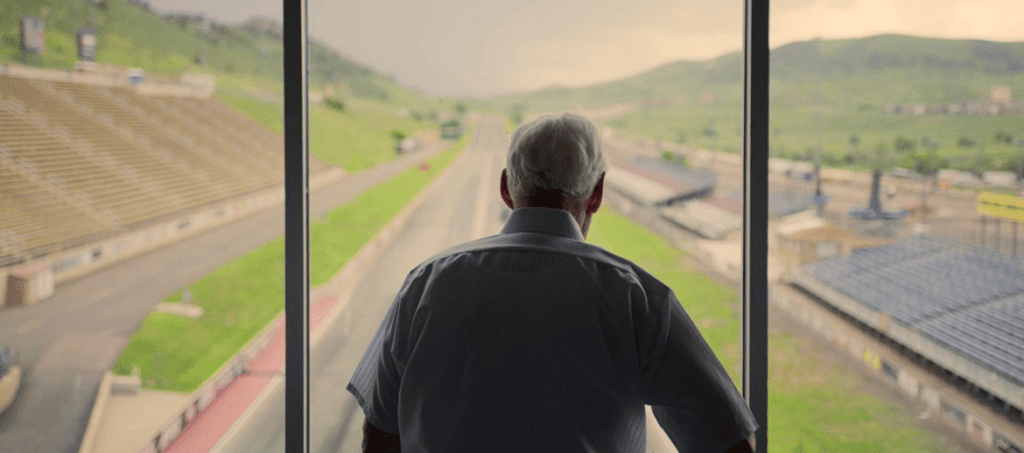
For John Bandimere, standing there unlocked a flood of memories that had very little to do with national event winners or elapsed times.
“There are several things that came through my mind,” Bandimere said.
His thoughts went back to the early years, when rainstorms would send water rushing through the facility and turn race preparation into a cleanup operation that lasted for hours.
“The water would just gush down the staging lanes right to where we were standing,” Bandimere recalled. “And the hours and hours, and hours that we spent cleaning all of that so that we could be ready to race.”
Those are not the memories most fans carry away from a racetrack. They’re the memories that belong to the people responsible for keeping one operating. Bandimere also found himself remembering the small trailer where he and Lorraine occasionally stayed overnight because vandalism had become a concern during the speedway’s early years.
“A lot of times I would stay and stay in the old tower, the one that looked like a spark plug and see if I could catch somebody,” Bandimere said. “Never did ever catch anybody, but it was just one of them things that you’re trying to keep everything together.”
Standing there, Bandimere found one memory leading to another. After more than six decades at the facility, every corner of the property seemed tied to a story.
Of all of them, Bandimere kept returning to the construction of the tower itself.
The structure eventually became the signature landmark of Thunder Mountain, but its existence was never guaranteed. After the death of his father in 1986, Bandimere found himself trying to navigate both family loss and the future of the facility. At the same time, NHRA officials were making it clear that substantial improvements would be necessary if national event racing was going to continue in Morrison.
Bandimere remembers asking NHRA’s Dallas Gardner a direct question.
“I said, ‘Dallas, if we take a year off, which would be 1988, will you let us come back?'” Bandimere recalled. “‘And he said, ‘Oh, absolutely. Absolutely.'”
That conversation launched one of the most ambitious projects in the track’s history. NHRA officials toured the facility, created a list of needed improvements and handed the Bandimeres a roadmap.
The response was immediate.
“We broke ground and poured the caissons for that tower on May the 10th, 1989,” Bandimere said. “July 19th, 1989, we had a certificate of occupancy and ran a race.”
Today, that timetable sounds impossible.
“You would never, ever get that done today,” Bandimere said.
The tower became a community project involving racers, contractors and suppliers, many of whom stepped forward to help make it happen. Some provided labor, others materials, and all became part of a project that would define the facility for decades.
“There were days when I counted well over 150 people working on that tower,” Bandimere said.
Even now, the demolition crews are learning what Bandimere already knew.
“They’re having a tough time tearing that thing down because it was well overbuilt,” he said. “That tower would have never gone anywhere.”

The memories were not all tied to construction projects and major decisions. Bandimere laughed while recalling the day a tow truck rolled away unattended and headed downhill toward Rooney Road without a driver.
“Never hit anything,” he said. “Went through a fence, of course, all that stuff.”
Then there was the wheelchair incident that still makes him cringe. Trying to help a mother and her son navigate the property, Bandimere suddenly found himself chasing a wheelchair that had begun rolling downhill on its own.
“I’m not joking you, he went all the way down and then crashed into a fence,” Bandimere said.
Fortunately, nobody was injured, though the story became part of Bandimere Speedway folklore.
“I never got past that,” Bandimere said. “They always remembered that story, how I tried to kill a guy in this wheelchair.”
The recollections eventually returned to what mattered most. Bandimere thought about standing near the speaker system during the national anthem. He thought about opening prayers before races and the generations of racers who grew up at the facility.
Family and youth programs were always at the center of what the Bandimeres were trying to build.
“We’ve actually had Memorial Day and Labor Day high school races with 785 entries,” Bandimere said.
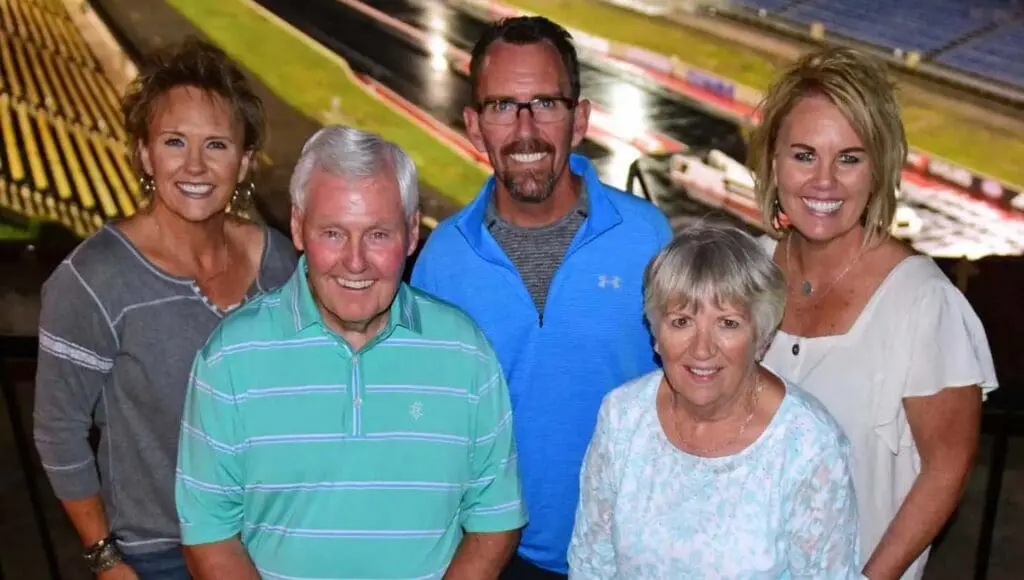
That commitment to youth helped shape the identity of Thunder Mountain as much as any national event. Bandimere Speedway occupied 150 acres, with only about 100 considered usable. Yet somehow the facility consistently produced packed grandstands, memorable events and a sense of place that was difficult to explain to anyone who had never visited.
The final NHRA national event in 2023 provided one last example. What mattered more to Bandimere was what people felt when they arrived.
“It was God’s place,” Bandimere said. “It was a place where you could just feel that He was there.”
For Bandimere, the mountain itself was always part of the attraction. Fans didn’t just watch race cars. They watched storms move across the Rockies, sunsets settle over the foothills and rainbows stretch across the horizon.
“You could sit in the grandstands and you could look out,” Bandimere said. “And I don’t know how many times sat there and saw complete rainbows start to finish because of the location.”
As the demolition continues, Bandimere knows another chapter lies ahead. He also understands that some places leave an imprint that extends beyond concrete, grandstands and scoreboards.
“We’ll never be able to replace it,” Bandimere said. “We can do a lot of things that’ll make it to where the new place will have a good feel, but you never can replace it.”