

Among the most talked-about machines to roll down zMAX Dragway this weekend, the loudest statement came from a car that made almost no noise at all.

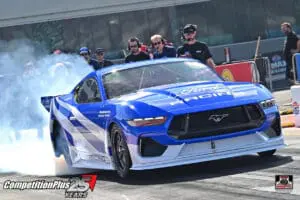
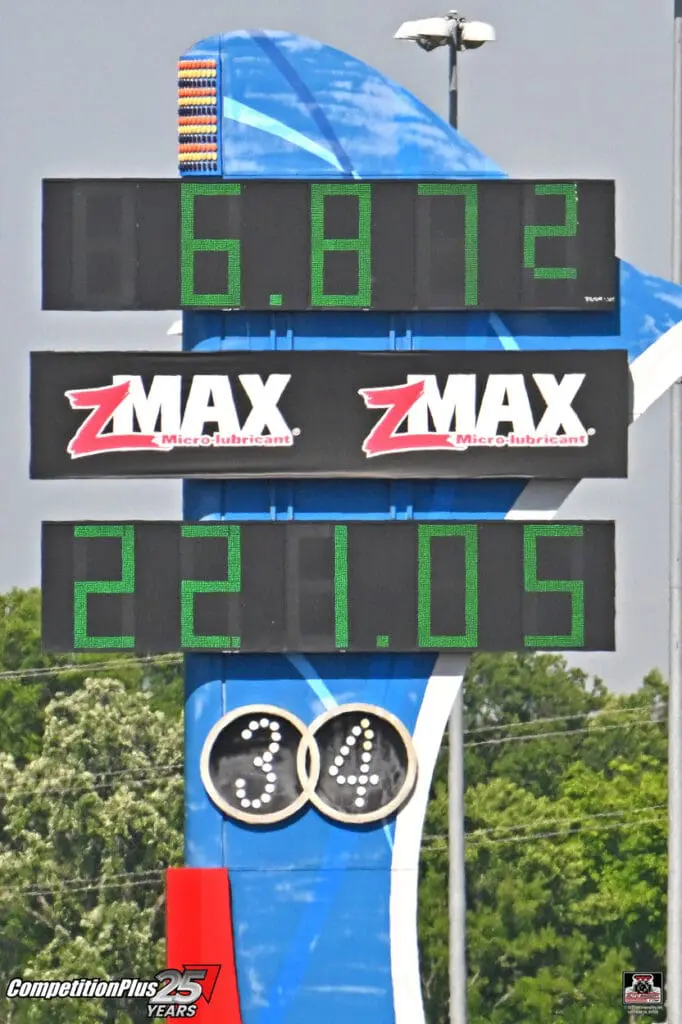
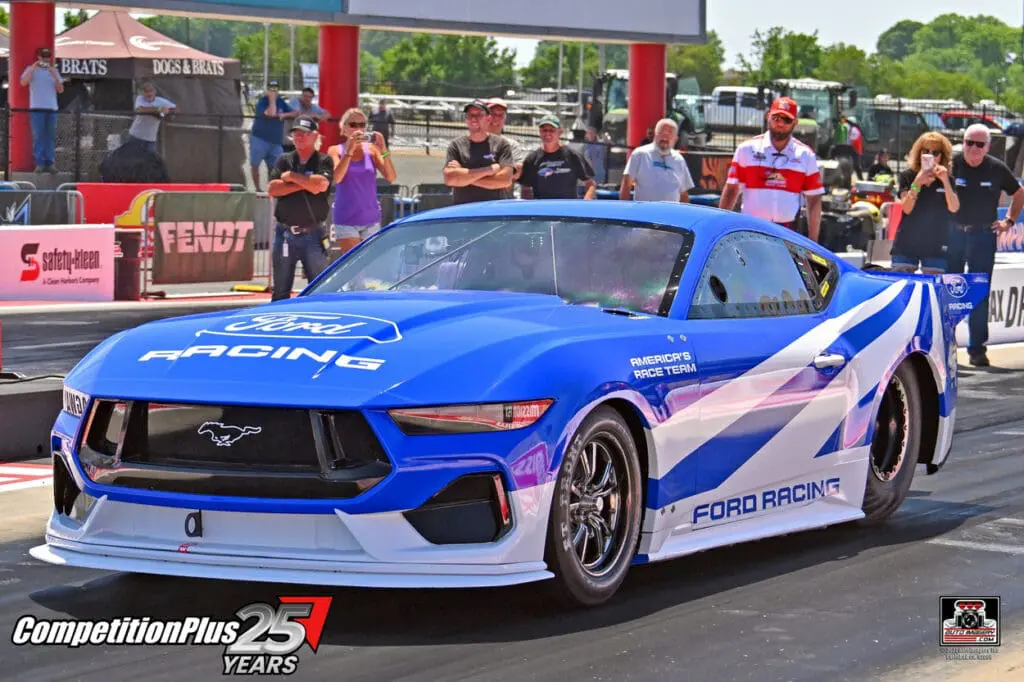
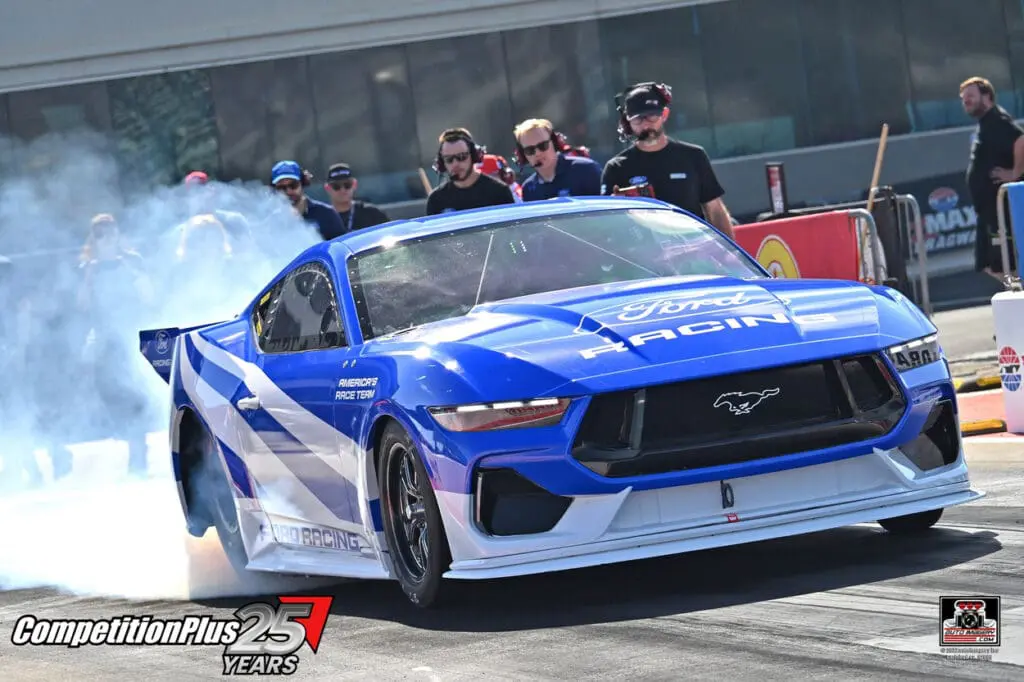
Ford Performance’s Mustang Cobra Jet 2200, driven by Pat McCue, delivered a 6.832-second quarter-mile at more than 220 mph, a pass recognized as the quickest recorded full quarter-mile run by an electric-powered vehicle. In a facility known for Top Fuel violence, Funny Car fury, and Pro Stock precision, the EV exhibition car found a way to own its own corner of the conversation.

The machine is the latest step in Ford’s electric drag-racing development program, a project built less around headlines and more around limits — finding them, then breaking through them.

“This car really for us is an endeavor to really push the limits of electrification and technology and really just see how far we can get in the quarter mile with an electric car,” said Nick Kuhajda, Demonstrators Program Supervisor at Ford Performance. “We’re really happy with the results. We’re now the quickest and fastest quarter-mile pass by an electric car in history.”

That statement lands differently at a dragstrip. This is a sport that doesn’t reward theory, slogans, or polished presentations.

It rewards elapsed time, mile-per-hour, and whether the scoreboard lights up in your lane. Ford showed up with numbers.

The Cobra Jet 2200 is the third chapter in Ford’s modern electric drag-racing evolution, following the Cobra Jet 1400 and Super Cobra Jet 1800. Each version has chased more power, more speed, and more understanding of how electric performance can survive in one of motorsports’ harshest environments.
Getting horsepower is one thing. Delivering it to a prepped dragstrip without blowing the tires off is another matter entirely.

That became the defining engineering fight behind the newest car. Kuhajda said the team quickly learned raw torque was not the obstacle. Control was.

“Some of the biggest challenges we had to overcome were the driveline, because we can make all that power and torque but really being able to manage it and put it down to the ground,” Kuhajda said. “We have a five-speed transmission and we have what’s called a reverse-acting centrifugal clutch.”

Ford wanted the car to leave in direct drive from zero RPM. When the motors were linked directly to the transmission, every shift shocked the driveline hard enough to spin the tires.

That meant all the available power became useless haze.

“We had a problem that when we directly linked the motors and the transmission, every time it shifted, we would spin the tire because there’s all that rotating inertia we have to manage,” Kuhajda said. “So the racers have been perfecting this technology for 70 years, and we took their slipper clutches and reversed the action of the counterweights.”

The solution came straight from drag racing’s old-school notebook instead of a modern lab.
“The car will leave fully locked up in direct drive,” Kuhajda said. “At the top of the gear, there is just enough pressure relief that that impulse on the shift will just cause it to slip. That allows us to manage that tire, and that was a big moment for us to be able to put the power down and keep it down.”

That quote says plenty about where racing still matters. Advanced batteries, motors, and inverters may draw headlines, but sometimes the breakthrough comes from lessons learned decades ago in race shops.

The quarter-mile has always been a truth machine. It exposes weak links faster than any conference room ever could.

Ford’s team used that environment exactly as intended. If a battery cell overheats, if a driveline part disagrees, if weight distribution misses the mark, the dragstrip reveals it in seconds.

“And really drag racing, like with a lot of forms of motorsport, allows us to focus,” Kuhajda said. “So this car, we had a specific mission and that mission would drive us to be innovative, to push ourselves beyond our comfort zone.”

He said once the mission becomes getting to the finish line quicker, priorities sharpen immediately.

“Because when we’re delivering a car that gets to the quarter mile, we have to prioritize power. We have to prioritize mass reduction,” Kuhajda said. “And that’s going to push us again to that next … just outside the envelope. And that allows us to grow and to learn.”

he crowd response suggested fans understood exactly what they were watching. This wasn’t a showroom gimmick parked under lights.

It was a purpose-built race car trying to run a number. That still resonates in drag racing, regardless of fuel source.

Stationed across from the nitro pits, the Ford display drew steady traffic as fans studied the car and asked the same question racers always ask first: What’s in it, and how fast will it go next?

Kuhajda said that reaction mattered because credibility inside this sport must be earned.

“I’ve been really thrilled with the response,” he said. “Again, I think with the drag race community, because this car was built by people who love the sport and it shows. And I think the fans really responded to that.”

No one in the nitro pits is mistaking an EV for a Top Fuel dragster. No one in Pro Stock is losing sleep over battery packs replacing mountain motors tomorrow morning.

But what happened at zMAX Dragway still mattered.

A 6.83 at more than 220 mph is not novelty. It is performance, and performance always gets respect.

Brad Littlefield contributed to this article

Share the Insights?

Click here to share the article.

ad space x ad space

ad space x ad space

Competition Plus Team

Since our inception, we have been passionately dedicated to delivering the most accurate, timely, and compelling content in the world of drag racing. Our readers depend on us for the latest news, in-depth features, expert analysis, and exclusive interviews that connect you to the sport’s pulse.

Sign up for our newsletters and email list.

This field is for validation purposes and should be left unchanged.
Name

FORD’S 2,200-HORSEPOWER ELECTRIC MUSTANG REWRITES DRAG RACING HISTORY AT ZMAX

Among the most talked-about machines to roll down zMAX Dragway this weekend, the loudest statement came from a car that made almost no noise at all.

Ford Performance’s Mustang Cobra Jet 2200, driven by Pat McCue, delivered a 6.832-second quarter-mile at more than 220 mph, a pass recognized as the quickest recorded full quarter-mile run by an electric-powered vehicle. In a facility known for Top Fuel violence, Funny Car fury, and Pro Stock precision, the EV exhibition car found a way to own its own corner of the conversation.

The machine is the latest step in Ford’s electric drag-racing development program, a project built less around headlines and more around limits — finding them, then breaking through them.

“This car really for us is an endeavor to really push the limits of electrification and technology and really just see how far we can get in the quarter mile with an electric car,” said Nick Kuhajda, Demonstrators Program Supervisor at Ford Performance. “We’re really happy with the results. We’re now the quickest and fastest quarter-mile pass by an electric car in history.”

That statement lands differently at a dragstrip. This is a sport that doesn’t reward theory, slogans, or polished presentations.

It rewards elapsed time, mile-per-hour, and whether the scoreboard lights up in your lane. Ford showed up with numbers.

The Cobra Jet 2200 is the third chapter in Ford’s modern electric drag-racing evolution, following the Cobra Jet 1400 and Super Cobra Jet 1800. Each version has chased more power, more speed, and more understanding of how electric performance can survive in one of motorsports’ harshest environments.

Getting horsepower is one thing. Delivering it to a prepped dragstrip without blowing the tires off is another matter entirely.

That became the defining engineering fight behind the newest car. Kuhajda said the team quickly learned raw torque was not the obstacle. Control was.

“Some of the biggest challenges we had to overcome were the driveline, because we can make all that power and torque but really being able to manage it and put it down to the ground,” Kuhajda said. “We have a five-speed transmission and we have what’s called a reverse-acting centrifugal clutch.”

Ford wanted the car to leave in direct drive from zero RPM. When the motors were linked directly to the transmission, every shift shocked the driveline hard enough to spin the tires.

That meant all the available power became useless haze.

“We had a problem that when we directly linked the motors and the transmission, every time it shifted, we would spin the tire because there’s all that rotating inertia we have to manage,” Kuhajda said. “So the racers have been perfecting this technology for 70 years, and we took their slipper clutches and reversed the action of the counterweights.”

The solution came straight from drag racing’s old-school notebook instead of a modern lab.

“The car will leave fully locked up in direct drive,” Kuhajda said. “At the top of the gear, there is just enough pressure relief that that impulse on the shift will just cause it to slip. That allows us to manage that tire, and that was a big moment for us to be able to put the power down and keep it down.”

That quote says plenty about where racing still matters. Advanced batteries, motors, and inverters may draw headlines, but sometimes the breakthrough comes from lessons learned decades ago in race shops.

The quarter-mile has always been a truth machine. It exposes weak links faster than any conference room ever could.

Ford’s team used that environment exactly as intended. If a battery cell overheats, if a driveline part disagrees, if weight distribution misses the mark, the dragstrip reveals it in seconds.

“And really drag racing, like with a lot of forms of motorsport, allows us to focus,” Kuhajda said. “So this car, we had a specific mission and that mission would drive us to be innovative, to push ourselves beyond our comfort zone.”

He said once the mission becomes getting to the finish line quicker, priorities sharpen immediately.

“Because when we’re delivering a car that gets to the quarter mile, we have to prioritize power. We have to prioritize mass reduction,” Kuhajda said. “And that’s going to push us again to that next … just outside the envelope. And that allows us to grow and to learn.”

he crowd response suggested fans understood exactly what they were watching. This wasn’t a showroom gimmick parked under lights.

It was a purpose-built race car trying to run a number. That still resonates in drag racing, regardless of fuel source.

Stationed across from the nitro pits, the Ford display drew steady traffic as fans studied the car and asked the same question racers always ask first: What’s in it, and how fast will it go next?

Kuhajda said that reaction mattered because credibility inside this sport must be earned.

“I’ve been really thrilled with the response,” he said. “Again, I think with the drag race community, because this car was built by people who love the sport and it shows. And I think the fans really responded to that.”

No one in the nitro pits is mistaking an EV for a Top Fuel dragster. No one in Pro Stock is losing sleep over battery packs replacing mountain motors tomorrow morning.

But what happened at zMAX Dragway still mattered.

A 6.83 at more than 220 mph is not novelty. It is performance, and performance always gets respect.

Brad Littlefield contributed to this article

Picture of John Doe

John Doe

Lorem ipsum dolor sit amet consectetur adipiscing elit dolor

More Posts

Send Us A Message

Picture of Bobby Bennett
Bobby Bennett
Thank you for joining us on this journey. Your support and trust inspire us every day to deliver the best in drag racing journalism. We are excited about the future and look forward to continuing to serve you with the same dedication and passion that has defined CompetitionPlus.com from the very beginning.

Don’t miss these other exciting stories!

Explore more action packed posts on Competition Plus, where we dive into the latest in Drag Racing News. Discover a range of topics, from race coverage to in-depth interviews, to keep you informed and entertained.