

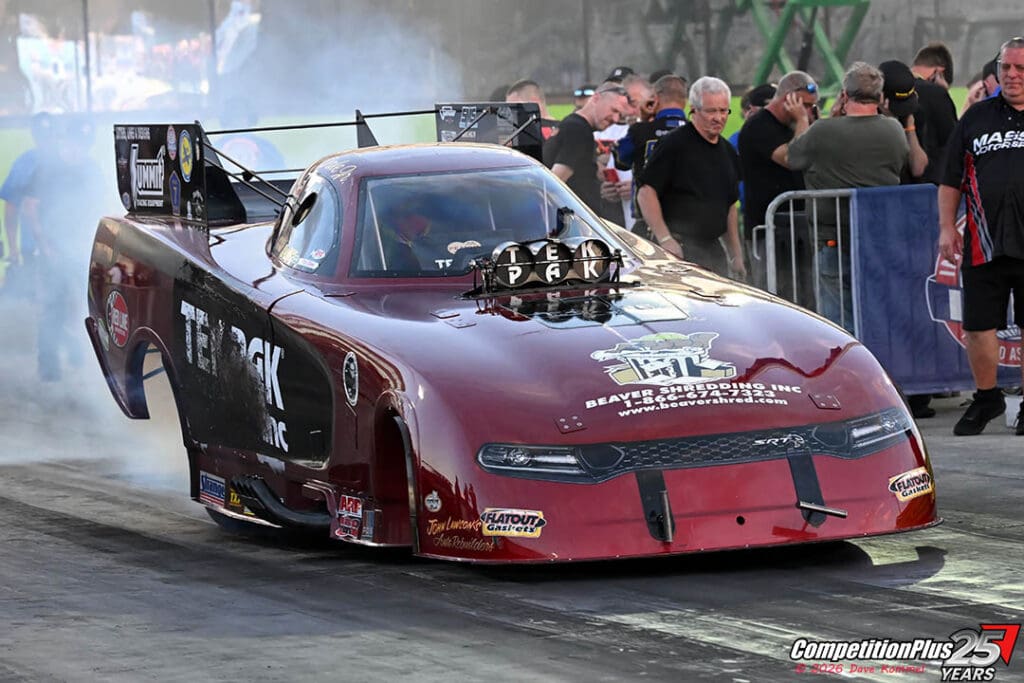
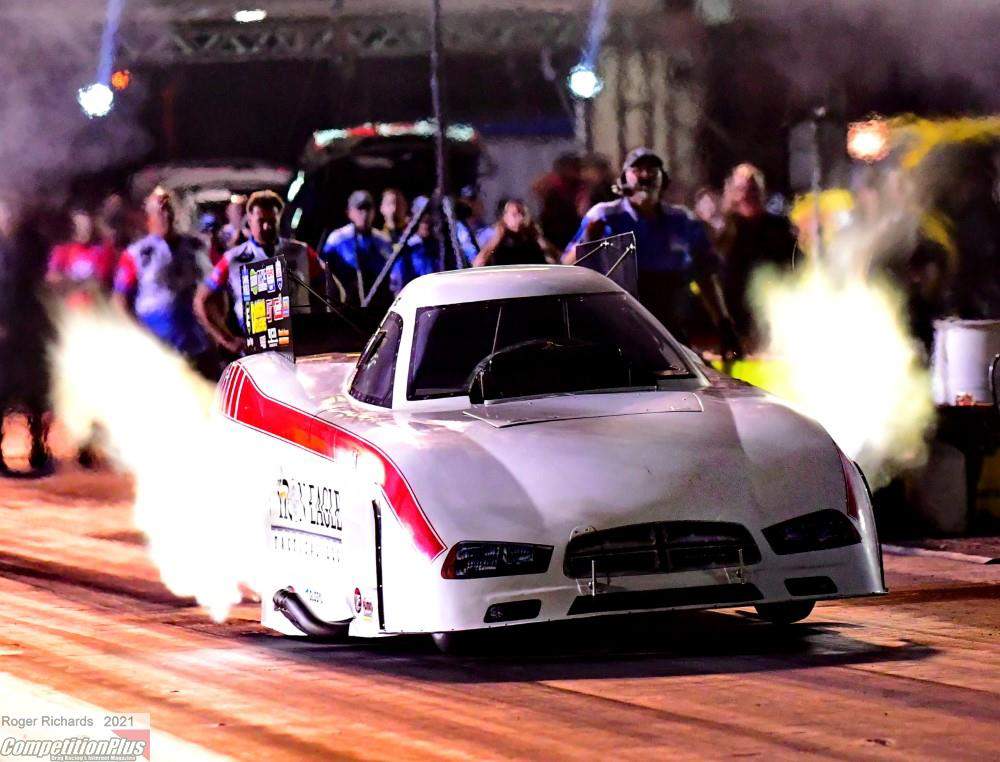
Dale Creasy Jr. was supposed to be unloading his Funny Car at Darana Dragway in Milan, Mich., last weekend.
Like dozens of IHRA racers, the two-time Funny Car champion expected to be preparing for another event in a championship chase that only weeks earlier appeared to be one of the most lucrative opportunities independent drag racers had seen in years. Instead, he found himself looking at a race trailer that never left the shop.
“That was devastating because it was like I’ve already planned it, we should be there right now,” Creasy said. “We were supposed to be in Milan this weekend.”
For the IHRA racers who invested their time, money and hopes into the organization’s return to nitro racing, the disappointment didn’t arrive all at once. The bad news kept coming.
On June 29, the IHRA announced it was removing four Outlaw Nitro Series events from its schedule, including Milan Dragway, Empire Dragway, Darana-Heartland Motorsports Park and Atlanta Dragway, citing the need for additional facility improvements. While the revised calendar still left a path to a championship, it dramatically reduced the margin for error for some racers such as Creasy chasing a title worth $200,000.
Eleven days later came the announcement few expected.
On July 10, the IHRA canceled the remainder of its 2026 Outlaw Nitro Series season, ending the championship battle before it reached its conclusion. At the same time, the organization’s much-publicized Triple Crown concept, complete with a $1 million bonus for any racer capable of sweeping all three events, effectively disappeared after only one race.
Then came another reality.
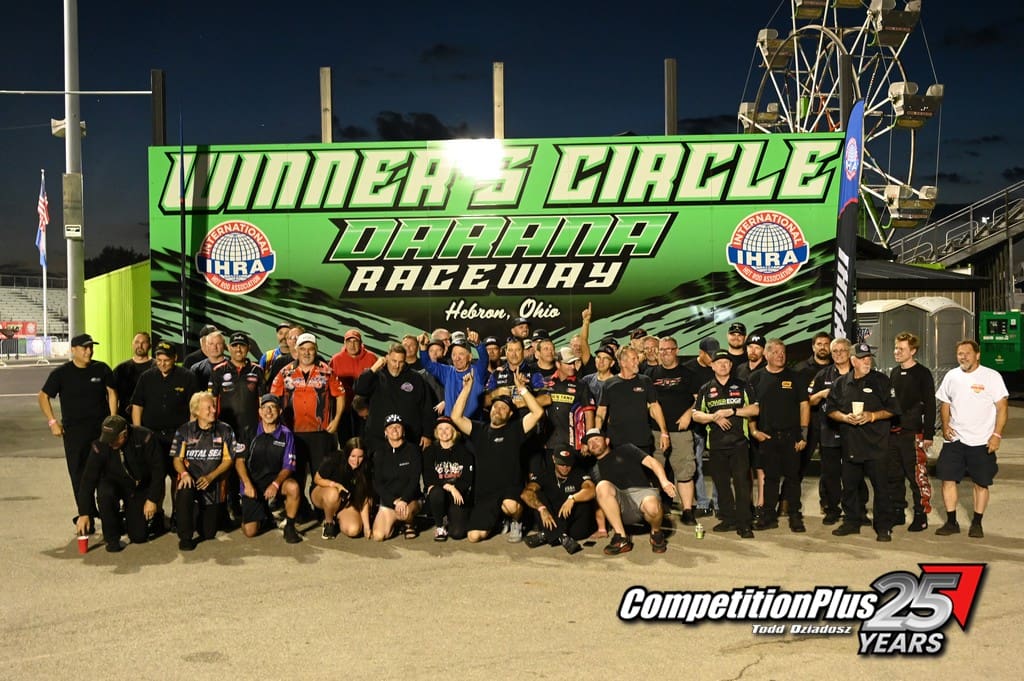
More than three weeks after the opening Triple Crown event in Columbus, multiple IHRA racers told CompetitionPlus.com they were still waiting for purse money from the event. While none interviewed questioned whether they would eventually be paid, many admitted the delay had already forced difficult decisions about the remainder of their racing seasons.
Now they’re left with no championship to chase, no chance at the Triple Crown’s $1 million bonus and, perhaps most significantly, no way to continue the momentum many had spent two seasons building.
Creasy would have entered the canceled Milan weekend second in Funny Car points, trailing Del Worsham by a single round. The revised schedule had already tightened the championship battle before the July 10 announcement ended it altogether.
“Canceling the races was disappointing and then the canceling the rest of the season, without getting paid from the last race, I’m going to have a hard time getting to another race,” Creasy said.
“We just have to regroup because we’re ready to go to the next three or four races without having to buy parts unless something happens. It’s just trying to justify going to NHRA and making three or four runs for $10,000. I’m just having a hard time with that.”
For many independent teams, the IHRA purse became what match racing was to racers in the 1970s. It wasn’t simply income. It became the engine that kept their programs moving forward.
CompetitionPlus.com heard the same theme over and over from IHRA racers in Funny Car, Top Fuel and Mountain Motor Pro Stock. But what didn’t universally surface was bitterness or resentment.
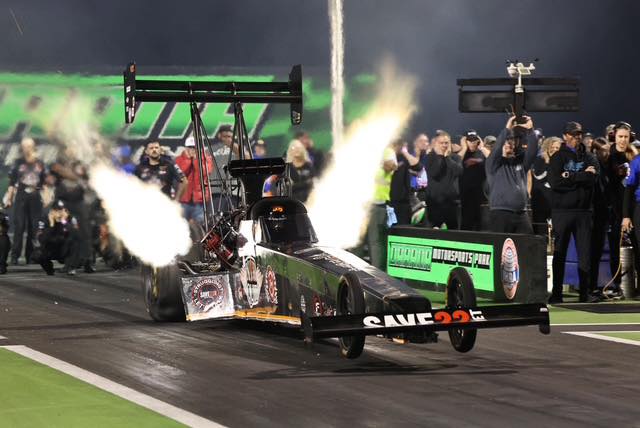
Instead of blaming the IHRA or its ownership, most racers expressed disappointment over the uncertainty while continuing to credit the series for giving independent teams opportunities they had struggled to find elsewhere.
Top Fuel racer Lex Joon may be the best example.
The Dutch racer credited the IHRA’s first season with allowing his operation to purchase better equipment, improve its inventory and finally compete at a level he believed was sustainable. The additional income also gave his team confidence to begin planning its first NHRA Western Swing.
Those plans are now on hold.
“Not having the financial resources coming back from a race, that put us in a bind,” Joon said. “I cannot fund any parts for another race. I cannot fund the hotels anymore for another race. I cannot buy the fuel for the truck. What it basically does is it’s parking us.”
Joon said he contacted IHRA officials before traveling to Columbus because his team couldn’t afford a lengthy delay in payment. He said he was told payment would arrive the Friday after the race. It didn’t.
Even with his own team parked, Joon remains one of the organization’s strongest supporters.
“IHRA, Darryl Cuttell, they helped our team go to the next level,” Joon said. “We had a great time last year racing with them. They were really generous with the payout. It was unbelievable.”
Joon believes communication—not intent—has become the biggest issue.
“My problem is start communicating about what the plan is,” he said. “If everyone knows what’s going on, people can move on and you eliminate the bad-mouthing on the internet.”
That thought echoed throughout nearly every conversation CompetitionPlus.com had with IHRA racers.
They admitted they didn’t know every detail behind the decisions. Most said they wished communication had been quicker. Almost none questioned what the series had already accomplished.
Creasy believes many fans never fully appreciated what the IHRA’s financial model meant to racers operating without factory-level budgets.
“It revived our race career because we had a place to go,” Creasy said. “We were making enough money to make it happen and we were doing pretty well.”
He paused before adding another thought.
“I’m not mad at anybody for that. I understand why, what happened kind of, but since I don’t know the whole story, I really don’t know.”
Funny Car veteran Jack Wyatt feels the same way.
After nearly 50 years in drag racing, Wyatt was preparing to retire and sell his operation before learning about the IHRA’s plans. Instead of selling, he bought a larger trailer, expanded his inventory and committed to racing because, for the first time in years, the numbers finally worked.
“And then I was able to buy more parts,” Wyatt said. “I got a bigger trailer and all that stuff to haul more stuff. It was working out really well.”
Wyatt acknowledged he often wondered whether such generous purses could be sustained. Not once, he said, did he ever question what they meant to racers.
“The pay was good, I liked the format,” Wyatt said. “It made it really a lot better.”
The uncertainty extends beyond the nitro categories.
Mountain Motor Pro Stock committed much of its future to the IHRA, while Top Fuel Motorcycle also embraced the organization as its primary national home. Both now find themselves waiting to learn what opportunities, if any, lie ahead.
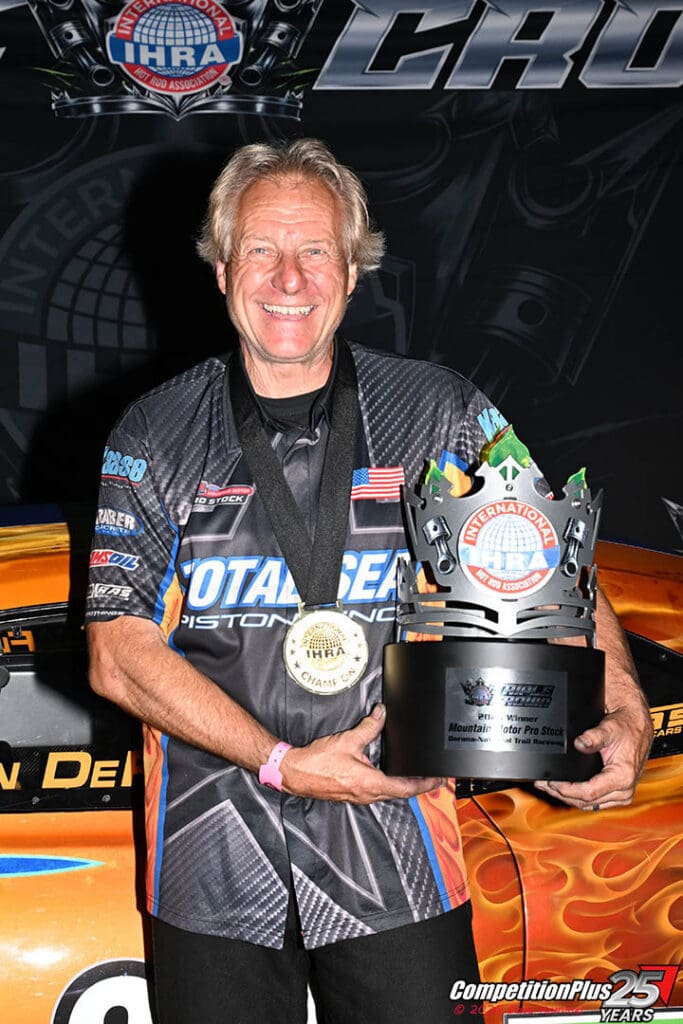
Fresh off his victory in Columbus, Mountain Motor Pro Stock standout John DeFlorian admitted the purse mattered, but not as much as standing in the winner’s circle.
“When you’re my age, you don’t know when the last race is going to be,” DeFlorian said.
He then explained why racers continue returning despite the financial risks.
“When this is all done and over with, the trucks and the trailers are gone, the cars are gone,” DeFlorian said. “The thing that we’re going to have as drivers, we’re going to have the trophies, the photos, the pictures and the memories.”
CompetitionPlus.com reached out to IHRA officials on July 10, 2026, and inquired as to when the racers will be paid.

Those memories remain as do the subsequent questions. No IHRA racer interviewed by CompetitionPlus.com claimed to know exactly what forced the organization to end its Outlaw Nitro season. Some speculated the investment required to launch the series simply grew faster than expected. Others admitted they didn’t have enough information to draw that conclusion.
What they did know was far simpler.
The IHRA gave many independent racers something they hadn’t enjoyed in years—a chance to race for purses that could actually improve their programs instead of merely helping them survive another weekend.
Now those same racers find themselves waiting for answers, waiting for purse money and waiting to learn whether the opportunity that changed their programs will return.
Despite everything that has happened, Creasy says he hasn’t given up on the vision.
“Absolutely.”













NHRA’S COUNTDOWN PROBLEM DIDN’T START WITH SHAWN REED, BUT HIS CASE EXPOSED IT