

It was as if Mountain Motor Pro Stock had come full circle.

The large-displacement Pro Stock machines returned to a revitalized IHRA last season, drawing fields of as many as 24 cars and rekindling memories of 1977, when the Bristol-based sanctioning body abandoned the traditional pounds-per-cubic-inch formula and created a new identity for factory hot rod racing.

For the first time in years, the class had something it had spent more than a decade chasing: stability.

After bouncing between sanctioning bodies, racing selective schedules and watching competitors split over quarter-mile versus eighth-mile competition, Mountain Motor Pro Stock finally stood under one banner. Car counts climbed, new teams emerged and longtime competitors believed the wandering years were finally over.

Then the floor disappeared beneath them.

When IHRA ended its 2026 Outlaw Nitro Series season prematurely, Mountain Motor Pro Stock didn’t merely lose a schedule. It lost the only national home it had left.

Unlike Top Fuel, Funny Car and Pro Modified, which have multiple places to compete at the professional level, Mountain Motor Pro Stock suddenly found itself without a national championship to pursue. The uncertainty has forced one of drag racing’s oldest professional classes back into a familiar position: searching for somewhere to race.
Ironically, many within the class believe the crisis has also created its greatest opportunity.

Instead of debating horsepower combinations, track length or sanctioning politics, nearly every racer interviewed reached the same conclusion. If Mountain Motor Pro Stock is going to survive this latest challenge, it will happen only if the racers refuse to splinter.

Veteran racer John Montecalvo believes the class has already demonstrated its greatest strength.

“This class has been doing an outstanding job,” Montecalvo said. “I’m very impressed with the way everybody’s operating here, especially [in Norwalk]. We did what we had to do. We didn’t have much time. We don’t drag our feet. We get up there and do what we have to do.”

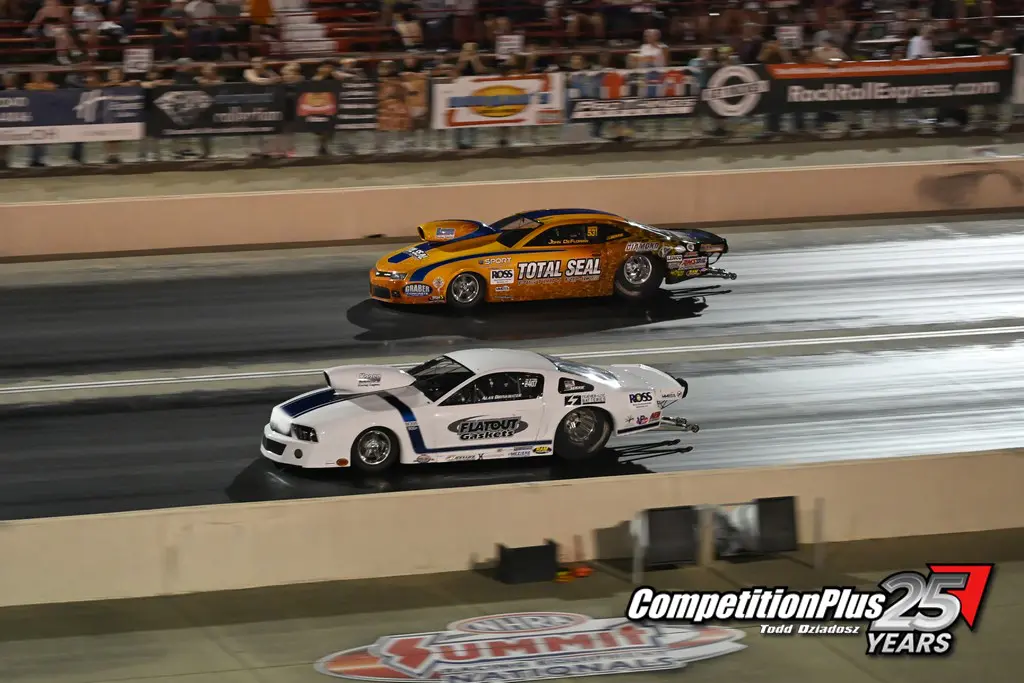
The Mountain Motor Pro Stockers were in Norwalk, as one of the entertaining groups taking part in the Night Under Fire, bringing 23 cars to compete in a 16-car field paying in excess of $100,000 in combined purse.

Montecalvo pointed to both the fan response and the professionalism of the teams as reasons he remains optimistic despite the uncertainty.

“I think there’s been articles written that this was the favorite class in IHRA, the new IHRA, and the fan support is there,” Montecalvo said. “So, what is the future? I’m a very optimistic guy. I always feel when one door closes, another one opens. And by the way, I’m not convinced that that door is closed.”

He isn’t ready to predict where the class lands next.

“I’m always optimistic,” Montecalvo continued. “I think we got a great group of people here. We got great cars. We put on a good show. We’ll find a home. Not sure where, can’t say where. It’s a little too preliminary, but I wouldn’t be worried until after the PRI show.”
Their confidence isn’t built on wishful thinking. Instead, it is built on participation numbers the class hasn’t consistently enjoyed in years.

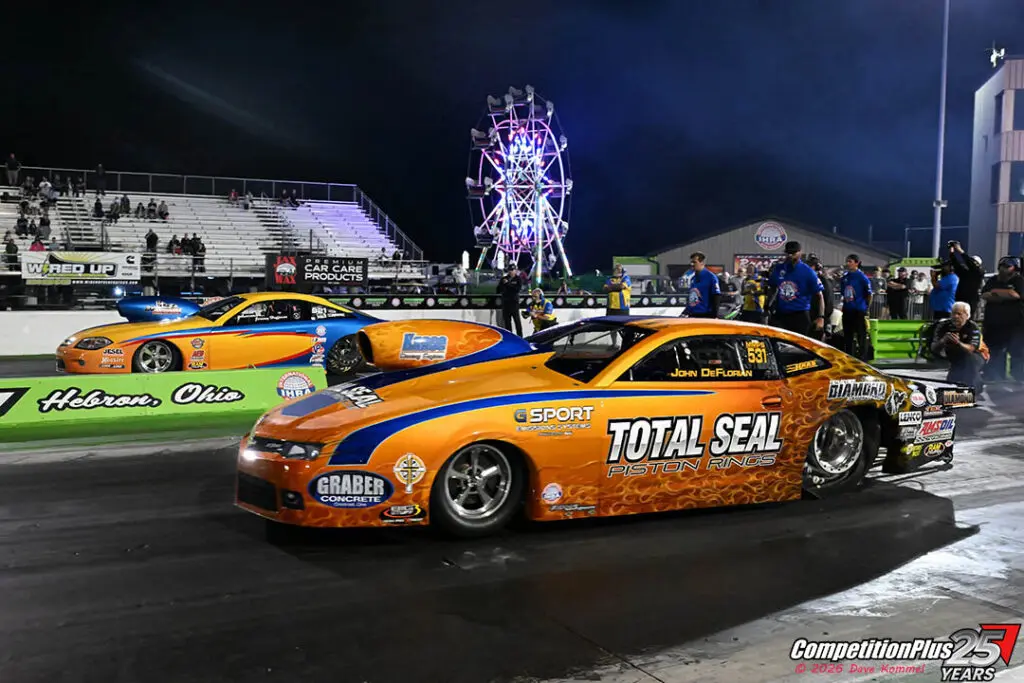
Multi-time Mountain Motor Pro Stock champion John DeFlorian said unity has produced something the category can finally market to promoters and sanctioning bodies.

“We all have to stay together as a unit,” DeFlorian agreed. “Now, if we become splintered and divided, it’ll never happen.””

For much of the last decade, Mountain Motor Pro Stock competitors divided themselves among NHRA, PDRA and independent events. Some preferred quarter-mile racing. Others favored the eighth mile. Geography became another obstacle as some teams refused to leave the East Coast while others chased larger purses elsewhere.

The result was predictable. Every organization ended up with smaller fields, making the class appear weaker than it actually was.

“Right now, if you look at what’s going on for the last year and a half or thereabouts, we’ve been having 24 to 26 cars showing up at every race at one race with one group, which is a big deal,” DeFlorian said. “We haven’t had that in years, right? So it shows we’re united that we can stand together.”

That unity, he believes, represents the class’s strongest bargaining chip.

“If we do that, then we can have something to offer somebody,” DeFlorian said. “Whatever sanctioning body we’d be able to entertain going to, we’ve got something we can sell because we’ll have 24, 26 cars showing up, good cars, quality cars, good side-by-side competition. I mean, that’s what they want to see.”

Ironically, DeFlorian credits IHRA with solving the very problem that had haunted Mountain Motor Pro Stock for years.

“There was something good that came out of it,” he said. “That was that it united the Mountain Motor Pro Stock guys for the first time in many, many years that they’re all on the same page.”

Now he believes the class cannot afford to lose momentum.

“We really need to have ourselves set and figured out, I feel by late November before we go into the PRI show,” DeFlorian said. “We’d like to go into the PRI show, being able to say, ‘Hey, here’s where we’re going to be. Here’s where the Mountain Motor cars will be at next year.'”

Johnny Pluchino sees the category’s value extending beyond participation numbers. He believes Mountain Motor Pro Stock delivers something increasingly difficult to manufacture in modern drag racing: unpredictable, driver-influenced competition.

“I feel like it’s the greatest class in general,” Pluchino said. “So you could definitely say one that doesn’t have a permanent home right now. But if we stick together as a group, I think we’ll be able to figure something out that’ll be good for everybody.”

Pluchino said the racing itself should sell the class.

“Well, it offers really good side-by-side racing where the driver still plays an integral part,” he said. “So we still determine a lot of the success that our teams have, which is to me, an awesome factor.”

He also believes the class remains accessible compared with many professional categories.

“A lot of us are playing on similar playing fields with the horsepower and car combos that we have,” Pluchino said. “It’s a tuner and driver deal, and you could do it with a low budget, you could do it with a really big budget, and still be successful in either facet.”
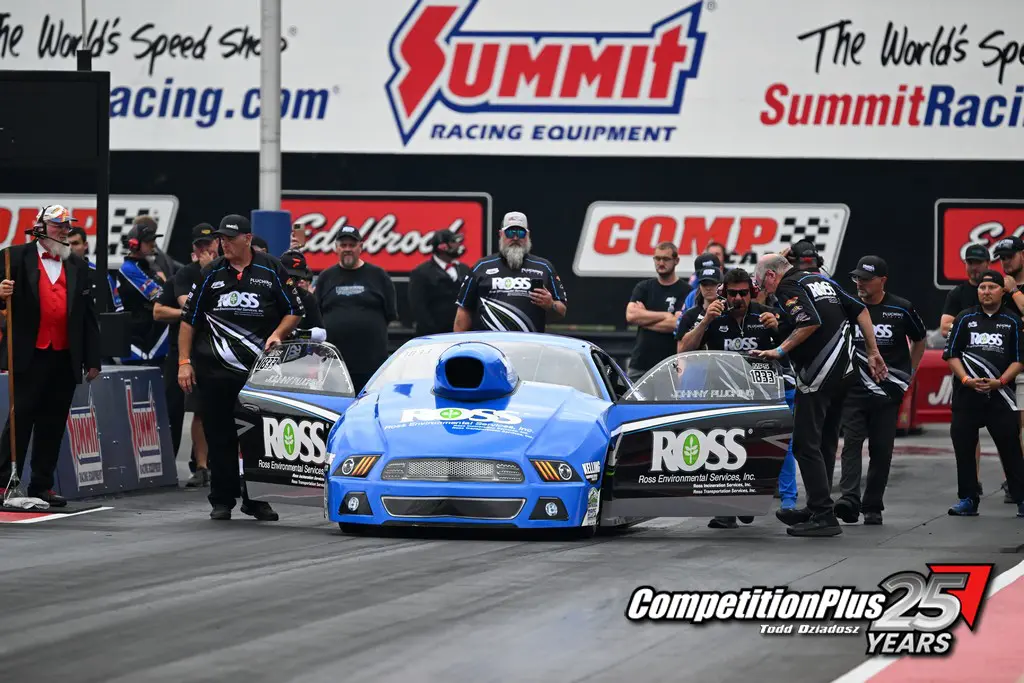
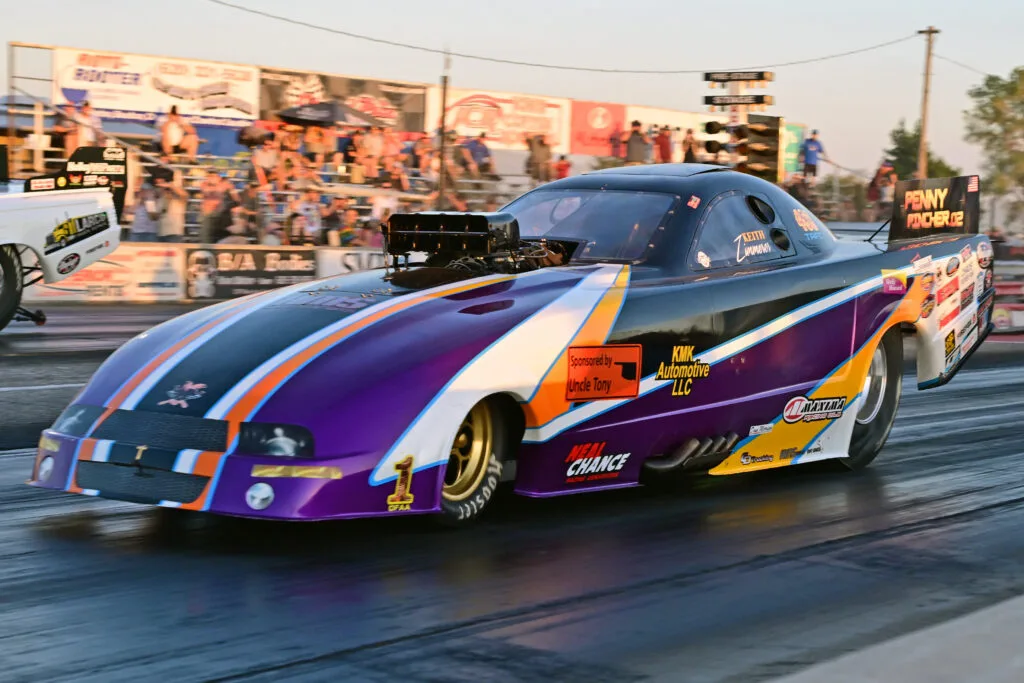
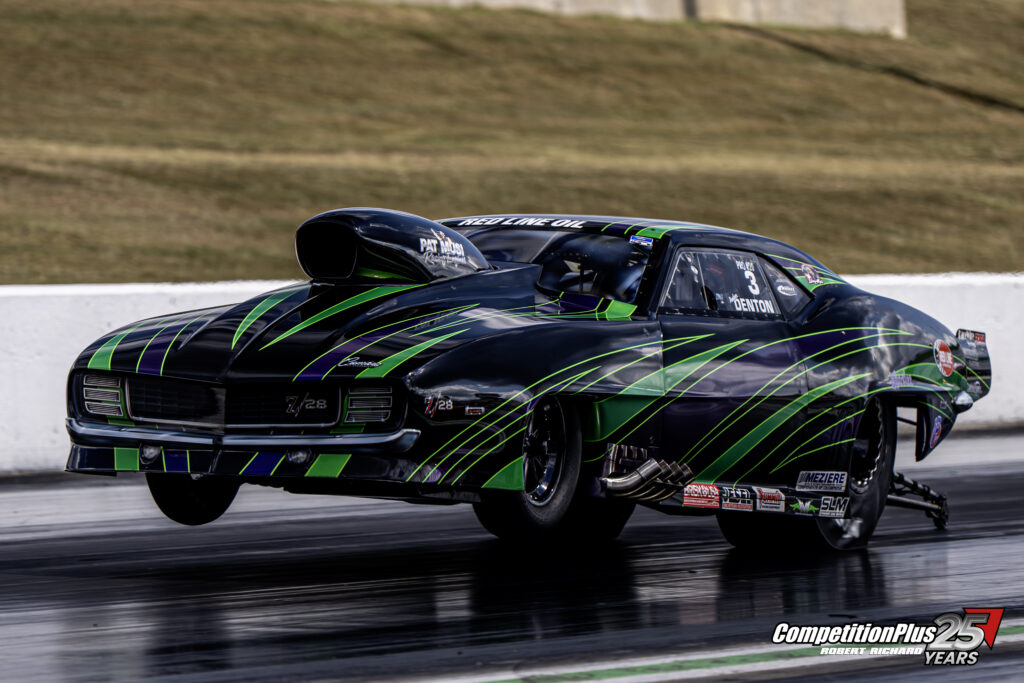
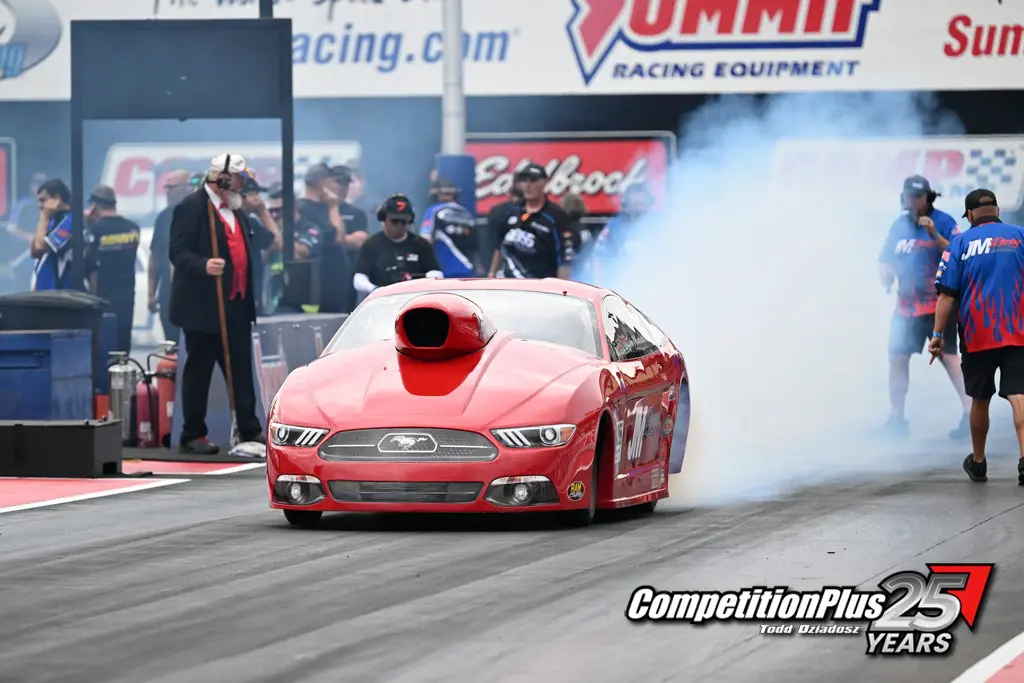
The diversity of the class’ racecar makeup stands as a major selling point. Instead of Camaros accounting for 95-percent of the class, it’s a mix of different manufacturers and some older and newer body styles. For instance, in Norwalk the 23-car makeup was comprised of nine Mustangs, eight Camaros, three Chevrolet Cobalts, two Pontiac GXPs and one Chevrolet Cavalier.

Veteran crew chief Frank Gugliotta has watched the class survive multiple identity crises. That history makes him cautious, but it hasn’t taken away his belief.

“Here we are again,” Gugliotta said. “You know, we’ve been here before several times, haven’t we? Right now the class seems like it’s more unified than it ever has been. And hopefully we can find a place to race.”

Gugliotta believes today’s version of Mountain Motor Pro Stock is healthier than it has been in years.

“I think this class is probably stronger than it’s probably been in what, maybe 10, 15 years at least,” Gugliotta said. “I love this class more than anything. I don’t know how much longer I’ll be doing it, but I never would want to see this class die.”

He admits the IHRA program appeared to offer everything competitors had hoped for.

“You know the old saying. If it’s too good to be true, right?” Gugliotta said. “And it did look like it was really good. You couldn’t have asked for a better deal. Treated everybody like kings. He really did do everything the right way, and he really did try to do it. It was great while it lasted. But nothing lasts forever.”

Looking back, Gugliotta acknowledges the danger of placing every opportunity under one roof.

“Maybe it was a bad thing, because put all of our eggs in one basket,” he said. “But here’s the thing, it looked good on paper. And you can’t turn that down.”
Elijah Morton shares the disappointment but refuses to believe the story ends here. He remembers how quickly optimism spread once the class finally found consistent races and professional treatment.

“The future was looking bright, but you know, sometimes when things look too good to be true, they are not true,” Morton said. “Things happen and I’m sure everybody’s putting forth a good effort.”

Morton said competitors felt valued.

“We were really having a good time,” he said. “A lot of cars were coming out, the purses were good and being treated like a pro team.”

Now, he believes discipline will matter as much as horsepower.

“Certainly that’s the key to it,” Morton said. “We got to stick together and can’t be dividing one another.”

He also warned against allowing social media to become another source of division.

“We just got to have our time together to figure it out and then we’ll report it,” Morton said. “Nobody needs to be bashing anybody. We just got to get our heads together, make a plan, and then stick to the plan.”

Lenny Lottig represents another encouraging sign for the category. He didn’t grow up in Mountain Motor Pro Stock. He chose it. After Factory Stock Showdown lost momentum in his eyes, Lottig looked for another place to race a clutch-equipped door car and found what he considered the logical next step.

“I still like shifting gears and like a door car,” Lottig said. “So that was the next thing in this progression to try to go to.”
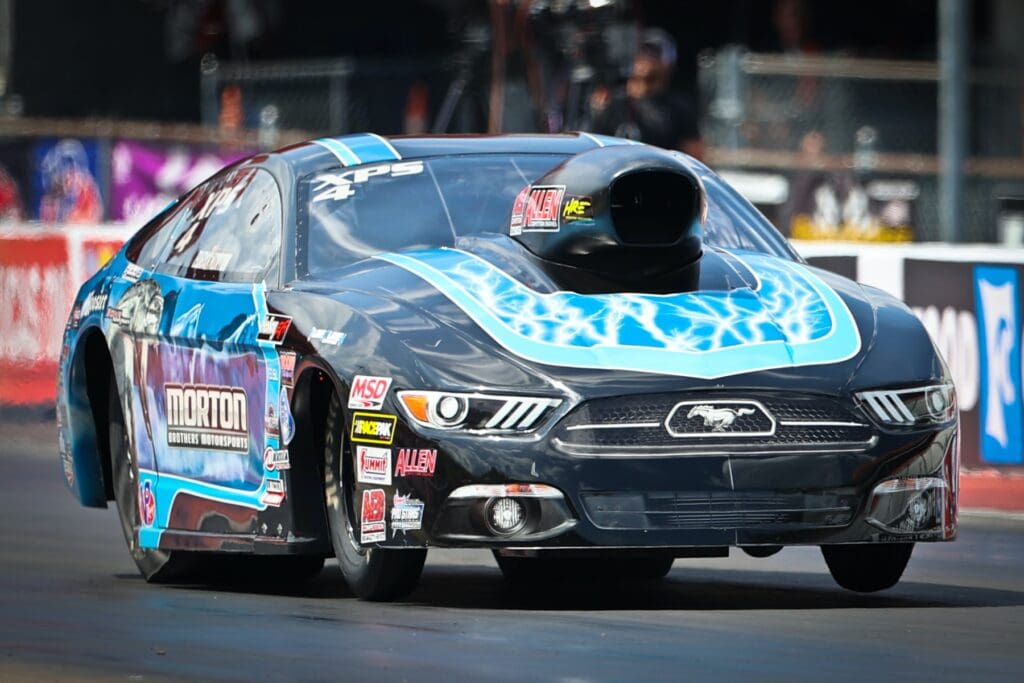
Lottig believes the class offers technical diversity unmatched by many professional categories.

“They’re naturally aspirated and there’s a huge diversification of cars and engine builders that can be all competitive,” Lottig said. “Here there’s six or seven different engine builders across several different makes of cars.”

That balance, he believes, gives newcomers a legitimate opportunity to compete.

“I think that’s one of the huge draws to this class,” Lottig said. “The availability to be competitive.”

For nearly 50 years, Mountain Motor Pro Stock has survived rule changes, sanctioning-body shifts and economic downturns. It has outlived predictions of its demise more than once.

The racers know finding another home won’t be easy. They also know they’ve already accomplished the hardest part. After years of fragmentation, they finally found common ground.

Now they have to make sure they don’t lose it.

Share the Insights?

Click here to share the article.

ad space x ad space

ad space x ad space

Competition Plus Team

Since our inception, we have been passionately dedicated to delivering the most accurate, timely, and compelling content in the world of drag racing. Our readers depend on us for the latest news, in-depth features, expert analysis, and exclusive interviews that connect you to the sport’s pulse.

Sign up for our newsletters and email list.

This field is for validation purposes and should be left unchanged.
Name

MMPS FIGHTING TO KEEP FROM BECOMING HOMELESS

It was as if Mountain Motor Pro Stock had come full circle.

The large-displacement Pro Stock machines returned to a revitalized IHRA last season, drawing fields of as many as 24 cars and rekindling memories of 1977, when the Bristol-based sanctioning body abandoned the traditional pounds-per-cubic-inch formula and created a new identity for factory hot rod racing.

For the first time in years, the class had something it had spent more than a decade chasing: stability.

After bouncing between sanctioning bodies, racing selective schedules and watching competitors split over quarter-mile versus eighth-mile competition, Mountain Motor Pro Stock finally stood under one banner. Car counts climbed, new teams emerged and longtime competitors believed the wandering years were finally over.

Then the floor disappeared beneath them.

When IHRA ended its 2026 Outlaw Nitro Series season prematurely, Mountain Motor Pro Stock didn’t merely lose a schedule. It lost the only national home it had left.

Unlike Top Fuel, Funny Car and Pro Modified, which have multiple places to compete at the professional level, Mountain Motor Pro Stock suddenly found itself without a national championship to pursue. The uncertainty has forced one of drag racing’s oldest professional classes back into a familiar position: searching for somewhere to race.

Ironically, many within the class believe the crisis has also created its greatest opportunity.

Instead of debating horsepower combinations, track length or sanctioning politics, nearly every racer interviewed reached the same conclusion. If Mountain Motor Pro Stock is going to survive this latest challenge, it will happen only if the racers refuse to splinter.

Veteran racer John Montecalvo believes the class has already demonstrated its greatest strength.

“This class has been doing an outstanding job,” Montecalvo said. “I’m very impressed with the way everybody’s operating here, especially [in Norwalk]. We did what we had to do. We didn’t have much time. We don’t drag our feet. We get up there and do what we have to do.”

The Mountain Motor Pro Stockers were in Norwalk, as one of the entertaining groups taking part in the Night Under Fire, bringing 23 cars to compete in a 16-car field paying in excess of $100,000 in combined purse.

Montecalvo pointed to both the fan response and the professionalism of the teams as reasons he remains optimistic despite the uncertainty.

“I think there’s been articles written that this was the favorite class in IHRA, the new IHRA, and the fan support is there,” Montecalvo said. “So, what is the future? I’m a very optimistic guy. I always feel when one door closes, another one opens. And by the way, I’m not convinced that that door is closed.”

He isn’t ready to predict where the class lands next.

“I’m always optimistic,” Montecalvo continued. “I think we got a great group of people here. We got great cars. We put on a good show. We’ll find a home. Not sure where, can’t say where. It’s a little too preliminary, but I wouldn’t be worried until after the PRI show.”

Their confidence isn’t built on wishful thinking. Instead, it is built on participation numbers the class hasn’t consistently enjoyed in years.

Multi-time Mountain Motor Pro Stock champion John DeFlorian said unity has produced something the category can finally market to promoters and sanctioning bodies.

“We all have to stay together as a unit,” DeFlorian agreed. “Now, if we become splintered and divided, it’ll never happen.””

For much of the last decade, Mountain Motor Pro Stock competitors divided themselves among NHRA, PDRA and independent events. Some preferred quarter-mile racing. Others favored the eighth mile. Geography became another obstacle as some teams refused to leave the East Coast while others chased larger purses elsewhere.

The result was predictable. Every organization ended up with smaller fields, making the class appear weaker than it actually was.

“Right now, if you look at what’s going on for the last year and a half or thereabouts, we’ve been having 24 to 26 cars showing up at every race at one race with one group, which is a big deal,” DeFlorian said. “We haven’t had that in years, right? So it shows we’re united that we can stand together.”

That unity, he believes, represents the class’s strongest bargaining chip.

“If we do that, then we can have something to offer somebody,” DeFlorian said. “Whatever sanctioning body we’d be able to entertain going to, we’ve got something we can sell because we’ll have 24, 26 cars showing up, good cars, quality cars, good side-by-side competition. I mean, that’s what they want to see.”

Ironically, DeFlorian credits IHRA with solving the very problem that had haunted Mountain Motor Pro Stock for years.

“There was something good that came out of it,” he said. “That was that it united the Mountain Motor Pro Stock guys for the first time in many, many years that they’re all on the same page.”

Now he believes the class cannot afford to lose momentum.

“We really need to have ourselves set and figured out, I feel by late November before we go into the PRI show,” DeFlorian said. “We’d like to go into the PRI show, being able to say, ‘Hey, here’s where we’re going to be. Here’s where the Mountain Motor cars will be at next year.'”

Johnny Pluchino sees the category’s value extending beyond participation numbers. He believes Mountain Motor Pro Stock delivers something increasingly difficult to manufacture in modern drag racing: unpredictable, driver-influenced competition.

“I feel like it’s the greatest class in general,” Pluchino said. “So you could definitely say one that doesn’t have a permanent home right now. But if we stick together as a group, I think we’ll be able to figure something out that’ll be good for everybody.”

Pluchino said the racing itself should sell the class.

“Well, it offers really good side-by-side racing where the driver still plays an integral part,” he said. “So we still determine a lot of the success that our teams have, which is to me, an awesome factor.”

He also believes the class remains accessible compared with many professional categories.

“A lot of us are playing on similar playing fields with the horsepower and car combos that we have,” Pluchino said. “It’s a tuner and driver deal, and you could do it with a low budget, you could do it with a really big budget, and still be successful in either facet.”

The diversity of the class’ racecar makeup stands as a major selling point. Instead of Camaros accounting for 95-percent of the class, it’s a mix of different manufacturers and some older and newer body styles. For instance, in Norwalk the 23-car makeup was comprised of nine Mustangs, eight Camaros, three Chevrolet Cobalts, two Pontiac GXPs and one Chevrolet Cavalier.

Veteran crew chief Frank Gugliotta has watched the class survive multiple identity crises. That history makes him cautious, but it hasn’t taken away his belief.

“Here we are again,” Gugliotta said. “You know, we’ve been here before several times, haven’t we? Right now the class seems like it’s more unified than it ever has been. And hopefully we can find a place to race.”

Gugliotta believes today’s version of Mountain Motor Pro Stock is healthier than it has been in years.

“I think this class is probably stronger than it’s probably been in what, maybe 10, 15 years at least,” Gugliotta said. “I love this class more than anything. I don’t know how much longer I’ll be doing it, but I never would want to see this class die.”

He admits the IHRA program appeared to offer everything competitors had hoped for.

“You know the old saying. If it’s too good to be true, right?” Gugliotta said. “And it did look like it was really good. You couldn’t have asked for a better deal. Treated everybody like kings. He really did do everything the right way, and he really did try to do it. It was great while it lasted. But nothing lasts forever.”

Looking back, Gugliotta acknowledges the danger of placing every opportunity under one roof.

“Maybe it was a bad thing, because put all of our eggs in one basket,” he said. “But here’s the thing, it looked good on paper. And you can’t turn that down.”

Elijah Morton shares the disappointment but refuses to believe the story ends here. He remembers how quickly optimism spread once the class finally found consistent races and professional treatment.

“The future was looking bright, but you know, sometimes when things look too good to be true, they are not true,” Morton said. “Things happen and I’m sure everybody’s putting forth a good effort.”

Morton said competitors felt valued.

“We were really having a good time,” he said. “A lot of cars were coming out, the purses were good and being treated like a pro team.”

Now, he believes discipline will matter as much as horsepower.

“Certainly that’s the key to it,” Morton said. “We got to stick together and can’t be dividing one another.”

He also warned against allowing social media to become another source of division.

“We just got to have our time together to figure it out and then we’ll report it,” Morton said. “Nobody needs to be bashing anybody. We just got to get our heads together, make a plan, and then stick to the plan.”

Lenny Lottig represents another encouraging sign for the category. He didn’t grow up in Mountain Motor Pro Stock. He chose it. After Factory Stock Showdown lost momentum in his eyes, Lottig looked for another place to race a clutch-equipped door car and found what he considered the logical next step.

“I still like shifting gears and like a door car,” Lottig said. “So that was the next thing in this progression to try to go to.”

Lottig believes the class offers technical diversity unmatched by many professional categories.

“They’re naturally aspirated and there’s a huge diversification of cars and engine builders that can be all competitive,” Lottig said. “Here there’s six or seven different engine builders across several different makes of cars.”

That balance, he believes, gives newcomers a legitimate opportunity to compete.

“I think that’s one of the huge draws to this class,” Lottig said. “The availability to be competitive.”

For nearly 50 years, Mountain Motor Pro Stock has survived rule changes, sanctioning-body shifts and economic downturns. It has outlived predictions of its demise more than once.

The racers know finding another home won’t be easy. They also know they’ve already accomplished the hardest part. After years of fragmentation, they finally found common ground.

Now they have to make sure they don’t lose it.

Picture of John Doe

John Doe

Lorem ipsum dolor sit amet consectetur adipiscing elit dolor

More Posts

Send Us A Message

Picture of Bobby Bennett
Bobby Bennett
Thank you for joining us on this journey. Your support and trust inspire us every day to deliver the best in drag racing journalism. We are excited about the future and look forward to continuing to serve you with the same dedication and passion that has defined CompetitionPlus.com from the very beginning.

Don’t miss these other exciting stories!

Explore more action packed posts on Competition Plus, where we dive into the latest in Drag Racing News. Discover a range of topics, from race coverage to in-depth interviews, to keep you informed and entertained.