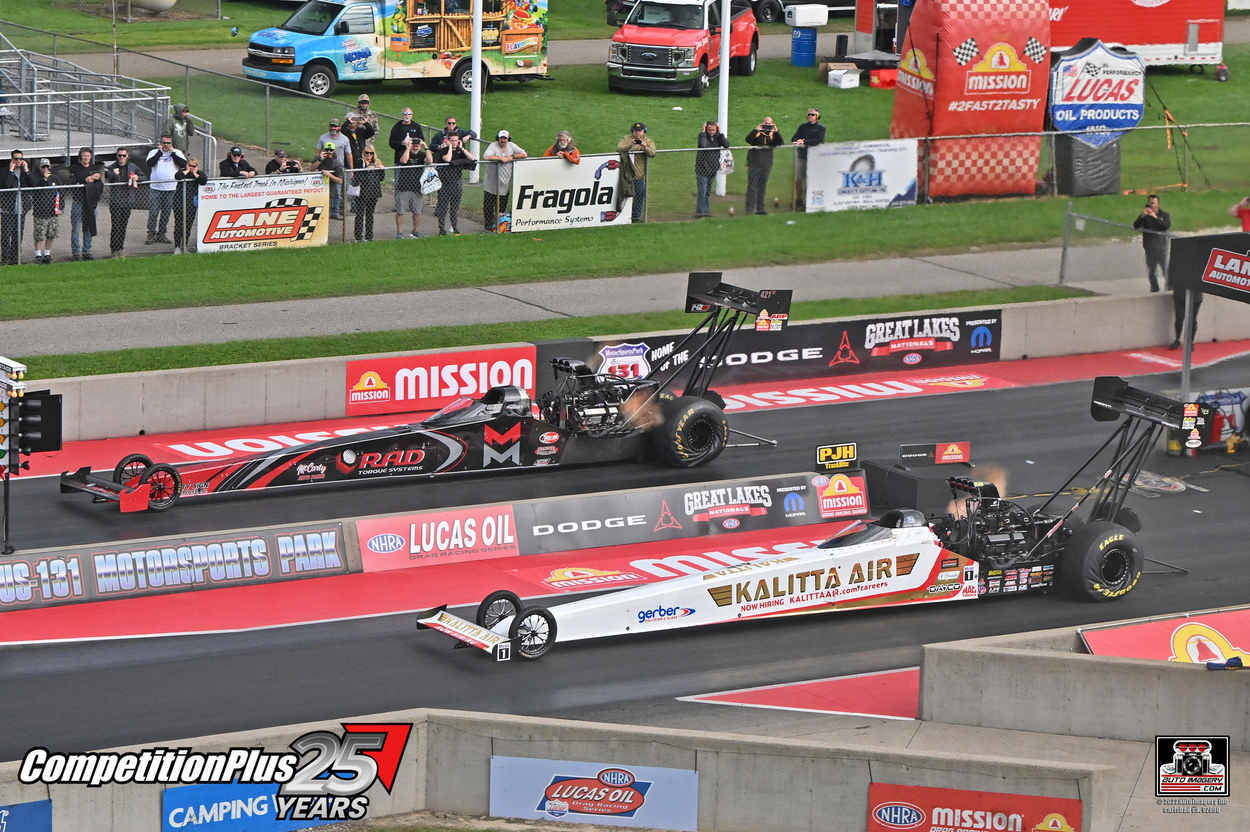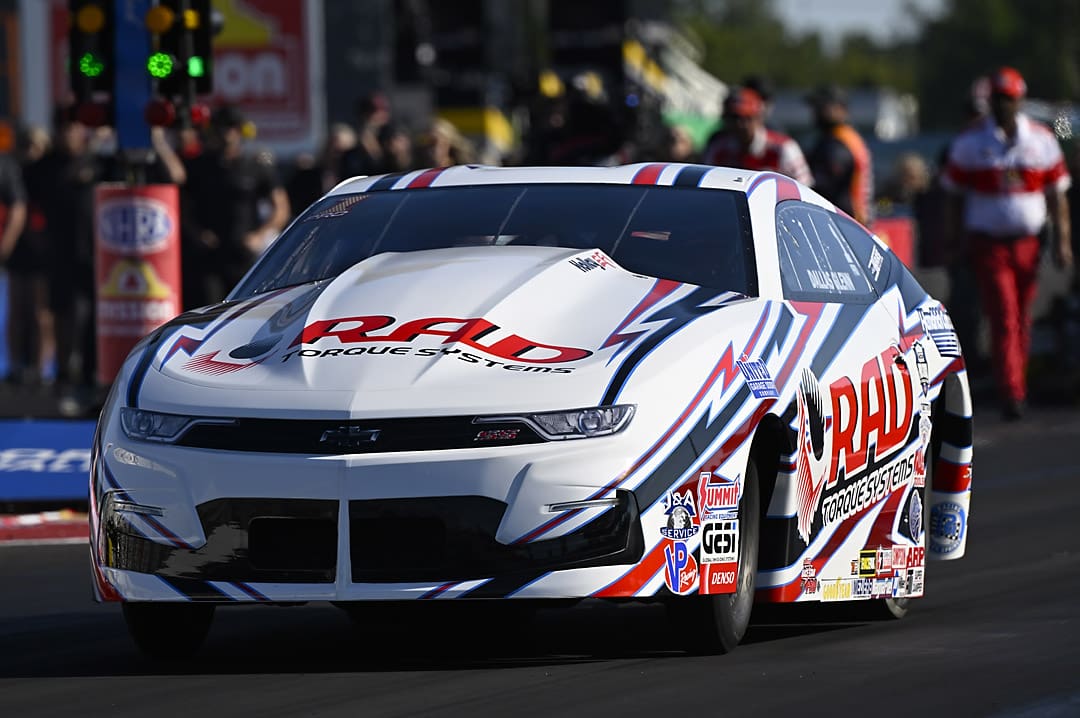
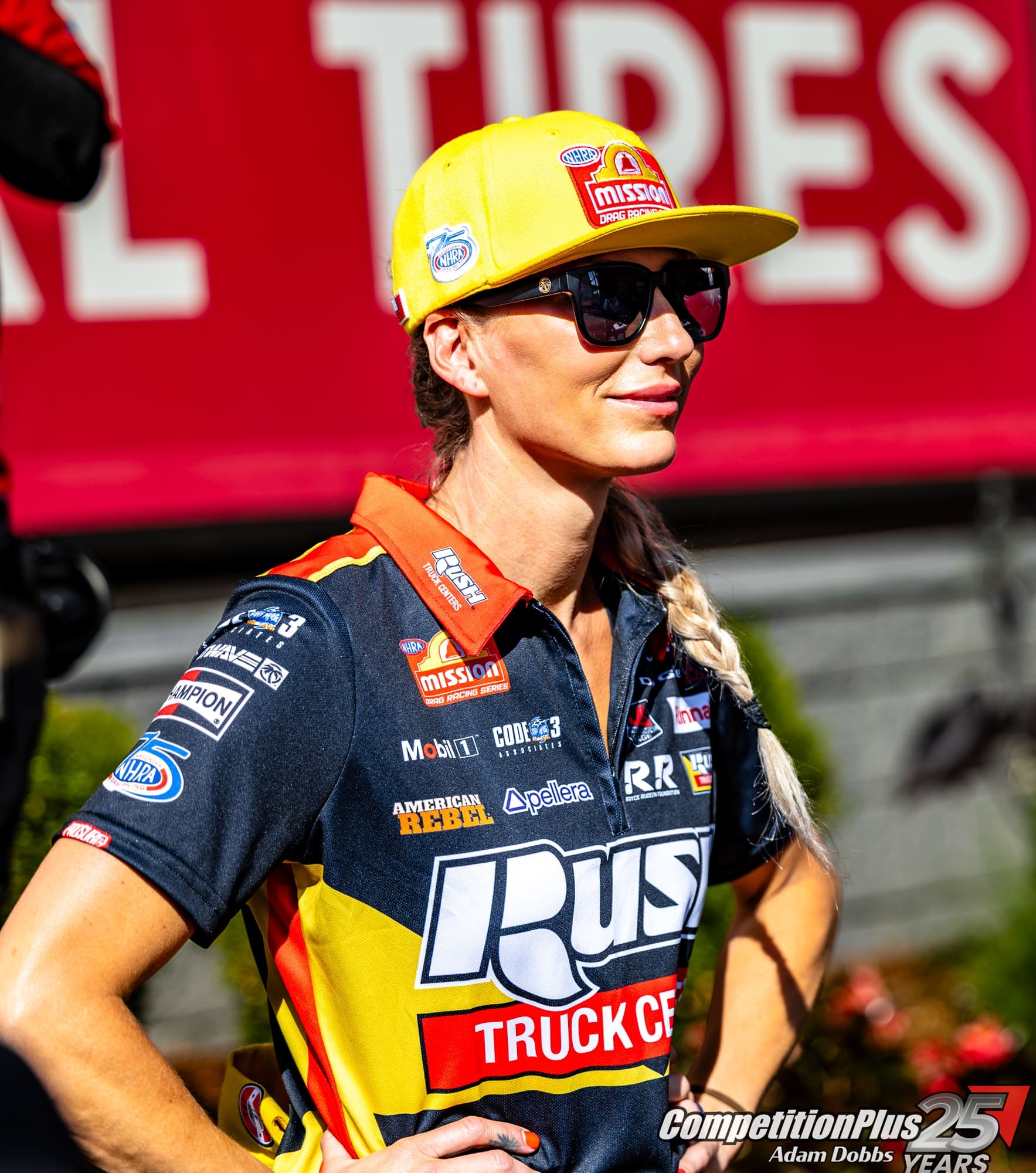

Leah Pruett couldn’t help herself; she had two years on the sidelines to become immersed in the lingo.
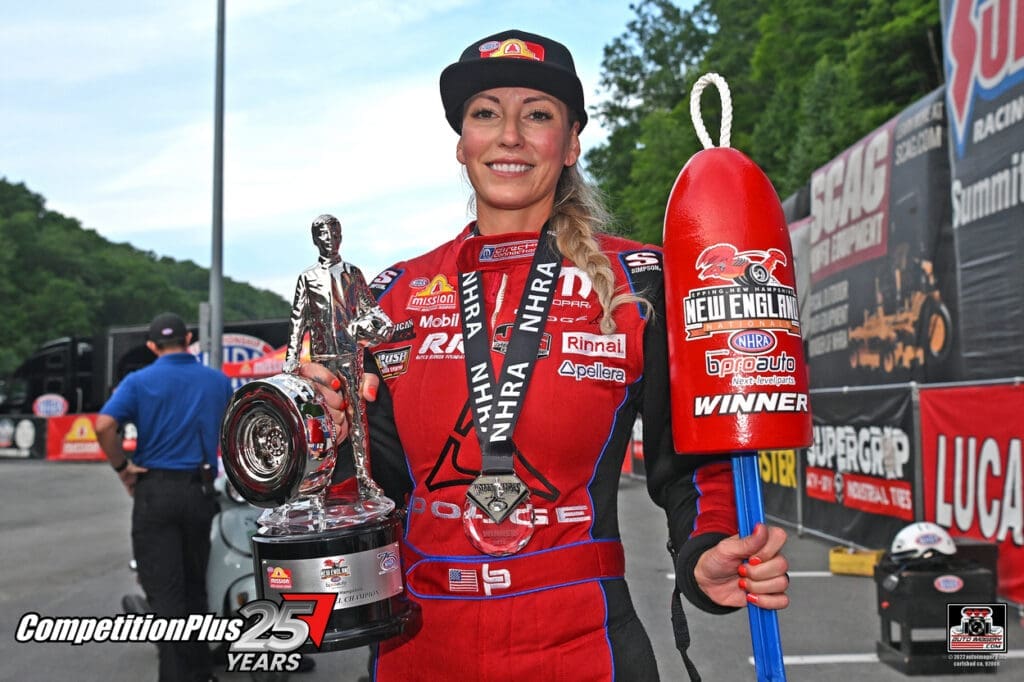
Pruett, who took two years away from Top Fuel competition to start a family with husband Tony Stewart, had just secured her first national event victory since stepping out of the cockpit. The language she used in the post-race press conference might as well have been Swahili to many of the media members sitting in front of her.
“… throughout the week coming into the final. But then many people might think that, ‘Okay, we’re just waiting around through the rain.’ No, the grains are moving up and down through the roof. We’re already stacked. The compression is set. There’s only so much variable you can have for overdrive and there’s only so much you can do with a dragster of difference from a funny car and fuel wise. And so it’s just, we are going to err the side of aggressiveness. That’s what it’s taken for us to get this momentum and it’s where we’re at right now.”
When the floor opened for questions, a reporter made an observation that drew a smile from the Top Fuel driver.
“You sound more like a crew chief than you do a driver.”
Pruett didn’t hesitate.
“Because I was on sidelines for two years listening and working with them all,” Pruett said. “It just has grown such an incredible, greater appreciation for what they do and what other crew chiefs of teams do. But that’s why, man, yeah, I get to hoist that Wally, but there is nothing more. I saw so many examples of teamwork this weekend, specifically today, even between Matt [Hagan], and that Q2 going low, and the chitter-chatter between Phil [Shuler], of the rate that he was at, and what they got away with clutch wise, and primary, and where we were at. And so we just kind of meshed what we thought versus what we knew worked for them. And so you can say that Funny Car and Top Fuel can translate when you have the correct people that know how to communicate.”
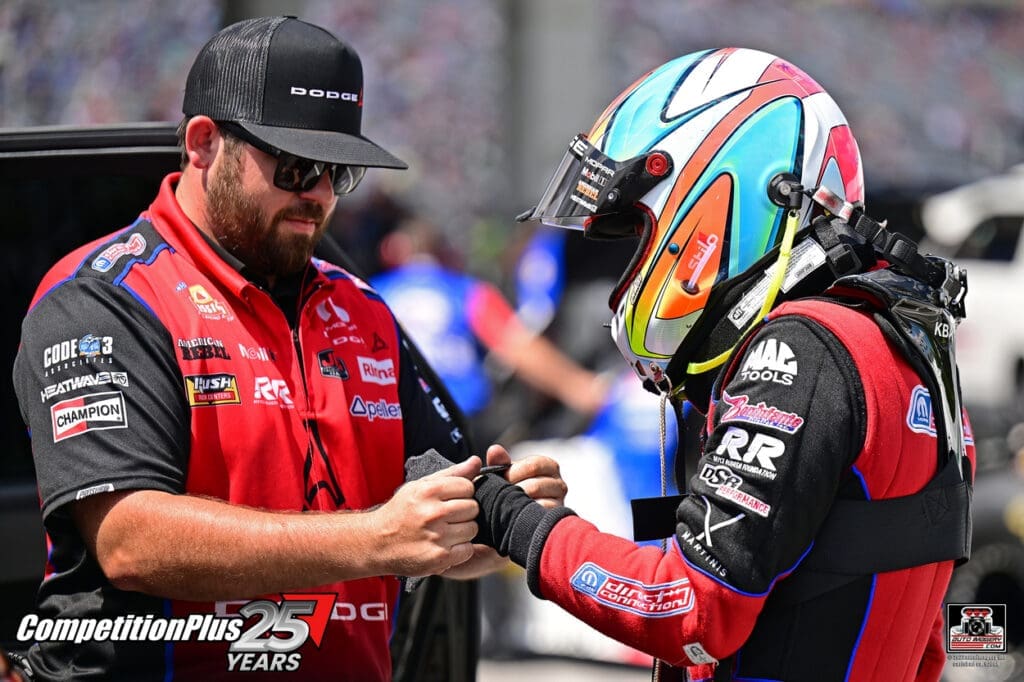
What became clear as the conversation continued was that Pruett no longer views racing strictly through the windshield.
Two years away from competition gave her a front-row seat to the work, communication and decision-making that happens around a race car long before a driver ever stages it. The result is a racer who returned to competition with a broader understanding of the sport than the one who stepped away at the end of 2023.
Like many athletes returning from a major life change, Pruett believed the transition back would happen quickly. The offseason was spent preparing for her return, but a few races into the season she realized there was more to manage than reaction times and race-day execution.
“Oh, well, in the off season for sure I was like, ‘Yeah, let’s start out strong, been preparing for this for years,'” Pruett said. “And I found myself a couple races in not really knowing how to collect my new self, emotionally manage myself, and also from a physical ability.”
The expectations she placed on herself were high. The reality proved more complicated.
Rather than comparing herself to the driver she was before stepping away, Pruett and her team shifted their focus toward smaller goals and measurable progress. The emphasis shifted from immediate results to improvement.
“And so I got pretty beat down,” Pruett said. “I don’t have to read the internet. But I have an incredible team that has that car’s performance. And so instead of me comparing to where I thought I would be at race three or race four, took a step back and we said, ‘Let’s work on progression. Let’s work on hitting some marks that are obtainable for me and how I’m doing them, doing some right things to doing some wrong things.'”
The breakthrough didn’t come from trying harder. It came from changing the way success was measured. Pruett believes that process produced a stronger driver than the one who left the cockpit two years ago.
“And then because of that plan that we created together, so I’m in a better spot, not just because I just got a Wally down there, but I think I’m in a better spot than I’ve ever been as a driver because I have a systematic approach with a team that’s unwavering behind me, and the same thing for every member of the group,” Pruett said.
“So that’s why it’s very fulfilling, this race. It didn’t come by accident. It didn’t come by somebody falling short, smoke the tires or anything, and you top it off with the number one qualifier provisionally, we’re all going to at least sleep way better I think than we all slept all week.”

The victory also carried a significance that extended beyond the racetrack. The last time Pruett celebrated a national event victory, only a handful of people inside the organization knew how dramatically her life was about to change. She was racing through a championship chase while preparing for a future that would soon revolve around motherhood.
Today, that future is standing at the finish line waiting for her.
“I think when I was competing then, and knowing that whole countdown, and only few in our team knew everything that was going to go down, I was chasing something that I was afraid was, didn’t know when I would have an opportunity to,” Pruett said. “So I kind of raced with no regrets. No, raced in a way that I wanted to be proud of.”
Ask Pruett what she’ll remember most about the weekend and the answer isn’t a reaction time, a winning pass or even another Wally. It’s what happens after the interviews end.
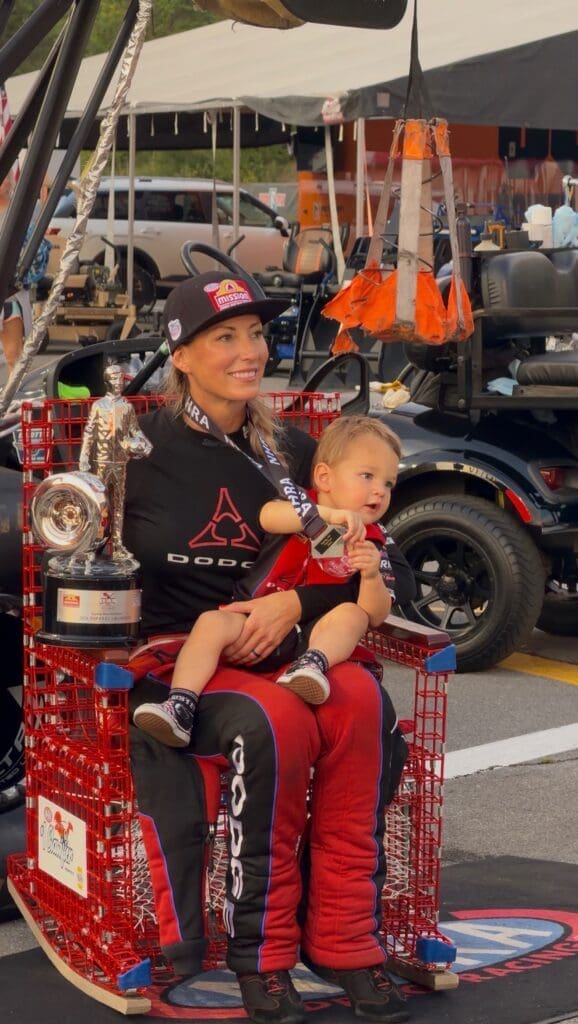
“I’m super proud that I’m going to be able to go down there and hold our child and get this Wally in his hands, because he’s been touching all Tony’s Wallys that are on the countertop the past two years,” Pruett said.
Motherhood has changed the way she approaches race weekends. Not because she’s less focused, but because she’s learned that focus doesn’t have to come at the expense of everything else. For years, race-day routines and superstitions helped create structure. Some remain, but Pruett admits they no longer dictate every decision she makes.
During Sunday’s rain delays, the old version of Leah Pruett probably would have stayed glued to the race car. The current version chose something different.
“I specifically don’t see Dom as much during the day so I can stay focused, and not had this softer side come out in me,” Pruett said. “And I was just like, ‘I got to go take a walk. Car’s already ready to roll and I’m going to see my son.'”
The old routines haven’t completely disappeared. Some habits remain. Some superstitions still show up from time to time. The difference is that they no longer control the day. That’s not the Leah Pruett many competitors remember.
And, she’s perfectly fine with that.
“I’m proud of myself that I’m not harnessed by old superstitions,” Pruett said. “I’m making new ones and then actually at the end of the day, the Lord says not have any superstitions at all. So you do what you make that makes your heart happy and what he can be proud of you as a person for, and that’s the type of life that I’m trying to live, and then also the type of race that I’m trying to accomplish.”