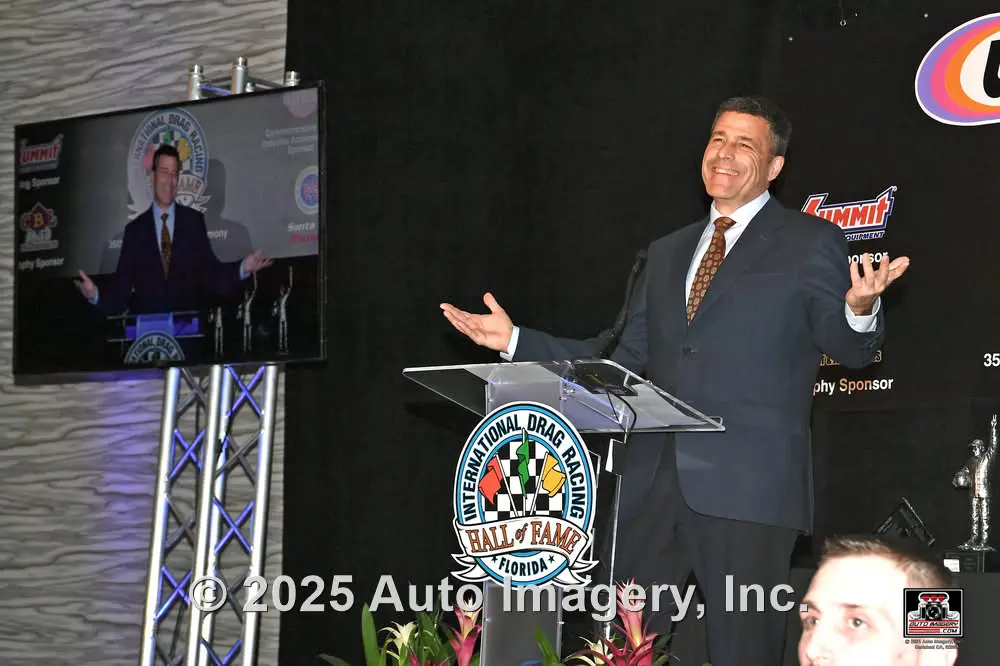


Few people in drag racing are better positioned to evaluate the sport than Bill Bader Jr.
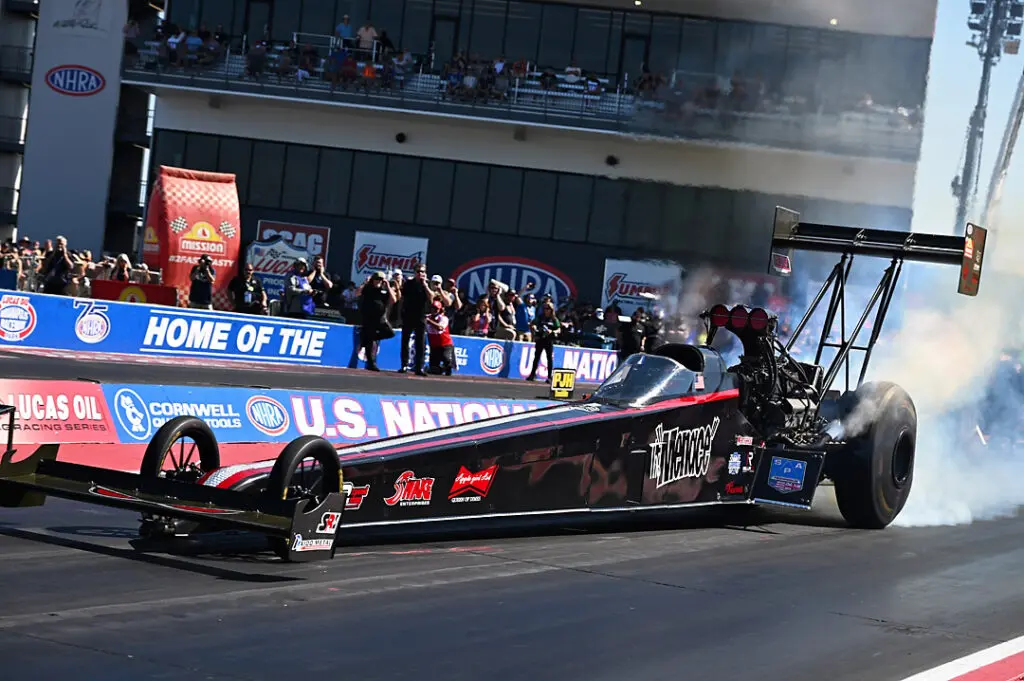
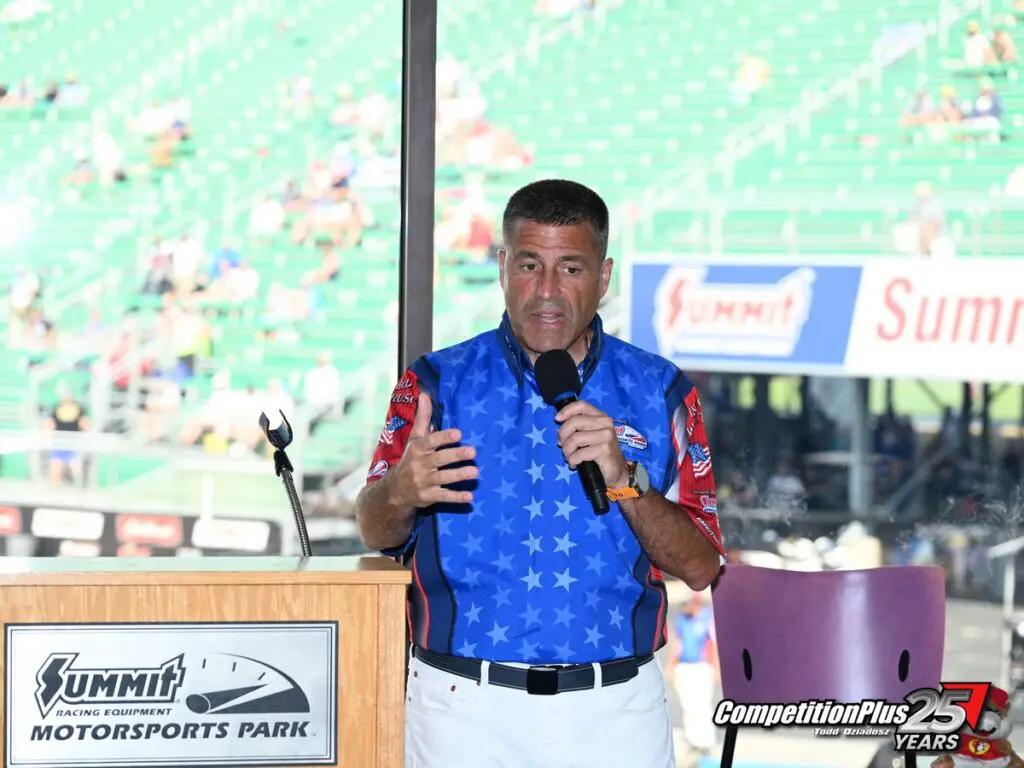
As president and owner of Summit Motorsports Park in Norwalk, Ohio, Bader represents the second generation of a family that transformed a local drag strip into one of the sport’s premier destinations. Under his leadership, the facility has become widely recognized as a standard-bearer for fan experience, hospitality and event promotion, hosting one of the NHRA Mission Foods Drag Racing Series’ marquee national events while earning a reputation for putting spectators first.
Bader stands as one of drag racing’s most influential promoters, never hesitant to challenge conventional thinking or offer ideas aimed at growing the sport. Whether discussing marketing, ticket sales, facility improvements or the importance of creating memorable experiences beyond what happens on the racetrack, his perspective is shaped by decades of operating one of the industry’s most successful venues.
In the first installment of this exclusive two-part CompetitionPlus.com interview, Bader offers an unfiltered assessment of where drag racing stands today. He explains why he believes the sport possesses all the ingredients for success yet continues to underperform, why the live experience remains drag racing’s greatest strength, why television has never fully captured the sport’s sensory impact, and why racers—not race cars—must become the center of future marketing efforts.
Bader also addresses the financial realities facing track operators, the opportunities and pitfalls created by social media, and why improving the guest experience—from the moment fans enter the gate until they leave—is essential if drag racing hopes to reach a broader audience.
If there is a common thread throughout the conversation, it is this: Bader believes drag racing’s future remains bright, but only if the sport is willing to evolve.
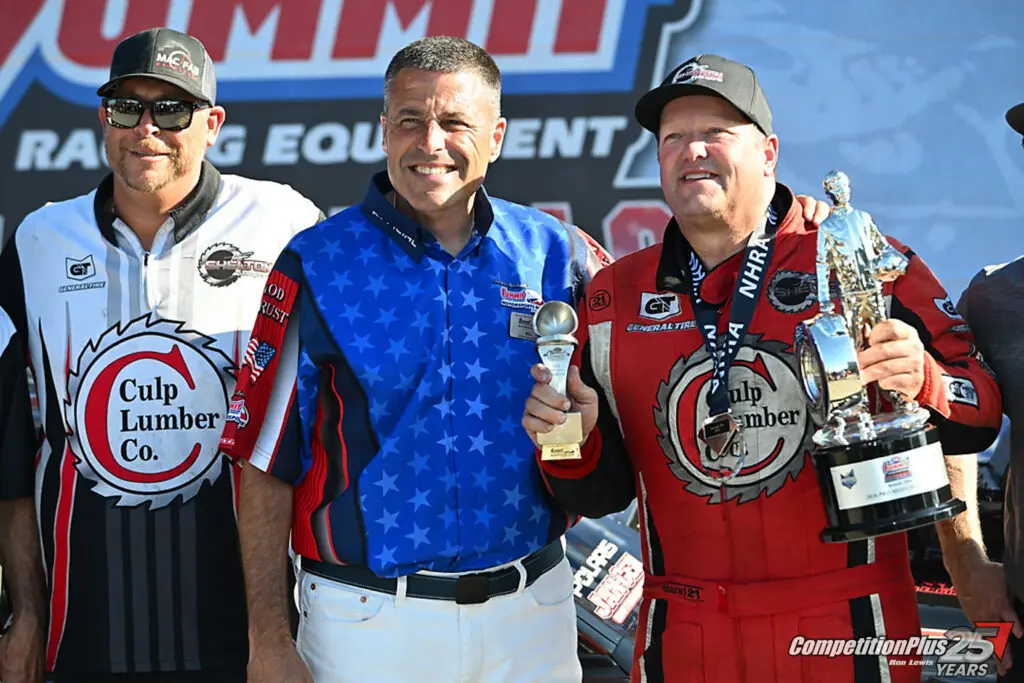
COMP PLUS – Bill, where do you think drag racing is at right now?
BILL BADER – I would say drag racing today has some definite headwinds and some definite challenges. I’m not going to say we’re at a crossroads, but what I am going to say is we have some definite challenges that we need to figure out how to navigate.
Our sport is, in my opinion, one of the most exciting live audience sports in the world. I had the opportunity to entertain some lawmakers from the state of Ohio at our Summit Racing Equipment NHRA Nationals.
And these were state reps and state senators who had never been to my racetrack before. And to say they had an eye-opening experience was an understatement, and they said that.
Generally, what I hear from first-time attendees is something along the lines of, “I had no idea.” So the good news is that we have an incredibly exciting, multi-generational, family-centric sport.
We have incredible access to our stars. Our stars make themselves available. We can get into their pit areas. We can collect autographs. We can see those drivers in public spaces moving around the park.
We have the fastest sport on the planet. We have some bright young stars. We have parity in classes. So we have an awful lot to be really excited about. And yet we find ourselves struggling to fill fields. We find ourselves struggling to sell tickets.
We find ourselves struggling to gain or garner mainstream acceptance. And we have to be better, Bobby. We’ve got to be better. We’ve got to be better at marketing. We’ve got to be better at fan experience. We’ve got to be better at the on-premise experience.
Meaning, what is the experience like when you pull off the highway, from ingress to egress, and everything in between? We’ve got the makings. We have all the key ingredients for incredible success, but we’re underperforming. And that’s honestly what I believe.
CP – Now, one of the most positive aspects is that drag racing is an excellent live presentation, but because that’s largely what it is, do you think that that hurts the sport?
BB – I think it doesn’t translate well on television. I think about going to a stick-and-ball event versus watching that same event on television. The Super Bowl, unless you want the experience of being part of all of those people in that arena, unless you want to plug into that electricity of being at a live audience stick and ball sport, a stick and ball event, the experience is way better in your living room.
And what I mean by that is, think about, and I’m going to use Cleveland sports as an example. You’re going to pay, at minimum, $50 in a muni Lot to park, which is obscene. Then you’re going to have to walk some distance to get to the stadium.
You’re going to pay extremely high ticket prices for that experience, and you’re there for three hours, and then you unwind everything that you wound. You’ve got to get up out of your seats, you’ve got to walk through the stadium, you’ve got to walk back to your car, and you go home.
And your experience is basically from your seat watching the game for three hours. Given the technology that exists, you can sit in your living room, you can watch the game, you can see instant replay. They have cameras so incredibly close to the action.
And again, unless you want to plug into the energy of that live audience experience, it’s a better experience at home. Drag racing does not translate well on television.
As an example, the smell of nitromethane does not translate. The smoke and all of the dotting, the nitro measles as they’re called, the vibration that exists. The visceral experience that drag racing provides does not translate at all at home.
The best we ever captured the veracity of drag racing was back in the old Diamond P days, when they had handheld cameras, bandanas across their noses and mouths, and took those sweeping shots of the cars while they were lit. That was the golden age, so to speak.
So, in my mind, we have an incredible opportunity to create an entertainment experience that goes well beyond a three-hour watch of an event at home on television.
And I’ll give you some examples of that. Tailgating. We can tailgate to start the morning. We can come in, and you can turn your kids loose in a friendly and safe environment. They can go to playgrounds. Older kids can walk with parents or grandparents through interactive midways.
I mean, if we had Midway experiences that you could actually interact with beyond looking at a carburetor, or looking at a manifold, or looking at a set of heads, no disrespect to our manufacturing partners, they’re a vital part of what we do.
But when you have generations of people who aren’t mechanically inclined, simulators, rock-climbing walls, obstacle courses, having big giant tents where people could come in and could compete in video game competitions. So the point is that’s another ring in the circus.
Then we have great food courts where you can choose from a variety of food. You can go into the pit area, you can see work being done, you can experience cars warming, you can collect autographs.
Then you get to go in the grandstands. You don’t have to be in your seat for three hours from start to finish. Yes, our day is longer, but if we fill that day with meaningful things, I think it’s a huge win.
I think we, as a sport, are a far better live audience experience than we will ever be on television. And that is both a blessing and a curse. It’s a blessing on the live audience side. It’s a curse for television. Now, do I think our sport is worthy of a television package commensurate with the caliber and quality of what we’re offering? Yes, absolutely. I think we are due a television package that generates revenue for everybody involved, and we don’t have that.
And that hampers us because if we had the kind of television revenue that NASCAR has and other sporting events. Imagine what we could do with that money.
I mean, we could invest in our facilities and we would have all of the creature comfort features that all of the stick and ball venues enjoy. I mean, whether it’s Levi’s Stadium, whether it’s AT&T Stadium, or all the new stadiums that are being built, those things are built with the fan experience in mind.
But they’re able to do that because they have revenue streams that far and away exceed what we currently enjoy. Right now, our revenue streams are ticket sales and sponsorship. That’s it.
So I think until we figure out that TV piece, we are relegated to an in-venue experience that I don’t think we’re doing very well with either. But it’s definitely a challenge for our sport, for sure.
CP – So when it comes to drag racing’s health right now, are we a very healthy sport, or where do you put us?
BB – I would say I think drag racing, it depends on what metrics you’re using to measure the health. In terms of passion and energy and drive, I think we’re very healthy. In terms of professional team and sportsman team commitment, I think we’re very high.
I think in terms of marketing, in terms of becoming mainstream, in terms of building our stars, I think we’re weak.
In terms of the in-venue experience, I think we’re relying on the same old thing that we’ve relied on since the sport began. And it was this idea that the cars were the stars, and I could not be more opposed to that. The cars are not the stars. The cars are cool, but the people are the stars. If you take Maddi Gordon, who I was blessed enough to have her get her first Top Fuel win at Norwalk, and if you put Maddi Gordon’s car in the staging lanes and you put Maddi Gordon 200 feet away from her car in the staging lanes and turn people loose, people are going to go to Maddi Gordon first, not her car. So that to me… And I saw it at our national event a couple of weeks ago.
We held the crowd because people wanted to see if Maddi Gordon could seal the deal and get her first win. The champions’ outro, when we came up the track, the number of people around that stage was more than the previous year. The winner’s circle went on forever. The sun was setting, and she was still in the winner’s circle talking to guests and signing autographs. So my point is that the cars are cool, but we need to market our stars. And all of these things, marketing, third-party engagement, selling stars, marketing stars, marketing events, selling tickets, selling sponsorships, all of those things, Bobby, are things that we need to be better at. And all of those things require money, which doesn’t exist in our sport. We don’t have the volume of money necessary to do what we need to do. And that’s unfortunate.
Now, I think people have a misconception that when you come to an NHRA national event, I think people overestimate attendance, which means if you have 15,000 people in your park on Saturday of your national event, and you ask a lot of people, they would think it’s 30, 40, or 50,000 people. It’s not; it’s 15,000 people as an example. So I think people, the public, have a tendency to think, well, “NHRA is making so much money. IHRA is making so much money. The track is making so much money. Everybody’s making so much money.”
That is simply not true. NHRA is not. IHRA is not. The tracks are not. We are working our asses off to make a living doing something that we love to do. And so when you look in from the outside, I think people think we’re just making a lot of money. What people don’t look at is a $900,000 purse, a $400,000 ad budget, a $100,000 insurance policy.
I think people are really good at overestimating income and underestimating expenses. So I think a lot of this stuff could be fixed, but you need money in order to do it, and it’s just not in our sport right now.
CP – Let’s talk about something that has really taken drag racing by storm over the last decade or so. Social media, is it good or bad for drag racing?
BB – It’s both. It’s good for drag racing because it allows us, in a very efficient and strategic manner, the ability to market. It is a precision marketing tool versus a shotgun approach when you buy linear media, specifically radio, television, be it cable or network. When you buy a TV commercial, you are hitting all kinds of people. The majority or a bulk of those people could care less about the offering. So it is a shotgun approach. Social media has allowed us, with tremendous precision through a number of strategies, to get specifically to our customers and be able to market to them. That makes social media fantastic.
Social media is also a cesspool of… It is a cesspool of negativity. It is a cesspool of ignorance, and it is a cesspool of sport. And what I mean by that is people can say whatever they want, which we live in the land of the free. So these people can say whatever they want whether they know anything about the topic or not, that’s a problem. Number two, some people just do it because they think it’s fun. Let’s throw it out there and see what sticks. And what that has created is just incredible negativity to the point where, personally, I don’t spend any time on social media because it is so warped and so negative, and I just don’t have the stomach for it, truthfully.
What other business, think about it, you have track operators, you have sanctioning bodies who are working a hundred hours a week, working their ass off, taking extraordinary risks to produce something that in their heart they’re passionate about, that they love, that they want to share with the community, and then something doesn’t go right or something comes unwrapped or somebody has a bad experience and then the next thing you know, they are crucifying you literally in social media?
Now, in some cases, maybe it’s warranted. I don’t know. I don’t think it’s ever warranted. I don’t understand why calling somebody out in social media, what problem that’s supposed to solve. I mean, I remember this from the old days. The first version of this was chat rooms and message boards. And everybody I know took those down because they became just incredibly negative. So here we are now with social media as the next version of that. So I do think social media; I think we live in a free country.
People are going to do what they’re going to do. They’re going to say what they’re going to say. I think what we need to do, we as an industry, we don’t do well in guest service as an industry. We don’t take very good care of our guests. We don’t always honor what we say we’re going to do. We over-promise and under-deliver. We misrepresent. So maybe some of it we bring on ourselves.
But at Norwalk, we have a community code of conduct that says, “When you come through my gate, you act a certain way. And if you can’t or don’t or choose not to, you’re out.” We have a Bader family guarantee that says, “We guarantee your experience. And if you’re dissatisfied, we’ll resolve it to your satisfaction.” We have a full-time guest advocate on staff. And the guest advocate views everything we do through the lens of the guest, not through the lens of management or ownership.
So I feel like the next question is, well, how do you fix it? Well, you fix it by dedicating or rededicating yourself to your guest experience and making sure that you do what you say you’re going to do, that you’re going to stand by your product, you’re going to guarantee your product, and you’re going to be better. Your facility’s going to be clean, your facility’s going to be mowed, and it’s going to be manicured, and you’re going to have fair pricing, and you’re going to be able to get people in and out of your facility safely, and you’re going to have well-lit parking lots, and you’re going to have clean bathrooms.
I mean, look at… I’m going to go back to a comment I made earlier and look at the NFL stadiums and the NBA arenas. Look at what fans are experiencing there versus at a drag strip where porta-johns are prevalent, where you’re parking in grass parking lots with temporary light plans. We have to be better. The problem is that all require money, and we don’t have the kind of revenue in our sport that allows us to invest in those things. I wish I had the NASCAR TV revenue because I could build bathrooms with that. I could pave my parking lots with that. I could put up permanent lighting in my parking lots. I could have wifi throughout my park. I mean, I am well aware, speaking about Summit Motorsports Park, of all of our deficits. I just don’t have the money to fix it.
So what we do is we treat people well. We kill them with kindness. We do the very best we can. We keep our ticket prices as low as we can. We don’t charge people to park. For most of our events, kids 12 and under are free. So we try to make up for it as best we can. So that’s my answer.