

They weren’t marching to the NHRA Tech trailer with torches and pitchforks, but that didn’t mean there weren’t spirited opinions flowing throughout the hauler lounges.
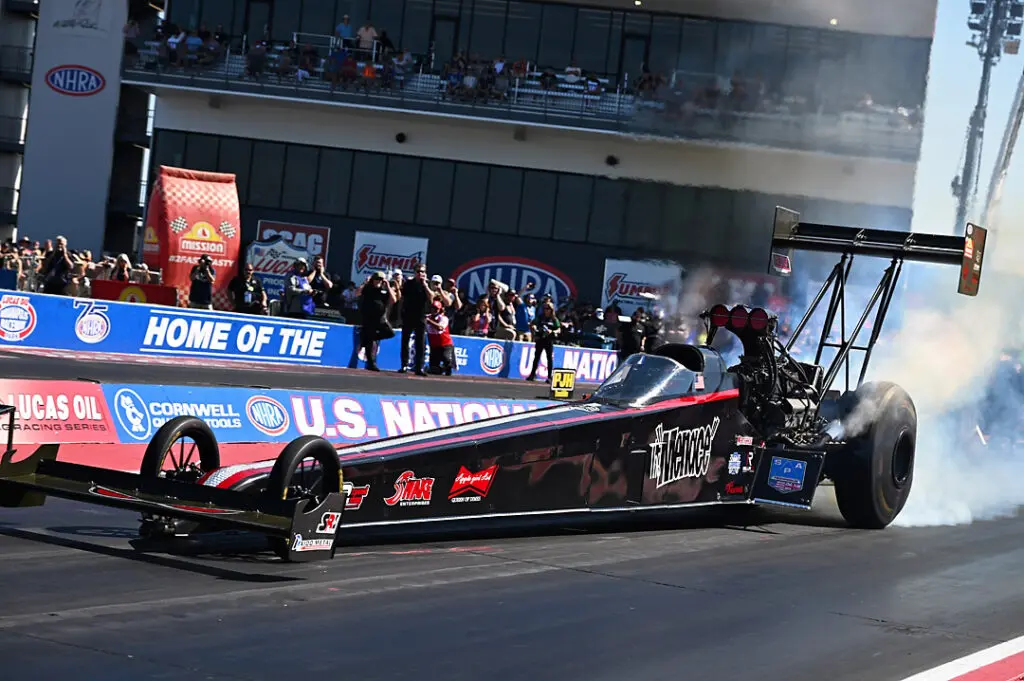
The majority of crew chiefs and drivers were not holding backon the topic of one team having a device connected to the pedal of their Top Fuel dragster designed to help a driver during a loss of traction in a race — essentially a pedalfest.
Then July 8, 2026 came along, and a post on the NHRARacer.com site, revealing an amendment to NHRA’s rulebook.
NHRA Releases 2026 Rulebook Amendment Updates
The NHRA Technical Department has released additional 2026 Rulebook Amendments. Unless otherwise noted in this document, these amendments will become effective immediately. The 2026 NHRA Rulebook Amendments can be found on NHRARacer.com under Tech > Rules.
These amendments include the following changes. Please see the latest 2026 Rulebook Amendments document for complete details.
- Section 18, Funny Car — Throttle Pullback/Return clarification; Electrical Components updated. (Revised)
- Section 19, Top Fuel — Throttle Pullback/Return clarification; Electrical Components updated. (Revised)
Then, it became public and those in opposition were all willing to talk about it on the record. Their contention is not so much that it was allowed, but it was allowed in 2022, with no amendment to the rulebook, essentially contradicting a passage in the series rulebook stating there can be do devices attached to the pedal to assist the driver.
What becomes the head-scratcher for the critics is not that the team went through the proper NHRA channels to gain approval. Essentially, the team did everything legally and many don’t fault them, but instead the NHRA’s tech department for doing something they believe looks shady. And for the purists of nitro racing, many believe it takes a large measure of the driver out of the traction loss equation. They say it’s not traction control per se, but it works much in the same vein.
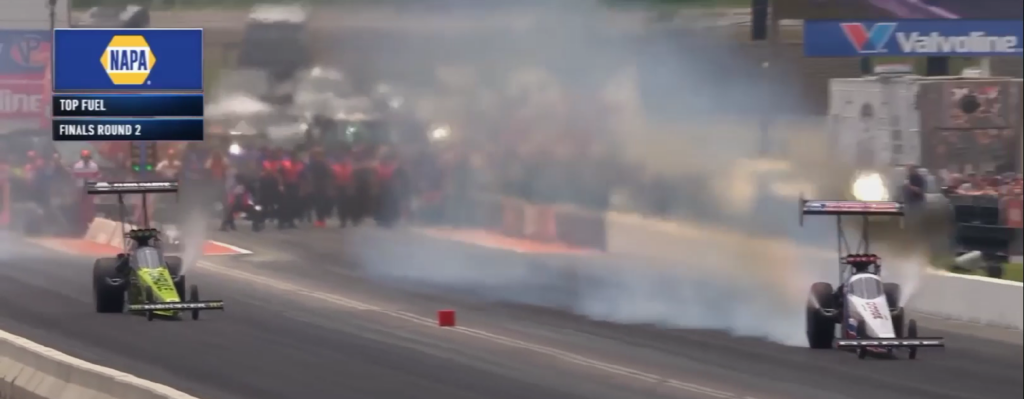
Neal Strausbaugh, crew chief for Tony Stewart Racing, has no problem acknowledging his team was the one that legally presented the device to NHRA. The system limits how much throttle can be reapplied after the driver lifts during a pedalfest.
Strausbaugh does not flinch when he says this is not as much of a device helping a driver recover better from a pedalfest as much as it is to keep a team from blowing an engine to smithereens.
Can it help a team win a race? Yes. Can it save money from a costly engine detonation. Yes. And this is why Strausbaugh said the team brought the concept to the NHRA.
“The goal or the issue that we were having was that when pedaling the car that we backfired the supercharger numerous times that year and we were trying to combat that with just stopping the throttle from going back to wide open,” Strausbaugh said. “And the numbers absolutely prove that it works very well. In 2022, one third of the runs that we made smoking the tires on race day, it backfired. And from 2023 on with the system on there, we had smoked the tires 32 times in competition and never backfired the engine.”
And, this Strausbaugh feels, makes the device more of a savior for the class than a device of the devil in the church of nitro driving. The engine backfires had added up, costing the team anywhere from $60K to $100K.
Strausbaugh understands it wasn’t as much about a perceived performance advantage as it was about the NHRA’s failure to modify the rulebook following its approval.
“That’s where a lot of the rub is from the competition was that it was out there and nobody knew about it,” Strausbaugh admitted. “But I wished that it had a better performance advantage in the end. The reason that it’s still allowed today is because of the numbers that it’s produced for saving money. I believe that in that amount of time we won two rounds of competition because we had it on there. And that’s not saying that we couldn’t have won those two rounds of competition and a pedal fest without it. I’m just saying it was on there when that happened.
“But on the flip side of that, we have four runs in competition that we feel we could have won if the throttle was able to go back to wide open.”
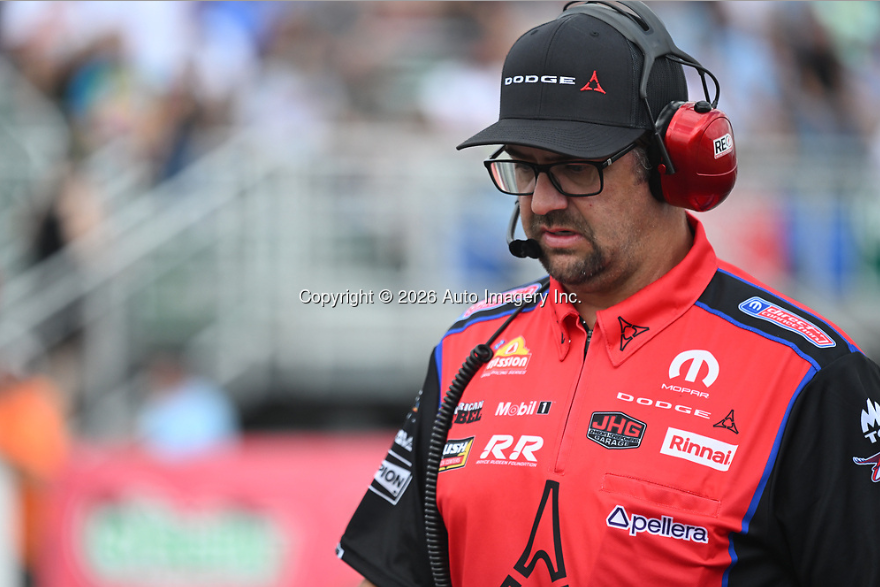
NHRA’s Clinton Snead, Director of Engineering for the NHRA, joined the series’ tech team after the device was approved for. He doesn’t deny the optics of the four-year delay situation look bad.
Multiple sources within the NHRA said the posting delay was not done on purpose but simply a mistake.
“That part I can’t really say with 100% certainty,” Snead said when asked why there was a delay in posting the admendment. I think that was probably something that just fell through the cracks at one point or another. But certainly when it came to light earlier this year, we felt collectively that it was worth putting in the rule book and putting a bit more definition behind it.”
Strausbaugh believes the NHRA didn’t necessarily have an obligation to post it in 2022 anyway.
“No, not necessarily for the fact that the specific item didn’t need to be introduced into the rule book,” Strausbaugh explained. “From what was pointed out in Bristol, it was contradicting to what the rulebook stated, but this item specifically did not need to be introduced into the rulebook. Just like if a team has a part or a piece or a system or whatever approved, it doesn’t necessarily have to go be passed around to the competition.”
What was pointed out, is that reportedly after a competitor pointed out the device to the NHRA, a follow-up inspection revealed the current state of the device didn’t match up 100-percent with what had been initially presented to NHRA. The team was asked to remove the part and bring it back to compliance with the original scope of the project.
“The NHRA asked us to remove it in Bristol just because it did contradict the rule book. The way the rule was written without that amendment in there, it did contradict. So we said, okay. So we’ll take it off in Bristol and we’ll work on getting the amendment, get that ship righted, I guess you could say, going to Norwalk. So that was the first steps in it.
“And then once it came out before Norwalk, enough teams screamed about it again to get it pushed back. And there needed to be more information, and that’s fine. It all worked out. So we went through that process a little bit further, had more meetings in Norwalk. And then this last week they added a couple parameters in the amendment from the way it came out in Norwalk and we’re good to go, it’s on the car going to Sonoma.”
NHRA confirmed that while the spirit of the rule was in question, it was necessary to take a step back for at least one event, and that’s what Bristol provided.
“We did ask them to essentially change it or take it off at Bristol was the event,” Snead said. “I’m not going to get into specifics of what exactly was different between the original submitted and what they had on the car. But from where we were at. The team agreed with this, that was the best move forward was like, ‘Okay, let’s press pause on this and regroup and make sure that we’re all on the same page.”
On the same page is not how championship-winning crew chief Brian Corradi sees it.
“Yeah, whatever,” Corradi said. “You just don’t step back on the gas then if you want to save parts, right?”
Corradi believes a driver’s brake and the throttle can do the same thing.
“What’s wrong with the driver controlling that part of the car?” Corradi asked.
Veteran crewchief and former national event winning driver Tim Wilkerson believes there are some aspects of nitro drag racing should remain sacred. He said he took the NHRA to task on this issue years ago.
“I seen that pneumatic cylinder on, and I’m going to lie to you, I don’t remember which car it was about three years ago and I called Joey [Gorman, NHRA official] and I said, ‘Hey, that’s illegal,” Wilkerson recalled. “He goes, ‘No, they’re using that to shut the throttle.”
“I said, ‘Well, I’ll put one of them on my car and put a button on the steering wheel. What do you think of that?” He goes, “What?” I said, “My Super Comp car’s got one of them on it. You can’t let them have a hydraulic cylinder on their gas pedal. It says right on there, cable.” “Yeah, but they’re using that to shut the throttle.”
“So when this thing came up, I called him up and I said, “Well, there you go. Exactly what I told you three years ago.”
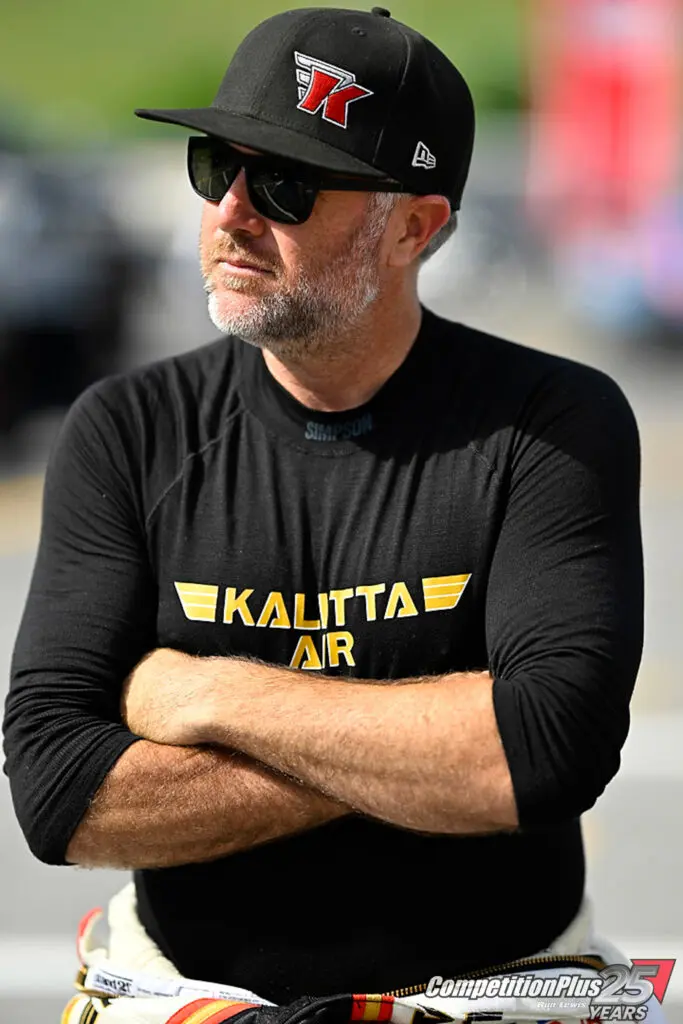
Top Fuel point leader Shawn Langdon believes this will change the class and not necessarily in a good way.
“I one hundred percent do not agree with it,” Langdon said. “I feel it band-aids bad driving. Part of being a professional is being the best in the world at your job. This device is intended to cover for a driver’s inability to properly pedal a race car. I think if you drive a racecar you have to have a feel for that car. If you need something electronically to help your inability and you don’t try to be better then you should probably find another job.:
But, as aggravated as Langdon is about the part being on the car, he believes the way everything came about further hurts Top Fuel, if only from a fairness standpoint.
“I guess they ‘forgot.” Lagdon added. “Which. at that point the tech department created an unfair racing environment by allowing a certain team an advantage by utilizing a device that nobody else knew about until it was found. Then at that point it’s just deer in the headlights with them.:
Snead knows the backlash is going to be around for a while but believes once the controversy dies down, it will be better for Top Fuel.
“Obviously [this situation] is getting a lot of coverage, but we feel like for where we’re at, we felt like this was the best path forward and I think we’ll get through it,” Snead said.
Strausbaugh believes what his team introduced is very much in the spirit of professional drag racing. He realizes amid the controversy, the skeptics won’t see it this way.
“I think the sport is built around finding better ways to do things,” Strausbaugh said. “And that’s been the evolution of the sport for 75 years.”