
There are traditions in drag racing and then there was the Cajun Nationals. Every Memorial Day weekend, the drag racing community migrated to State Capitol Dragway just outside Baton Rouge, La., for oppressive humidity, colorful personalities, fans who treated drag racers like family and enough food to make crew chiefs reconsider every life decision that brought them there.

You didn’t simply go to the Cajun Nationals.

You survived it, laughed about it and spent the next year telling stories that sounded made up to people who had never been there. Somehow, those stories usually turned out to be true.

The Cajun Nationals did not arrive with the fanfare of Indianapolis or Pomona. It slipped onto the NHRA schedule in 1976 at LaPlace as more of a showcase race, almost like NHRA sticking a toe into Louisiana water to see if anybody cared.

Turns out they cared plenty.

Within a short time, a race that started as a trial balloon became a full national event. Memorial Day weekend in Louisiana slowly became less of a date on a schedule and more of a yearly migration.

Division 4 racers made themselves comfortable almost immediately. Richard Tharp won Top Fuel, Raymond Beadle won Funny Car and Lee Shepherd grabbed Pro Stock honors in the event’s opening chapter.

But statistics never really explained the Cajun Nationals.
The race itself became secondary to the atmosphere surrounding it.

Richard Tharp never looked like a man trying to fit into drag racing. Drag racing looked like it had been built around people like him.

Yet even he looked back and shrugged.

“I won it twice,” Tharp said. “I won it in ’76 and ’77 with Candies. It was a s***hole.”

Funny thing about drag racers from that period. They could insult a place and compliment it in the same sentence.

Tharp carried a reputation as one of drag racing’s great road warriors, living by his own unofficial creed: A Star I Are. A Saint I Ain’t. But when asked if Cajun Nationals represented some nonstop carnival atmosphere, he wasn’t buying the mythology.

“No, not really,” Tharp said. “Leonard Candies stopped all that partying s***. It wasn’t no more party than any place else really for me.”

Then he paused.

“Yeah, you’re exactly right,” Tharp said when reminded Memorial Day eventually became tradition. “Yeah.”

Memorial Day weekend had its own soundtrack. Somewhere in the pits, somebody always had a radio playing the Indianapolis 500 in the background. Between rounds, racers leaned against trailers, sat in lawn chairs and listened while waiting for the next call to the lanes.

Nobody thought anything about it back then. Today people stare into phones. Back then they turned up the radio.

Maybe the place simply didn’t need extra help. The weather alone could wear people down.

Cajun Nationals heat wasn’t ordinary summer heat. It sat on you. The humidity wrapped itself around your neck and followed you around all weekend like a debt collector.

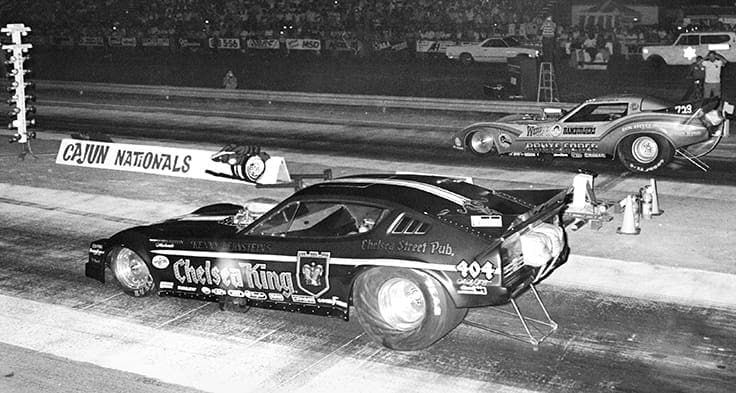
Al Segrini brought one of drag racing’s cleaner images into Baton Rouge with his Brut-sponsored Funny Car operation. Louisiana had a way of treating polished images like suggestions.

“First of all, it was so humid. It was unbelievable, the humidity,” Segrini remembered.

“My trailer, my semi, the lounge had a window in it, it frosted up. It was so bad. It frosted up the window.”

Segrini still sounded amazed decades later.

“Unbelievable,” he said. “I was scraping with my fingernail, like, ‘Look at this.’ That’s how hot, it was so humid, man.”

The weather eventually followed him onto the racetrack. Segrini remembered loading the Funny Car heavily for a nighttime run because conditions had changed. Then the car decided it had plans of its own.

“Well, this run once put me up in the roll cage,” Segrini recalled. “Picked the front end up and got out there about two feet and went into a f*** shake like I never had.”

Then things got worse.

“So I lift and I’m facing the other lane,” Segrini said. “I said, ‘Holy f***, I’m racing with Wemet’s car. Holy f***, I’m going in his lane.'”

The collision tore up both cars and left Segrini limping along on three wheels before finally coming to a stop. Most people would have remembered the accident.

Instead, Segrini remembered the humidity.

“It’s got a picture of me staging the lights,” he said. “The back cylinders are pouring raw fuel out of them. That’s how humid it was.”

Then came the line that probably belonged in every Cajun Nationals brochure ever printed.

“I hope we never have to go back,” Segrini remembered telling Moose. “Jesus Christ, Moose. It’s terrible.”

Then he laughed. Because he won the race anyway.

Then there was the racetrack itself. Calling State Capitol Dragway temperamental might have been generous. Some years the surface behaved. Other years it looked like it had entered into a disagreement with everybody trying to race on it.

Steve Earwood remembered one season when NHRA’s Steve Gibbs had finally seen enough.

“One year Gibbs told me he had to pave the starting line, at least pave the starting line at Baton Rouge,” Earwood said. “It was so awful.”

The repair itself sounded absurd enough.

“Gibbs somehow found somebody and they actually paved the dag gum racetrack overnight on Thursday night of a national event,” Earwood recalled.

That still wasn’t the end of it. Iconic Blue Max crewman Fred “Waterbed” Miller witnessed one of those stories that still sounds impossible decades later.

Moose was literally driving nails into sections of the racing surface trying to keep things where they belonged.

Think about that for a minute. A racetrack owner at a national event was walking around trying to hold together pieces of a dragstrip with a hammer and nails.

Today, racers discuss weather stations, track sensors, and data acquisition. Back then people remembered Moose.

Norman “Moose” Pearah wasn’t simply a racetrack owner.

He was a force of nature.

Steve Earwood remembered a man who could work politicians, charm media members and operate in places where common sense occasionally stopped following along.

“He just lived in a little different world,” Earwood said. “I don’t know of anything illegally he really did, but he sure pushed the boundaries.”

Pushed them might be putting it mildly.

Earwood remembered Moose walking into a sheriff’s office and announcing race traffic would likely overflow because he planned to park cars on Highway 90. Not beside the highway. On the highway.

“And sure enough,” Earwood remembered, “the right lane turned into a drag strip parking lot.”

Former NHRA Press & Publicity team Steve Earwood and Dave Densmore fit perfectly into the Cajun atmosphere.

The food eventually developed its own following.

Fred “Waterbed” Miller remembered the Jambalaya Fest almost like a second event taking place inside the event itself.

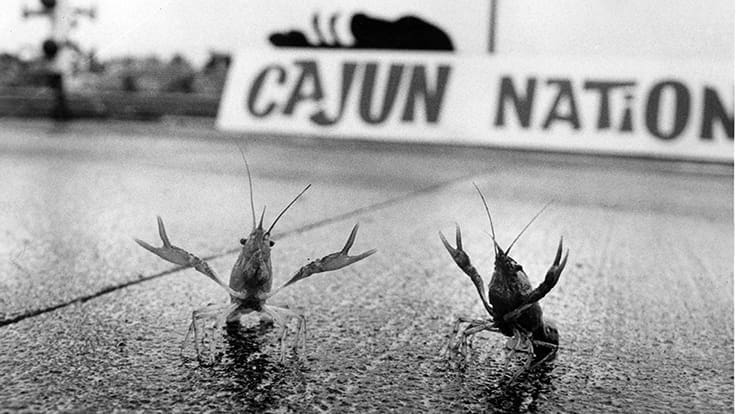
“If you were invited to the Jambalaya Fest over there, they poured out picnic tables and dumped five-gallon buckets of crawfish, potatoes and people were lined up just eating and peeling crawfish,” Miller remembered.

Then there was Shake. Not Snake. Shake.

Like many Cajun Nationals stories, nobody seemed entirely sure where some people came from or exactly how they became part of the landscape. They just existed.

Down there, nicknames occasionally carried more importance than real names.

Earwood remembered Moose understanding publicity long before publicity departments became a normal part of motorsports.

“I had a suite on Bourbon Street for three weeks leading up to the event,” Earwood said. “Moose just could see the results of doing things the right way as far as media.”

Even the Funny Car boycott of 1981 somehow turned into a Cajun Nationals story. Raymond Beadle and Funny Car racers sat out over purse disagreements. On paper, it sounded significant.

Earwood never thought it damaged the race.

“So why would you tell folks your feet stink?” Earwood said when officials discussed warning fans there might not be Funny Cars. “Let them find out on their own.”

Two fans eventually walked into the tower looking for the Blue Max.

That was it. The racers eventually gained purse increases. NHRA survived it. Everybody walked away claiming some kind of victory. That fit Cajun Nationals too.

Somewhere along the way the race delivered Kenny Bernstein’s first NHRA Funny Car victory over first-time finalist John Force. It delivered Moose stories, Waterbed stories and enough nicknames to fill a phone book. Mostly it delivered stories people still drag back out decades later.

Because when people remember the Cajun Nationals, they usually don’t start with elapsed times or reaction times. They remember humidity so thick trailer windows frosted over. They remember radios playing the Indianapolis 500 between rounds. They remember crawfish, jambalaya and a racetrack owner trying to hold together a dragstrip with a hammer and nails.

Kenny Bernstein remembered something simpler.

“The fans were great. I loved it there,” Bernstein said. “Moose was a blast. We really had a hell of a good time with him.”

Share the Insights?

Click here to share the article.

ad space x ad space

ad space x ad space

Competition Plus Team

Since our inception, we have been passionately dedicated to delivering the most accurate, timely, and compelling content in the world of drag racing. Our readers depend on us for the latest news, in-depth features, expert analysis, and exclusive interviews that connect you to the sport’s pulse.

Sign up for our newsletters and email list.

This field is for validation purposes and should be left unchanged.
Name

THE NHRA CAJUN NATIONALS NEVER NEEDED TO MAKE SENSE

There are traditions in drag racing and then there was the Cajun Nationals. Every Memorial Day weekend, the drag racing community migrated to State Capitol Dragway just outside Baton Rouge, La., for oppressive humidity, colorful personalities, fans who treated drag racers like family and enough food to make crew chiefs reconsider every life decision that brought them there.

You didn’t simply go to the Cajun Nationals.

You survived it, laughed about it and spent the next year telling stories that sounded made up to people who had never been there. Somehow, those stories usually turned out to be true.

The Cajun Nationals did not arrive with the fanfare of Indianapolis or Pomona. It slipped onto the NHRA schedule in 1976 at LaPlace as more of a showcase race, almost like NHRA sticking a toe into Louisiana water to see if anybody cared.

Turns out they cared plenty.

Within a short time, a race that started as a trial balloon became a full national event. Memorial Day weekend in Louisiana slowly became less of a date on a schedule and more of a yearly migration.

Division 4 racers made themselves comfortable almost immediately. Richard Tharp won Top Fuel, Raymond Beadle won Funny Car and Lee Shepherd grabbed Pro Stock honors in the event’s opening chapter.

But statistics never really explained the Cajun Nationals.
The race itself became secondary to the atmosphere surrounding it.

Richard Tharp never looked like a man trying to fit into drag racing. Drag racing looked like it had been built around people like him.

Yet even he looked back and shrugged.

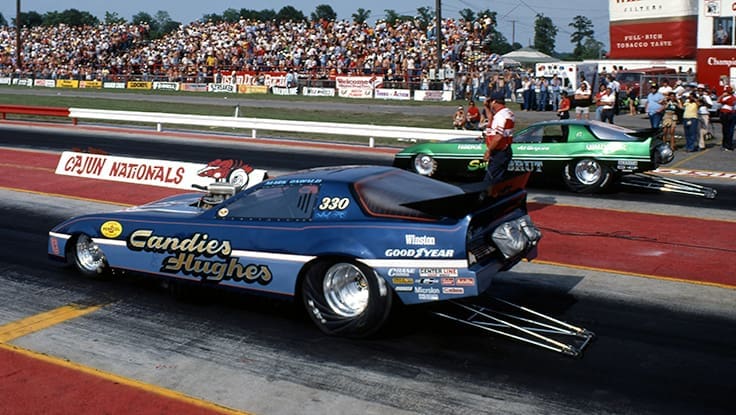
“I won it twice,” Tharp said. “I won it in ’76 and ’77 with Candies. It was a s***hole.”

Funny thing about drag racers from that period. They could insult a place and compliment it in the same sentence.

Tharp carried a reputation as one of drag racing’s great road warriors, living by his own unofficial creed: A Star I Are. A Saint I Ain’t. But when asked if Cajun Nationals represented some nonstop carnival atmosphere, he wasn’t buying the mythology.

“No, not really,” Tharp said. “Leonard Candies stopped all that partying s***. It wasn’t no more party than any place else really for me.”

Then he paused.

“Yeah, you’re exactly right,” Tharp said when reminded Memorial Day eventually became tradition. “Yeah.”
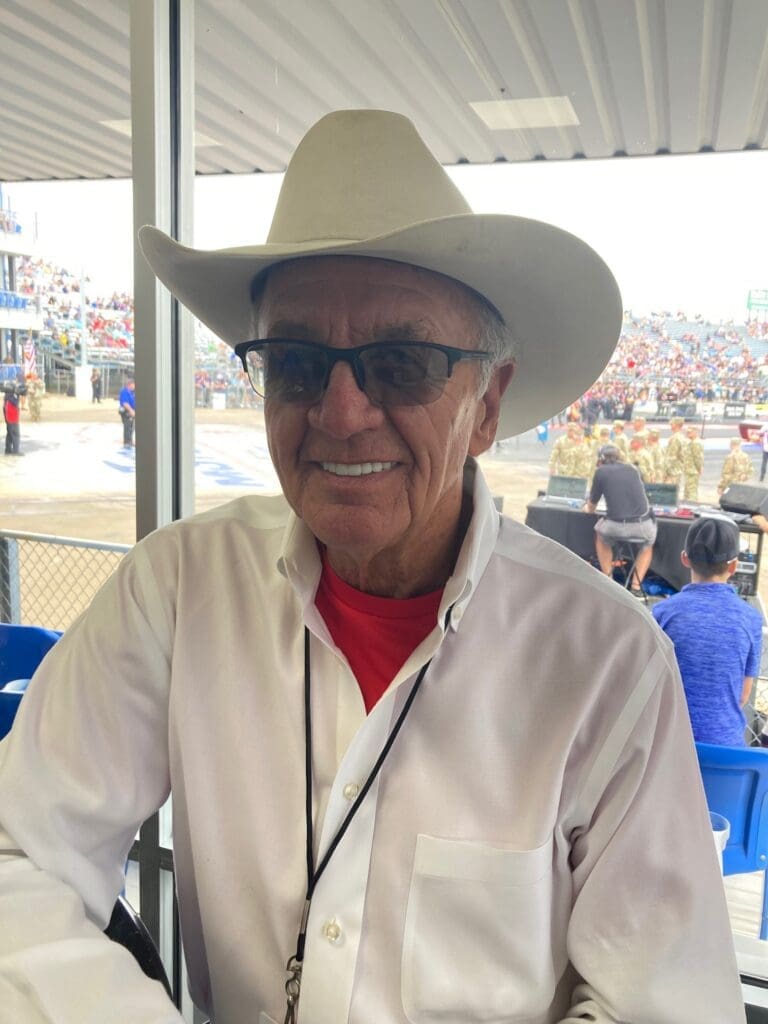
Memorial Day weekend had its own soundtrack. Somewhere in the pits, somebody always had a radio playing the Indianapolis 500 in the background. Between rounds, racers leaned against trailers, sat in lawn chairs and listened while waiting for the next call to the lanes.

Nobody thought anything about it back then. Today people stare into phones. Back then they turned up the radio.

Maybe the place simply didn’t need extra help. The weather alone could wear people down.

Cajun Nationals heat wasn’t ordinary summer heat. It sat on you. The humidity wrapped itself around your neck and followed you around all weekend like a debt collector.

Al Segrini brought one of drag racing’s cleaner images into Baton Rouge with his Brut-sponsored Funny Car operation. Louisiana had a way of treating polished images like suggestions.

“First of all, it was so humid. It was unbelievable, the humidity,” Segrini remembered.

“My trailer, my semi, the lounge had a window in it, it frosted up. It was so bad. It frosted up the window.”

Segrini still sounded amazed decades later.

“Unbelievable,” he said. “I was scraping with my fingernail, like, ‘Look at this.’ That’s how hot, it was so humid, man.”

The weather eventually followed him onto the racetrack. Segrini remembered loading the Funny Car heavily for a nighttime run because conditions had changed. Then the car decided it had plans of its own.

“Well, this run once put me up in the roll cage,” Segrini recalled. “Picked the front end up and got out there about two feet and went into a f*** shake like I never had.”

Then things got worse.

“So I lift and I’m facing the other lane,” Segrini said. “I said, ‘Holy f***, I’m racing with Wemet’s car. Holy f***, I’m going in his lane.'”

The collision tore up both cars and left Segrini limping along on three wheels before finally coming to a stop. Most people would have remembered the accident.

Instead, Segrini remembered the humidity.

“It’s got a picture of me staging the lights,” he said. “The back cylinders are pouring raw fuel out of them. That’s how humid it was.”

Then came the line that probably belonged in every Cajun Nationals brochure ever printed.

“I hope we never have to go back,” Segrini remembered telling Moose. “Jesus Christ, Moose. It’s terrible.”

Then he laughed. Because he won the race anyway.
Then there was the racetrack itself. Calling State Capitol Dragway temperamental might have been generous. Some years the surface behaved. Other years it looked like it had entered into a disagreement with everybody trying to race on it.

Steve Earwood remembered one season when NHRA’s Steve Gibbs had finally seen enough.

“One year Gibbs told me he had to pave the starting line, at least pave the starting line at Baton Rouge,” Earwood said. “It was so awful.”

The repair itself sounded absurd enough.

“Gibbs somehow found somebody and they actually paved the dag gum racetrack overnight on Thursday night of a national event,” Earwood recalled.

That still wasn’t the end of it. Iconic Blue Max crewman Fred “Waterbed” Miller witnessed one of those stories that still sounds impossible decades later.

Moose was literally driving nails into sections of the racing surface trying to keep things where they belonged.

Think about that for a minute. A racetrack owner at a national event was walking around trying to hold together pieces of a dragstrip with a hammer and nails.

Today, racers discuss weather stations, track sensors, and data acquisition. Back then people remembered Moose.

Norman “Moose” Pearah wasn’t simply a racetrack owner.

He was a force of nature.

Steve Earwood remembered a man who could work politicians, charm media members and operate in places where common sense occasionally stopped following along.

“He just lived in a little different world,” Earwood said. “I don’t know of anything illegally he really did, but he sure pushed the boundaries.”

Pushed them might be putting it mildly.

Earwood remembered Moose walking into a sheriff’s office and announcing race traffic would likely overflow because he planned to park cars on Highway 90. Not beside the highway. On the highway.

“And sure enough,” Earwood remembered, “the right lane turned into a drag strip parking lot.”

Former NHRA Press & Publicity team Steve Earwood and Dave Densmore fit perfectly into the Cajun atmosphere.

The food eventually developed its own following.

Fred “Waterbed” Miller remembered the Jambalaya Fest almost like a second event taking place inside the event itself.

“If you were invited to the Jambalaya Fest over there, they poured out picnic tables and dumped five-gallon buckets of crawfish, potatoes and people were lined up just eating and peeling crawfish,” Miller remembered.

Then there was Shake. Not Snake. Shake.

Like many Cajun Nationals stories, nobody seemed entirely sure where some people came from or exactly how they became part of the landscape. They just existed.

Down there, nicknames occasionally carried more importance than real names.

Earwood remembered Moose understanding publicity long before publicity departments became a normal part of motorsports.

“I had a suite on Bourbon Street for three weeks leading up to the event,” Earwood said. “Moose just could see the results of doing things the right way as far as media.”
Even the Funny Car boycott of 1981 somehow turned into a Cajun Nationals story. Raymond Beadle and Funny Car racers sat out over purse disagreements. On paper, it sounded significant.

Earwood never thought it damaged the race.

“So why would you tell folks your feet stink?” Earwood said when officials discussed warning fans there might not be Funny Cars. “Let them find out on their own.”

Two fans eventually walked into the tower looking for the Blue Max.

That was it. The racers eventually gained purse increases. NHRA survived it. Everybody walked away claiming some kind of victory. That fit Cajun Nationals too.

Somewhere along the way the race delivered Kenny Bernstein’s first NHRA Funny Car victory over first-time finalist John Force. It delivered Moose stories, Waterbed stories and enough nicknames to fill a phone book. Mostly it delivered stories people still drag back out decades later.

Because when people remember the Cajun Nationals, they usually don’t start with elapsed times or reaction times. They remember humidity so thick trailer windows frosted over. They remember radios playing the Indianapolis 500 between rounds. They remember crawfish, jambalaya and a racetrack owner trying to hold together a dragstrip with a hammer and nails.

Kenny Bernstein remembered something simpler.

“The fans were great. I loved it there,” Bernstein said. “Moose was a blast. We really had a hell of a good time with him.”


Picture of John Doe

John Doe

Lorem ipsum dolor sit amet consectetur adipiscing elit dolor

More Posts

Send Us A Message

Picture of Bobby Bennett
Bobby Bennett
Thank you for joining us on this journey. Your support and trust inspire us every day to deliver the best in drag racing journalism. We are excited about the future and look forward to continuing to serve you with the same dedication and passion that has defined CompetitionPlus.com from the very beginning.

Don’t miss these other exciting stories!

Explore more action packed posts on Competition Plus, where we dive into the latest in Drag Racing News. Discover a range of topics, from race coverage to in-depth interviews, to keep you informed and entertained.