

Most people know Frank Hawley as a two-time NHRA Funny Car champion, television analyst, and one of drag racing’s most respected instructors. Fewer know that during a recent cleanup, he rediscovered proof that he once came close to being part of a major Hollywood motion picture.
The recollection surfaced not through nostalgia but necessity. Hawley and his wife, Lana, were emptying decades of stored racing material as they built a new shop at their home.
Boxes that had followed Hawley from racetrack to racetrack were finally opened. Inside were old publications, photographs, and forgotten artifacts tied to a movie project that nearly happened.
“I’ve got thousands of, well, hundreds and hundreds of National Dragsters,” Hawley said. “And every one I pick up I want to read.”
As Hawley sorted the material, the cleanup became a trigger for memory. Among the items were a film script, photos, and a jacket linked to a proposed movie about Don Garlits.
The project, Hawley said, began shortly after he opened his drag racing school in the mid-1980s. A call came from Hollywood with an unexpected pitch.
Representatives from director John Frankenheimer contacted Hawley about developing a feature film centered on Garlits’ life and career. Frankenheimer was already an established name, known for The French Connection and Grand Prix.
At the time, Hawley said, there was no reason to doubt the project’s seriousness. Frankenheimer wanted a firsthand understanding of drag racing before committing to the film.
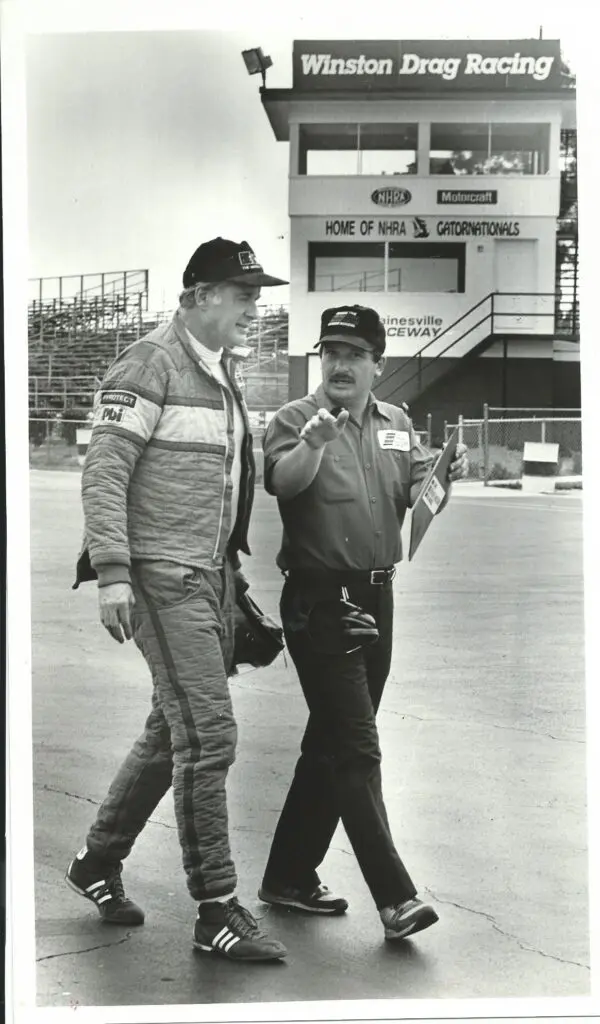

Hawley said Frankenheimer visited the school and drove a Super Comp car. He then insisted on driving an alcohol car.
“I suggested maybe not,” Hawley said. “And he insisted and he didn’t drive it all that well.”
Hawley said the director struggled but kept at it, determined to experience drag racing rather than observe it from a distance. That effort impressed Hawley.
“He liked the way I communicated stuff I was good at,” Hawley said.
Frankenheimer soon asked Hawley to assist with the movie’s technical accuracy. Hawley said yes without hesitation.
“He asked me if I’m going to be able to help with the movie from a technical aspect,” Hawley said. “And of course I’m like, ‘Hell yeah, I’m in.’”
The collaboration deepened when Frankenheimer asked Hawley to review the script. Hawley said the scale immediately stood out.
“This could be a really cool thing,” Hawley said.
The script focused on Garlits’ early career, beginning in the 1960s. Authenticity shaped every decision, including the search for period-correct racetracks.
“They didn’t want a Gainesville-looking racetrack,” Hawley said. “They needed a really old, small-looking track with wood grandstands.”
Locations in Florida and Georgia were scouted. Conversations turned to sourcing or building cars that resembled Garlits’ original Swamp Rat dragsters.
“Can we get some old cars like that?” Hawley recalled Frankenheimer asking. “I said, ‘Well, you know, yeah, maybe, but we might even have to build some.’”
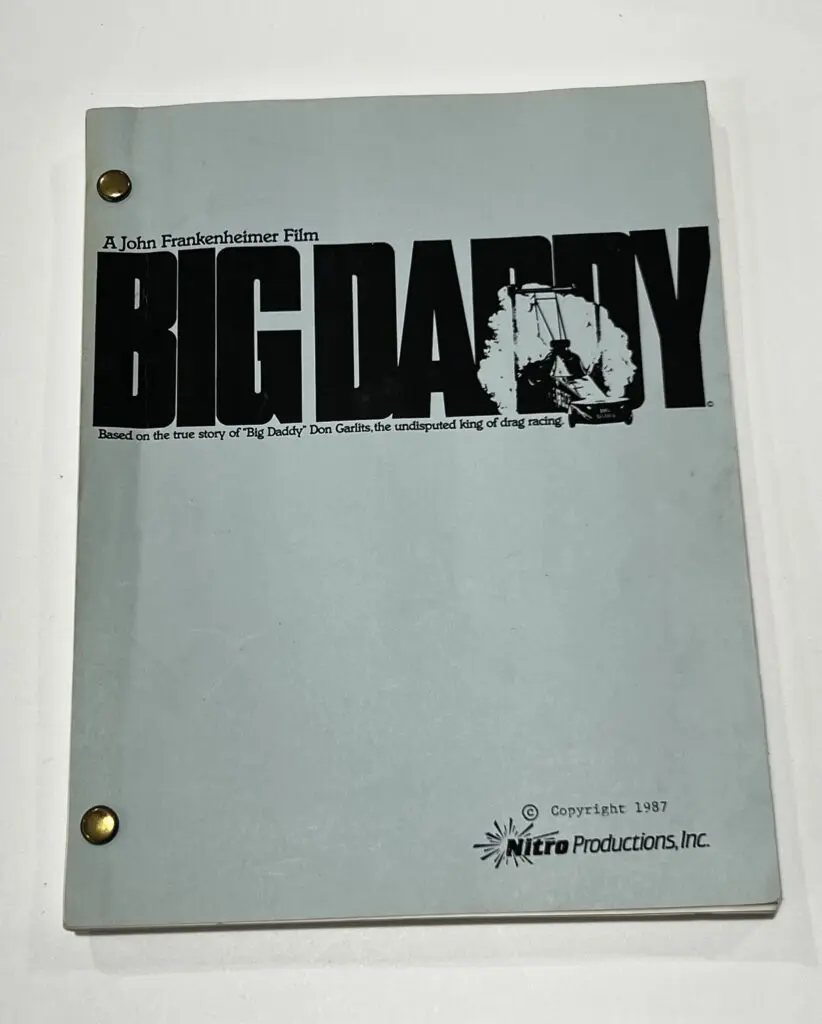

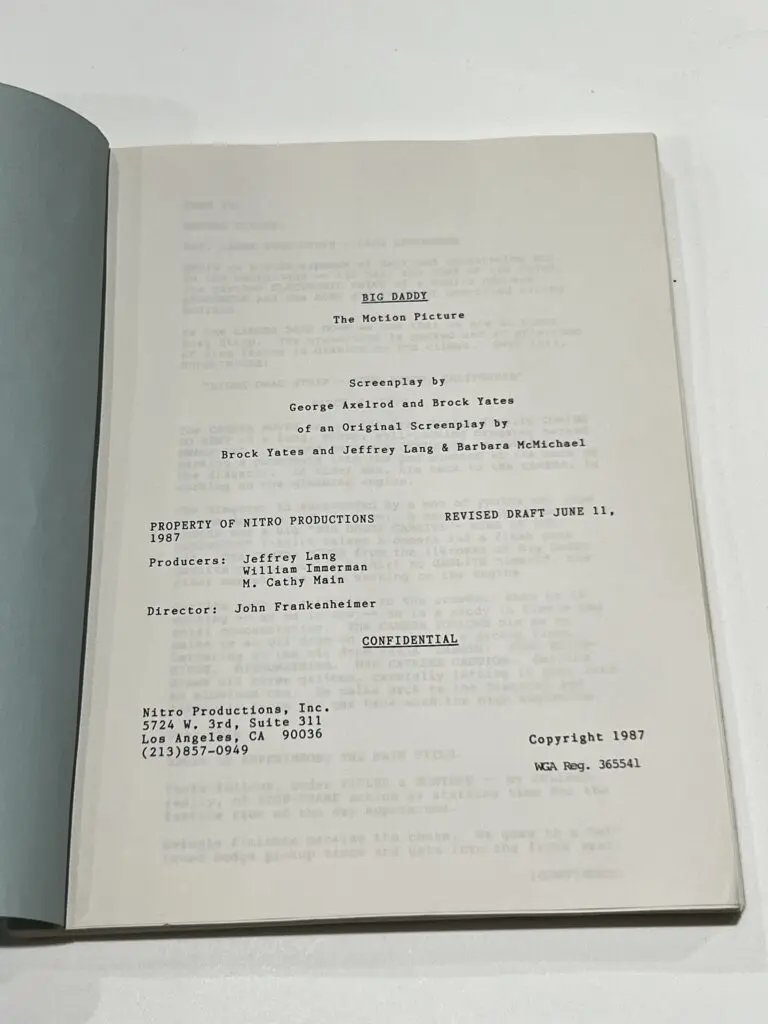
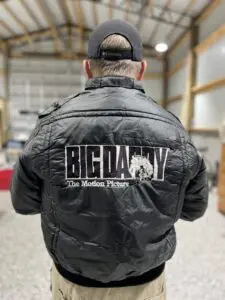
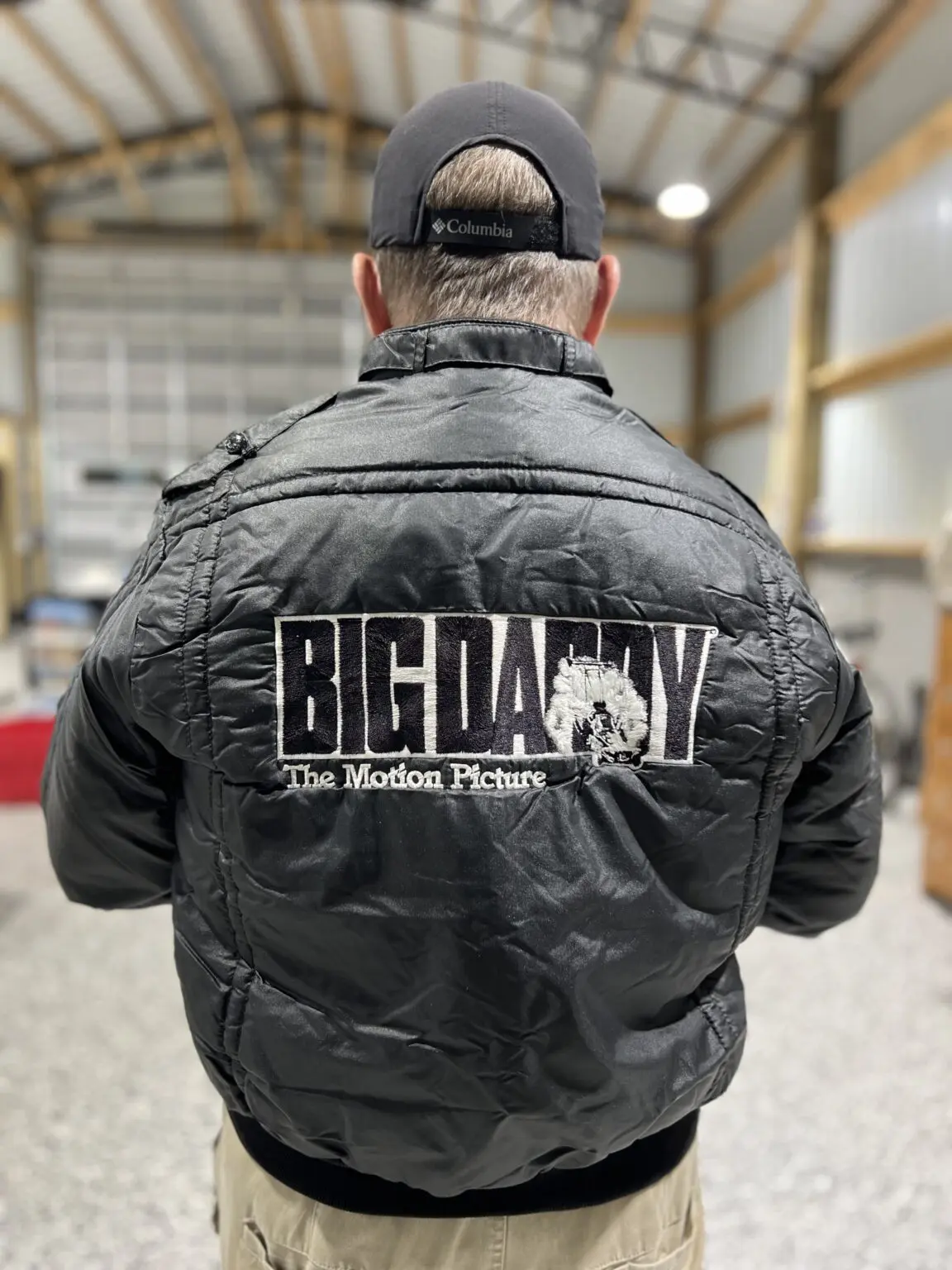
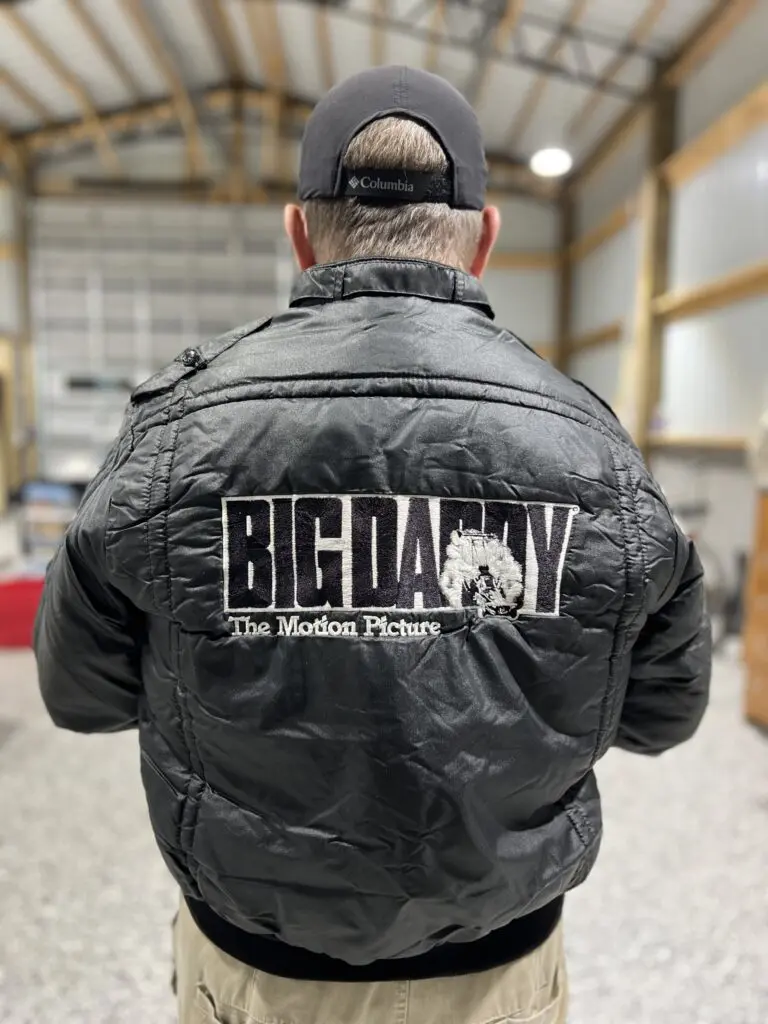
Months passed as discussions continued. Jackets bearing the title Big Daddy, the motion picture were produced, and Hawley still owns one.
He also retained an original copy of the script, which he described as substantial. Lana believes automotive journalist Brock Yates either wrote or collaborated on it, though Hawley said he has not confirmed that detail.
“Brock Yates keeps coming up whenever she thinks about this,” Hawley said.
The project progressed far enough that expectations felt real. Then the communication slowed.
“It just kind of tapered off where we weren’t hearing from him much,” Hawley said.
The final word was brief and definitive. Frankenheimer could not secure studio backing.
“The last we heard is he couldn’t get a studio to take it,” Hawley said.
The movie quietly collapsed. What remained were physical reminders uncovered years later during the cleanup.
Asked how disappointing that outcome was, Hawley did not hesitate.
“A lot,” he said.
Hawley said he did not understand how often film projects fail to move forward. He assumed a director of Frankenheimer’s stature could make it happen.
“I just figured John Frankenheimer wants to do a movie and he’s spending all this money that it was just going to happen,” Hawley said.

The disappointment was personal rather than professional. Hawley said it was the chance to be part of something entirely outside drag racing that stung most.
“How often does stuff like that come about in your life where you get a chance to be that involved?” Hawley said.
He joked that he imagined himself staying seated in an empty theater long after the credits rolled.
“I just pictured sitting there at the end of the movie and everybody’s left the theater and I’m sitting there watching the credits go so I can get to the last line and see my name,” Hawley said.
When asked whether drag racing or Hawley himself missed out more, he answered quickly.
“Probably the latter,” he said.
Hawley said the project was intended to be an “A-movie,” not a niche racing film. Frankenheimer envisioned major actors and a wide audience.
“He had thrown out some names of some really heavy-hitter movie stars back then,” Hawley said.
The script reportedly included early interactions between Garlits and Tom McEwen, adding historical depth to the film.
Later drag racing movies, including Snake & Mongoose, revived those memories.
“Every time there was a drag racing movie, I think about it,” Hawley said.
The decision to share the story came during the cleanup itself. Hawley said a conversation with Lana made it clear the rediscovered material deserved attention.
The cleanup also uncovered rare racing publications, including early Canadian Wheelspin News issues, reinforcing how easily history can disappear if left forgotten.
“The idea of just throwing all that old memorabilia in the garbage just is appalling,” Hawley said.
In the end, the movie never made it past development, but the rediscovery gave it new life. Hawley said the experience reminded him how close opportunity can come before quietly passing by.
“It’s just a cool story,” Hawley said. “The movie that never got made.”
As it turned out, the entire recollection came not from a racetrack or a studio, but from cleaning out the garage.