
Photos by Chris Simmons, Bobby Bennett



RACE NOTEBOOK – CREASY’S SENTIMENTAL MOMENT, PRITCHETT HONORS LEGEND IN WIN
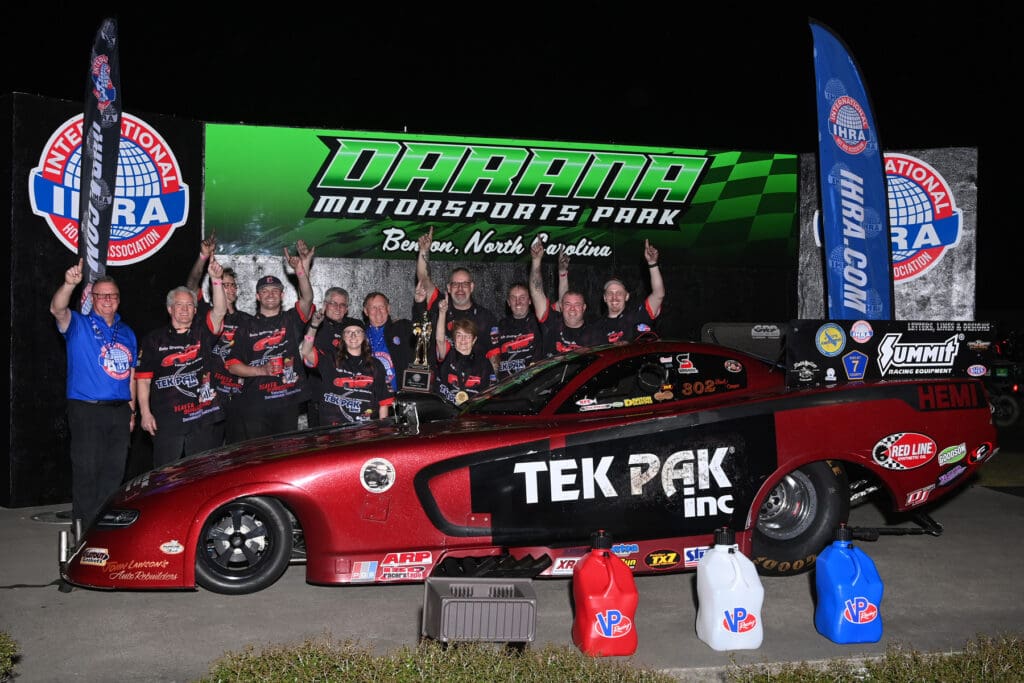
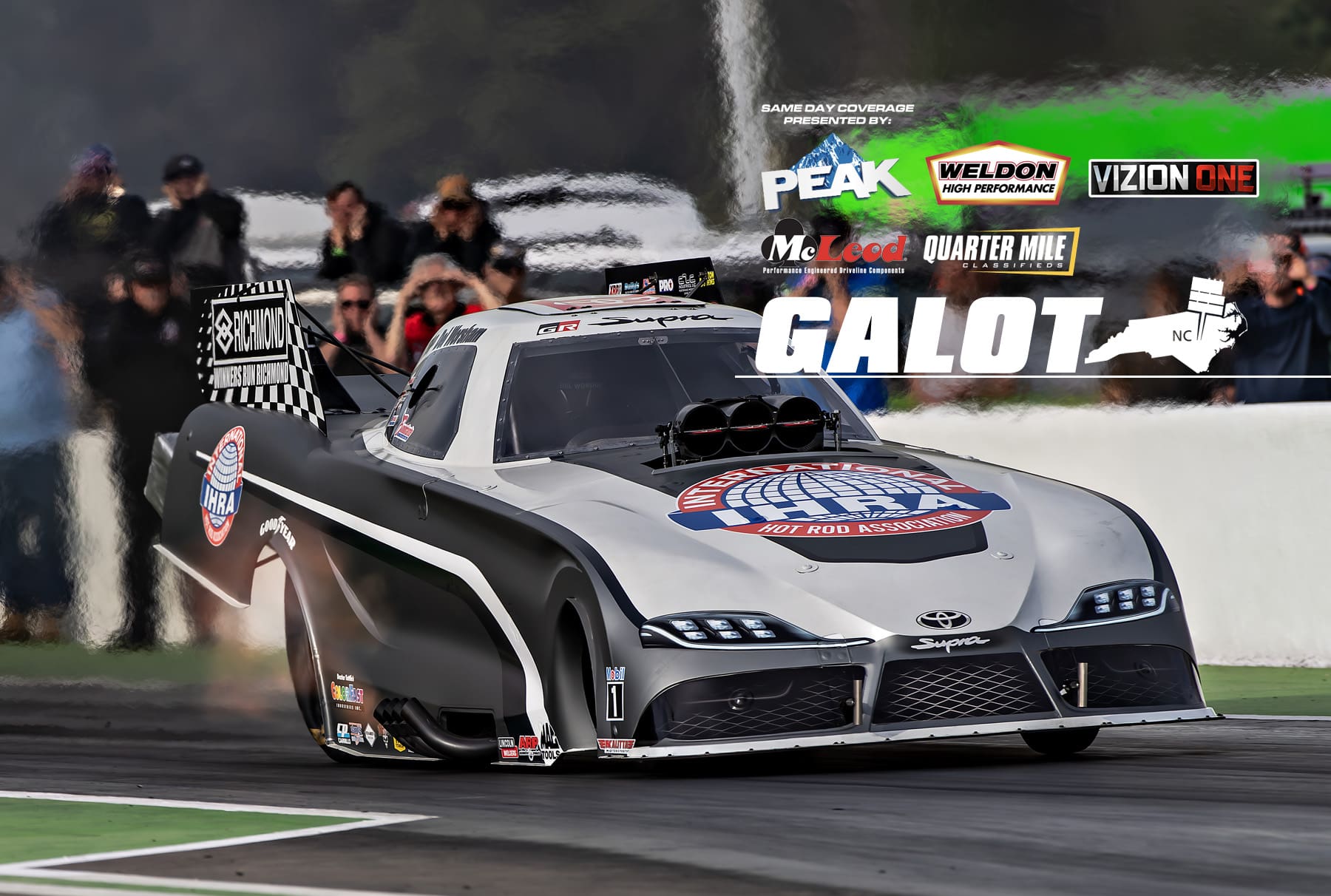
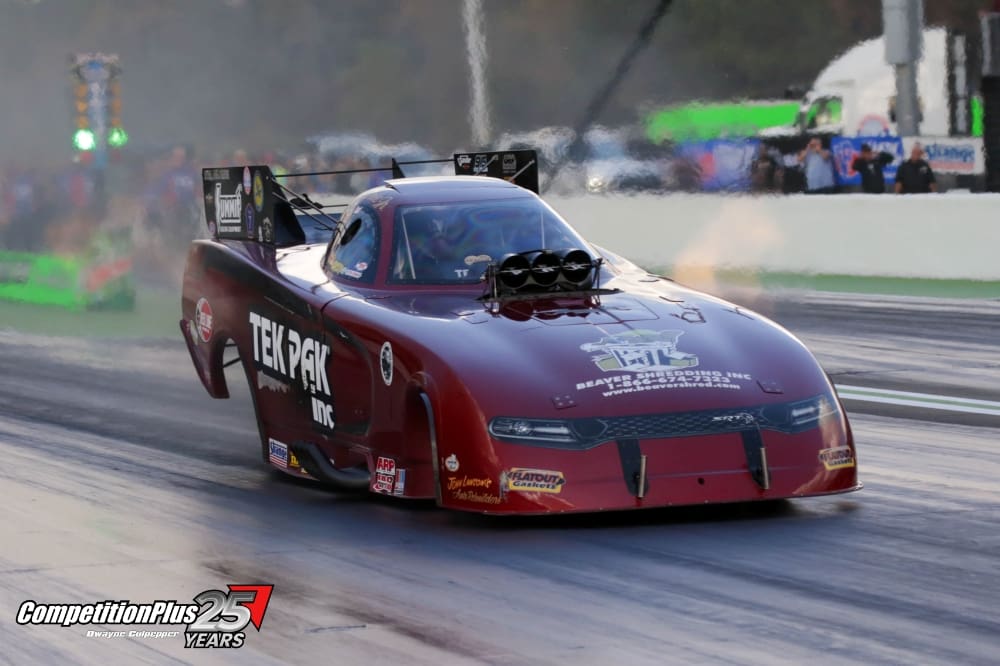
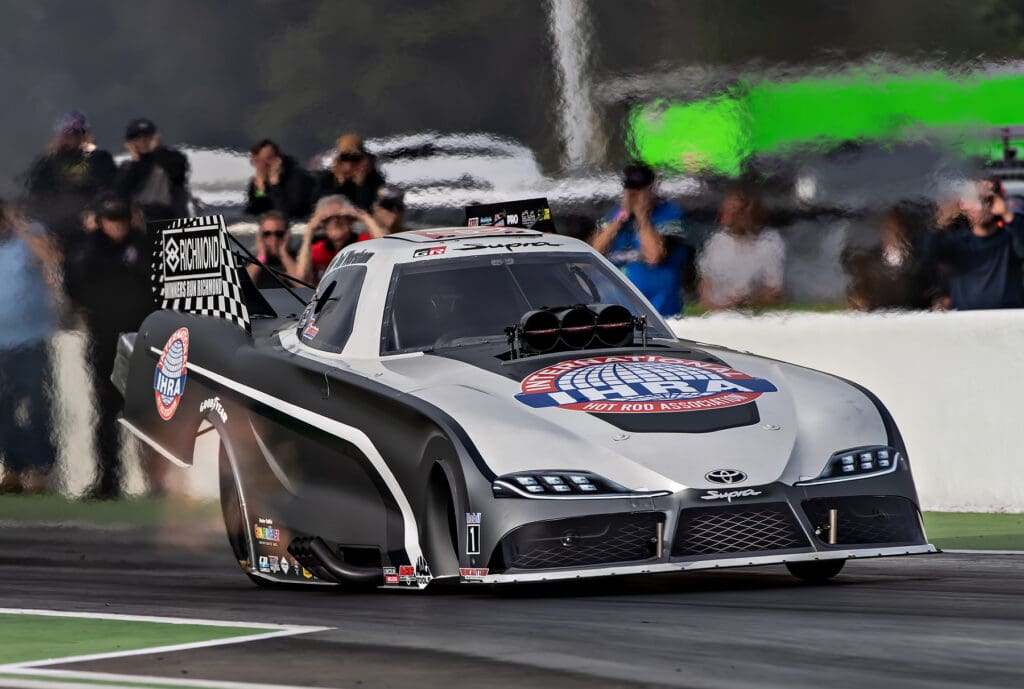
CREASY’S LONG ROAD BACK TOP THE TOP – For Dale Creasy Jr., the path back to the top of IHRA Funny Car competition has been less about a single win and more about years of persistence. Saturday night’s victory in Dunn, N.C., simply provided proof that the grind had not been in vain.
Creasy’s performance at the season-opening Outlaw Nitro Series event marked his first return to the points lead in nearly two decades. The moment carried added significance for a driver whose earlier championship momentum was derailed by injury and inconsistency.
“Well, ’06 and ’07, we did pretty good,” Creasy said. “We led the points at the end of the season when it counted, but it’s been a struggle last year or two.”
The struggle included both mechanical setbacks and the mental challenge of rediscovering confidence after a serious crash in Dallas. Creasy acknowledged that the rebuilding process required patience, even when results were slow to follow.
“After the crash in Dallas, been struggling, questioned what I was doing and just kept pushing,” Creasy said. “By the end of last year, we started getting it back.”
Creasy entered eliminations as the No. 5 qualifier but steadily gained momentum through each round. His semifinal victory over Del Worsham became one of the defining moments of the event.
“If you want to be the best, you have to beat the best,” Creasy said. “And right now he’s the best one out here.”
The matchup highlighted the increasing competitiveness of the revitalized IHRA Funny Car field. Creasy said the close race reinforced his belief that consistent execution remains more important than chasing peak performance numbers.
“That race was probably the closest race all day in most classes with him and I,” Creasy said. “We know his car runs good and we know our car can run as good.”
Creasy ultimately secured the victory after Terry Haddock was unable to return for the final round. The result marked his tenth career IHRA Funny Car win, placing him fifth on the sanctioning body’s all-time list.
The veteran driver views the current eighth-mile format as both a challenge and an opportunity. He said the shorter distance demands precise reaction times while reducing the likelihood of catastrophic incidents.
“Oh, mentally,” Creasy said. “Because you have to be on time in eighth mile.”
Creasy believes the team’s focus on repeatable mid-3.20-second runs provides a sustainable competitive strategy. For him, the victory represents not just a milestone but a reaffirmation that persistence can still shape outcomes in nitro racing.
“I mean, winning the race is just the coolest thing in the world,” Creasy said.
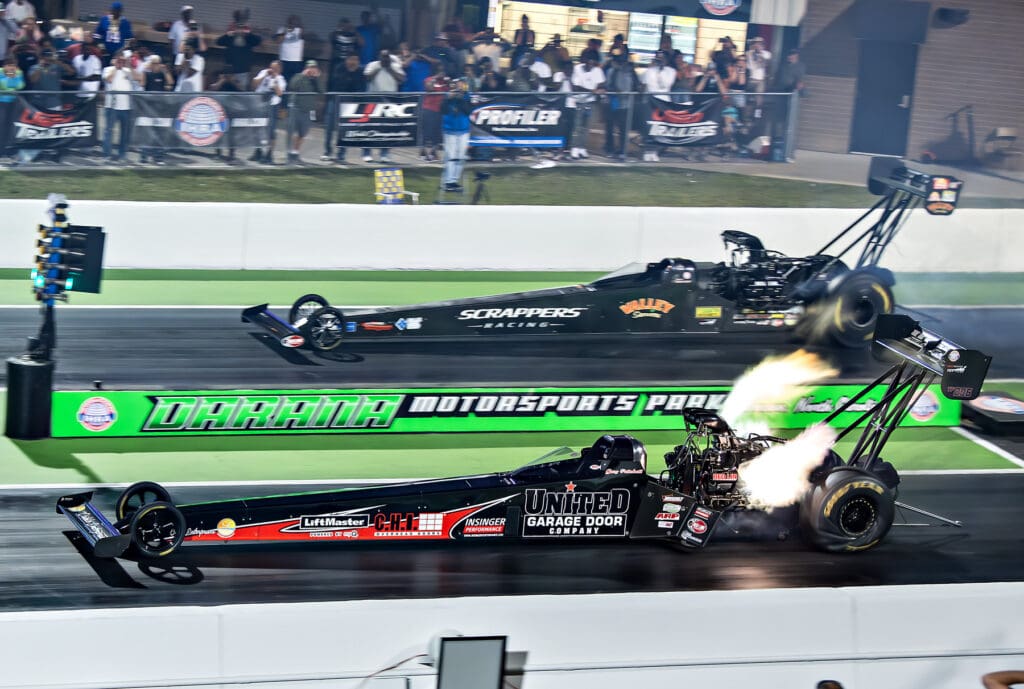
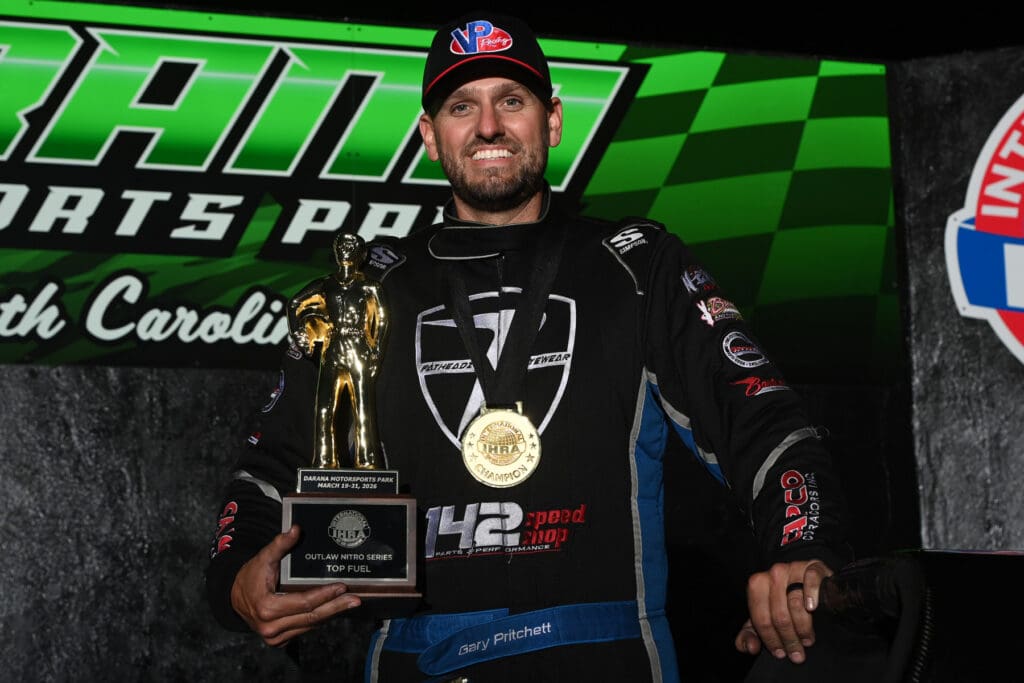
BUNNY WOULD’VE BEEN PROUD – Gary Pritchett’s first IHRA Top Fuel victory Saturday night at the Outlaw Nitro Series season opener at Durana Motorsports Park carried more meaning than a typical rookie breakthrough. The win served as both a career milestone and a tribute to the late Carol “Bunny” Burkett, whose influence helped shape his path into nitro drag racing.
Burkett became the IHRA’s first female professional world champion in 1986. Pritchett, her godson, ensured that connection remained visible in the winner’s circle.
“And we did it with TF 296 on the car,” Pritchett said.
Members of the Burkett family were present as Pritchett secured the victory in Doug Foley’s Top Fuel dragster. The emotional significance of the moment extended beyond the statistics attached to his first professional win in the category.
“We got Mo Burkett here with us,” Pritchett said. “We got Julie Burkett, the whole family.”
Earlier this season, Foley stepped aside from driving duties and elevated Pritchett into the cockpit. The decision represented a calculated gamble on a rookie driver, one that gained immediate validation in Dunn.
Pritchett entered eliminations as the No. 2 qualifier and posted a 3.069-second pass in the opening round, which stood as race day low elapsed time. He advanced to the final by defeating Chuck Loftin and Lee Calloway.
“I just knew that we needed to go A to B every run and just be consistent on the tree,” Pritchett said.
The final round against No. 1 qualifier Jasmine Salinas ended abruptly when Salinas’ dragster lost traction at the hit. Pritchett capitalized with a controlled 3.08-second run to secure the victory.
“I figured Jasmine and Adam and that team were going to throw down in the final,” Pritchett said. “Unfortunately they smoked the tires.”
The weekend also highlighted the physical and mental demands of eighth-mile nitro racing. Pritchett described the transition from acceleration to parachute deployment as one of the most challenging aspects of the format.
“Oh, eighth mile is a whole different experience,” Pritchett said. “It’s a shorter distance and you got to get there quicker.”
Mechanical setbacks added to the learning curve. Pritchett noted damage to key components, underscoring the unforgiving nature of Top Fuel competition.
“It broke our wheelie bar and broke our skid blocks from under the car,” Pritchett said.
For Pritchett, the victory marked the beginning of a new chapter rather than its culmination. The combination of opportunity, preparation and legacy created a defining moment in his early Top Fuel career.
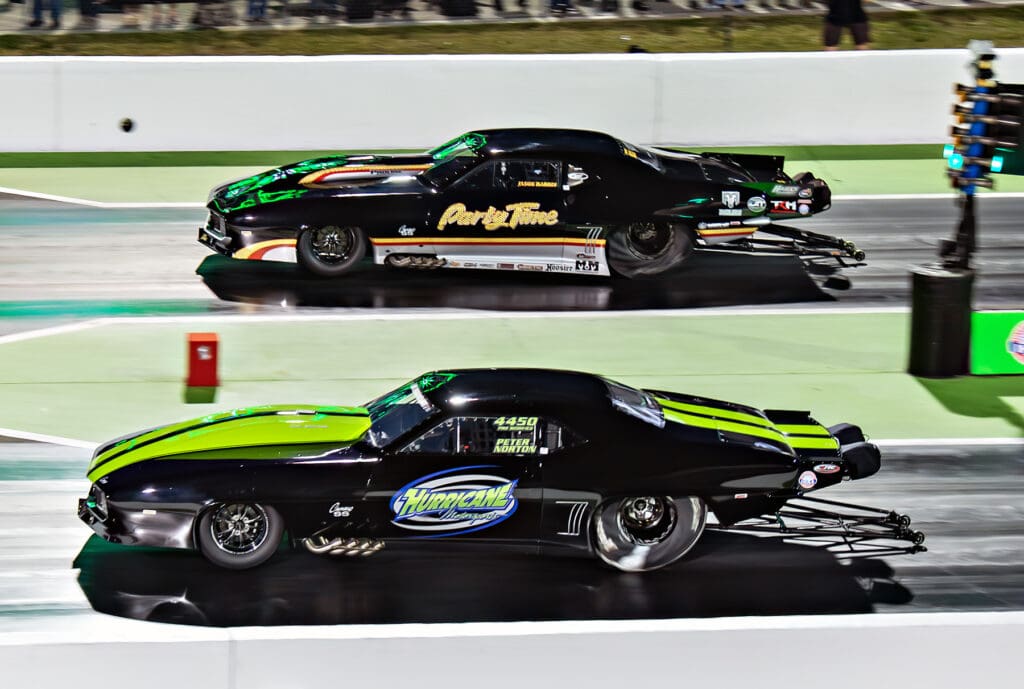
WIN AND HE’S IN – Fresh off his DI Winter Series championship, Peter Norton ensured his momentum carried into the IHRA Pro Modified season opener with a statement victory. The win positioned Norton as an early contender in his pursuit of a national championship.
Norton entered eliminations as the No. 6 qualifier but steadily advanced through a competitive field. He recorded round wins over Craig Sullivan, Randy Weatherford and John “Doc” before defeating No. 1 qualifier Jason Harris in the final.
“We went down to Bradenton, Florida in December, raced Snowbirds, U.S. Street, and the World Series of Pro Mod won the championship down there,” Norton said. “I hadn’t sat in this car until December of last year.”
The result reinforced the strength of a program that has rapidly found cohesion. Norton credited team chemistry and preparation as key factors behind the early-season success.
“We just have the best team,” Norton said. “Everybody works well together. The car does its thing and we just knocked one out.”
Harris, who opened race day with a bye run, advanced to the final with victories over Kye Kelley and Jay Cox. His strong performance throughout eliminations underscored the depth of competition within the Pro Modified field.
Norton’s victory also reflected his growing confidence behind the wheel. Having only begun racing the car late last season, he described the achievement as both validation and motivation.
“I don’t know what to say,” Norton said. “It’s awesome.”
With the national championship now his primary focus, Norton said the opening-round triumph aligned with the team’s long-term objectives. The win provided early momentum toward a title pursuit already outlined before the season began.
“Absolutely,” Norton said when asked about following the series. “That was kind of our goal for the year, and this is just one hell of a good start.”
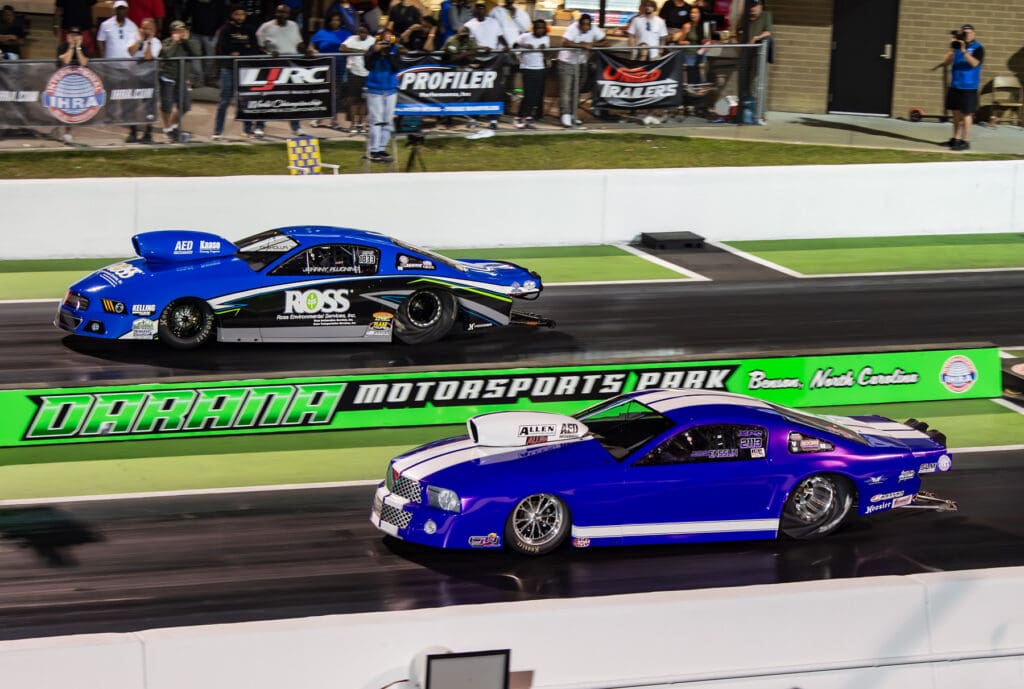
THE PLUCHINO WAY – Johnny Pluchino left little doubt about his intentions for the 2026 IHRA Outlaw Nitro Series Mountain Motor Pro Stock season. His performance at the opener confirmed both his offseason preparation and his place among the division’s early championship contenders.
Pluchino entered eliminations as the No. 2 qualifier in a 23-car field widely regarded as one of the most competitive Mountain Motor Pro Stock gatherings in recent IHRA history. He secured the victory with a narrow .016-second margin over Jordan Ensslin in the final round.
“It feels excellent,” Pluchino said. “We put some work in this off season.”
The win followed a methodical path through eliminations. Pluchino advanced past Dwayne Rice, Jason Grima and Jerry Tucker before reaching the final.
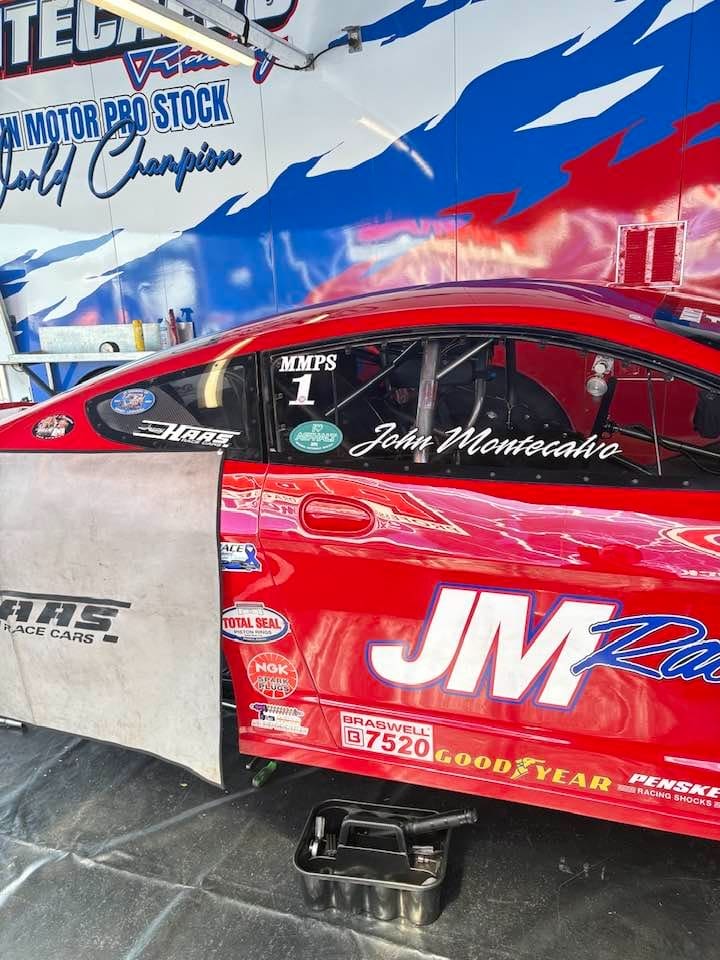
Ensslin, the No. 9 qualifier, produced his own notable run to the championship round. His route included victories over veteran contenders John Montecalvo, Elijah Morton and Jeremy Huffman.
The depth of competition underscored the significance of Pluchino’s result. Mountain Motor Pro Stock’s expanding field has elevated performance standards and intensified pressure on both drivers and teams.
“We knew how tough it was going to be,” Pluchino said. “So you got to go out there and you get out of it what you put in.”
Pluchino’s confidence entering the weekend reflected both technical preparation and an understanding of the division’s evolving dynamics. He emphasized the importance of offseason development in building a competitive foundation.
For Pluchino, the opening victory offered validation that his offseason investment had produced tangible results. It also established a tone for the championship battle ahead.
“It feels excellent,” Pluchino said.
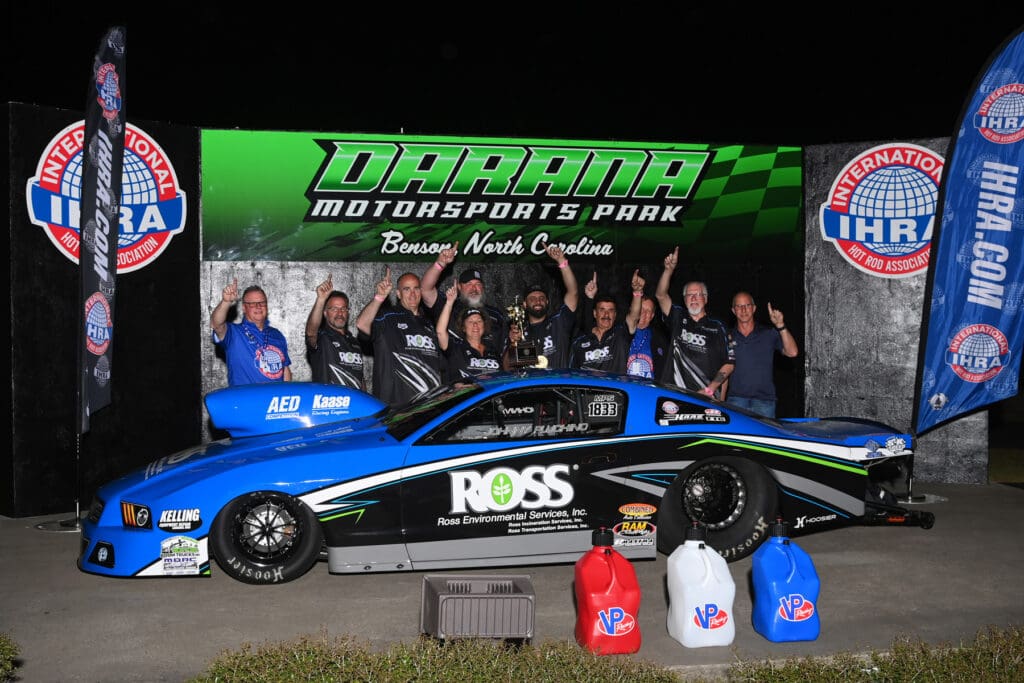

THE LONE WOLF APPROACH WORKS – Cory Reed understands the unspoken rules of small-tire grudge racing. He just chooses not to follow them.
The former NHRA Pro Stock national event winner has embraced an unconventional philosophy since shifting his focus to 28×10.5 competition. In a discipline built on secrecy and guarded performance data, Reed has become known for openly discussing his car’s capabilities.
“I ain’t scared,” Reed said. “If anybody wants to race, come on.”
Reed’s decision to step away from factory-backed Pro Stock competition surprised many within the drag racing community. He acknowledged the skepticism but said the move was rooted in a desire to rediscover the challenge and unpredictability that first drew him to the sport.
Saturday evening at the IHRA Outlaw Nitro season opener in Dunn, NC, Reed delivered the proof he’s on a right track, piloting Manny Buginga’s ride to the winner’s circle.
“Validation’s definitely the hard work that went into getting this car to work right,” Reed said.
Reed pointed to his victory over one of the class’s established benchmarks as confirmation his program is progressing as planned.
“And we just beat, as we know, Bill Lutz is the quickest 28×10.5 car seen by ticket wise,” Reed said. “So even if it was spray or not spray M5, no M5, whatever, it was good to beat him.”
While most competitors protect performance information to maintain a strategic edge, Reed believes confidence in continual improvement outweighs any advantage secrecy might offer. His approach reflects a broader commitment to driving development rather than tactical gamesmanship.
“I think we have the second-fastest one,” Reed said. “I think we have the fastest one with no extra power.”
The small-tire car’s demanding nature has reinforced Reed’s appreciation for diverse racing disciplines. He described the machine as more physically challenging and less predictable than the Pro Stock and Pro Modified entries he previously drove.
“Oh, man, this thing’s a handful to drive,” Reed said. “It really is.”
Reed’s willingness to share performance details underscores his competitive mindset. For him, the objective remains simple: race often, improve constantly and let results speak louder than strategy.
“I like driving any car,” Reed said. “I’ll drive an 11-second car. I don’t give a crap.”
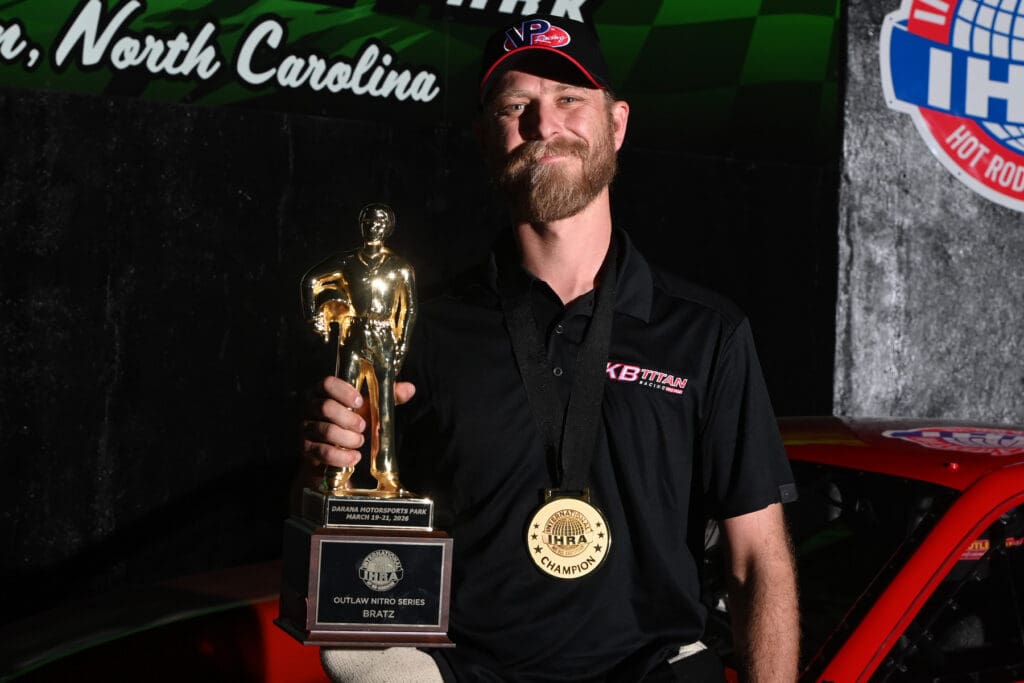
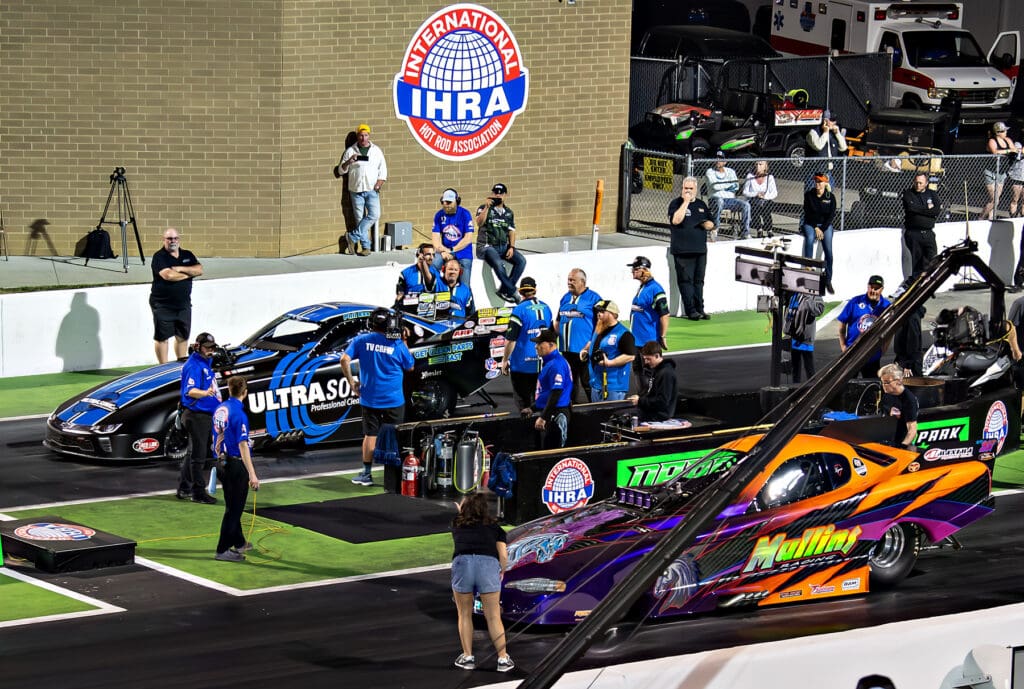
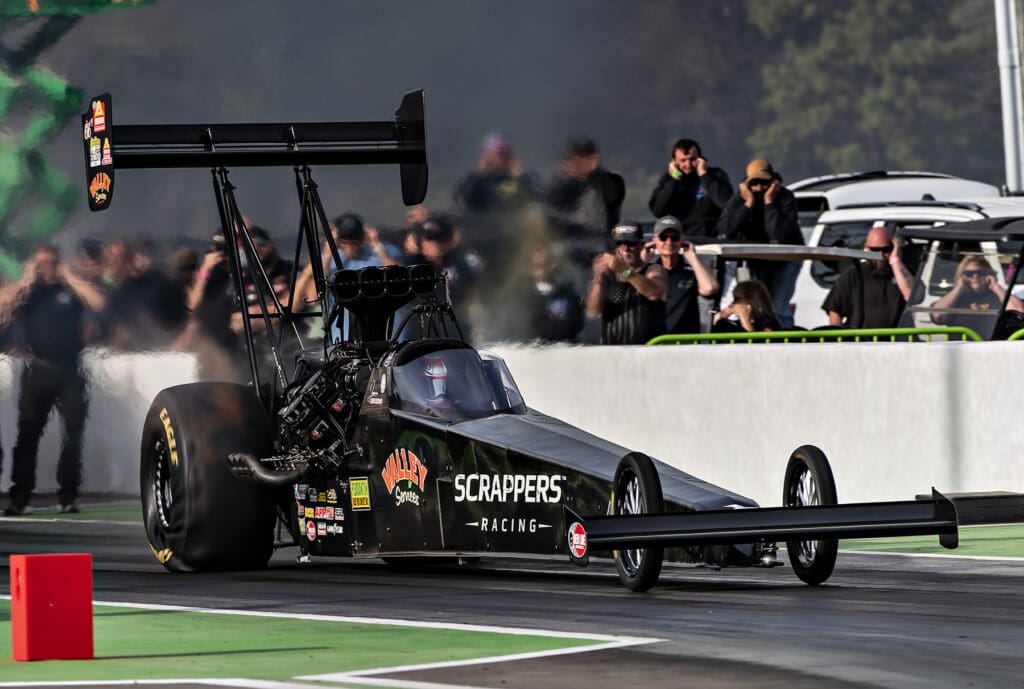
STICKING TO HIS ROOTS – Bruce Mullins knew exactly who to credit moments after winning the Top Alcohol Funny Car title at the IHRA Outlaw Nitro Series opener at Darana Motorsports Park in Dunn, N.C. The emotional victory carried meaning that extended well beyond the Ironman trophy.
“This is going to be hard to put into words. That woman right there is the reason I’m back in a Funny Car,” Mullins said of his wife, Lynne. “I met her six years ago, and a couple years back she told me I needed to get back in a Funny Car. I hadn’t been in one in 17 years.”
The return has reshaped both Mullins’ career trajectory and his personal outlook. He credited Lynne with providing the push that reignited his competitive ambitions.
“I had no plans to do it until she mentioned it,” Mullins said. “I missed it and I loved it, but she gave me the push. She put my life back on track. I never thought I’d win again.”
Mullins’ victory came with a technical distinction that sets his program apart. In a division largely dominated by screw superchargers, he continues to compete with a roots-blown combination.
“Everybody went to screw blowers a long time ago,” Mullins said. “They dominate. When I bought this car, I said I wanted to be the fastest roots-blown Funny Car in the world.”
The weekend began with adversity when a mechanical issue damaged the engine during the first qualifying attempt. The team installed a spare powerplant and qualified on the strength of an early 3.85-second pass at only 169 mph.
Mullins credited longtime chassis builder Jim Carl and mentor Leroy Dudeney for shaping the program’s development. Their guidance helped sustain momentum through a demanding eliminations ladder.
“He’s taught me so much,” Mullins said of Dudeney. “Without him, Jim, my family, and mainly that woman right there, this wouldn’t be possible.”
The roots-blower philosophy has become both a technical statement and a point of pride. Mullins even reflected that the team once joked they were “bringing a knife to a gunfight.”
That perception shifted as performance improved, culminating in a defining victory over Phil Esz in the final. Mullins said the moment reinforced both belief in his approach and appreciation for IHRA’s revitalized platform.
“We love what IHRA is doing,” Mullins said. “I don’t even know what to say right now.”
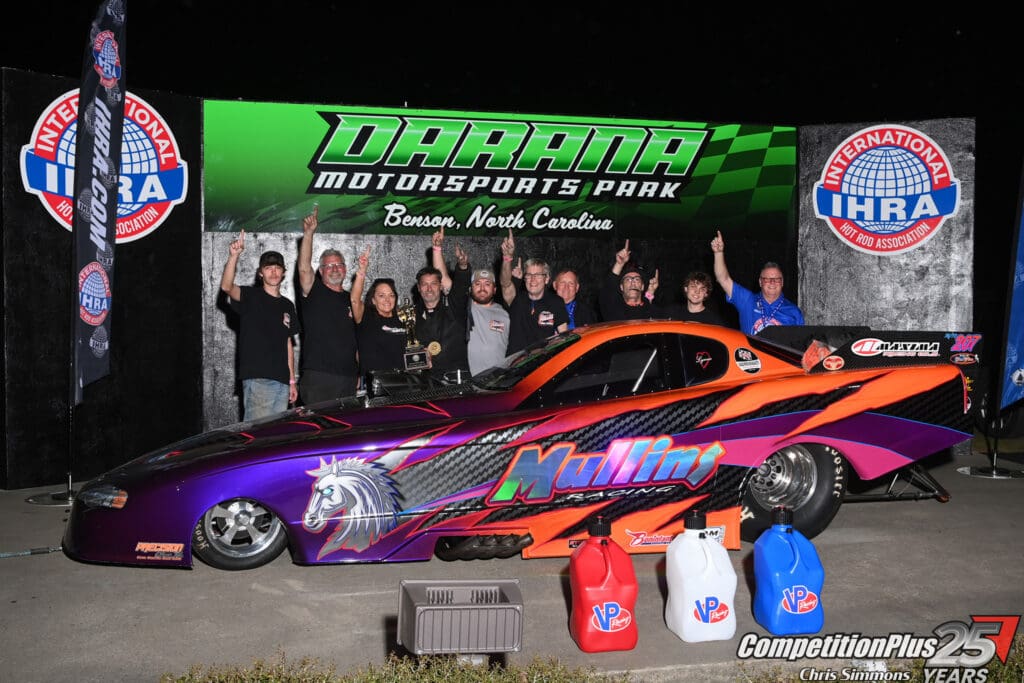
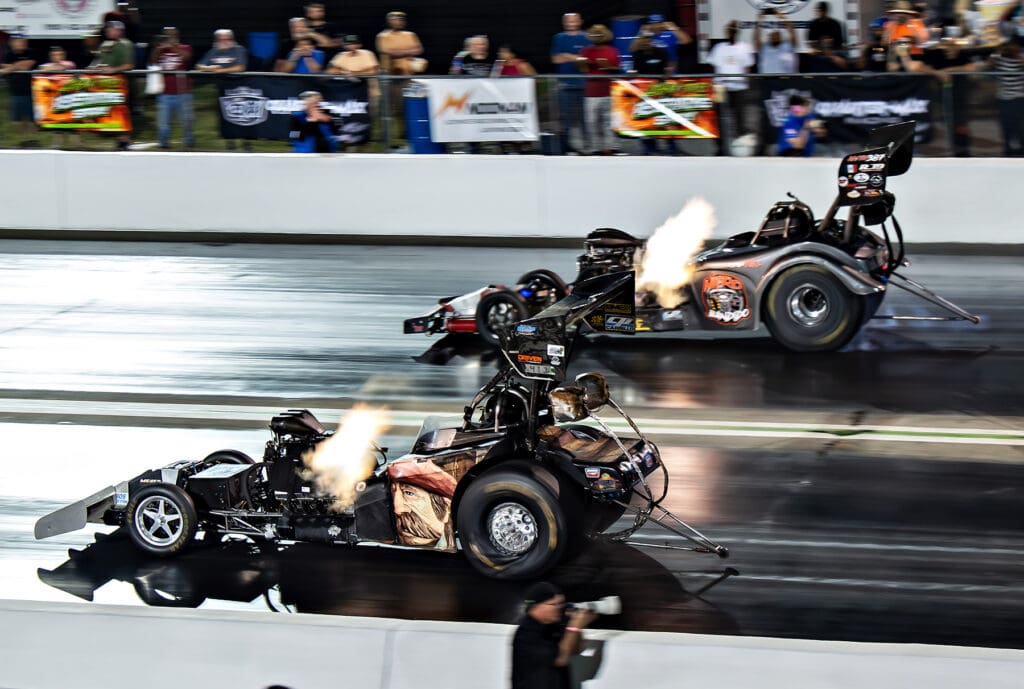
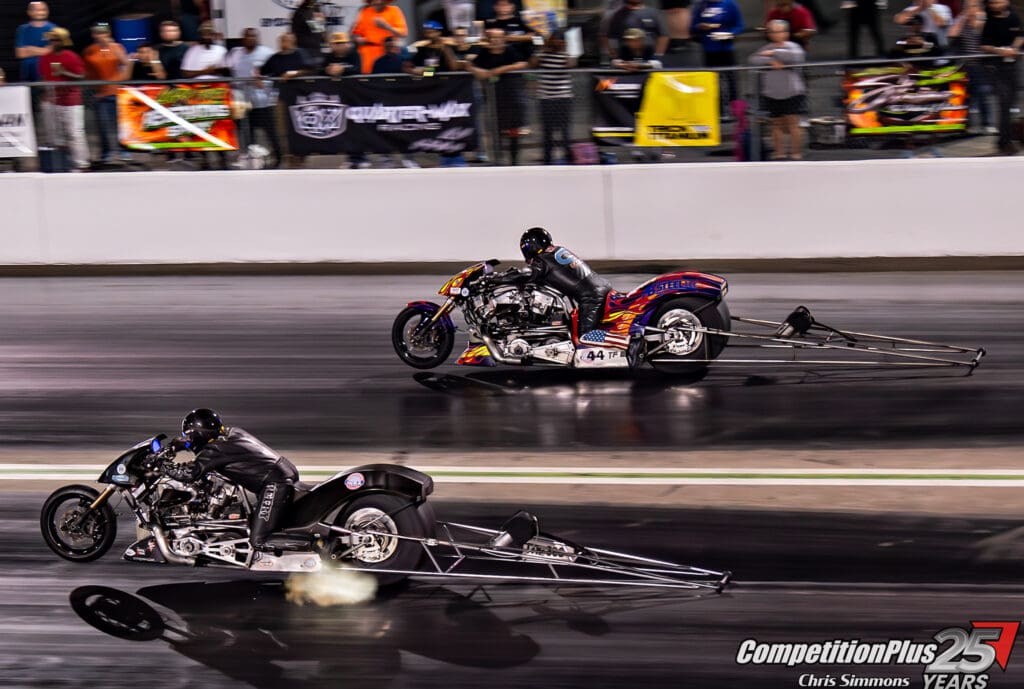
MORE NITRO WINNERS – Ryan Peery (Nitro Harley) and Cody Austin (Fuel Altered) rounded out the nitro winners from Darana Motorsports Park in Dunn, NC.
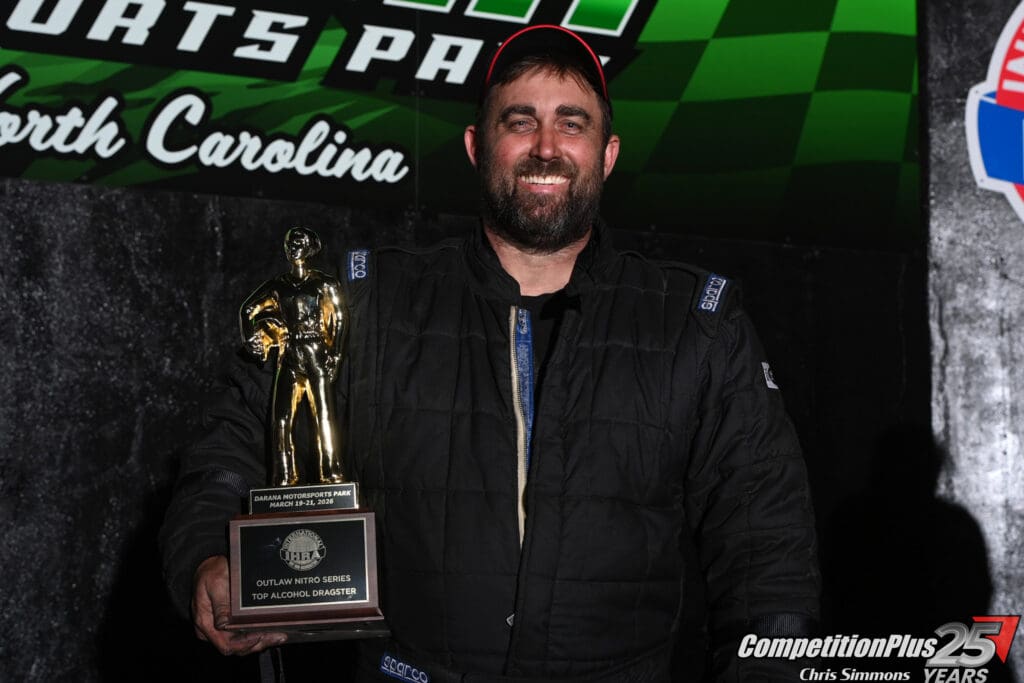
MCPHILLIPS RECONNECTS WITH HIS IHRA ROOTS IN WIN – Rich McPhillips Jr. converted qualifying consistency into a historic breakthrough Saturday night at Darana Raceway Park, capturing his first IHRA Top Alcohol Dragster victory. The win came at the IHRA Outlaw Nitro Series opener at the track formerly known as Galot Motorsports Park.
McPhillips secured the No. 4 provisional position in the opening qualifying session with a 3.552-second pass at 223.80 mph. He improved slightly in the second session, posting a 3.547 at 225.11 mph to lock in the No. 6 starting position for eliminations.
His strongest performance of the weekend came in the opening round of eliminations. McPhillips set a new track elapsed-time record with a 3.459-second run at 231.04 mph to defeat Joey Severance.
The record-setting pass established early momentum for a program seeking its first IHRA Ironman. McPhillips followed with a semifinal victory over Jackie Fricke, posting a 3.477 at 228.61 mph.
He completed the sweep with a 3.493-second run at 229.78 mph in the final round to defeat Jamie Noonan. The performance marked McPhillips’ third IHRA final-round appearance, the most by any Top Alcohol competitor.
“You can’t explain what it means to win,” McPhillips said. “When the scoreboard lights up, it’s a great feeling.”
The victory carried additional significance given McPhillips’ family history in the sanctioning body. While the 2026 win marked his first Ironman as a driver, he was previously part of an IHRA victory in 1989 when his father, Rich McPhillips Sr., served as car owner and crew chief for Alcohol Funny Car driver Peter Gallen.
McPhillips Sr. later captured his own Ironman from the driver’s seat in 2010 at Grand Bend, Ontario, competing in Pro Fuel Dragster. The generational connection added emotional context to the weekend’s milestone.
“The great thing about running eighth mile is you’re able to see who wins,” McPhillips said. “I have to thank all of my guys – Kenneth, my Pop, Larry, Earl and Bill.”
Despite a short-handed crew, the team maintained consistent performance throughout eliminations. McPhillips emphasized the collaborative nature of the effort in achieving the victory.
“We were short crew guys and they all stepped up,” McPhillips said. “This is a team effort, and it feels good to finally get a trophy again.”
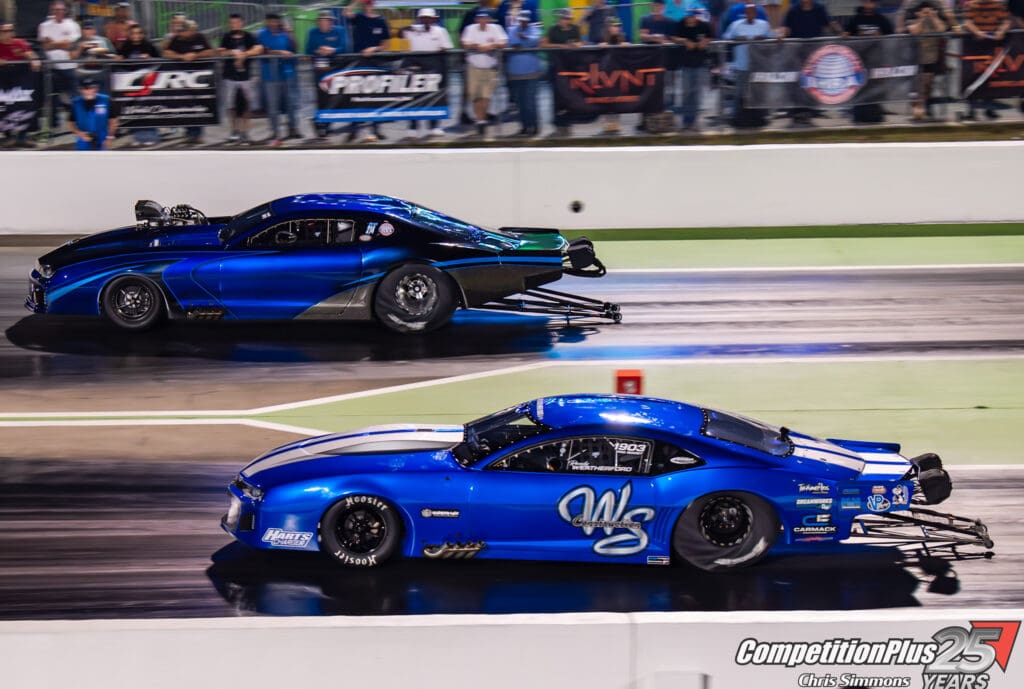
HENSLEY TAKES HOME OUTLAW PRO MOD – First-time finalist Cam Hensley made the most of his first money run, stopping Randy Weatherford in the final round of the Outlaw Pro Modified division.
Hensley’s road to the winner’s circle began with victories over Brandon Pesz, Frankie Taylor, and Jason Scruggs.
“We just came here to test and have fun,” Hensley said. “Didn’t make a run in this car until Q1 and just got used to it and we just kept picking on it and got some luck on our side and We pulled out the win.
“Our motto with our team is we always have to have fun,” Hensley added. “If we’re not having fun, we’ve got to stop spending the money and quit.
At the end of the day, yeah, we work hard, we want to win races, but you still have to have fun, and that’s what it’s all about.”
For his part, Weatherford scored wins over Jacinto Santos, Paul Gibbs and Chevy Reaves to reach the final round.
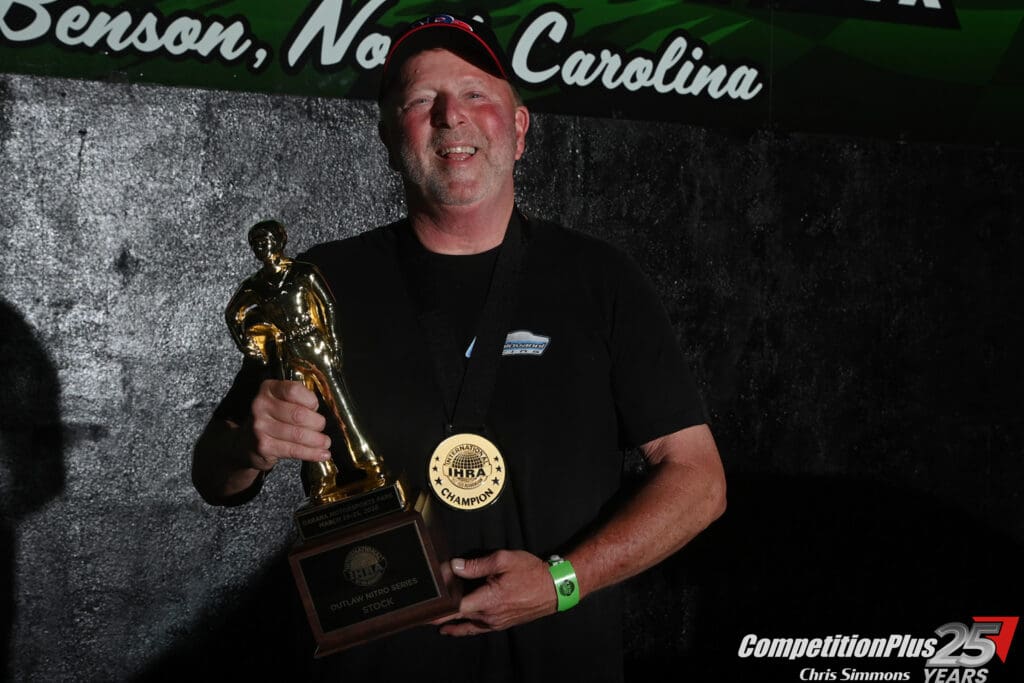
FLETCH SEALS THE DEAL – Sportsman drag racing legend Dan Fletcher proved that regardless of what letter is in fromnt of the Hot Rod Association that he can win.
“I’ve been fortunate enough to win a couple of them,” Fletcher said. “I haven’t won an IHRA race in a while, but it’s great to be here at Golott.
[Durana Motorsports Park] is actually my local home track and I’m just super proud to get one. Pretty awesome.”
Fletcher, who first raced IHRA in 1995, grabbed a .008 on final round opponent Strickland and raced him to the stripe and taking home the win.
Fletcher was +.012, 6.928, which coupled with the reaction time was enough to beat Strickland’s .030 reaction time and .014, 7.356
The rest of the sportsman winners included Jay Kirk (Top Sportsman), Joesph DiPasquale (Top Dragster). Jaymes Rawlings (Super Stock), Mitchell Harkey (Quick Rod), Keith Mayers (Super Rod)
QUALIFYING NOTEBOOK – RECORDS FALL IN FAST FRIDAY SEASON OPENER

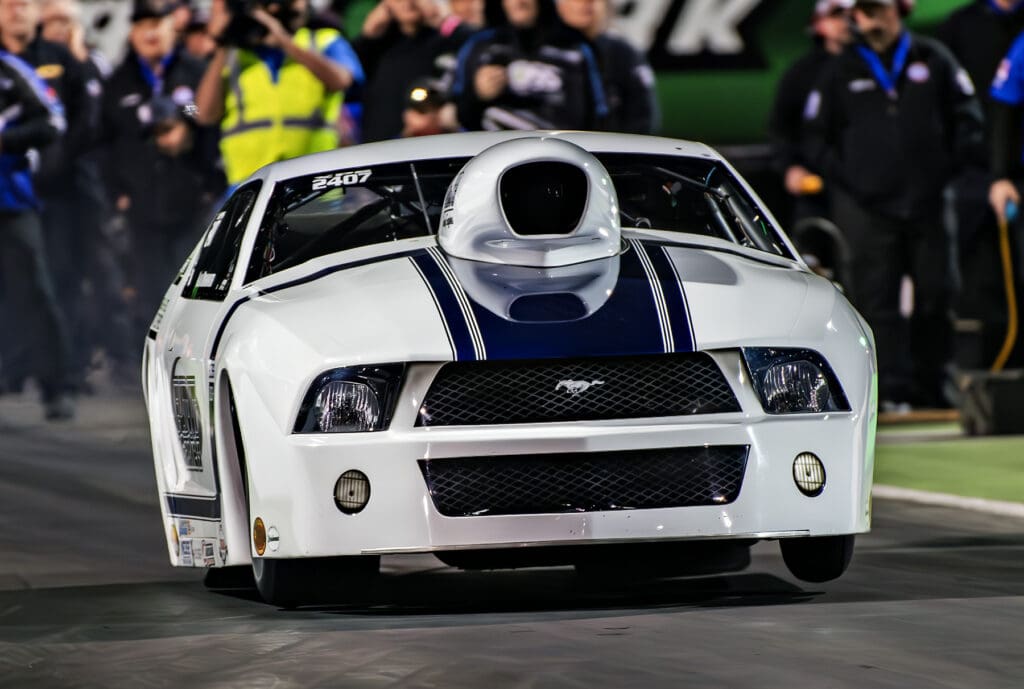

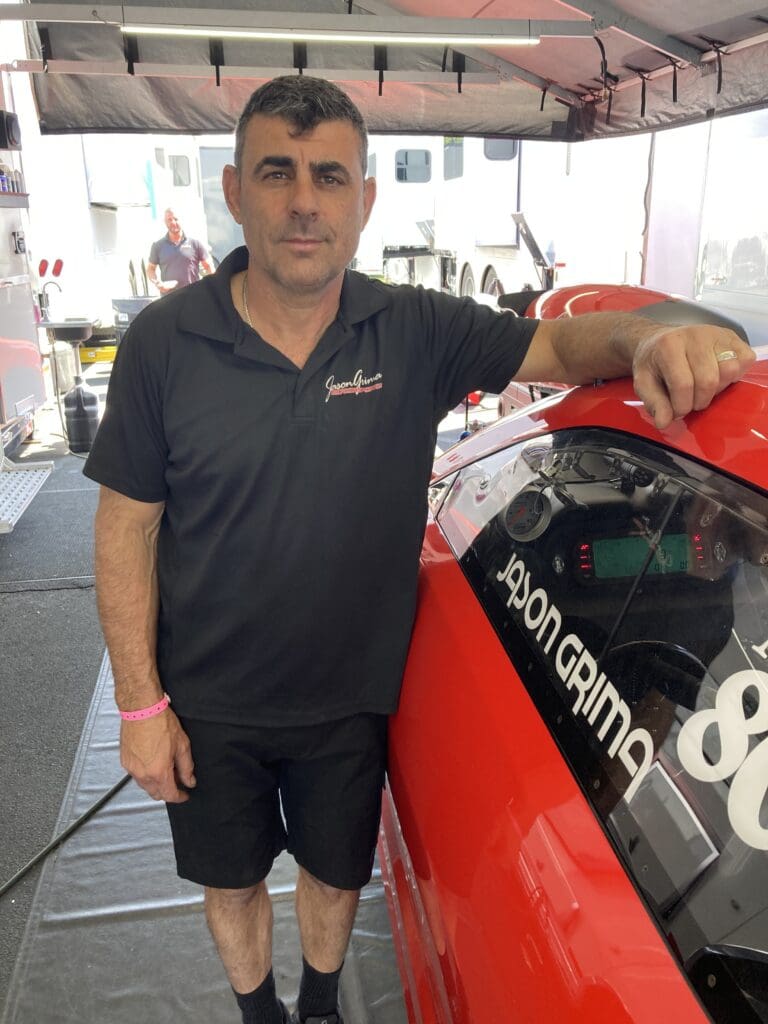
7 – GOOD DAY MATE! – Never let it be said that 2013 Australian Pro Stock champion Jason Grima isn’t maximizing his time racing in the United States. The veteran racer has shifted focus once again, trading his recent NHRA Competition Eliminator ride for a Mountain Motor Pro Stock entry in his IHRA debut.
Grima, who claimed victory last season at the In-N-Out Burger NHRA Finals in Competition Eliminator, said the transition into the larger-displacement category has been both demanding and eye-opening. His introduction to the car came quickly after securing the turn-key package earlier this year.
“Well, it’s going okay,” Grima said. “We put our eyes on this car, the first time was March 3. We’ve tested a few days because weather was not real kind to us and stuff, but had a few electrical gremlins in the car that we had to iron out.”
The adjustment process has centered on dialing in new systems and adapting to a significantly different driving experience. Even minor changes, he noted, have been critical in gaining comfort with the car’s performance characteristics.
“Now I’ve got a shift light so we can go out and run,” Grima said.
Grima’s Mountain Motor effort is powered by an engine package from 3V Performance. He described the purchase as a complete, ready-to-race program that allowed him to move into the category without the extended build process many competitors face.
“This motor was built by 3V,” Grima said. “Tom Vigue from 3V Performance. So I bought the car, turn-key package.”
The car’s ownership lineage includes previous involvement with noted Pro Stock competitor Richard Freeman before passing through an additional owner prior to Grima’s acquisition. That background provided confidence in the equipment’s pedigree, even as the on-track experience required adaptation.
“He didn’t race the car. He bought it off Richard Freeman and then I bought it off him,” Grima said.
The most striking difference, according to Grima, has been the transition from traditional Pro Stock powerplants to the massive displacement of Mountain Motor machinery. The contrast in performance has reinforced the category’s reputation for raw intensity.
“It was different,” Grima said. “It was balls in your hand.”
After years campaigning a 400-cubic-inch small-block combination, Grima now finds himself behind the wheel of an 824-cubic-inch engine package. The step up in power has delivered both a learning curve and renewed excitement as he establishes his footing in IHRA competition.
“But this thing’s an animal,” Grima said. “They’re animals.”
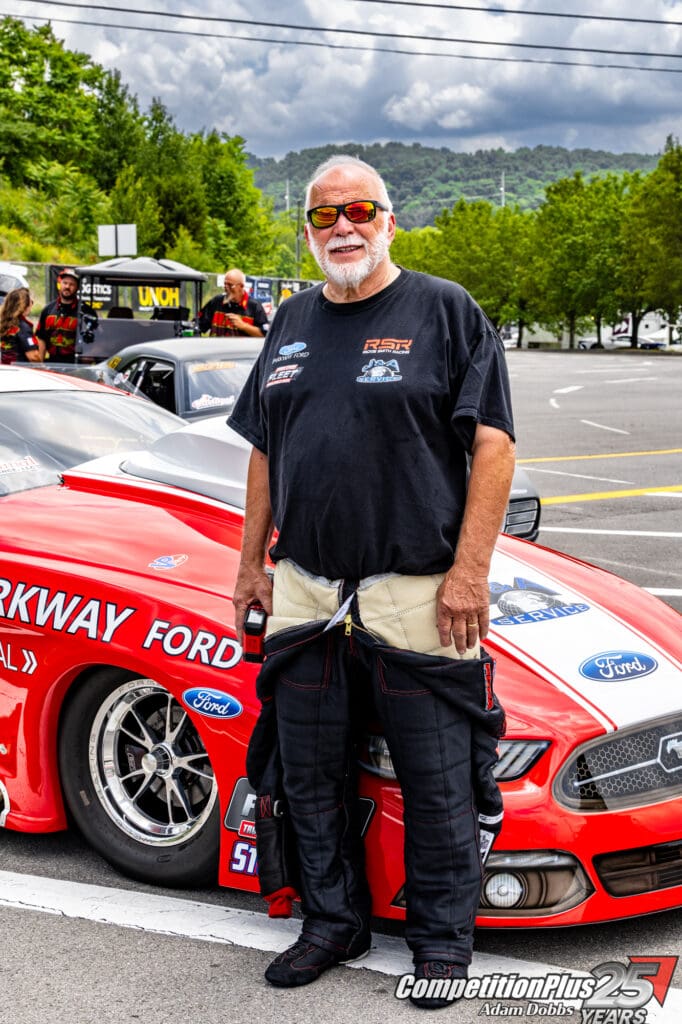
8 – THE HOME FOR DISPLACED FX CARS – “So this is where Factory X cars end up at now.
“That’s it. That’s the only spot we got.”
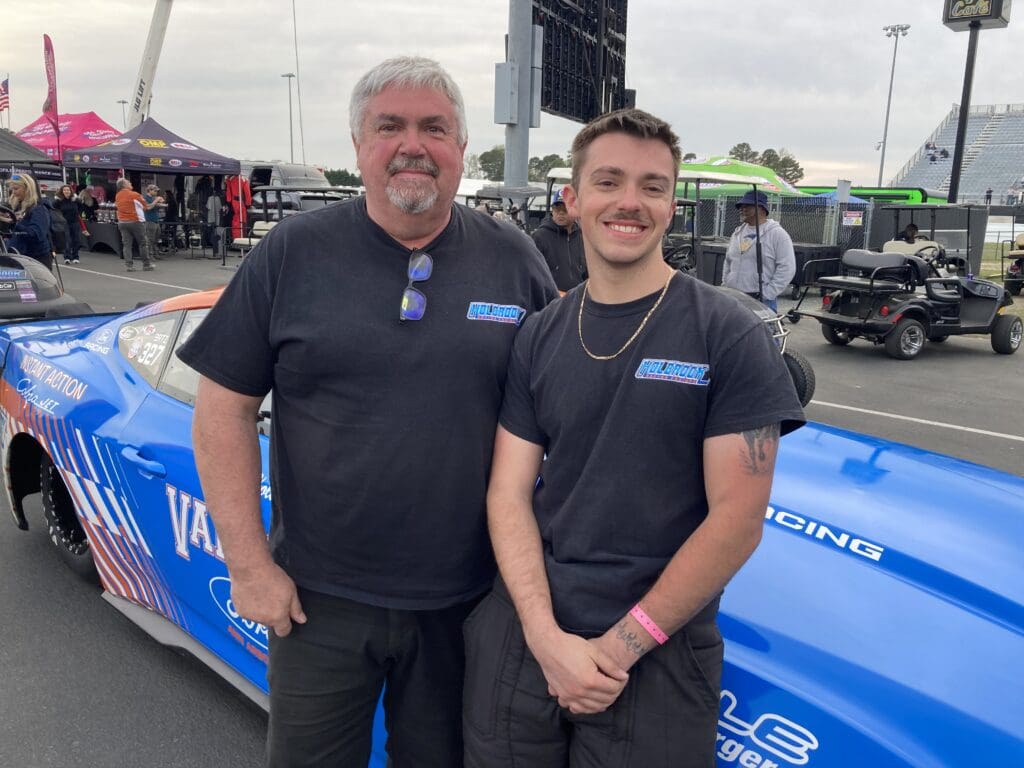
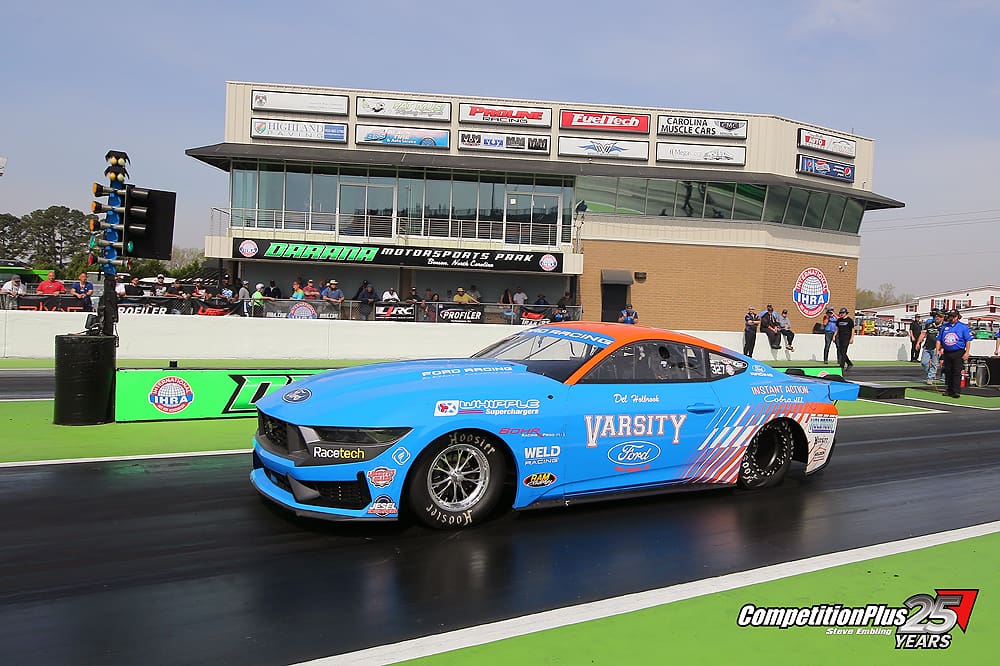
For Chris Holbrook, the realization summed up a growing reality for teams navigating the shifting structure of heads-up drag racing. The veteran IHRA racer has found a new home for his program in the emerging Small Tire Bratz class, a category built around small tires and open rules that has become a refuge for displaced Factory X machinery.
“Well, it’s a 28×10.5 tire and pretty much rules are all open, but you got to have steel roof recorders,” Holbrook said. “So we found somewhere for our FX car.”
The move represents a return to familiar territory for Holbrook, whose career traces back to early IHRA competition. His past success includes a championship run in 1999, a milestone that frames his perspective as he helps guide the next generation.
“We started in ITRA years ago and it was fun then,” Holbrook said. “And I tell you what, it’s a lot of fun now.”
The program now centers on his son, Del Holbrook, who has taken over driving duties as the team recalibrates its competitive direction. The transition to the Small Tire Bratz class followed a challenging previous season that forced the team to reassess its long-term path.
“I’m very excited,” Del Holbrook said. “I mean, we struggled with this car all last year, and Trey shut us down, so we found a class, finally got him to switch to a small tire where we should be.”
Chris Holbrook believes his son’s development behind the wheel reflects both maturity and a growing understanding of racecraft. The adjustment has been noticeable in both performance and approach.
“He’s advanced because he listens and he’s kind of matured now,” Chris Holbrook said. “He just don’t get in there and stab the gas. I mean, he’s focused, more focused.”
Support from Ford has further reinforced the program’s direction as the team settles into its new competitive environment. Holbrook views the partnership as a stabilizing influence after a period of uncertainty.
“And Ford’s come on board and they’re going to help us over here also,” Chris Holbrook said. “So it’s a good thing.”

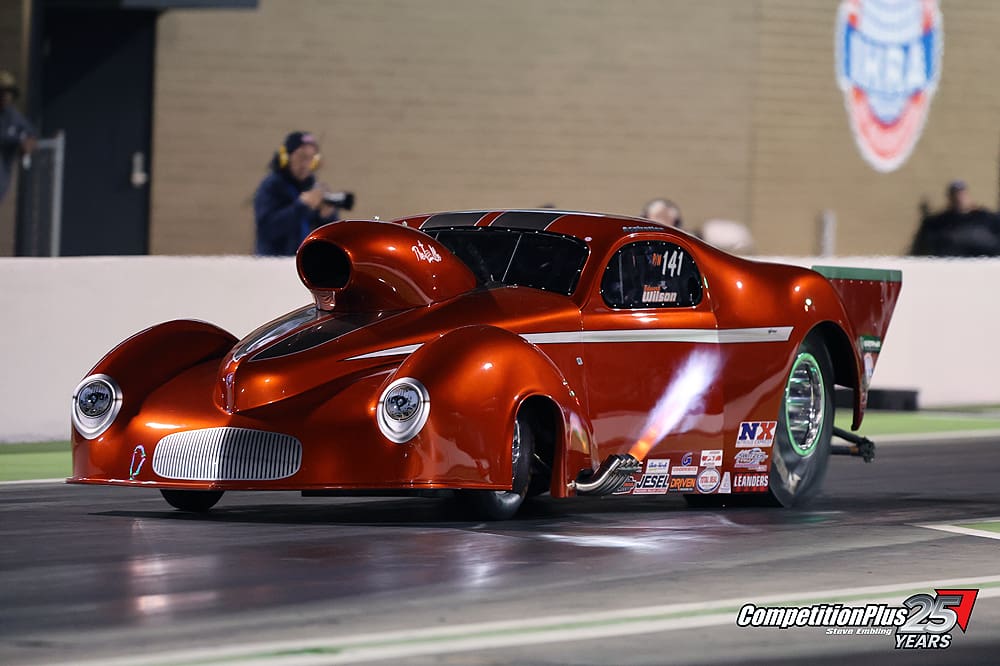
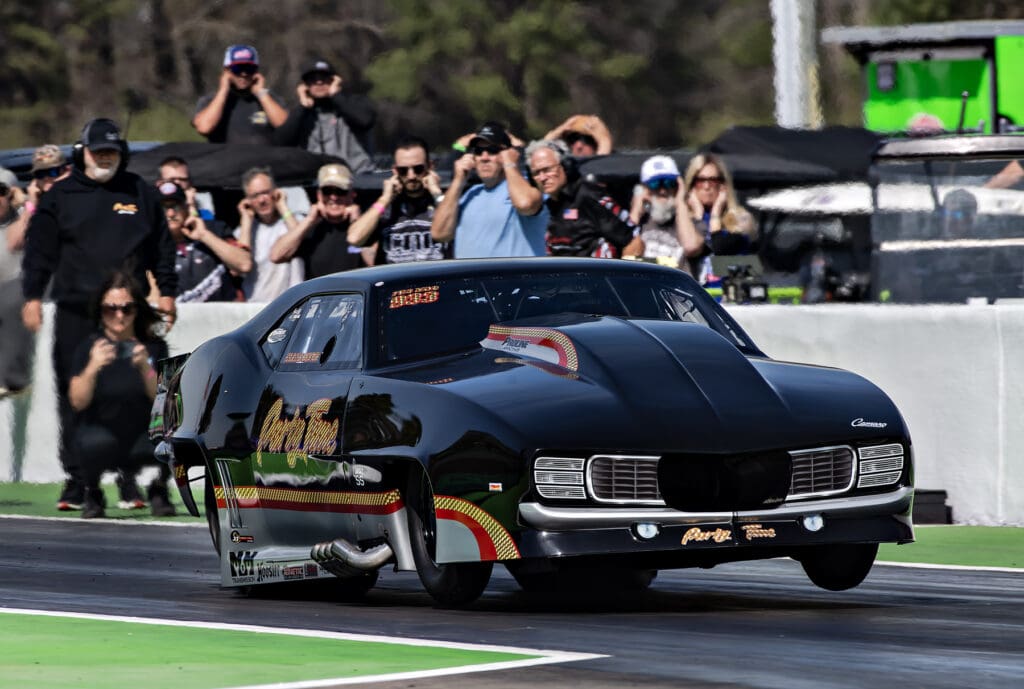
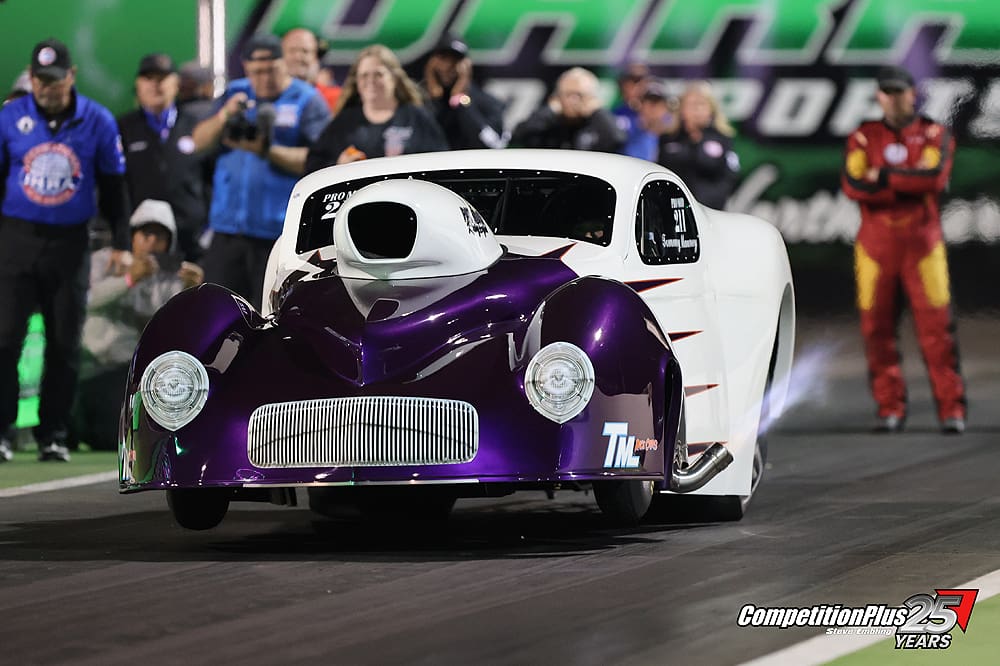
9 – AN UNSUNG PIONEER – If the drag racing world ever compiled a full accounting of Pro Modified pioneers, Ed Wilson’s name might not appear near the top. That reality has never bothered the understated veteran, who insists personal accomplishment has always outweighed public recognition.
“I’ve never been a loud person,” Wilson said. “To me, I can win and not win the race. When I come and make an accomplishment, I go home a winner.”
Wilson’s early exploits in the Top Sportsman Quick Eight era at Shuffletown Dragway helped define the raw, experimental spirit that later shaped modern Pro Modified racing. Competing with smaller engines and fewer resources, he carved out a reputation as a dark horse who relied more on ingenuity than funding.
“I’ve always probably been the smallest pony out here,” Wilson said. “Even back then guys had 632s, 615s, 672s. I had a little 523 with one nitrous system.”
His approach was never rooted in engineering theory or corporate backing. Instead, Wilson credited faith, persistence and a lifelong love of race cars as the driving forces behind his longevity.
“I tell people I can’t do nothing,” Wilson said. “I didn’t give myself the abilities to do what I’m doing. I feel like God’s just shined on me with blessings.”
That mindset carried into his most recent performance, where Wilson produced what he described as the best run of his career. The pass included a dramatic wheelstand that forced officials to determine how the car tripped timing beams due to the front end’s height.
“Well, the front end was so high it couldn’t have hit the front end, so it had to trip further back on the car somehow,” Wilson said.
Despite decades in the sport, Wilson maintains the humility of a grassroots racer who built and maintained his own equipment out of necessity. Every achievement, he said, carries added meaning because of the obstacles faced along the way.
“This is a miracle for somebody like me to be here competing against these guys,” Wilson said. “Today, I’ve already won.”
For Wilson, the measure of success remains unchanged. Recognition may come and go, but the satisfaction of competing on his own terms continues to define his legacy.
10 – THE FUEL ALTERED CRASH – Chuck Loftin left the IHRA season opener with more shaken pride than physical injury after a dramatic Fuel Altered crash halted competition for nearly an hour. The veteran driver said an unexpected oil failure blinded him moments after launch, leaving little option but to hold on as the car veered out of control.
“Car took off good … and all of a sudden I couldn’t see nothing,” Loftin said. “Oil got in my face, and I just held on for the ride.”
The incident occurred shortly after the initial hit, when the car appeared stable before a mechanical failure escalated into a dangerous situation. Loftin said the team later determined an internal engine issue triggered the chain reaction that ultimately coated him in oil.
“It was like an oil iron or something broke,” Loftin said. “But once we figured out, it leaned a piston out and burned up, pan pressure and oil got on me and I went for a ride.”
Track workers quickly responded as the damaged altered came to a stop, prompting a lengthy cleanup that temporarily halted the event’s momentum. The delay underscored both the volatility of nitro-powered exhibition machinery and the inherent risks drivers accept each time they stage.
Despite the severity of the incident, Loftin exited the car under his own power and later downplayed the physical toll. He acknowledged the emotional impact, however, noting the crash was not how he intended to make headlines at the season opener.
“Oh, yeah,” Loftin said when asked about his hurt pride.
Loftin, a longtime presence in exhibition-style nitro competition, said his focus now shifts toward rebuilding the car and restoring confidence before the next outing. He added that he hopes future attention centers on performance rather than survival.
“No, we want to change that title for sure,” Loftin said.