
When Wally Parks founded the NHRA in 1951, he literally built what would become the largest and most successful drag racing organization and sanctioning body in the world with his bare hands.

Along the way, Parks had a lot of helping hands from others who believed in his vision for what drag racing should be, taking it from its dangerous street racing roots to organized and far safer purpose-built facilities that would come to be known as dragstrips.

Two of the most important hands that helped Parks build NHRA belonged to Steve Gibbs, who started as an ad sales manager for National Dragster magazine in 1969 after a three-year stint as manager of fabled Irwindale Raceway and Fremont Raceway.

Gibbs impressed so much in his first six months on the job with NHRA that Parks made arguably the most important promotion of his tenure at the helm of the organization, naming Gibbs as NHRA’s first-ever competition director (eventually adding vice president duties).

It was a role that would see Gibbs ultimately oversee over 400 national events as the sport’s chief arbiter and referee, as well as one of the chief advocates to make the sport faster, better and safer.

Throughout Gibbs’ nearly 50 years of service to the NHRA, he was always a hands-on leader.

“I worked hand-in-hand with Wally (who died on Sept. 28, 2007, at the age of 94),” Gibbs told CompetitionPlus.com recently. “After all those 400-plus events, I’d call Wally, tell him how things went, talk about things. We had as close a working relationship as anybody in the sport. I mean, Wally and I were joined at the hip basically for a lot of years.”
Parks left his job at Hot Rod Magazine to form the NHRA in 1951. When he hired Gibbs in 1969, they formed a duo that took the sport into incredible heights within its professional ranks, but also its grassroots sportsman wing, with global membership in the organization reaching well into the six-figure range at its highest point.

And that brings yet another reference to hands – or in this case, Gibbs’ fingers.

“It’s gratifying to know that a lot of the stuff that NHRA has done to last this long, I’ve got my fingerprints on,” the Southern California resident said humbly. “There was no series like there is today when we started.”

Parks’ vision of what he felt Gibbs could do for the sport was nothing short of sheer genius, basically giving Gibbs the keys to take NHRA from a primarily regional Southern California organization and turned it into a truly national series.

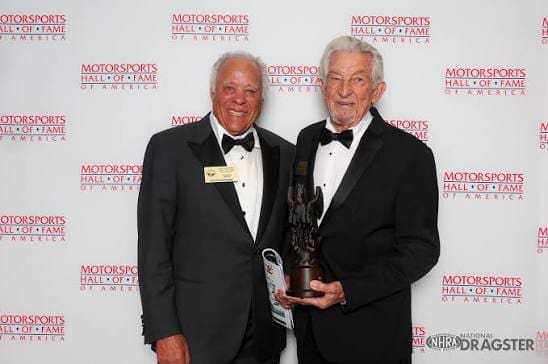
“Wally Parks started NHRA and if it wasn’t for Steve, Wally’s right-hand guy, in my opinion NHRA wouldn’t be where it’s at today,” legendary racer and team owner Don “Snake” Prudhomme said earlier this year when he and fellow NHRA legend Darrell Gwynn presented Gibbs for one of the highest honors of his career: induction into the revered Motorsports Hall of Fame of America (MSHFA).

Added Gwynn, “For decades, (Steve) was a man who served as the glue and ‘The Racer’s Friend’ (Gibbs’ nickname within the sport) for so many years. … When I was injured 36 years ago in England, Steve was the first person to come visit me. Steve’s official title with the NHRA was Competition Director, but in reality he was so much more than that.

“In a single word he was universally considered ‘fair.’ He had unfailing credibility and impartiality. His ears were the ultimate sounding board and safe place for the issues and concerns of the day.”


Prudhomme agreed with Gwynn about Gibbs’ unbiased and impartial persona during his time with NHRA.

“You may hate him, you may not like his decisions, but when you sat back and looked at it, he was being fair to everybody,” Prudhomme said. “He wasn’t favoring anybody. He’d go head to head with you, it didn’t matter if it was (John) Force or anybody else like that.

“He was always fair. That was the No. 1 thing. They should put that on his tombstone, they really should. I mean, if it wasn’t for him and Wally, NHRA today may not even be around or it wouldn’t be as big as it is.”

In a sense, Gibbs performed his duties wearing an iron glove, but one with velvet lining. He had numerous heated arguments with drivers and car owners, but his word was the final say. And even if drivers wound up losing, they usually came away from the confrontations with a clear understanding of why Gibbs ruled the way he did.

But Gibbs always kept an open mind, and if a driver presented a logical opposing viewpoint, it was not beneath Gibbs to give the driver the benefit of the doubt.

That’s exactly what Gwynn meant when he called Gibbs “fair.” Gibbs commanded the second-greatest amount of power in the sport for nearly 25 years, but his fairness also generated the same amount of respect that Parks received.

“I owe everything to Wally,” Gibbs said. “When Wally asked me to go to work, it turned a hobby into a career. I love the sport. I love the behind-the-scenes stuff. It’s something to be out there and do your best with. A lot goes on to make it all happen, and I was pretty good at it.”
 

Prudhomme is one of Gibbs’ closest and longest friends in the sport. But while the pair had their share of run-ins over the years, any anger or hard feelings typically evaporated by the next day.

“We went nose-to-nose quite a few times,” Prudhomme said with a chuckle. “We MF’d each other for a long time. Sometimes, he’d take it real hard but that’s because he would carry the weight of NHRA on his shoulders so much.

“He was right out there in the midst of it all. He was like a conductor. I’m serious. I’m thinking to myself, man, this guy really, really likes what he’s doing.

“I’ve known him since probably the early ‘60s and he’s one of my closest and dearest friends. I just love the guy.”

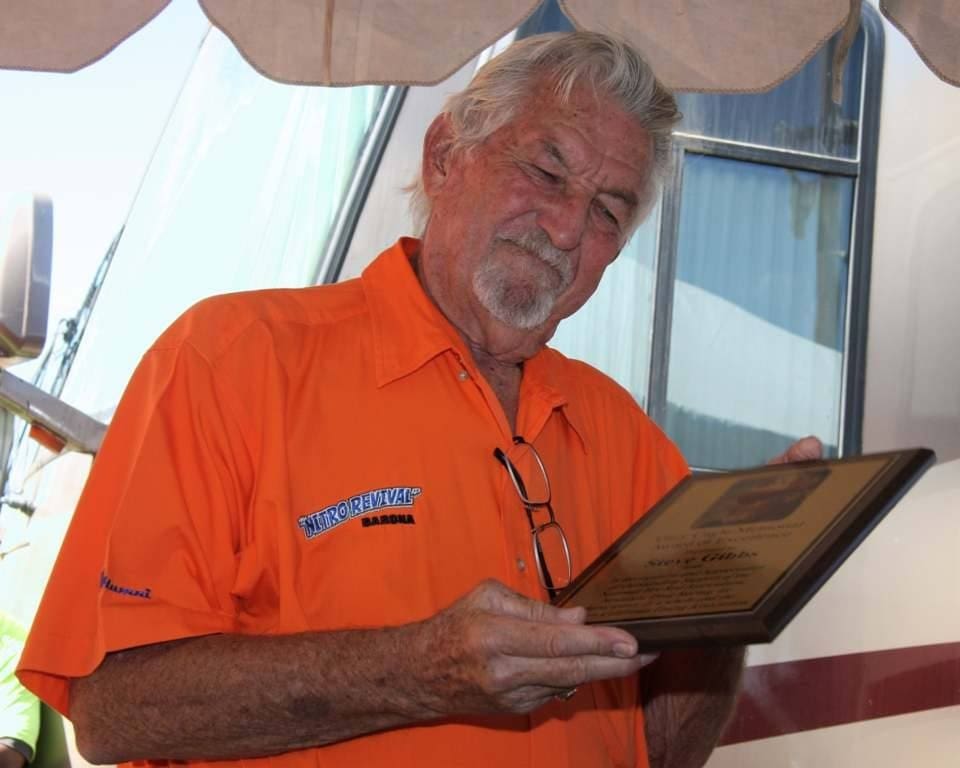
STEVE GIBBS: DRAG RACING FAN

Now that he’s a full-time fan, Gibbs still attends a handful of races each year, primarily the two annual events in Pomona, less than a half-hour from his home.

“I follow it on NHRA.tv,” the 86-year-old Gibbs said. “It’s not that I’m not interested in it, but at this age, I’m in good shape for this age, basically and I’m just doing other things. As I like to say, I’m an interested observer.”

Being an interested observer allows Gibbs to look a bit more impartially at the future of the sport, rather than as an NHRA employee or consultant. When asked what he envisions for the future of the sanctioning body and the sport as a whole, Gibbs is quite candid and admittedly concerned.

Among topics that are top of mind:

* The number of racetracks that have either lost races or shut down in recent years like Denver’s Bandimere Speedway – and with the likelihood of more still to come.

“You could argue is there going to be enough ballparks around the country to have a game,” Gibbs said.

* Constantly increasing operational costs and cost containment issues.

“I’m concerned about the cost of running these cars,” he said. “Are you going to have enough guys? We can’t fill the fields up right now. So is it at some point that they’re going to have to make the decision to cut the field size back? I don’t know.”

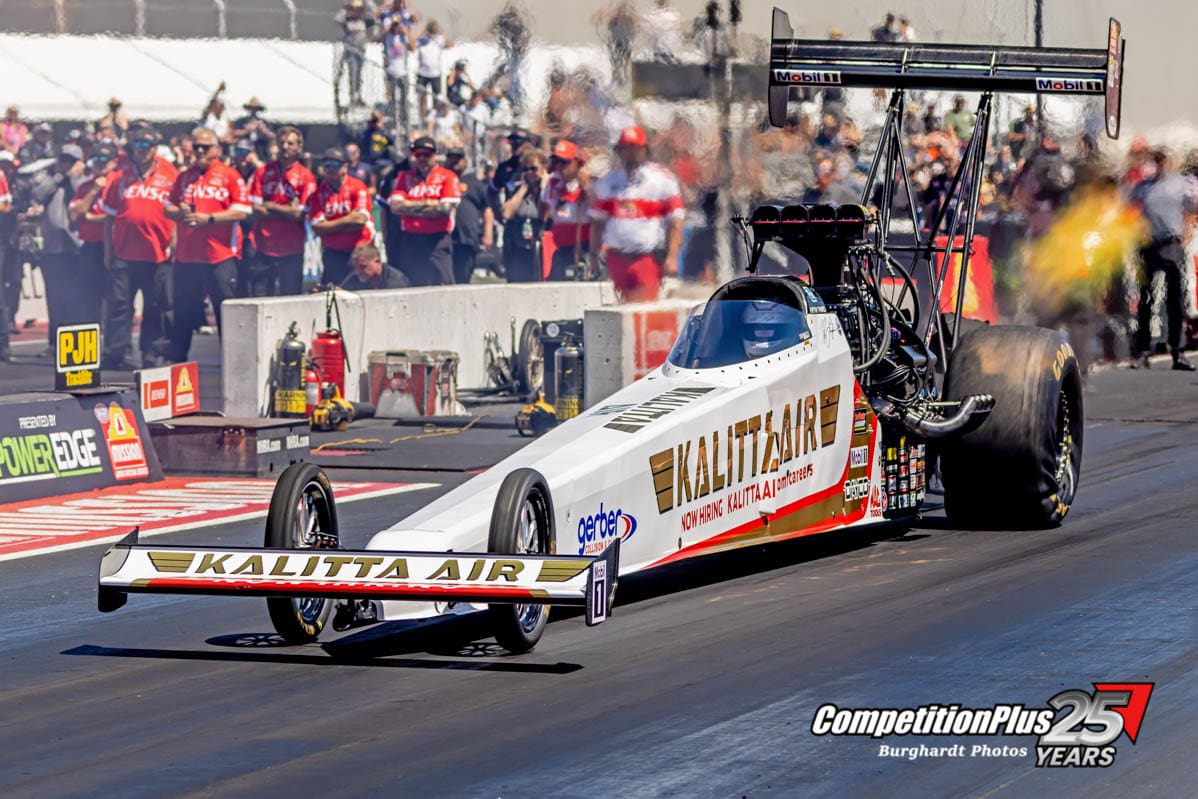
* It’s been 18 years since NHRA shortened dragstrip lengths for Top Fuel and Funny Car from 1,320 feet to 1,000 feet after the tragic crash that killed Scott Kalitta in 2008. And NHRA is still reeling from the fallout of the distance shortening.

“When NHRA cut the length from 1,320 to 1,000 feet, they lost a lot of fans, traditional fans,” Gibbs said. “There’s a lot of tradition in NHRA. A lot of people said drag racing is a quarter-mile, it’s not 1,000 feet. I talked to some of the management in NHRA and they said they actually felt a big impact at the (admission) gate when they made the decision to go to 1,000 feet.”
Earlier this year the now parked IHRA changed its track length to just an eighth-mile, something NHRA has also considered because of the ever-increasing speeds that dragsters and Funny Cars are reaching these days, routinely surpassing 340 mph in 1,000 feet.

God forbid, if another star loses his life during a 1,000-foot run, could NHRA be forced into the same position again to further cut down the distance to perhaps an eighth-mile? If that happens, while safety is obviously paramount, attendance could take yet another major decrease – which could ultimately spell disaster for the sport.

“If that decision has to be made if some tracks can’t handle even 1,000 feet now, it’ll have an impact on fans,” Gibbs said. “I don’t know. My crystal ball isn’t that clear. Will fans accept eighth-mile racing with short fields (of less than the traditional 16-car fields)?

“It’s hard to say that’s a major motorsports event then. You’ve gotta sell what you’ve got. How good a job can they do in selling that?”

* The cost of racing isn’t the only issue NHRA is dealing with. For as much as racing costs go up, NHRA has to pass some of those costs on to the consumer, meaning ticket prices must increase to keep pace with expenses and worthwhile race purses to attract competitors.

And if that is the case, will the cost of attending a race eventually price itself out of even more fans’ budgets or force those same fans to watch racing on TV or online, rather than enjoy the five-sense aura of being at a track in-person?

“The cost of getting in to watch the races is another factor, too,” Gibbs said. “When I started going to drag races, it was primitive. It was a buck or two bucks to get in, plus 50 cents for a pit pass.

“Nowadays, (drag racing) is like everything else. You go to Disneyland, the movies, to a play, whatever, and you’re talking 100 bucks just to get in the door. (As a result) you may go to a race only once or twice a year. You don’t go out there every weekend.

“There are some parts of the country where you’re so fortunate enough to have a good functioning drag strip with good local programs that almost resemble what it once was like in the ‘60s and ‘70s. But what’s the last brand new racetrack you saw built? I can’t think of it right now. It may be 20 years ago. Plus, you’ve got the environmental concerns that never get any easier. There’s a resistance from neighbors, from the noise and stuff. It’s a tough sell. I wish it well.”

* One other major concern is TV coverage after this season. The current contract with FOX Sports expires at the end of this season. Reports surfaced last week that FOX may be offering only a significantly scaled back TV package next year, if not completely eliminating coverage.
Those same reports indicated that with little, if any interest in NHRA from other TV networks on the table, telecasts may have to go the streaming TV route with FloRacing. If that happens, NHRA stands to potentially suffer yet another big hit if fans don’t want to pay subscription fees to watch on Flo or other streaming outlets.

“If it happens, that’s going to be a huge loss for NHRA,” Gibbs said. “That’s not good news.”

* If NHRA goes to a strictly streaming TV package, there undoubtedly will be a trickle down effect when it comes to sponsorships and advertising.

What FOX could charge for commercial time – or even the exposure it offers – would likely cause a major drop in ad rates for streaming platforms. In turn, that could then possibly cause companies to reconsider their ad or sponsorship spending, impacting not only the NHRA as a sanctioning body, but also sponsorship for cars.

For example, let’s say a team gets $2 million per year from a primary sponsor now. But if TV coverage moves solely to streaming or smaller outlets, companies that put their logos on the sides of race cars may decide the return on investment just isn’t worth it and could potentially pull its funding and involvement in the sport.

“The payoff is that with television time, that’s where the guys can justify their sponsorship,” Gibbs said of teams. “You sell a sponsorship, you need to deliver the kind of exposure you’re going to get.

“I don’t think losing FOX will have a financial impact in NHRA directly other than it’s going to really hurt in terms of keeping the sponsored race cars out there. Plus, there’s family awareness. In some ways, it’s easier to sit home and watch it than it is to go out to the racetrack. That’s a big part of the sport.”

 

KEEPING HIS HAND ON DRG RACING’S PULSE

While Gibbs’ official ties with NHRA ended with his retirement in 2017, don’t think he retired from drag racing. Au contraire. Even while he was still with NHRA, Gibbs was one of the founders of one of the most popular “cacklefests”, the California Hot Rod Reunion, which began in Bakersfield, Calif., in 1992.

In 2017 and drawing upon Gibbs’ love of the Golden Era of drag racing, featuring vintage Top Fuel Dragsters, Funny Cars and Gassers, he and his daughter Cindy began the extremely popular “Nitro Revival”, which now runs in conjunction with the Hot Rod Reunion. This year’s joint event will be held October 23-25 at Famoso Dragstrip.

“Nitro Revival is a nostalgia reunion, get-together, feel-good event,” Gibbs said. “We want people to come out and try to relive a little of the past with the sport, and celebrate these guys that are still around.”

After 25 years as competition director, and tiring of the constant travel, Gibbs segued to two other roles that once again played significant parts of the NHRA – and particularly its colorful history.

In 1990, while closing out the last few years of his role as VP of Competition, Gibbs formed the NHRA Historical Services department. Again, it was a perfect fit for him due to his love for the history of the sport.

And then came the crowning glory of Gibbs’ nearly half-century career with the NHRA, building the NHRA Motorsports Museum and becoming its first director in 1998. The museum sits on the edge of the grounds of the Los Angeles County Fairplex, home of In-N-Out Pomona Dragstrip, long-time host for the Winternationals and the season-ending and yearly championship-deciding NHRA Finals.

Although he retired yet again in 2003, Gibbs remained as a consultant to NHRA until 2017 when he finally ended his 48-year tenure with the sanctioning body.

MAINTAINING HIS EDGE

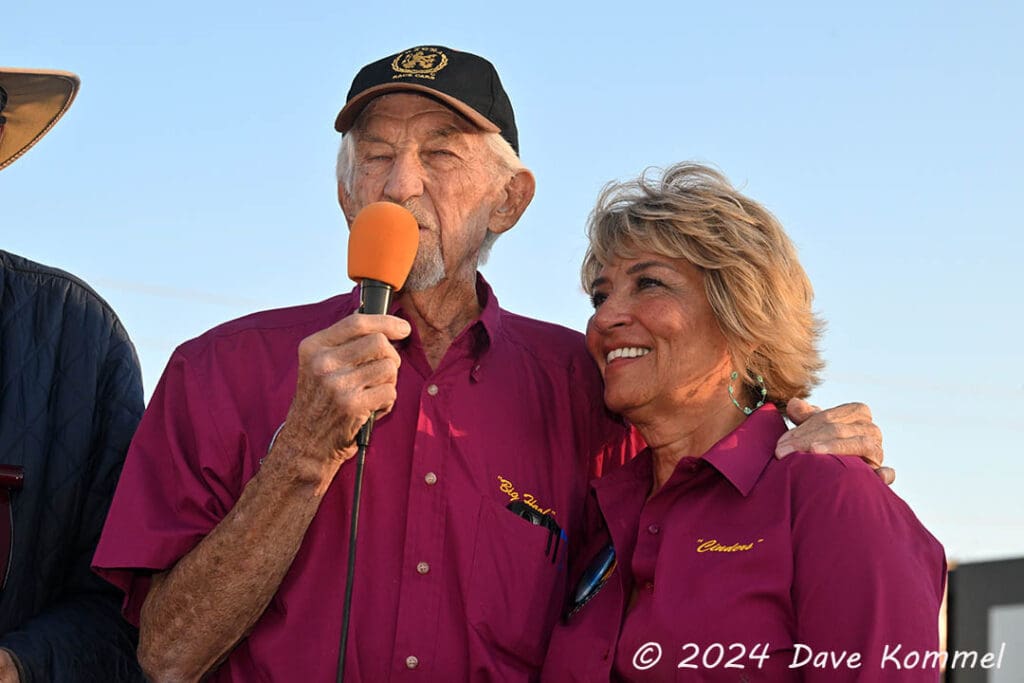
Even though he’s now an octogenarian, Gibbs remains sharp as a tack. He can vividly recall countless memories over his nearly 70 years as a fan of the sport, including the first drag race he ever saw in person – and one that holds a significant place in the sport’s history: in March 1959, the then-18-year-old Gibbs stood on the sidelines at Bakersfield Raceway (which became Famoso Dragstrip), watching 27-year-old “Big Daddy” Don Garlits make his first appearance in California.

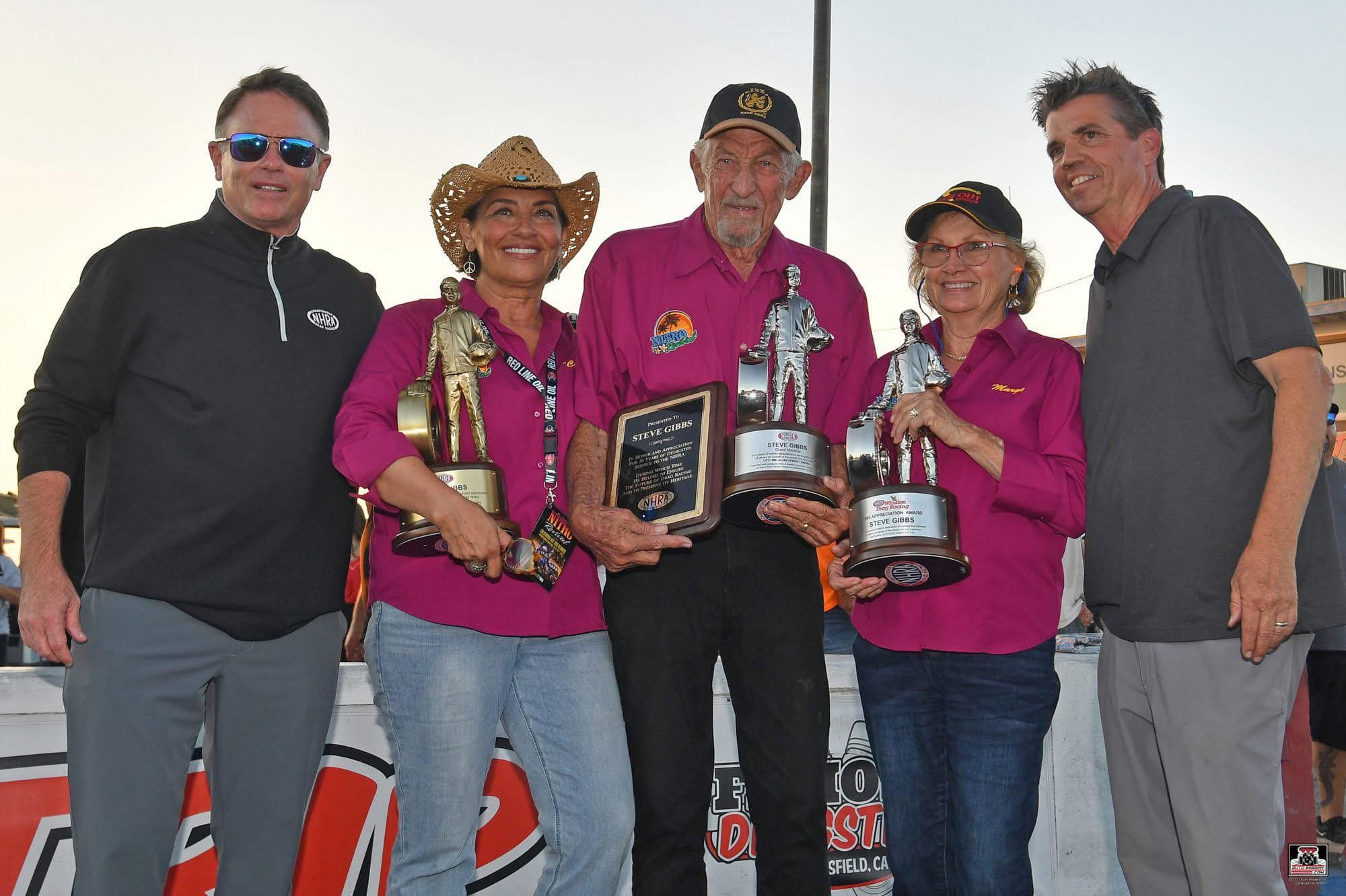
Gibbs’ induction into the Motorsports Hall of Fame of America earlier this year was the latest of countless honors the North Carolina native (moved with his mother to Southern California at the age of seven) has received over the years, including earning the NHRA Lifetime Achievement Award in 1995 and induction into the International Drag Racing Hall of Fame in 2006.

This March’s induction into the MSHFA made Gibbs the latest drag racing great to enter the Daytona Beach, Fla. pantheon, joining Joe Amato, Dale Armstrong, Raymond Beadle, Kenny Bernstein, Keith Black, John Buttera, Art Chrisman, Jack Chrisman, Austin Coil, Larry Dixon Jr., Ed Donovan, John Force, Don Garlits, Bob Glidden, Darrell Gwynn, C. J. Hart, Eddie Hill, Tommy Ivo, Bill Jenkins, Warren Johnson, Connie Kalitta, Chris Karamesines, Dick LaHaie, Dave McClelland, Ed McCulloch, Tom McEwen, “Ohio George” Montgomery, Shirley Muldowney, Paula Murphy, Don Nicholson, Danny Ongais, Wally Parks, Ed Pink, Don Prudhomme, Tony Schumacher, Don Schumacher, and Ronnie Sox and Buddy Martin.

“I was a fan who happened to make a career out of this,” Gibbs said during his acceptance speech. “I feel a little like Lou Gehrig and George Bailey (the Christmas classic movie, ‘It’s A Wonderful Life’). Tonight, I feel like the luckiest man on the face of the earth.”

Before he made drag racing his career, Gibbs went to college for a couple of years to originally be an artist and journalist. When asked how he’d describe himself if he had to write his life’s story, Gibbs once again displayed the humility he was known for.

“I’m fortunate,” he said. “I’m a blue-collar guy. I had a couple years of college, but I didn’t have a degree. I’m just a fan who somehow managed to get tangled up in something I love. Just kind of happened to land on this planet at just the right time and place. It took some desire on my part, some preparedness, just through interest in the sport, to be ready when that opportunity somehow showed up. It’s been a joy. I mean, my life has been good.

“I’m amazed that it was recently inducted into the Motorsports Hall of Fame. Referees, judges, you don’t get that kind of recognition. To have that bestowed on me was just staggering to realize you did your job well enough and enough people noticed that something like that could happen. It’s very humbling.

“All I can say is it’s been a good run. I’ve had a great life. I have a great family. Life has been good to me.
Drag racing has been just a huge, huge part of my life. The people, the friends, the experiences, some mostly good, some bad, some tragic. But that’s life. You just have to deal with it. I’m satisfied that I’ve left my fingerprints all over the sport.”


 

Share the Insights?

Click here to share the article.

ad space x ad space

ad space x ad space

Competition Plus Team

Since our inception, we have been passionately dedicated to delivering the most accurate, timely, and compelling content in the world of drag racing. Our readers depend on us for the latest news, in-depth features, expert analysis, and exclusive interviews that connect you to the sport’s pulse.

Sign up for our newsletters and email list.

This field is for validation purposes and should be left unchanged.
Name

AFTER WALLY PARKS, NO ONE SHAPED NHRA MORE THAN STEVE GIBBS

When Wally Parks founded the NHRA in 1951, he literally built what would become the largest and most successful drag racing organization and sanctioning body in the world with his bare hands.

Along the way, Parks had a lot of helping hands from others who believed in his vision for what drag racing should be, taking it from its dangerous street racing roots to organized and far safer purpose-built facilities that would come to be known as dragstrips.

Two of the most important hands that helped Parks build NHRA belonged to Steve Gibbs, who started as an ad sales manager for National Dragster magazine in 1969 after a three-year stint as manager of fabled Irwindale Raceway and Fremont Raceway.

Gibbs impressed so much in his first six months on the job with NHRA that Parks made arguably the most important promotion of his tenure at the helm of the organization, naming Gibbs as NHRA’s first-ever competition director (eventually adding vice president duties).

It was a role that would see Gibbs ultimately oversee over 400 national events as the sport’s chief arbiter and referee, as well as one of the chief advocates to make the sport faster, better and safer.

Throughout Gibbs’ nearly 50 years of service to the NHRA, he was always a hands-on leader.

“I worked hand-in-hand with Wally (who died on Sept. 28, 2007, at the age of 94),” Gibbs told CompetitionPlus.com recently. “After all those 400-plus events, I’d call Wally, tell him how things went, talk about things. We had as close a working relationship as anybody in the sport. I mean, Wally and I were joined at the hip basically for a lot of years.”

Parks left his job at Hot Rod Magazine to form the NHRA in 1951. When he hired Gibbs in 1969, they formed a duo that took the sport into incredible heights within its professional ranks, but also its grassroots sportsman wing, with global membership in the organization reaching well into the six-figure range at its highest point.

And that brings yet another reference to hands – or in this case, Gibbs’ fingers.

“It’s gratifying to know that a lot of the stuff that NHRA has done to last this long, I’ve got my fingerprints on,” the Southern California resident said humbly. “There was no series like there is today when we started.”

Parks’ vision of what he felt Gibbs could do for the sport was nothing short of sheer genius, basically giving Gibbs the keys to take NHRA from a primarily regional Southern California organization and turned it into a truly national series.

“Wally Parks started NHRA and if it wasn’t for Steve, Wally’s right-hand guy, in my opinion NHRA wouldn’t be where it’s at today,” legendary racer and team owner Don “Snake” Prudhomme said earlier this year when he and fellow NHRA legend Darrell Gwynn presented Gibbs for one of the highest honors of his career: induction into the revered Motorsports Hall of Fame of America (MSHFA).

Added Gwynn, “For decades, (Steve) was a man who served as the glue and ‘The Racer’s Friend’ (Gibbs’ nickname within the sport) for so many years. … When I was injured 36 years ago in England, Steve was the first person to come visit me. Steve’s official title with the NHRA was Competition Director, but in reality he was so much more than that.

“In a single word he was universally considered ‘fair.’ He had unfailing credibility and impartiality. His ears were the ultimate sounding board and safe place for the issues and concerns of the day.”


Prudhomme agreed with Gwynn about Gibbs’ unbiased and impartial persona during his time with NHRA.

“You may hate him, you may not like his decisions, but when you sat back and looked at it, he was being fair to everybody,” Prudhomme said. “He wasn’t favoring anybody. He’d go head to head with you, it didn’t matter if it was (John) Force or anybody else like that.

“He was always fair. That was the No. 1 thing. They should put that on his tombstone, they really should. I mean, if it wasn’t for him and Wally, NHRA today may not even be around or it wouldn’t be as big as it is.”

In a sense, Gibbs performed his duties wearing an iron glove, but one with velvet lining. He had numerous heated arguments with drivers and car owners, but his word was the final say. And even if drivers wound up losing, they usually came away from the confrontations with a clear understanding of why Gibbs ruled the way he did.

But Gibbs always kept an open mind, and if a driver presented a logical opposing viewpoint, it was not beneath Gibbs to give the driver the benefit of the doubt.

That’s exactly what Gwynn meant when he called Gibbs “fair.” Gibbs commanded the second-greatest amount of power in the sport for nearly 25 years, but his fairness also generated the same amount of respect that Parks received.

“I owe everything to Wally,” Gibbs said. “When Wally asked me to go to work, it turned a hobby into a career. I love the sport. I love the behind-the-scenes stuff. It’s something to be out there and do your best with. A lot goes on to make it all happen, and I was pretty good at it.”


Prudhomme is one of Gibbs’ closest and longest friends in the sport. But while the pair had their share of run-ins over the years, any anger or hard feelings typically evaporated by the next day.

“We went nose-to-nose quite a few times,” Prudhomme said with a chuckle. “We MF’d each other for a long time. Sometimes, he’d take it real hard but that’s because he would carry the weight of NHRA on his shoulders so much.

“He was right out there in the midst of it all. He was like a conductor. I’m serious. I’m thinking to myself, man, this guy really, really likes what he’s doing.

“I’ve known him since probably the early ‘60s and he’s one of my closest and dearest friends. I just love the guy.”

STEVE GIBBS: DRAG RACING FAN

Now that he’s a full-time fan, Gibbs still attends a handful of races each year, primarily the two annual events in Pomona, less than a half-hour from his home.

“I follow it on NHRA.tv,” the 86-year-old Gibbs said. “It’s not that I’m not interested in it, but at this age, I’m in good shape for this age, basically and I’m just doing other things. As I like to say, I’m an interested observer.”

Being an interested observer allows Gibbs to look a bit more impartially at the future of the sport, rather than as an NHRA employee or consultant. When asked what he envisions for the future of the sanctioning body and the sport as a whole, Gibbs is quite candid and admittedly concerned.

Among topics that are top of mind:

* The number of racetracks that have either lost races or shut down in recent years like Denver’s Bandimere Speedway – and with the likelihood of more still to come.

“You could argue is there going to be enough ballparks around the country to have a game,” Gibbs said.

* Constantly increasing operational costs and cost containment issues.

“I’m concerned about the cost of running these cars,” he said. “Are you going to have enough guys? We can’t fill the fields up right now. So is it at some point that they’re going to have to make the decision to cut the field size back? I don’t know.”

* It’s been 18 years since NHRA shortened dragstrip lengths for Top Fuel and Funny Car from 1,320 feet to 1,000 feet after the tragic crash that killed Scott Kalitta in 2008. And NHRA is still reeling from the fallout of the distance shortening.

“When NHRA cut the length from 1,320 to 1,000 feet, they lost a lot of fans, traditional fans,” Gibbs said. “There’s a lot of tradition in NHRA. A lot of people said drag racing is a quarter-mile, it’s not 1,000 feet. I talked to some of the management in NHRA and they said they actually felt a big impact at the (admission) gate when they made the decision to go to 1,000 feet.”

Earlier this year the now parked IHRA changed its track length to just an eighth-mile, something NHRA has also considered because of the ever-increasing speeds that dragsters and Funny Cars are reaching these days, routinely surpassing 340 mph in 1,000 feet.

God forbid, if another star loses his life during a 1,000-foot run, could NHRA be forced into the same position again to further cut down the distance to perhaps an eighth-mile? If that happens, while safety is obviously paramount, attendance could take yet another major decrease – which could ultimately spell disaster for the sport.

“If that decision has to be made if some tracks can’t handle even 1,000 feet now, it’ll have an impact on fans,” Gibbs said. “I don’t know. My crystal ball isn’t that clear. Will fans accept eighth-mile racing with short fields (of less than the traditional 16-car fields)?

“It’s hard to say that’s a major motorsports event then. You’ve gotta sell what you’ve got. How good a job can they do in selling that?”

* The cost of racing isn’t the only issue NHRA is dealing with. For as much as racing costs go up, NHRA has to pass some of those costs on to the consumer, meaning ticket prices must increase to keep pace with expenses and worthwhile race purses to attract competitors.

And if that is the case, will the cost of attending a race eventually price itself out of even more fans’ budgets or force those same fans to watch racing on TV or online, rather than enjoy the five-sense aura of being at a track in-person?

“The cost of getting in to watch the races is another factor, too,” Gibbs said. “When I started going to drag races, it was primitive. It was a buck or two bucks to get in, plus 50 cents for a pit pass.

“Nowadays, (drag racing) is like everything else. You go to Disneyland, the movies, to a play, whatever, and you’re talking 100 bucks just to get in the door. (As a result) you may go to a race only once or twice a year. You don’t go out there every weekend.

“There are some parts of the country where you’re so fortunate enough to have a good functioning drag strip with good local programs that almost resemble what it once was like in the ‘60s and ‘70s. But what’s the last brand new racetrack you saw built? I can’t think of it right now. It may be 20 years ago. Plus, you’ve got the environmental concerns that never get any easier. There’s a resistance from neighbors, from the noise and stuff. It’s a tough sell. I wish it well.”

* One other major concern is TV coverage after this season. The current contract with FOX Sports expires at the end of this season. Reports surfaced last week that FOX may be offering only a significantly scaled back TV package next year, if not completely eliminating coverage.

Those same reports indicated that with little, if any interest in NHRA from other TV networks on the table, telecasts may have to go the streaming TV route with FloRacing. If that happens, NHRA stands to potentially suffer yet another big hit if fans don’t want to pay subscription fees to watch on Flo or other streaming outlets.

“If it happens, that’s going to be a huge loss for NHRA,” Gibbs said. “That’s not good news.”

* If NHRA goes to a strictly streaming TV package, there undoubtedly will be a trickle down effect when it comes to sponsorships and advertising.

What FOX could charge for commercial time – or even the exposure it offers – would likely cause a major drop in ad rates for streaming platforms. In turn, that could then possibly cause companies to reconsider their ad or sponsorship spending, impacting not only the NHRA as a sanctioning body, but also sponsorship for cars.

For example, let’s say a team gets $2 million per year from a primary sponsor now. But if TV coverage moves solely to streaming or smaller outlets, companies that put their logos on the sides of race cars may decide the return on investment just isn’t worth it and could potentially pull its funding and involvement in the sport.

“The payoff is that with television time, that’s where the guys can justify their sponsorship,” Gibbs said of teams. “You sell a sponsorship, you need to deliver the kind of exposure you’re going to get.

“I don’t think losing FOX will have a financial impact in NHRA directly other than it’s going to really hurt in terms of keeping the sponsored race cars out there. Plus, there’s family awareness. In some ways, it’s easier to sit home and watch it than it is to go out to the racetrack. That’s a big part of the sport.”


KEEPING HIS HAND ON DRG RACING’S PULSE

While Gibbs’ official ties with NHRA ended with his retirement in 2017, don’t think he retired from drag racing. Au contraire. Even while he was still with NHRA, Gibbs was one of the founders of one of the most popular “cacklefests”, the California Hot Rod Reunion, which began in Bakersfield, Calif., in 1992.

In 2017 and drawing upon Gibbs’ love of the Golden Era of drag racing, featuring vintage Top Fuel Dragsters, Funny Cars and Gassers, he and his daughter Cindy began the extremely popular “Nitro Revival”, which now runs in conjunction with the Hot Rod Reunion. This year’s joint event will be held October 23-25 at Famoso Dragstrip.

“Nitro Revival is a nostalgia reunion, get-together, feel-good event,” Gibbs said. “We want people to come out and try to relive a little of the past with the sport, and celebrate these guys that are still around.”

After 25 years as competition director, and tiring of the constant travel, Gibbs segued to two other roles that once again played significant parts of the NHRA – and particularly its colorful history.

In 1990, while closing out the last few years of his role as VP of Competition, Gibbs formed the NHRA Historical Services department. Again, it was a perfect fit for him due to his love for the history of the sport.

And then came the crowning glory of Gibbs’ nearly half-century career with the NHRA, building the NHRA Motorsports Museum and becoming its first director in 1998. The museum sits on the edge of the grounds of the Los Angeles County Fairplex, home of In-N-Out Pomona Dragstrip, long-time host for the Winternationals and the season-ending and yearly championship-deciding NHRA Finals.

Although he retired yet again in 2003, Gibbs remained as a consultant to NHRA until 2017 when he finally ended his 48-year tenure with the sanctioning body.

MAINTAINING HIS EDGE

Even though he’s now an octogenarian, Gibbs remains sharp as a tack. He can vividly recall countless memories over his nearly 70 years as a fan of the sport, including the first drag race he ever saw in person – and one that holds a significant place in the sport’s history: in March 1959, the then-18-year-old Gibbs stood on the sidelines at Bakersfield Raceway (which became Famoso Dragstrip), watching 27-year-old “Big Daddy” Don Garlits make his first appearance in California.

Gibbs’ induction into the Motorsports Hall of Fame of America earlier this year was the latest of countless honors the North Carolina native (moved with his mother to Southern California at the age of seven) has received over the years, including earning the NHRA Lifetime Achievement Award in 1995 and induction into the International Drag Racing Hall of Fame in 2006.

This March’s induction into the MSHFA made Gibbs the latest drag racing great to enter the Daytona Beach, Fla. pantheon, joining Joe Amato, Dale Armstrong, Raymond Beadle, Kenny Bernstein, Keith Black, John Buttera, Art Chrisman, Jack Chrisman, Austin Coil, Larry Dixon Jr., Ed Donovan, John Force, Don Garlits, Bob Glidden, Darrell Gwynn, C. J. Hart, Eddie Hill, Tommy Ivo, Bill Jenkins, Warren Johnson, Connie Kalitta, Chris Karamesines, Dick LaHaie, Dave McClelland, Ed McCulloch, Tom McEwen, “Ohio George” Montgomery, Shirley Muldowney, Paula Murphy, Don Nicholson, Danny Ongais, Wally Parks, Ed Pink, Don Prudhomme, Tony Schumacher, Don Schumacher, and Ronnie Sox and Buddy Martin.

“I was a fan who happened to make a career out of this,” Gibbs said during his acceptance speech. “I feel a little like Lou Gehrig and George Bailey (the Christmas classic movie, ‘It’s A Wonderful Life’). Tonight, I feel like the luckiest man on the face of the earth.”

Before he made drag racing his career, Gibbs went to college for a couple of years to originally be an artist and journalist. When asked how he’d describe himself if he had to write his life’s story, Gibbs once again displayed the humility he was known for.

“I’m fortunate,” he said. “I’m a blue-collar guy. I had a couple years of college, but I didn’t have a degree. I’m just a fan who somehow managed to get tangled up in something I love. Just kind of happened to land on this planet at just the right time and place. It took some desire on my part, some preparedness, just through interest in the sport, to be ready when that opportunity somehow showed up. It’s been a joy. I mean, my life has been good.

“I’m amazed that it was recently inducted into the Motorsports Hall of Fame. Referees, judges, you don’t get that kind of recognition. To have that bestowed on me was just staggering to realize you did your job well enough and enough people noticed that something like that could happen. It’s very humbling.

“All I can say is it’s been a good run. I’ve had a great life. I have a great family. Life has been good to me.
Drag racing has been just a huge, huge part of my life. The people, the friends, the experiences, some mostly good, some bad, some tragic. But that’s life. You just have to deal with it. I’m satisfied that I’ve left my fingerprints all over the sport.”

 

Picture of John Doe

John Doe

Lorem ipsum dolor sit amet consectetur adipiscing elit dolor

More Posts

Send Us A Message

Don’t miss these other exciting stories!

Explore more action packed posts on Competition Plus, where we dive into the latest in Drag Racing News. Discover a range of topics, from race coverage to in-depth interviews, to keep you informed and entertained.