Photos by Larry Pfister

Getting 64 Funny Cars to Seattle was Bill Doner’s first challenge. Once he had them there, the Hall of Fame drag racing promoter had to figure out what to do with all of them.

The answer became one of the wildest nights drag racing has ever produced. For the late Jim Rockstad, who worked those Seattle International Raceway events and later chronicled them for CompetitionPlus.com, the memories went well beyond who won the race.

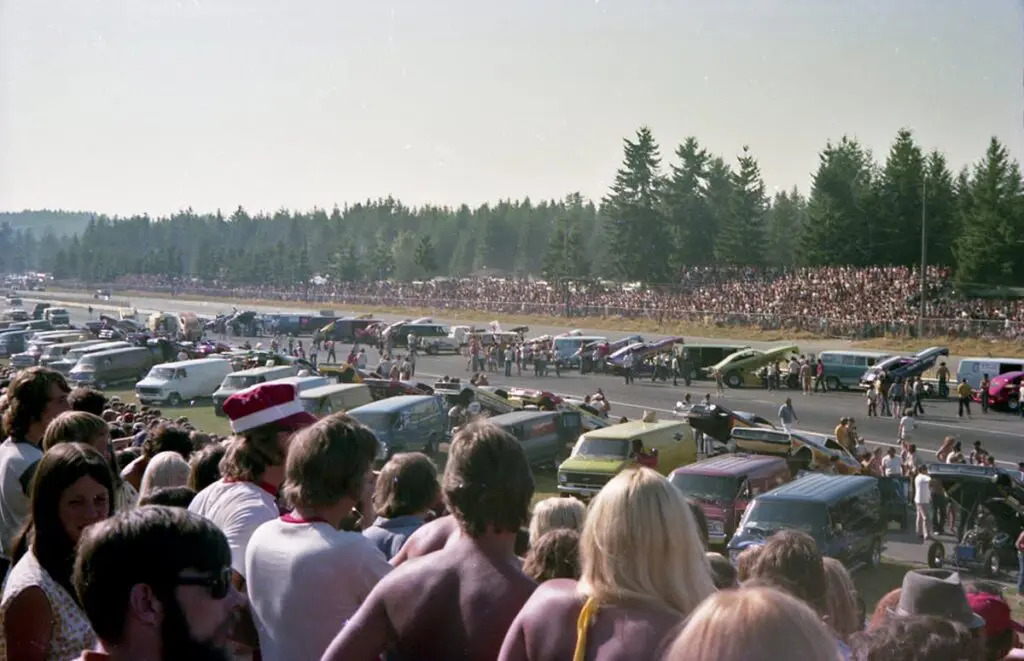
Rock bands played during the afternoon as the crowd filed into the facility, but eventually attention turned toward the drag strip. Two long rows of Funny Cars rolled onto the racing surface and waited for one of the signature moments of Doner’s show.

It was a moment that had to be experienced to be believed. The crowd counted them down, and the Funny Cars fired.

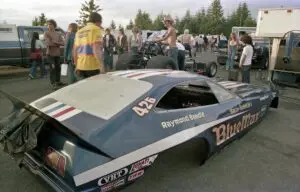
Rockstad remembered the sound asthunder in the pipes,with dozens of supercharged engines running at the same time. There were so many cars on the racing surface that getting everybody back to the pits became a sight in its own.

EdThe AceMcCulloch understood there was still a crowd watching.

McCulloch would add a little extra showmanship on the trip back to the pits, including some well-timedtire cleaningthat brought the spectators to their feet. Rockstad remembered McCulloch as one of Seattle’s favorites, a racer who never missed the event and knew exactly what the people in the grandstands wanted.

Once the track was cleared, there were 64 Funny Cars to race and only so many hours in the evening. A conventional elimination format wasn’t going to get the job done.

Seattle used a Chicago-style program, giving each Funny Car two runs regardless of whether the driver won or lost. The two quickest elapsed times advanced to the final, which meant Doner could keep sending Funny Cars to the starting line instead of cutting the field in half after every round.

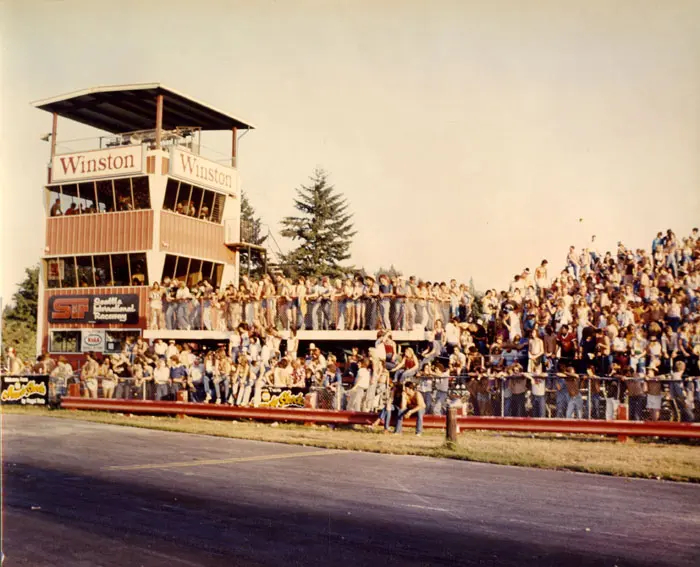
The show began much like the swelling of a tidal wave. By 5:30 p.m., the staging lanes were filling. It was in-your-face from the get-go.

Rockstad remembered Doner opening with some of the strongest racers on the property once the National Anthem was completed. He wasn’t interested in saving his best cards for later when he could use them to set the tone immediately.

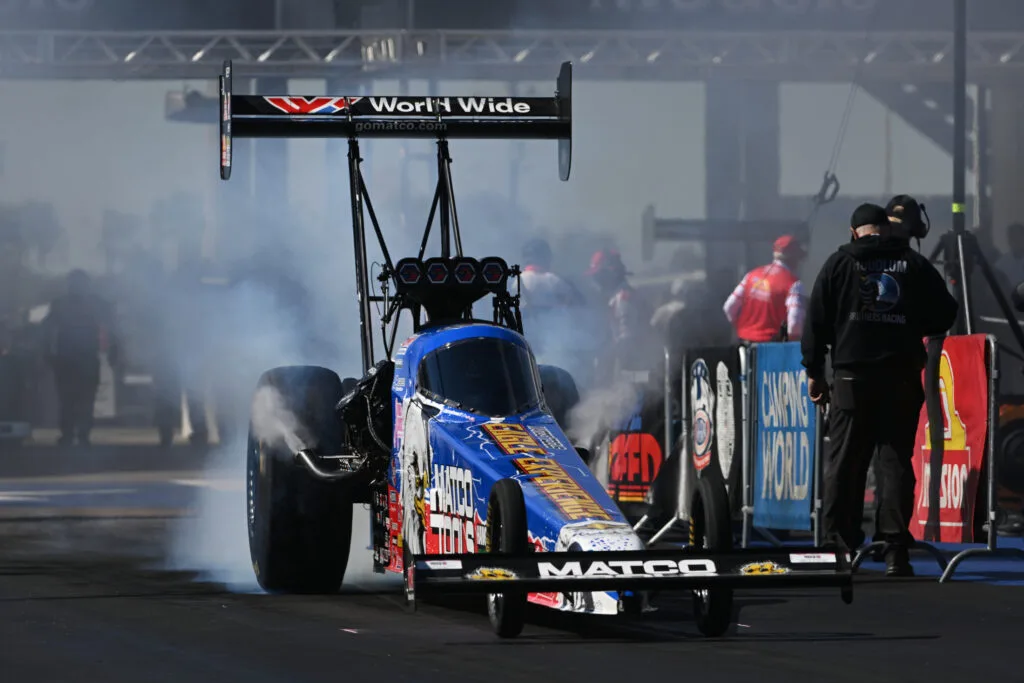
From there, Funny Cars came to the starting line a pair at a time, with another pair waiting behind them. Drivers routinely stretched their burnouts beyond the eighth-mile mark, and the crowd let them know exactly how much they appreciated it.

Downtime? That was blasphemy for a Doner promotion. There was little opportunity for the show to go quiet.

Jet dragsters and wheelstanders filled openings while Funny Car crews prepared for another run. Rockstad joked that getting a hot dog and a Coke required some planning because the chances were good a fan would miss something while standing in line.

The place changed after sunset. Header flames that were difficult to see during the afternoon began reaching above the Funny Car bodies, while hours of burnouts left tire smoke hanging over the racetrack. Nitro fumes mixed into the cool Seattle night until, as Rockstad remembered it, a haze settled over the facility.

For a crowd watching 64 of them, Doner didn’t have to exaggerate much.

The burnouts continued, the flames grew brighter, and the smoke became thicker as the evening wore on. Rockstad described a combination of sights, sounds, and nitro fumes that belonged specifically to 64 Funny Cars because there wasn’t another race producing that much of everything in one place.

Getting people to understand what awaited them was where Doner’s other talent took center stage.

His radio commercials became almost as famous as the race, delivered with the same lack of restraint he brought to the event itself. “Fiberglass forest,” “trick traction compound,” “under the lights” and “ground pounding” were among the phrases Doner worked into advertisements that sounded nothing like the typical motorsports commercial.

One spot warned listeners they would regret reading Monday morning’s headlines if they stayed home.

Rockstad knew the advertisements rubbed some people the wrong way, but he also understood why Doner didn’t care. The people who complained about the commercials were still talking about 64 Funny Cars, and getting the market talking was the whole idea.

Doner didn’t save that approach for Seattle. Instead, he used it early and often.

When he and Rockstad sat down with KISN general manager Bill Failing to discuss advertising for Portland in 1973, Doner asked whether the station would allow one advertiser to buy a commercial every hour. Failing said it could be done.

That’s exactly what he did. Doner bought one every hour for 10 days.

KISN was one of Portland’s major rock stations at the time, and Rockstad remembered the Funny Car commercials being almost impossible to escape. Doner bought additional radio in the market, but the KISN schedule provided the kind of saturation he wanted.

He also found a way to make Portland’s race fans advertise the Seattle event.

Doner recorded the Portland crowd yelling, “SIXTY FOUR FUNNY CARS,” and used the recording in Seattle commercials. With the bigger race less than three hours north on Interstate 5 and only a week away, Doner had thousands of people in Portland helping him sell the next show.

There wasn’t much conservative about the way he spent advertising money or wrote the spots.

Doner believed he had something worth seeing and kept hammering that message until race day arrived. Rockstad remembered hearing references to those commercials from sports broadcasters many years later, long after 64 Funny Cars had disappeared from the Seattle schedule.

There was truth in advertising and it worked because Doner could back it up once people arrived.

Don Prudhomme later remembered Seattle as some “real serious ground pounding,” while Midwest promoter Ben Christ eventually traveled west to see the spectacle himself. Christ had his own Funny Car show at U.S. 30 Drag Strip, so he wasn’t exactly unfamiliar with big drag racing promotions.

What he saw in Seattle was another matter.

“I’ve never seen anything like it,” Christ said.

Rock bands were playing, thousands of people were packed onto the grounds and Funny Cars covered the racing surface. Rockstad remembered the show also including a motorcycle stunt, which only added to what Christ was trying to take in from the starting line.

The size of the crowds eventually became as much a part of the story as the number of Funny Cars.

Nothing topped the 1979 NAPA Regal Ride-sponsored event, which Rockstad remembered as the largest gathering ever held at Seattle International Raceway. More than 26,000 people packed the facility after ticket sales that began at 6 p.m. Friday and continued for roughly 26 hours.

Traffic reportedly backed up for more than five miles.

Doner had spent years figuring out how to get people through the gates. By 1979, Rockstad had another problem on his hands: Where was he going to put them?

Rockstad was working primarily with ticketing that weekend, and the parking lots were already jammed while cars continued pouring toward the track. Eventually traffic inside the property stopped moving, backing all the way to the ticket booths and bringing sales to a standstill.

There were multiple lanes of cars and nowhere obvious to send them.
Rockstad grabbed a motorcycle.

Security personnel began lining vehicles behind him in the exit lane, and Rockstad led them toward open space in the pit area. Once those cars were parked, he went back and did it again.

Hundreds of spectators ended up following Rockstad’s motorcycle directly into the pits.

“They must have felt like they were VIP’s getting an escorted trip right directly into the pit area,” Rockstad recalled.

It wasn’t VIP treatment. Rockstad was trying to keep the entrance from becoming completely paralyzed while thousands more people were still trying to get inside.

He had already been involved with six or seven editions of 64 Funny Cars, and none had prepared him for what happened in 1979. Ticket sellers could actually work a shift, go home and sleep, then return to work the same one-day race because the sales operation had never stopped.

The crowd eventually topped 26,000.

For an event that began with people wondering whether Doner could find 64 Funny Cars, the sight of a five-mile traffic jam outside Seattle International Raceway spoke volumes about what it had become.
It also explains why memories of the race have survived long after the last traditional 64-car show.

What remained were the stories: McCulloch entertaining the crowd on his way back to the pits, burnouts going beyond the eighth mile, header flames lighting the Seattle night and enough tire smoke and nitro fumes to leave a fog hanging over the track.

There were Doner’s commercials, too, pounding away on the radio until seemingly everybody in the market knew what was coming.

Then there was 1979, when more than 26,000 people showed up and Rockstad found himself on a motorcycle leading customers into the pits because Seattle International Raceway had run out of sensible places to put them.

“There will never be anything like it!” Doner said years later.
Considering what Rockstad saw from the inside, Doner might have undersold it.

Share the Insights?

Click here to share the article.

ad space x ad space

ad space x ad space

Competition Plus Team

Since our inception, we have been passionately dedicated to delivering the most accurate, timely, and compelling content in the world of drag racing. Our readers depend on us for the latest news, in-depth features, expert analysis, and exclusive interviews that connect you to the sport’s pulse.

Sign up for our newsletters and email list.

This field is for validation purposes and should be left unchanged.
Name

PT. 2 BILL DONER’S 64 FUNNY CARS: WHEN SEATTLE BECAME THE WILDEST SHOW IN DRAG RACING

Photos by Larry Pfister

Getting 64 Funny Cars to Seattle was Bill Doner’s first challenge. Once he had them there, the Hall of Fame drag racing promoter had to figure out what to do with all of them.

The answer became one of the wildest nights drag racing has ever produced. For the late Jim Rockstad, who worked those Seattle International Raceway events and later chronicled them for CompetitionPlus.com, the memories went well beyond who won the race.

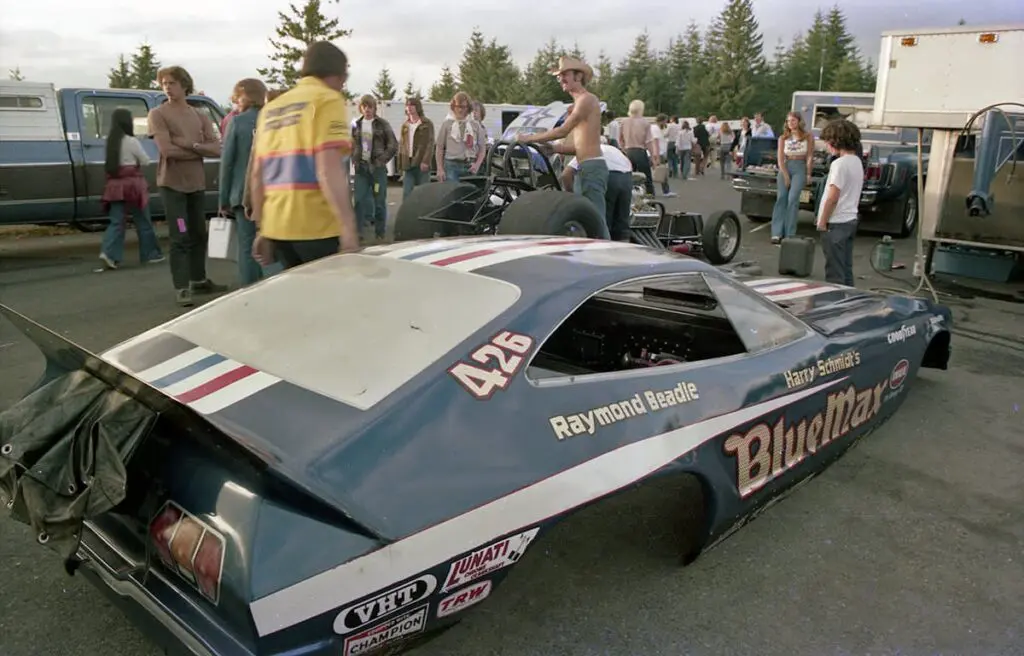
Rock bands played during the afternoon as the crowd filed into the facility, but eventually attention turned toward the drag strip. Two long rows of Funny Cars rolled onto the racing surface and waited for one of the signature moments of Doner’s show.

It was a moment that had to be experienced to be believed. The crowd counted them down, and the Funny Cars fired.

Rockstad remembered the sound asthunder in the pipes,with dozens of supercharged engines running at the same time. There were so many cars on the racing surface that getting everybody back to the pits became a sight in its own.

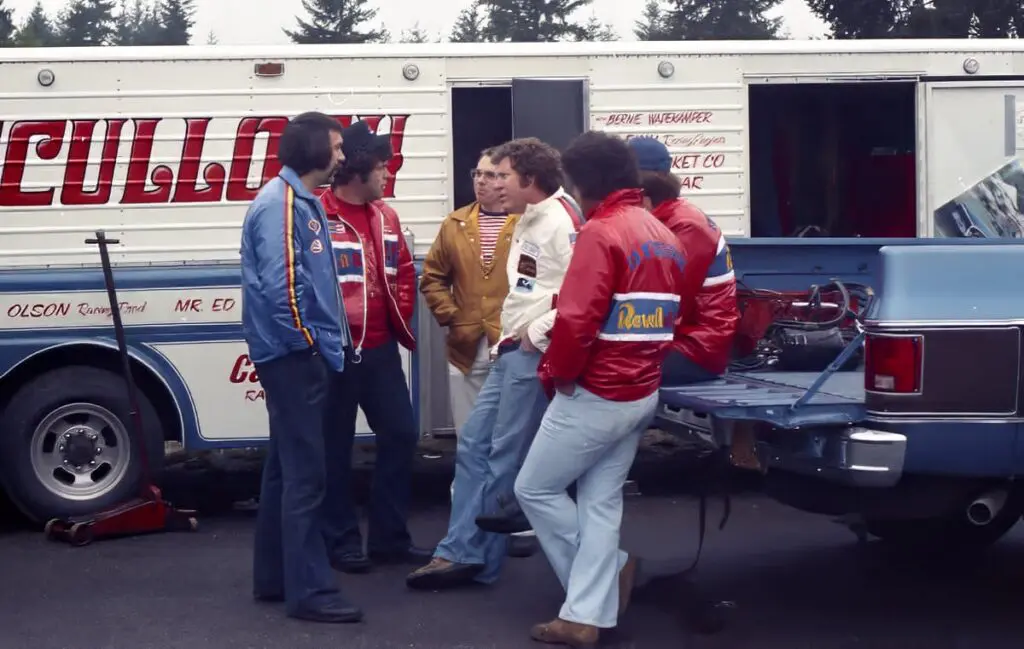
EdThe AceMcCulloch understood there was still a crowd watching.

McCulloch would add a little extra showmanship on the trip back to the pits, including some well-timedtire cleaningthat brought the spectators to their feet. Rockstad remembered McCulloch as one of Seattle’s favorites, a racer who never missed the event and knew exactly what the people in the grandstands wanted.

Once the track was cleared, there were 64 Funny Cars to race and only so many hours in the evening. A conventional elimination format wasn’t going to get the job done.

Seattle used a Chicago-style program, giving each Funny Car two runs regardless of whether the driver won or lost. The two quickest elapsed times advanced to the final, which meant Doner could keep sending Funny Cars to the starting line instead of cutting the field in half after every round.
The show began much like the swelling of a tidal wave. By 5:30 p.m., the staging lanes were filling. It was in-your-face from the get-go.

Rockstad remembered Doner opening with some of the strongest racers on the property once the National Anthem was completed. He wasn’t interested in saving his best cards for later when he could use them to set the tone immediately.

From there, Funny Cars came to the starting line a pair at a time, with another pair waiting behind them. Drivers routinely stretched their burnouts beyond the eighth-mile mark, and the crowd let them know exactly how much they appreciated it.

Downtime? That was blasphemy for a Doner promotion. There was little opportunity for the show to go quiet.

Jet dragsters and wheelstanders filled openings while Funny Car crews prepared for another run. Rockstad joked that getting a hot dog and a Coke required some planning because the chances were good a fan would miss something while standing in line.

The place changed after sunset. Header flames that were difficult to see during the afternoon began reaching above the Funny Car bodies, while hours of burnouts left tire smoke hanging over the racetrack. Nitro fumes mixed into the cool Seattle night until, as Rockstad remembered it, a haze settled over the facility.
For a crowd watching 64 of them, Doner didn’t have to exaggerate much.

The burnouts continued, the flames grew brighter, and the smoke became thicker as the evening wore on. Rockstad described a combination of sights, sounds, and nitro fumes that belonged specifically to 64 Funny Cars because there wasn’t another race producing that much of everything in one place.

Getting people to understand what awaited them was where Doner’s other talent took center stage.

His radio commercials became almost as famous as the race, delivered with the same lack of restraint he brought to the event itself. “Fiberglass forest,” “trick traction compound,” “under the lights” and “ground pounding” were among the phrases Doner worked into advertisements that sounded nothing like the typical motorsports commercial.

One spot warned listeners they would regret reading Monday morning’s headlines if they stayed home.

Rockstad knew the advertisements rubbed some people the wrong way, but he also understood why Doner didn’t care. The people who complained about the commercials were still talking about 64 Funny Cars, and getting the market talking was the whole idea.

Doner didn’t save that approach for Seattle. Instead, he used it early and often.

When he and Rockstad sat down with KISN general manager Bill Failing to discuss advertising for Portland in 1973, Doner asked whether the station would allow one advertiser to buy a commercial every hour. Failing said it could be done.

That’s exactly what he did. Doner bought one every hour for 10 days.
KISN was one of Portland’s major rock stations at the time, and Rockstad remembered the Funny Car commercials being almost impossible to escape. Doner bought additional radio in the market, but the KISN schedule provided the kind of saturation he wanted.

He also found a way to make Portland’s race fans advertise the Seattle event.

Doner recorded the Portland crowd yelling, “SIXTY FOUR FUNNY CARS,” and used the recording in Seattle commercials. With the bigger race less than three hours north on Interstate 5 and only a week away, Doner had thousands of people in Portland helping him sell the next show.

There wasn’t much conservative about the way he spent advertising money or wrote the spots.

Doner believed he had something worth seeing and kept hammering that message until race day arrived. Rockstad remembered hearing references to those commercials from sports broadcasters many years later, long after 64 Funny Cars had disappeared from the Seattle schedule.

There was truth in advertising and it worked because Doner could back it up once people arrived.

Don Prudhomme later remembered Seattle as some “real serious ground pounding,” while Midwest promoter Ben Christ eventually traveled west to see the spectacle himself. Christ had his own Funny Car show at U.S. 30 Drag Strip, so he wasn’t exactly unfamiliar with big drag racing promotions.

What he saw in Seattle was another matter.

“I’ve never seen anything like it,” Christ said.

Rock bands were playing, thousands of people were packed onto the grounds and Funny Cars covered the racing surface. Rockstad remembered the show also including a motorcycle stunt, which only added to what Christ was trying to take in from the starting line.

The size of the crowds eventually became as much a part of the story as the number of Funny Cars.

Nothing topped the 1979 NAPA Regal Ride-sponsored event, which Rockstad remembered as the largest gathering ever held at Seattle International Raceway. More than 26,000 people packed the facility after ticket sales that began at 6 p.m. Friday and continued for roughly 26 hours.

Traffic reportedly backed up for more than five miles.

Doner had spent years figuring out how to get people through the gates. By 1979, Rockstad had another problem on his hands: Where was he going to put them?

Rockstad was working primarily with ticketing that weekend, and the parking lots were already jammed while cars continued pouring toward the track. Eventually traffic inside the property stopped moving, backing all the way to the ticket booths and bringing sales to a standstill.

There were multiple lanes of cars and nowhere obvious to send them.
Rockstad grabbed a motorcycle.

Security personnel began lining vehicles behind him in the exit lane, and Rockstad led them toward open space in the pit area. Once those cars were parked, he went back and did it again.

Hundreds of spectators ended up following Rockstad’s motorcycle directly into the pits.

“They must have felt like they were VIP’s getting an escorted trip right directly into the pit area,” Rockstad recalled.

It wasn’t VIP treatment. Rockstad was trying to keep the entrance from becoming completely paralyzed while thousands more people were still trying to get inside.

He had already been involved with six or seven editions of 64 Funny Cars, and none had prepared him for what happened in 1979. Ticket sellers could actually work a shift, go home and sleep, then return to work the same one-day race because the sales operation had never stopped.

The crowd eventually topped 26,000.

For an event that began with people wondering whether Doner could find 64 Funny Cars, the sight of a five-mile traffic jam outside Seattle International Raceway spoke volumes about what it had become.
It also explains why memories of the race have survived long after the last traditional 64-car show.

What remained were the stories: McCulloch entertaining the crowd on his way back to the pits, burnouts going beyond the eighth mile, header flames lighting the Seattle night and enough tire smoke and nitro fumes to leave a fog hanging over the track.

There were Doner’s commercials, too, pounding away on the radio until seemingly everybody in the market knew what was coming.

Then there was 1979, when more than 26,000 people showed up and Rockstad found himself on a motorcycle leading customers into the pits because Seattle International Raceway had run out of sensible places to put them.

“There will never be anything like it!” Doner said years later.
Considering what Rockstad saw from the inside, Doner might have undersold it.
Picture of John Doe

John Doe

Lorem ipsum dolor sit amet consectetur adipiscing elit dolor

More Posts

Send Us A Message

Picture of Bobby Bennett
Bobby Bennett
Thank you for joining us on this journey. Your support and trust inspire us every day to deliver the best in drag racing journalism. We are excited about the future and look forward to continuing to serve you with the same dedication and passion that has defined CompetitionPlus.com from the very beginning.

Don’t miss these other exciting stories!

Explore more action packed posts on Competition Plus, where we dive into the latest in Drag Racing News. Discover a range of topics, from race coverage to in-depth interviews, to keep you informed and entertained.