

The sight of it was purely majestic, because after all, a king had made it all happen.
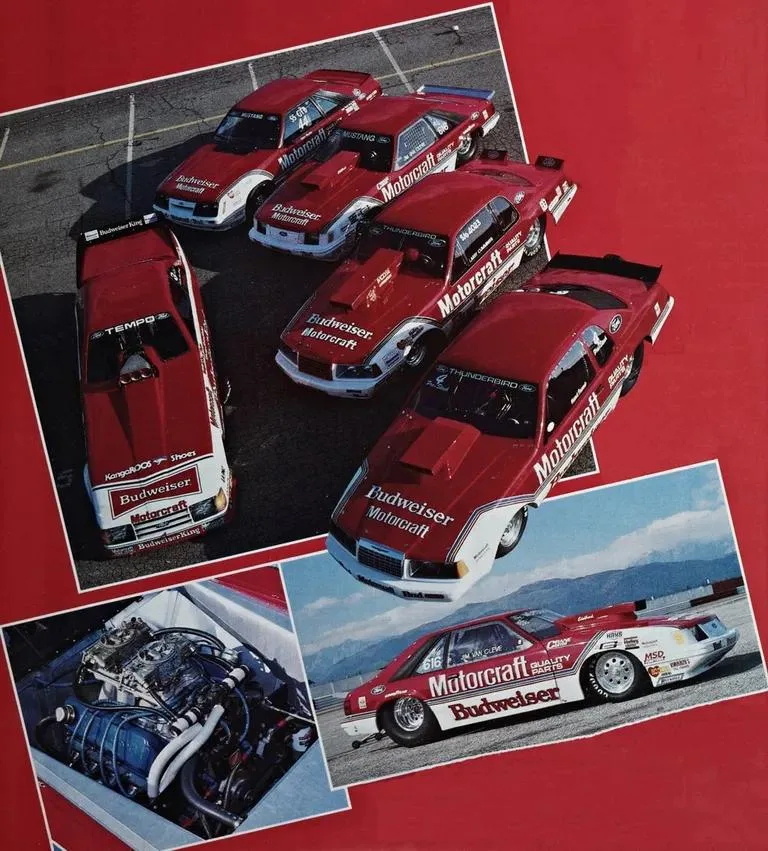
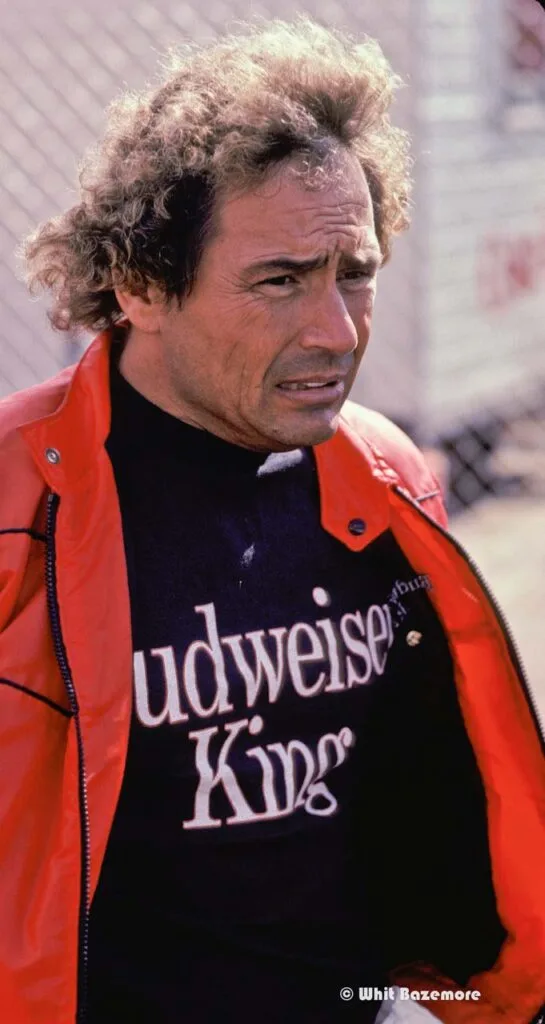
Five race cars, five different eliminators, and three corporate giants footing the bill. In 1985, Kenny Bernstein, drag racing’s Budweiser King, had something most racers couldn’t have assembled with a winning lottery ticket and a generous banker.
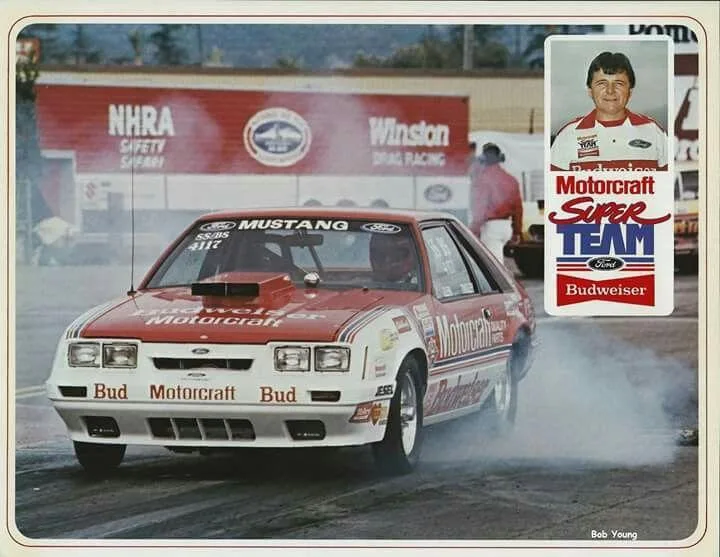
Imagine the sight at an NHRA national event, where a Super Stock racer accustomed to paying his own way was suddenly wearing the same corporate colors as one of the biggest names in drag racing. Ford Motor Company, Motorcraft and Budweiser weren’t just sponsoring Bernstein’s Funny Car anymore; they had an entire racing operation representing them from the professional ranks to the Sportsman pits.
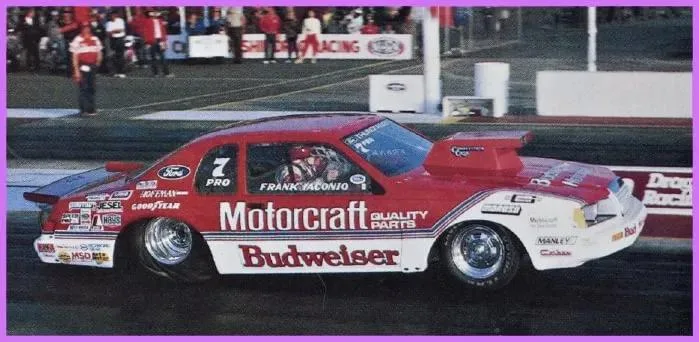
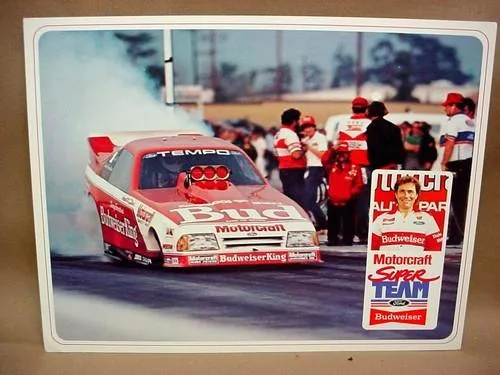
Bernstein commanded the operation with his Budweiser Ford Tempo Funny Car, joined by Frank Iaconio’s, a dyed-in-the-wool Chevrolet racer now in a Thunderbird, Glen Tinsley’s GT-classified Super Stock Mustang, Larry Cummings’ Super Gas Thunderbird and the Competition Eliminator Mustang of Jim Van Cleve Sr. and Jr. All five entries were contracted to be at the 13 NHRA national events scheduled for 1985, with selected IHRA appearances also planned.
It was called the Super Team, and the name wasn’t exactly an exercise in modesty. Bernstein was already one of drag racing’s most successful businessmen, so naturally, anyone seeing that collection of Ford race cars might have figured the Budweiser King had dreamed up another way to make his kingdom a little bigger.
Except he hadn’t been the one to come up with the plan. The people who dreamed up this particular arrangement worked for Ford, and they had come looking for Bernstein rather than the other way around.
“That was a really interesting deal,” Bernstein recalled. “Actually, Ford Motor Company and SVO at that time, Special Vehicle Operation, SVO, they came to me and said, ‘We want to put a team together, a super team.’ They’re the ones that came up with it and said, ‘We would like these classes and fall underneath your umbrella. And do you think Budweiser would be interested?’ And I said, ‘Well, we’ll find out and check and see.’ And that’s how it came about. And Budweiser, of course, jumped on it too. The Ford company was the one that did that, and SVO was the ones that did it.”
Getting Budweiser interested was one thing, but finding the right racers was another assignment altogether. Bernstein knew Funny Car racing well enough to make a living beating its best, but Ford was asking him to identify talent in categories where he couldn’t necessarily tell the contenders from the pretenders.
“The startup was because I didn’t know a lot of those classes that they wanted,” Bernstein said. “So I had to go and do a bunch of research and talk to a lot of people that really knew who the players were in those classes because you’re in your own world when it’s Funny Cars or Top Fuel or whatever. You’re not interested in anything else at the time, so that was the only hard part about it. It was easy getting the team. I missed on a couple of them. I don’t remember who they were that I really wanted, but we still ended up with a really good group of guys, wonderful people. After we got the money dealed out for them and got them happy, they were tickled to death because they didn’t have anything, weren’t ever going to get a sponsorship like this one. So it was a big plus for them, too.”
These were accomplished competitors, but being good at winning rounds didn’t necessarily mean a major corporation was waiting to give you money.
The Super Team changed that equation for its selected racers, putting them in a program where Ford and Budweiser were paying attention to more than just Top Fuel, Funny Car and Pro Stock. For competitors accustomed to chasing contingency checks and paying their own expenses, the arrangement was a pretty substantial upgrade.
There was also the unlikely business of Bernstein and dyed-in-the-wool Chevrolet man Iaconio becoming teammates, something neither the traditional separation of their racing categories nor their previous careers had suggested. Bernstein admitted he hadn’t envisioned such an arrangement until Ford presented the opportunity.
“No, no, no, not at all,” Bernstein said. “In fact, I never thought of that at all. Again, thanks to Ford Motor Company and Budweiser, that’s what made it happen. I felt it an honor to be able to be the captain of the team and go put it together. My question was doing it the best we could. It took me quite a while and a lot of hard work in the beginning to find people that knew who to get and so on and so forth, and then go talk them into it.”
Ford introduced the program with a major press announcement in Detroit, giving the operation a launch befitting a manufacturer-backed racing effort. A promotional publication, Kenny Bernstein Explains Drag Racing, also featured the Super Team, helping Ford explain its involvement to people who might have known plenty about automobiles but considerably less about Super Stock eliminations.
Meanwhile, Bernstein was busy making life miserable for the competition in Funny Car. He won six NHRA national events in 1985, collected a record 38 elimination-round victories and established a national elapsed-time record of 5.569 seconds.
The season produced his first of four consecutive Funny Car championships, while his operation continued advancing aerodynamics, chassis development and onboard data acquisition. Ford had picked a captain who wasn’t exactly having trouble finding his way to the winner’s circle.
The Super Team concept had its skeptics, which wasn’t surprising in a sport where racers had spent years operating independently and scraping together whatever sponsorship they could find. Bernstein wasn’t interested in preserving that arrangement for the sake of tradition, particularly when somebody was offering to bring more money into the sport.
“If it did anything to make drag racing better for the public and to the public, I was all for it,” Bernstein said. “And when Ford wanted to do that, I though it was fantastic. And it was just a matter of getting it done and off we went with it for a couple of years. So no, I always felt and looked at drag racing, the better we could make it for ourselves and make the drag racing better period, the better chances we have of getting the sponsors and keeping the sponsors for a long time.”
Other Super Team arrangements followed, although Bernstein wasn’t about to claim he had invented the idea. Ford had brought him the proposal, Budweiser had joined the effort, and the resulting operation had given several racers an opportunity they might otherwise never have received.
“Well, that’s kind of what happens,” Bernstein said. “Sometimes if something’s good, then other people do. And again, it’s all back to the fact that, for me, is that we’re trying to grow drag racing so the world would know about it. And if it meant doing this with a company like Ford and Budweiser and getting those exposures for everybody, that’s fantastic.”
For all the preparation that went into assembling the operation, the Super Team didn’t last forever. Bernstein recalled the program running approximately two years before Ford and Budweiser decided they had gotten what they wanted from the investment.
” I just think it ran its course, and there was nobody was upset with anybody or anything,” Bernstein explained. “And Ford and Budweiser just made a decision that they’d seen enough, and they had done what they wanted, and off we went. There was no issues whatsoever with any of those guys. They were all great. They were wonderful to work with. Once they got it all set up and got the money in the right places for the guys, I didn’t have much to do then. We were just there with each other because we were just racing.”
There had been questions about whether an accident involving Jim Van Cleve and Lori Johns contributed to the Super Team’s demise, but Bernstein dismissed that suggestion. He said the incident had no bearing on the decision to end the program, leaving no mystery about where he stood.
The five-car operation was gone, but Bernstein had plenty of racing left in him, including ventures into NASCAR and IndyCar ownership. The Super Team had been an ambitious undertaking in a sport still learning how far corporate sponsorship could reach beyond the professional eliminators.
Looking back, Bernstein appreciated the experience and the opportunity to work with racers he might otherwise never have called teammates. But when asked whether commanding the Super Team ranked among his greatest memories, the Budweiser King wasn’t about to pretend it outranked everything else he’d accomplished.
“It’s in the memory bank, but it’s not one of the greatest,” Bernstein said. “I mean, we were fortunate to have a lot of successes as the Budweiser King, and Ford too, for that matter, in Funny Car Days and when we went to Top Fuel. You’re going to have a hard time replacing 301.70.”