

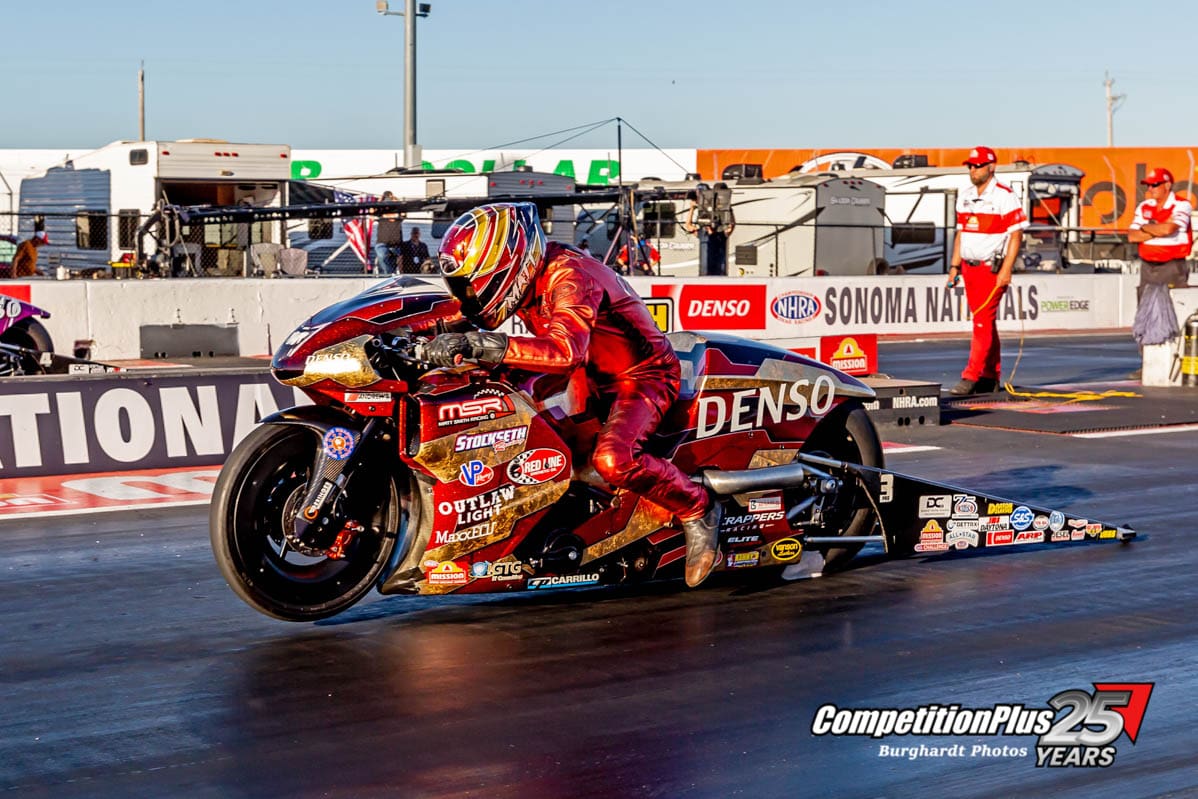

Matt Smith never spent his time away from the racetrack wondering whether he still knew how to ride a Pro Stock Motorcycle. His only question was whether his body would be ready when he threw a leg back over the bike.
That answer finally came after weeks of recovery, medical clearance and patience following the health scare that sidelined the six-time NHRA world champion earlier this season.
“No butterflies,” Smith said. “Just ready to get back on the bike and hope I do my job and hope the bike does its job.”
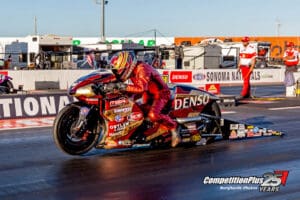
Smith ran the second quickest run of the first time GETTRX Pro Stock Motorcycle time trial at the NHRA Sonoma Nationals, posting a 6.791, 198.82. The Pro Stock Motorcycles are not in Mission Foods Drag Racing Series competition this weekend save for the shootout. The winner of the event can pocket $25,000 by winning three rounds of competition.
Smith’s return wasn’t built around test sessions or an aggressive workout program. It centered on following doctors’ orders and resisting the temptation to rush back before his body had fully healed.
“I really haven’t prepared anything,” Smith said. “I’ve just been trying to take care of myself and listen to what the doctors have said. We thought about going to testing last week, but I feel like it was just better to give me another whole week of rest. So T1 today when we go out there will be the first time I’ve been on a bike since Chicago.”
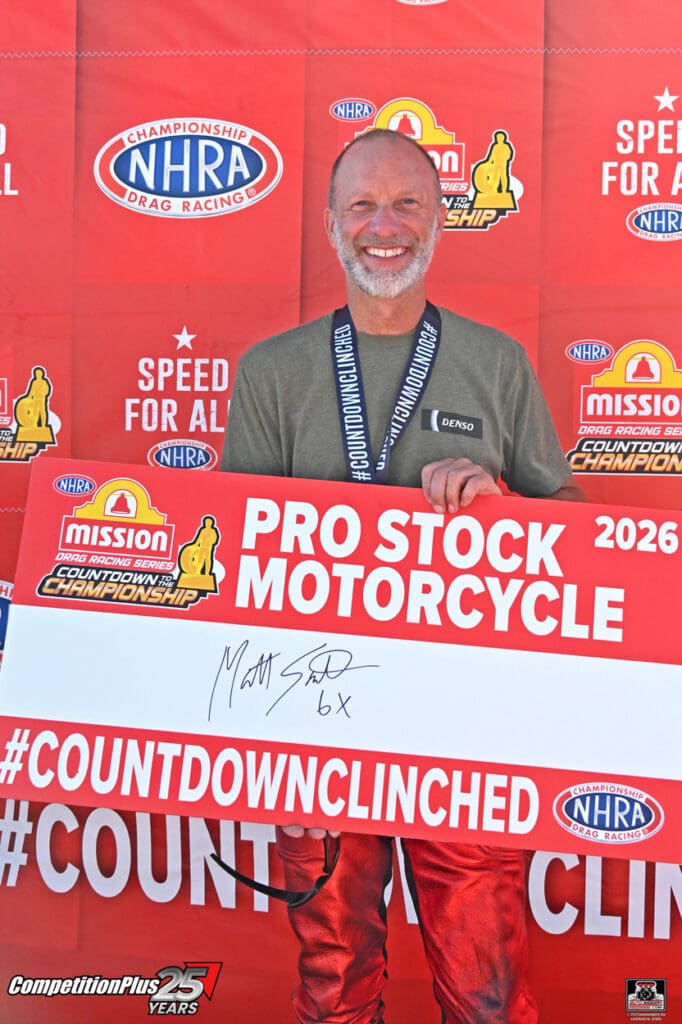
For someone who has won six world championships, confidence wasn’t something Smith needed to rediscover. His experience told him the riding would come naturally once he was healthy enough to compete again. Instead, his focus shifted to something racers often struggle to embrace – patience.
“I didn’t do any working out; I just wanted to give my body enough time to heal before they went in through my stomach and got the gallbladder out,” Smith said. “More or less, you’re trying to let my body heal up like it needs to.”
“I got full release last week from the doctor, and then NHRA released me on Friday after seeing all the doctor stuff and all that. Like I said, just ready to go, ready to go do this. I know I know how to do it; I hope my body is ready for it.”
Smith’s cautious approach followed one of the most frightening stretches of his racing career.
On the drive to the NHRA Potomac Nationals at Maryland International Raceway in late May, severe abdominal pain became so intense that wife Angie Smith drove the final miles before taking him directly to a nearby hospital after they reached the racetrack.
Doctors diagnosed Smith with pancreatitis caused by gallstones blocking his gallbladder. He also learned he was dealing with kidney stones and multiple hernias that had developed earlier in the season.
“I woke up Thursday morning (May 28) with a lot of pain about 2 o’clock in the morning,” Smith explained during a Facebook Live broadcast shortly after the incident. “We got in the truck at 5 a.m., and started driving, making our five-hour trip to Budds Creek, Maryland. As I was driving up there, I had a lot more pain hit me. I had Angie take over the wheel of the truck while I went to the bathroom back there and got very, very sick.”
“(We) got off of the highway, went through the back roads. I started driving again, got to the track, got the truck and trailer parked, and immediately Angie took me to the emergency room.”
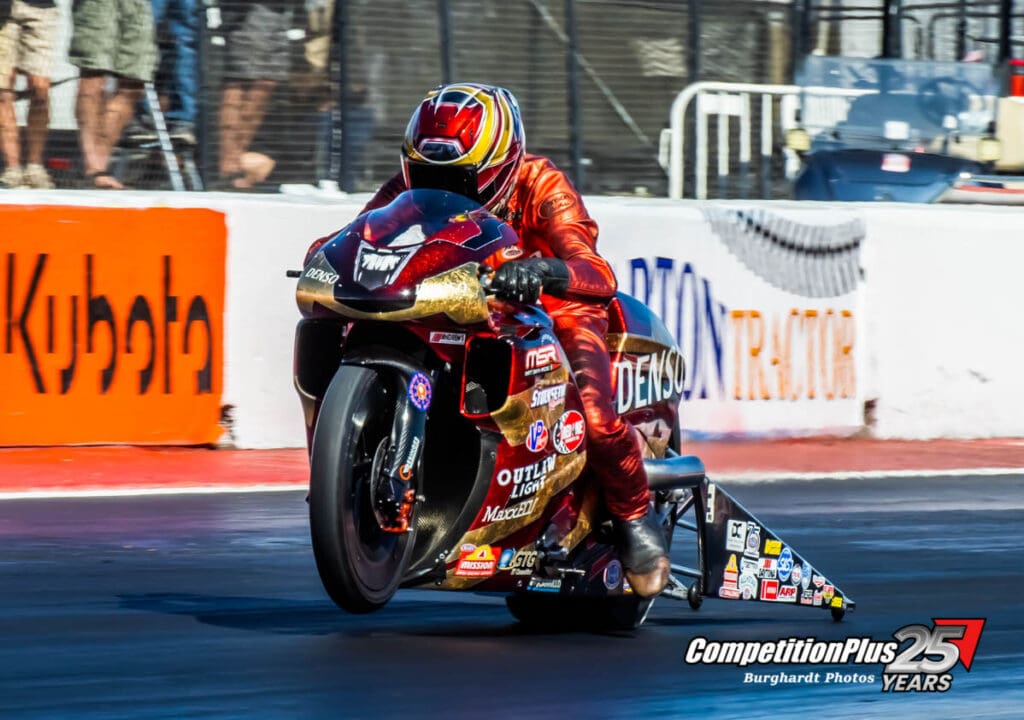
Smith underwent surgery June 4 to remove his gallbladder before another procedure the following day to remove stones from his ducts. Those procedures addressed the immediate issue, but they also reinforced the importance of allowing his body to recover before climbing back aboard his motorcycle.
Now that he’s back, Smith carries a few reminders of the ordeal.
“I got some scars; I look like I’d been stabbed five times,” Smith said. “So I got those little scars.”
The recovery, however, isn’t completely finished.
Smith still plans to undergo surgery this offseason to repair the hernias doctors elected not to address while treating the more immediate medical issues.
“But all in all, we got all that done, and over the winter I’ll get the hernias taken care of,” Smith said. “They didn’t want to do all of it at one time, so I’ll still manage that.”
“Can’t pick up nothing real heavy, but I was managing that before all this happened. So we just got to get through the rest of the year, and then I’ll have surgery on the hernias over the winter so I’ll be fully recovered for next year.”
Smith hopes the biggest impact from his experience won’t be measured in race wins or championship points.
He hopes it changes the way racers think about their own health.
“Well, I hope so,” Smith said when asked if fellow competitors might view medical issues differently after watching his ordeal. “NHRA has a protocol that you can have a substitute driver. And us as racers, we always… we’re big macho. We want to show how tough we are and we just want to race.”
Smith believes racers often convince themselves they can ignore pain long enough to finish the weekend. He now sees that mindset differently because he understands how quickly a manageable problem can become life-threatening.
“And when the whole Kyle Busch thing happened, racers are racers. Just like Days of Thunder, you don’t take them to the hospital. Nobody wants to go to the hospital,” Smith said. “But after the whole Kyle Busch thing, it should have woke up everybody’s eyes in the industry, because that’s somebody with unlimited money and loved racing, and he didn’t take his health seriously and it cost him.”
Smith believes he made the right decision by seeking treatment instead of trying to compete through the pain.
“We’re not so fortunate as that,” Smith said. “I had a scare and I went to the hospital, and luckily I did, because I could have been in the same situation as Kyle.”
His advice to every racer is simple, and it comes from someone who admits he once thought the same way many competitors still do.
“So any racers out there, they need to take their health seriously, because you can’t race if you’re not alive,” Smith said. “You can come back and race down the road. So take care of yourself, do the protocols that NHRA has, and that’s where I’m at right now.”


















NHRA’S COUNTDOWN PROBLEM DIDN’T START WITH SHAWN REED, BUT HIS CASE EXPOSED IT