

What started as NHRA’s intention to inspect superchargers for safety purposes turned into one of the largest controversies in the Pro Modified pits at Indianapolis.
NHRA began checking screw superchargers in Top Alcohol Funny Car and Top Alcohol Dragster before eventually reaching Pro Modified. When inspectors examined the Scott Tidwell-owned Pro Mod entry driven by Jason Collins, they found a modified rotor support that NHRA National Tech Director Lonnie Grim considered a safety concern.
The result was severe. Collins’ first three qualifying runs were disallowed, leaving the team one final shot to make the 16-car field at the NHRA U.S. Nationals.
It didn’t.
Collins failed to crack the bump spot in the fourth and final qualifying session, ending a turbulent weekend that had already divided portions of the Pro Mod pits. Fingers were pointed, whispers traveled from trailer to trailer and the discussion quickly moved from what NHRA found to why it acted when it did.
For Grim, however, the starting point never changed. He said the inspection was initiated because of safety concerns, not because NHRA went hunting for a performance advantage.
“It was really about safety is why we went looking and we actually looked at,” Grim said. “The tech team started at Alcohol Funny Car, looked through all them, went through Alcohol Dragster and then finally moved to Pro Mod and ran into just the one. We ran into another one under somebody’s bench as a spare in a different category. We told them that they couldn’t use it.”
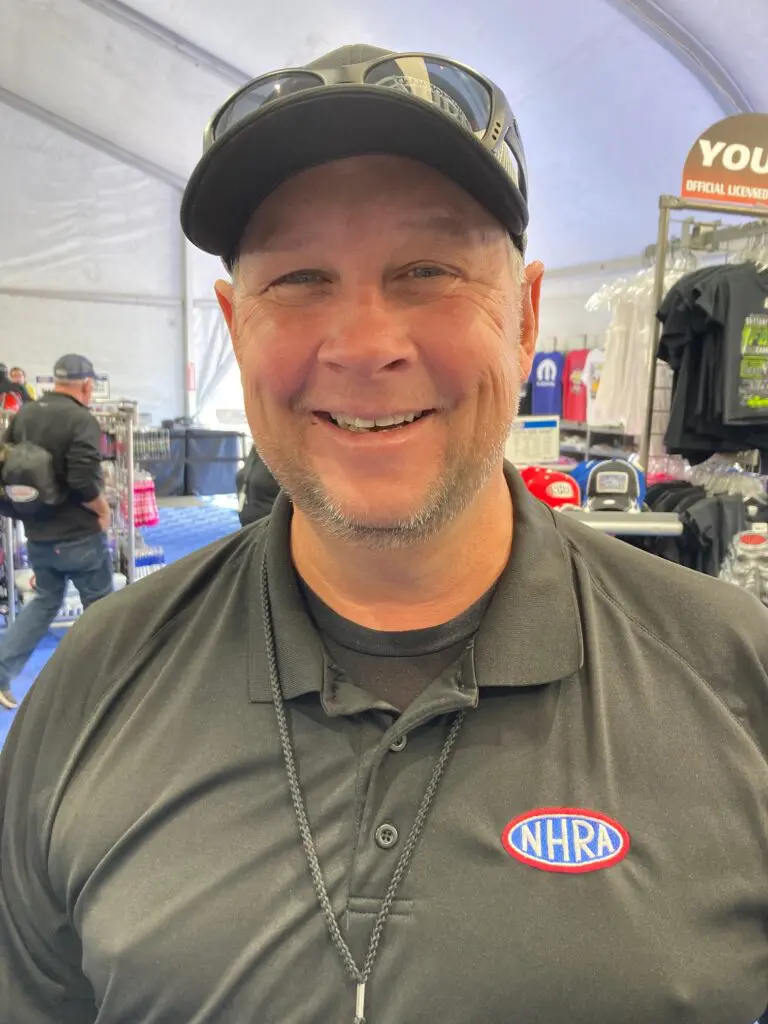
As much as NHRA’s Tech Department would have preferred to inspect every applicable car at once, it didn’t have the manpower to descend on three categories simultaneously. The understaffed department instead worked meticulously through the pits, beginning with Alcohol Funny Car, moving through Alcohol Dragster and eventually reaching Pro Mod after the third qualifying session.
What inspectors were looking for was a modification to the rotor support inside the screw supercharger. Grim said material had been removed and a hole added to allow additional air into the rotor area.
“It’s the rotor support that has been ported and modified,” Grim said. “And whether it’s a hole saw, a drill bit, or it’s in a CNC machine or a bridge port, obviously it’s the rotor support itself that is compromised whenever they put a hole in it. And they put a hole in it so that air will enter the rotor. There’s an area above the rotor support brace that is open and there’s an area below the rotor support base that is open.”
Grim said NHRA’s concern became urgent after he learned of a failure involving another supercharger roughly two weeks before Indianapolis. That incident did not involve a Pro Mod car, but Grim said the failed component had been modified in the same area.
“But when they do that, it compromises the rotor support,” Grim said. “Could it last 100 runs? Could it last 10 runs? We don’t know. But I was informed about a C rotor crash almost two weeks ago and it was not from a Pro Mod car. And that same area of the rotor support had been ported, had a hole in it. And it cracked the rotor support and crashed the rotors and the rotors tried to compromise the case, but didn’t get all the way through.”
That was enough to inspire Grim to move forward with the checks.
“I got really nervous,” Grim said. “We were about to race at the U.S. Nationals. I didn’t reasonably think any of our guys might have done that, but it was worth looking because I don’t want a case compromised due to this modification, right?”
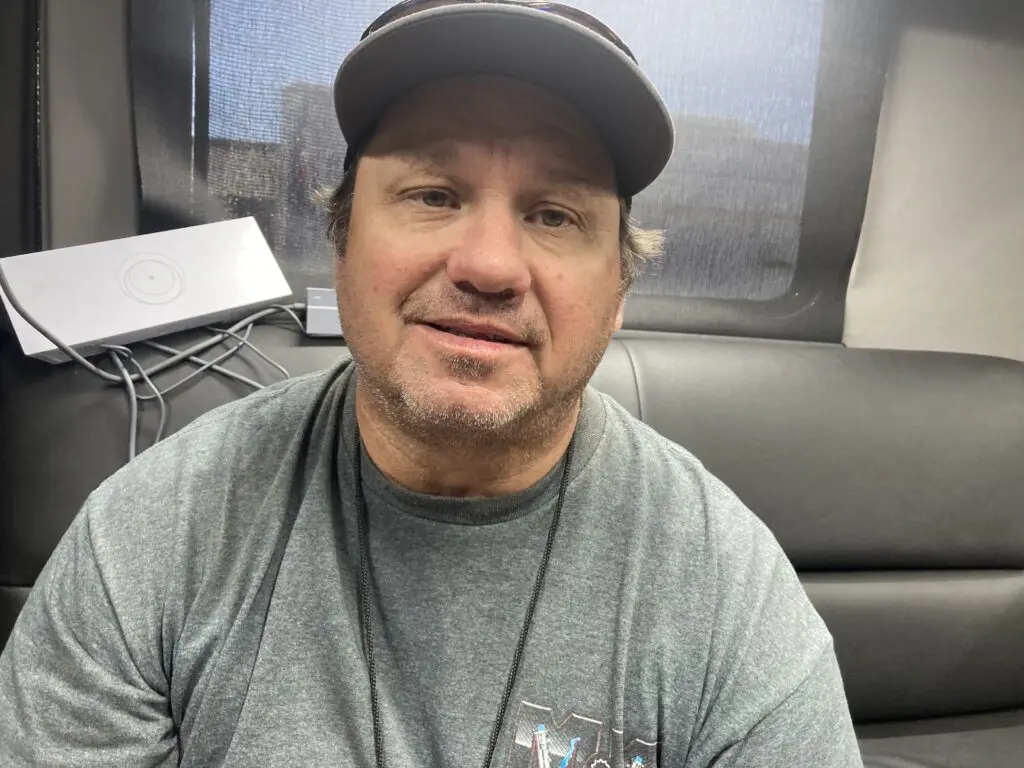
Tidwell doesn’t dispute that his supercharger had been modified. His dispute centers on whether NHRA’s rulebook clearly prohibited what inspectors found and whether the timing of the inspection gave his team a fair opportunity to respond.
“No, we owned the blower. We did not buy them new, is the real story,” Tidwell said. “Well, first, I want to start out with this is a talented team. We won four races and two combos with three different race cars this year already. And we don’t plan on being done yet, but maybe we are, but I don’t think so.”
Tidwell said his biggest problem wasn’t NHRA deciding it didn’t want the blower used. He believes the written regulations fail to specifically address the area that triggered the ruling.
“My biggest issue with it is there’s not a rule in the rule book that covers this,” Tidwell said. “There’s holes in those from the beginning. There’s cast holes that are none the same. Do I feel like mine was modified? I actually do. I don’t disagree with NHRA tech department. The problem is we don’t have anything in our rule book to cover that.”
NHRA’s position comes through SFI 34.1. Grim said the certification covers the entire supercharger, not just the rotors.
“One of the things that I also share, a lot of people think that the 34.1, the screw blower test for SFI is only the rotors,” Grim said. “Well, that is not true. A big portion of that test is spinning the rotors at a certain RPM, right? That is the test for the SFI. But if you go to SFI’s website and look at the SFI document for 34.1, it is the whole blower. That’s why they put the tag back there in an area where they don’t intend for you to take it apart. If you take it apart, they intend for you to send it back and get it re-SFI’d.”
Tidwell sees the rulebook differently.
“The only thing I’ve asked NHRA tech department is for something to come out of this is to please get something in the rule book because there’s nothing in there for what they did,” Tidwell said. “They blamed it on the SFI, but the SFI is on the rotors, not necessarily the case. My understanding. I’m not an SFI expert, but my understanding is that.”
Tidwell also questioned why, if the modification presented an immediate safety concern, it wasn’t discovered before competition began.
“So I don’t mind what they did,” Tidwell said. “If there was a safety concern, I don’t think it was fair to wait till after Q3 to address it. If there was a safety concern in these pits out here, I think we should’ve addressed it on Thursday before we ever made a run.”
Grim said NHRA did not target Tidwell and did not begin the inspection believing the Pro Mod team had such a blower. Tech officials worked category by category until they reached the car, and Indianapolis still offered another qualifying session in which the team could replace the supercharger and try again.
“Had we done that at Q3 behind any other event, there’s no qualifying available,” Grim said. “It would’ve been the end of the event for that team. But we’re at the U.S. Nationals. There’s plenty of qualifiers. We didn’t get to Pro Mod until after Q3 because we did Alcohol Funny Car and Alcohol Dragster forward of Pro Mod.”
Justin Bond became part of the story when Tidwell needed a legal replacement. Bond loaned the team one of his superchargers, but he also believes the controversy exposed a larger communication problem between screw-blower racers and NHRA.
“In defense of all of us running screw blowers, including Tidwell Racing, we’ve asked questions in the past about these blowers and what’s doable, and what’s not doable,” Bond said. “And some of it’s, we’re getting opinion-based questions that are only being answered orally and not a lot in writing.”
Bond’s blower didn’t save Tidwell’s weekend. Collins’ Q4 attempt failed to produce the run necessary to qualify, although Tidwell said the borrowed supercharger actually produced more boost than the one NHRA rejected.
“Justin Bond’s a dear friend of mine. He loaned us his blower,” Tidwell said. “We put it on. Actually, it made more boosts than ours, which is why in Q4, our car climbed the wheelie bars, because it was leaned out and meaner and trying to go faster than we had intended to.”
Tidwell refused to blame NHRA for the team missing the field.
“Well, I don’t disagree with them. I don’t disagree with NHRA’s decision. I don’t,” Tidwell said. “And that’s not the reason we didn’t qualify. The reason we didn’t qualify is we didn’t make a respectable run in Q4. I mean, we only had to go 75 or 80 and low was 65. That’s not too much to ask of a team like this.”


He also rejected the suggestion that the modification transformed the blower into an overwhelming performance piece.
“We run four or five different blowers and the ones we had here have the modifications that they deemed not legal,” Tidwell said. “I don’t even argue that, that they have what they don’t like, but it didn’t make any more boost than several others in the pits.”
Tidwell said the supercharger was being sent to Darren Mayer’s operation to be corrected and recertified. If it cannot return to NHRA specifications, Tidwell said it can still be used in outlaw competition.
Tidwell believes NHRA now needs more precise language governing what can and cannot be done to screw superchargers. He pointed to common maintenance practices such as recoating, retiming and changing clearances as examples of work that can alter a blower from the exact configuration in which it left the manufacturer.
“We were told that if it doesn’t say you can in the rule book, then you can’t,” Tidwell said. “Well, it doesn’t say you can recoat it. It doesn’t say you can re-time it. It doesn’t say you can re-clearance, but everybody does it.”
For Grim, the argument came back to where it started: safety. Once NHRA learned of a similar rotor-support failure, he said ignoring the possibility wasn’t an option.
That also explains why NHRA didn’t treat the situation as a conventional cheating scandal. Grim said the purpose of the inspection was removing a potentially dangerous component, not building a performance-enhancement case against Tidwell Racing.
“There’s people that think that you should’ve sent them out the gate,” Grim said. “We weren’t looking for the performance enhancement portion of it. I was looking for safety.”
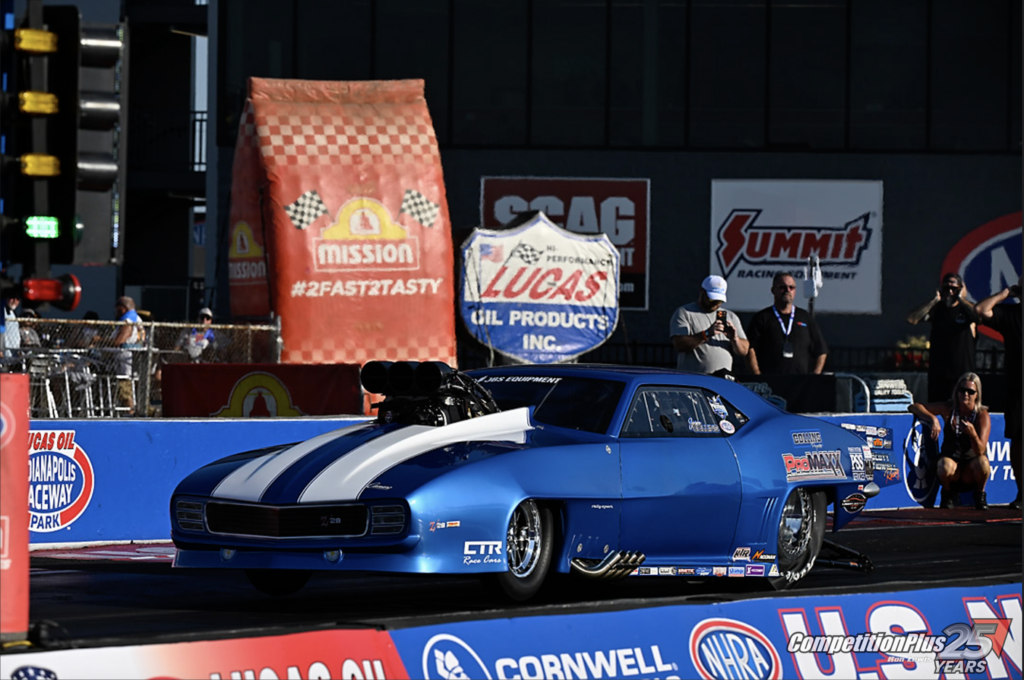
By the time Collins made his last qualifying attempt, the conversation had expanded well beyond one supercharger and into how NHRA writes technical regulations, how racers interpret them and how much latitude exists when modifications aren’t explicitly addressed.
Bond would just as soon leave Indianapolis with the controversy buried there.
“But as far as the blower controversy, I think it just needs to go away and die,” Bond said. “We need to stop talking about it. And that’s all I have to say on that.”
NHRA, however, may not have that luxury.
Tidwell wants the rulebook clarified. Grim wants teams to approach the Tech Department before making modifications that could affect certification or safety, rather than forcing officials to sort through those questions after the cars have already gone down the racetrack.
“The NHRA Tech Dept continues to strive for relationships that promote teams asking for permission instead of forgiveness,” Grim said. “It is our job to provide fair competition but also to require safe competition.”