As you know, the sport of drag racing has seen plenty of innovations over the last 50-plus years. Tires, clutches, chassis and engine development have made Top Fuel dragsters the quickest and fastest race cars on the planet. But owners and drivers of these quarter-mile missiles have always wanted more speed. So why not try streamlining these dragsters to squeeze out a little more speed and a quicker elapsed time?

Now, streamlining race cars was nothing new. In fact, racers were experimenting with streamlined bodies at Bonneville back in the 1920s. By the time the 1970s rolled around, there were lighter metals to work with and some very talented body designers and builders itching to see if streamlining could work on the 1,320-foot dragstrip.

There was one problem. Drag racers have always been conscious of weight, and adding a streamlined body meant extra pounds that could affect performance and handling. I guess that’s what wind tunnel testing was for, but that could cost big bucks and take plenty of time figuring out what worked and what didn’t.

In the early 1970s, we saw an influx of streamlined Top Fuel dragsters. Some of these creations were almost practical, while others were downright absurd. Whatever the case, I was there with my camera to catch these unusual machines on film.

But here’s the big question. Did all that streamlining actually improve the speed and elapsed times of these handful of Top Fuelers? The answer was a pretty firm no. For all the work and imagination that went into these cars, streamlining never really caught on in Top Fuel.

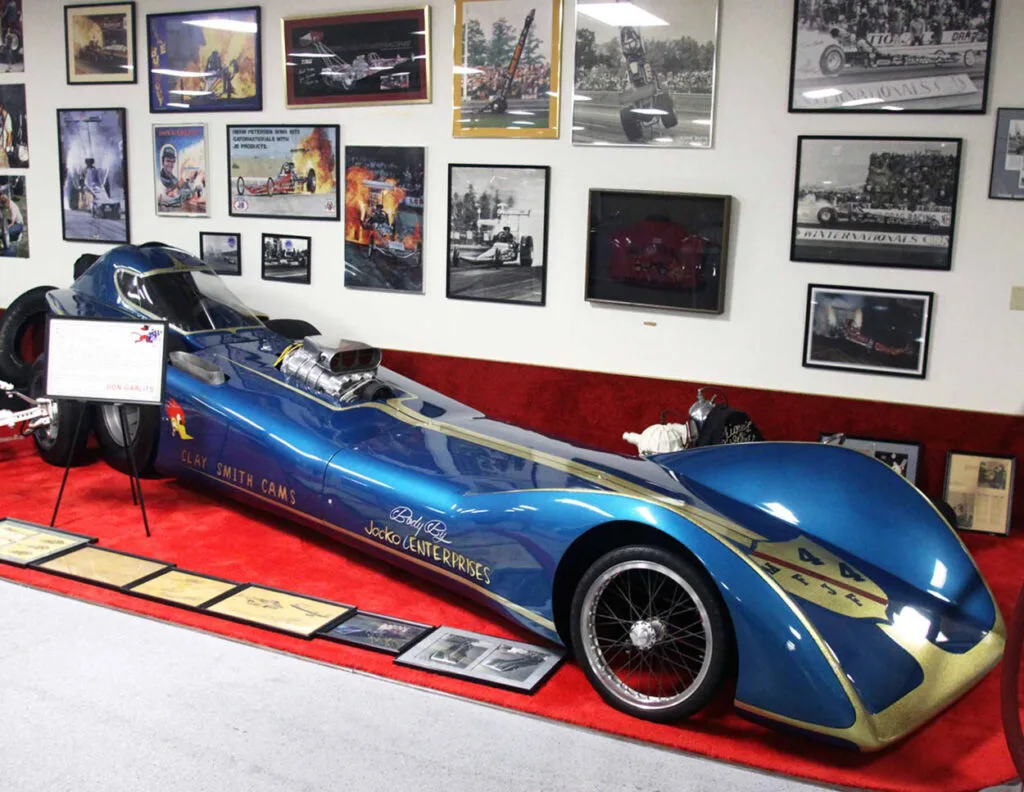
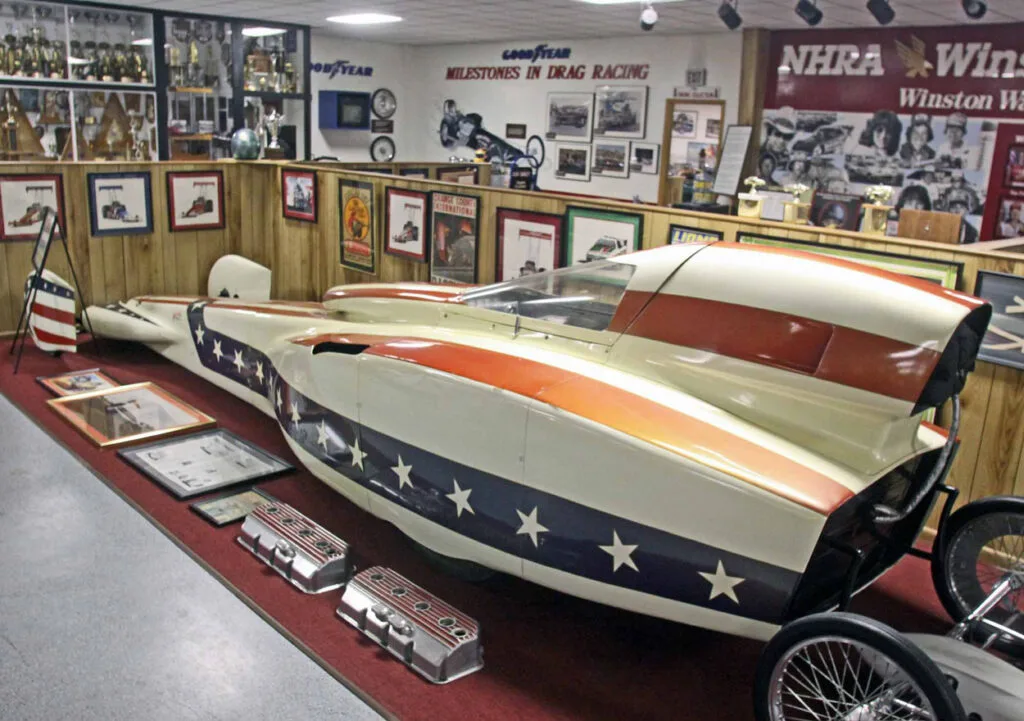
Today, the streamlined Top Fuel dragster is mostly a memory from one of drag racing’s more experimental periods. A few examples can still be found at Don Garlits’ Museum of Drag Racing in Ocala, Florida.

Fortunately, I was around to photograph some of these creations when they were actually making runs down the quarter-mile. So let’s take a look back at a time when some very creative drag racers figured the quickest way to go faster was to cover up a perfectly good dragster.

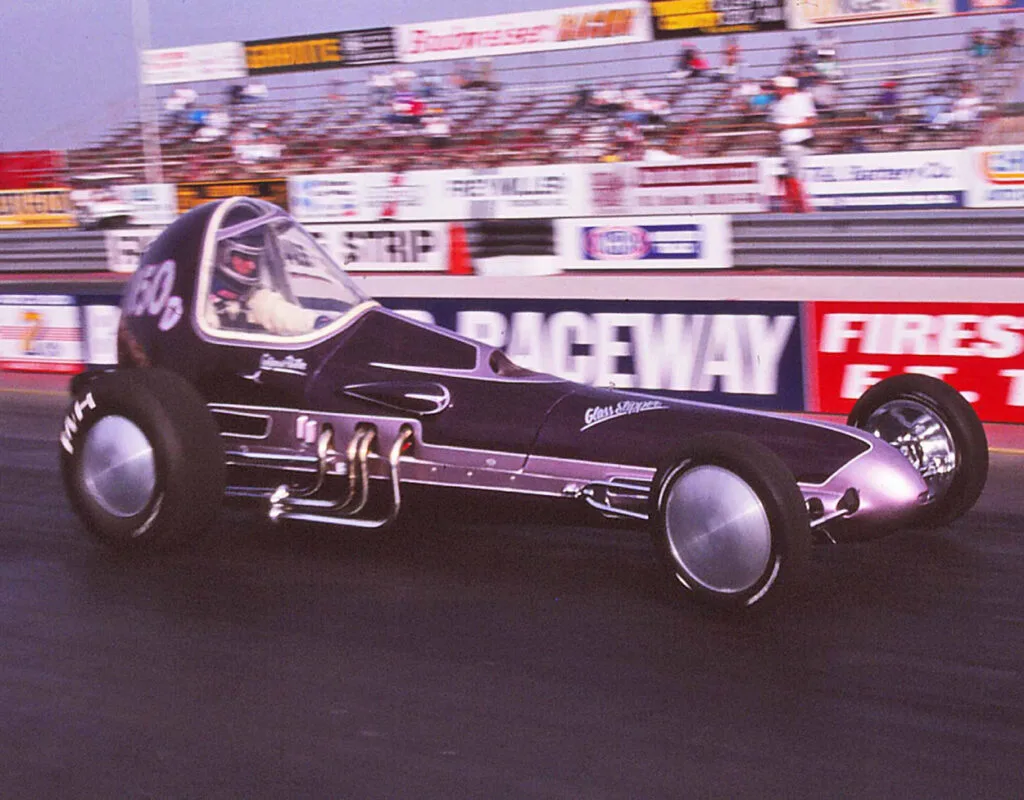
1. the glass slipper at bakersfield color copy

The restored “Glass Slipper” is a great example of early dragster streamlining. With its canopy and sleek body style, it was certainly a great-looking race car. Unfortunately, the results weren’t quite what its owners had hoped for.

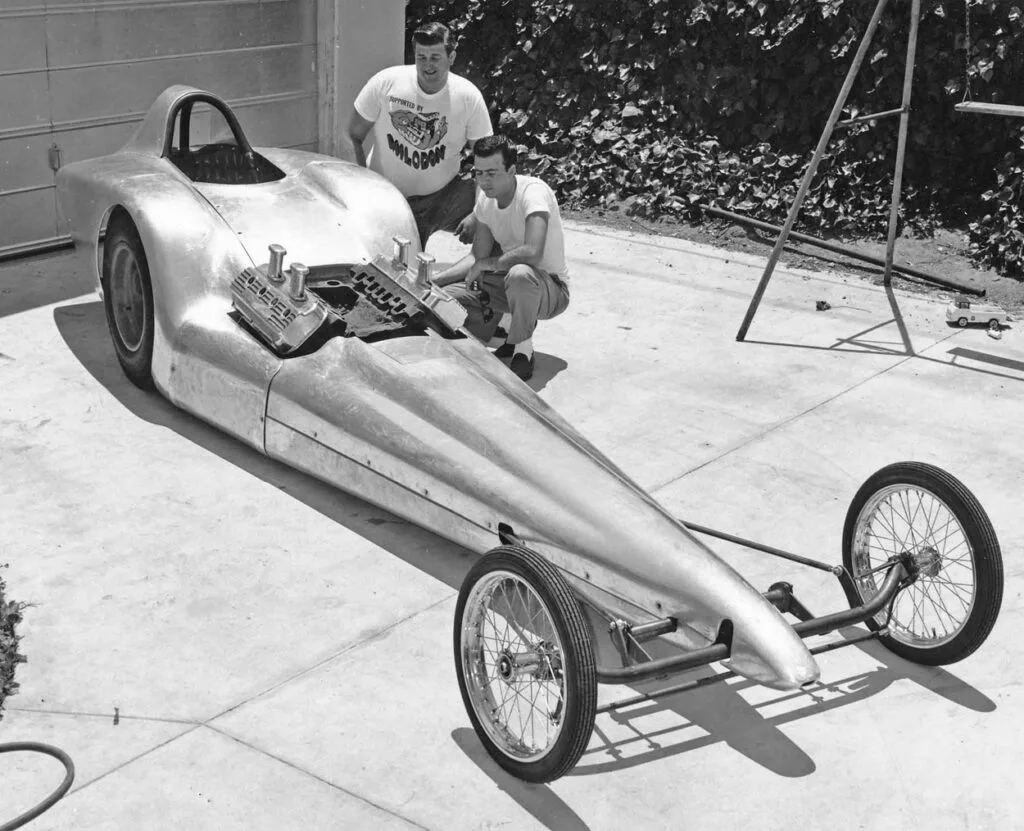
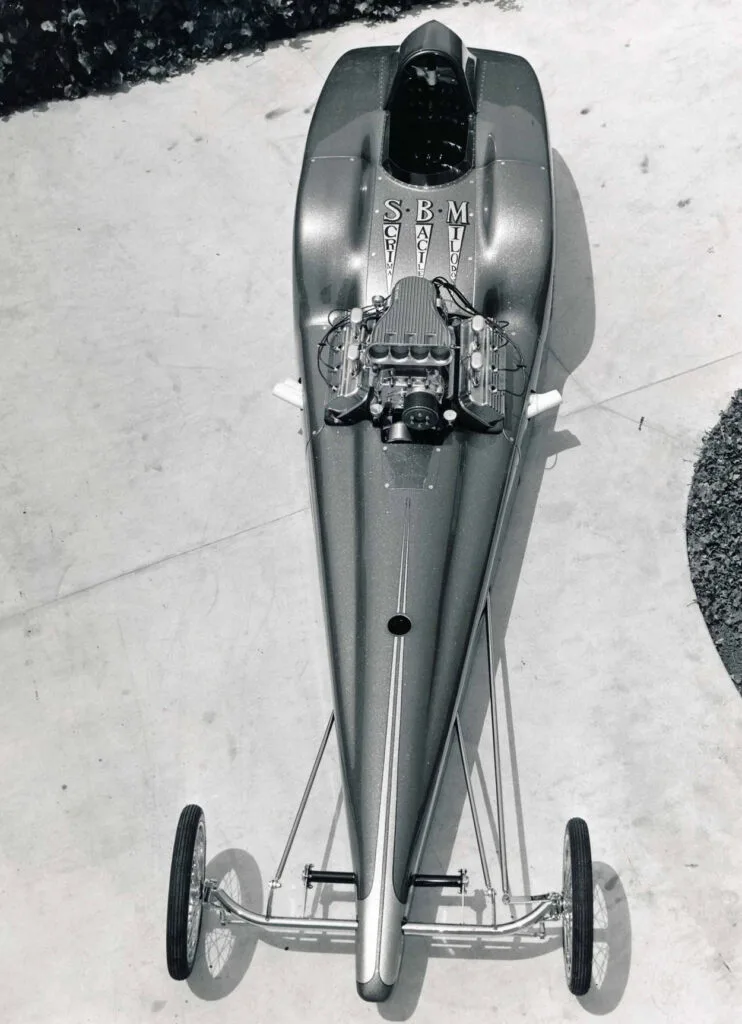
2 a. 1965 don milodon alderson with ron scrima and the scrima liner copy

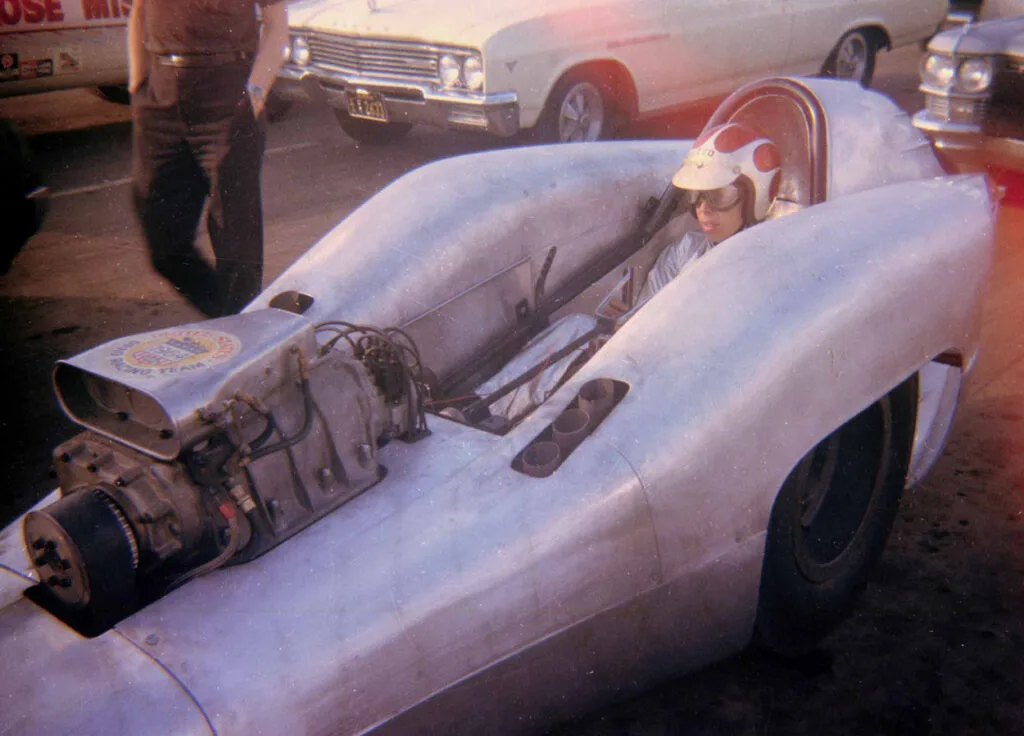
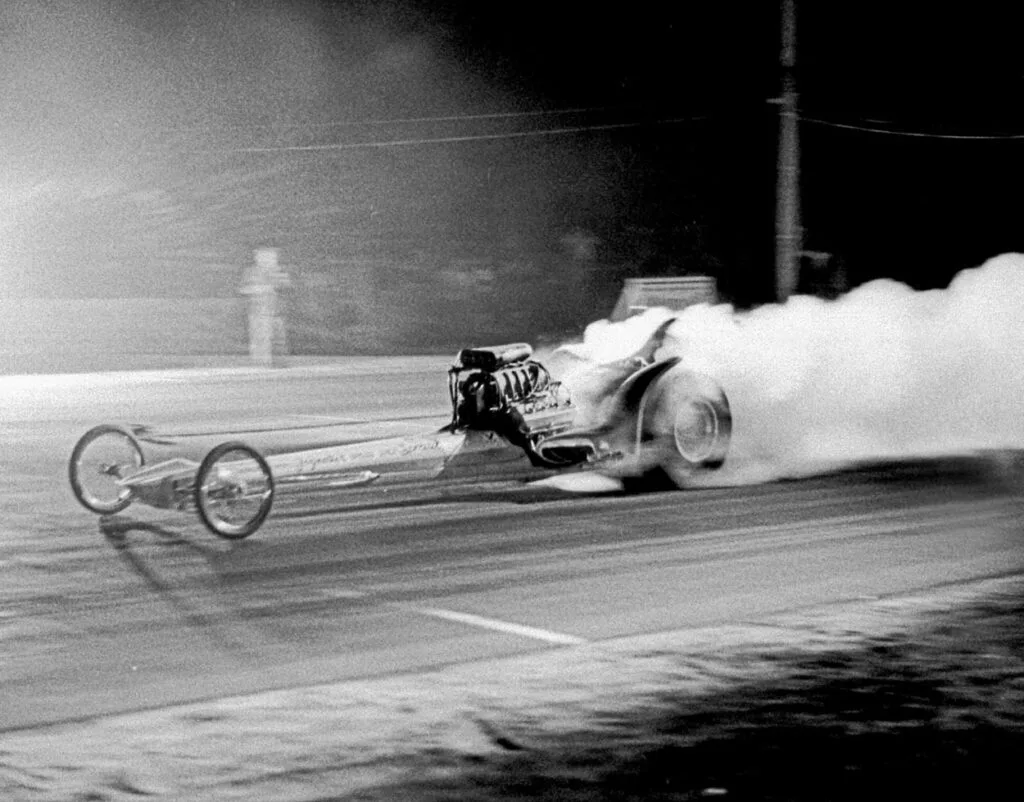
In 1965, Milodon and Ron Scrima took a big leap into the world of streamlined Top Fuel dragsters with their “Scrim-Liner.” This beauty was driven by Roy “Goob” Tuller and showed some promise during its first outings.

But as the car ran faster and quicker, handling became a concern for the team. Rather than risk a serious crash, they parked the car before something bad happened. Photos from the Greg Sharp collection.

2 b.1965 scrima liner copy
3. 1965 fremont jockos streamliner copy

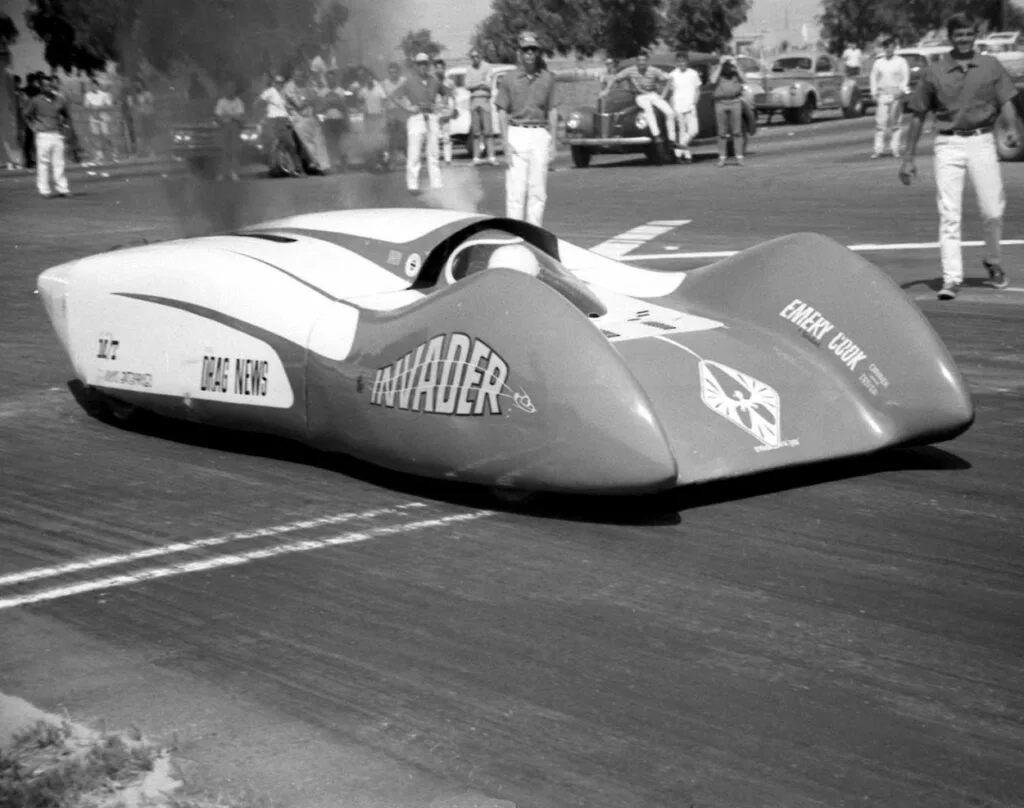
Jocko Johnson had his own ideas about streamlining when he came up with his “Invader” in 1965. Driven by Emery Cook, Johnson’s fueler was designed to accommodate either a 392 Hemi or an Allison aircraft engine.

Here at Fremont, California, the car is Allison-powered. At high speeds, the Invader had a tendency to “float” near the finish line, which wasn’t exactly a comforting feeling for the driver. The car still exists and can be seen at the Don Garlits Museum of Drag Racing in Ocala, Florida.

4. 1965 fremont tommy ivo videoliner aafd color copy

Always the showman, TV Tommy Ivo introduced his “Video-Liner” in March 1965 at Fremont, California. Following its initial test runs, Ivo had the car painted a beautiful candy red with gold leaf lettering, making it a true show-and-go race car.

Alas, handling problems near the finish line made Ivo uncomfortable behind the wheel. The Video-Liner was sold to racers in the Northwest and was never seen again. Ivo returned to a conventional Top Fuel dragster for his usual tour across the United States.

5. 1966 fremont the bushwacker aafd edited 1 copy

Sacramento, California, speed shop owner Don Tognotti took his award-winning “Bushwacker” show car Top Fueler to the racetrack in 1966, with Marc Danekas tuning and Jack “Mosquito” Martin driving. This beautiful piece of rolling art had already collected awards at car shows throughout California.

Unfortunately, the weight of its streamlined body limited the car’s performance. After a very brief fling on the 1,320, the Bushwacker returned to the car show circuit, where looking good counted for a little more than elapsed time.

6. jungle 4 car copy

In 1966, the Los Angeles-based “Jungle Four” team of Mooneyham, Jackson, Ferguson and Faust decided to try streamlining their Top Fuel dragster. Driver “Jungle” Larry Faust wasn’t particularly comfortable with the way the car handled in crosswinds during testing at Lions and San Fernando.

The team eventually replaced the streamlined body with a conventional Top Fuel body on its regular chassis. The original streamliner body still exists, mounted on a dummy chassis at the Don Garlits Museum of Drag Racing in Ocala, Florida.

7. mickey thompson panarma city special aafd

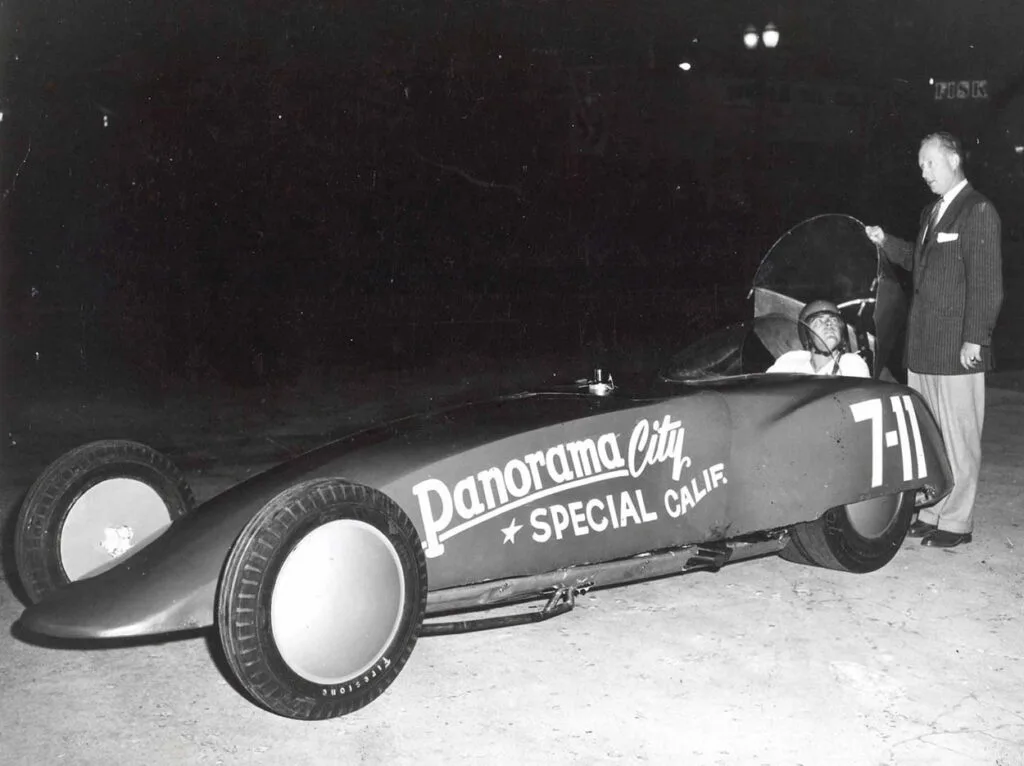
The self-proclaimed “King of Speed,” Mickey Thompson, brought out his streamlined “Panorama City Special” in 1954. At the time, it was about as state-of-the-art as a dragster could get, and of all the streamliners built and raced, Thompson’s was among the most successful.

Mickey took the car to the 1955 NHRA Nationals in Great Bend, Kansas, where he finished runner-up to Calvin Rice for Top Eliminator honors. The Panorama City Special can also be found at the Don Garlits Museum of Drag Racing in Ocala, Florida. Photo from the Greg Sharp collection.

8. breedlove 2 copy

When land-speed legend Craig Breedlove decided to try Top Fuel racing in the mid-1960s, this streamlined dragster was his race car of choice. It certainly looked impressive, but the extra weight made it something of a slug on the racetrack.

Breedlove didn’t have the money or time to work all the bugs out of the car, so the project was abandoned. Today, the dragster rests at the Don Garlits Museum of Drag Racing in Ocala, Florida.

9. lisa and rossi doorstop at ontario color copy

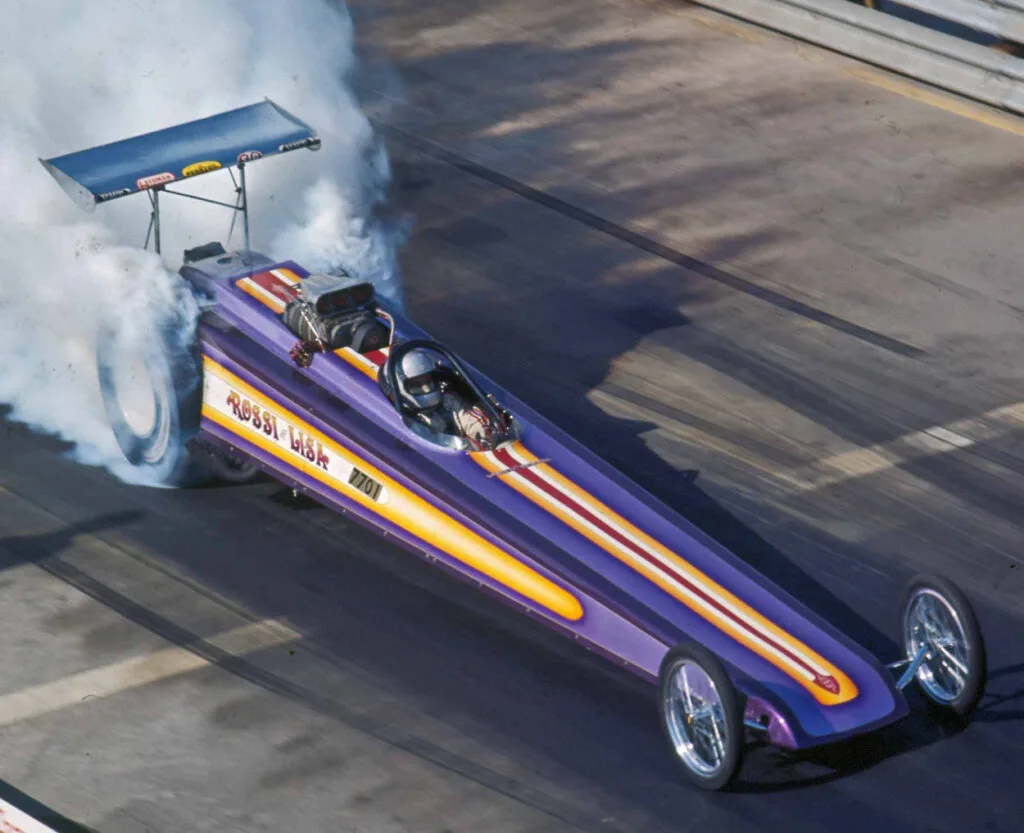
The Southern California team of Lisa and Rossi brought its “Flying Doorstop” into the Top Fuel wars in the early 1970s. Over the three or four years it raced, the car had Bill Tidwell, Jack “Mosquito” Martin and Danny Ongais, pictured here, taking turns behind the wheel.

Of course, the weight of the streamlined body eventually became a factor. The Flying Doorstop was replaced by a conventional Top Fuel dragster, with Tony “The Loner” Nancy taking over the driving duties.

10. 1971 ocir leland kolb aafd 1 copy

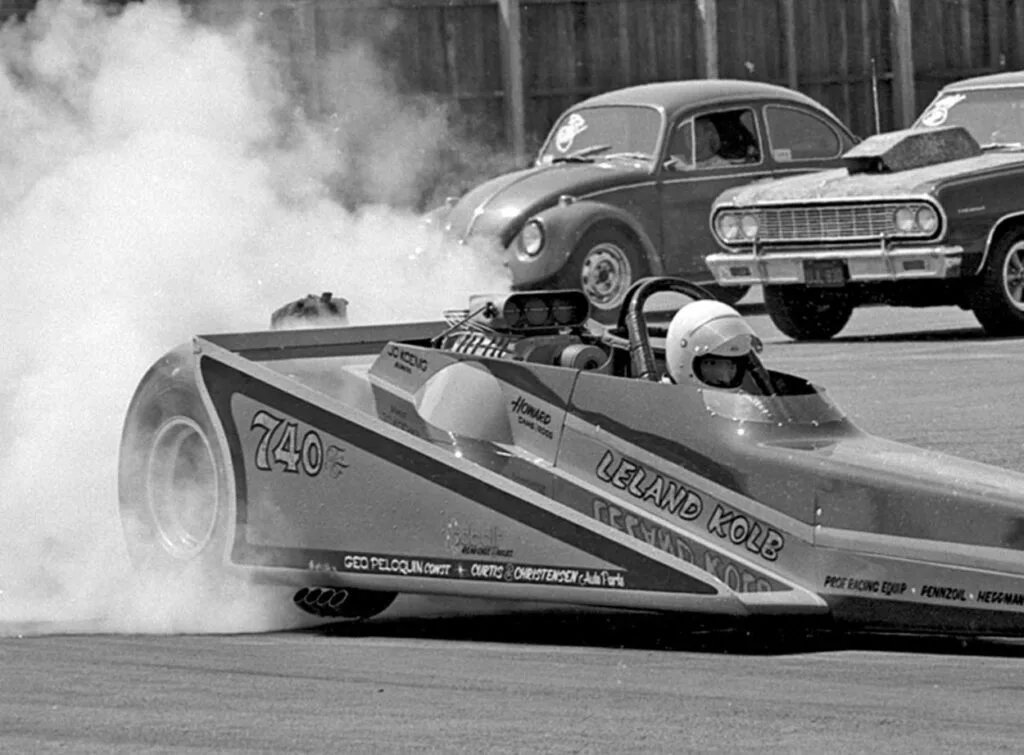
Longtime Top Fuel racer Leland Kolb helped start the wedge-style dragster craze in 1971 with his “Polish Lotus.” Almost overnight, other wedge-style Top Fuelers began appearing, including cars from Pancho Rendon in Michigan, Chris Karamesines in Chicago, Dan Olson in Fresno, California, and Don Prudhomme in Granada Hills, California.

Those wedges didn’t last very long. Once again, the extra body weight became an issue, and most were converted back to conventional Top Fuel dragsters.

There was one exception. Pancho Rendon’s wedge was destroyed in a spectacular crash at Indianapolis in 1971, with driver Connie Kalitta walking away with bumps and bruises. Rendon returned with a conventional Top Fuel dragster in 1972.

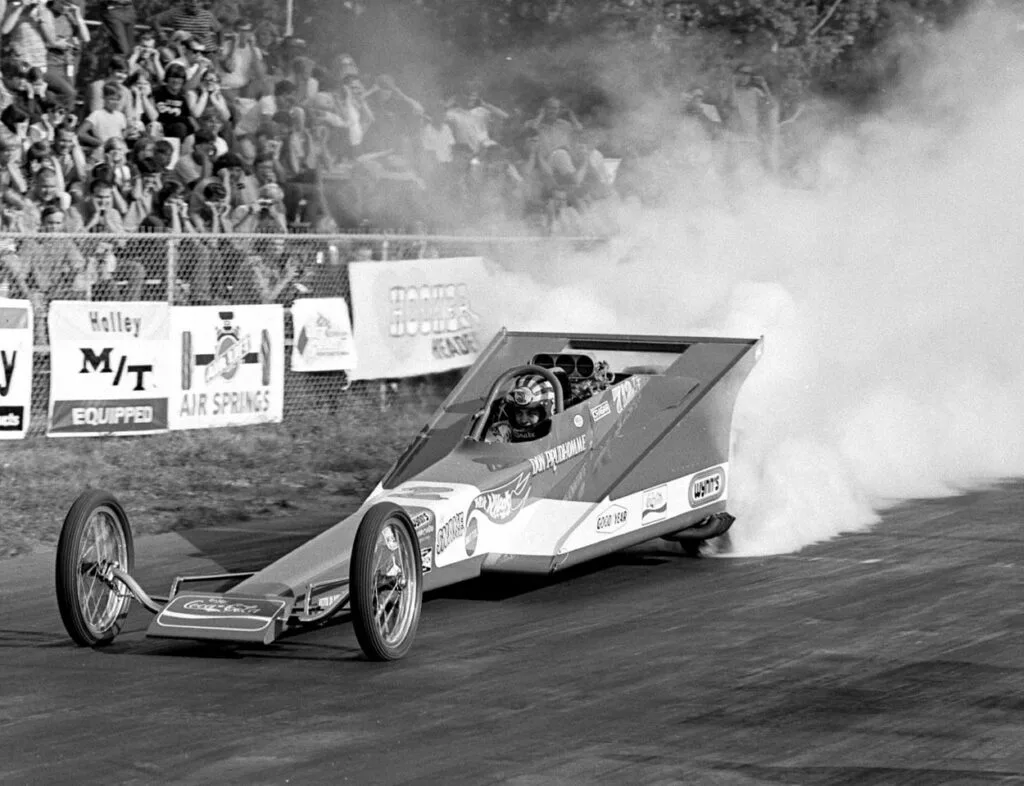
11. top fuel wedge snake 1 copy

Don Prudhomme joined the streamliner and wedge movement in 1971 with this beautiful red Wynn’s/Hot Wheels Top Fuel dragster. Unfortunately, the car didn’t perform the way Prudhomme expected, and it wasn’t long before the wedge bodywork was removed in search of better performance.

The following season, Don traded the wedge design for his “Feather” Top Fuel dragster and began winning again. Sometimes the old-fashioned approach works just fine.

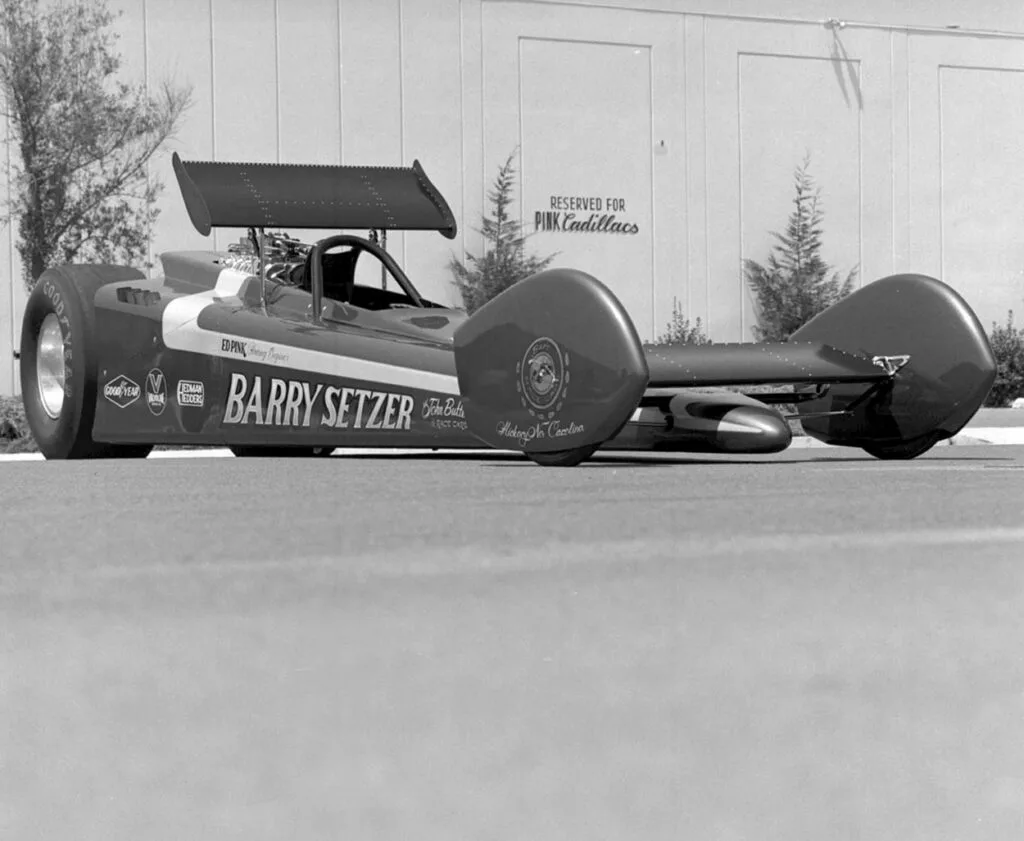
12 a.1972 buttera built barry setzer wedge 1 copy

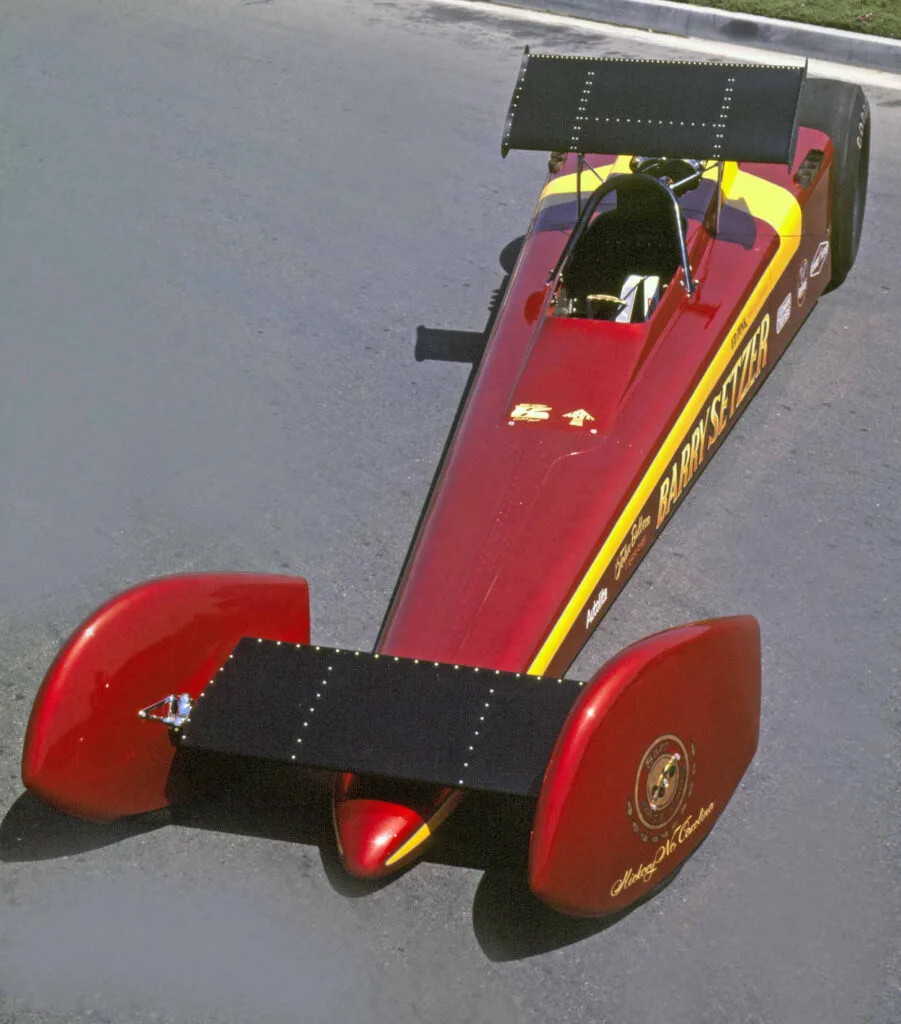
In 1972, Barry Setzer planned to enter Top Fuel racing with this beautiful John Buttera-built, Monique-style dragster. The workmanship was outstanding, but things went terribly wrong during testing at Orange County International Raceway.

Driver Pat Foster made one very easy pass to see how the car would handle. On the second run, however, the dragster stood up on its tail, forcing Foster to get off the throttle before the car could blow over.

The car slammed back to earth and suffered extensive damage. It was returned to Buttera’s shop, where it sat for years before eventually being repaired. Today, the dragster resides at the Don Garlits Museum of Drag Racing in Ocala, Florida.

12 b. top fuel barry setzer top fuel color 2 copy
13 a. top fuel american way re car top fueler color copy

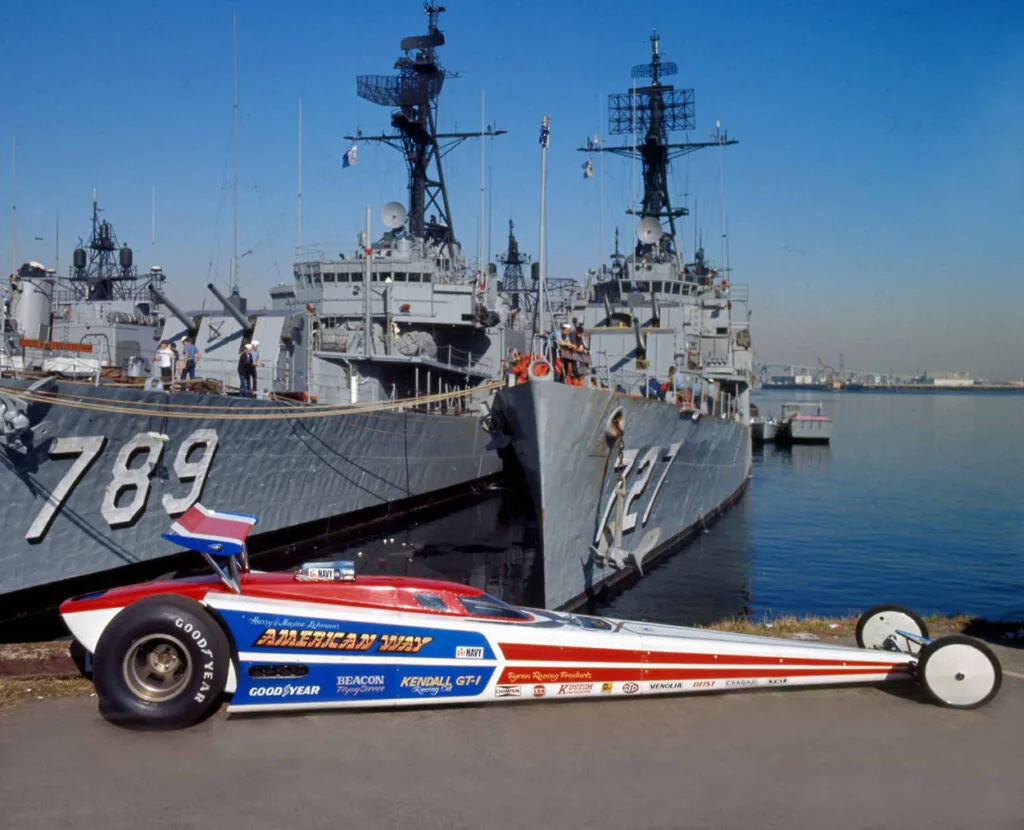
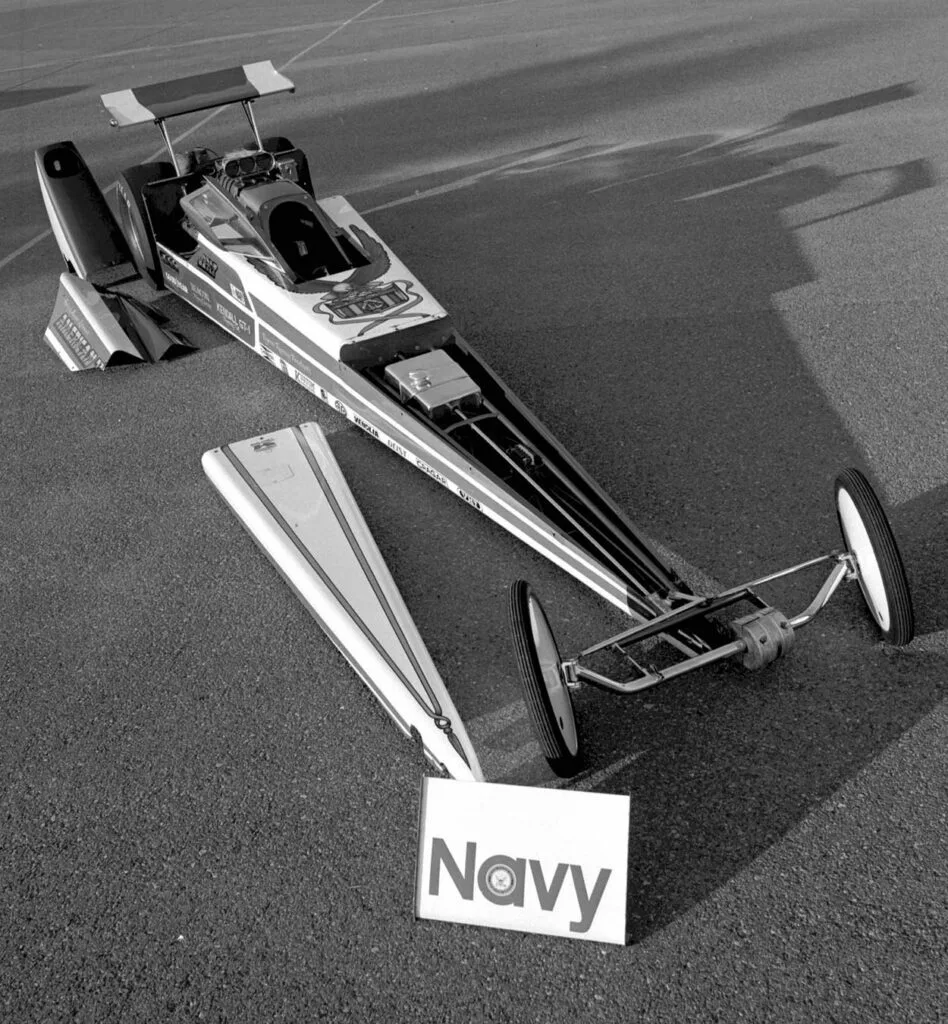
The husband-and-wife team of Harry and Maxine Lehmann debuted their “American Way” streamliner in 1972. The East Coast couple had a major problem before the car ever got going, as their driver, Al Friedman, had died suddenly at just 26 years old.

The new streamliner had been built around Friedman, who was a very small guy. Finding another driver who could fit inside the car wasn’t going to be easy.

The Lehmanns eventually found veteran Top Fuel and Fuel Altered driver Howard Haight on the West Coast. Haight was close enough to Friedman’s size to fit the car, so he became the new driver of the American Way.

Unfortunately, the car proved once again that all that extra body weight wasn’t doing much to help performance. The Lehmanns eventually parked their streamlined creation.

13 b.top fuel american way 3 copy
14. 1973 ocir fred mooneyham streamliner 2 copy

Not many race fans got to see “Fearless Fred” Mooneyham behind the wheel of the Mooneyham & Sons wedge-style Top Fuel dragster in 1973. I caught the car at Orange County International Raceway, and it was certainly an unusual sight.

Rumor has it the car didn’t perform very well and was eventually cut up for scrap metal. All I know is that I only saw or heard of it that one time at OCIR.

15.1973 ocir wynns liner garlits butch maas 2 copy

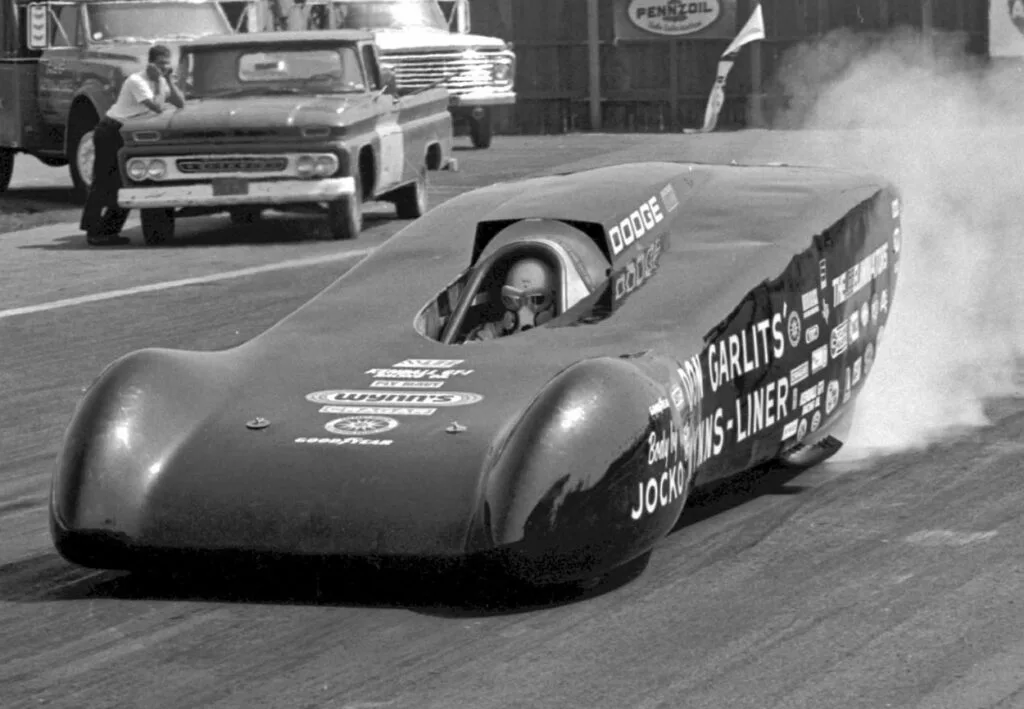
Don Garlits decided to try streamlining in 1973 with his Jocko Johnson-inspired “Wynn’s-Liner.” Garlits had several drivers test the car in Florida and Southern California, and they all came back with pretty much the same complaint.

The car had a tendency to “search” near the finish line, making it a scary ride at high speeds. Don Cook, Connie Swingle and Butch Maas all spent time behind the wheel and reported similar handling problems.

Pictured here is Maas driving the Wynn’s-Liner at Orange County International Raceway. And yes, the car was quickly parked and now resides in Don’s museum in Ocala, Florida.

16. herm petersen lotus style top fuel dragster at pomona color rescan copy

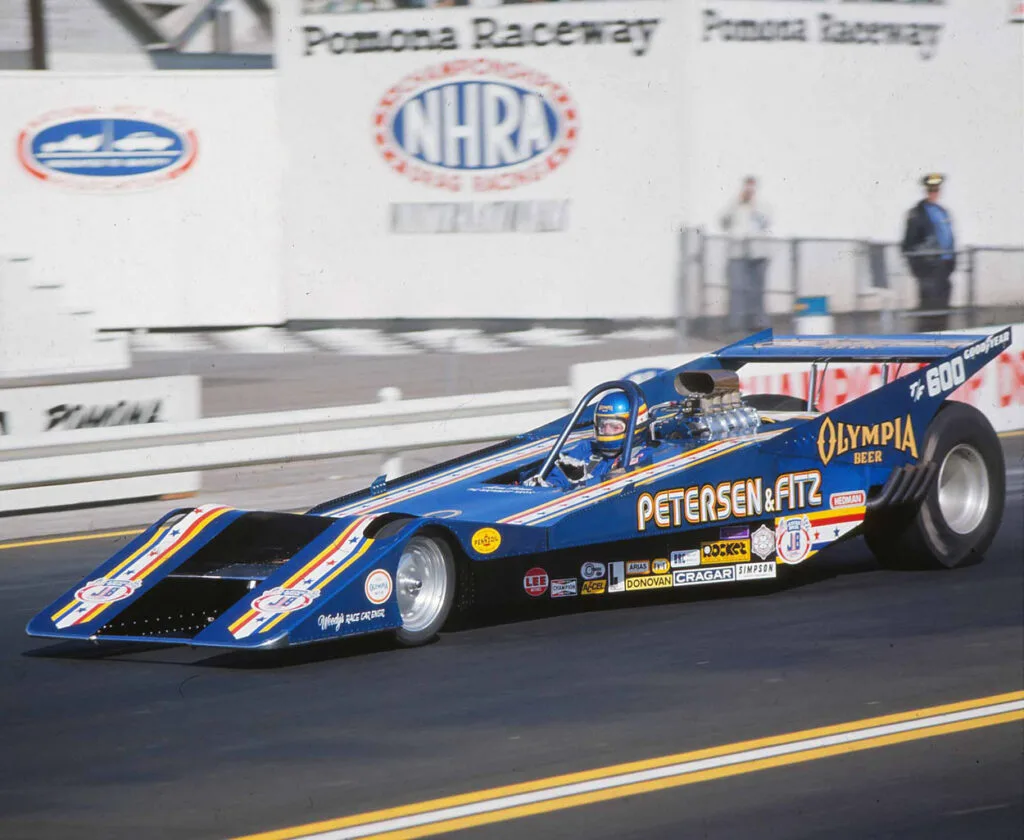
Making its debut in February 1974 was the Lotus-style Top Fuel dragster of Petersen & Fitz. The Northwest-based team had Herm Petersen handling the driving duties in this unusual-looking machine.

Once again, the car looked cool, but looking cool doesn’t win drag races. The team discovered that the extra body weight was hurting performance, and the streamliner was soon parked. It now resides at the Don Garlits Museum of Drag Racing.

17. sammy miller aafd in color copy

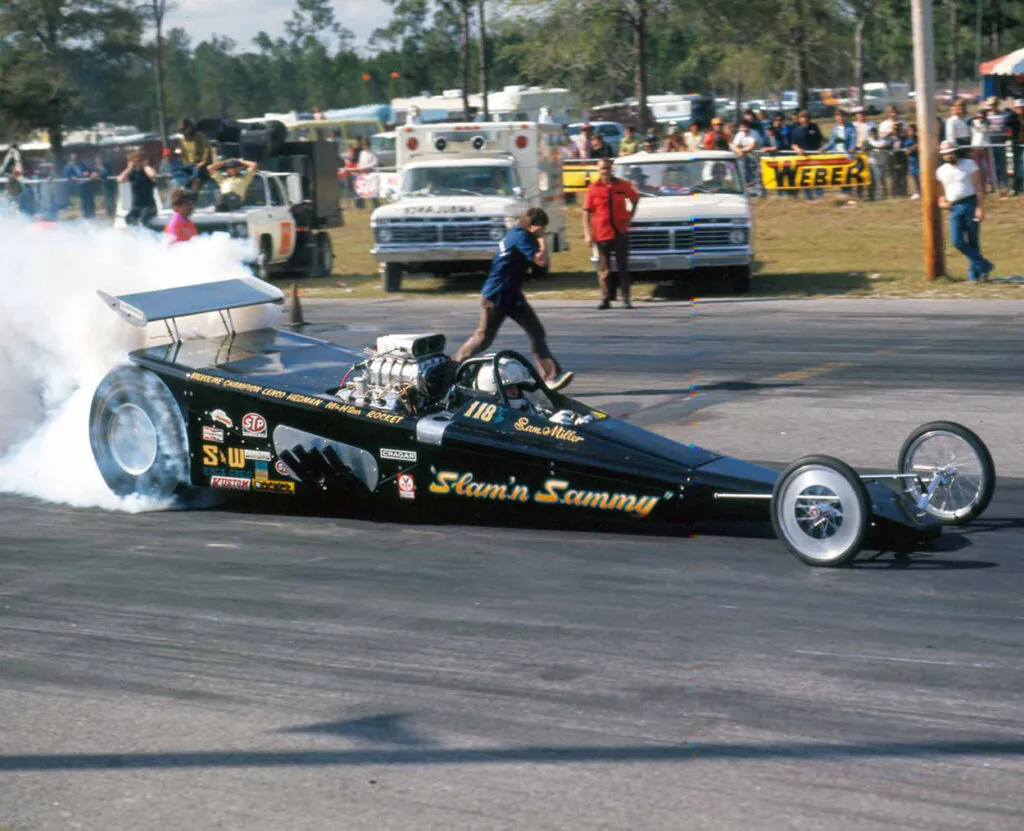
Sam Miller left the Funny Car ranks in the mid-1970s to try Top Fuel racing with this short-wheelbase, wedge-style dragster. It was certainly different from the conventional fuelers of the period, but its career didn’t leave much of an impression on me.

The last time I saw this car, it was on fire. After that, it seemed to vanish.

Miller returned to his Funny Car roots in 1978 with the rocket-powered “Vanishing Point,” which he primarily raced in Europe.

18. dunn and krause streamliner at ocir copy

Now, this one was kind of strange. It’s the Dunn, Reath and Kruse streamliner, a Top Fuel experiment involving the Dunn & Reath Funny Car operation and a streamlined body built by Doug Kruse.

I believe the car made some runs in Top Fuel around 1973. The team was serious enough about the project to have the body painted, and the car even managed to get featured in a few magazines.

The last time I saw that streamlined body, it was strapped to the roof of a beat-up station wagon headed from Fremont to Los Angeles. I haven’t seen it since, and I’d sure like to know whatever happened to it.

19. don durbin aafd copy

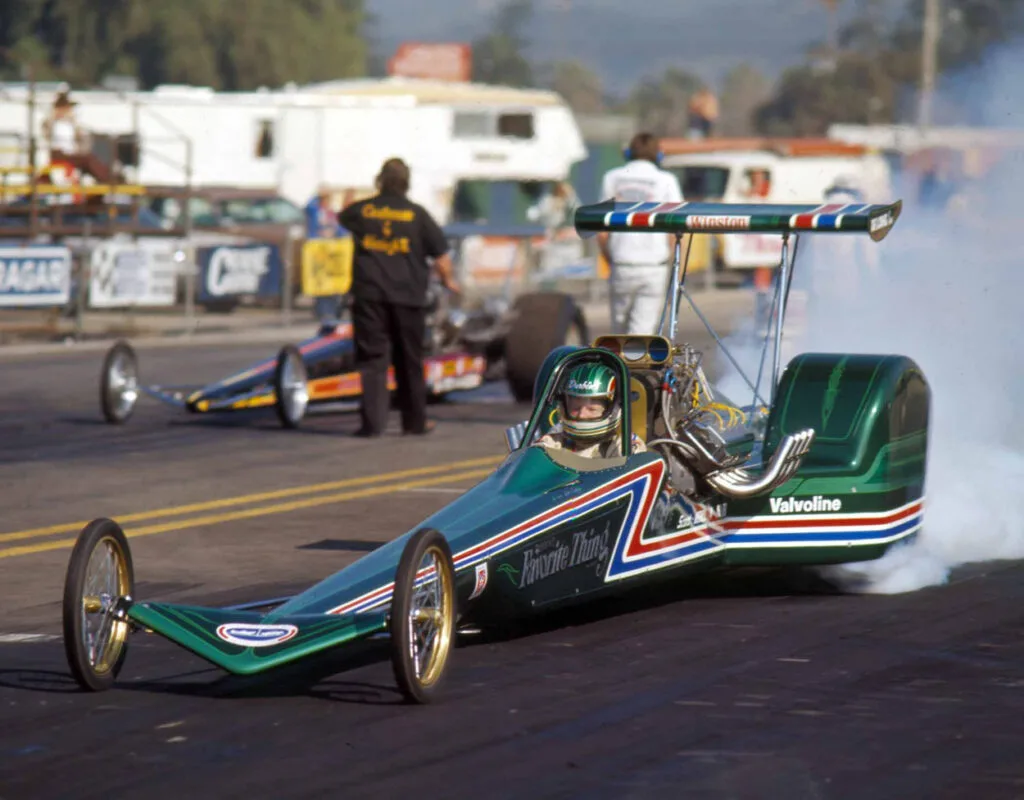
Top Fuel owner and driver Don Durbin decided to try a semi-streamlined look on his “Favorite Thing” dragster. The car featured rear body covers designed to give it a little aerodynamic advantage.

Unfortunately, the results were disappointing, and the rear covers were eventually removed. Another case of a streamlined idea that looked better than it performed.

20. top fuel bike jay upton from australia color 3 copy

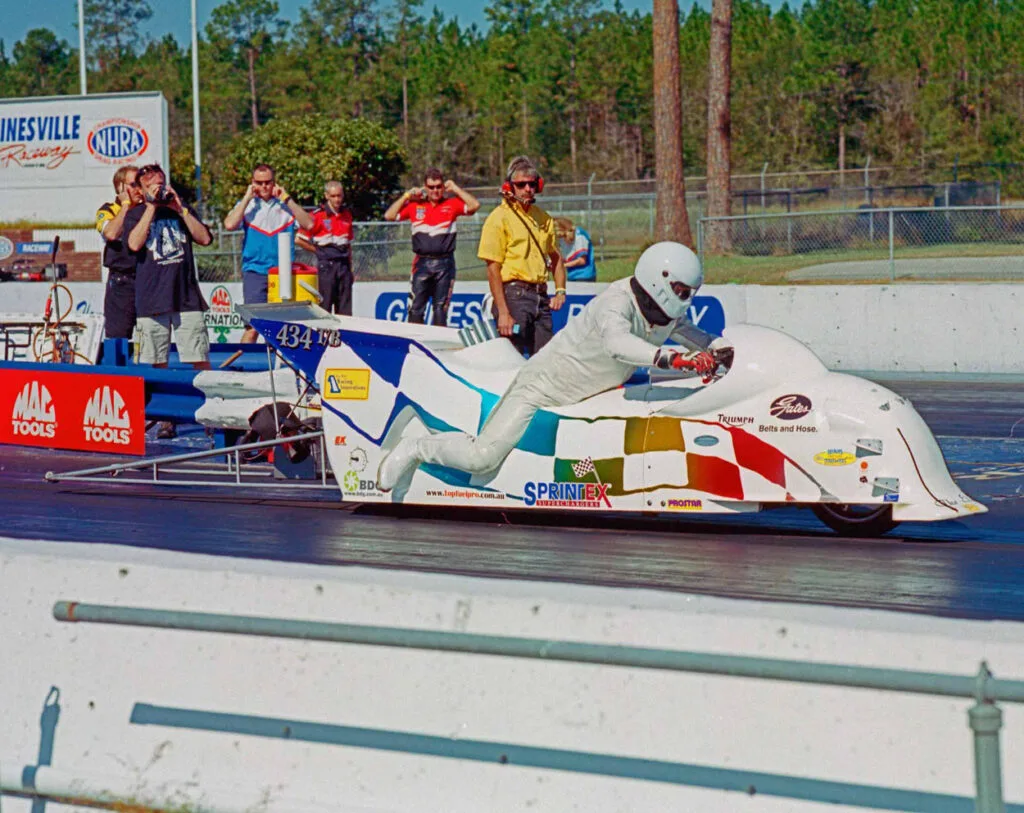
The last streamliner I photographed was at Gainesville, Florida, during a Top Fuel motorcycle event more than 20 years ago. Australian racer Jay Upton had brought his streamlined Top Fuel bike to the event, and it certainly caught my attention.

Upton didn’t exactly set the world on fire with his speeds or elapsed times that weekend. Nothing particularly special showed up on the clocks, but hey, the bike looked cool!

21. sutter home streamliner roadster color copy

Share the Insights?

Click here to share the article.

ad space x ad space

ad space x ad space

Competition Plus Team

Since our inception, we have been passionately dedicated to delivering the most accurate, timely, and compelling content in the world of drag racing. Our readers depend on us for the latest news, in-depth features, expert analysis, and exclusive interviews that connect you to the sport’s pulse.


Sign up for our newsletters and email list.

This field is for validation purposes and should be left unchanged.
Name

REYES ON TOUR – THE STREAMLINERS OF THE GOOD ‘OL DAYS

As you know, the sport of drag racing has seen plenty of innovations over the last 50-plus years. Tires, clutches, chassis and engine development have made Top Fuel dragsters the quickest and fastest race cars on the planet. But owners and drivers of these quarter-mile missiles have always wanted more speed. So why not try streamlining these dragsters to squeeze out a little more speed and a quicker elapsed time?

Now, streamlining race cars was nothing new. In fact, racers were experimenting with streamlined bodies at Bonneville back in the 1920s. By the time the 1970s rolled around, there were lighter metals to work with and some very talented body designers and builders itching to see if streamlining could work on the 1,320-foot dragstrip.

There was one problem. Drag racers have always been conscious of weight, and adding a streamlined body meant extra pounds that could affect performance and handling. I guess that’s what wind tunnel testing was for, but that could cost big bucks and take plenty of time figuring out what worked and what didn’t.

In the early 1970s, we saw an influx of streamlined Top Fuel dragsters. Some of these creations were almost practical, while others were downright absurd. Whatever the case, I was there with my camera to catch these unusual machines on film.

But here’s the big question. Did all that streamlining actually improve the speed and elapsed times of these handful of Top Fuelers? The answer was a pretty firm no. For all the work and imagination that went into these cars, streamlining never really caught on in Top Fuel.

Today, the streamlined Top Fuel dragster is mostly a memory from one of drag racing’s more experimental periods. A few examples can still be found at Don Garlits’ Museum of Drag Racing in Ocala, Florida.

Fortunately, I was around to photograph some of these creations when they were actually making runs down the quarter-mile. So let’s take a look back at a time when some very creative drag racers figured the quickest way to go faster was to cover up a perfectly good dragster.

1. the glass slipper at bakersfield color copy

The restored “Glass Slipper” is a great example of early dragster streamlining. With its canopy and sleek body style, it was certainly a great-looking race car. Unfortunately, the results weren’t quite what its owners had hoped for.

2 a. 1965 don milodon alderson with ron scrima and the scrima liner copy

In 1965, Milodon and Ron Scrima took a big leap into the world of streamlined Top Fuel dragsters with their “Scrim-Liner.” This beauty was driven by Roy “Goob” Tuller and showed some promise during its first outings.

But as the car ran faster and quicker, handling became a concern for the team. Rather than risk a serious crash, they parked the car before something bad happened. Photos from the Greg Sharp collection.

2 b.1965 scrima liner copy
3. 1965 fremont jockos streamliner copy

Jocko Johnson had his own ideas about streamlining when he came up with his “Invader” in 1965. Driven by Emery Cook, Johnson’s fueler was designed to accommodate either a 392 Hemi or an Allison aircraft engine.

Here at Fremont, California, the car is Allison-powered. At high speeds, the Invader had a tendency to “float” near the finish line, which wasn’t exactly a comforting feeling for the driver. The car still exists and can be seen at the Don Garlits Museum of Drag Racing in Ocala, Florida.

4. 1965 fremont tommy ivo videoliner aafd color copy

Always the showman, TV Tommy Ivo introduced his “Video-Liner” in March 1965 at Fremont, California. Following its initial test runs, Ivo had the car painted a beautiful candy red with gold leaf lettering, making it a true show-and-go race car.

Alas, handling problems near the finish line made Ivo uncomfortable behind the wheel. The Video-Liner was sold to racers in the Northwest and was never seen again. Ivo returned to a conventional Top Fuel dragster for his usual tour across the United States.

5. 1966 fremont the bushwacker aafd edited 1 copy

Sacramento, California, speed shop owner Don Tognotti took his award-winning “Bushwacker” show car Top Fueler to the racetrack in 1966, with Marc Danekas tuning and Jack “Mosquito” Martin driving. This beautiful piece of rolling art had already collected awards at car shows throughout California.

Unfortunately, the weight of its streamlined body limited the car’s performance. After a very brief fling on the 1,320, the Bushwacker returned to the car show circuit, where looking good counted for a little more than elapsed time.

6. jungle 4 car copy

In 1966, the Los Angeles-based “Jungle Four” team of Mooneyham, Jackson, Ferguson and Faust decided to try streamlining their Top Fuel dragster. Driver “Jungle” Larry Faust wasn’t particularly comfortable with the way the car handled in crosswinds during testing at Lions and San Fernando.

The team eventually replaced the streamlined body with a conventional Top Fuel body on its regular chassis. The original streamliner body still exists, mounted on a dummy chassis at the Don Garlits Museum of Drag Racing in Ocala, Florida.

7. mickey thompson panarma city special aafd

The self-proclaimed “King of Speed,” Mickey Thompson, brought out his streamlined “Panorama City Special” in 1954. At the time, it was about as state-of-the-art as a dragster could get, and of all the streamliners built and raced, Thompson’s was among the most successful.

Mickey took the car to the 1955 NHRA Nationals in Great Bend, Kansas, where he finished runner-up to Calvin Rice for Top Eliminator honors. The Panorama City Special can also be found at the Don Garlits Museum of Drag Racing in Ocala, Florida. Photo from the Greg Sharp collection.

8. breedlove 2 copy

When land-speed legend Craig Breedlove decided to try Top Fuel racing in the mid-1960s, this streamlined dragster was his race car of choice. It certainly looked impressive, but the extra weight made it something of a slug on the racetrack.

Breedlove didn’t have the money or time to work all the bugs out of the car, so the project was abandoned. Today, the dragster rests at the Don Garlits Museum of Drag Racing in Ocala, Florida.

9. lisa and rossi doorstop at ontario color copy

The Southern California team of Lisa and Rossi brought its “Flying Doorstop” into the Top Fuel wars in the early 1970s. Over the three or four years it raced, the car had Bill Tidwell, Jack “Mosquito” Martin and Danny Ongais, pictured here, taking turns behind the wheel.

Of course, the weight of the streamlined body eventually became a factor. The Flying Doorstop was replaced by a conventional Top Fuel dragster, with Tony “The Loner” Nancy taking over the driving duties.

10. 1971 ocir leland kolb aafd 1 copy

Longtime Top Fuel racer Leland Kolb helped start the wedge-style dragster craze in 1971 with his “Polish Lotus.” Almost overnight, other wedge-style Top Fuelers began appearing, including cars from Pancho Rendon in Michigan, Chris Karamesines in Chicago, Dan Olson in Fresno, California, and Don Prudhomme in Granada Hills, California.

Those wedges didn’t last very long. Once again, the extra body weight became an issue, and most were converted back to conventional Top Fuel dragsters.

There was one exception. Pancho Rendon’s wedge was destroyed in a spectacular crash at Indianapolis in 1971, with driver Connie Kalitta walking away with bumps and bruises. Rendon returned with a conventional Top Fuel dragster in 1972.

11. top fuel wedge snake 1 copy

Don Prudhomme joined the streamliner and wedge movement in 1971 with this beautiful red Wynn’s/Hot Wheels Top Fuel dragster. Unfortunately, the car didn’t perform the way Prudhomme expected, and it wasn’t long before the wedge bodywork was removed in search of better performance.

The following season, Don traded the wedge design for his “Feather” Top Fuel dragster and began winning again. Sometimes the old-fashioned approach works just fine.

12 a.1972 buttera built barry setzer wedge 1 copy

In 1972, Barry Setzer planned to enter Top Fuel racing with this beautiful John Buttera-built, Monique-style dragster. The workmanship was outstanding, but things went terribly wrong during testing at Orange County International Raceway.

Driver Pat Foster made one very easy pass to see how the car would handle. On the second run, however, the dragster stood up on its tail, forcing Foster to get off the throttle before the car could blow over.

The car slammed back to earth and suffered extensive damage. It was returned to Buttera’s shop, where it sat for years before eventually being repaired. Today, the dragster resides at the Don Garlits Museum of Drag Racing in Ocala, Florida.

12 b. top fuel barry setzer top fuel color 2 copy
13 a. top fuel american way re car top fueler color copy

The husband-and-wife team of Harry and Maxine Lehmann debuted their “American Way” streamliner in 1972. The East Coast couple had a major problem before the car ever got going, as their driver, Al Friedman, had died suddenly at just 26 years old.

The new streamliner had been built around Friedman, who was a very small guy. Finding another driver who could fit inside the car wasn’t going to be easy.

The Lehmanns eventually found veteran Top Fuel and Fuel Altered driver Howard Haight on the West Coast. Haight was close enough to Friedman’s size to fit the car, so he became the new driver of the American Way.

Unfortunately, the car proved once again that all that extra body weight wasn’t doing much to help performance. The Lehmanns eventually parked their streamlined creation.

13 b.top fuel american way 3 copy
14. 1973 ocir fred mooneyham streamliner 2 copy

Not many race fans got to see “Fearless Fred” Mooneyham behind the wheel of the Mooneyham & Sons wedge-style Top Fuel dragster in 1973. I caught the car at Orange County International Raceway, and it was certainly an unusual sight.

Rumor has it the car didn’t perform very well and was eventually cut up for scrap metal. All I know is that I only saw or heard of it that one time at OCIR.

15.1973 ocir wynns liner garlits butch maas 2 copy

Don Garlits decided to try streamlining in 1973 with his Jocko Johnson-inspired “Wynn’s-Liner.” Garlits had several drivers test the car in Florida and Southern California, and they all came back with pretty much the same complaint.

The car had a tendency to “search” near the finish line, making it a scary ride at high speeds. Don Cook, Connie Swingle and Butch Maas all spent time behind the wheel and reported similar handling problems.

Pictured here is Maas driving the Wynn’s-Liner at Orange County International Raceway. And yes, the car was quickly parked and now resides in Don’s museum in Ocala, Florida.

16. herm petersen lotus style top fuel dragster at pomona color rescan copy

Making its debut in February 1974 was the Lotus-style Top Fuel dragster of Petersen & Fitz. The Northwest-based team had Herm Petersen handling the driving duties in this unusual-looking machine.

Once again, the car looked cool, but looking cool doesn’t win drag races. The team discovered that the extra body weight was hurting performance, and the streamliner was soon parked. It now resides at the Don Garlits Museum of Drag Racing.

17. sammy miller aafd in color copy

Sam Miller left the Funny Car ranks in the mid-1970s to try Top Fuel racing with this short-wheelbase, wedge-style dragster. It was certainly different from the conventional fuelers of the period, but its career didn’t leave much of an impression on me.

The last time I saw this car, it was on fire. After that, it seemed to vanish.

Miller returned to his Funny Car roots in 1978 with the rocket-powered “Vanishing Point,” which he primarily raced in Europe.

18. dunn and krause streamliner at ocir copy

Now, this one was kind of strange. It’s the Dunn, Reath and Kruse streamliner, a Top Fuel experiment involving the Dunn & Reath Funny Car operation and a streamlined body built by Doug Kruse.

I believe the car made some runs in Top Fuel around 1973. The team was serious enough about the project to have the body painted, and the car even managed to get featured in a few magazines.

The last time I saw that streamlined body, it was strapped to the roof of a beat-up station wagon headed from Fremont to Los Angeles. I haven’t seen it since, and I’d sure like to know whatever happened to it.

19. don durbin aafd copy

Top Fuel owner and driver Don Durbin decided to try a semi-streamlined look on his “Favorite Thing” dragster. The car featured rear body covers designed to give it a little aerodynamic advantage.
Unfortunately, the results were disappointing, and the rear covers were eventually removed. Another case of a streamlined idea that looked better than it performed.
20. top fuel bike jay upton from australia color 3 copy

The last streamliner I photographed was at Gainesville, Florida, during a Top Fuel motorcycle event more than 20 years ago. Australian racer Jay Upton had brought his streamlined Top Fuel bike to the event, and it certainly caught my attention.

Upton didn’t exactly set the world on fire with his speeds or elapsed times that weekend. Nothing particularly special showed up on the clocks, but hey, the bike looked cool!

21. sutter home streamliner roadster color copy
Picture of John Doe

John Doe

Lorem ipsum dolor sit amet consectetur adipiscing elit dolor

More Posts

Send Us A Message

Don’t miss these other exciting stories!

Explore more action packed posts on Competition Plus, where we dive into the latest in Drag Racing News. Discover a range of topics, from race coverage to in-depth interviews, to keep you informed and entertained.