Ron Lewis was only 14 years old when Woodstock, the iconic music festival in Bethel, N.Y., took place, and he didn’t get to go. But 20 years later, he traveled 604 miles south from Upstate New York to another kind of Woodstock.
This festival featured a different kind of performer — one that corralled 4,000 horsepower for 1,320 feet and produced an entirely different soundtrack.
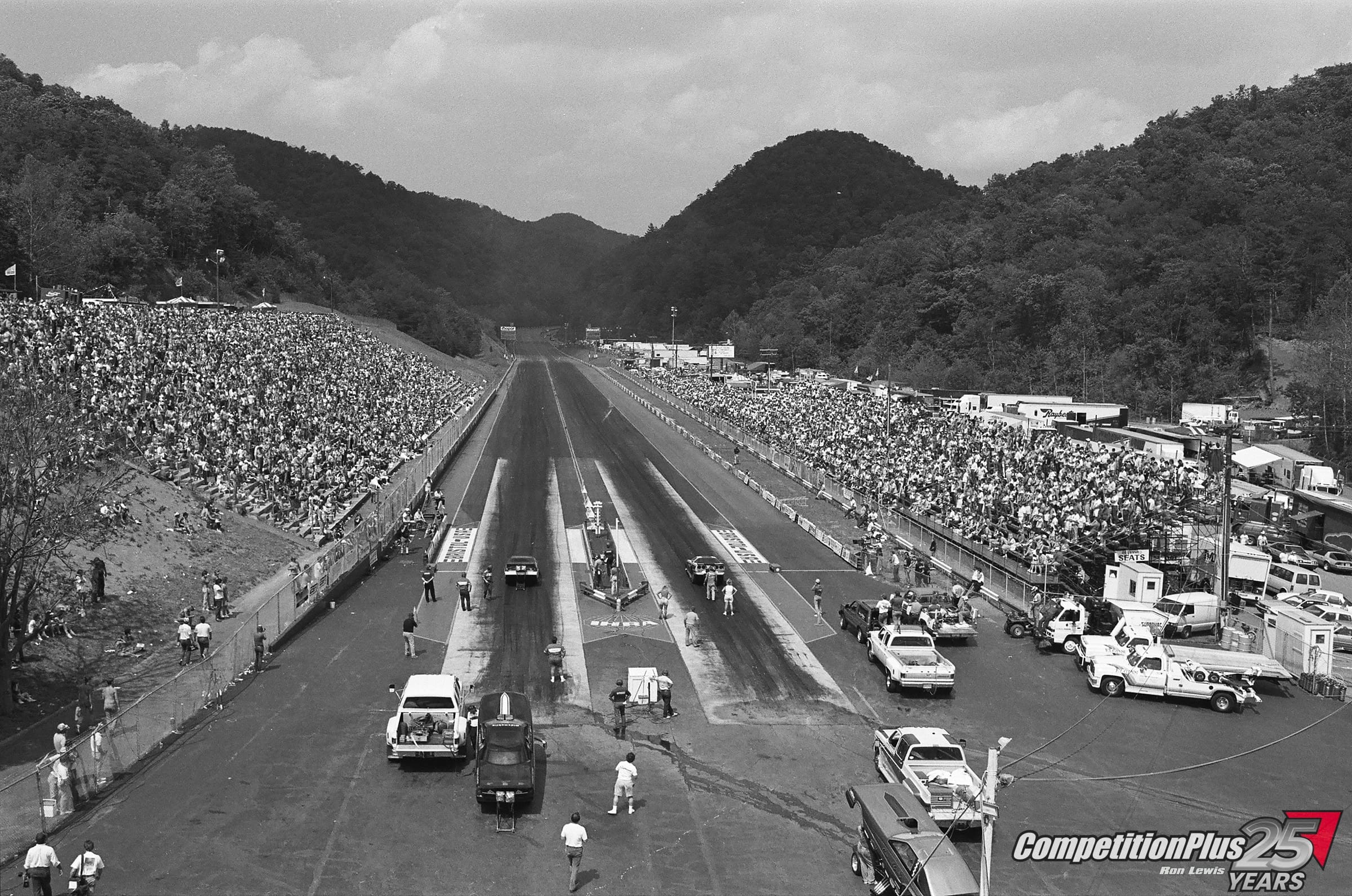
Lewis, who has photographed drag racing since 1965, described the old Thunder Valley, now Bristol Dragway, as a four-wheeled Woodstock with as much entertainment in the grandstands as on the racetrack.
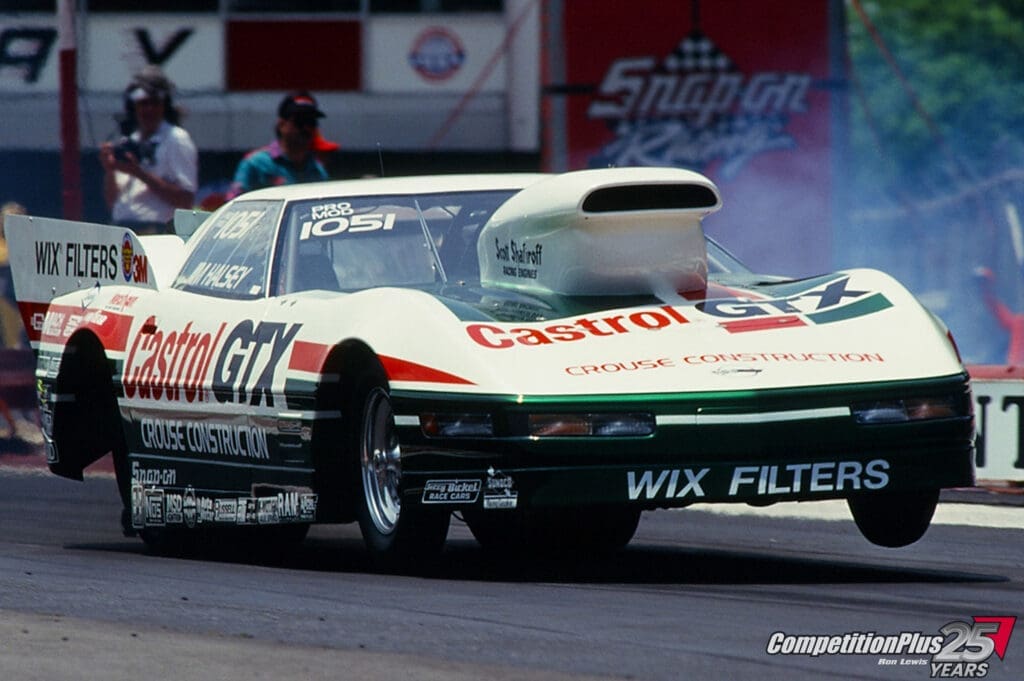
“I considered this as Woodstock, with a bit of the Wild West,” Lewis said. “It was like the East versus West Funny Cars at Lions Drag Strip back in ’66, ’67. The East versus West Funny Car races where you had everybody in the country, and they were all handmade, one-off, screwy, questionable-design cars that were out there.
“But this really flashed me back to the Lions and Pomona back then. I’ve got photos.”
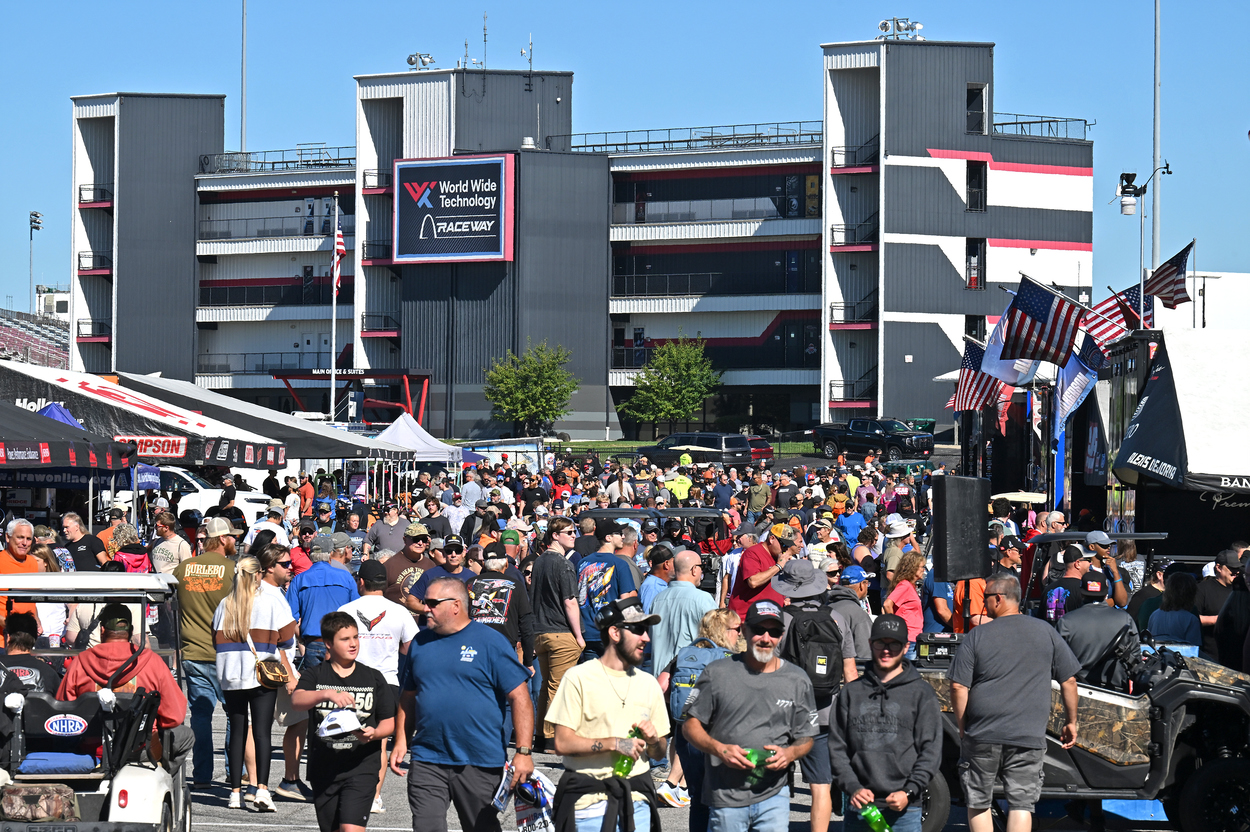
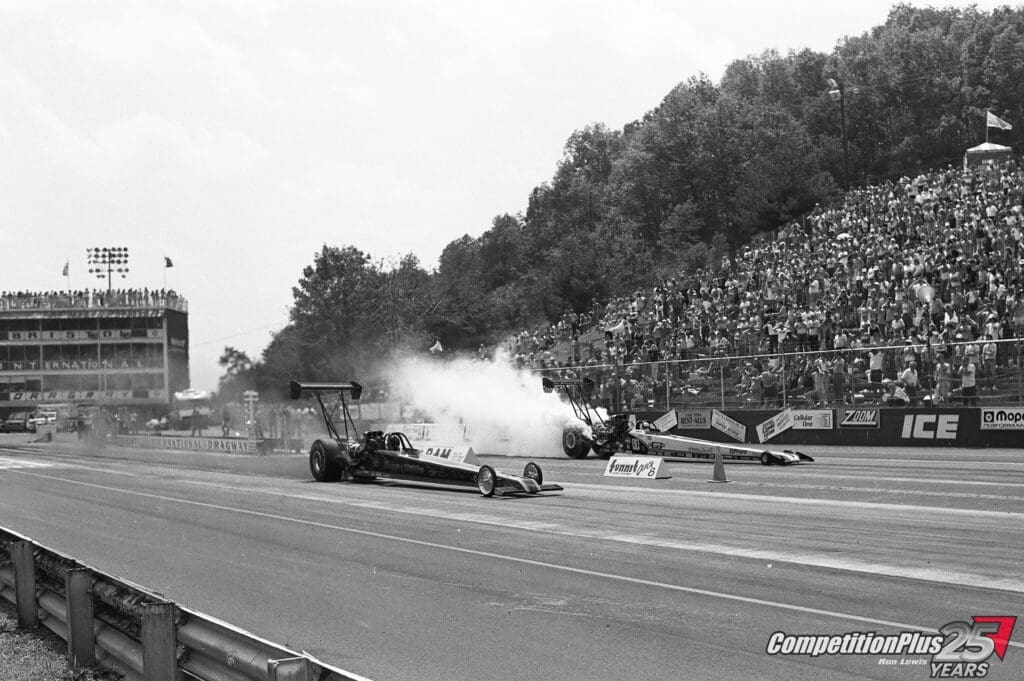
The one aspect Lewis wishes he had photographed more was the action in the grandstands. The general admission section often became a show of its own.
“The race fans were up close and personal with the track,” Lewis said. “That came with its own kind of circumstance. There was the occasional drunk who tossed his cookies in the photographer area or the occasional daredevil who tried to climb the fence.
“People would throw beers and other things on the track.
“They got mad at you if you’re blocking them. I don’t blame them. They paid money. I was freeloading in there. But the people, there was fun. There was some really crazy stuff. I remember where [IHRA founder] Larry Carrier hired the Hells Angels or something like that for a few years to do security. Should have had them the first year I was here. Nobody got hurt. It was fun.”
Lewis has been there, seen that and collected the T-shirts over the years since his first published work in 1967. He has amassed a career spanning more than five decades while capturing some of drag racing’s most historic moments.
Of all those moments, it is the facility once nicknamed Thunder Valley for its rolling acoustics that stole his heart from the start.
“The only thing that comes closest to it is Bandimere Speedway because it’s got some mountains around it, but it’s not like this,” Lewis said. “The character and the whole place here, it’s just a real pleasure to come here and spend a weekend in this part of the country.
“The people are nice. There’s such a nice layout. There are no bad pictures here.”
The original Bristol Dragway had as many unique characteristics in its design as it did in the way it amplified sound. One feature that always stood out to Lewis was the shutdown area, which curved to the right and climbed uphill, causing spectators and photographers to lose sight of the cars.
“I can’t see the end of the track,” he recalled thinking during his first visit. “The end of the track went around the curve through the dogleg, where drivers got out of the car on the top end. You couldn’t see the starting line from down there.”
Photographs can capture the scenery, but Lewis believes they can never fully communicate what made Thunder Valley famous.
“The acoustics completely lived up to its reputation,” he said. “You could hear the sounds bouncing back and forth and echoing out here.”
The noise of nitromethane-powered dragsters reverberating through the surrounding hills became part of the Bristol experience. So did the unpredictability.
“The other thing you don’t see in the pictures is every Saturday night or Friday night when we had a power outage, a couple hours every night,” Lewis said with a laugh. “So you got out here about one o’clock in the morning. But it just added to the character of the whole experience.”
Then there was the weather.
“Oh, and the rain too,” he added. “Bristol always has a chance of rain. But it was fun.”
For Lewis, the thousands of images archived over the decades represent more than photographs. They are visual records of a sport that has evolved dramatically since he first picked up a camera.
The tracks have changed. The cars have become faster. Technology has transformed both racing and photography.
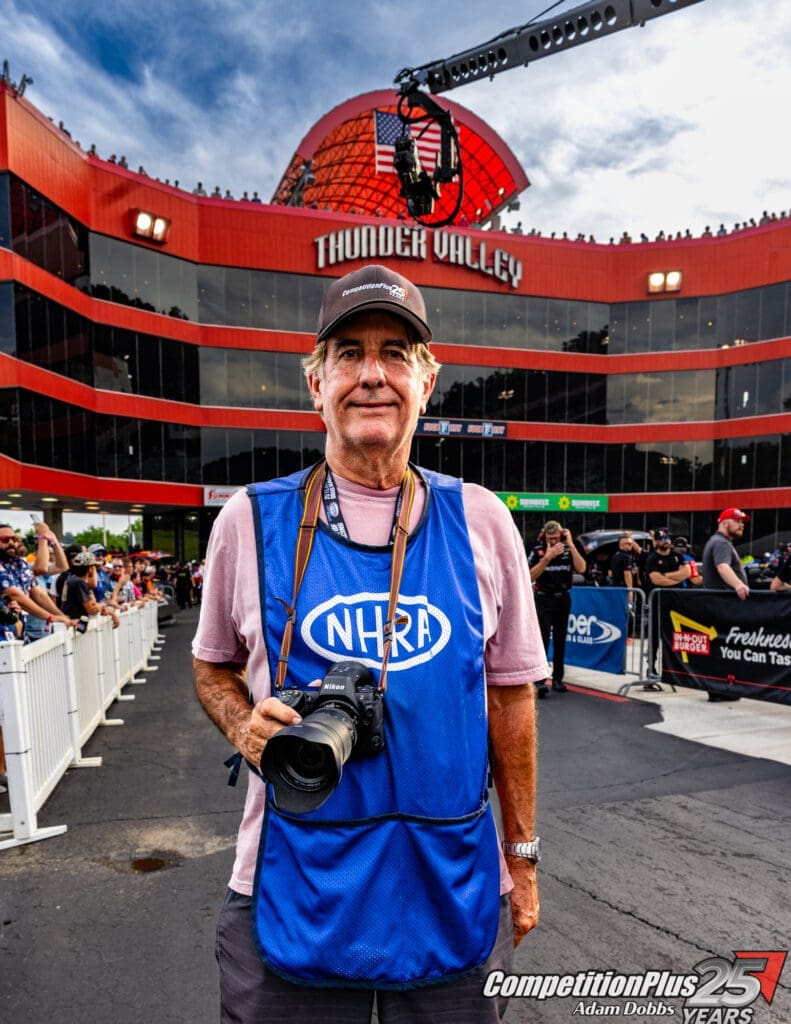
But when Lewis stands in Thunder Valley, camera in hand, many of those memories still feel close enough to touch.
The echoes bouncing off the mountains remain. So do the stories.
After more than 60 years behind the lens, Ron Lewis is still helping tell them.