Photos by Larry Pfister

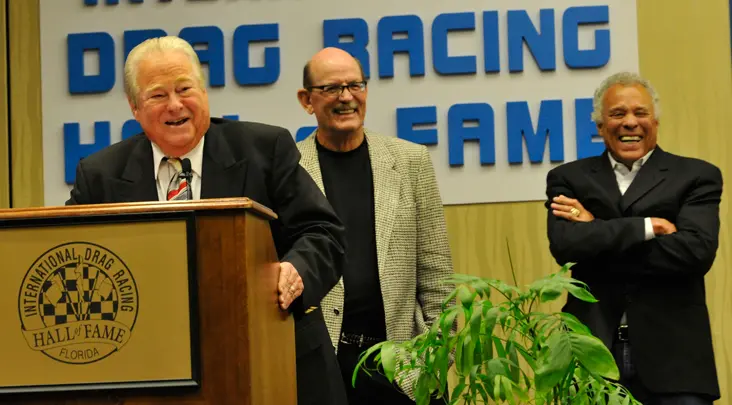
Bill Doner, the legendary Hall of Fame drag racing promoter, had a simple philosophy. If a lot was good, then more was better.
And Doner, the former sportswriter who became one of drag racing’s most successful promoters, staged some doozies along the way. His Northwest National Open and Fox Hunts became part of his reputation, but even those couldn’t hold a candle to the night he decided Seattle needed 64 Funny Cars.
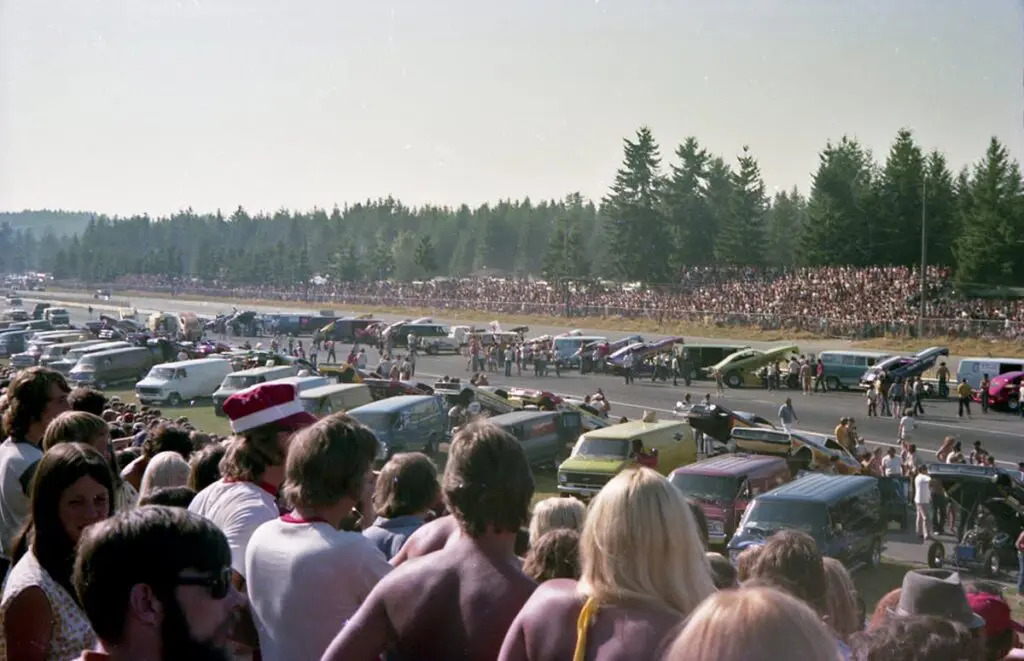
It sounds outrageous now, and truthfully, it sounded outrageous then. Doner wasn’t proposing a 16-car field padded with another category or two; he intended to put 64 Funny Cars on the grounds at Seattle International Raceway and send them down the track two at a time for the better part of an evening.
The late Jim Rockstad had one of the best seats in the house for Doner’s grand experiment. Some 20 years ago, Rockstad chronicled those massive Funny Car gatherings for CompetitionPlus.com, documenting not only what happened at Seattle, but how one promoter’s oversized idea changed drag racing throughout the Pacific Northwest.
There would eventually be plenty of star power, from Don Prudhomme and Tom McEwen to Jungle Jim Liberman, Raymond Beadle, Ed McCulloch and Gordie Bonin. Before any of that happened, Doner had a racetrack in Seattle that needed people in the seats and money coming through the gate.
Doner took over the lease at the facility then known as Kent Pacific Raceways in the late 1960s and renamed it Seattle International Raceway. Rockstad recalled a track that was financially unstable, without enough successful events or much direction for the future.
Doner initially stayed with road racing, just as the promoters before him had done. Then an L&M-sponsored event in the early 1970s lost a pile of money, and another lesson came with it: Something had to change at SIR.
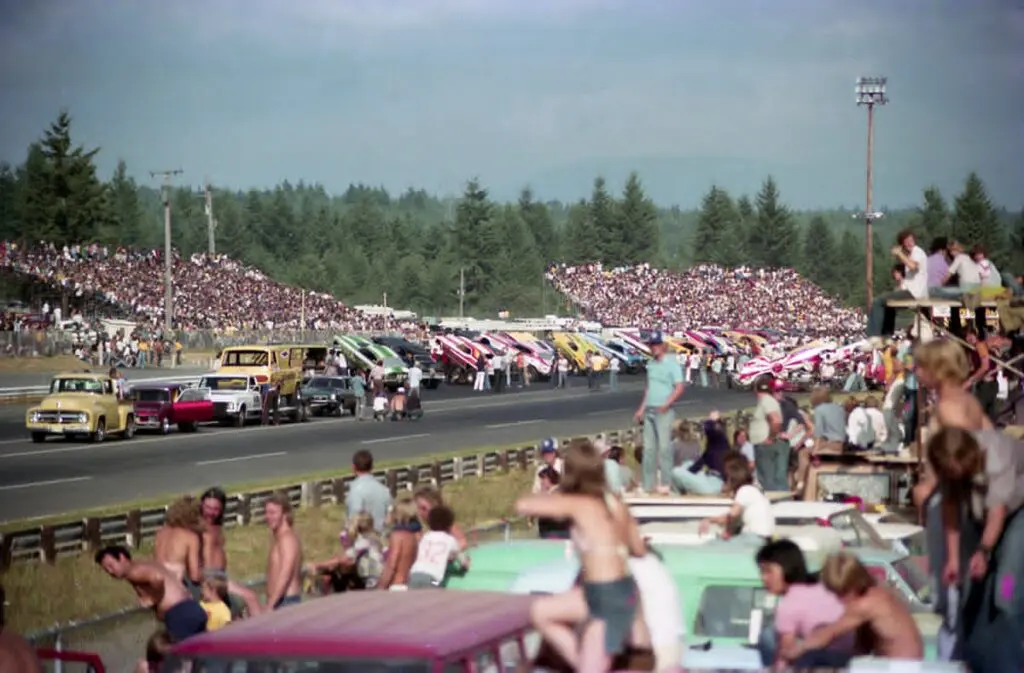
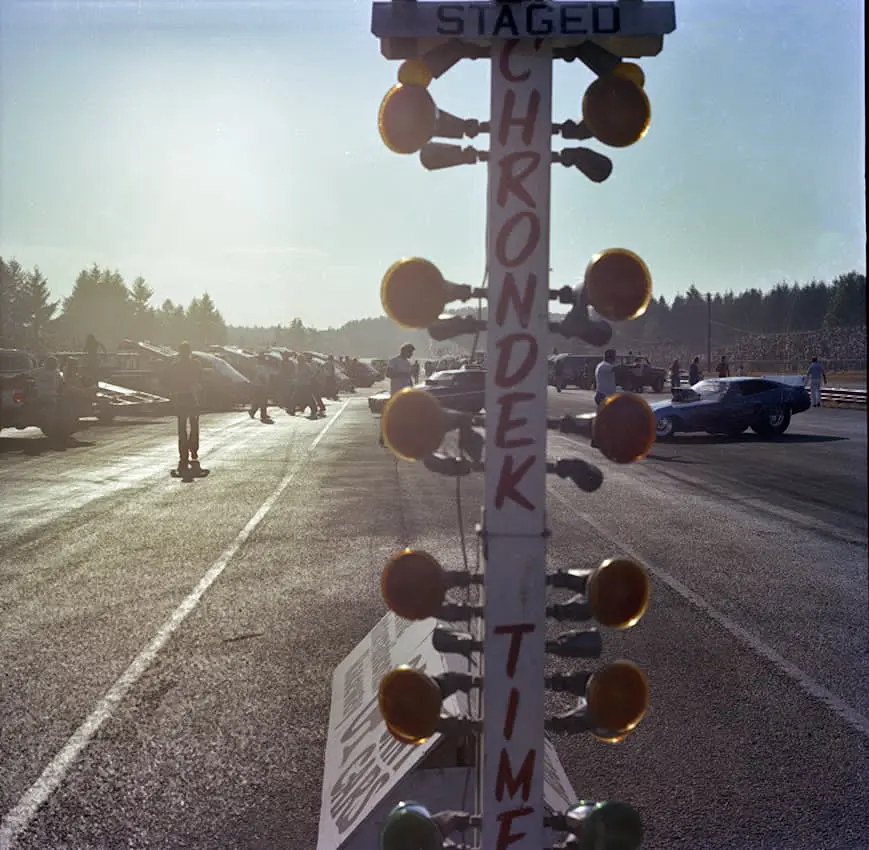
Drag racing had been little more than an add-on in the facility’s early years, with the strip using part of the road-course straightaway and running in the opposite direction of today’s configuration. There weren’t many grandstands or much infrastructure dedicated to straight-line racing, but Doner saw something there that others apparently hadn’t.
Seattle already had Seafair, with the Unlimited Hydroplanes attracting enormous attention around Lake Washington each summer. Doner figured some of those race fans might be interested in spending a Friday night watching the most colorful, loudest and increasingly popular machines in drag racing.
Funny Cars were beginning to draw a following of their own, and Doner didn’t need much convincing once he saw what happened when they ran at night. The noise was one thing, but the flames, smoke and personalities gave him plenty to promote.
“There is nothing in all of motorsports like nitro Funny Cars at night,” Doner proclaimed.
The Seafair Funny Car Championships gave Doner his answer. He could bring the Northwest racers together with some of the best-known Funny Cars out of Southern California, put them under the lights on a Friday night and give Seattle fans a show they couldn’t get anywhere else.
The crowds came, and Funny Cars under the Seattle lights became a summer attraction. Most promoters would have taken the win and booked the same show again, but that wasn’t how Doner operated.
He wanted more cars.
Instead of settling for 16 nitro Funny Cars and another 16 alcohol cars, Doner began talking about putting 64 Funny Cars into one show. It meant hours of racing, an enormous booking bill and a logistical problem unlike anything he had attempted, but restraint wasn’t exactly the foundation of the Doner promotional playbook.
“If some is good, more is better!” Rockstad wrote of Doner’s philosophy.
There was nothing comparable elsewhere in drag racing. Rockstad later researched the Funny Car shows of the period and found plenty of two-car, four-car, six-car and eight-car match races, along with Orange County International Raceway’s manufacturers’ event, but nothing approaching what Doner envisioned for Seattle.
At the 1972 Seafair Funny Car Championships, he finally said it out loud. The following year, Seattle International Raceway was going to present 64 Funny Cars.
Rockstad remembered the reaction from people within earshot of the public-address system. They had just watched what they considered a tremendous Funny Car show, and now Doner was telling them he planned to double down on the whole operation.
There was a pretty substantial problem with Doner’s promise because he didn’t have 64 Funny Cars sitting around Seattle waiting for a phone call. Roughly three-quarters of the field would have to come from outside the Northwest, many towing thousands of miles to an event that one Seattle rainstorm could wipe out.
Getting enough cars was only part of the problem. If Doner wanted 64 Funny Cars to become something more than a numerical stunt, he needed the names fans recognized from the magazines and national events.
Gene Snow, Jungle Jim Liberman, Don Prudhomme, Tom McEwen, Raymond Beadle, Danny Ongais, Big Jim Dunn, Ed McCulloch, Dale Pulde, Al Bergler, John Collins and others were the kind of racers who could turn Doner’s giant field into an all-star gathering. Convincing them to haul across the country for one race in Seattle was another matter entirely.
The economics didn’t make much sense for the racers, either. A Funny Car team accustomed to match racing several times a week wasn’t likely to haul from the Midwest, East Coast or Southern California for one Seattle payday, so Doner needed another race to help make the trip pay.
Portland International Raceway gave him exactly that opportunity when its operating agreement became available after the 1972 season. Doner reached an agreement with the City of Portland and scheduled a 32-car Funny Car event there the weekend before Seattle’s 64-car show.
A racer could run Portland, move north to Seattle and pick up additional dates around the Northwest before heading home. The additional dates put money into the racers’ pockets and gave Doner a much better chance of landing the names he wanted for Seattle.
That network eventually stretched far beyond Portland. Funny Cars were booked into Eugene, Boise, Spokane and Yakima, along with Calgary, Saskatoon and Edmonton in Canada, giving teams a string of races surrounding the Seattle centerpiece.
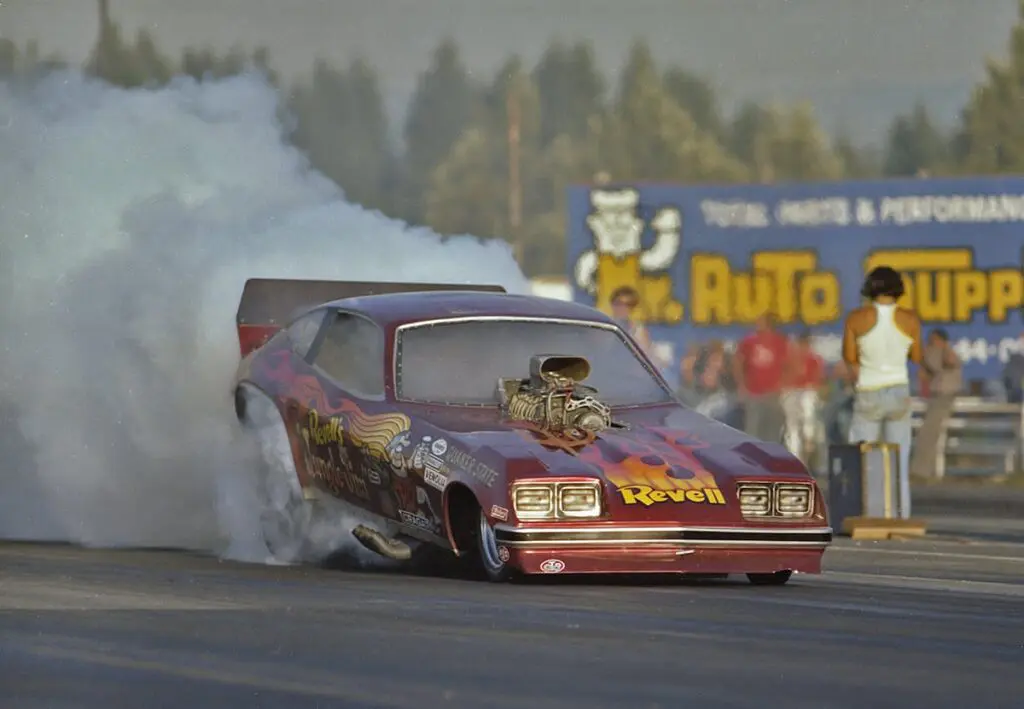

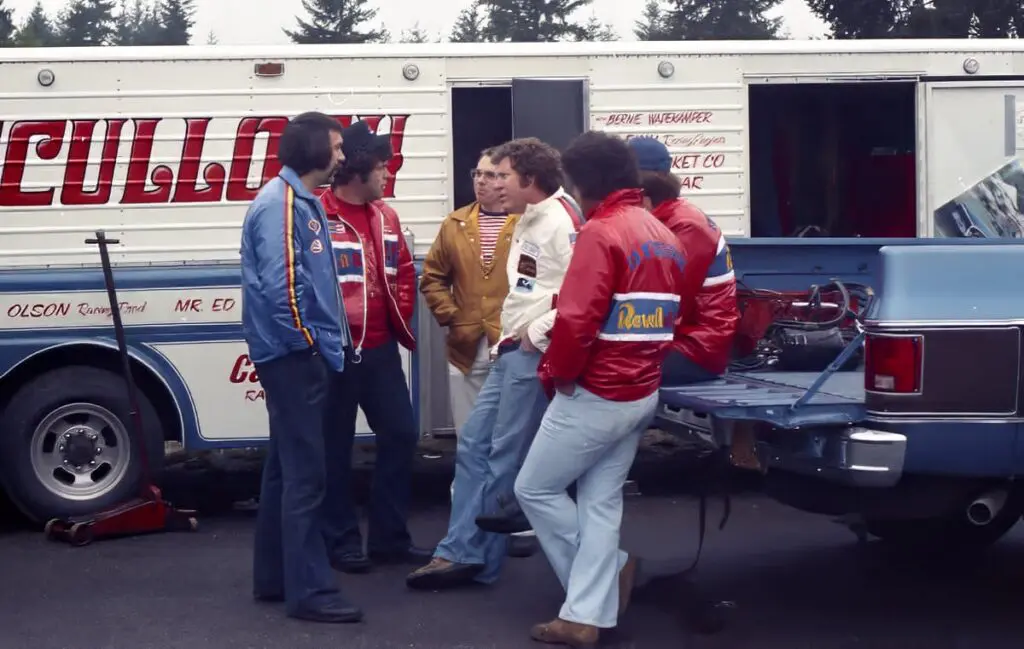
By midsummer, Funny Car teams from across the country were headed toward the Northwest. Racers whom Seattle fans had been reading about in the magazines were suddenly running Portland, Seattle and some of the smaller tracks around the region.
Rockstad remembered Funny Cars scattered around motel parking lots in the Portland-Vancouver area before the 32-car event. Raymond Beadle and the Blue Max team even found room beneath the Interstate 5 bridge, where they performed what Rockstad described as a full “field strip” of the car while fans gathered around to watch.
There were no ropes, hospitality compounds or carefully controlled appearances. Fans could spend an evening under the bridge watching “Waterbed” Fred and the Blue Max crew prepare a nitro Funny Car for Portland and Seattle, and plenty of them did.
The fans weren’t the only ones paying attention. Northwest racers watched Prudhomme, McEwen, Beadle, McCulloch and the others come through every summer, and Funny Car racing began catching on with the racers who lived there.
Gordie Bonin became one of the region’s most popular and successful drivers, but Rockstad remembered plenty of others following the same path. Looking back at the number of Northwest Funny Cars that came from that period, he didn’t believe it was a coincidence.
“Doner’s event changed the entire landscape of drag racing in the Northwest,” Rockstad wrote.

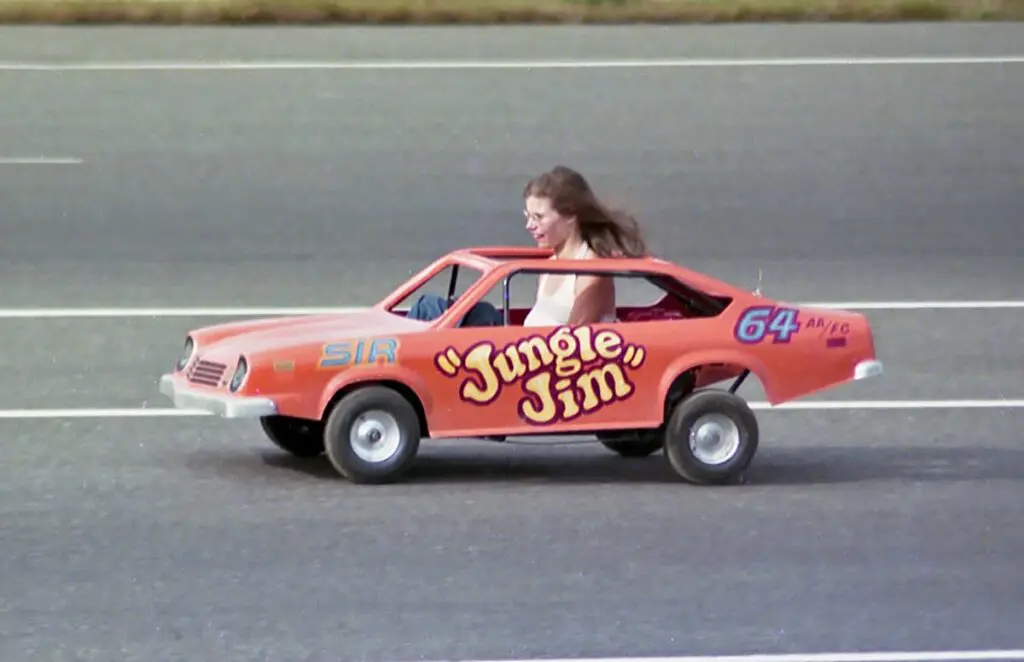
The part of the story lost beneath the staggering car counts and famous names. Doner didn’t just bring Funny Car racing to Seattle in greater numbers than anyone else; he helped create a regional culture around it.
By the time the first 64-car gathering arrived in 1973, Doner had done far more than book a race. He had secured another major facility, pieced together additional appearances across the Northwest, convinced some of the sport’s best racers to make the trip and wagered a considerable amount of money that Seattle fans would understand exactly what he was selling.
The weather could still ruin him, and one rain shower on race day could have turned the entire experiment into an expensive lesson. Doner had spent a year building the house of cards anyway because there wasn’t much point in advertising 64 Funny Cars if you weren’t prepared to actually produce them.
He produced them.
The “Big One” became a Seattle institution, surviving through the 1970s and well into the 1980s while developing a reputation that reached far beyond the Northwest. Racers wanted to be part of it, fans planned their summers around it, and winning the thing carried enough weight that teams could put Seattle into their sponsor proposals.
“There will never be anything like it!” Doner said years later.
The “Big One” became a Seattle institution through the 1970s and into the 1980s, and racers eventually wanted Seattle on their schedules and their résumés. Doner had heard all the reasons why 64 Funny Cars couldn’t work, particularly when most of the cars he needed were sitting hundreds or thousands of miles away.
“There will never be anything like it!” Doner said years later.
Getting them there was the trick. Portland helped, the additional match races helped even more, and Doner spent countless hours on the telephone putting together enough dates and enough money to convince the racers to head northwest.
By race day, the question was no longer whether Bill Doner could find 64 Funny Cars.
The question was what in the world he was going to do with all of them.