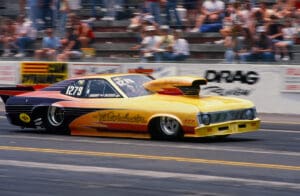
If you raced IHRA Top Sportsman from 1986 through 1989, it helped to bring a label to the race along with the race car. Usually, that label wasWorld’s Fastest,followed by whatever year, make or combination happened to make your operation different from everyone else.

It was more than a boast painted on the side of a race car. In a class growing almost faster than anyone could define it, being the world’s fastest something could generate match-race dates, sell T-shirts and, just as importantly, convince a magazine editor that there was a story worth telling.

There was no official World’s Fastest group, but there didn’t need to be one. The racers understood what was happening, and finding a niche in the rapidly expanding Top Sportsman movement became part competition and part promotion.

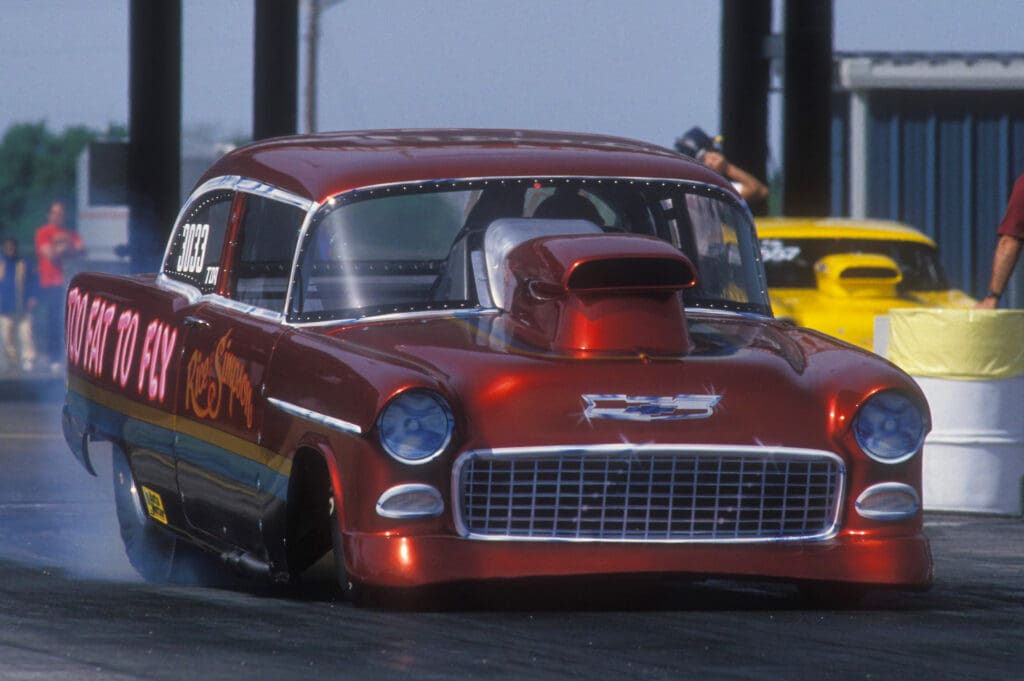
R.C. Sherman’s introduction to the scene didn’t produce a lasting title, but Dave Bishop helped change the landscape when the part-time journalist proclaimed Charles Carpenter’s 1955 Chevy theWorld’s Fastest ’55 Chevy.The description stuck, and before long other racers were finding identities of their own.

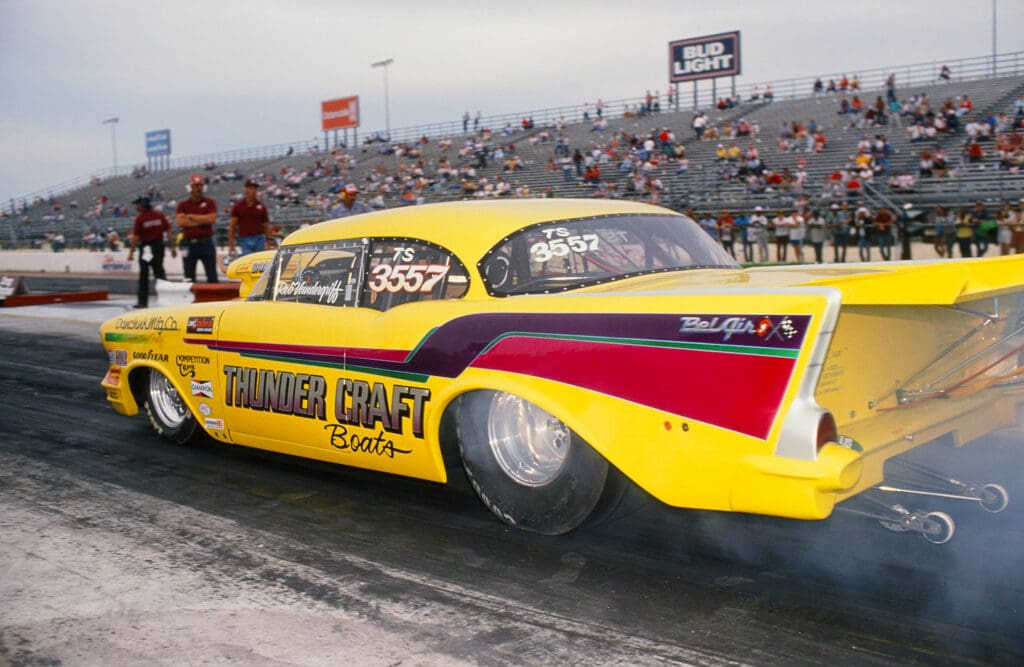
Sportsman racer Robbie Vandergriff, cousin of Top Fuel racer Bob Vandergriff Jr., joined businessman Jim Bryant to field a 1957 Chevy. As Carpenter and Vandergriff gained notoriety with their shoebox Chevrolets, the attention they received provided a pretty good blueprint for anyone wondering how to stand out in an increasingly crowded field.

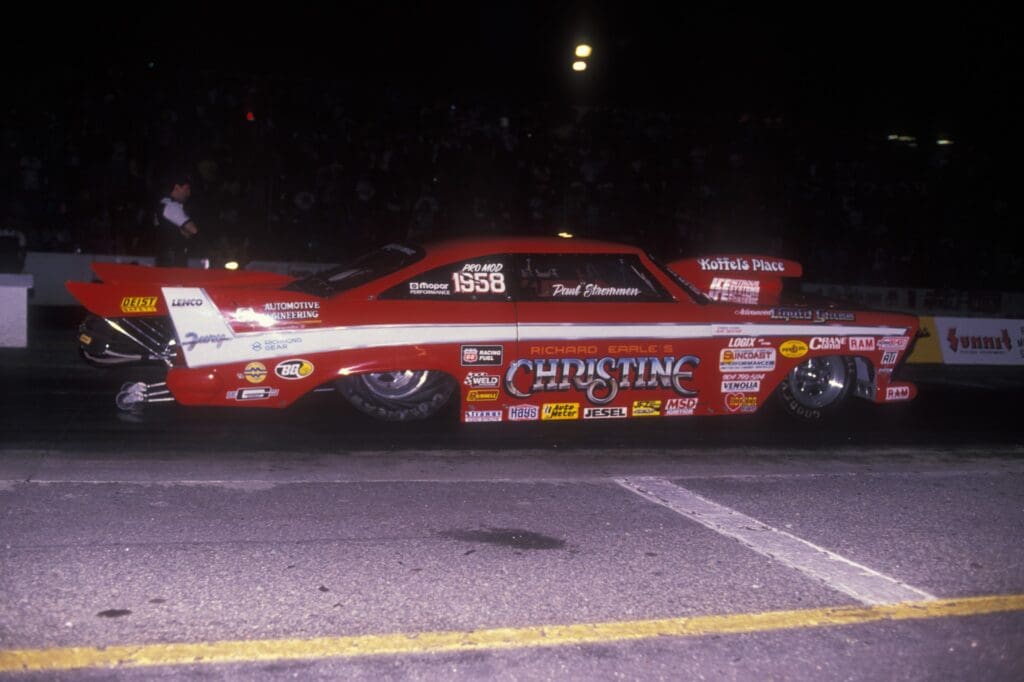
Former Comp Eliminator racer Norm Wizner came along with a 1957 Ford, while Florida chassis builder Richard Earle unveiled a 1958 Plymouth Fury. These weren’t old street cars converted into racers, either, as sleek fiberglass bodies were being fitted to Pro Stock-style chassis and backed by combinations capable of running with the quickest doorslammers of the period.

Wizner called his creation theMega Ford,giving Ford fans something to rally around at a time when the shoebox Chevrolet crowd was getting plenty of attention. Earle’s Plymouth might have been the most unusual of the bunch, patterned after the sinister automobile from the Stephen King thriller Christine.

Except for the hood scoop and the potent B-1 wedge underneath it, Earle’s Mopar was a convincing copy of the movie car. It was strange, fast and instantly recognizable, which made it almost perfect for the match-racing business.

The list grew quickly.

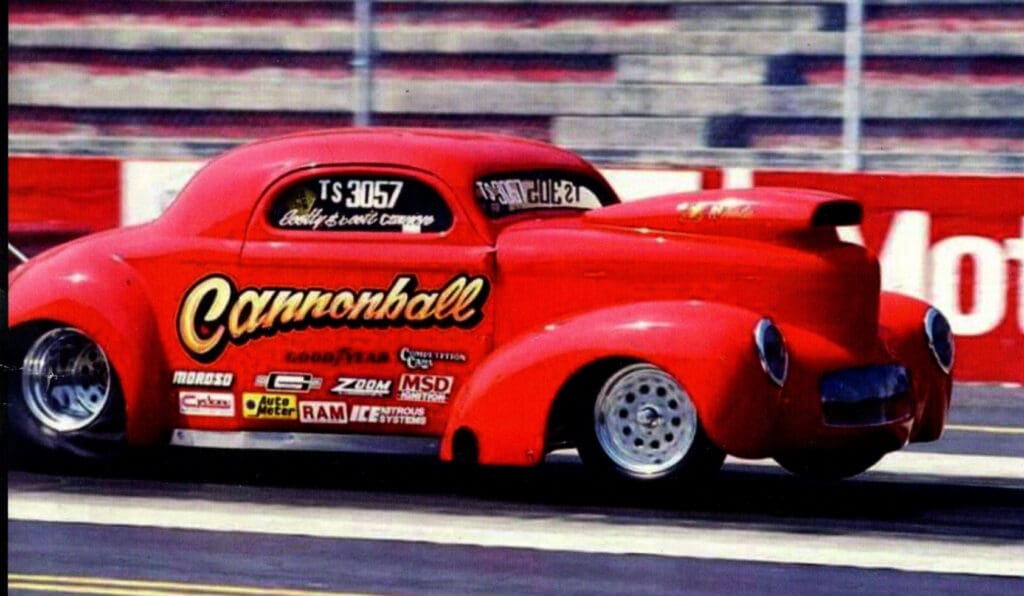
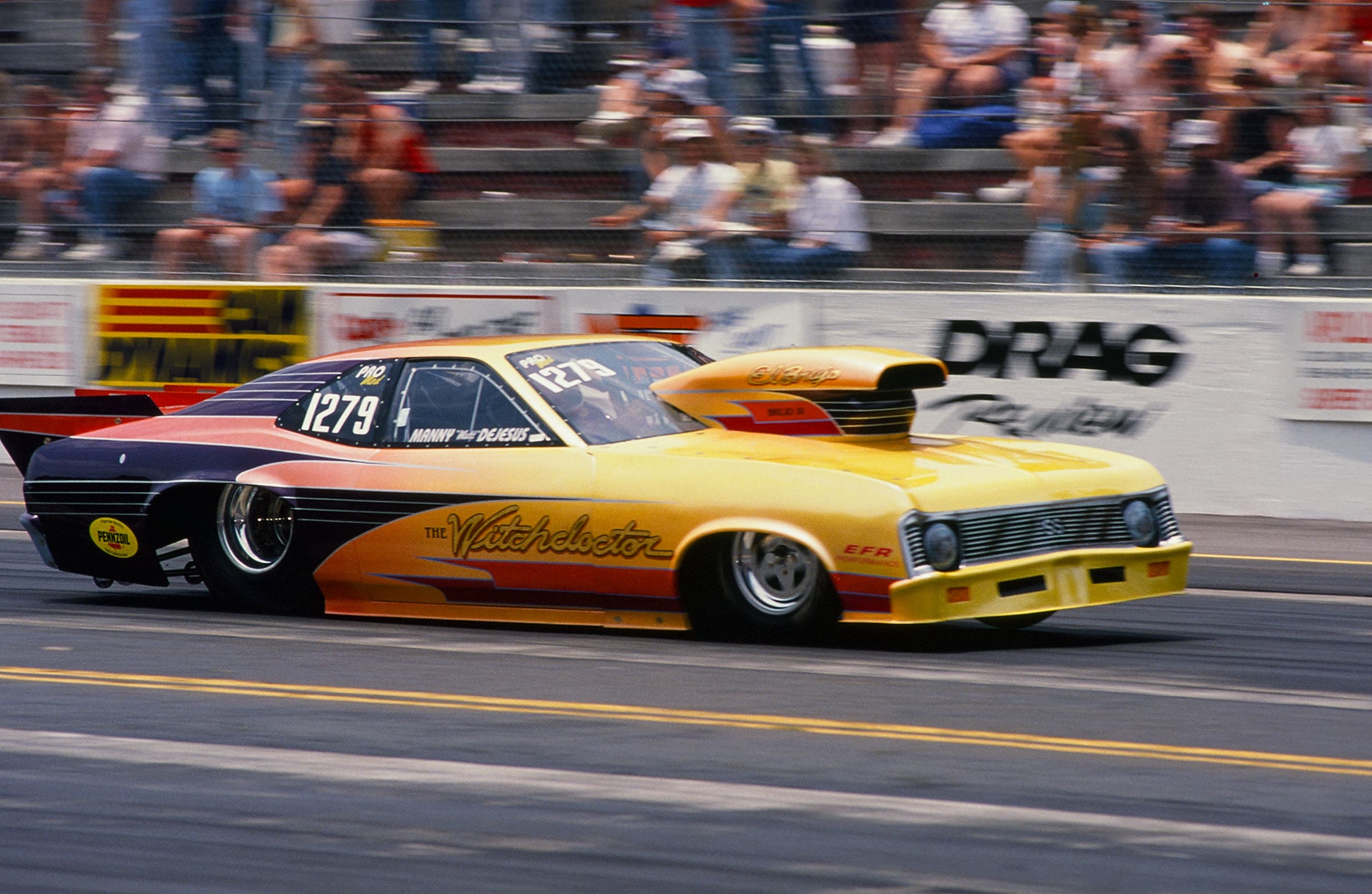
Gordy Foust had his 1966 Chevelle, while Lamar Walden campaigned the “World’s Fastest 409” 1962 Impala. Scotty Cannon had his Top Fuel-winged Willys Jeep, Tommy Mauney his small-block Opel, Jim Honeycutt a 1967 Camaro and Manny DeJesus the Withdoctor 1968 Nova.
Jim Wheatley raced a 1966 Chevy II, and Terry Leggett had a 1955 Thunderbird. There were plenty of others, enough that the list of unusual Top Sportsman machinery seemed a quarter-mile long.

These weren’t average racers looking to slap a slogan on a shirt and make a few dollars at the souvenir trailer. Many were methodical about both their racing and their promotion, and they understood that getting their car into one of the major drag racing magazines could be almost as valuable as what happened on the racetrack.

A racer who became friendly with an editor or one of the prominent photographers had an avenue to an audience that otherwise was difficult to reach. Magazine exposure doubled as advertising, and advertising could lead directly to a telephone call from a track operator looking for something different to put on the bill.

“I wouldn’t say that we had their number on speed dial, but they’d take our calls any time,” Carpenter said.

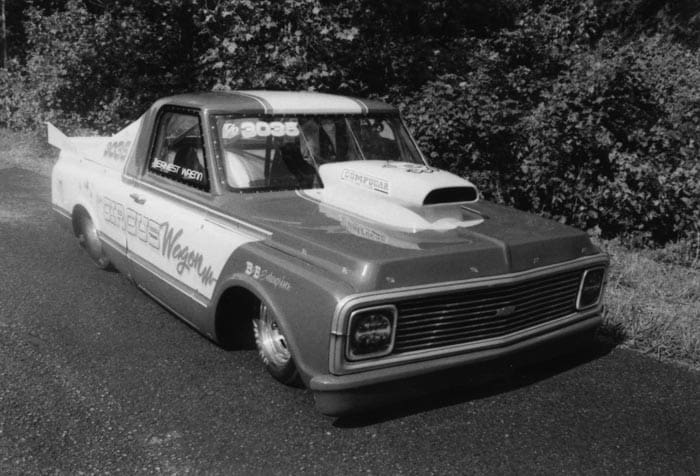
The was a place at the table for everyone in the "World's Fastest Group" - whether you were a mid-engined '55 Chevy or a Chevrolet C10 truck.

Bret Kepner, noted drag racing historian and former IHRA announcer, remembers that many of the unusual cars were constructed with exactly that purpose in mind. Winning an IHRA national event was important, but making a race car memorable enough that somebody wanted to pay to see it was another part of the business.

“They were building the weird stuff for the same exact reason that the Funny Car and Dragster guys built the weird stuff – for bookings,” Kepner said. “When Christine was built, it was not to win IHRA national events. It was built to get a spot on the match race circuit. These cars were built to be noticed.”

Carpenter became one of the biggest beneficiaries of the media attention surrounding the unofficial World’s Fastest crowd. His ’55 Chevy became known well outside the IHRA national-event circuit, and every photograph or magazine story put the car in front of another track operator and another group of potential fans.

“The media was the key to our survival and growth,” Carpenter said. “That media hype and exposure fueled the fire. There wasn’t an internet and those magazines were the only connection we had to the race fans and industry.”

The results could be measured by looking at Carpenter’s calendar. At the peak of his operation in 1988, he ran a combined 53 races and match-race dates, a workload difficult to imagine in today’s Pro Modified world.

“At times we were racing as many as three different times a weekend at three different places,” Carpenter said. “We were zig-zagging the country as much as humanly possible. We’d have to turn down dates because I couldn’t do them all.

“It will never be like that again. Back in those days, there probably weren’t 20 Pro Mod type cars around in the United States. Now there are 20 in every neighborhood.

“I’ve said it before. I never set out to do what I did. I was just doing what I loved to do. I was just racing my 1955 Chevy and it all evolved into that. It just came naturally and that was the sweetest part of it all.”

Share the Insights?

Click here to share the article.

ad space x ad space

ad space x ad space

Competition Plus Team

Since our inception, we have been passionately dedicated to delivering the most accurate, timely, and compelling content in the world of drag racing. Our readers depend on us for the latest news, in-depth features, expert analysis, and exclusive interviews that connect you to the sport’s pulse.

Sign up for our newsletters and email list.

This field is for validation purposes and should be left unchanged.
Name

WHEN ‘WORLD’S FASTEST’ BECAME TOP SPORTSMAN’S CALLING CARD

If you raced IHRA Top Sportsman from 1986 through 1989, it helped to bring a label to the race along with the race car. Usually, that label wasWorld’s Fastest,followed by whatever year, make or combination happened to make your operation different from everyone else.

It was more than a boast painted on the side of a race car. In a class growing almost faster than anyone could define it, being the world’s fastest something could generate match-race dates, sell T-shirts and, just as importantly, convince a magazine editor that there was a story worth telling.

There was no official World’s Fastest group, but there didn’t need to be one. The racers understood what was happening, and finding a niche in the rapidly expanding Top Sportsman movement became part competition and part promotion.

R.C. Sherman’s introduction to the scene didn’t produce a lasting title, but Dave Bishop helped change the landscape when the part-time journalist proclaimed Charles Carpenter’s 1955 Chevy theWorld’s Fastest ’55 Chevy.The description stuck, and before long other racers were finding identities of their own.

Sportsman racer Robbie Vandergriff, cousin of Top Fuel racer Bob Vandergriff Jr., joined businessman Jim Bryant to field a 1957 Chevy. As Carpenter and Vandergriff gained notoriety with their shoebox Chevrolets, the attention they received provided a pretty good blueprint for anyone wondering how to stand out in an increasingly crowded field.

Former Comp Eliminator racer Norm Wizner came along with a 1957 Ford, while Florida chassis builder Richard Earle unveiled a 1958 Plymouth Fury. These weren’t old street cars converted into racers, either, as sleek fiberglass bodies were being fitted to Pro Stock-style chassis and backed by combinations capable of running with the quickest doorslammers of the period.

Wizner called his creation theMega Ford,giving Ford fans something to rally around at a time when the shoebox Chevrolet crowd was getting plenty of attention. Earle’s Plymouth might have been the most unusual of the bunch, patterned after the sinister automobile from the Stephen King thriller Christine.

Except for the hood scoop and the potent B-1 wedge underneath it, Earle’s Mopar was a convincing copy of the movie car. It was strange, fast and instantly recognizable, which made it almost perfect for the match-racing business.

The list grew quickly.

Gordy Foust had his 1966 Chevelle, while Lamar Walden campaigned the “World’s Fastest 409” 1962 Impala. Scotty Cannon had his Top Fuel-winged Willys Jeep, Tommy Mauney his small-block Opel, Jim Honeycutt a 1967 Camaro and Manny DeJesus the Withdoctor 1968 Nova.
Jim Wheatley raced a 1966 Chevy II, and Terry Leggett had a 1955 Thunderbird. There were plenty of others, enough that the list of unusual Top Sportsman machinery seemed a quarter-mile long.

These weren’t average racers looking to slap a slogan on a shirt and make a few dollars at the souvenir trailer. Many were methodical about both their racing and their promotion, and they understood that getting their car into one of the major drag racing magazines could be almost as valuable as what happened on the racetrack.

A racer who became friendly with an editor or one of the prominent photographers had an avenue to an audience that otherwise was difficult to reach. Magazine exposure doubled as advertising, and advertising could lead directly to a telephone call from a track operator looking for something different to put on the bill.

“I wouldn’t say that we had their number on speed dial, but they’d take our calls any time,” Carpenter said.

The was a place at the table for everyone in the "World's Fastest Group" - whether you were a mid-engined '55 Chevy or a Chevrolet C10 truck.

Bret Kepner, noted drag racing historian and former IHRA announcer, remembers that many of the unusual cars were constructed with exactly that purpose in mind. Winning an IHRA national event was important, but making a race car memorable enough that somebody wanted to pay to see it was another part of the business.

“They were building the weird stuff for the same exact reason that the Funny Car and Dragster guys built the weird stuff – for bookings,” Kepner said. “When Christine was built, it was not to win IHRA national events. It was built to get a spot on the match race circuit. These cars were built to be noticed.”

Carpenter became one of the biggest beneficiaries of the media attention surrounding the unofficial World’s Fastest crowd. His ’55 Chevy became known well outside the IHRA national-event circuit, and every photograph or magazine story put the car in front of another track operator and another group of potential fans.

“The media was the key to our survival and growth,” Carpenter said. “That media hype and exposure fueled the fire. There wasn’t an internet and those magazines were the only connection we had to the race fans and industry.”

The results could be measured by looking at Carpenter’s calendar. At the peak of his operation in 1988, he ran a combined 53 races and match-race dates, a workload difficult to imagine in today’s Pro Modified world.

“At times we were racing as many as three different times a weekend at three different places,” Carpenter said. “We were zig-zagging the country as much as humanly possible. We’d have to turn down dates because I couldn’t do them all.

“It will never be like that again. Back in those days, there probably weren’t 20 Pro Mod type cars around in the United States. Now there are 20 in every neighborhood.

“I’ve said it before. I never set out to do what I did. I was just doing what I loved to do. I was just racing my 1955 Chevy and it all evolved into that. It just came naturally and that was the sweetest part of it all.”

Picture of John Doe

John Doe

Lorem ipsum dolor sit amet consectetur adipiscing elit dolor

More Posts

Send Us A Message

Picture of Bobby Bennett
Bobby Bennett
Thank you for joining us on this journey. Your support and trust inspire us every day to deliver the best in drag racing journalism. We are excited about the future and look forward to continuing to serve you with the same dedication and passion that has defined CompetitionPlus.com from the very beginning.

Don’t miss these other exciting stories!

Explore more action packed posts on Competition Plus, where we dive into the latest in Drag Racing News. Discover a range of topics, from race coverage to in-depth interviews, to keep you informed and entertained.