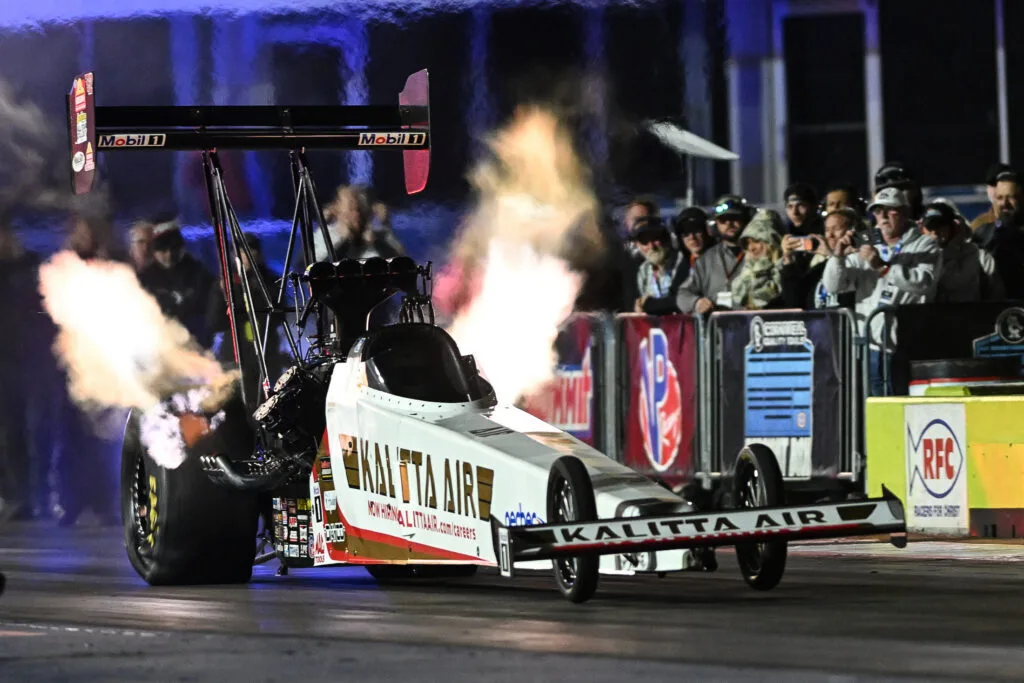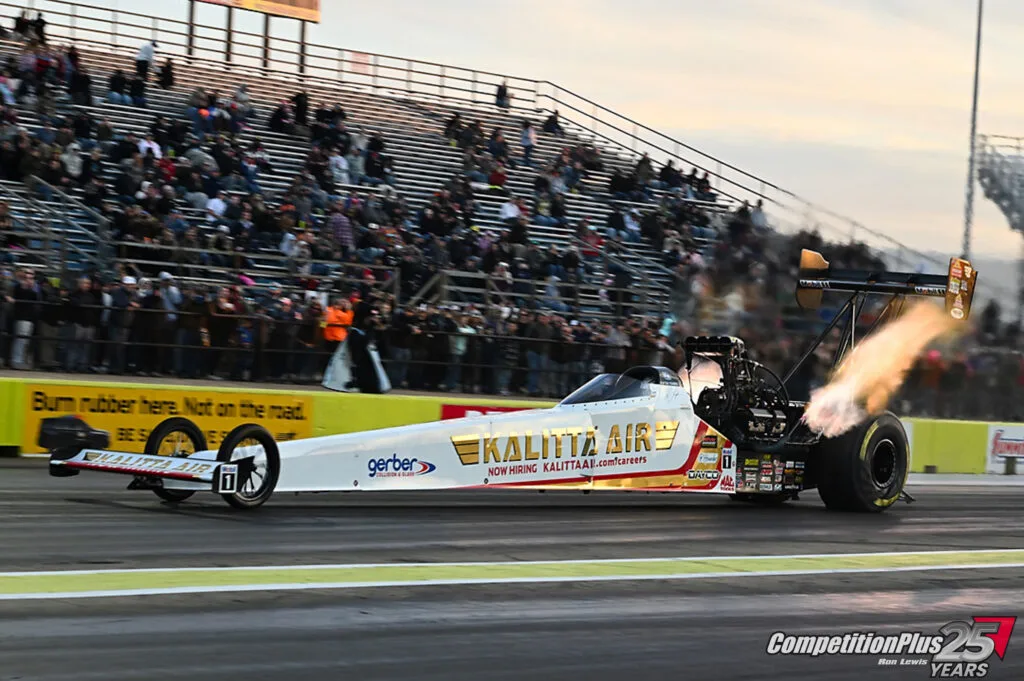
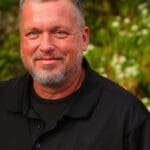

Scott Palmer has spent the past couple of years going from drag racing’s social-media-appointed people’s champion to one of the most recognizable personalities associated with an attempted revival of the International Hot Rod Association. Now that revival has fallen apart, Palmer is back where many fans believe he belongs: racing Top Fuel in the NHRA Mission Foods Drag Racing Series.

If anyone expects Palmer to apologize for leaving in the first place, they haven’t been paying attention to the man from Cassville, Missouri.

Palmer isn’t running from his decision to race with IHRA, nor is he pretending the experience was a mistake. He followed the money, earned more than he expected elsewhere, and returned to an NHRA pit area where he insists he never intended to stop racing.

“I never had any intention of not coming in HRA racing. I’m just going to be real honest,” Palmer said. “I followed the money. I went there and I won more money in eight races than I would win in five years over here.”

For a racer who spent much of his life painting cars in a garage to finance a Top Fuel dream, there was nothing complicated about the decision. Drag racing might be a passion, but somebody still has to pay for the parts.

“It’s just a business,” Palmer said. “It’s a business decision, and I did it. Every race we’re running right now, we had planned to run anyway. So it’s not like we skipped any races or took on any more races.”

Palmer’s involvement with IHRA put him in a position he never particularly sought, serving as something of an ambassador for a sanctioning body attempting to establish itself as an alternative destination for professional nitro racing. He doesn’t consider himself the face of that operation, although he acknowledges playing a role in bringing other racers into the program.

“Yeah. You know, I think they had some bigger names for the face of the sanctioning body,” Palmer said. “I was like the recruiter for some teams to get over there and get their feet wet, and top fuel racing. And that all worked out good for a lot of teams.”
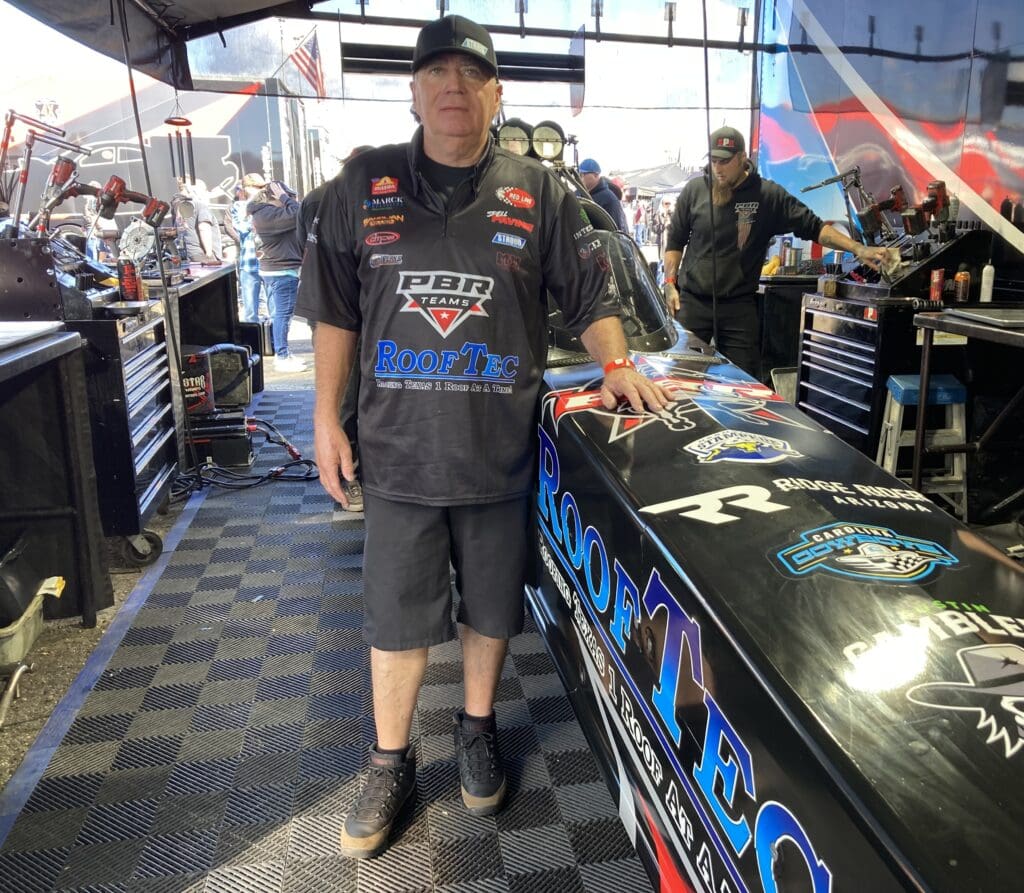
scott palmer

The outcome wasn’t what those teams had envisioned. Palmer isn’t interested in pretending otherwise, but he also refuses to dismiss what racers gained from the opportunity.

“Obviously the end result didn’t work out the way everybody thought it would, but I used to just tell everybody, ‘Don’t get ahead of yourself. Just go race by race and take the good with the bad,'” Palmer said. “But the good outweighed the bad and we’re here.”

Palmer’s return also illustrates the reality of independent Top Fuel racing, where financial survival can require decisions that don’t always fit neatly into sanctioning-body loyalties. He has spent too many years chasing the sport to confuse allegiance with the ability to afford another race.

“All you can do is do the best you can,” Palmer said. “And at some point in your life, we’ve chased this NHRA dream forever. I mean, I painted cars in my garage. It’s the same story every time I talk to you, but painted cars in my garage my whole life, trying to be a NHRA top fuel racer.”

That same survival mentality made the IHRA opportunity difficult to ignore. Palmer saw a chance to strengthen his racing operation without abandoning the NHRA schedule he already intended to run.

“But at some point in your life, you have to follow the money and do what’s best for yourself,” Palmer said. “And that opportunity, the IHRA deal was a good opportunity to stock your trailer up with parts, go over there and win some money.”

The arrangement also provided an opportunity for Lee Calloway, who had been sidelined following a serious motorcycle accident five years earlier. Palmer brought two cars into the IHRA program, allowing Calloway to regain seat time and experience before continuing his comeback in NHRA competition.

“I took two cars. Lee Calloway got to get back in the seat after his motorcycle crash,” Palmer said. “He had a bad crash five years ago. He got to get back and get his feet back wet and get some experience back in it. And now, Lee’s driving here.”
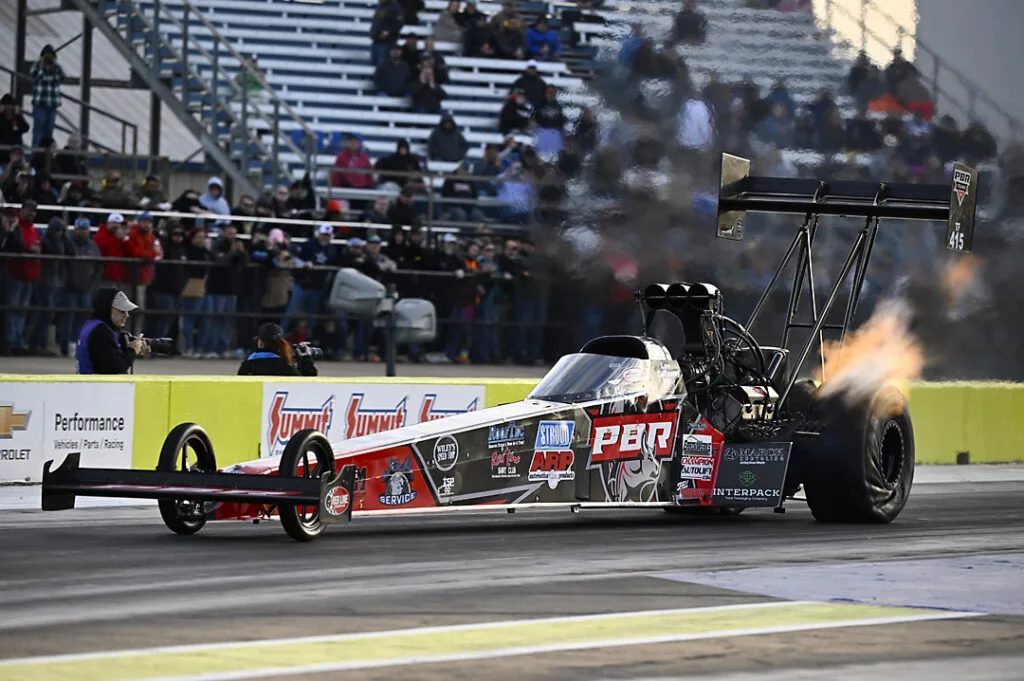
Lee Calloway driving for Scott Palmer

The original intention was to campaign both dragsters, but Palmer decided the operation needed a more focused approach. Getting competitive again took priority over trying to run everything available.

“We were going to run both of them, but we just decided we need to concentrate and get back up to speed,” Palmer said.

If Palmer’s racing decisions reflect a practical approach to survival, his transportation arrangements demonstrate the lengths he will go to keep his operation moving. At St. Louis, Palmer drove one transporter to the racetrack, arranged a flight home and returned with another rig.

There was a reason for the extra work. His friend Lanny Warren was hospitalized with health problems, and Palmer wasn’t about to leave him without help.

“I did do that. I did it at St. Louis,” Palmer said. “My buddy, Mr. Lanny Warren, he’s in the hospital having some health issues. So, I’m covering for him. We got each other’s back around here. It may take two trips, but we’ll cover him.”

Palmer’s first trip produced an unexpected assist from fellow Top Fuel racer Shawn Reed. The two were discussing boat racing during a telephone conversation when Reed offered to fly Palmer home himself.

“And actually at St. Louis, I drove to St. Louis,” Palmer said. “I was talking to Shawn Reed just in casual conversation. He called and we’re talking on the way up there, talking about boat racing and whatever. And he said, ‘I’ll pick you up at the track and I’ll fly you back myself.'”

Reed made good on the offer, flying Palmer from the racetrack to his hometown airport in Cassville. Palmer appreciated the gesture, although he wasn’t about to turn his friend into a personal airline.

“He picked me up at the track. He flew me back to Cassville, Missouri,” Palmer said. “Landed in my home little town on the airport in his badass, nice prop plane. And obviously he would have brought me back too. He’s that good a guy and we’re just buddies.”

Palmer eventually returned for the other transporter, making a stop along the way to purchase a Burromax scooter. For somebody accustomed to handling his own problems, even a complicated travel schedule could become another adventure.

“But I didn’t do that. I actually drove back up there to get the other one when I left, and stopped by Burromax and picked me up a new little scooter,” Palmer said. “And I made a good trip out of it. I made a little field trip out of it and brought it home, and then I did the same thing here.”
Pro Modified racer Alex Laughlin and Reed have both offered additional flights, but Palmer prefers not to exhaust the goodwill of his fellow racers. Instead, he has mixed commercial flights with long drives to get the equipment where it needs to be.

“Alex Laughlin’s got a little plane. He’s offered to fly me back and forth and Sean Reed has, but I don’t like to wear out my favors, and I don’t want to wear my welcome out,” Palmer said. “So I flew home commercial and got the other one and brought it back. I’m lucky I don’t have a job. I have time. I can do it.”

The logistical juggling is vintage Palmer, a racer who has never confused having a Top Fuel operation with having unlimited resources. His willingness to handle the work himself isn’t about being cheap; it’s about protecting what he has spent a lifetime building.

Everything he owns in racing is tied up in the equipment parked in those transporters. Unlike competitors backed by corporate funding or personal fortunes, Palmer has invested his working life into machinery that consumes money almost as quickly as it consumes nitromethane.

Palmer remains the same independent racer who has spent his life finding a way to stay in the game. His assessment of what all those years have produced is characteristically blunt.

“Everything I own is in these trailers,” Palmer said. “My whole life’s work is here, and it’s not that they’re that valuable. My retirement plan is whatever everything sitting here is worth in scrap metal when I’m done. So it’s not a good investment, but it’s the only investment I’ve ever made.”


Share the Insights?

Click here to share the article.

ad space x ad space

ad space x ad space

Competition Plus Team

Since our inception, we have been passionately dedicated to delivering the most accurate, timely, and compelling content in the world of drag racing. Our readers depend on us for the latest news, in-depth features, expert analysis, and exclusive interviews that connect you to the sport’s pulse.

Sign up for our newsletters and email list.

This field is for validation purposes and should be left unchanged.
Name

SCOTT PALMER FOLLOWED THE MONEY TO IHRA, BUT HIS HEART NEVER LEFT NHRA

Scott Palmer has spent the past couple of years going from drag racing’s social-media-appointed people’s champion to one of the most recognizable personalities associated with an attempted revival of the International Hot Rod Association. Now that revival has fallen apart, Palmer is back where many fans believe he belongs: racing Top Fuel in the NHRA Mission Foods Drag Racing Series.

If anyone expects Palmer to apologize for leaving in the first place, they haven’t been paying attention to the man from Cassville, Missouri.

Palmer isn’t running from his decision to race with IHRA, nor is he pretending the experience was a mistake. He followed the money, earned more than he expected elsewhere, and returned to an NHRA pit area where he insists he never intended to stop racing.

“I never had any intention of not coming in HRA racing. I’m just going to be real honest,” Palmer said. “I followed the money. I went there and I won more money in eight races than I would win in five years over here.”

For a racer who spent much of his life painting cars in a garage to finance a Top Fuel dream, there was nothing complicated about the decision. Drag racing might be a passion, but somebody still has to pay for the parts.

“It’s just a business,” Palmer said. “It’s a business decision, and I did it. Every race we’re running right now, we had planned to run anyway. So it’s not like we skipped any races or took on any more races.”

Palmer’s involvement with IHRA put him in a position he never particularly sought, serving as something of an ambassador for a sanctioning body attempting to establish itself as an alternative destination for professional nitro racing. He doesn’t consider himself the face of that operation, although he acknowledges playing a role in bringing other racers into the program.

“Yeah. You know, I think they had some bigger names for the face of the sanctioning body,” Palmer said. “I was like the recruiter for some teams to get over there and get their feet wet, and top fuel racing. And that all worked out good for a lot of teams.”

scott palmer

The outcome wasn’t what those teams had envisioned. Palmer isn’t interested in pretending otherwise, but he also refuses to dismiss what racers gained from the opportunity.

“Obviously the end result didn’t work out the way everybody thought it would, but I used to just tell everybody, ‘Don’t get ahead of yourself. Just go race by race and take the good with the bad,'” Palmer said. “But the good outweighed the bad and we’re here.”

Palmer’s return also illustrates the reality of independent Top Fuel racing, where financial survival can require decisions that don’t always fit neatly into sanctioning-body loyalties. He has spent too many years chasing the sport to confuse allegiance with the ability to afford another race.

“All you can do is do the best you can,” Palmer said. “And at some point in your life, we’ve chased this NHRA dream forever. I mean, I painted cars in my garage. It’s the same story every time I talk to you, but painted cars in my garage my whole life, trying to be a NHRA top fuel racer.”

That same survival mentality made the IHRA opportunity difficult to ignore. Palmer saw a chance to strengthen his racing operation without abandoning the NHRA schedule he already intended to run.

“But at some point in your life, you have to follow the money and do what’s best for yourself,” Palmer said. “And that opportunity, the IHRA deal was a good opportunity to stock your trailer up with parts, go over there and win some money.”

The arrangement also provided an opportunity for Lee Calloway, who had been sidelined following a serious motorcycle accident five years earlier. Palmer brought two cars into the IHRA program, allowing Calloway to regain seat time and experience before continuing his comeback in NHRA competition.

“I took two cars. Lee Calloway got to get back in the seat after his motorcycle crash,” Palmer said. “He had a bad crash five years ago. He got to get back and get his feet back wet and get some experience back in it. And now, Lee’s driving here.”

Lee Calloway driving for Scott Palmer

The original intention was to campaign both dragsters, but Palmer decided the operation needed a more focused approach. Getting competitive again took priority over trying to run everything available.

“We were going to run both of them, but we just decided we need to concentrate and get back up to speed,” Palmer said.

If Palmer’s racing decisions reflect a practical approach to survival, his transportation arrangements demonstrate the lengths he will go to keep his operation moving. At St. Louis, Palmer drove one transporter to the racetrack, arranged a flight home and returned with another rig.

There was a reason for the extra work. His friend Lanny Warren was hospitalized with health problems, and Palmer wasn’t about to leave him without help.

“I did do that. I did it at St. Louis,” Palmer said. “My buddy, Mr. Lanny Warren, he’s in the hospital having some health issues. So, I’m covering for him. We got each other’s back around here. It may take two trips, but we’ll cover him.”

Palmer’s first trip produced an unexpected assist from fellow Top Fuel racer Shawn Reed. The two were discussing boat racing during a telephone conversation when Reed offered to fly Palmer home himself.

“And actually at St. Louis, I drove to St. Louis,” Palmer said. “I was talking to Shawn Reed just in casual conversation. He called and we’re talking on the way up there, talking about boat racing and whatever. And he said, ‘I’ll pick you up at the track and I’ll fly you back myself.'”

Reed made good on the offer, flying Palmer from the racetrack to his hometown airport in Cassville. Palmer appreciated the gesture, although he wasn’t about to turn his friend into a personal airline.

“He picked me up at the track. He flew me back to Cassville, Missouri,” Palmer said. “Landed in my home little town on the airport in his badass, nice prop plane. And obviously he would have brought me back too. He’s that good a guy and we’re just buddies.”

Palmer eventually returned for the other transporter, making a stop along the way to purchase a Burromax scooter. For somebody accustomed to handling his own problems, even a complicated travel schedule could become another adventure.

“But I didn’t do that. I actually drove back up there to get the other one when I left, and stopped by Burromax and picked me up a new little scooter,” Palmer said. “And I made a good trip out of it. I made a little field trip out of it and brought it home, and then I did the same thing here.”

Pro Modified racer Alex Laughlin and Reed have both offered additional flights, but Palmer prefers not to exhaust the goodwill of his fellow racers. Instead, he has mixed commercial flights with long drives to get the equipment where it needs to be.

“Alex Laughlin’s got a little plane. He’s offered to fly me back and forth and Sean Reed has, but I don’t like to wear out my favors, and I don’t want to wear my welcome out,” Palmer said. “So I flew home commercial and got the other one and brought it back. I’m lucky I don’t have a job. I have time. I can do it.”

The logistical juggling is vintage Palmer, a racer who has never confused having a Top Fuel operation with having unlimited resources. His willingness to handle the work himself isn’t about being cheap; it’s about protecting what he has spent a lifetime building.

Everything he owns in racing is tied up in the equipment parked in those transporters. Unlike competitors backed by corporate funding or personal fortunes, Palmer has invested his working life into machinery that consumes money almost as quickly as it consumes nitromethane.

Palmer remains the same independent racer who has spent his life finding a way to stay in the game. His assessment of what all those years have produced is characteristically blunt.

“Everything I own is in these trailers,” Palmer said. “My whole life’s work is here, and it’s not that they’re that valuable. My retirement plan is whatever everything sitting here is worth in scrap metal when I’m done. So it’s not a good investment, but it’s the only investment I’ve ever made.”

Picture of John Doe

John Doe

Lorem ipsum dolor sit amet consectetur adipiscing elit dolor

More Posts

Send Us A Message

Picture of Bobby Bennett
Bobby Bennett
Thank you for joining us on this journey. Your support and trust inspire us every day to deliver the best in drag racing journalism. We are excited about the future and look forward to continuing to serve you with the same dedication and passion that has defined CompetitionPlus.com from the very beginning.

Don’t miss these other exciting stories!

Explore more action packed posts on Competition Plus, where we dive into the latest in Drag Racing News. Discover a range of topics, from race coverage to in-depth interviews, to keep you informed and entertained.