
It’s rare when a T-shirt tells the whole story, but back in 2000, one particular design managed to capture exactly what the Maryland International Raceway crowd, the IHRA Pro Modified pits, and just about everyone watching that weekend were asking themselves.

“Who the ‘ef’ is Chip King?”

And honestly, who could blame them?

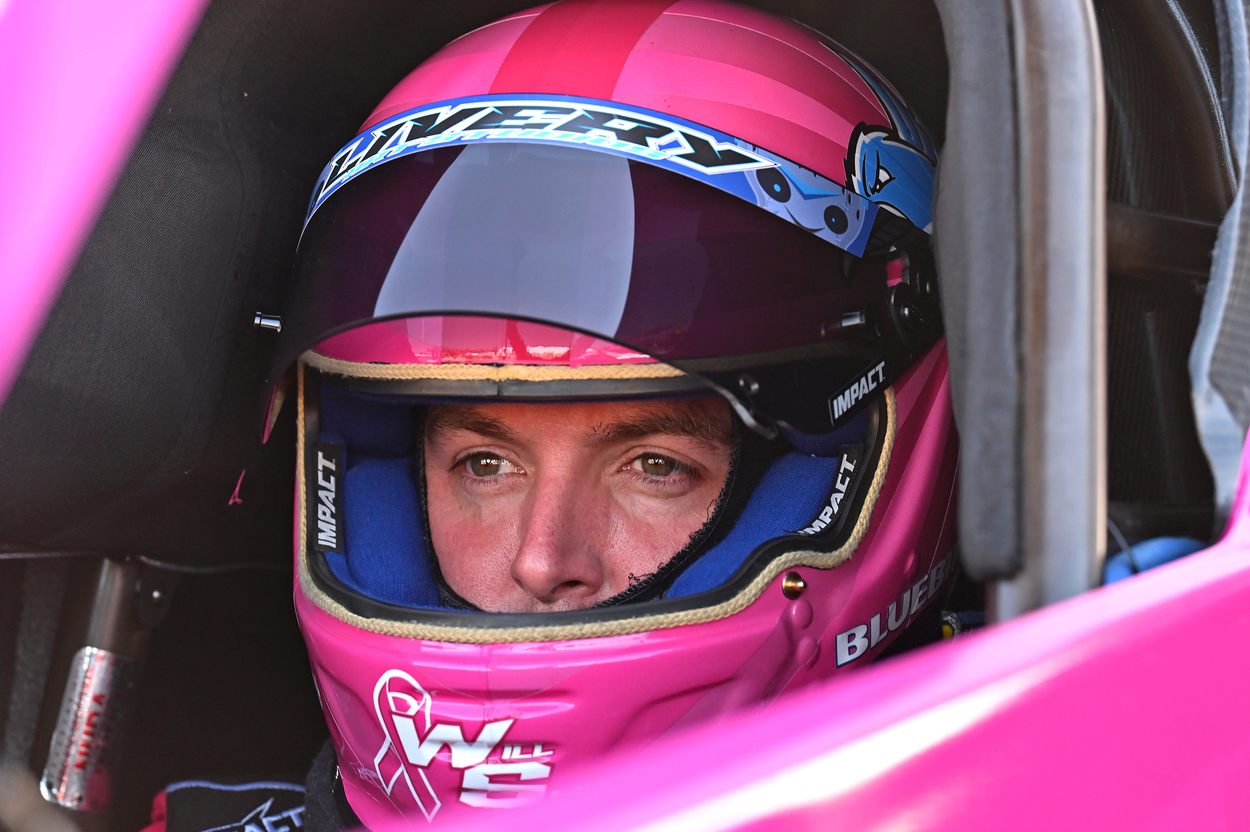
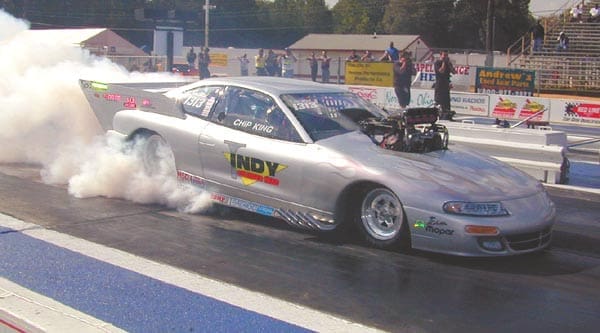
King rolled into the IHRA President’s Cup Nationals at Budds Creek as little more than an unknown with a silver Dodge Avenger, a handful of high school buddies, and a program held together with determination, borrowed help, and whatever parts hadn’t broken from the previous race. By the end of the weekend, the former Top Sportsman racer had the Pro Modified world scrambling for answers after storming to the provisional No. 1 spot during Thursday night qualifying at one of IHRA’s most electric events of that era.

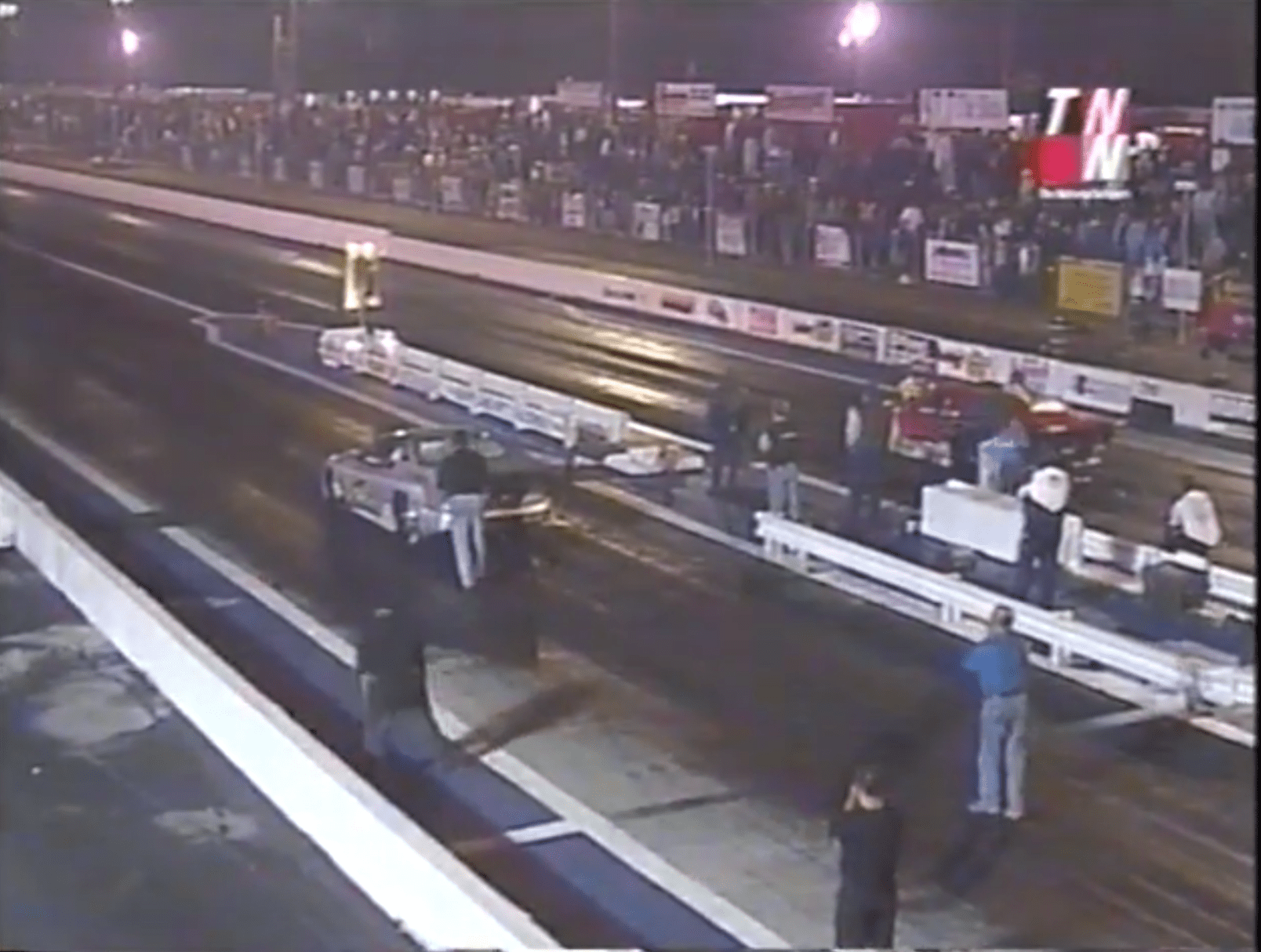
Back then, under Bill Bader’s leadership, IHRA knew exactly how to market Budds Creek. Racing started Thursday night and ended Saturday night under the lights before packed grandstands that treated the event like part drag race, part summer carnival, and part late-night street party.

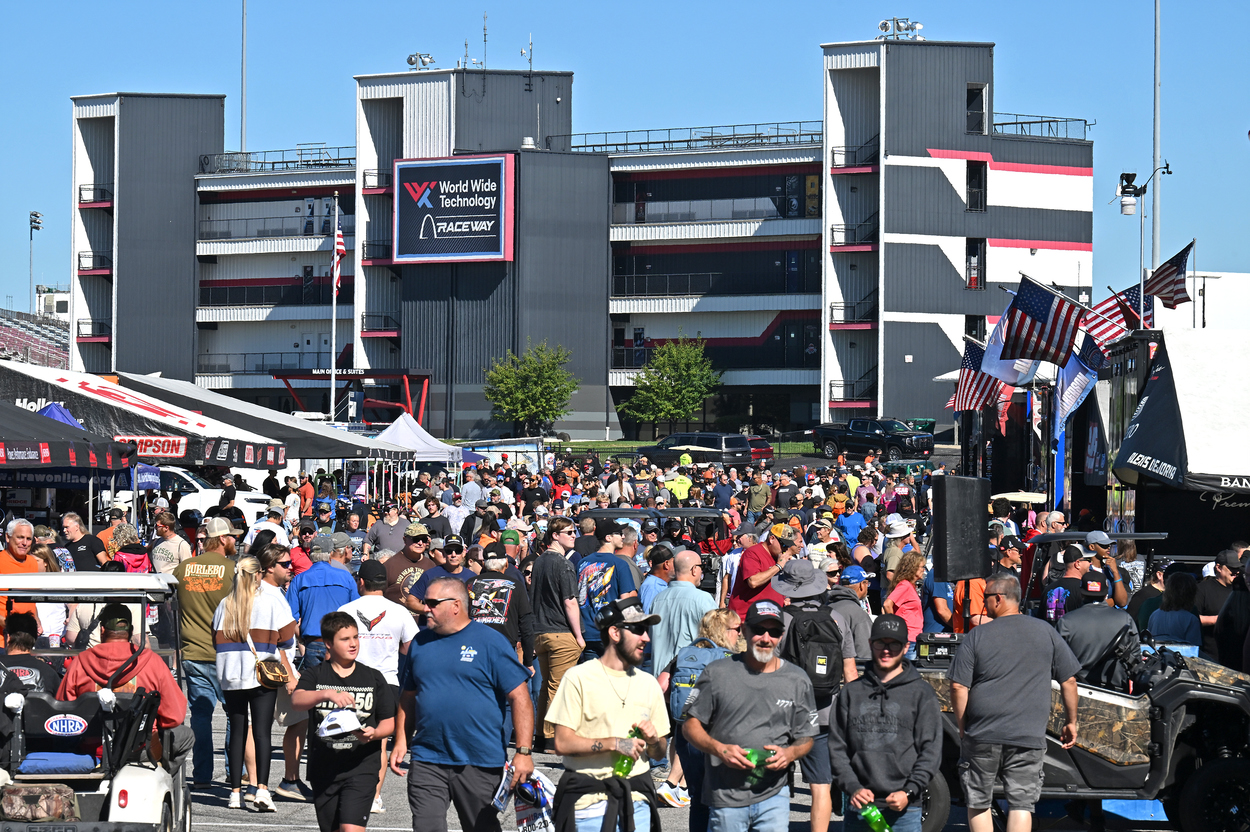
The crowd at Maryland International Raceway didn’t just watch races. They gambled on lanes, packed the fence line, and lived every run like it mattered.

Most of them had no idea the man driving the silver Avenger had been surviving race weekends almost entirely on grit.

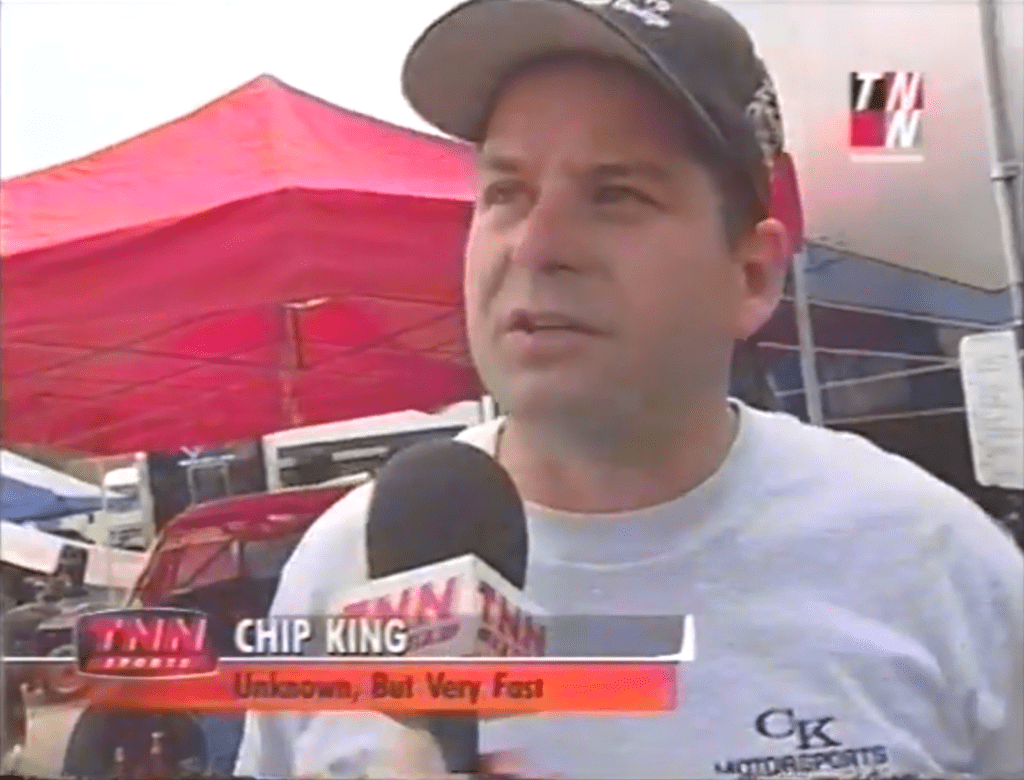
“This was my third race in IHRA,” King recalled. “I went to Cordova by myself and had to flag somebody down to help shoot fuel in the car just to start it for the day. Then I had some help come the next day. Then we went to Leicester, New York, and I had a little bit of help there. By the time we got to Budds Creek, we qualified No. 1.”
That statement alone was enough to turn heads in 2000 Pro Modified racing.

The category was filled with polished operations featuring stacker trailers, matching uniforms, established crew chiefs, and engines maintained by specialists. King arrived with little more than raw horsepower and a support system built from loyal friends willing to spend a weekend helping a racer they believed in.

By Budds Creek, drag racing legend Bill Barrett had started helping tune and organize the operation. Barrett, already well known throughout drag racing circles for his years around Scotty Cannon and some of the toughest doorslammer programs in the sport, gave King’s ragtag team a measure of direction when it desperately needed it.

“Bill Barrett had started helping me a little bit,” King said. “Ultimately he moved to Roxboro and lived there until he died. But, yeah, he was helping me somewhat. Other than that, it was just a couple of high school buddies.”

And then came Thursday night.

King laid down a run that instantly put the Avenger on top of the field. The pass shocked competitors because the combination itself already stood out. At a time when the class was dominated by established powerplants, King became the first racer to successfully campaign one of the newly re-legalized Chrysler Hemi combinations in IHRA Pro Modified competition.

The Hemi combination carried its own backstory inside doorslammer racing circles.

IHRA originally approved the Chrysler Hemi engine combination for Randy Moore’s radical Lamborghini program back in 1991 before quickly outlawing it after concerns over competitive balance. More than a decade later, the combination was reinstated, and King became the racer bold enough to bring it back into national-event Pro Modified competition.

That alone made the car different.

What happened after the run made the weekend unforgettable.

Most racers celebrated a provisional No. 1 with a steak dinner or a couple beers with the crew. King’s celebration escalated much further after one of his friends from the Baltimore area decided qualifying success deserved a proper night out.

Not just any night out, either.

King’s longtime friend owned a high-end adult entertainment business near Baltimore, and after the Thursday session, he sent a bus to pick up King and his crew.

What followed became drag racing folklore.

“My buddy owned an adult entertainment bar in the Baltimore area, and he sent a bus down to pick us all up and we had quite the time the night before,” King admitted. “He put me in the front seat of the bus with some adult beverage and two adult entertainers, for lack of better words.”
By Friday, the consequences of that celebration were becoming painfully obvious.

King still managed to hold the top spot for much of the event, but the weekend took another turn during the final qualifying session Friday night. Low on parts and already sitting atop the order, the team initially planned to skip the run entirely.

Then another competitor dipped into the 6.20s and knocked King off the No. 1 spot.

Suddenly King had to run again.

What happened next looked more like a bracket racer’s panic move than a polished Pro Modified operation.

“I think Carl Spiering had already done his burnout and was pulling up to pre-stage and they were yelling, ‘No burnout, no burnout,’” King remembered. “So I rolled through the water, hit the throttle and went, ‘Oh crap,’ slammed on the brakes and slid into full stage completely by accident.”

There was no strategy behind it. No calculated move.

King was simply trying to survive the moment.

“I’m sitting there thinking, ‘Oh crap, what do I do now?’” he said. “So I just revved it up, dropped the clutch, and the stars and moon lined up and the thing went even quicker.”

The run put him back on top.
Then came the shutdown area.

IHRA officials immediately approached the car for inspection after another blistering pass from the previously unknown racer. They expected to check the legality of the combination.

Instead, they got something else entirely.

“They came running to the car saying, ‘Don’t get out, we’ve got to check you over,’” King said. “I told them to stand back and then I threw up everywhere.”

The hangover from Thursday night had officially arrived.

King laughed recalling the reaction from officials and competitors, but the performance itself had already changed how people viewed the operation. Suddenly the unknown racer with the skeleton crew was becoming the story of the race.

The engine, meanwhile, was slowly destroying itself every pass.

“We had an engine that was already hurting itself every run because it was the first Hemi in Pro Mod at that time,” King said. “Nobody had a Hemi. I was the first one to bring one.”
 

What made the weekend resonate wasn’t just the qualifying performance. It was the survival act.

The team patched the wounded engine together repeatedly throughout eliminations while King kept advancing rounds against better-funded operations. Against expectations, the obscure racer from Roxboro, North Carolina, drove all the way into the final round before ultimately finishing runner-up to established Pro Modified star Steve Vick after a burst panel failure just before the finish line.

That miracle run nearly became a victory.

Instead, the mechanical issue handed Vick the win and left King as runner-up in only his third IHRA Pro Modified event. Even in defeat, the weekend belonged to King.

The T-shirts appeared almost immediately afterward, courtesy of the same Baltimore-area friend responsible for the infamous Thursday night celebration. The original version featured stronger language before calmer heads eventually cleaned up the slogan for public consumption.

“My buddy that owned the topless bar is the one that showed up with the shirts,” King said. “Obviously the first ones had the full F-word on them, but we toned them down so people could actually wear them.”

The shirts spread throughout drag racing almost as quickly as the story itself.

For longtime IHRA fans, Budds Creek became one of those legendary weekends people still bring up whenever conversations turn toward underdogs and unlikely stars. It represented a period where personalities mattered, where rough-around-the-edges racers could still show up with homemade programs and disrupt the establishment.

And King understands exactly why the memories still follow him.

As NHRA prepares to bring the inaugural NHRA Potomac Nationals to Maryland International Raceway, King returns with a different perspective than the one he carried entering Budds Creek a quarter-century ago. The racer who once survived on borrowed help and volunteer crew members now looks back on the weekend as both a launching point and a cautionary tale.

If that same bus pulls into the pits this weekend, however, King insists things will be different.

“Diet Coke,” he said with a laugh. “That’s me now.”

At least that’s the official story.

“Window shopping only,” King added.

Share the Insights?

Click here to share the article.

ad space x ad space

ad space x ad space

Competition Plus Team

Since our inception, we have been passionately dedicated to delivering the most accurate, timely, and compelling content in the world of drag racing. Our readers depend on us for the latest news, in-depth features, expert analysis, and exclusive interviews that connect you to the sport’s pulse.

Sign up for our newsletters and email list.

This field is for validation purposes and should be left unchanged.
Name

WHO THE ‘EF’ IS CHIP KING? THE WEEKEND A PRO MOD OUTLAW TURNED MARYLAND UPSIDE DOWN

It’s rare when a T-shirt tells the whole story, but back in 2000, one particular design managed to capture exactly what the Maryland International Raceway crowd, the IHRA Pro Modified pits, and just about everyone watching that weekend were asking themselves.

“Who the ‘ef’ is Chip King?”

And honestly, who could blame them?

King rolled into the IHRA President’s Cup Nationals at Budds Creek as little more than an unknown with a silver Dodge Avenger, a handful of high school buddies, and a program held together with determination, borrowed help, and whatever parts hadn’t broken from the previous race. By the end of the weekend, the former Top Sportsman racer had the Pro Modified world scrambling for answers after storming to the provisional No. 1 spot during Thursday night qualifying at one of IHRA’s most electric events of that era.

Back then, under Bill Bader’s leadership, IHRA knew exactly how to market Budds Creek. Racing started Thursday night and ended Saturday night under the lights before packed grandstands that treated the event like part drag race, part summer carnival, and part late-night street party.

The crowd at Maryland International Raceway didn’t just watch races. They gambled on lanes, packed the fence line, and lived every run like it mattered.

Most of them had no idea the man driving the silver Avenger had been surviving race weekends almost entirely on grit.

“This was my third race in IHRA,” King recalled. “I went to Cordova by myself and had to flag somebody down to help shoot fuel in the car just to start it for the day. Then I had some help come the next day. Then we went to Leicester, New York, and I had a little bit of help there. By the time we got to Budds Creek, we qualified No. 1.”

That statement alone was enough to turn heads in 2000 Pro Modified racing.

The category was filled with polished operations featuring stacker trailers, matching uniforms, established crew chiefs, and engines maintained by specialists. King arrived with little more than raw horsepower and a support system built from loyal friends willing to spend a weekend helping a racer they believed in.

By Budds Creek, drag racing legend Bill Barrett had started helping tune and organize the operation. Barrett, already well known throughout drag racing circles for his years around Scotty Cannon and some of the toughest doorslammer programs in the sport, gave King’s ragtag team a measure of direction when it desperately needed it.

“Bill Barrett had started helping me a little bit,” King said. “Ultimately he moved to Roxboro and lived there until he died. But, yeah, he was helping me somewhat. Other than that, it was just a couple of high school buddies.”

And then came Thursday night.

King laid down a run that instantly put the Avenger on top of the field. The pass shocked competitors because the combination itself already stood out. At a time when the class was dominated by established powerplants, King became the first racer to successfully campaign one of the newly re-legalized Chrysler Hemi combinations in IHRA Pro Modified competition.

The Hemi combination carried its own backstory inside doorslammer racing circles.

IHRA originally approved the Chrysler Hemi engine combination for Randy Moore’s radical Lamborghini program back in 1991 before quickly outlawing it after concerns over competitive balance. More than a decade later, the combination was reinstated, and King became the racer bold enough to bring it back into national-event Pro Modified competition.

That alone made the car different.

What happened after the run made the weekend unforgettable.

Most racers celebrated a provisional No. 1 with a steak dinner or a couple beers with the crew. King’s celebration escalated much further after one of his friends from the Baltimore area decided qualifying success deserved a proper night out.

Not just any night out, either.

King’s longtime friend owned a high-end adult entertainment business near Baltimore, and after the Thursday session, he sent a bus to pick up King and his crew.

What followed became drag racing folklore.

“My buddy owned an adult entertainment bar in the Baltimore area, and he sent a bus down to pick us all up and we had quite the time the night before,” King admitted. “He put me in the front seat of the bus with some adult beverage and two adult entertainers, for lack of better words.”

By Friday, the consequences of that celebration were becoming painfully obvious.

King still managed to hold the top spot for much of the event, but the weekend took another turn during the final qualifying session Friday night. Low on parts and already sitting atop the order, the team initially planned to skip the run entirely.

Then another competitor dipped into the 6.20s and knocked King off the No. 1 spot.

Suddenly King had to run again.

What happened next looked more like a bracket racer’s panic move than a polished Pro Modified operation.

“I think Carl Spiering had already done his burnout and was pulling up to pre-stage and they were yelling, ‘No burnout, no burnout,’” King remembered. “So I rolled through the water, hit the throttle and went, ‘Oh crap,’ slammed on the brakes and slid into full stage completely by accident.”

There was no strategy behind it. No calculated move.

King was simply trying to survive the moment.

“I’m sitting there thinking, ‘Oh crap, what do I do now?’” he said. “So I just revved it up, dropped the clutch, and the stars and moon lined up and the thing went even quicker.”

The run put him back on top.

Then came the shutdown area.

IHRA officials immediately approached the car for inspection after another blistering pass from the previously unknown racer. They expected to check the legality of the combination.

Instead, they got something else entirely.

“They came running to the car saying, ‘Don’t get out, we’ve got to check you over,’” King said. “I told them to stand back and then I threw up everywhere.”

The hangover from Thursday night had officially arrived.

King laughed recalling the reaction from officials and competitors, but the performance itself had already changed how people viewed the operation. Suddenly the unknown racer with the skeleton crew was becoming the story of the race.

The engine, meanwhile, was slowly destroying itself every pass.

“We had an engine that was already hurting itself every run because it was the first Hemi in Pro Mod at that time,” King said. “Nobody had a Hemi. I was the first one to bring one.”


What made the weekend resonate wasn’t just the qualifying performance. It was the survival act.

The team patched the wounded engine together repeatedly throughout eliminations while King kept advancing rounds against better-funded operations. Against expectations, the obscure racer from Roxboro, North Carolina, drove all the way into the final round before ultimately finishing runner-up to established Pro Modified star Steve Vick after a burst panel failure just before the finish line.

That miracle run nearly became a victory.

Instead, the mechanical issue handed Vick the win and left King as runner-up in only his third IHRA Pro Modified event. Even in defeat, the weekend belonged to King.

The T-shirts appeared almost immediately afterward, courtesy of the same Baltimore-area friend responsible for the infamous Thursday night celebration. The original version featured stronger language before calmer heads eventually cleaned up the slogan for public consumption.

“My buddy that owned the topless bar is the one that showed up with the shirts,” King said. “Obviously the first ones had the full F-word on them, but we toned them down so people could actually wear them.”

The shirts spread throughout drag racing almost as quickly as the story itself.

For longtime IHRA fans, Budds Creek became one of those legendary weekends people still bring up whenever conversations turn toward underdogs and unlikely stars. It represented a period where personalities mattered, where rough-around-the-edges racers could still show up with homemade programs and disrupt the establishment.

And King understands exactly why the memories still follow him.

As NHRA prepares to bring the inaugural NHRA Potomac Nationals to Maryland International Raceway, King returns with a different perspective than the one he carried entering Budds Creek a quarter-century ago. The racer who once survived on borrowed help and volunteer crew members now looks back on the weekend as both a launching point and a cautionary tale.

If that same bus pulls into the pits this weekend, however, King insists things will be different.

“Diet Coke,” he said with a laugh. “That’s me now.”

At least that’s the official story.

“Window shopping only,” King added.

Picture of John Doe

John Doe

Lorem ipsum dolor sit amet consectetur adipiscing elit dolor

More Posts

Send Us A Message

Picture of Bobby Bennett
Bobby Bennett
Thank you for joining us on this journey. Your support and trust inspire us every day to deliver the best in drag racing journalism. We are excited about the future and look forward to continuing to serve you with the same dedication and passion that has defined CompetitionPlus.com from the very beginning.

Don’t miss these other exciting stories!

Explore more action packed posts on Competition Plus, where we dive into the latest in Drag Racing News. Discover a range of topics, from race coverage to in-depth interviews, to keep you informed and entertained.