

There are gearheads, and then there are the people who make up the Nitro Revival Cacklefest. These are the folks who will spend years chasing down parts nobody makes anymore, rebuilding cars that haven’t existed for decades and hauling them across the country for the privilege of firing an engine without ever making a pass down the dragstrip.

How about trying to explain that to someone who doesn’t understand drag racing?

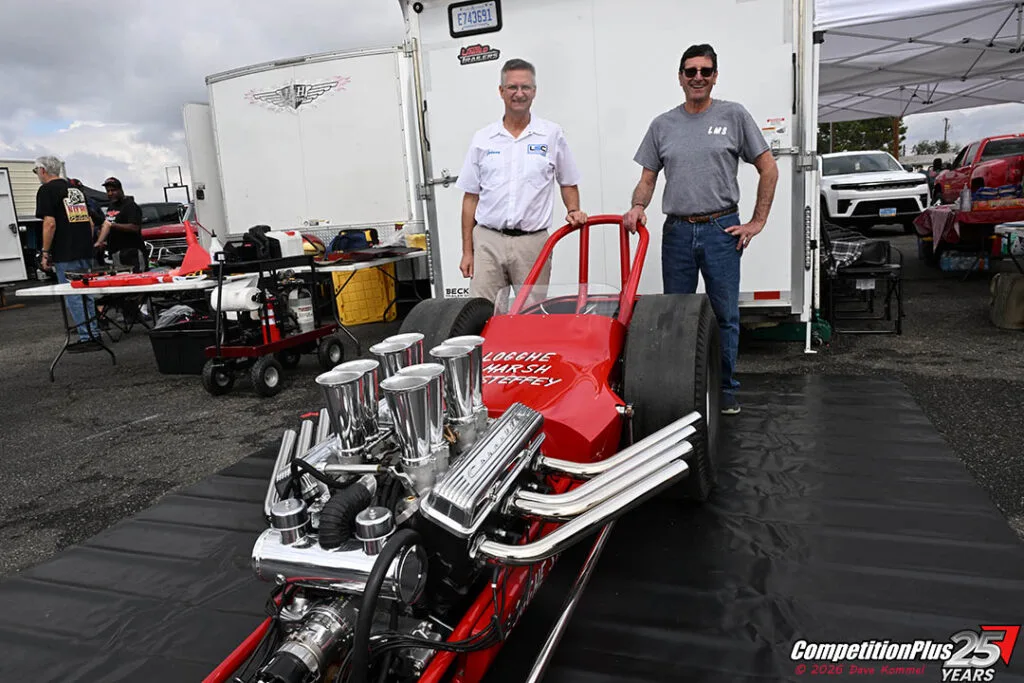
Ernie Manoleas probably wouldn’t waste much time trying. He hauled his recreation of the legendary Logghe-Marsh-Steffey dragster 2,400 miles from Michigan to Famoso Dragstrip for the Good Vibrations California Hot Rod Reunion, and he wasn’t there to collect a trophy.

What made the trip even more remarkable was the fellow he brought along to sit in the driver’s seat. John Marsh is the son of Jim Marsh, who drove the original dragster during the 1960s, when a naturally aspirated small-block Chevrolet could still make some serious noise.

For the Cacklefest crowd, this is why they do what they do.
DK2643 01497 2

The original Logghe-Marsh-Steffey dragster wasn’t just another old race car with a good story. According to Manoleas, it was the world’s fastest unblown dragster in 1964, recording a 7.92-second elapsed time at 187 mph.

An earlier version reportedly ran 8.14 seconds in 1963, but Manoleas’ interest in the car went beyond its performance.

“I grew up knowing about this car,” Manoleas said. “My best friend was John Logghe, because it’s a Logghe Marsh Steffey car, and this was his favorite car.”

“So all my childhood, from junior high on, he always talked about this car,” Manoleas said. “Ultimately, it came up where I decided that I wanted to recreate it, because the Logghes and the families could not find this thing, so it doesn’t exist.”

The original was believed to have been destroyed in a crash in Florida. Nobody could produce the car, and there wasn’t enough left of its history to suggest somebody would eventually discover it sitting in a forgotten building.

Manoleas wasn’t about to cut corners on a car he’d spent most of his life hearing about. If the original had a particular part on it in 1964, he was going to do his best to make sure the recreation had one, too.

The project received an important boost when Manoleas connected with Roy Steffey, who had been part of the original operation. Steffey helped him get started, giving the recreation a direct connection to the people who knew the car.

“So I said, ‘Well, I want to do this,'” Manoleas said. “I met Roy Steffey and he helped me get started on it.”

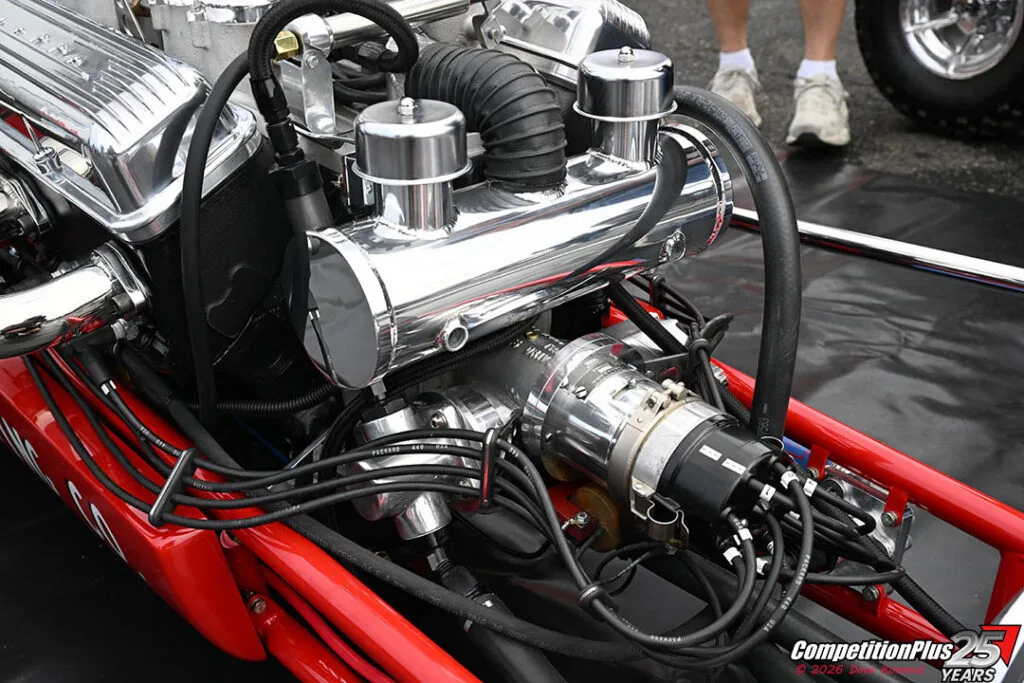
Much of the car was recreated from the front axle back, using equipment matching what the original carried. That included the McGurk Tri-Drive, Enderle injection components and a dry-sump oiling system that was a rarity in 1964.

Instead of keeping the oil in the pan, the engine drew it from a separate tank. Manoleas believes the original dragster was among the first to use that arrangement.

The small-block Chevrolet displaced 389 cubic inches, thanks in part to a Studebaker crankshaft forging modified by Moldex in Dearborn, Michigan. The crankshaft provided a three-quarter-inch longer stroke than the original 327 Chevrolet combination.

The tribute also included a magnesium Pontiac rear end associated with Mickey Thompson, a driveshaft shield, hydraulic brakes with a Girling master cylinder and a Logghe aluminum clutch can. Manoleas even got his wife, Debbie, involved in the project, and she made the driver’s seat.

DK2643 01476 1

To recreate the chassis, Manoleas turned to Michigan fabricator Andy Gemmete. Without an original car to measure or blueprints to follow, Gemmete had to work from photographs.

“We did a lot of reverse engineering out of photographs and pictures that Ernie had from the collection of books he’s gotten, and then we jigged it up on a surface plate,” Gemmete said. “And then just started from there.”

“I worked in a restoration shop for about 30 years and we rebuilt Ferrari chassis and then we also did some prototype stuff also, building cars from scratch,” Gemmete said.

The completed version made its first public appearance at the Famoso Dragstrip, where the Nitro Revival brought together some of the machinery and personalities responsible for drag racing’s early identity.

Manoleas had every reason to be proud of what he and his crew accomplished, but he wasn’t interested in being the center of attention when it came time to fire the engine. That responsibility belonged to John Marsh.

DK2643 01477 2

Marsh, of Rochester Hills, Michigan, also had family ties to Roy Steffey, his uncle and one of the original partners in the dragster. Jim Marsh’s sister, Sharon, was married to Steffey.

Marsh had more than a family interest in seeing the recreation completed. He also had the skills to help put it together.

“Well, I’ve raced my own cars and Ernie called me and said he was going to redo the car and asked if I was interested in helping, and I said, ‘Oh yeah,'” Marsh said. “And so I do fuel injection work and I’m a machinist and welder, so I helped out quite a bit with the car and you see what we have here.”

The team wasn’t planning a push start during its first Cacklefest appearance. Manoleas said they were still learning the newly completed car, and there was no reason to take unnecessary chances after investing so much effort in getting it to Bakersfield.

The elder Marsh died in 1999. Twenty-seven years later, his son was at Famoso, getting ready to climb into a new rendition of the dragster his father once drove.

For Manoleas, the trip from Michigan meant finally showing the world a car he’d spent years trying to bring back. For John Marsh, it meant getting behind the wheel of something he never figured he’d see again, much less have a hand in building.

And if anybody wondered whether all those years of work and 2,400 miles of hauling were worth it, they only needed to ask the man sitting in the driver’s seat.

“Oh, it’s very special,” Marsh said. “Very special to me to see that my family’s car is back here at Bakersfield.”

DK2643 01481

Share the Insights?

Click here to share the article.

ad space x ad space

ad space x ad space

Competition Plus Team

Since our inception, we have been passionately dedicated to delivering the most accurate, timely, and compelling content in the world of drag racing. Our readers depend on us for the latest news, in-depth features, expert analysis, and exclusive interviews that connect you to the sport’s pulse.

Sign up for our newsletters and email list.

This field is for validation purposes and should be left unchanged.
Name

2,400 MILES, A LOST DRAGSTER AND A SON FOLLOWING HIS FATHER’S FOOTSTEPS

There are gearheads, and then there are the people who make up the Nitro Revival Cacklefest. These are the folks who will spend years chasing down parts nobody makes anymore, rebuilding cars that haven’t existed for decades and hauling them across the country for the privilege of firing an engine without ever making a pass down the dragstrip.

How about trying to explain that to someone who doesn’t understand drag racing?

Ernie Manoleas probably wouldn’t waste much time trying. He hauled his recreation of the legendary Logghe-Marsh-Steffey dragster 2,400 miles from Michigan to Famoso Dragstrip for the Good Vibrations California Hot Rod Reunion, and he wasn’t there to collect a trophy.

What made the trip even more remarkable was the fellow he brought along to sit in the driver’s seat. John Marsh is the son of Jim Marsh, who drove the original dragster during the 1960s, when a naturally aspirated small-block Chevrolet could still make some serious noise.

For the Cacklefest crowd, this is why they do what they do.
DK2643 01497 2

The original Logghe-Marsh-Steffey dragster wasn’t just another old race car with a good story. According to Manoleas, it was the world’s fastest unblown dragster in 1964, recording a 7.92-second elapsed time at 187 mph.

An earlier version reportedly ran 8.14 seconds in 1963, but Manoleas’ interest in the car went beyond its performance.

“I grew up knowing about this car,” Manoleas said. “My best friend was John Logghe, because it’s a Logghe Marsh Steffey car, and this was his favorite car.”

“So all my childhood, from junior high on, he always talked about this car,” Manoleas said. “Ultimately, it came up where I decided that I wanted to recreate it, because the Logghes and the families could not find this thing, so it doesn’t exist.”

The original was believed to have been destroyed in a crash in Florida. Nobody could produce the car, and there wasn’t enough left of its history to suggest somebody would eventually discover it sitting in a forgotten building.

Manoleas wasn’t about to cut corners on a car he’d spent most of his life hearing about. If the original had a particular part on it in 1964, he was going to do his best to make sure the recreation had one, too.

The project received an important boost when Manoleas connected with Roy Steffey, who had been part of the original operation. Steffey helped him get started, giving the recreation a direct connection to the people who knew the car.

“So I said, ‘Well, I want to do this,'” Manoleas said. “I met Roy Steffey and he helped me get started on it.”

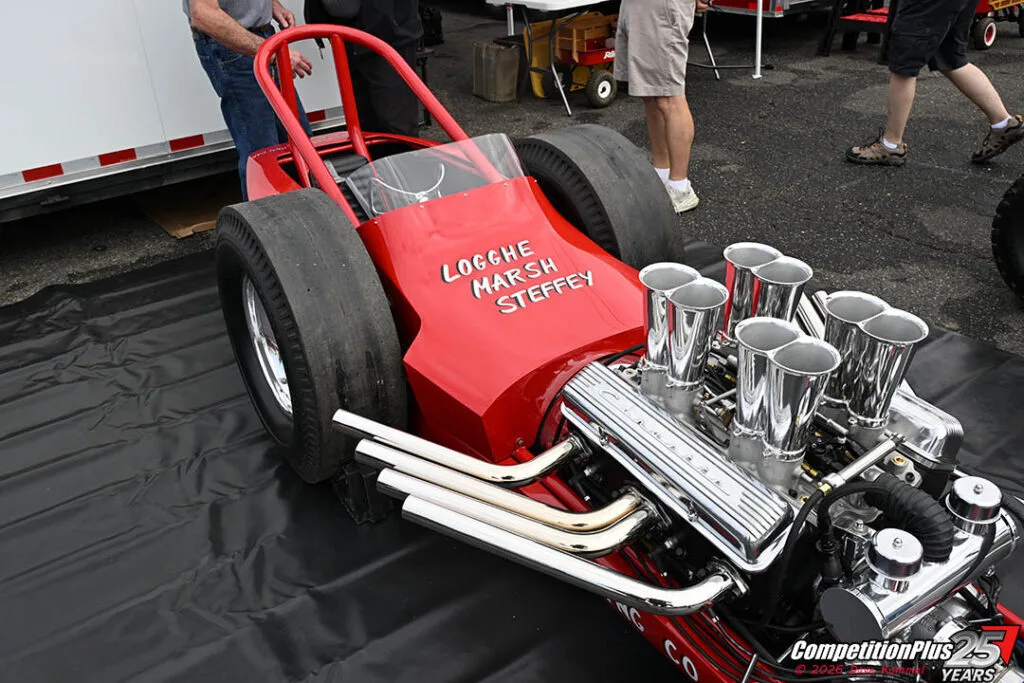
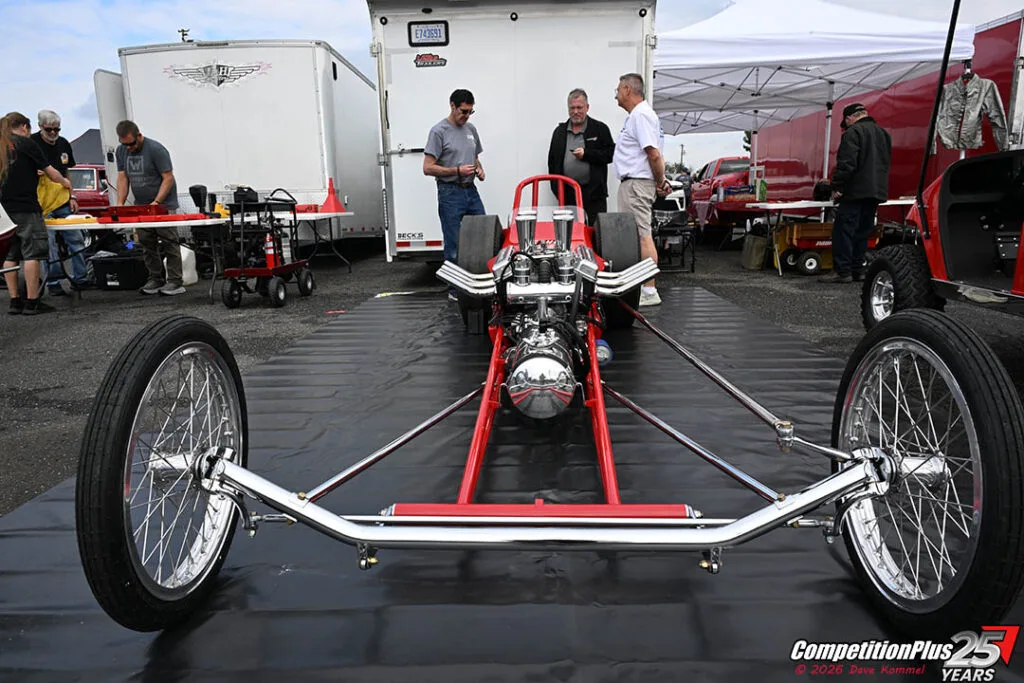
Much of the car was recreated from the front axle back, using equipment matching what the original carried. That included the McGurk Tri-Drive, Enderle injection components and a dry-sump oiling system that was a rarity in 1964.

Instead of keeping the oil in the pan, the engine drew it from a separate tank. Manoleas believes the original dragster was among the first to use that arrangement.

The small-block Chevrolet displaced 389 cubic inches, thanks in part to a Studebaker crankshaft forging modified by Moldex in Dearborn, Michigan. The crankshaft provided a three-quarter-inch longer stroke than the original 327 Chevrolet combination.

The tribute also included a magnesium Pontiac rear end associated with Mickey Thompson, a driveshaft shield, hydraulic brakes with a Girling master cylinder and a Logghe aluminum clutch can. Manoleas even got his wife, Debbie, involved in the project, and she made the driver’s seat.
DK2643 01476 1

To recreate the chassis, Manoleas turned to Michigan fabricator Andy Gemmete. Without an original car to measure or blueprints to follow, Gemmete had to work from photographs.

“We did a lot of reverse engineering out of photographs and pictures that Ernie had from the collection of books he’s gotten, and then we jigged it up on a surface plate,” Gemmete said. “And then just started from there.”

“I worked in a restoration shop for about 30 years and we rebuilt Ferrari chassis and then we also did some prototype stuff also, building cars from scratch,” Gemmete said.

The completed version made its first public appearance at the Famoso Dragstrip, where the Nitro Revival brought together some of the machinery and personalities responsible for drag racing’s early identity.

Manoleas had every reason to be proud of what he and his crew accomplished, but he wasn’t interested in being the center of attention when it came time to fire the engine. That responsibility belonged to John Marsh.

DK2643 01477 2

Marsh, of Rochester Hills, Michigan, also had family ties to Roy Steffey, his uncle and one of the original partners in the dragster. Jim Marsh’s sister, Sharon, was married to Steffey.

Marsh had more than a family interest in seeing the recreation completed. He also had the skills to help put it together.

“Well, I’ve raced my own cars and Ernie called me and said he was going to redo the car and asked if I was interested in helping, and I said, ‘Oh yeah,'” Marsh said. “And so I do fuel injection work and I’m a machinist and welder, so I helped out quite a bit with the car and you see what we have here.”

The team wasn’t planning a push start during its first Cacklefest appearance. Manoleas said they were still learning the newly completed car, and there was no reason to take unnecessary chances after investing so much effort in getting it to Bakersfield.

The elder Marsh died in 1999. Twenty-seven years later, his son was at Famoso, getting ready to climb into a new rendition of the dragster his father once drove.

For Manoleas, the trip from Michigan meant finally showing the world a car he’d spent years trying to bring back. For John Marsh, it meant getting behind the wheel of something he never figured he’d see again, much less have a hand in building.

And if anybody wondered whether all those years of work and 2,400 miles of hauling were worth it, they only needed to ask the man sitting in the driver’s seat.

“Oh, it’s very special,” Marsh said. “Very special to me to see that my family’s car is back here at Bakersfield.”

DK2643 01481
Picture of John Doe

John Doe

Lorem ipsum dolor sit amet consectetur adipiscing elit dolor

More Posts

Send Us A Message

Picture of Bobby Bennett
Bobby Bennett
Thank you for joining us on this journey. Your support and trust inspire us every day to deliver the best in drag racing journalism. We are excited about the future and look forward to continuing to serve you with the same dedication and passion that has defined CompetitionPlus.com from the very beginning.

Don’t miss these other exciting stories!

Explore more action packed posts on Competition Plus, where we dive into the latest in Drag Racing News. Discover a range of topics, from race coverage to in-depth interviews, to keep you informed and entertained.