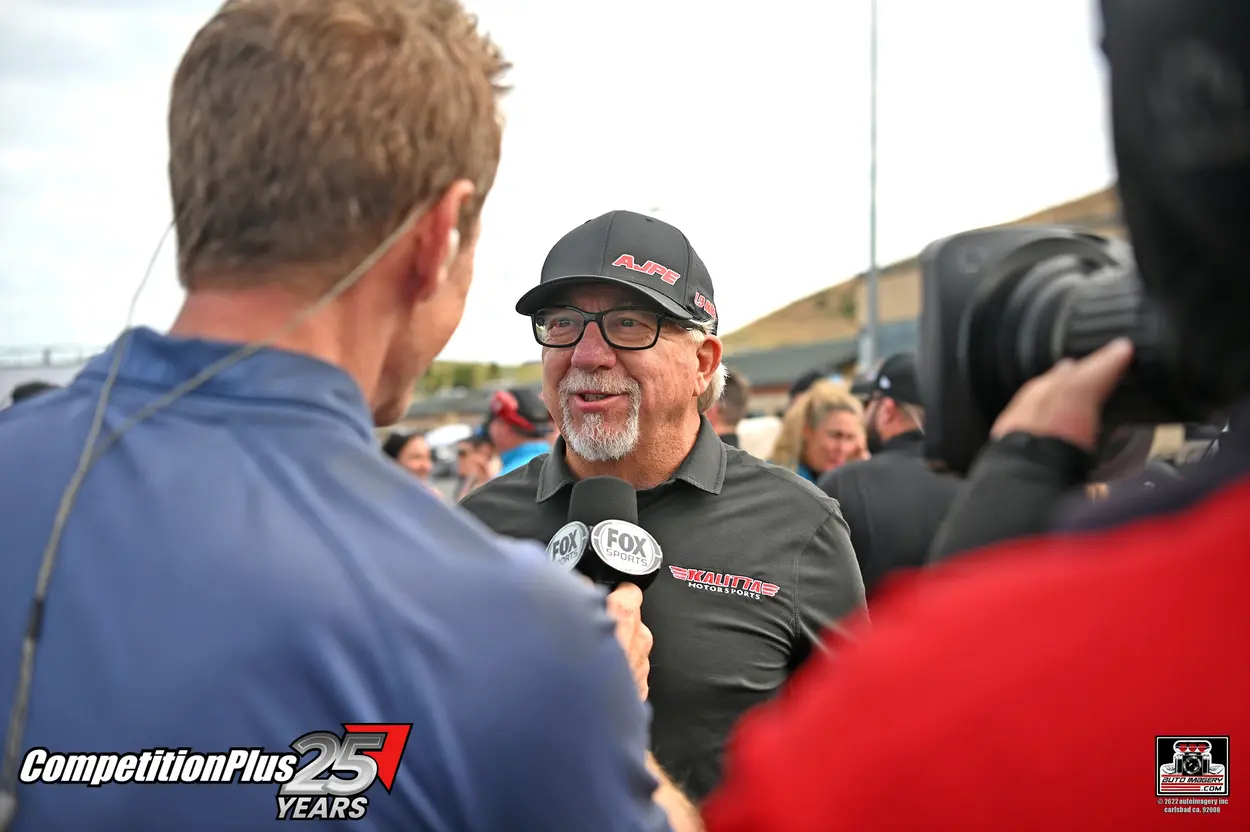

Thirty years have passed since Alan Johnson and his younger brother, Blaine, celebrated one of the defining victories of their lives at Sonoma Raceway. Time has transformed Alan Johnson into the gold standard of Top Fuel tuning, but every return to Northern California still carries him back to the day his brother threw his hands into the air after winning what became the final victory of their careers together.
Sunday’s victory by Doug Kalitta at the Denso NHRA Sonoma Nationals presented by PowerEdge brought those memories back into sharp focus. Kalitta’s win over Jasmine Salinas added another trophy to Johnson’s remarkable resume, but it also reminded him that long before championships, records and Hall of Fame credentials, there was a family team trying to survive one race at a time.
For most fans, Johnson’s career is measured in championships, national-event victories and his reputation as the tuner nearly every aspiring crew chief studies. Yet Sonoma remains one of the few places where the numbers take a back seat to the emotions.
Every trip through the gates stirs the same image.
“I can’t help but think about it whenever you’re rolling in here,” Johnson said. “The iconic shot of [Blaine] throwing his stuff up in the air when he finally figured out that he won the race. Pretty special. It’s hard to forget that.”
The celebration has become one of drag racing’s enduring video clips. Blaine Johnson never saw the win light shine on the scoreboard, leaving him uncertain until someone on the starting line gave him a thumbs up confirming he had defeated Kenny Bernstein in the final round of the 1996 California Nationals.
For Alan, however, the memory stretches beyond the finish line. He still remembers the scramble that nearly prevented the victory from happening at all.
“There’s a couple of things that stick out,” Johnson recalled. “One, watching his reaction after he won when he finally found out that he did win, because he didn’t see the light on the pole, so he didn’t know he won until they gave him a thumbs up, but before that round, we needed our blower.
“There was a problem with the blower. I can’t remember what it was, but there was an issue with the blower, so I needed another blower. So I borrowed one from Jim Head and bolted it on the car for the final.”
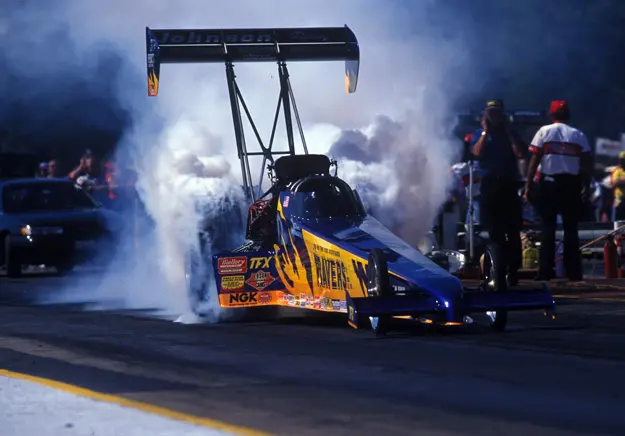
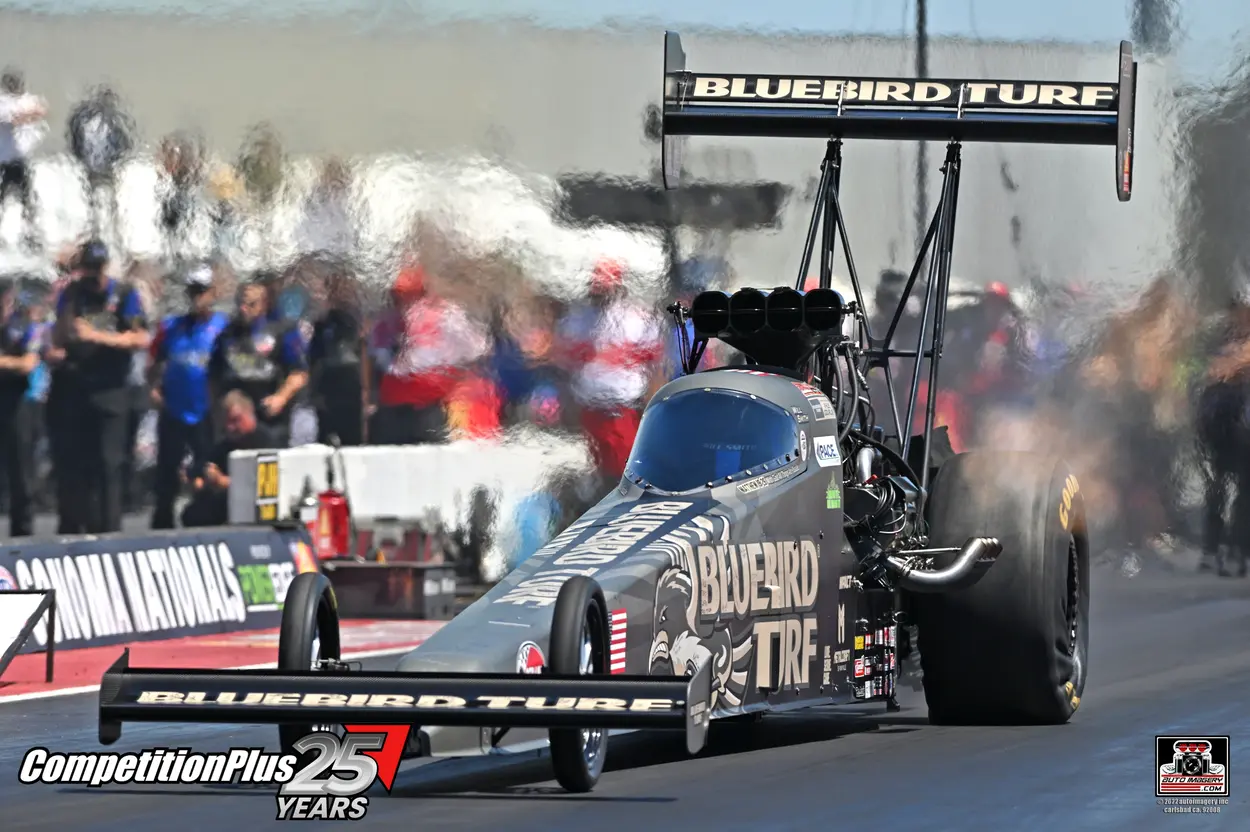
The Top Fuel cars of three decades ago look almost archaic when compared to today’s. The Johnson brothers were building a championship-caliber operation without the financial resources enjoyed by many of their rivals, forcing them to rely on friendships and determination when parts failed at the worst possible time.
“We weren’t the most well-funded team in the world, but for some reason, we had two superchargers, but something happened to both of them and we didn’t have a suitable one to run the final with,” Johnson said. “So we borrowedone from Jim Head and put it on there for the race.”
That borrowed supercharger became part of drag racing history. Blaine drove to his 30th and final NHRA national-event victory, defeating Bernstein with a 4.67-second pass to Bernstein’s 5.00.
The victory also came during what appeared destined to become a championship season.
A little over a month later, Blaine was killed in a racing accident at Indianapolis, ending one of the sport’s most promising careers. The Sonoma victory became more than another trophy. It became an enduring memory shared by two brothers who had built their racing dreams together.
Johnson admits success never felt inevitable, even as their performance steadily improved.
“Well, back then, it certainly was, because we were really new at it,” Johnson said. “We obviously won a lot of races before we started running Top Fuel, but in Top Fuel, at that point, that was 1996. We’d only raced for two years, part of ’94, not a whole season in ’94, but then the season of ’95, and we had some success, but we never got a win until the last race of that year.

“Our car ran good, but still Sunday, it’s hard to win on Sunday. It still is hard to win on Sunday, because you’ve got to make four good runs. You can’t have any mistakes. So it was still a challenge back then for sure. I mean, if it was easy, we’d have won all of them, but we didn’t.”
Today Johnson’s accomplishments have elevated him into the conversation once occupied by crew chiefs he once chased. He’s won well over 150 national events and been the driving force behind 14 NHRA championships in nitro, and four in Top Alcohol Dragster with Blaine.
Ironically, he admits, he rarely spent time studying the sport’s biggest names because he preferred solving problems on his own.
“I really didn’t think about it that much, because I kind of lived on my own island,” Johnson said. “I never really went and got help from anybody because I didn’t know anybody.”
“I came from alcohol and I didn’t really know many Top Fuel guys, really. The only ones I really knew very well were Fuzzy Carter, because we were buddies with the whole Hill group there. So we knew them pretty well, but we never talked about tune-up or any of that stuff. We just kind of kept to our own, did our own thing.”
Rather than viewing established crew chiefs as heroes, Johnson saw them as obstacles standing between his team and victory lane.
“We never really interacted with any of those guys, but there’s certainly some guys that could make the cars run,” Johnson said. “But I thought of it more as a challenge than icons, you know what I mean? Challenges. A challenge, I want to beat that guy. Dick LaHaie was one. It’s kind of hard to beat. You got to get your stuff together. So it’s a challenge to race Dick.”


That independent approach still shapes how Johnson manages Kalitta Motorsports today. Even with two competitive Top Fuel dragsters under one roof, he believes every race car demands its own strategy.
“There’s probably advantages and disadvantages to that,” Johnson said. “The one advantage to that is your mind doesn’t get cluttered up with whatever the other people are doing.”
“It’s like if you have two race cars… I don’t really pay much attention to how [Brian Husen] runs his car, because I don’t want that car to influence what I do over here. Every car has its own personality.”
Johnson then reached for one of the more memorable analogies of the weekend.
“It’s no different than a girlfriend,” he said. “Might go through your life, have a couple of different girlfriends. I guarantee you they don’t have the same personality, and neither do race cars. So you’ve got to learn how to adapt to your race car, because it ain’t going to adapt to you. It does what it wants to do. You’ve just got to give it what it wants.”
His thoughts eventually returned to the brother who helped launch the career that has since become legendary.
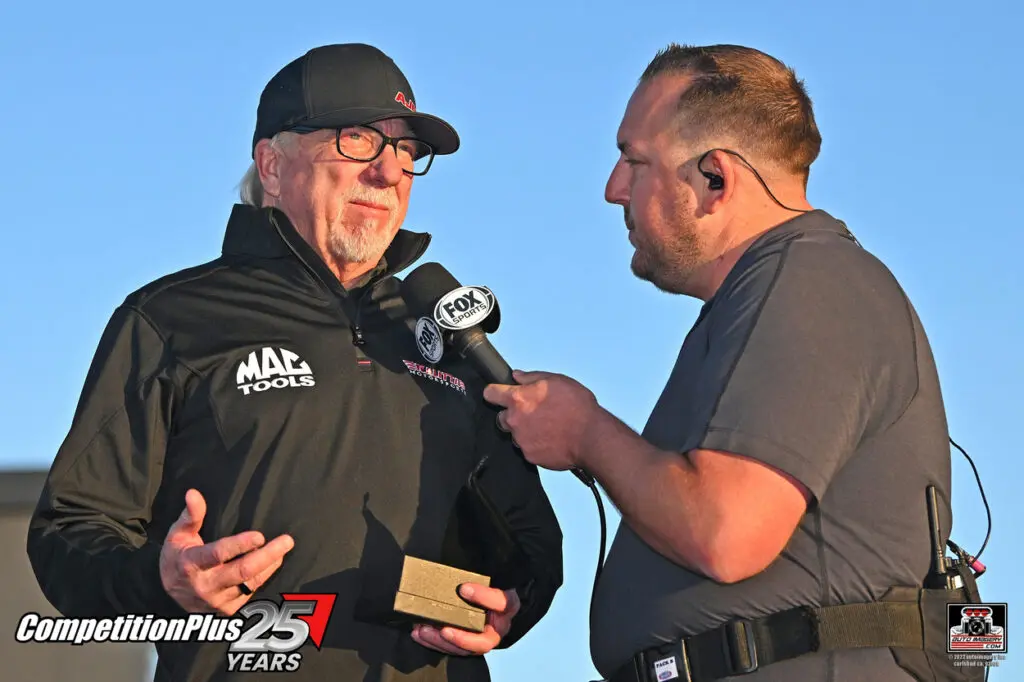
Asked what Blaine might say if he could see everything his older brother has accomplished, Johnson never hesitated.
“I think he sees it,” Johnson said. “He’s watching.”
That independent approach still shapes how Johnson manages Kalitta Motorsports today. Even with two competitive Top Fuel dragsters under one roof, he believes every race car demands its own strategy.
“There’s probably advantages and disadvantages to that,” Johnson said. “The one advantage to that is your mind doesn’t get cluttered up with whatever the other people are doing.”
“It’s like if you have two race cars… I don’t really pay much attention to how [Brian Husen] runs his car, because I don’t want that car to influence what I do over here. Every car has its own personality.”
Johnson then reached for one of the more memorable analogies of the weekend.
“It’s no different than a girlfriend,” he said. “Might go through your life, have a couple of different girlfriends. I guarantee you they don’t have the same personality, and neither do race cars. So you’ve got to learn how to adapt to your race car, because it ain’t going to adapt to you. It does what it wants to do. You’ve just got to give it what it wants.”
His thoughts eventually returned to the brother who helped launch the career that has since become legendary.
Asked what Blaine might say if he could see everything his older brother has accomplished, Johnson never hesitated.
“I think he sees it,” Johnson said. “He’s watching.”