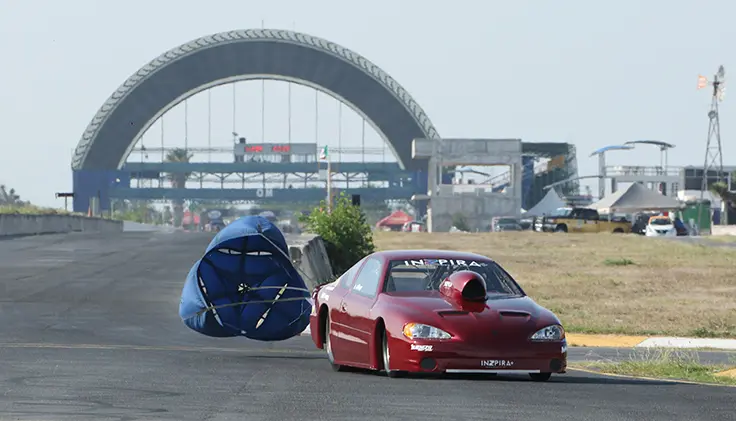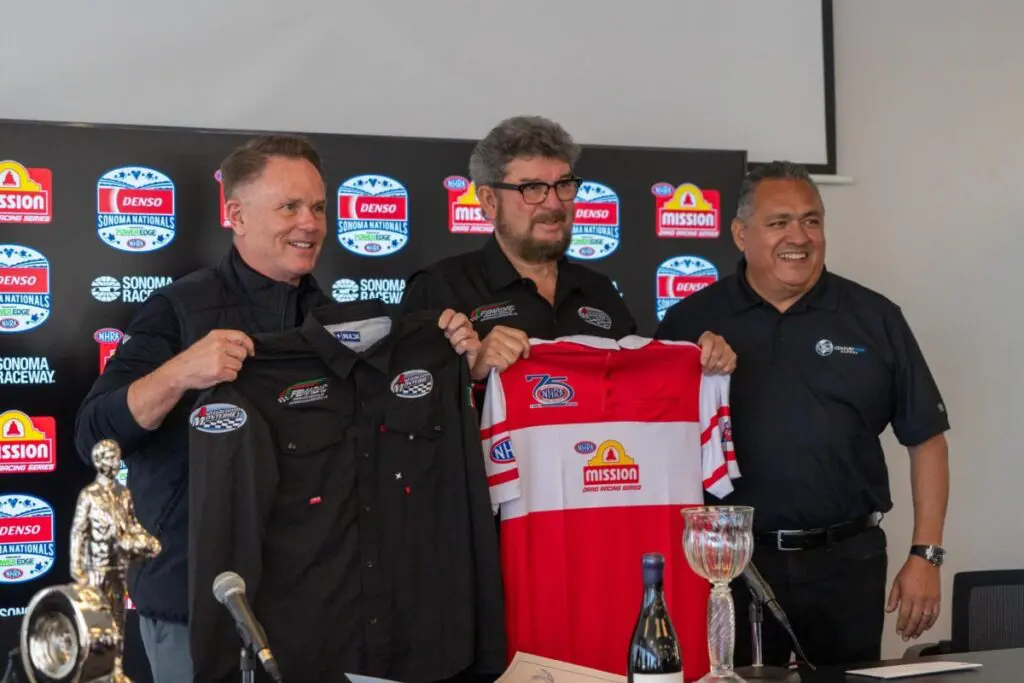

The NHRA’s international footprint grew again Saturday with the return of Autódromo de Monterrey to the NHRA Member Track Network, re-establishing a relationship that dates back to the 1980s and 1990s while opening a new chapter for drag racing in Mexico.
 
The Apodaca, Nuevo León facility will become part of NHRA’s South Central Division (Division 4), giving racers in Mexico access to NHRA-sanctioned competition while strengthening one of drag racing’s longest-standing international relationships.
 
For NHRA, the announcement reaches beyond adding another sanctioned facility. It represents a return to a market where the organization believes there is both history and untapped potential, especially during the sanctioning body’s 75th anniversary season.
 
Autódromo de Monterrey joins an international network that includes tracks in Canada, Bahrain and Puerto Rico. The facility previously operated as an NHRA member track before its affiliation ended decades ago.
 
Under the renewed agreement, the track will become eligible to host a variety of NHRA-sanctioned programs, including the NHRA Racing Series presented by Hoosier, the NHRA Jr. Drag Racing League, NHRA Street Legal and NHRA Jr. Street. The facility also gains access to NHRA insurance programs, operational support and national marketing resources available to member tracks.
 
The agreement also creates opportunities for future specialty events while providing Mexican racers with additional pathways into NHRA competition.
 
For NHRA President Glen Cromwell, the timing carried added significance.
 
With the organization celebrating 75 years since Wally Parks founded NHRA in 1951, Cromwell said bringing the Mexican facility back into the fold reflects the same mission that launched the organization: providing racers a safe place to compete while continuing to grow the sport.
 
“Yeah, it’s great. And what a perfect timing, we’re sitting here in the middle of our 75th anniversary and you get to take a second and reflect about NHRA 75 years and how it all started back in 1951 with Wally Parks and what his mission was,” Cromwell said.
 
“And that was to bring racers, get them off the street, but bring them in a safe haven and bring them to our member tracks.”
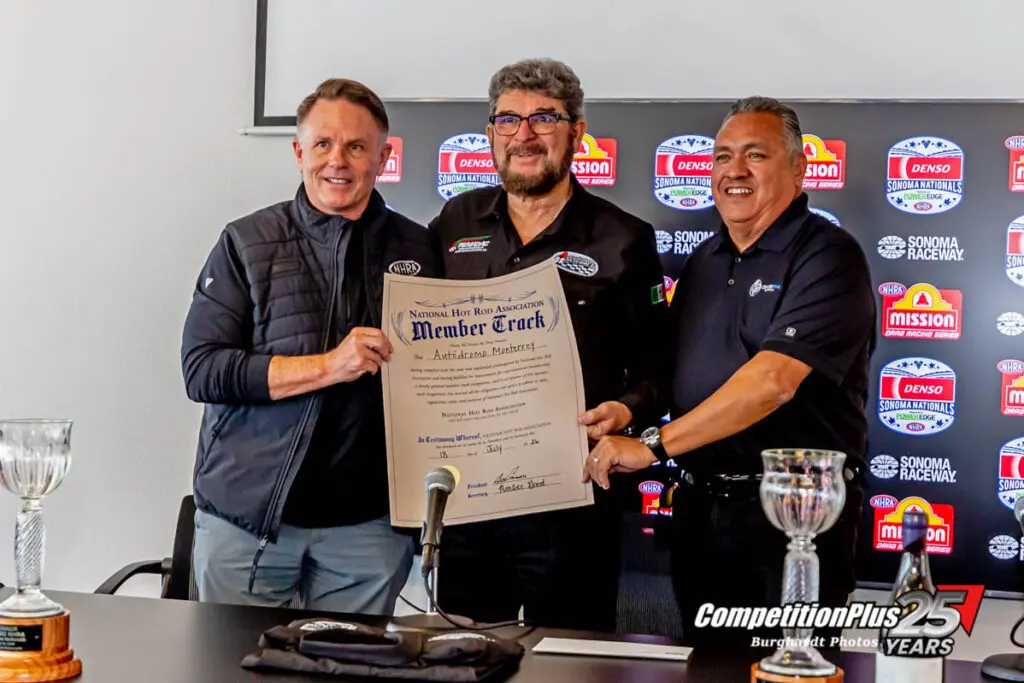
Rather than describing Monterrey as a new addition, Cromwell viewed the announcement as welcoming back a familiar member of the family.
 
“And this is an exciting time of our 75th to bring you back to the family because I know you were here in the ’90s and we are so excited, you really never left,” Cromwell said. “You were always part of the family. You’re just coming back.”
 
Cromwell believes the renewed relationship reinforces NHRA’s broader international ambitions.
 
“So super excited and it’s perfect,” Cromwell said. “And for us to have the outreach going international, this is a big deal. We’re in Puerto Rico, we’re in Canada, we’re in Saudi Arabia and now we’re in Mexico.”
 
“So what it tells you, it’s the growth of the NHRA and we’re in a good place, and I’m excited for the future.”
 
The significance extends beyond geography.
 
For decades, racers from Mexico have competed at NHRA national events throughout the United States, but the return of an NHRA member track inside Mexico creates a foundation for developing racers before they reach professional competition.
 
That opportunity resonated with Gilberto Jiménez, whose family has operated Autódromo de Monterrey since the late 1960s.
 
The facility has long been known as a multi-purpose motorsports complex, featuring a 2.2-mile FIA Grade 3 road course while maintaining one of Mexico’s most recognizable drag racing venues.
 
Jiménez said restoring the NHRA relationship represents years of family commitment finally coming full circle.
 
“Before, thank you all to the media, thank you for all of the fans and of course, thank you to NHRA, our family in Mexico, our representers here in the USA, CPG Consulting Group and all of the family here of quarter-mile racing,” Jiménez said.
 
“For us, it’s an honor to be here sharing again the races, sharing today the feeling and the winning, the desire of winning.”
Jiménez explained that the track has remained family-owned since its founding and that preparing to return under NHRA sanctioning has required a renewed commitment to meeting the organization’s standards.
 
“Autódromo de Monterrey was founded by my father back in 1967, if I remember correctly and has always been a family racetrack owner,” Jiménez said. “It’s a 2.2-mile road racing circuit. It’s FIA classified level three of racing as a road racing circuit.”
 
“And now, we are working together with NHRA and the division of all of these people in order to put our racetrack back in track again, to be able to produce races according to your organization, your rules and we are committed.”
 
Jiménez said the partnership represents more than sanctioning races.
 
He believes motorsports can provide young people with positive opportunities while strengthening the relationship between the United States and Mexico through competition.
 
“And as you pointed very well, it is the perfect timing I believe between the two countries to promote racing, to promote the new generations, the new guys, the new kids, the new teenagers to go racing instead of doing something else out there that they’re not supposed to do,” Jiménez said.
 
“So we like to do that in Mexico in our racetrack and we are very, very happy.”
 
Another key player in the agreement was Century Prime Global, whose leadership helped connect NHRA officials with the Jiménez family.
 
Rudy Gutierrez, a racer himself and a principal with Century Prime Global, said the effort began with a simple question about bringing NHRA back to Mexico before evolving into a business proposal supported by both organizations.
 
“Yes, I’ve been involved in racing for many years,” Gutierrez said. “We actually are racing in a little while, we qualify a little while. So out of that passion came out this idea that I shared with my partners.”
Gutierrez credited the Cuadra family for introducing Century Prime Global to the Jiménez family before discussions accelerated.
 
He said the proposal eventually became about much more than financial projections.
 
“We put together an executive summary that made sense, numbers made sense, but this is historic,” Gutierrez said. “It’s about passion.”
 
Gutierrez said persistence eventually opened the door to a partnership that could create a first for Mexican drag racing.
 
“I reached out to the Jiménez family, approached them,” Gutierrez said. “I think they kind of held me off a little bit, this guy’s not real, but kept knocking on that door.”
 
“Gilberto Jiménez answered that call and he said, ‘If this is real,’ he asked the father of family, ‘If this is real, I’m in.’ We’re in the door. Mexico has never had a 300-plus mile an hour race. We’re going to make history.”
 
During the media session, Jiménez expanded on what the announcement means beyond racing itself.
 
He repeatedly returned to the idea that cooperation between the United States and Mexico can create opportunities for future generations of racers.
 
“Well, I think it’s the right time for the two countries to do better things together,” Jiménez said. “I think it’s the right time for the Mexican scenario, for the Mexican fans, for the Mexican people that likes racing to feel involved in a professional worldwide level as the National Hot Rod Association has at the moment.”
 
“It is the right time for a country, for both of our countries to show to the world that united, we can make it.”
 
Jiménez also emphasized youth development, noting that Monterrey already has an active Junior Dragster program that could eventually connect young racers from both countries.
 
“As I said, the Autódromo has been in business for 50 something years, 56 years,” Jiménez said. “It’s a dream of my father, Filiberto, who built the racetrack.”
 
“My son, Gilbo and me, we are honored and my family, the brothers, the sisters, the mom, we are so happy that this is happening at the moment, especially bringing the junior dragsters.”
 
“We have about 25, 30 kids racing in Mexico for the past, I don’t know, past 20, 30 years,” Jiménez continued. “We want to bring them over to a race here in, I don’t know, in Texas or somewhere, to come and compete with your drivers.”
 
“Just imagine that, what an example it will be for the juniors, for the teenagers to have Mexico and USA together, to compete together, all of us together, the attention of the world.”

Share the Insights?

Click here to share the article.

ad space x ad space

ad space x ad space

Competition Plus Team

Since our inception, we have been passionately dedicated to delivering the most accurate, timely, and compelling content in the world of drag racing. Our readers depend on us for the latest news, in-depth features, expert analysis, and exclusive interviews that connect you to the sport’s pulse.

Sign up for our newsletters and email list.

This field is for validation purposes and should be left unchanged.
Name

MEXICO RETURNS TO NHRA AS AUTÓDROMO DE MONTERREY REJOINS MEMBER TRACK NETWORK

The NHRA’s international footprint grew again Saturday with the return of Autódromo de Monterrey to the NHRA Member Track Network, re-establishing a relationship that dates back to the 1980s and 1990s while opening a new chapter for drag racing in Mexico.
 
The Apodaca, Nuevo León facility will become part of NHRA’s South Central Division (Division 4), giving racers in Mexico access to NHRA-sanctioned competition while strengthening one of drag racing’s longest-standing international relationships.
 
For NHRA, the announcement reaches beyond adding another sanctioned facility. It represents a return to a market where the organization believes there is both history and untapped potential, especially during the sanctioning body’s 75th anniversary season.
 
Autódromo de Monterrey joins an international network that includes tracks in Canada, Bahrain and Puerto Rico. The facility previously operated as an NHRA member track before its affiliation ended decades ago.
 
Under the renewed agreement, the track will become eligible to host a variety of NHRA-sanctioned programs, including the NHRA Racing Series presented by Hoosier, the NHRA Jr. Drag Racing League, NHRA Street Legal and NHRA Jr. Street. The facility also gains access to NHRA insurance programs, operational support and national marketing resources available to member tracks.
 
The agreement also creates opportunities for future specialty events while providing Mexican racers with additional pathways into NHRA competition.
 
For NHRA President Glen Cromwell, the timing carried added significance.
 
With the organization celebrating 75 years since Wally Parks founded NHRA in 1951, Cromwell said bringing the Mexican facility back into the fold reflects the same mission that launched the organization: providing racers a safe place to compete while continuing to grow the sport.
 
“Yeah, it’s great. And what a perfect timing, we’re sitting here in the middle of our 75th anniversary and you get to take a second and reflect about NHRA 75 years and how it all started back in 1951 with Wally Parks and what his mission was,” Cromwell said.
 
“And that was to bring racers, get them off the street, but bring them in a safe haven and bring them to our member tracks.”
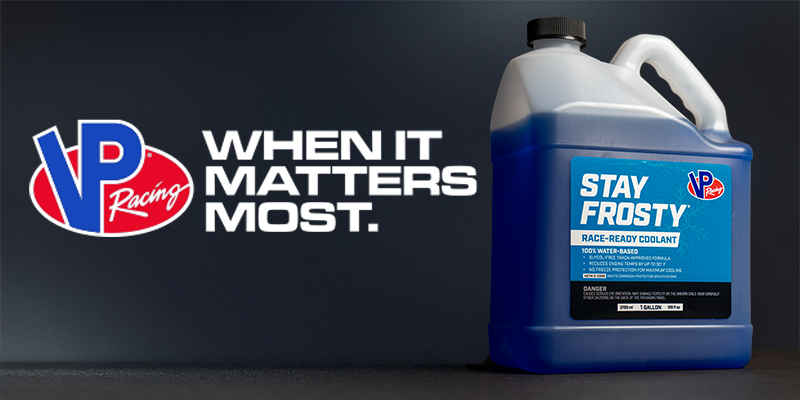
Rather than describing Monterrey as a new addition, Cromwell viewed the announcement as welcoming back a familiar member of the family.
 
“And this is an exciting time of our 75th to bring you back to the family because I know you were here in the ’90s and we are so excited, you really never left,” Cromwell said. “You were always part of the family. You’re just coming back.”
 
Cromwell believes the renewed relationship reinforces NHRA’s broader international ambitions.
 
“So super excited and it’s perfect,” Cromwell said. “And for us to have the outreach going international, this is a big deal. We’re in Puerto Rico, we’re in Canada, we’re in Saudi Arabia and now we’re in Mexico.”
 
“So what it tells you, it’s the growth of the NHRA and we’re in a good place, and I’m excited for the future.”
 
The significance extends beyond geography.
 
For decades, racers from Mexico have competed at NHRA national events throughout the United States, but the return of an NHRA member track inside Mexico creates a foundation for developing racers before they reach professional competition.
 
That opportunity resonated with Gilberto Jiménez, whose family has operated Autódromo de Monterrey since the late 1960s.
 
The facility has long been known as a multi-purpose motorsports complex, featuring a 2.2-mile FIA Grade 3 road course while maintaining one of Mexico’s most recognizable drag racing venues.
 
Jiménez said restoring the NHRA relationship represents years of family commitment finally coming full circle.
 
“Before, thank you all to the media, thank you for all of the fans and of course, thank you to NHRA, our family in Mexico, our representers here in the USA, CPG Consulting Group and all of the family here of quarter-mile racing,” Jiménez said.
 
“For us, it’s an honor to be here sharing again the races, sharing today the feeling and the winning, the desire of winning.”

Jiménez explained that the track has remained family-owned since its founding and that preparing to return under NHRA sanctioning has required a renewed commitment to meeting the organization’s standards.
 
“Autódromo de Monterrey was founded by my father back in 1967, if I remember correctly and has always been a family racetrack owner,” Jiménez said. “It’s a 2.2-mile road racing circuit. It’s FIA classified level three of racing as a road racing circuit.”
 
“And now, we are working together with NHRA and the division of all of these people in order to put our racetrack back in track again, to be able to produce races according to your organization, your rules and we are committed.”
 
Jiménez said the partnership represents more than sanctioning races.
 
He believes motorsports can provide young people with positive opportunities while strengthening the relationship between the United States and Mexico through competition.
 
“And as you pointed very well, it is the perfect timing I believe between the two countries to promote racing, to promote the new generations, the new guys, the new kids, the new teenagers to go racing instead of doing something else out there that they’re not supposed to do,” Jiménez said.
 
“So we like to do that in Mexico in our racetrack and we are very, very happy.”
 
Another key player in the agreement was Century Prime Global, whose leadership helped connect NHRA officials with the Jiménez family.
 
Rudy Gutierrez, a racer himself and a principal with Century Prime Global, said the effort began with a simple question about bringing NHRA back to Mexico before evolving into a business proposal supported by both organizations.
 
“Yes, I’ve been involved in racing for many years,” Gutierrez said. “We actually are racing in a little while, we qualify a little while. So out of that passion came out this idea that I shared with my partners.”

Gutierrez credited the Cuadra family for introducing Century Prime Global to the Jiménez family before discussions accelerated.
 
He said the proposal eventually became about much more than financial projections.
 
“We put together an executive summary that made sense, numbers made sense, but this is historic,” Gutierrez said. “It’s about passion.”
 
Gutierrez said persistence eventually opened the door to a partnership that could create a first for Mexican drag racing.
 
“I reached out to the Jiménez family, approached them,” Gutierrez said. “I think they kind of held me off a little bit, this guy’s not real, but kept knocking on that door.”
 
“Gilberto Jiménez answered that call and he said, ‘If this is real,’ he asked the father of family, ‘If this is real, I’m in.’ We’re in the door. Mexico has never had a 300-plus mile an hour race. We’re going to make history.”
 
During the media session, Jiménez expanded on what the announcement means beyond racing itself.
 
He repeatedly returned to the idea that cooperation between the United States and Mexico can create opportunities for future generations of racers.
 
“Well, I think it’s the right time for the two countries to do better things together,” Jiménez said. “I think it’s the right time for the Mexican scenario, for the Mexican fans, for the Mexican people that likes racing to feel involved in a professional worldwide level as the National Hot Rod Association has at the moment.”
 
“It is the right time for a country, for both of our countries to show to the world that united, we can make it.”
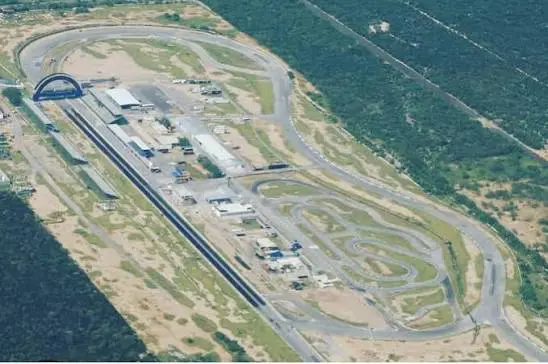
 
Jiménez also emphasized youth development, noting that Monterrey already has an active Junior Dragster program that could eventually connect young racers from both countries.
 
“As I said, the Autódromo has been in business for 50 something years, 56 years,” Jiménez said. “It’s a dream of my father, Filiberto, who built the racetrack.”
 
“My son, Gilbo and me, we are honored and my family, the brothers, the sisters, the mom, we are so happy that this is happening at the moment, especially bringing the junior dragsters.”
 
“We have about 25, 30 kids racing in Mexico for the past, I don’t know, past 20, 30 years,” Jiménez continued. “We want to bring them over to a race here in, I don’t know, in Texas or somewhere, to come and compete with your drivers.”
 
“Just imagine that, what an example it will be for the juniors, for the teenagers to have Mexico and USA together, to compete together, all of us together, the attention of the world.”
Picture of John Doe

John Doe

Lorem ipsum dolor sit amet consectetur adipiscing elit dolor

More Posts

Send Us A Message

Don’t miss these other exciting stories!

Explore more action packed posts on Competition Plus, where we dive into the latest in Drag Racing News. Discover a range of topics, from race coverage to in-depth interviews, to keep you informed and entertained.