
While many racetracks develop a personality over time, Bristol Dragway’s racing surface became a blend of fictional horror icons Michael Myers and Freddy Krueger.

The bumps weren’t always visible, but racers knew they were there. Crew chiefs talked about them. Drivers braced for them. Nobody questioned Bristol’s place on the NHRA schedule, but plenty questioned what they might encounter once the car settled onto the racing surface.

An all-hands-on-deck rebuild over the offseason was designed to finally exorcise those demons, and the process started by tearing the problem out at ground level.

For years, Bristol attacked the symptoms. Grinding helped. Repairs helped. Surface treatments bought time. Eventually, everybody reached the same conclusion: if the track was going to be fixed, it needed more than another patch.

It needed a fresh start.

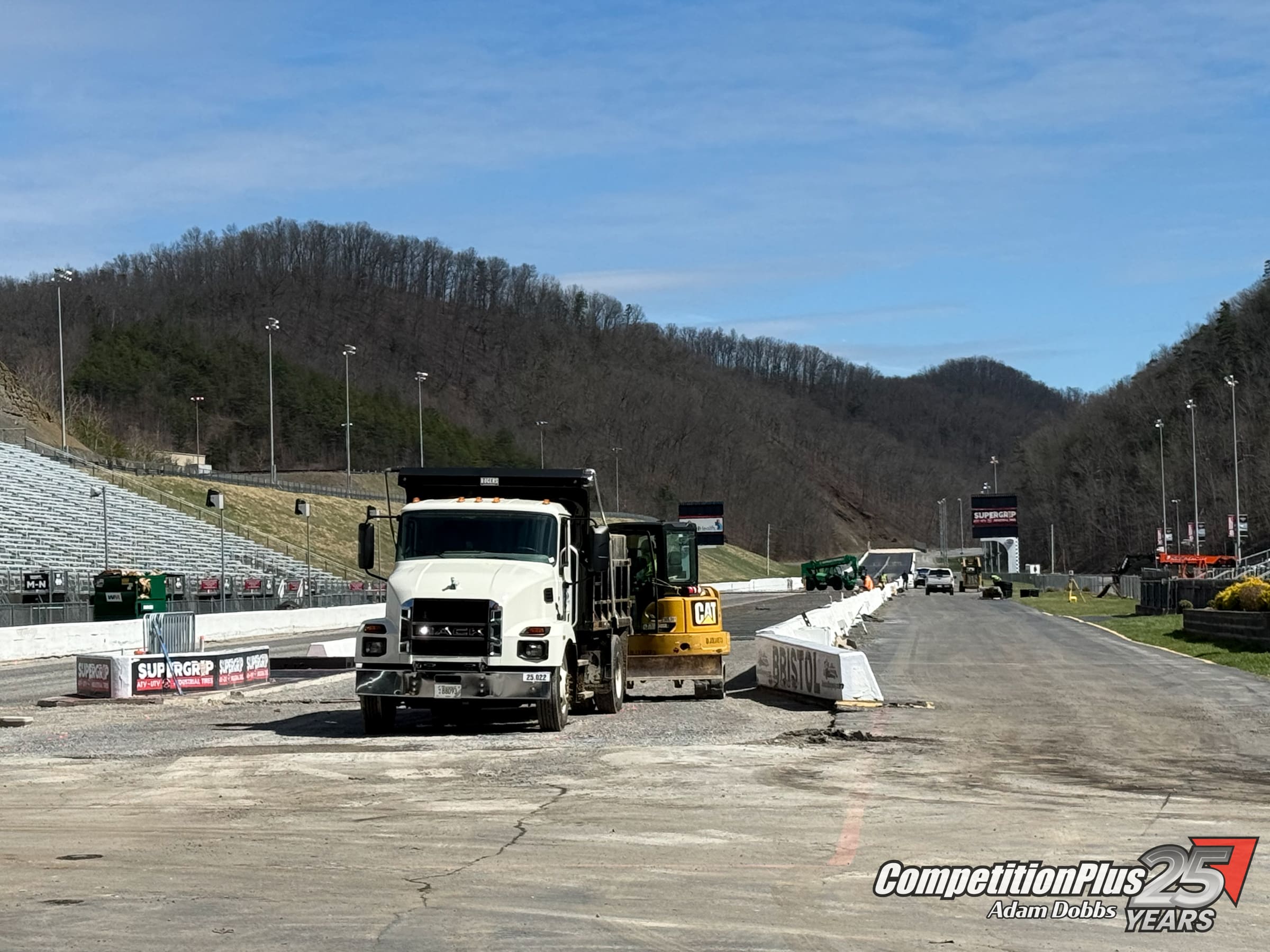
That’s exactly what Bristol Dragway manager Jimmy Owen, Speedway Motorsports officials, engineers and contractors set out to accomplish when they removed and rebuilt approximately 700 feet of racing surface from behind the burnout box downtrack.

The work is finished now. The concrete is poured, the rubber is on the surface and the compliments have started arriving.

The verdict, however, belongs to the racers.

“It does, and I raced for a lot of years before I got on this side of the hill,” Owen said. “It’s easy to say it’s the same in both lanes, but they both needed a little attention. And that’s kind of where we were at with it.”

The concrete had been in place for roughly two decades, enduring East Tennessee winters, summer heat and countless passes from everything ranging from sportsman cars to 330-mph nitro machines.

At some point, every racing surface reaches the end of its useful life. Bristol’s had arrived.
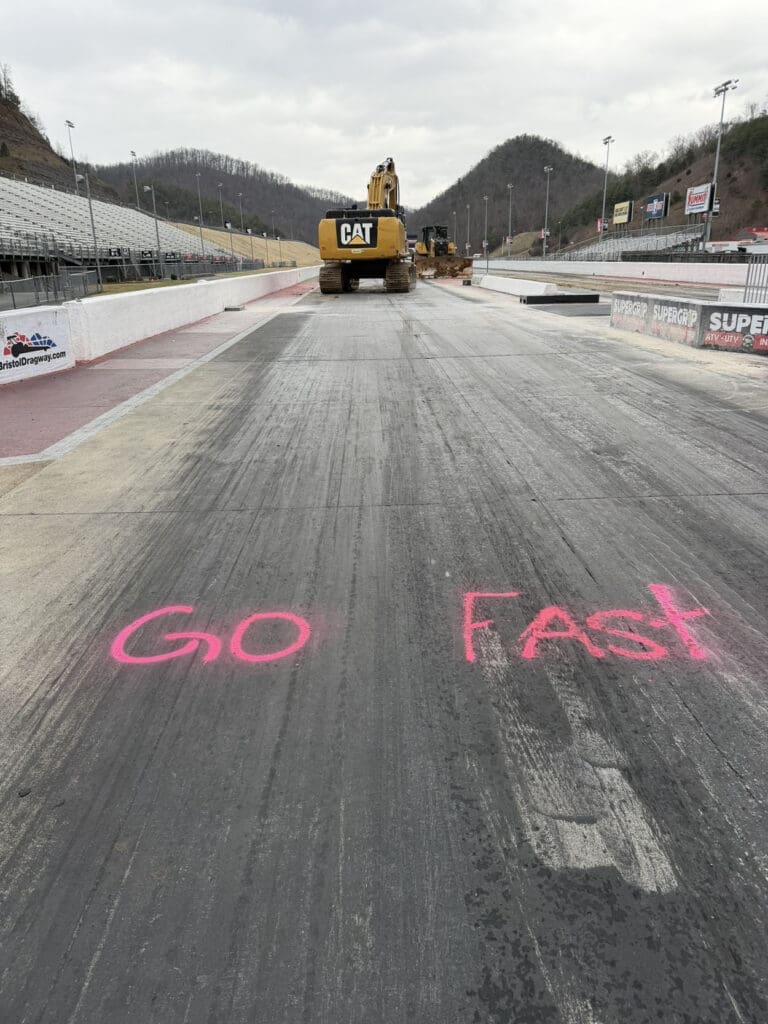
The project removed and replaced concrete from behind the burnout box to approximately 700 feet downtrack. What followed wasn’t simply a resurfacing effort but a complete reconstruction aimed at addressing issues that had developed beneath the racing surface over time.

Steve Swift, Speedway Motorsports’ Senior Vice President of Operations and Development, said previous efforts often focused on managing symptoms while the underlying issues remained.

This project focused on the foundation.

The tunnels beneath portions of the dragstrip had contributed to settlement issues over the years. Grinding and repairs helped manage the surface, but the conditions beneath the concrete continued to create challenges.

This time, crews went after the root of the problem.

“We actually went in and fixed some of the subgrade this time,” Swift said. “We cement stabilized the soil, which has been tried and true for us the last five years.”

The process involved strengthening the soil beneath the racing surface and incorporating significantly more reinforcing steel than existed in the previous concrete. The goal was to create a surface capable of resisting movement long before racers ever noticed it.

“I think it’s a combination of that type of construction with the treatment of the subgrade,” Swift said. “I think both of those together give it the largest success rate they could have with what was there before.”

Nobody involved was trying to reinvent drag racing.

They wanted a surface that was flatter than the one it replaced, strong enough to survive the region’s climate and consistent enough that racers could trust what they felt from one lane to the other.

Owen said selecting the right contractors became just as important as the design itself.

“We had a pretty high standard that we were looking for,” Owen said. “When we approached Baker with it, it was like, yes, we can handle that. Summers-Taylor as well. They’re accustomed to doing work of the high quality and caliber that we were looking for.”

The concrete was poured using slip-form paving methods, creating two 20-foot-wide lanes designed to provide a smoother and more durable racing surface.

On paper, it all looked right. but the challenge with drag racing is that paper rarely settles arguments.

That’s where Kurt Johnson entered the conversation. Through Total Venue Concepts, Johnson has spent years evaluating and improving racing surfaces across the country. When tracks need traction, consistency or an independent set of eyes, Johnson is often part of the discussion.

He doesn’t hand out compliments because somebody spent money. That’s why his assessment means something. Johnson became involved during the final stages of the project and expected extensive grinding before rubber application could begin. Instead, he found a surface that exceeded expectations.

“Our plan was to grind the whole thing,” Johnson said. “We figured we would and take the surface off it so it’d hold rubber better, but it’s one of the first non-ground surfaces I’ve ever seen that took rubber so well.”

That wasn’t the only surprise.

“This is the smoothest I’ve ever seen in Bristol,” Johnson said. “There are still some small imperfections. The thing’s built on a hundred foot of fill, but they really did some engineering and there’s big rebar in it compared to before.”

Johnson believes the project addressed the concerns racers had discussed for years.and his summary was brief.

“I think they did everything right,” he said.

That doesn’t mean Bristol suddenly became as smooth as a sheet of smooth glass. No dragstrip is. And if there is, it’s a rarity.

Johnson still sees minor imperfections, but he said the dramatic transitions and disturbances that once defined portions of the track have largely disappeared.

“There’s a little bit of chatter in it that we see electronically,” Johnson said. “When you take a car down it, like a heavy truck, you can’t feel hardly anything.”

Then came the endorsement racers will pay attention to.

“It’s completely raceable, much better than it used to be.”

Owen said the early signs have been encouraging. The rubber has adhered quickly, weeks of weather haven’t created issues and the new concrete already looks older than it is, something track operators generally view as a positive sign.

Still, nobody at Bristol is hanging a banner yet.

The people who designed the project have done their part. The contractors have done theirs. Johnson has delivered his assessment. Now the racers get a vote.

“I was pleasantly surprised that the surface took rubber very quickly and it’s not offered to peel. It’s not lifted,” Owen said. “It looks like a racetrack that’s been here for five to 10 years the way the rubber’s adhering to it.”

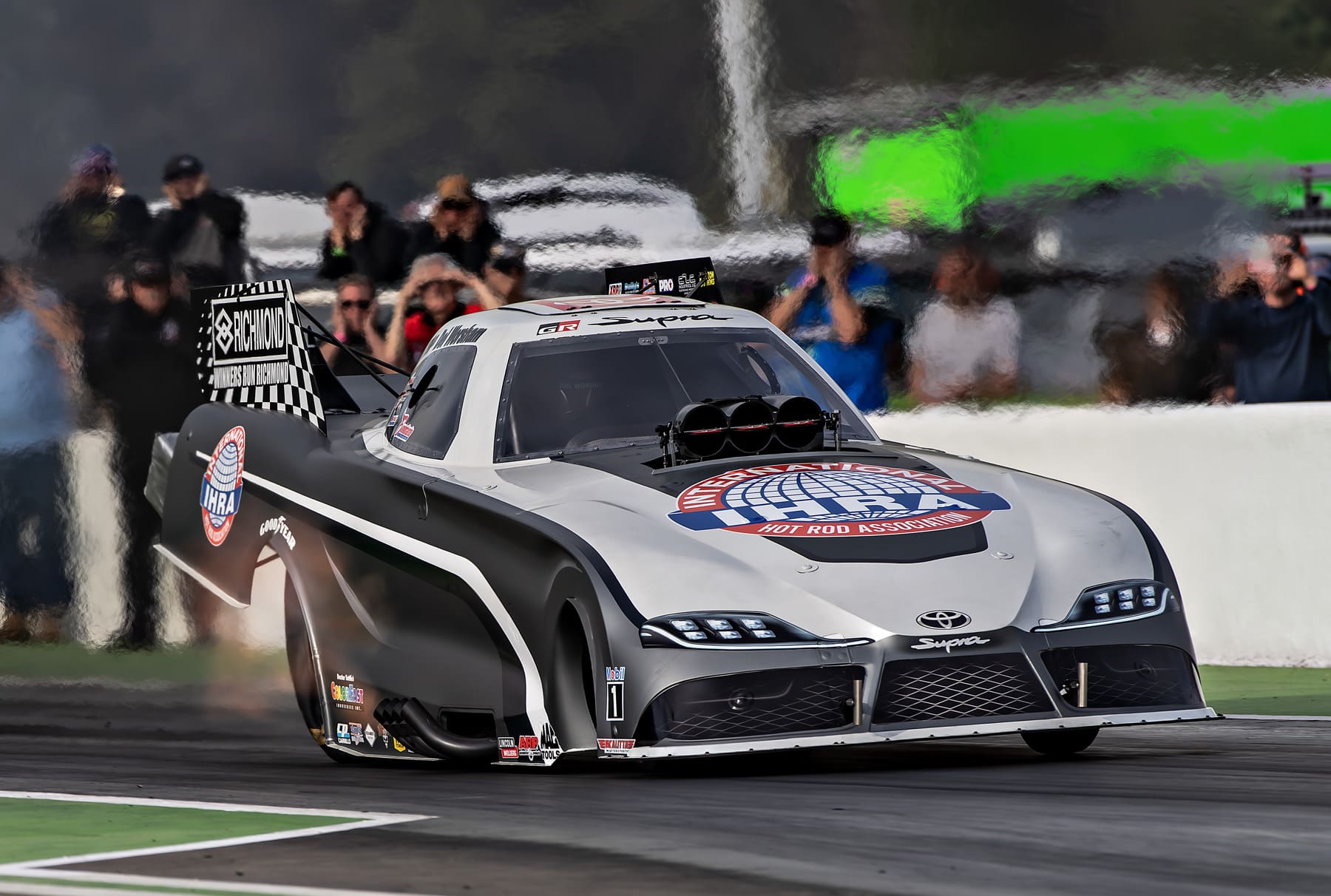
The final validation arrives when the nitro cars roll to the starting line.

“I want to see some fuel cars go down the racetrack and then that’ll kind of set my mind at ease,” Owen said. “Yes, we’ve built a very good product here.”

Share the Insights?

Click here to share the article.

ad space x ad space

ad space x ad space

Competition Plus Team

Since our inception, we have been passionately dedicated to delivering the most accurate, timely, and compelling content in the world of drag racing. Our readers depend on us for the latest news, in-depth features, expert analysis, and exclusive interviews that connect you to the sport’s pulse.

Sign up for our newsletters and email list.

This field is for validation purposes and should be left unchanged.
Name

BRISTOL’S DRAGWAY’S BIGGEST REBUILD IS READY FOR ITS FIRST REAL TEST

While many racetracks develop a personality over time, Bristol Dragway’s racing surface became a blend of fictional horror icons Michael Myers and Freddy Krueger.

The bumps weren’t always visible, but racers knew they were there. Crew chiefs talked about them. Drivers braced for them. Nobody questioned Bristol’s place on the NHRA schedule, but plenty questioned what they might encounter once the car settled onto the racing surface.

An all-hands-on-deck rebuild over the offseason was designed to finally exorcise those demons, and the process started by tearing the problem out at ground level.

For years, Bristol attacked the symptoms. Grinding helped. Repairs helped. Surface treatments bought time. Eventually, everybody reached the same conclusion: if the track was going to be fixed, it needed more than another patch.

It needed a fresh start.

That’s exactly what Bristol Dragway manager Jimmy Owen, Speedway Motorsports officials, engineers and contractors set out to accomplish when they removed and rebuilt approximately 700 feet of racing surface from behind the burnout box downtrack.

The work is finished now. The concrete is poured, the rubber is on the surface and the compliments have started arriving.

The verdict, however, belongs to the racers.

“It does, and I raced for a lot of years before I got on this side of the hill,” Owen said. “It’s easy to say it’s the same in both lanes, but they both needed a little attention. And that’s kind of where we were at with it.”

The concrete had been in place for roughly two decades, enduring East Tennessee winters, summer heat and countless passes from everything ranging from sportsman cars to 330-mph nitro machines.

At some point, every racing surface reaches the end of its useful life. Bristol’s had arrived.
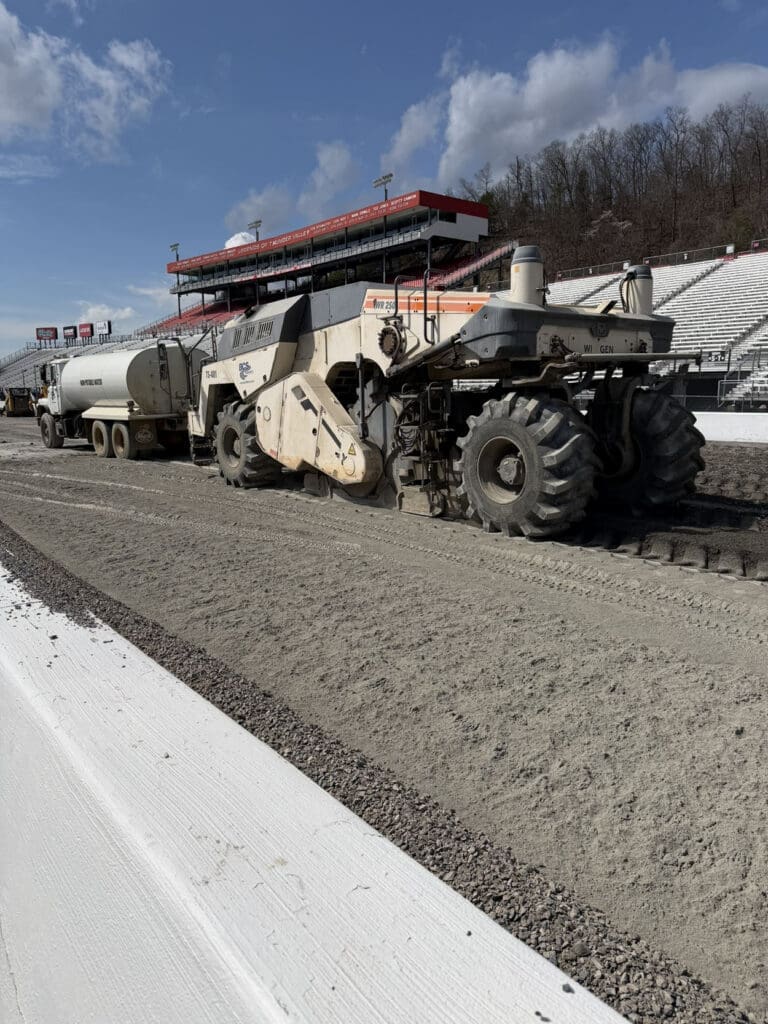
The project removed and replaced concrete from behind the burnout box to approximately 700 feet downtrack. What followed wasn’t simply a resurfacing effort but a complete reconstruction aimed at addressing issues that had developed beneath the racing surface over time.

Steve Swift, Speedway Motorsports’ Senior Vice President of Operations and Development, said previous efforts often focused on managing symptoms while the underlying issues remained.

This project focused on the foundation.

The tunnels beneath portions of the dragstrip had contributed to settlement issues over the years. Grinding and repairs helped manage the surface, but the conditions beneath the concrete continued to create challenges.

This time, crews went after the root of the problem.

“We actually went in and fixed some of the subgrade this time,” Swift said. “We cement stabilized the soil, which has been tried and true for us the last five years.”

The process involved strengthening the soil beneath the racing surface and incorporating significantly more reinforcing steel than existed in the previous concrete. The goal was to create a surface capable of resisting movement long before racers ever noticed it.

“I think it’s a combination of that type of construction with the treatment of the subgrade,” Swift said. “I think both of those together give it the largest success rate they could have with what was there before.”

Nobody involved was trying to reinvent drag racing.

They wanted a surface that was flatter than the one it replaced, strong enough to survive the region’s climate and consistent enough that racers could trust what they felt from one lane to the other.

Owen said selecting the right contractors became just as important as the design itself.

“We had a pretty high standard that we were looking for,” Owen said. “When we approached Baker with it, it was like, yes, we can handle that. Summers-Taylor as well. They’re accustomed to doing work of the high quality and caliber that we were looking for.”

The concrete was poured using slip-form paving methods, creating two 20-foot-wide lanes designed to provide a smoother and more durable racing surface.

On paper, it all looked right. but the challenge with drag racing is that paper rarely settles arguments.
That’s where Kurt Johnson entered the conversation. Through Total Venue Concepts, Johnson has spent years evaluating and improving racing surfaces across the country. When tracks need traction, consistency or an independent set of eyes, Johnson is often part of the discussion.

He doesn’t hand out compliments because somebody spent money. That’s why his assessment means something. Johnson became involved during the final stages of the project and expected extensive grinding before rubber application could begin. Instead, he found a surface that exceeded expectations.

“Our plan was to grind the whole thing,” Johnson said. “We figured we would and take the surface off it so it’d hold rubber better, but it’s one of the first non-ground surfaces I’ve ever seen that took rubber so well.”

That wasn’t the only surprise.

“This is the smoothest I’ve ever seen in Bristol,” Johnson said. “There are still some small imperfections. The thing’s built on a hundred foot of fill, but they really did some engineering and there’s big rebar in it compared to before.”

Johnson believes the project addressed the concerns racers had discussed for years.and his summary was brief.

“I think they did everything right,” he said.

That doesn’t mean Bristol suddenly became as smooth as a sheet of smooth glass. No dragstrip is. And if there is, it’s a rarity.

Johnson still sees minor imperfections, but he said the dramatic transitions and disturbances that once defined portions of the track have largely disappeared.

“There’s a little bit of chatter in it that we see electronically,” Johnson said. “When you take a car down it, like a heavy truck, you can’t feel hardly anything.”

Then came the endorsement racers will pay attention to.

“It’s completely raceable, much better than it used to be.”
Owen said the early signs have been encouraging. The rubber has adhered quickly, weeks of weather haven’t created issues and the new concrete already looks older than it is, something track operators generally view as a positive sign.

Still, nobody at Bristol is hanging a banner yet.

The people who designed the project have done their part. The contractors have done theirs. Johnson has delivered his assessment. Now the racers get a vote.

“I was pleasantly surprised that the surface took rubber very quickly and it’s not offered to peel. It’s not lifted,” Owen said. “It looks like a racetrack that’s been here for five to 10 years the way the rubber’s adhering to it.”

The final validation arrives when the nitro cars roll to the starting line.

“I want to see some fuel cars go down the racetrack and then that’ll kind of set my mind at ease,” Owen said. “Yes, we’ve built a very good product here.”


Picture of John Doe

John Doe

Lorem ipsum dolor sit amet consectetur adipiscing elit dolor

More Posts

Send Us A Message

Picture of Bobby Bennett
Bobby Bennett
Thank you for joining us on this journey. Your support and trust inspire us every day to deliver the best in drag racing journalism. We are excited about the future and look forward to continuing to serve you with the same dedication and passion that has defined CompetitionPlus.com from the very beginning.

Don’t miss these other exciting stories!

Explore more action packed posts on Competition Plus, where we dive into the latest in Drag Racing News. Discover a range of topics, from race coverage to in-depth interviews, to keep you informed and entertained.