

Most racetrack sales end with racers wondering how long it will be before the bulldozers arrive.
At Mooresville Dragway, the bulldozers are coming.
The difference is they’re being brought in to build another racetrack.
When Paddock Property Group completed its purchase of the historic North Carolina facility earlier this year, founder Matt Erich wasn’t looking for a commercial development opportunity. He was looking for a chance to rebuild a dragstrip and create something far larger around it.
Whether that vision ultimately becomes reality remains to be seen. What cannot be disputed is the scale of what Erich wants to accomplish.
Drag racers have learned over the years to be cautious when grand plans are unveiled.
The sport has watched facilities disappear under warehouses, subdivisions and industrial parks. It has also seen ambitious motorsports developments announced with fanfare only to stall somewhere between the architect’s desk and the permitting office.
That’s why the most important part of Erich’s presentation may not be the clubhouse, the road course or the luxury garages.
It’s the fact the dragstrip remains at the center of the conversation.
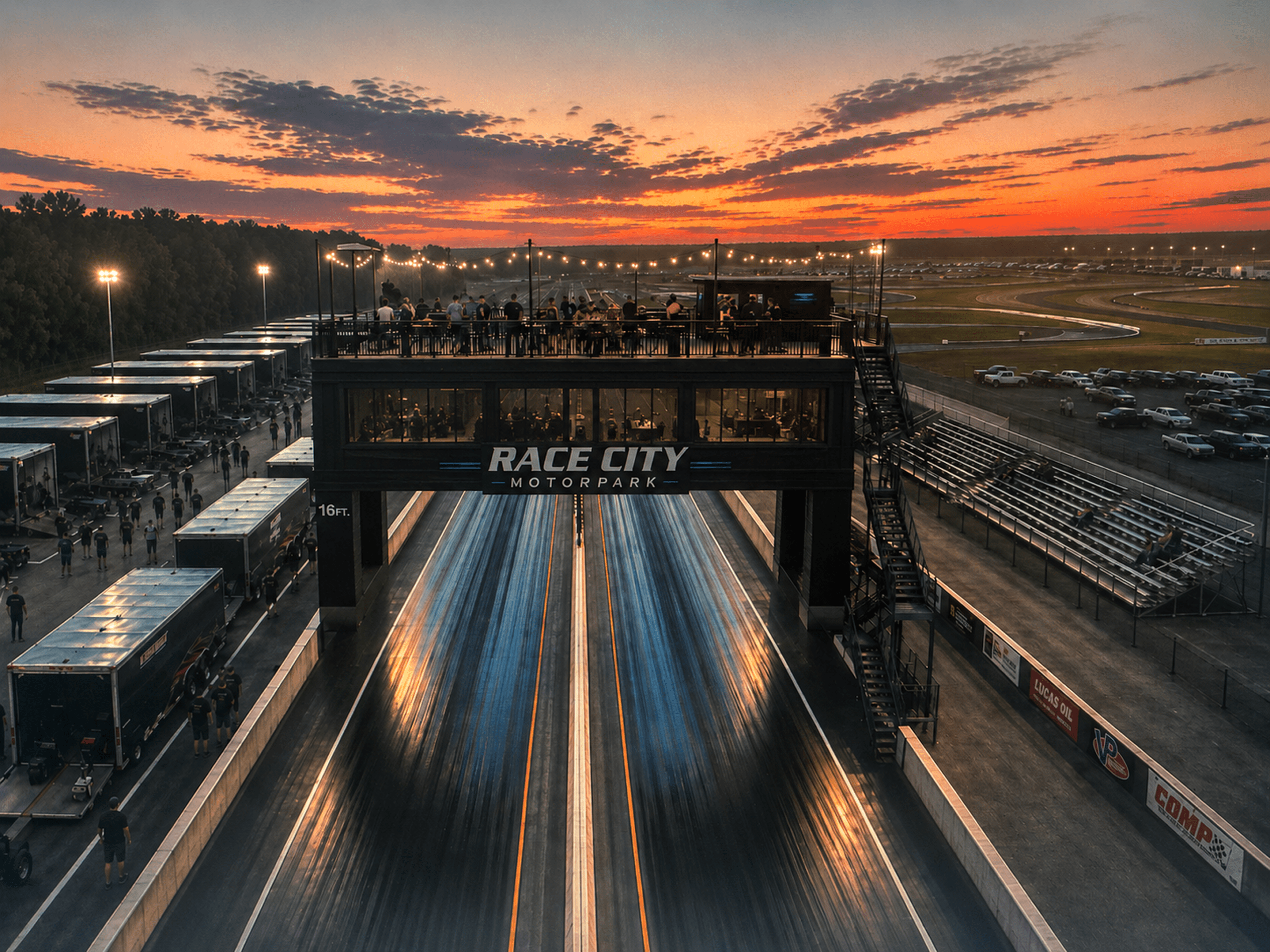
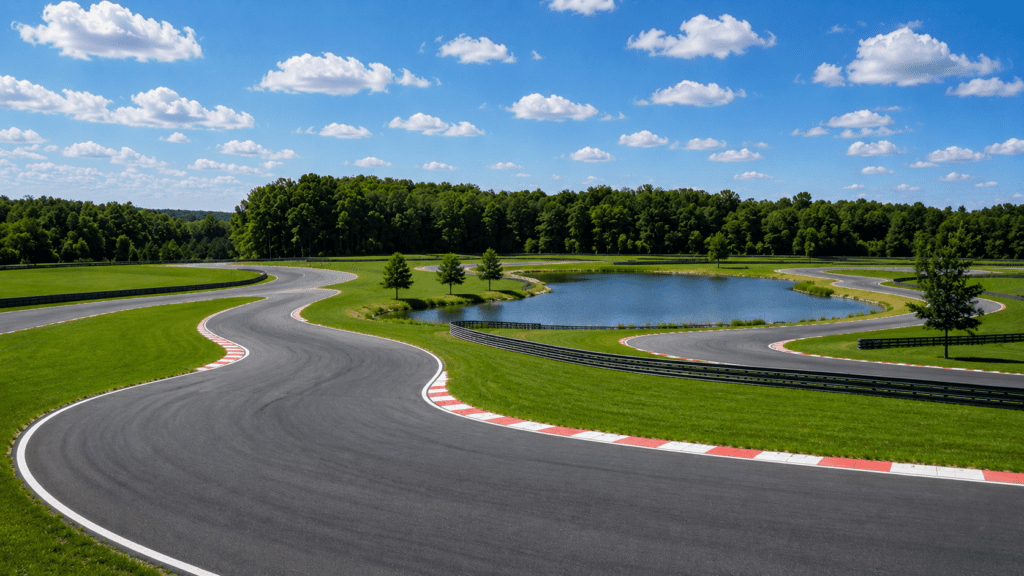
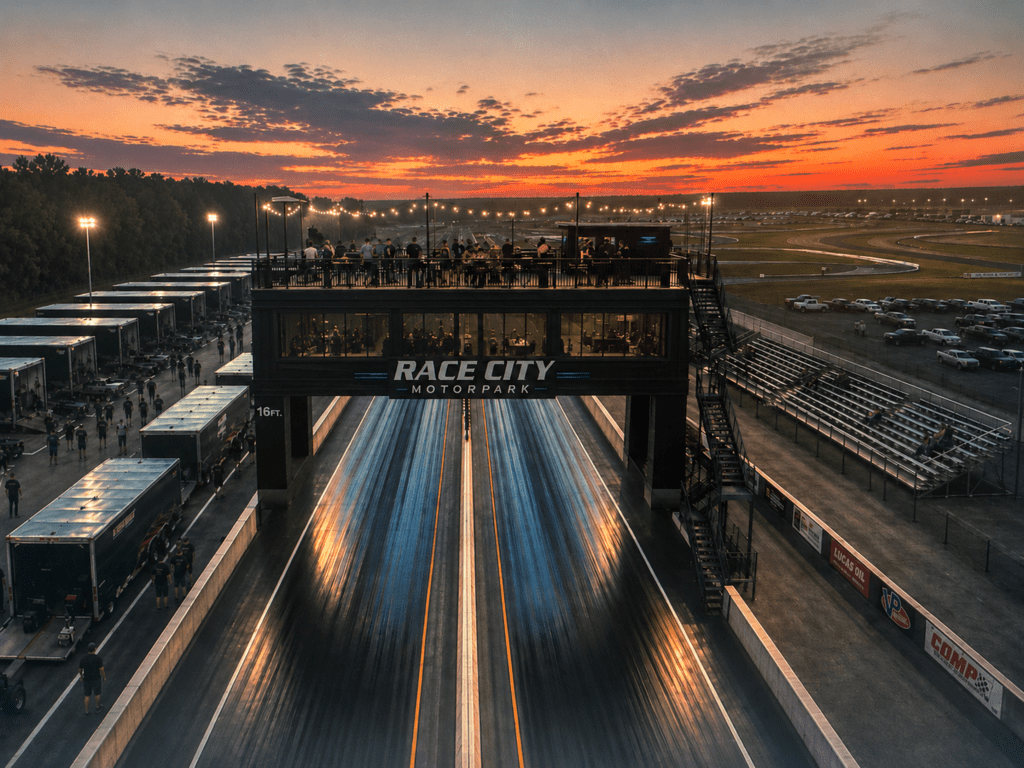
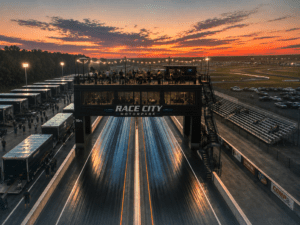
Pending zoning and committee approvals, ownership plans to rebuild Mooresville Dragway into a modern eighth-mile facility while simultaneously developing Race City Motorpark + Social Club on an adjoining property. Together, the project would create a 270-acre motorsports-focused destination built around racing, automotive culture, hospitality and entertainment.
For racers worried about losing another historic track, Erich’s message has remained consistent.
“I bought Mooresville Dragway, I want to support grassroots racing,” Erich said.
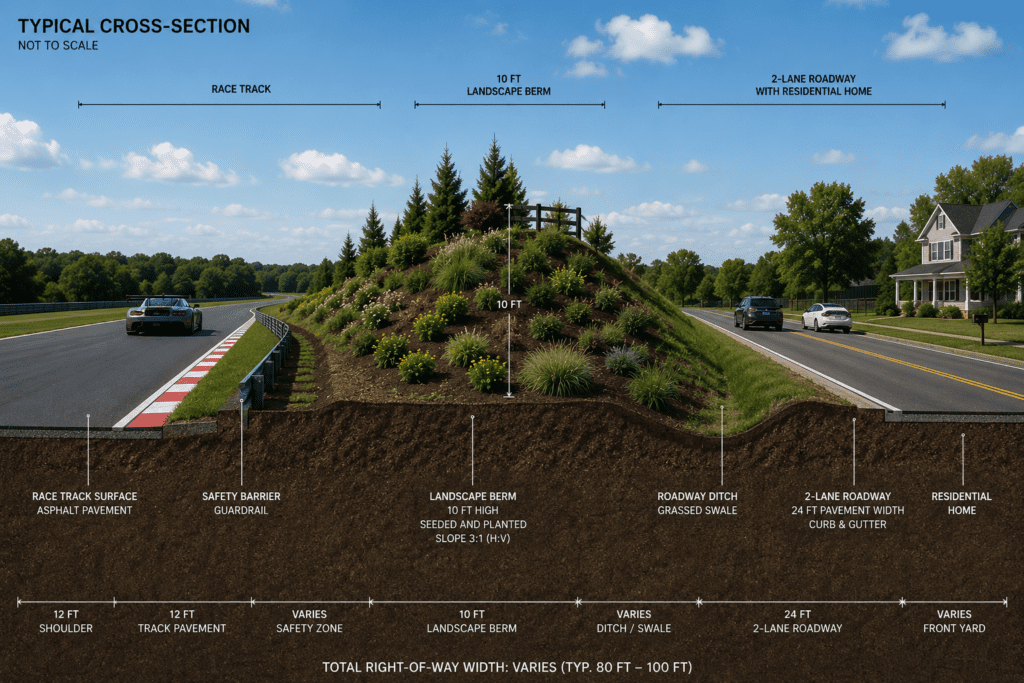
“I’m bulldozing the entire 91 acres that’s currently known as Mooresville Dragway. Rebuilding an eighth-mile track. All new walls, all new surface, 60-foot-wide surface, all new facilities being grandstands, towers, bathrooms, all while incorporating that with a car country club next door that’s going to intertwine a roughly four-plus-mile road course that’s going to have an A, B, and C circuit for car connoisseurs and road course racers to enjoy.”
The dragstrip is only one piece of a much larger plan.
Current concepts include luxury garage suites, premium townhomes, a professional driver training facility, member amenities and a 24,000-square-foot clubhouse designed to anchor the development. Erich believes enthusiasts are looking for more than a place to race a few weekends each year.
“We’ll have about 64, but I’d say less than 80 car suites on the property that will be for sale and looking to get a professional driver training facility approved at the facility and built at the facility with a roughly 24,000 square foot state-of-the-art luxury clubhouse on the grounds for the members to enjoy,” Erich said.
For someone leading one of the most ambitious drag racing facility projects in recent memory, Erich is surprisingly candid about what he doesn’t know.
His background is commercial real estate development, not drag racing. Instead of pretending to have all the answers, he says he’s spending more time listening than talking.
“I wouldn’t say it’s not in the cards, but I don’t know anything about drag racing. I guess I probably should have just led with that,” Erich said.
“I’m learning very quickly. I’ve met the IHRA guys, I had to sign an agreement for this year. I signed a one-year agreement with those folks. I’ve become friendly with the NHRA folks and talked with in person at the 4-Wide for a lengthy period of time with Glen over at NHRA.”
One of the biggest questions still facing the project is what role, if any, sanctioning bodies will play in its future.
The answer isn’t as obvious as it once was.
Thirty years ago most track owners chased sanctioning agreements because that was the accepted path. Today some facilities make their biggest weekends with specialty events operating outside the traditional national-event structure.
Erich isn’t rushing toward a decision.
“I’m just trying to learn the process and understand the landscape of drag racing as it sits currently and understand where the car culture and drag racing intertwine and is it necessary to be sanctioned?” Erich said.
“Is the sanctioning body and the national events the path forward for facilities like mine, or do we leave that to the NHRA and the IHRA-owned facilities, and we just do specialty one-off annual staple events that are non-sanctioned is really what I’m trying to figure out right now if I’m just being upfront and honest with you.”
His willingness to publicly ask those questions may be one of the more refreshing aspects of the project.
Too often in motorsports, owners announce solutions before they fully understand the problems. Erich appears content gathering information before determining what works best for his facility.
If he is paying attention to anything racers complain about most, it isn’t horsepower.
It’s time.
“I want to support grassroots racing. I want to put on some really good big small tire events. I want to bring index racing back,” Erich said.
“I really want to dive in deeper to be honest with you, and explore the potential of shortening some of these event days so that we’re not there seven o’clock in the morning until 11 o’clock at night, because that’s just not the way that people are entertained anymore.”
That observation may resonate as much as any rendering associated with the project.
Across drag racing, racers have become increasingly vocal about race days that stretch endlessly into the night. Facilities continue competing not only with other forms of racing but with every entertainment option available to consumers.
Erich’s approach is rooted in a simple belief.
Facilities built decades ago often struggle to meet the expectations of today’s customers. He believes modernizing the experience is essential if drag racing wants to continue attracting racers, fans and families.
“This is about more than preserving a racetrack, it’s about protecting a culture, a community, and a piece of Mooresville’s identity,” Erich said.
“Motorsports helped shape Race City USA, and we believe the future of this property should continue that legacy. Race City is designed to become a place where enthusiasts from all over the world can come together to drive, connect, and belong.”
Those ambitions are substantial.
So are the obstacles.
The project still requires approvals, hearings and significant construction before any of it becomes reality. Renderings are easy. Dirt work is expensive.
Motorsports has seen plenty of major announcements over the years.
Some changed the landscape. Others never made it beyond a presentation board.
Erich knows there will be skeptics, particularly among racers who have watched beloved facilities disappear despite promises of preservation.
For now, the grading plans, permits and approvals still sit ahead.
The vision is large.
So is the gamble.
What separates this project from many others is that the owner insists the dragstrip remains the reason it exists.
“That’s all we got is our word and our integrity, and that’s it,” Erich said. “Mine will not be jeopardized because of this project.”.
“I guess it’d be valuable to you to know I’m a commercial real estate developer. I didn’t buy the track to build a business park, I didn’t buy it to build a data center or an apartment complex or a residential neighborhood.”
“I bought the place and I’ve been trying to buy the place for six years from the previous two owners now, and I just successfully got it across the finish line here recently. I want to keep it the Mooresville Dragway staple of the state, but rebuild it so that it’s safer and more enjoyable for people in 2026 and beyond because what we expect now from a venue is very different than how this thing was built 50 years ago.”
















REYES ON TOUR: INVASION OF THE CHEVROLET VEGA — PART 1