Photos by Larry Pfister

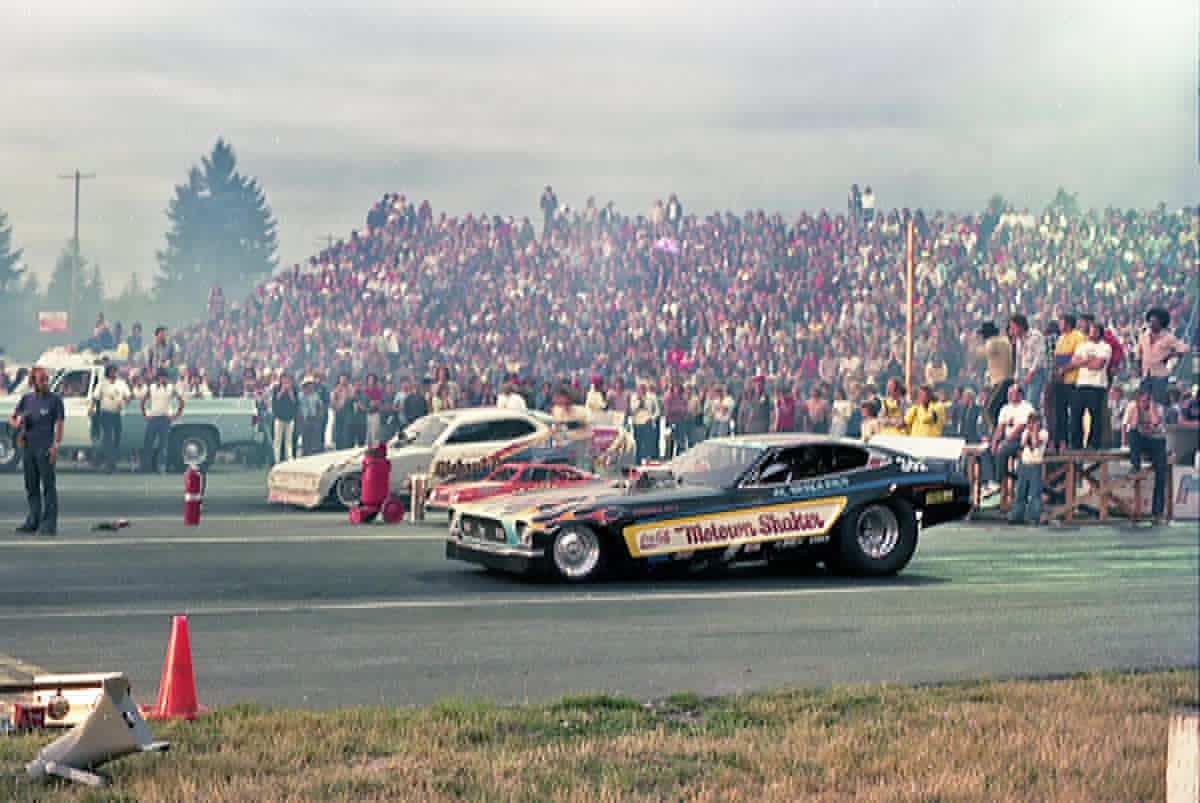
Nobody pulled the plug on Seattle’s 64 Funny Cars overnight. What ultimately caught up with the “Big One” was a drag racing business that looked considerably different in the late 1980s than it had when Bill Doner dreamed up the deal.
Funny Car teams weren’t chasing match races the way they once had, Portland was about to disappear from the equation and Seattle had an NHRA national event coming. Jim Rockstad could see where this was headed, even if he wasn’t particularly interested in letting 64 Funny Cars go quietly.
Few understood the changing landscape better than the late Jim Rockstad, who had been there when Bill Doner’s oversized vision was still very much alive.
Rockstad knew the event from the inside. He had worked alongside Doner, been involved with the operation at Seattle International Raceway and knew firsthand how many moving pieces had to come together before the first Funny Car ever fired.
Nearly 20 years ago, Rockstad also did drag racing history an enormous favor. He sat down and documented those years in an extensive series for CompetitionPlus.com, preserving the stories of 64 Funny Cars from someone who had dealt with the racers, promoters, bookings and problems himself.
By the 1980s, Rockstad was dealing with those problems himself as Doner had elected to exit the business.

By midsummer, however, some of those commitments could become inconvenient.
A racer who started the season believing he would spend the summer match racing might suddenly find himself in contention for an NHRA championship. Missing a national event to honor an independent booking could mean giving away points, and Seattle was beginning to compete with something it hadn’t faced during the heyday of the match-racing era.
Contracts weren’t necessarily part of the deal during the better years of match racing. A promoter called, a racer agreed to the date and both sides expected the other to live up to the conversation. That became more complicated when a racer committed to Seattle during the winter and then found himself chasing NHRA championship points by summer. Rockstad remembered one case in which an attorney had to remind a racer considering backing out that the verbal deal he’d made was still a deal.
The racer came to Seattle.
It was another indication of where professional drag racing was headed.
The days when Funny Car racers might run two, three or even four times during a week were fading. NHRA championship points were becoming more important, sponsors had greater expectations, and the national-event tour was becoming the center of the professional racing business.
Seattle’s 64 Funny Cars had been built in a different world.
Portland International Raceway presented another problem after 1986. Neighborhood pressure over noise finally brought the major drag racing programs there to an end, leaving only the quieter bracket racing operation.
That took a valuable Funny Car date out of the Northwest at exactly the wrong time. Costs were climbing, local cars were becoming harder to find and Seattle increasingly had to look farther away to fill what remained a very large field.
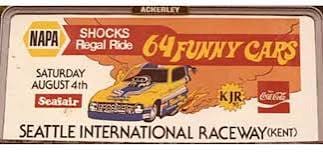
Operating costs continued to climb while the smaller events provided less money to offset them. Every local car that went away created another hole that had to be filled by somebody traveling a considerably greater distance.
For an event with a number attached to its name, that was a problem.
Sixty-four wasn’t merely an advertising hook. Fans had come to expect it.
Rockstad found himself wrestling with whether the event could continue in its traditional form. He didn’t want to surrender something that had become part of Seattle International Raceway’s identity, but nostalgia wasn’t going to put more Funny Cars within towing distance of the track.
Then came 1988.
The NHRA Northwest Nationals was coming to Seattle International Raceway, putting an NHRA national event into the traditional calendar position occupied by 64 Funny Cars. NHRA had hosted a fall national event from 1975 – 1980, but this event threatened the tradition that was quickly fading away.
For the racetrack, landing a modern NHRA national event represented another level of legitimacy and exposure. For Rockstad, it also created an uncomfortable question about what happened to the event that had helped establish Seattle as a Funny Car destination in the first place.
He wasn’t ready to let it go.
Rockstad moved 64 Funny Cars to another place on the schedule and tried converting the traditional one-night show into a three-day event. It was an attempt to give the race another life without asking it to compete directly with the new Northwest Nationals.
Rockstad understood the gamble. Major events generally needed time to establish themselves, and he wasn’t sure how much time the revised 64 Funny Cars would have. NHRA was continuing to expand its national-event footprint, and Rockstad suspected the professional racing calendar would only become more difficult for independent promoters.
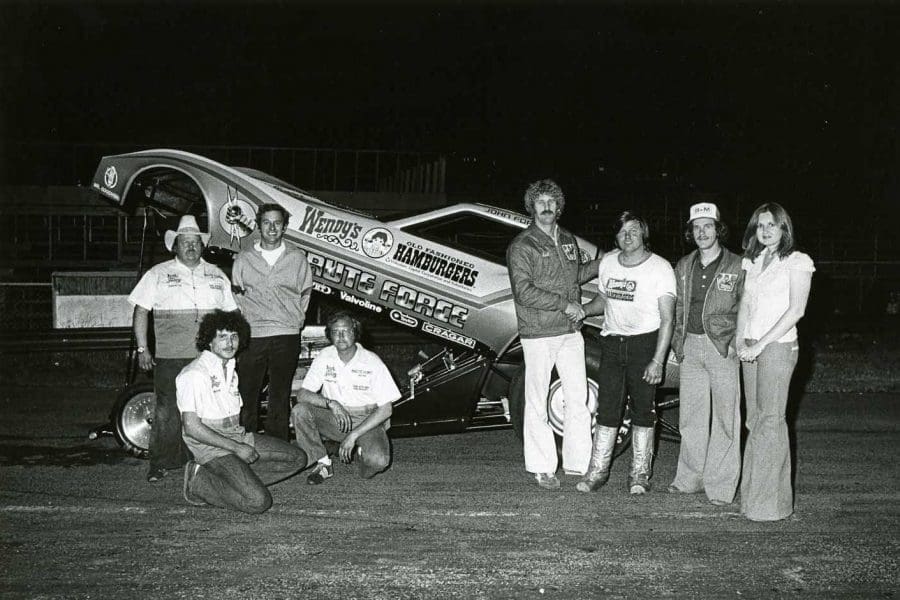
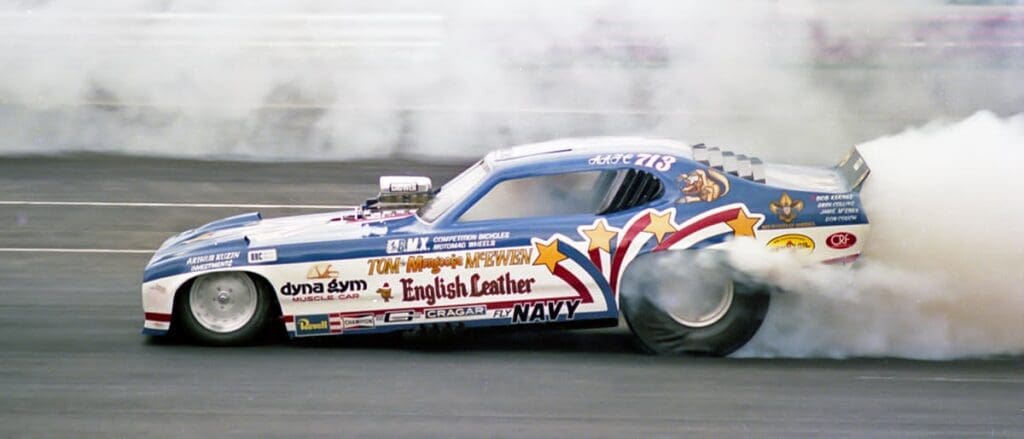
Still, he had racers willing to make the old system work. Raymond Beadle and the Blue Max were among those Rockstad had lined up for the 1988 event. So was John Force, whose career had been built in part by chasing match races wherever somebody was willing to pay him to run.
Force presented Rockstad with another problem. The weekend before Seattle, Force was booked to race in Englishtown, New Jersey.
That meant getting a Funny Car and everything required to race it from one side of the country to the other in a matter of days. Rockstad already had radio and television advertising running in Seattle telling fans John Force was coming.
Then he started thinking about the truck. Rockstad couldn’t control what happened somewhere between New Jersey and Washington. A broken engine in the transporter, an accident or any other problem along the way could leave one of his advertised stars stranded thousands of miles from Seattle.
The advertisements would keep running regardless. Rockstad remembered plenty of sleepless nights that week as he considered what would happen if Force didn’t make it.
“What would happen if their truck blew a motor and they didn’t make it to Seattle on time?” Rockstad remembered asking himself. “Can you imagine how much heat we would get if Force didn’t make it…ugh! I would have had to hide under my desk during the whole event!”
It was funny to him years later. For the promoter with advertising money already spent and customers expecting John Force to roll through the gate, there wasn’t much funny about it at the time.
That was part of the reality behind match racing.
The customer heard a driver’s name on the radio and expected to see that driver at the racetrack. The promoter was the one depending on a truck, trailer, crew and race car to survive a cross-country trip before he could deliver what had already been advertised.
Force had spent much of his early career living that way. He booked races wherever he could find them and accepted the travel that came with the paycheck. A coast-to-coast haul that would seem extraordinary later in his career was part of trying to make a living when match racing remained an important piece of the Funny Car business.
By 1988, however, racers had more reasons to stay on the NHRA trail.
Championship points paid the bills. National-event victories also paid those bills, and sponsors increasingly wanted their cars competing where the championship and larger national audience were.
Independent promoters were competing for racers in a marketplace that no longer favored them the way it once had. There wasn’t a radio commercial Doner could write back in the day to fix that.
Nor could Rockstad rearrange the schedule enough to recreate the conditions that had existed during the strongest years of 64 Funny Cars. The racers, economics and schedules had changed, and eventually the event had to confront those changes.
Seattle was changing with them and the irony was difficult to miss.
The facility had spent years establishing itself with independent attractions, and 64 Funny Cars had become one of the events most closely associated with the place. Now Seattle had landed an NHRA national event, the kind of race that signaled the track had reached another level in the sport.
What was good for the future also helped close the door on part of the past.
A race conceived in the early 1970s had lived through dramatic changes in Funny Car technology, sponsorship and the economics of professional drag racing. What began when match racers could chase several paydays in a week lasted long enough to see the sport move toward the national-tour structure familiar today.
By the late 1980s, that era was checking out. Seattle didn’t stop being a major Funny Car town. It just became one for a different kind of race.
And somewhere between the last handshake deal, the final long-distance tow and the arrival of the Northwest Nationals, one of drag racing’s most outrageous traditions became history.