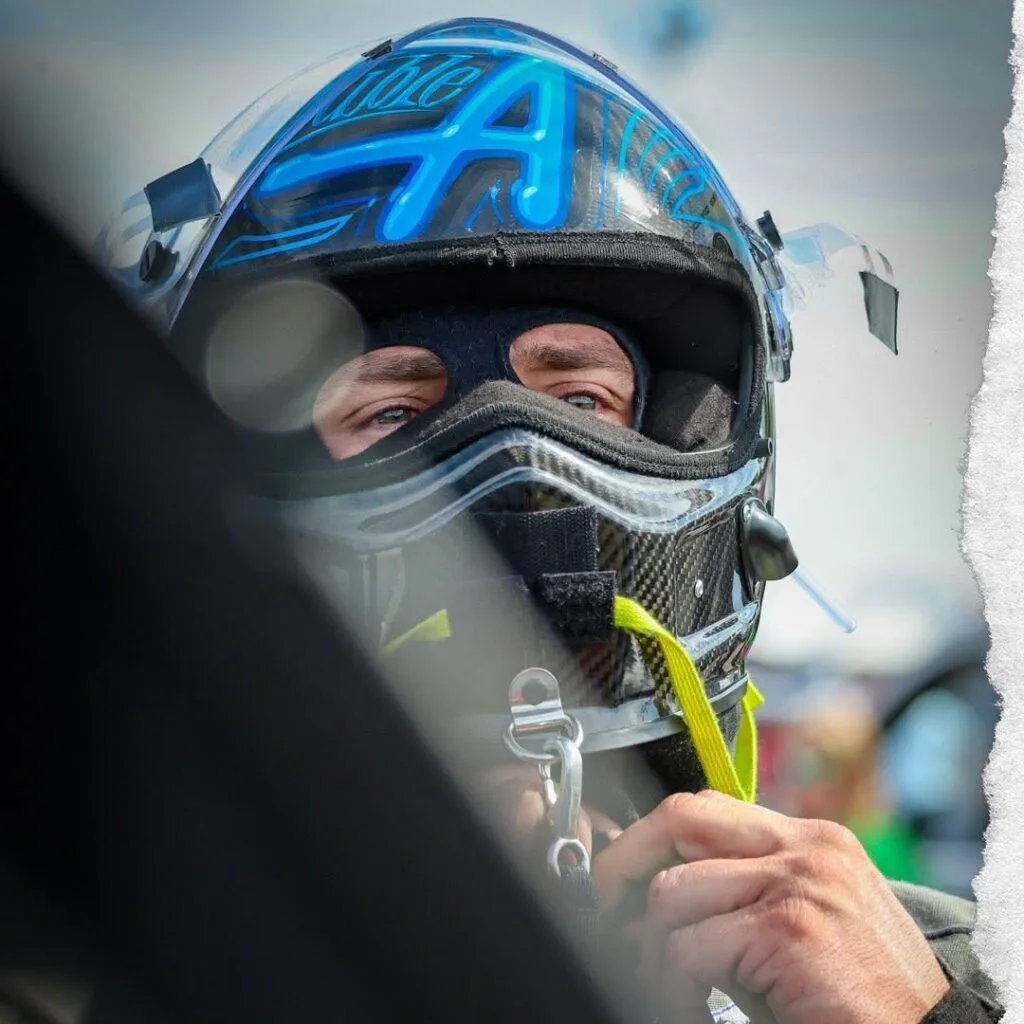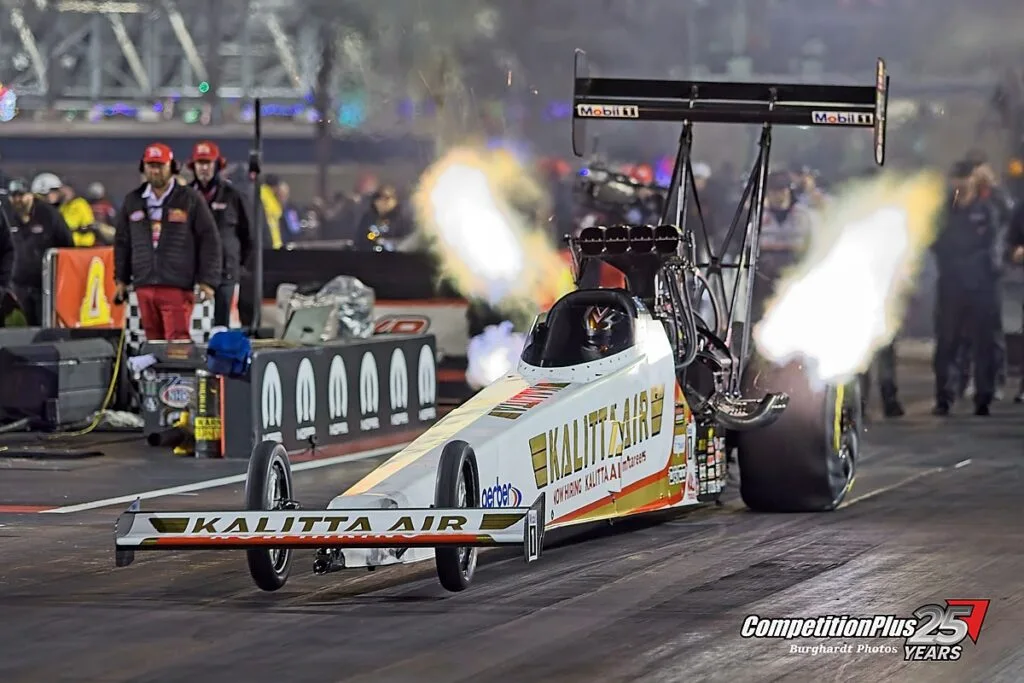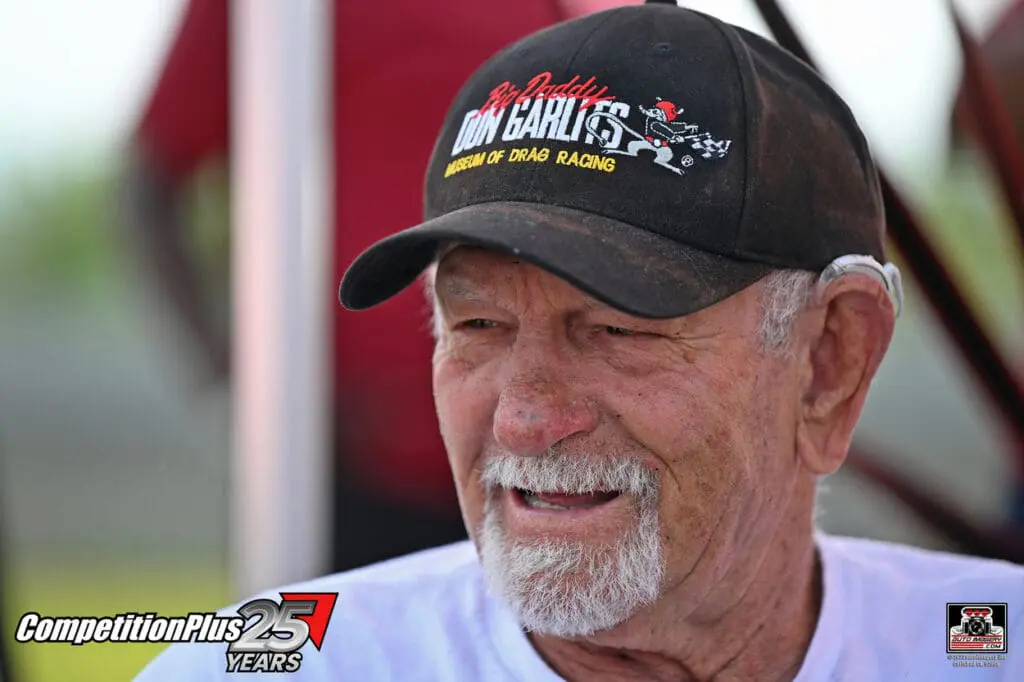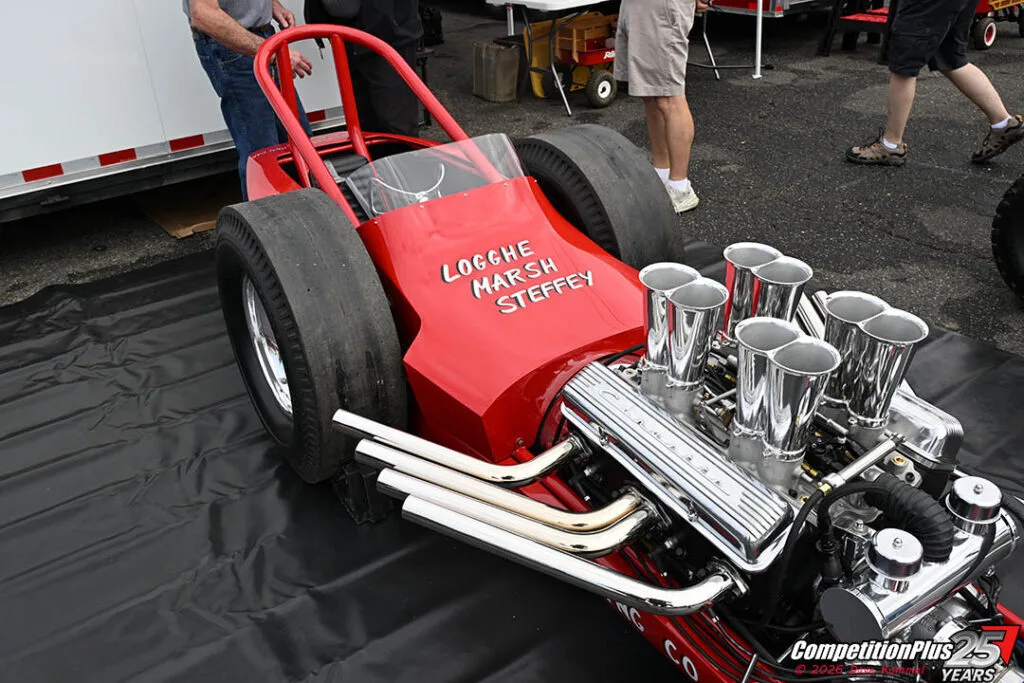
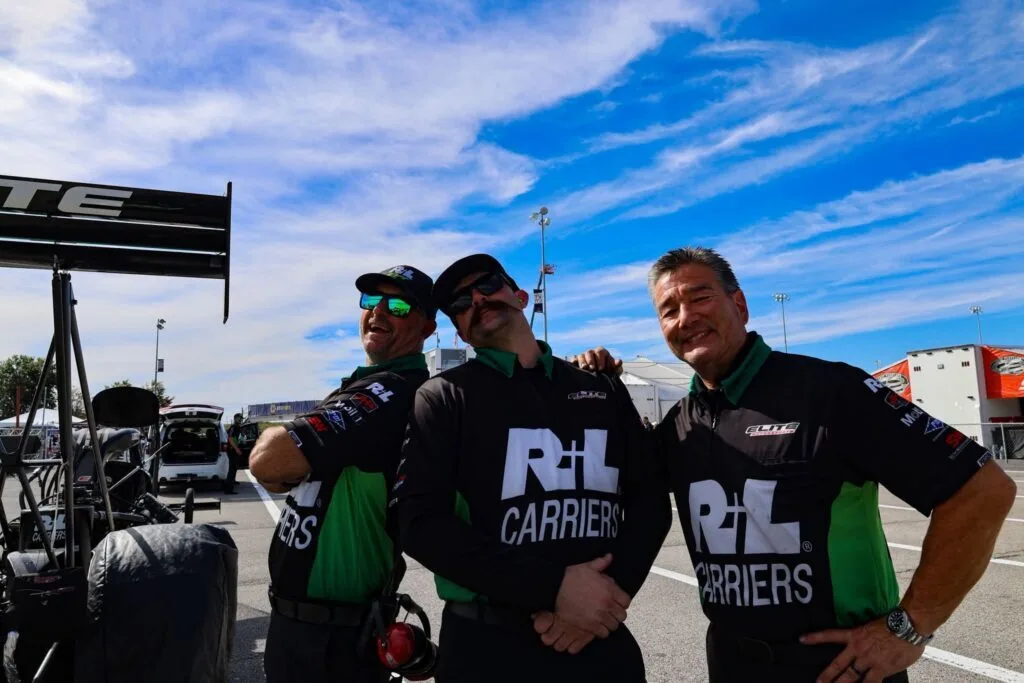
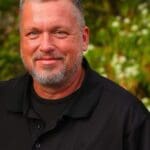

Imagine a bunch of Major League Baseball players spending their off weekend playing recreational softball. That’s probably the best comparison for Dustin Davis and several members of Tony Stewart’s Top Fuel operation, who spend their time away from NHRA competition racing a front-engine Nostalgia Top Fuel dragster.
Except there’s nothing remotely softball about these machines, something Davis and driver Austin Arnerich have learned over three seasons of trying to tame a race car once campaigned by Heritage Series legend Jim Murphy.
Saturday at the Good Vibrations California Hot Rod Reunion, they finally had something to show for their persistence. Arnerich entered the third and final qualifying session outside the field, then drove Davis’ dragster to a 5.957-second pass at 248.41 mph, vaulting into the No. 5 qualifying position at Famoso Dragstrip.
For a team accustomed to the sophistication of modern Top Fuel racing, getting a 1950s-style dragster down the quarter-mile has proven considerably more difficult than anyone anticipated. Davis will be the first to admit some of those problems were self-inflicted.
“We’re behind where we want to be,” Davis said. “I think that in the first two years, we didn’t put a lot of attention to it, to be 100% honest with you. We were busy with some other programs and that kind of thing.”
Davis purchased Murphy’s entire WWII Nostalgia Top Fuel operation with the intention of preserving a piece of drag racing history. Arnerich, whose family has worked alongside Davis for years, was selected to drive despite having never previously driven a front-engine dragster before his licensing runs.
The combination looked good on paper, particularly considering the professional racing experience involved. Unfortunately, Nostalgia Top Fuel doesn’t give much consideration to résumés.
“Well, I think it’s more just we’re drag racers, so when we’re not racing, we’re racing,” Davis said.
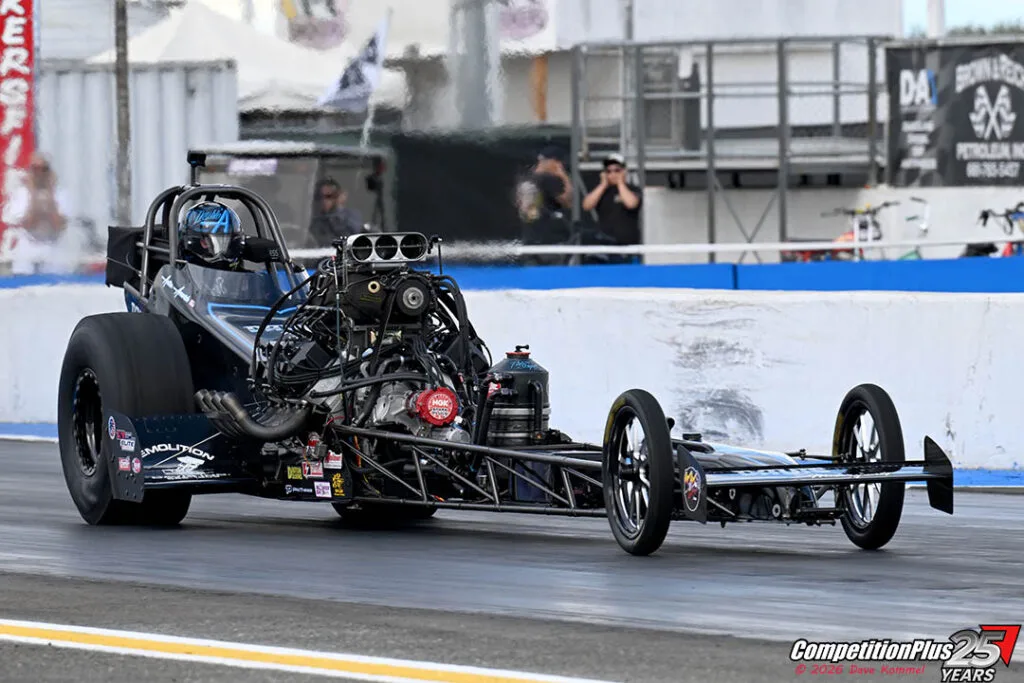
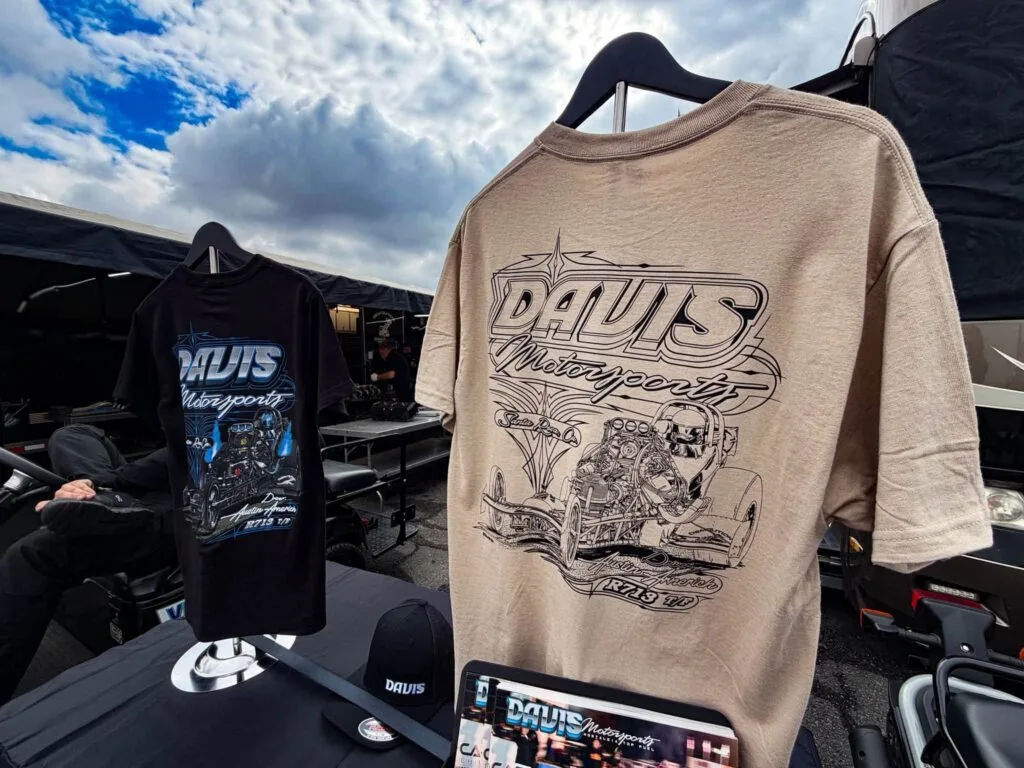
The trouble was that Davis initially approached the nostalgia operation with the same thinking he had developed working around modern dragsters and currently with Elite Motorsports. Murphy had spent years refining a combination that worked, and Davis eventually discovered that improving upon it wasn’t quite as straightforward as he believed.
“I didn’t done a great service to Jim Murphy on how we’ve run this car,” Davis said. “I mean, he was a pro, and when I got ahold of the thing, we kind of made some decisions on things that went away from the program that he had developed.”
Eventually, Davis and Murphy sat down and discussed what needed to change. The answer wasn’t more sophisticated technology or another attempt to reinvent Murphy’s combination.
It was returning to what Murphy already knew worked.
“So we went to the back of the drawing board on that and we’ve gotten the shop and consulted with them a lot,” Davis said. “And, like I said, dude’s a legend, man. I mean, there’s only so many people that have won March Meet and have had the success in drag racing that Jim has had.”
Murphy and longtime associate Daniel Wilkison have remained involved, helping Davis rebuild the program around the knowledge accumulated during Murphy’s successful nostalgia racing career. Davis has also assembled a more dedicated crew and committed additional time to testing.
For Arnerich, who works with Davis on the Tony Stewart Top Fuel dragster, the education has been equally humbling, particularly when it comes to driving a front-engine dragster where the engine, tires and driver all compete for the same limited real estate.
“Steep learning curve. Very, very challenging,” Arnerich said. “One of the hardest cars I’ve ever tried to drive. I really gives a lot of respect for the guys that come out here, pull them out of the trailer and make a good clean lick down the racetrack.”
Unlike his experience racing junior dragsters and bracket cars, Arnerich discovered that seeing where he wanted to go wasn’t always an option. With the engine sitting directly in front of him, keeping the car in the groove required learning an entirely different set of instincts.
“There’s just so many little minute details you got to pay attention to and unlike anything else,” Arnerich said. “When you can’t see the racetrack, can’t see the groove, it really throws a curveball into it.”
The learning process has required patience, something professional drag racers aren’t always particularly good at practicing. Davis acknowledged the team competed in only two races during its first two seasons, a schedule hardly conducive to developing a driver or sorting out a temperamental nitro combination.
That is changing, and Saturday’s qualifying performance offered evidence that the additional work is beginning to pay off.
“Enough laps into it. It’s finally getting more comfortable,” Arnerich said. “I’m feeling better in the car, but every time you go out there, you learn something new.”
Davis intends to increase the team’s racing schedule considerably, with the Heritage Series forming the foundation of the program. He also wants to pursue match races, additional testing opportunities and appearances at tracks that seldom get to showcase front-engine nitro dragsters.
“Our plan is for sure we’re going to run the Heritage Series, but we want to add to that,” Davis said. “We want to add some other events. We want to try to do some match racing. I got some ideas around that.”
There is another reason Davis remains committed to the project beyond winning races. His relationship with Murphy extends into their construction businesses and their shared hometown of Santa Rosa, California, where they have known each other for years.
Davis even gave Murphy a key to his racing shop, making it clear that selling the dragster hadn’t ended Murphy’s association with the operation.
“I told him when we got the thing, I dropped a key to my shop off at his shop and I said, ‘Whenever you want to be there, you can be there,'” Davis said. “So I certainly appreciate how much time and effort that they’ve put in on our behalf.”
Davis knows there is still work ahead, but he isn’t looking for a shortcut.
“We’ll get there. We got to work on a couple things and it takes laps,” Davis said. “We’ll just keep putting laps on this thing and we’ll get there.”