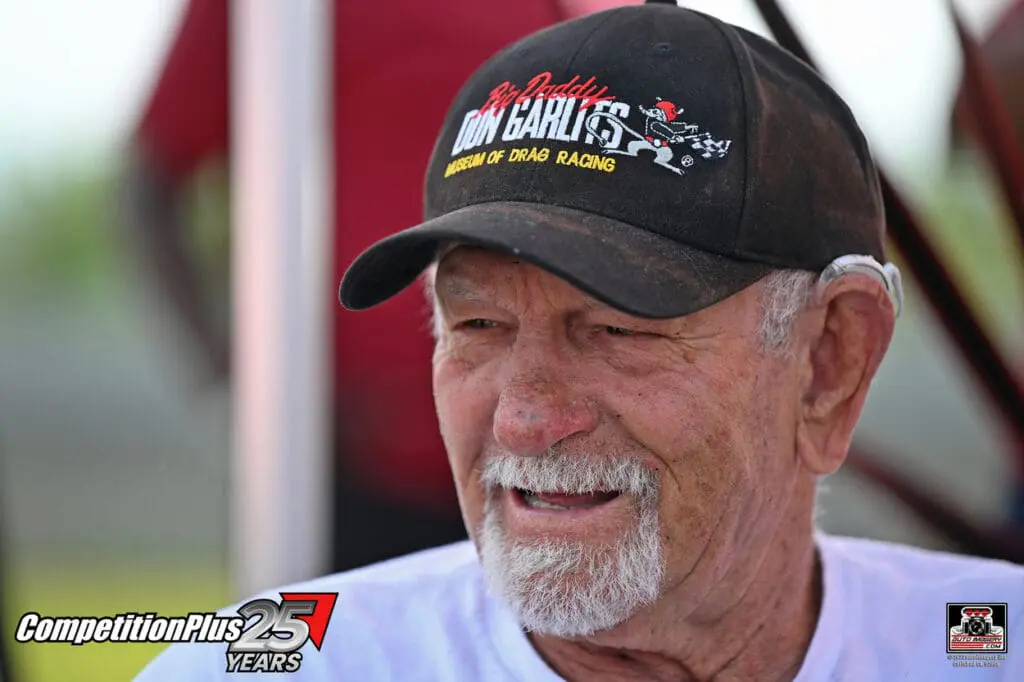


Don Garlits has spent a lifetime doing things people told him couldn’t be done, but the story of how his drag racing museum came to occupy a piece of Florida real estate along Interstate 75 isn’t about horsepower, engineering or winning another race.
Big Daddy will tell you straight up that God had a hand in putting his museum where it stands today. And when you hear how an $80,000 piece of property and a rather gruff woman named Shirley entered the picture, you’ll understand why he’s never backed away from that belief.
Don’t expect Garlits to downplay his faith in God to make anybody more comfortable. As far as he’s concerned, without God’s intervention, there might never have been a Don Garlits Museum of Drag Racing in Ocala, Florida.
Garlits and his late wife, Pat, had one rule when it came to making the museum happen. They weren’t going to borrow money, regardless of how promising a piece of property looked.
Garlits has told the story many times, including at a recent Texas Motorplex Champions Dinner, and the details haven’t changed. Considering the characters involved, there’s hardly a reason to embellish anything.
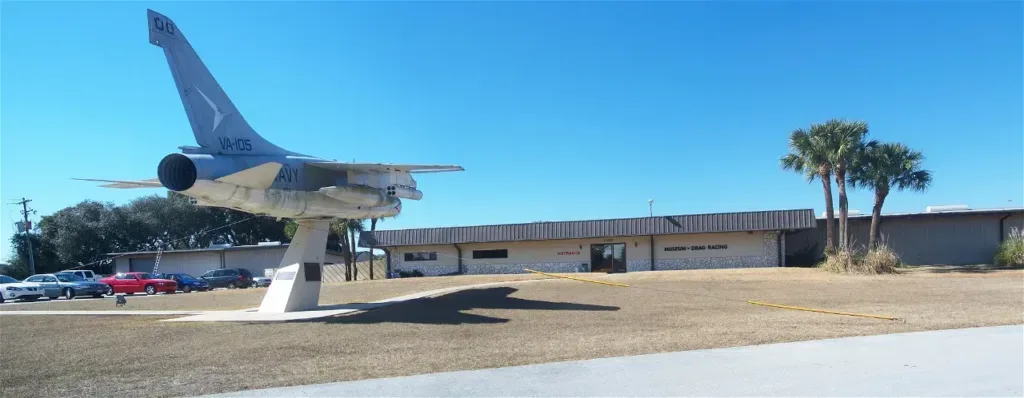
Today, the museum occupies a 13-acre complex with more than 50,000 square feet of indoor exhibition space and approximately 140 vehicles. The idea originated in England in 1976, when Garlits and Pat visited several privately owned automobile museums.
Garlits had retained many of his dragsters because his experimentation sometimes required returning to an earlier design when something new didn’t work. Seeing how British collectors preserved their cars gave him an idea.
“We went to England in 1976, my wife and I, we visited a lot of car museums over there on private property,” Garlits said. “Seemed like all the English saved cars and then had a little museum on their property.”
The couple discussed building their own museum during the flight home. They eventually constructed a 15,000-square-foot building adjoining their residence in Seffner, Florida, to house Garlits’ collection.
“It wasn’t for other people’s cars, it was for mine,” Garlits said. “That’s why it’s called a Don Garlits’s museum.”
There was one problem. The building attracted plenty of visitors, but practically none were paying customers.
Friends came through, as did sponsors, journalists, photographers and relatives. Six years into the operation, Garlits said the museum had yet to establish a paying audience capable of supporting it.
Pat, who managed the family’s finances, finally raised the question her husband couldn’t ignore.
“What are we going to do with that white elephant when you can’t race and support it?” she asked.
Garlits wanted to move the museum near an interstate highway where travelers might stop and buy a ticket. His initial thought was Interstate 4, but Interstate 75 offered better access to motorists traveling from the Midwest into Florida.
By 1981, the search was underway. Garlits was still racing, but he knew the museum couldn’t depend on his racing income forever.
The first promising location was near Brooksville, where Garlits had established early speed records exceeding 170 and 180 mph. He and Pat spotted a large tract visible from Interstate 75 near State Road 50.
Garlits had just turned 50 in January 1982, and age was entering the conversation. Pat’s father had died at 57 and her mother at 52, leaving the couple mindful of how quickly the years could disappear.
“We need to get on this move because I just turned 50,” Garlits recalled telling his wife. “How long am I going to want to do anything?”
Before they went shopping, Garlits asked Pat how much money they could safely spend. She reviewed the accounts and returned with a figure that would become central to everything that followed.
“We could write a check for $80,000 and still be okay with the racing account in case there’s some kind of a failure,” Garlits recalled her saying.

The Brooksville property was listed for $250,000, more than three times their budget. It also sat approximately a mile from the interstate, farther away than Garlits initially believed.
They passed on it and hired a real estate agent. From Lake Panasoffkee to Brooksville, they spent the day inspecting properties that were either too expensive, too small or too far from the highway.
By nightfall, they had accomplished nothing. Garlits suggested staying at a Holiday Inn in Brooksville and continuing north the following morning.
What happened in that hotel room is the part Garlits considers more important than any real estate transaction.
He and Pat got down on their knees and prayed.
They weren’t merely asking God to help them find affordable land. They wanted to know whether leaving their family property in Seffner was something He wanted them to do.
Garlits wasn’t exactly looking to leave home, either. His parents had cleared that land back in 1927, planted 65 citrus trees, and there was a lake out back where the family spent summer afternoons water-skiing.
Giving all that up wasn’t something he and Pat took lightly. They wanted to be certain they weren’t pursuing something God didn’t intend for them.
“We asked the Lord, ‘Are we supposed to move off this property? Maybe you don’t want us to move from here, but we’re going to go look tomorrow and we’re going to try to find something,'” Garlits said. “‘If we don’t find anything, we’ll know that you don’t want us to move and we’ll go back there and live our lives out and never trouble you with it again.'”
They would search one more day. If nothing worked, they would accept the answer and go home.
The next morning, the couple headed north and checked the Wildwood exit. The available property there was priced at $350,000 and located a mile from the interchange.
Their next stop was the Belleview exit, which Garlits described as almost entirely undeveloped. Immediately off the ramp, they spotted a beautiful piece of property adjoining the interstate.
Pat saw what it could become before her husband had even determined whether it was available.
“We can put the museum right there by the highway and up there by those trees we can build our house,” she told him.
Garlits wasn’t ready to celebrate. There wasn’t a real estate sign anywhere he could see.
They drove around to the other side, parked and began inspecting the land. Garlits climbed into a ditch intending to pace off the property because he believed they needed approximately 16 acres.
The tract turned out to be exactly that size. Underneath a small bush was a little sign bearing two words and a telephone number.
For sale.
Garlits and Pat drove to a nearby Stuckey’s to make the telephone call. It was approximately 8:30 in the morning when a woman answered.
“This is Shirley. What do you want?”
The introduction caught Garlits off guard. Shirley Muldowney, one of his fiercest racing rivals, had recently beaten him in an AHRA World Championship event, and hearing that name delivered an unwelcome reminder.
This Shirley, however, had something Garlits wanted considerably more than another racing trophy. He explained that he was calling about the property along the interstate and asked for the price.
“It’s 80,000 cash,” she told him.
“I’ll take it,” he replied.
The woman wanted to know what he intended to do with the property. When Garlits explained that he planned to build a museum, she informed him that the land was zoned for agricultural use.
“You can’t put a museum on it,” she told him. “It’s agriculture. It has to be a farm.”
Garlits figured he could persuade the county commissioners to change the zoning. Shirley wasn’t convinced he should gamble $80,000 on something that hadn’t yet been approved.
“Don’t you think it would be prudent to get the zone changed before you actually make the final deal on the property?” she asked.
“No, I’ll take it just like it is and take my chances with the commissioners,” Garlits answered.
Thirty days later, the property belonged to him. Garlits hadn’t yet received permission to build the museum, but he was convinced the purchase had been arranged by a higher authority.

While walking along the southern fence line, he encountered a neighboring property owner who identified himself as Robert DuPont, a member of the famous DuPont family. DuPont explained that his family owned the adjoining farm and had wanted the property Garlits had just purchased.
They hadn’t known it was for sale.
According to Garlits, DuPont offered him $180,000 for the land, which would have given the drag racing legend a $100,000 profit almost immediately. Garlits wasn’t interested, and his explanation had nothing to do with holding out for a better price.
He believed God had given him the property for a purpose and selling it wasn’t an option.
There was still the matter of getting the property rezoned. Garlits prepared his presentation and went before the county commissioners, knowing that an unfavorable decision could leave him with a very expensive piece of farmland.
He had barely begun speaking when the commission chairman interrupted.
“Stop. We don’t want to hear it.”
For a moment, Garlits thought he had made an $80,000 mistake. Then the chairman finished what he had started.
“We’re going to give you the zone,” Garlits recalled him saying. “What we want to know is why did you land on that intersection? It’s never going to be nothing.”
The commissioners couldn’t envision much happening at that exit. Over the ensuing decades, the once-undeveloped interchange became valuable commercial real estate.
Garlits learned something about real estate during a trip to California in 1959. Buy land near an interstate exit before everybody else figures out what it’s worth, and chances are you’ll make a pretty good return on your money.
He took that lesson home to Florida and put it to work. Some of those investments proved considerably more profitable than racing.
“In fact, most of my wealth came from real estate in Florida, not from drag racing,” Garlits said. “I made money in drag racing, but not the kind of money that it takes to be really rich.”
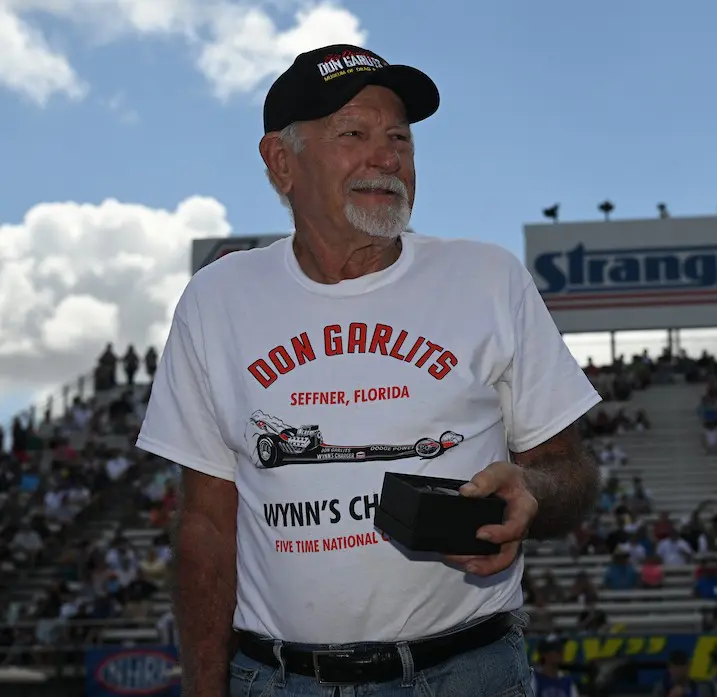
The museum, however, wasn’t another real estate investment. It became a permanent home for machinery and history that otherwise might have been scattered among private collectors or lost entirely.
The drag racing building houses approximately 90 vehicles, including historic Top Fuel dragsters, Funny Cars, altered-wheelbase machines and examples of the engineering that transformed the sport. Another building contains approximately 50 antique automobiles, muscle cars and early hot rods.
Garlits’ career included the development of the modern rear-engine Top Fuel dragster, a design that changed professional drag racing after his devastating 1970 transmission explosion. But he has never credited his engineering skills or business instincts for the circumstances surrounding the museum’s creation.
He believes God heard the prayer he and Pat offered in that Brooksville hotel room and provided an answer the following morning. The fact that the land was priced at exactly what they could afford has never been something Garlits considered a coincidence.
A person can visit the museum, admire the race cars and never consider the circumstances surrounding the land beneath them. Garlits has spent more than four decades making sure anyone willing to listen knows the story.
The value of the land was never why Garlits refused DuPont’s $180,000 offer. The reason had been settled, at least in his mind, before he ever met the man.
“I told him it was a generous offer, but I’d never be able to sell it because God himself personally gave it to me,” Garlits said. “And that’s the truth. He did give it to me.”