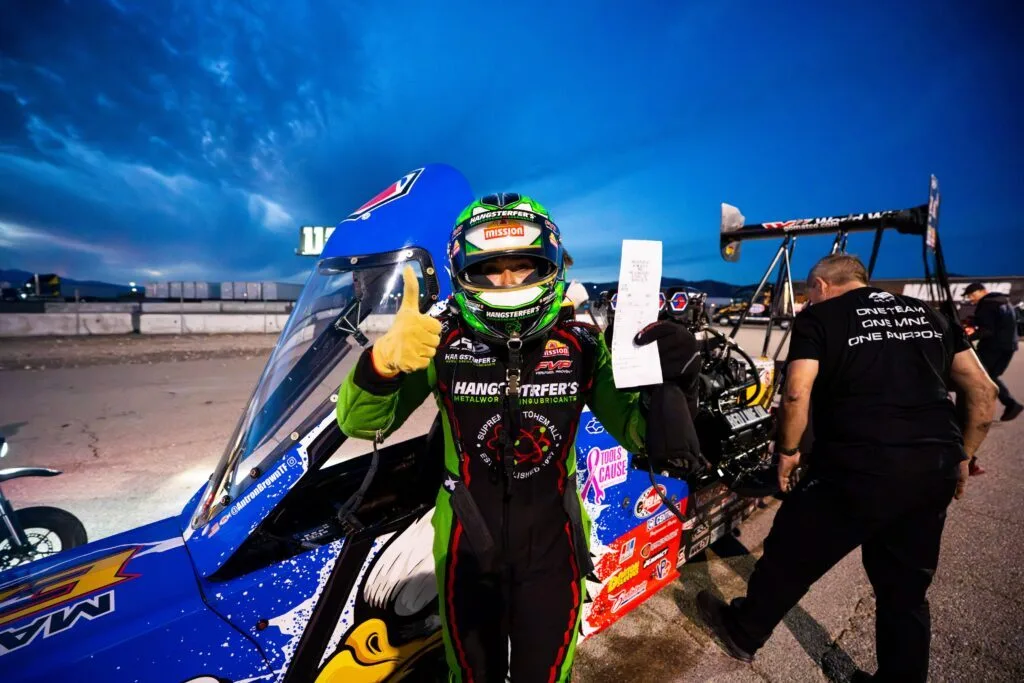
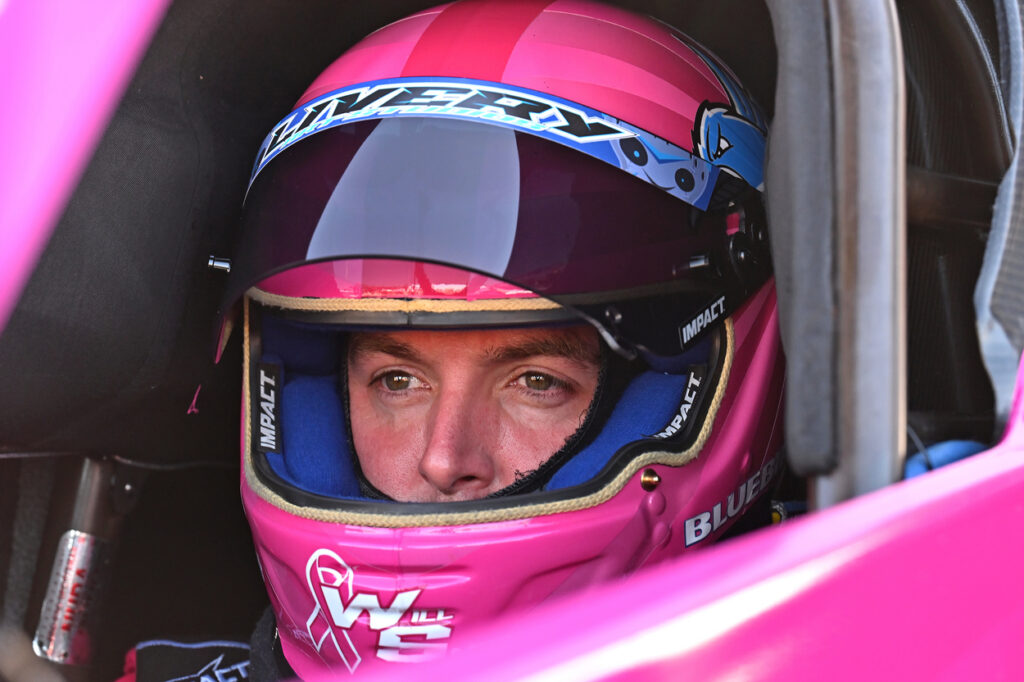

Will Smith has a description for the Top Fuel driver SCAG Racing hired before the 2026 season: a Walmart bargain.
Smith can laugh about it now because the bargain bin is getting considerably more expensive.
“I was certainly a Walmart bargain in my mind,” Smith said. “And I think the reality of that is true as well.”
Nobody should confuse Smith with a clearance item anymore. After reaching his first NHRA Top Fuel final at the Midwest Nationals outside St. Louis, Smith and the Bluebird Turf team have gone from trying to establish themselves to becoming the kind of car nobody particularly wants in the other lane.
What makes the climb more impressive is what SCAG Racing actually started with. This wasn’t an established Top Fuel team trying to find another hundredth of a second.
It was a new operation being assembled from scratch around a driver with limited Top Fuel experience who, at the same time, was recovering from a life-threatening health battle.
There was never a shortage of potential. There was an abundance of moving parts.
Randy Gloede had committed the resources and surrounded Smith with people capable of building a competitive operation. The challenge was getting a new race team, new personnel, new equipment, an inexperienced driver and Smith’s recovering body moving in the same direction at the same time.
Smith can put a number on how far they had to go.
“At the beginning of the year, we probably were at a negative two on a scale of 1-10 because we didn’t have anything at that time,” Smith said. “Randy Gloede has given us all the resources that we need to be successful. And it just took time to get everything.”
Negative two wasn’t Smith grading the talent in the building. It was his way of describing how little of the actual infrastructure existed when the calendar turned to January.
When Smith was hired, there were no transporters waiting, no inventory of parts and tools, and no established crew ready to roll into Gainesville.
From Jan. 1 until preseason testing, virtually everything had to be assembled.
“Gosh, the guys worked so hard,” Smith said. “And we’ve had some different people helping out at the beginning of the year, but now we’ve really got our core group built, all of our full-time guys in place. And I say now we’re a 10 now.”
Smith credits tuners Glen Huszar and Scott Okuhara with building the foundation, and veteran Nicky Boninfante joined the operation after the U.S. Nationals. Michigan was Boninfante’s first race working with the team.
“Between Glen and Scott and Nicky [Boninfante] all working together and sharing ideas, it’s just starting to come around,” Smith said.
There was another component being developed right along with the race car: the driver.
Smith had earned his Top Fuel license and fought his way toward an opportunity, but nobody was pretending he arrived with hundreds of competitive runs in a 12,000-horsepower dragster. The experience had to come while the team itself was learning.
Then cancer complicated everything.
Smith entered the season recovering from Dermatofibrosarcoma Protuberans, a rare form of skin cancer that required multiple surgeries on the left side of his face. He was cancer-free, but being cleared of cancer and being physically ready to wrestle a Top Fuel dragster are two entirely different standards.
So SCAG Racing wasn’t developing one thing. It was developing everything.
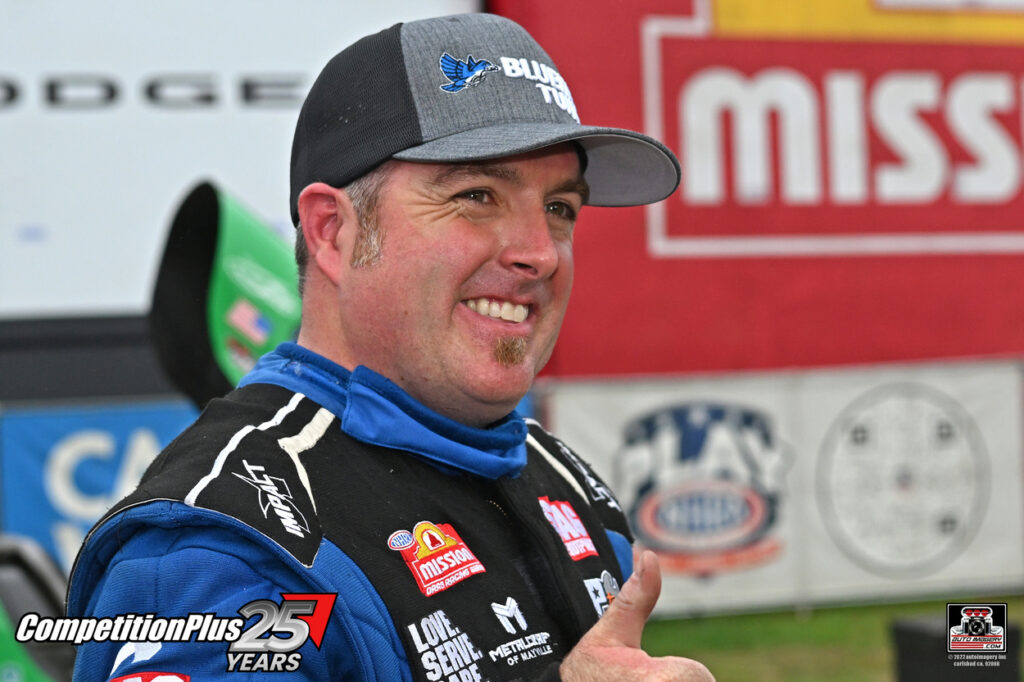
By St. Louis, those separate pieces were beginning to look very much like one race team.
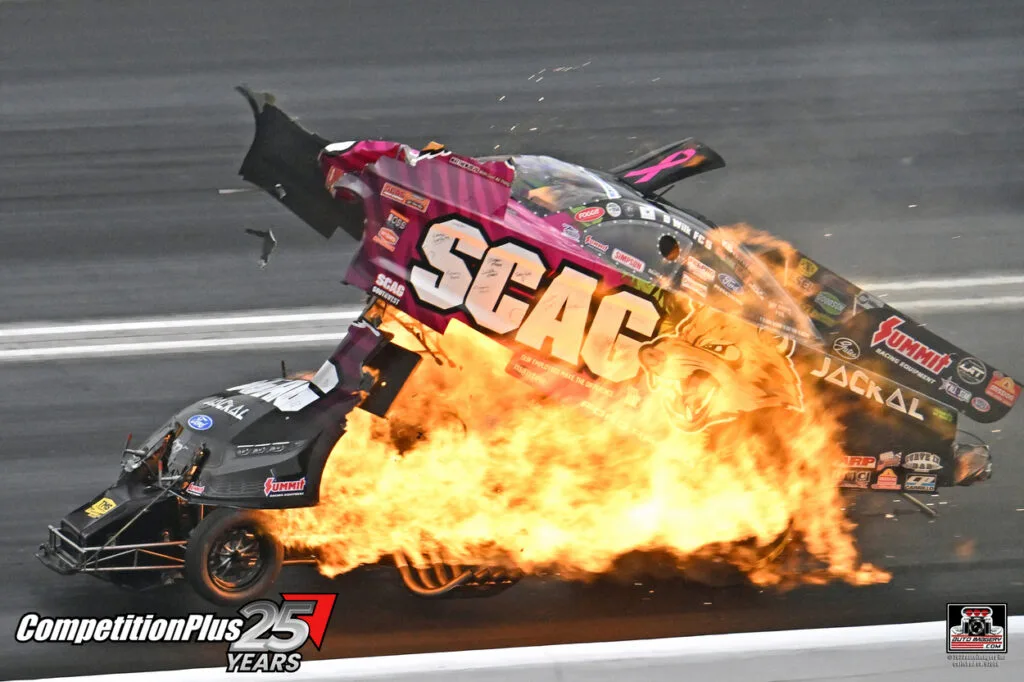
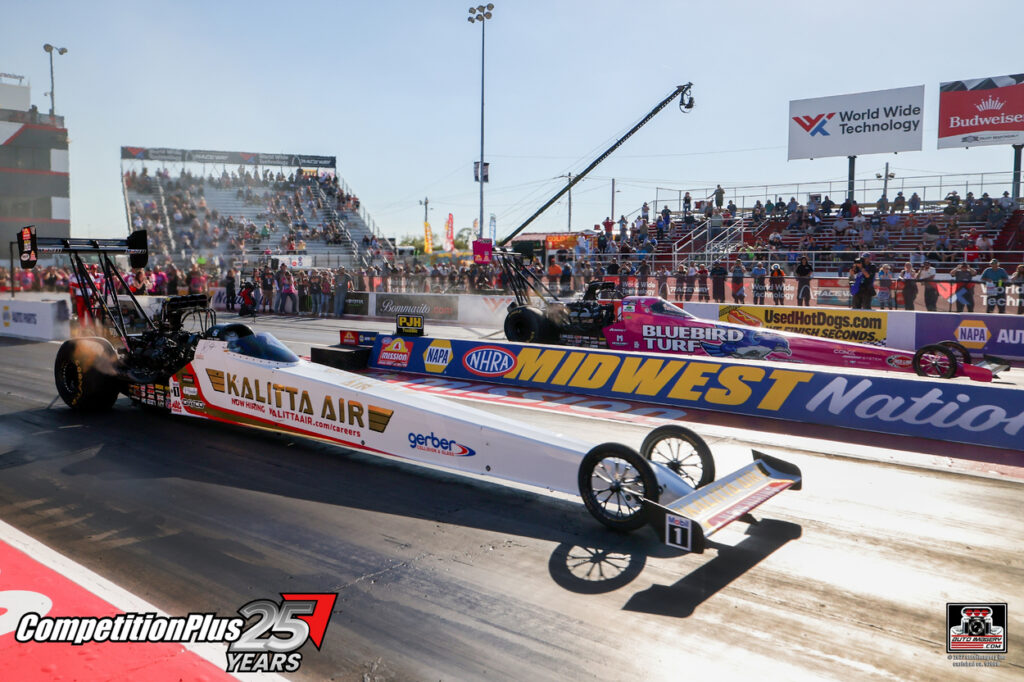
Smith qualified 14th and proceeded to beat Maddi Gordon, Tony Stewart and Shawn Reed to reach his first NHRA Top Fuel final. Against championship leader Shawn Langdon, Smith left first with a .044 reaction time to Langdon’s .059 before his dragster lost traction downtrack.
Langdon won with a 3.732-second run, but Smith had already made his point.
The runner-up followed a semifinal appearance at Rockingham and moved Smith to fifth in the Top Fuel standings. More important than the points, the Bluebird Turf dragster has developed into a car capable of going rounds against established championship teams.
“We’ve grown and built this program at a very rapid rate, and we’re a contender now,” Smith said. “And the performance on track I think speaks for itself.”
His first-round race against Doug Kalitta produced something the team hadn’t accomplished since preseason testing at Gainesville: a full run to the finish line under power.
“That was the first full run the car went to the finish line under power,” Smith said. “Me and my crew guys have talked about it and said, ‘Man, to see where we are right now and see how this car’s performed the last three races and to see how we started out, it took us getting to the first round of Phoenix to make a full run.’”
Phoenix wasn’t merely an early-season measuring stick for the race car. Smith wasn’t physically where he wanted to be, either.
January and February had been consumed by something considerably more important than elapsed times.
“Certainly. Both physically and mentally, emotionally,” Smith said. “January and February was a pretty rough time for me and certainly took a lot of time to work to get over that and heal and get stronger.”
At Phoenix, Smith said he could barely turn his neck and one side of his smile still drooped.
“So physically have come a long way since my cancer battle earlier this year,” Smith said. “But most definitely I wasn’t physically where I needed to be driving a car. And in these cars, you got to be 100% ready, and I don’t think I was quite there yet at that time either.
“On paper, I guess it seemed like the car had to do some catching up, but at the same time, I wasn’t quite as far along in my mind as what some would believe,” Smith said. “So it’s been a joint effort together.”
Smith isn’t pretending the development is finished just because the win lights are arriving more frequently.
“Driver and car have been coming along nicely as the year has progressed,” Smith said. “The car’s doing phenomenal now and the driver’s got a little bit more work to do as far as physically driving the car and just being more consistent behind the wheel and gaining some more consistency on the starting line. But it’s been a learning curve for both of us.”
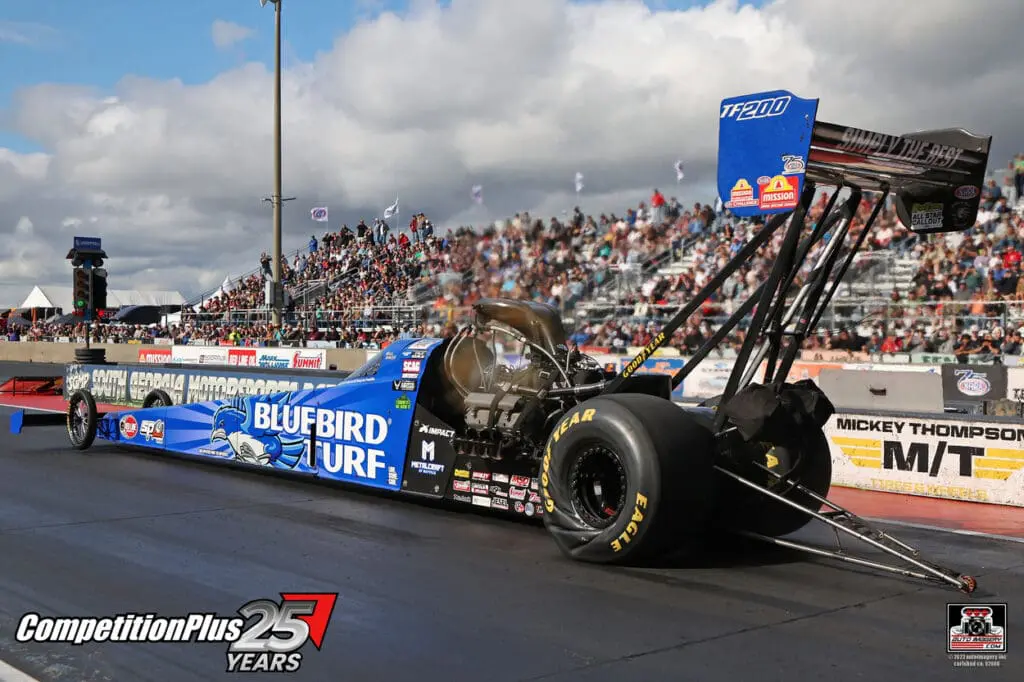
Smith has had a useful classroom. He points to his teammates and the culture Gloede created within SCAG Racing, where information isn’t treated as something to protect from the next pit area. Smith said watching teammates handle pressure and listening to their advice has accelerated his development.
“I’ve got the three best teammates out there and we all help one another out,” Smith said. “We give advice. We listen to others. And we’re always there for each other.”
Still, there is something distinctly Will Smith about how he arrived here.
There was no giant sponsorship check that purchased his seat. Smith spent years as a crew member, sold possessions to finance his Top Fuel license and slept on Dave Hirata’s couch while trying to create an opportunity that didn’t otherwise exist.
“I was definitely the Walmart bargain for sure,” Smith said. “But I have a pretty good work ethic, I believe, and a never quit mentality.”
Smith used to describe that persistence differently.
“I used to tell people I was too stupid to quit, but if I had thought I’d been smart and quit, I never would have had this opportunity,” Smith said. “Giving up is never an option for me.”
That journey also gave Gloede something beyond a driver who could stand on the throttle. Smith came from a marketing and sales background, something he believes fits naturally with the dealer and customer relationships attached to his role.
“This opportunity has given me a lot of opportunity, obviously behind the wheel, but off the racetrack and working with all of our dealers and our customers,” Smith said. “And I enjoy that. I’ve had a marketing and sales background ever since I got out of college, and having this opportunity to drive this car allows me to build relationships and utilize those people skills in a positive way. And it’s a bonus to get to stand on the gas in a Top Fuel dragster as well.”
Smith isn’t interested in changing the mentality because his name has climbed into the Top Fuel points conversation. If anything, surviving cancer, building a team from virtually nothing and spending years trying to reach this level have left him with little interest in racing defensively.
“100%. That’s the way I’ve always raced,” Smith said. “And when I race that way, I usually perform pretty well.”
A final round at St. Louis didn’t suddenly make Smith believe he belongs. It provided evidence for everyone else.
“Even though we’re in a points battle now, it’s not really going to change,” Smith said. “It can’t change anything we’re doing right now. We just got to go out and keep doing the same thing we’re doing.”
Smith doesn’t see the final round as requiring some different version of himself. Four win lights on Sunday are still built from the same fundamental job he faces when the car rolls into the staging lanes for the first qualifying session.
“I look at it as you’re making the final round in St. Louis, physically making the run down the track is no different than Q1 on Friday,” Smith said. “So you just have to keep making clean run after clean run and being fast and being quick off the starting line.”
The Walmart bargain isn’t hidden on the bottom shelf anymore.
Everybody knows where to find him.