
IHRA PUTS TRACKS UP FOR AUCTION – SEE WHICH TRACKS ON THE BLOCK

Somewhere out there in this drag racing world, Billy Meyer is smiling ear to ear.

Meyer, who purchased the IHRA in 1988, turned a bid of bravado into one of the worst efforts to take drag racing to the next level. He made a lot of changes, angered a lot of people and somehow managed to anger the one person he could least afford to offend, Mother Nature.

It rained so much that the IHRA moniker became “It Has Rained Again.” For nearly four decades, Meyer has carried the distinction of presiding over arguably the biggest failure in IHRA history.

Billy, you’re off the hook.

If Meyer thought he was the worst failure in IHRA history, Darryl Cuttell essentially said, “Hold my beer.” Meyer isn’t even a close second.

There’s a difference between Meyer and Cuttell, though. Meyer failed miserably, but I never doubted he wanted to succeed for the betterment of drag racing.

After Larry Carrier sold it, IHRA had strong years under leaders like Ted Jones and Bill Bader. Those weren’t failures. They were proof that IHRA could survive, prosper and provide a legitimate alternative when the right people were running it.

There were failures along the way. The Prolong era was one, and the IHRA eventually stumbled badly with Aaron Polburn and Skooter Peaco running the show.

But even during IHRA’s worst stretches before this one, I never came away believing the whole exercise was about one man’s need to prove how important he was.

I cannot say the same about what just happened.
editorial cropped 01

I believe too much of this became about Cuttell proving he could build something big enough to make everybody acknowledge him, particularly NHRA.

Nice try, Don Quixote.

The problem with tilting at windmills is eventually somebody has to pay for the horse. In this case, the racers did.

IHRA promised millions in purses, $200,000 championships for Top Fuel and Funny Car, six-figure payouts in other professional categories and a Triple Crown carrying the possibility of a $1 million bonus.

For the independent racer, it was hard not to pay attention. IHRA was offering the kind of money that could make racing at that level worthwhile, and plenty of racers bought into the promise.

Then races started disappearing, and eventually the professional season disappeared with them.

Gary Pritchett, Del Worsham, Jason Harris and Johnny Pluchino were left leading championships that ended without actually ending. Racers who competed at the Triple Crown were left waiting on purse money.

One racer told me having the season taken out from under his team was “heartbreaking.”

And that’s where the bags of ice and great meals become meaningless.
Don’t misunderstand me. The racers appreciated them, and IHRA received plenty of deserved praise for how competitors were treated at the track.

But you know what racers wanted more?

A race series they could count on.

You can’t put ice in the fuel tank, and a steak dinner doesn’t pay for connecting rods. That’s what angers me the most because IHRA deserved better than this.

cuttell nowling ihra

Larry Carrier and Tennessee state Sen. Carl Moore created IHRA because Carrier couldn’t get along with NHRA’s Wally Parks or AHRA’s Jim Tice. His response was about as drag racer as it gets: If I can’t race with you, I’ll build my own sanctioning body.

And that’s exactly what he did.

IHRA became successful because it dared to be different. It raced different classes, conducted events differently and wasn’t afraid to try something before the other guy did.

Mountain Motor Pro Stock grew there. Pro Modified became a professional category there, and it was IHRA in 1974 that believed Winston’s involvement in drag racing shouldn’t stop with them. IHRA believed Winston needed NHRA, too.

IHRA helped open the door for Winston to expand its drag racing involvement to NHRA. Eventually, NHRA ended up with the whole pie.

It used to kill me when NHRA announcers referred to racers who had succeeded in IHRA as having done it over on the “I” side, almost as if that made the accomplishment something less.

I remember asking one of them, “Are you talking about the same ‘I’ whose race procedures and classes you keep adopting?”

Yeah, that’s the one, and that’s the IHRA Cuttell purchased.

For a while, I thought he might actually pull it off.

When IHRA started buying tracks, spending money like a drunken sailor and making noise, NHRA suddenly had something it hadn’t had in a long time, somebody forcing it to look over its shoulder. I thought that was good for drag racing.

Ron Capps said in an interview at Rockingham that he believed the IHRA debacle helped “pivot” NHRA toward places it might not have considered five years earlier. He pointed to Michigan, South Georgia and Rockingham and said the Maple Grove situation helped force NHRA’s hand.

There’s some irony in Cuttell spending a fortune trying to build a competitor to NHRA and perhaps accomplishing more by making NHRA stronger.

The Maple Grove announcement was probably the high-water mark. IHRA made a huge splash by purchasing one of drag racing’s most historic facilities. Virginia Motorsports Park was another acquisition, as was Piedmont Dragway, and each move made this thing look more legitimate.

The announcements kept coming, and so did the people.

Kenny Nowling, Rich Schaefer, Alan Reinhart, Christian Byrd, Josh Peake and Scott Woodruff were among those attached to the operation at different points. The organizational chart changed so often that eventually you needed a scorecard to know who was still there.

Then Richard Freeman traveled to Ohio looking at IHRA rolling assets and ended up having to explain that he wasn’t buying the sanctioning body after racers started contacting him about purse money.

Freeman summed up the situation better than I can.

“Yeah, that deal’s a total cluster f***.”

There will still be Cuttell apologists, including racers who were treated well and people who desperately wanted this thing to succeed. Count me among those who wanted it to succeed.

What I cannot understand is the double standard.

Cuttell got a pass from a lot of people over the whole Elon Musk fiasco. As ridiculous as that episode became, there were people willing to look past it and wait for the next announcement.

Kenny Nowling never received that kind of grace.

When an ADRL event ended with Nowling unable to pay the purse, he said someone who had committed the money reneged on the deal. Nobody wanted to hear it.

Nowling was crucified, his standing in the sport was shredded and the ADRL died a death every bit as ugly, maybe uglier, than what we’ve watched happen to IHRA.

I’m not rewriting Kenny Nowling’s history or absolving him of anything. I’m asking why the standard changed.

If not paying racers was enough to make Nowling a pariah, why wasn’t everybody held to the same standard?

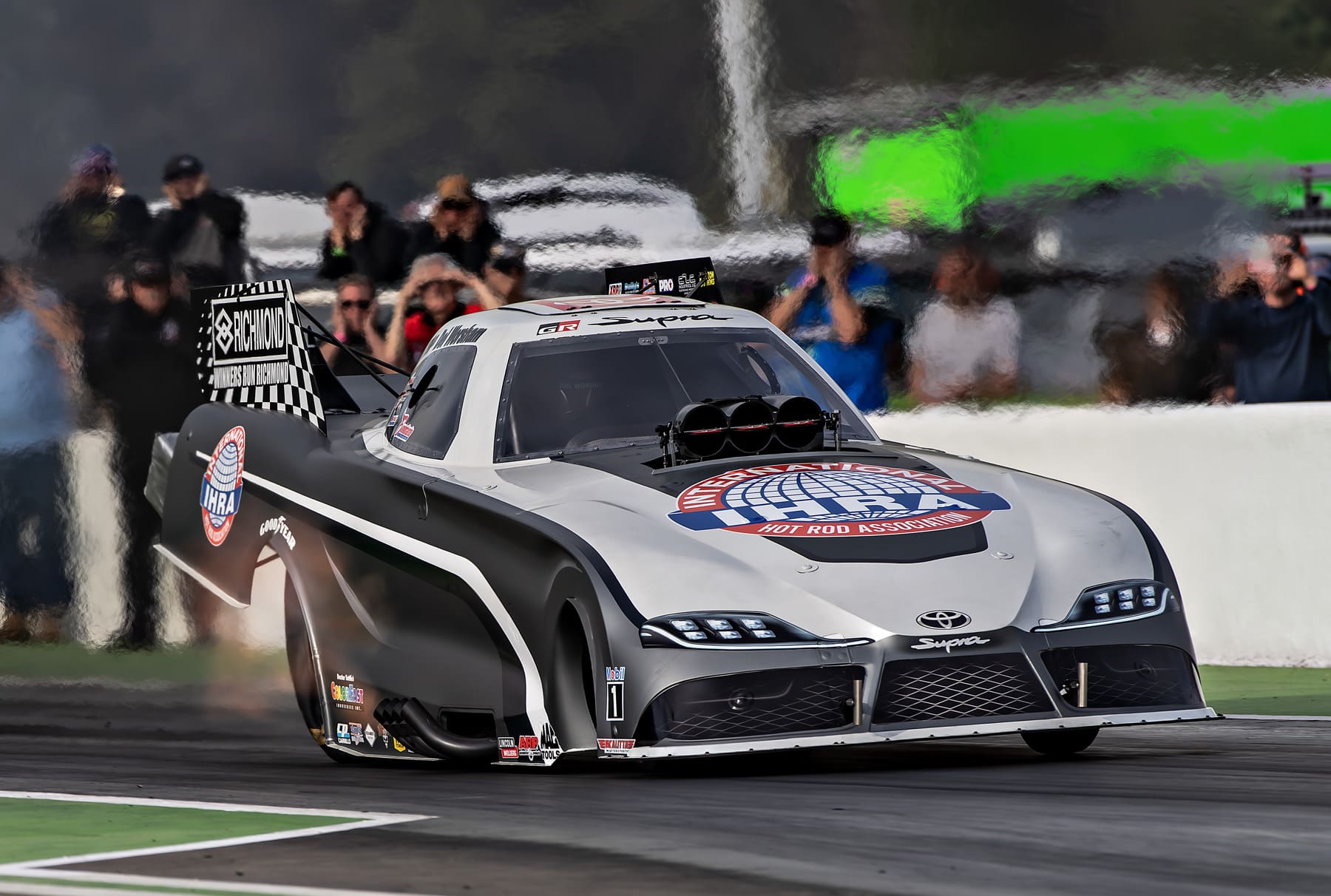
TOP FUEL FINAL 4 11 2026 IHRA RICHMOND TODD DZIADOSZ PHOTO 027

The real shame is what IHRA once represented.

IHRA was never supposed to be NHRA with a different first letter. It was the rebel, the place where somebody could tell the establishment to pound sand and then prove there was another way to do it.

It was Mountain Motor Pro Stock running seven seconds in 1980 and Pro Modified before Pro Modified became fashionable. It was a home for racers who didn’t need somebody else deciding whether they were major league.

IHRA has died enough deaths. By my count, it has been buried in the Pet Sematary so many times that Church ought to be a saber-toothed tiger by now.

Nobody needs to buy this crap-show again.

Nobody needs to dust off the logo, announce another return to glory, hire another management team or tell racers one more time that this time will be different. Let it rest.

IHRA was once too important to drag racing to keep doing this to its name.

Cuttell didn’t buy some meaningless collection of four letters and a trademark. He inherited Larry Carrier’s rebel sanctioning body, the place that gave racers another choice and wasn’t afraid to show NHRA there might be a better way to do something.

Now it’s dead again.

Then I saw the meme: “I stand with Darryl.”

They can but I’ll stand over here.

I’ll stand with the racers who spent money chasing a championship season that disappeared, the people still wondering about money they were promised and those who believed IHRA finally had a chance to become IHRA again.

I’ll stand with the people who remember what those four letters used to mean before “Return to Glory” became another promise somebody couldn’t keep.

Mostly, I’ll stand over here and mourn the final death of an old friend, with a red-hot anger that no bag of ice is ever going to cool down.

Share the Insights?

Click here to share the article.

ad space x ad space

ad space x ad space

Competition Plus Team

Since our inception, we have been passionately dedicated to delivering the most accurate, timely, and compelling content in the world of drag racing. Our readers depend on us for the latest news, in-depth features, expert analysis, and exclusive interviews that connect you to the sport’s pulse.

Sign up for our newsletters and email list.

This field is for validation purposes and should be left unchanged.
Name

IN THE END, CUTTELL DIDN’T REJUVENATE IHRA – HE FINISHED IT

IHRA PUTS TRACKS UP FOR AUCTION – SEE WHICH TRACKS ON THE BLOCK

Somewhere out there in this drag racing world, Billy Meyer is smiling ear to ear.

Meyer, who purchased the IHRA in 1988, turned a bid of bravado into one of the worst efforts to take drag racing to the next level. He made a lot of changes, angered a lot of people and somehow managed to anger the one person he could least afford to offend, Mother Nature.

It rained so much that the IHRA moniker became “It Has Rained Again.” For nearly four decades, Meyer has carried the distinction of presiding over arguably the biggest failure in IHRA history.

Billy, you’re off the hook.

If Meyer thought he was the worst failure in IHRA history, Darryl Cuttell essentially said, “Hold my beer.” Meyer isn’t even a close second.

There’s a difference between Meyer and Cuttell, though. Meyer failed miserably, but I never doubted he wanted to succeed for the betterment of drag racing.

After Larry Carrier sold it, IHRA had strong years under leaders like Ted Jones and Bill Bader. Those weren’t failures. They were proof that IHRA could survive, prosper and provide a legitimate alternative when the right people were running it.

There were failures along the way. The Prolong era was one, and the IHRA eventually stumbled badly with Aaron Polburn and Skooter Peaco running the show.

But even during IHRA’s worst stretches before this one, I never came away believing the whole exercise was about one man’s need to prove how important he was.

I cannot say the same about what just happened.
editorial cropped 01

I believe too much of this became about Cuttell proving he could build something big enough to make everybody acknowledge him, particularly NHRA.

Nice try, Don Quixote.

The problem with tilting at windmills is eventually somebody has to pay for the horse. In this case, the racers did.

IHRA promised millions in purses, $200,000 championships for Top Fuel and Funny Car, six-figure payouts in other professional categories and a Triple Crown carrying the possibility of a $1 million bonus.

For the independent racer, it was hard not to pay attention. IHRA was offering the kind of money that could make racing at that level worthwhile, and plenty of racers bought into the promise.

Then races started disappearing, and eventually the professional season disappeared with them.

Gary Pritchett, Del Worsham, Jason Harris and Johnny Pluchino were left leading championships that ended without actually ending. Racers who competed at the Triple Crown were left waiting on purse money.

One racer told me having the season taken out from under his team was “heartbreaking.”

And that’s where the bags of ice and great meals become meaningless.
Don’t misunderstand me. The racers appreciated them, and IHRA received plenty of deserved praise for how competitors were treated at the track.

But you know what racers wanted more?

A race series they could count on.

You can’t put ice in the fuel tank, and a steak dinner doesn’t pay for connecting rods. That’s what angers me the most because IHRA deserved better than this.
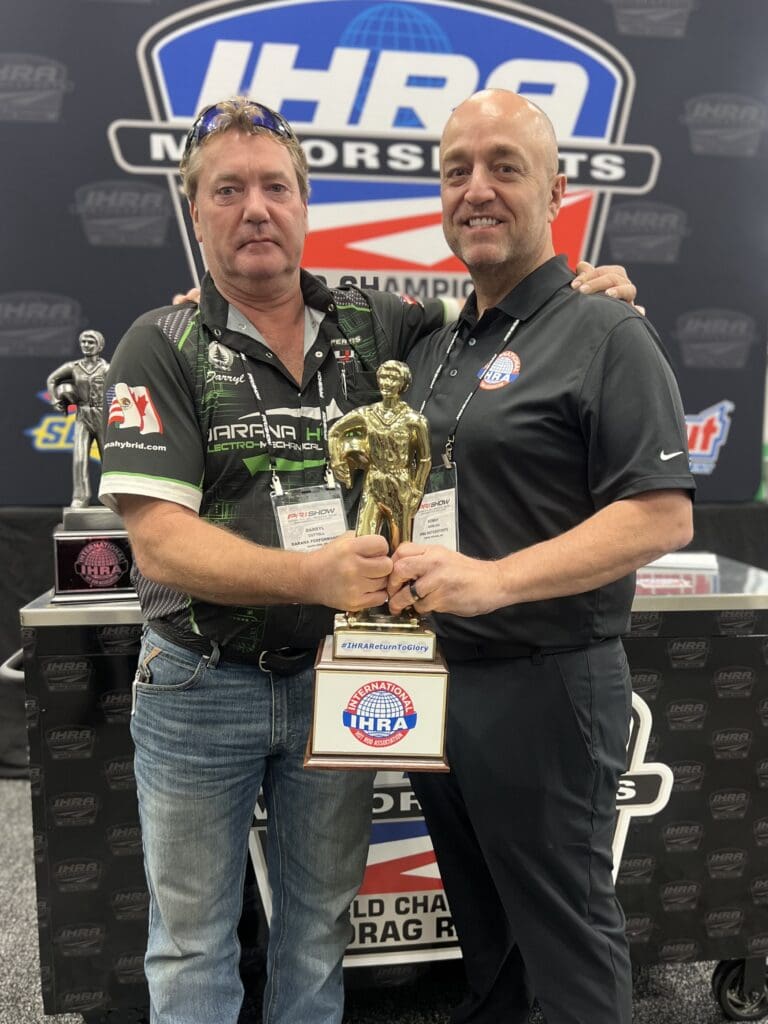
cuttell nowling ihra

Larry Carrier and Tennessee state Sen. Carl Moore created IHRA because Carrier couldn’t get along with NHRA’s Wally Parks or AHRA’s Jim Tice. His response was about as drag racer as it gets: If I can’t race with you, I’ll build my own sanctioning body.

And that’s exactly what he did.

IHRA became successful because it dared to be different. It raced different classes, conducted events differently and wasn’t afraid to try something before the other guy did.

Mountain Motor Pro Stock grew there. Pro Modified became a professional category there, and it was IHRA in 1974 that believed Winston’s involvement in drag racing shouldn’t stop with them. IHRA believed Winston needed NHRA, too.

IHRA helped open the door for Winston to expand its drag racing involvement to NHRA. Eventually, NHRA ended up with the whole pie.

It used to kill me when NHRA announcers referred to racers who had succeeded in IHRA as having done it over on the “I” side, almost as if that made the accomplishment something less.

I remember asking one of them, “Are you talking about the same ‘I’ whose race procedures and classes you keep adopting?”

Yeah, that’s the one, and that’s the IHRA Cuttell purchased.

For a while, I thought he might actually pull it off.

When IHRA started buying tracks, spending money like a drunken sailor and making noise, NHRA suddenly had something it hadn’t had in a long time, somebody forcing it to look over its shoulder. I thought that was good for drag racing.
Ron Capps said in an interview at Rockingham that he believed the IHRA debacle helped “pivot” NHRA toward places it might not have considered five years earlier. He pointed to Michigan, South Georgia and Rockingham and said the Maple Grove situation helped force NHRA’s hand.

There’s some irony in Cuttell spending a fortune trying to build a competitor to NHRA and perhaps accomplishing more by making NHRA stronger.

The Maple Grove announcement was probably the high-water mark. IHRA made a huge splash by purchasing one of drag racing’s most historic facilities. Virginia Motorsports Park was another acquisition, as was Piedmont Dragway, and each move made this thing look more legitimate.

The announcements kept coming, and so did the people.

Kenny Nowling, Rich Schaefer, Alan Reinhart, Christian Byrd, Josh Peake and Scott Woodruff were among those attached to the operation at different points. The organizational chart changed so often that eventually you needed a scorecard to know who was still there.

Then Richard Freeman traveled to Ohio looking at IHRA rolling assets and ended up having to explain that he wasn’t buying the sanctioning body after racers started contacting him about purse money.

Freeman summed up the situation better than I can.

“Yeah, that deal’s a total cluster f***.”

There will still be Cuttell apologists, including racers who were treated well and people who desperately wanted this thing to succeed. Count me among those who wanted it to succeed.

What I cannot understand is the double standard.

Cuttell got a pass from a lot of people over the whole Elon Musk fiasco. As ridiculous as that episode became, there were people willing to look past it and wait for the next announcement.

Kenny Nowling never received that kind of grace.

When an ADRL event ended with Nowling unable to pay the purse, he said someone who had committed the money reneged on the deal. Nobody wanted to hear it.

Nowling was crucified, his standing in the sport was shredded and the ADRL died a death every bit as ugly, maybe uglier, than what we’ve watched happen to IHRA.

I’m not rewriting Kenny Nowling’s history or absolving him of anything. I’m asking why the standard changed.

If not paying racers was enough to make Nowling a pariah, why wasn’t everybody held to the same standard?
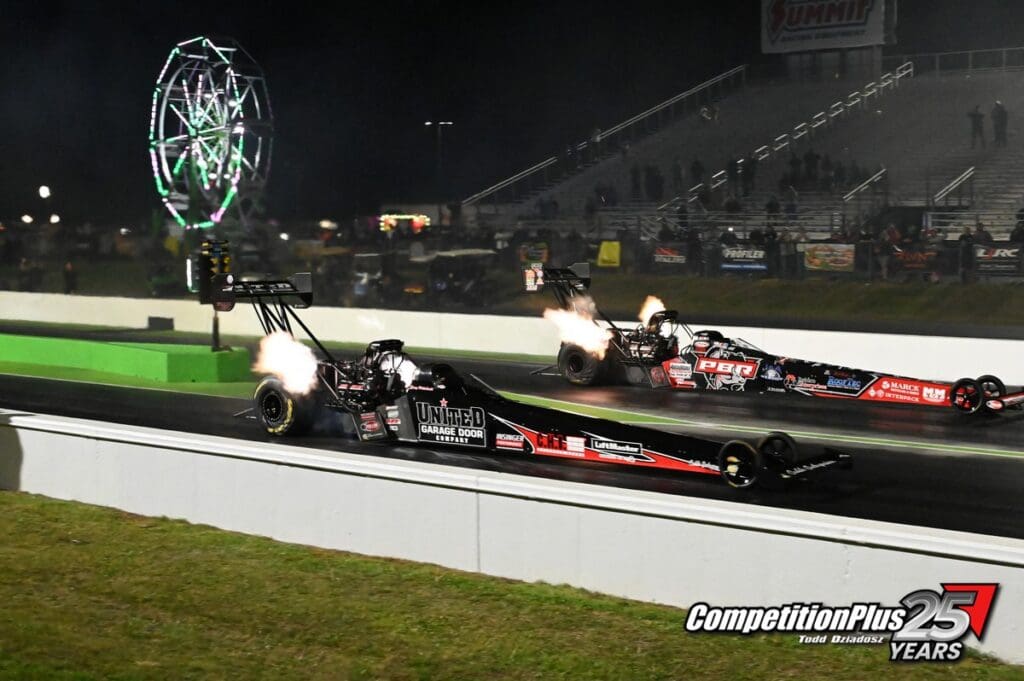
TOP FUEL FINAL 4 11 2026 IHRA RICHMOND TODD DZIADOSZ PHOTO 027

The real shame is what IHRA once represented.

IHRA was never supposed to be NHRA with a different first letter. It was the rebel, the place where somebody could tell the establishment to pound sand and then prove there was another way to do it.

It was Mountain Motor Pro Stock running seven seconds in 1980 and Pro Modified before Pro Modified became fashionable. It was a home for racers who didn’t need somebody else deciding whether they were major league.

IHRA has died enough deaths. By my count, it has been buried in the Pet Sematary so many times that Church ought to be a saber-toothed tiger by now.

Nobody needs to buy this crap-show again.

Nobody needs to dust off the logo, announce another return to glory, hire another management team or tell racers one more time that this time will be different. Let it rest.

IHRA was once too important to drag racing to keep doing this to its name.

Cuttell didn’t buy some meaningless collection of four letters and a trademark. He inherited Larry Carrier’s rebel sanctioning body, the place that gave racers another choice and wasn’t afraid to show NHRA there might be a better way to do something.

Now it’s dead again.

Then I saw the meme: “I stand with Darryl.”

They can but I’ll stand over here.

I’ll stand with the racers who spent money chasing a championship season that disappeared, the people still wondering about money they were promised and those who believed IHRA finally had a chance to become IHRA again.

I’ll stand with the people who remember what those four letters used to mean before “Return to Glory” became another promise somebody couldn’t keep.

Mostly, I’ll stand over here and mourn the final death of an old friend, with a red-hot anger that no bag of ice is ever going to cool down.


Picture of John Doe

John Doe

Lorem ipsum dolor sit amet consectetur adipiscing elit dolor

More Posts

Send Us A Message

Picture of Bobby Bennett
Bobby Bennett
Thank you for joining us on this journey. Your support and trust inspire us every day to deliver the best in drag racing journalism. We are excited about the future and look forward to continuing to serve you with the same dedication and passion that has defined CompetitionPlus.com from the very beginning.

Don’t miss these other exciting stories!

Explore more action packed posts on Competition Plus, where we dive into the latest in Drag Racing News. Discover a range of topics, from race coverage to in-depth interviews, to keep you informed and entertained.