It is becoming the same old story in Pro Stock, especially over the last three seasons. Greg Anderson is the aging gunfighter surrounded by younger gunslingers who, by his own admission, are often quicker on the draw.
Then the smoke clears, and Anderson is still standing. More often than not, he is smiling because somewhere along the way he found another way to hustle them.
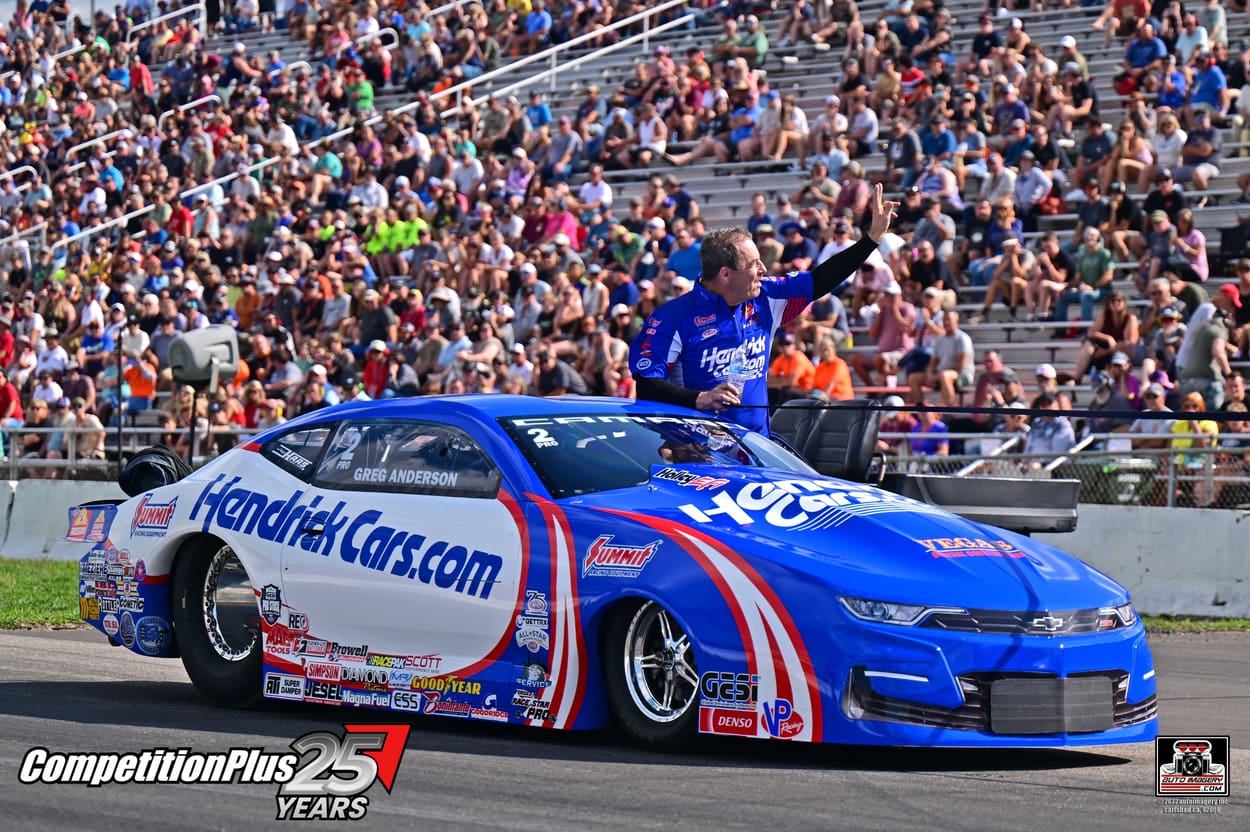
Sunday at his old stomping grounds of Brainerd International Raceway, Anderson came out guns blazing and drove to career victory No. 116, chasing down first-time finalist Chris Vang to win the NHRA Brainerd Nationals for the second consecutive year.
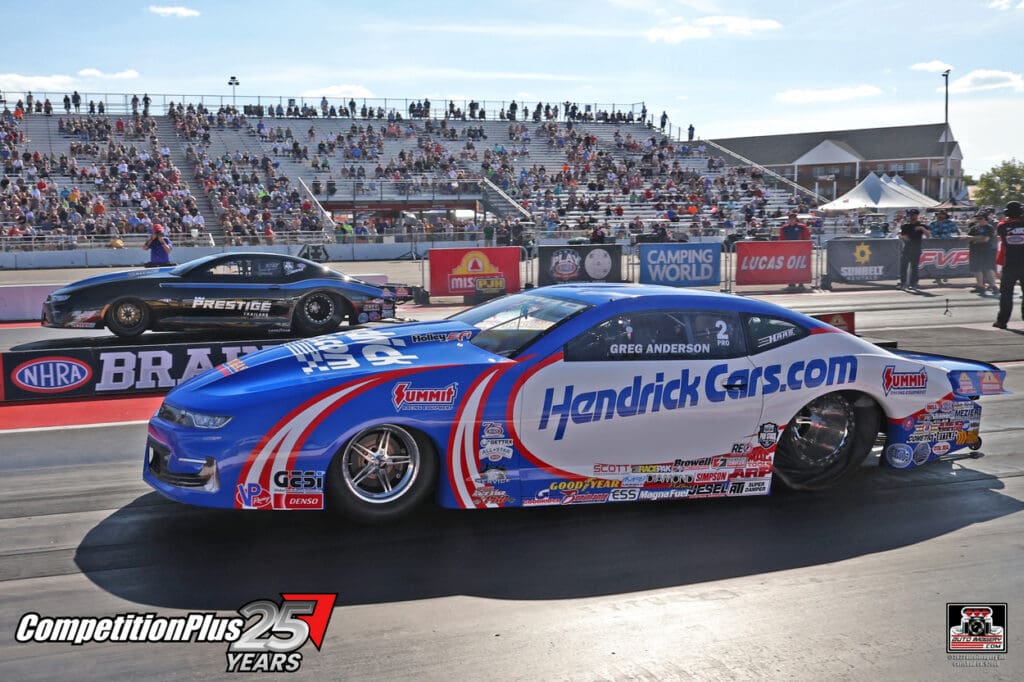
Anderson went 6.584 seconds at 208.17 mph in his HendrickCars.com Chevrolet Camaro, overcoming Vang’s starting-line advantage and pulling ahead before the finish. It was Anderson’s fourth victory of the season and fifth at Brainerd, the most by any Pro Stock driver at the Minnesota facility.
There was considerably more at stake than another trophy. Anderson arrived as the Pro Stock points leader and left with an 85-point advantage over KB Titan Racing teammate and reigning world champion Dallas Glenn with only the U.S. Nationals remaining in the regular season.
Glenn qualified No. 1 but went out in the opening round, opening a door Anderson rarely leaves unattended. Anderson beat Mason McGaha, Troy Coughlin Jr. and Greg Stanfield before meeting Vang in the final.
Vang did exactly what the young guns have increasingly done against Anderson. He left first.
Anderson did what Anderson has been doing for decades. He hunted him down.
The result carried an added weight because Brainerd isn’t simply another stop on Anderson’s schedule. Long before the championships, national-event trophies and Pro Stock records, this was where the foundation was poured.
“The world knows this is the place where it all started for me. I wouldn’t be a Pro Stock racer today if it wasn’t for this place and all the people around here,” Anderson said. “My father and John Hagen gave me my start in Pro Stock. It’s been a special place to me since the first time I walked on the grounds.”
That history explains why Anderson still talks about winning at Brainerd differently than he does most tracks. For someone with 116 national-event victories, finding one that still feels different is no small thing.
“It’s pretty cool to win here and apparently have the record for most wins,” Anderson said. “This place has everything. It’s a great, great event. The prestige of this one never, ever goes away. It’s certainly at the top of my list, and I think it should be at the top of a lot of people’s lists.”
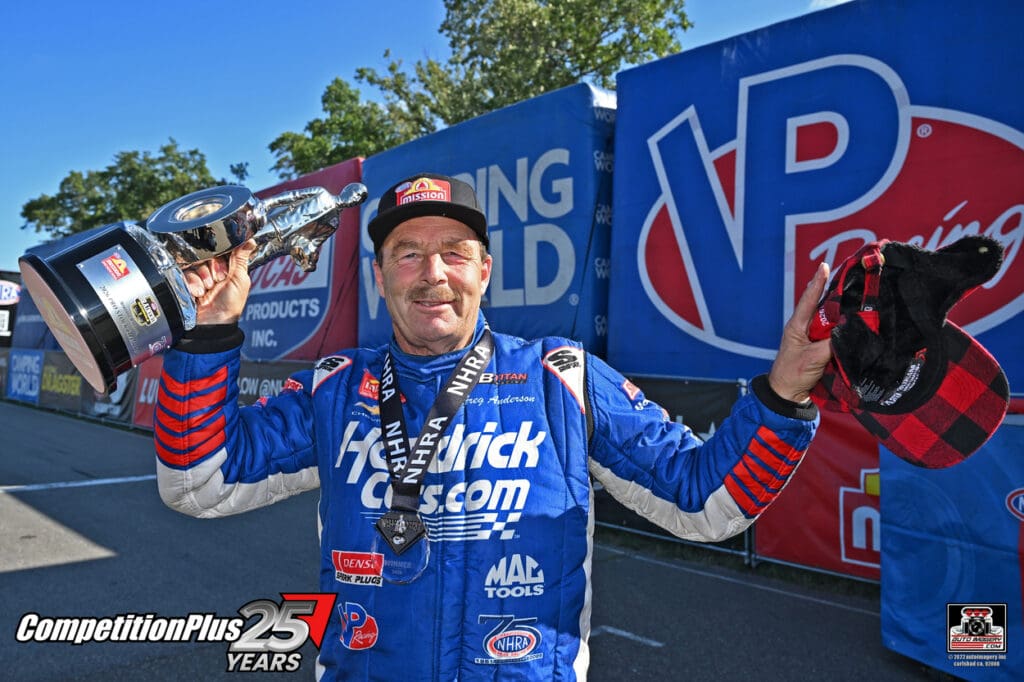
Anderson has spent much of the last several seasons reminding everyone that age has done little to diminish his ability to win races. If anything, the changing face of Pro Stock has given him another challenge to solve.
Glenn has become one of the class’s most consistent performers. Drivers such as Aaron Stanfield, Troy Coughlin Jr., Erica Enders and now newcomers such as Vang have made reaction times and small margins increasingly important.
Anderson knows the equation has changed. He also knows experience still counts when four rounds have to be assembled on the same afternoon.
Brainerd became another example. Anderson was not handed the race when Glenn went out early, and Vang didn’t reach his first final by accident.
Vang defeated Matt Latino, Jeg Coughlin Jr. and rookie Cody Anderson to earn his first shot at an NHRA national-event trophy. By the time he reached the final, he had already put together the best Sunday of his young Pro Stock career.
Then he drew the guy who has been doing this since many of today’s younger drivers were kids.
Vang got the first move, but Anderson’s Camaro had enough to erase the advantage and turn the finish line in his favor. In a class routinely decided by thousandths of a second, the veteran once again found enough.
There is an irony to Anderson’s place in today’s Pro Stock landscape. He has spent years talking about younger drivers being sharper on the starting line, yet the trophies keep piling up on his side of the pit.
The younger drivers may bring quicker reflexes, fresh approaches and fewer miles on their odometers. Anderson counters with decades of knowing how races develop, how weekends turn and how to take advantage when an opponent leaves an opening.
That ability became particularly valuable Sunday when Glenn’s early departure changed the points picture. Anderson had three rounds remaining after Glenn was eliminated, and he converted every one of them into additional separation.
The 85-point margin heading to Indianapolis now gives Anderson a substantial advantage in the regular-season championship chase. The U.S. Nationals offers increased points, so nothing is settled, but Anderson gave himself considerably more breathing room than he had when Brainerd began.
For a driver who has made a career out of surviving one generation of challengers after another, the current battle has a familiar look. The names change, the reaction times get tighter and another crop of young racers comes along believing this might finally be the moment the old gunfighter gets pushed aside.
Anderson keeps answering them with win lights.
“To come out on top is just an incredible feeling. It never gets old, and I hope it never does,” Anderson said. “I treat every one like it’s the first because you never know when the last one is going to be the last. They’re all special. I hope this one wasn’t the last, but I’m going to enjoy the hell out of this one tonight.”