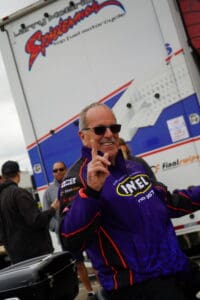
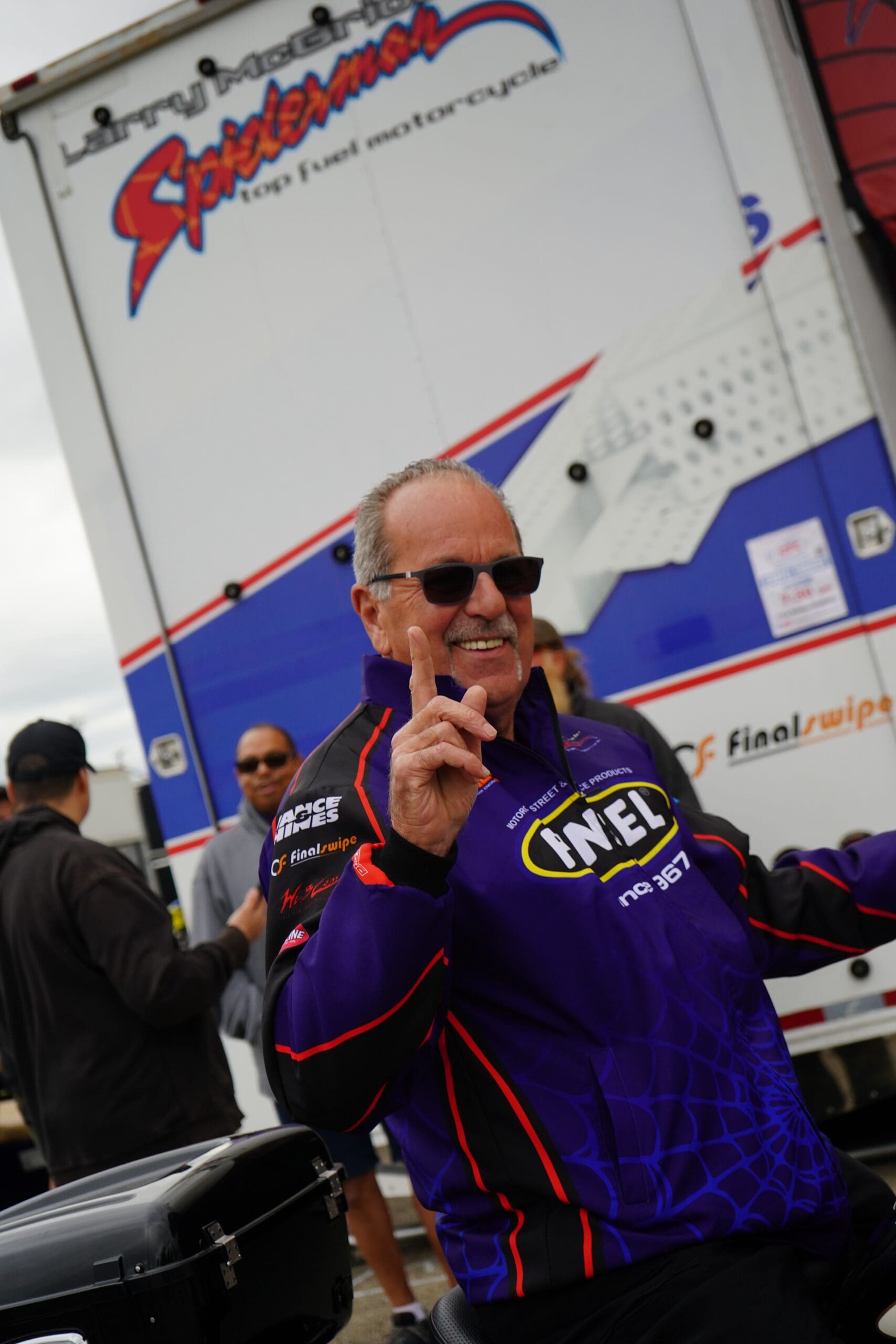

Larry McBride has spent nearly five decades working up to making passes at more than 250 mph, but the hardest thought he has faced since crashing at Darana Raceway has nothing to do with speed. For the first time in his career, the winningest rider in Top Fuel Motorcycle history has allowed himself to consider that the last run might already be behind him.

“It could be the last run in competition. It very well could be,” McBride said. “I sure hope not.”

If that sounds like retirement, it isn’t. McBride answered that question just as quickly.

“Yes, sir. That’s my plans right now,” he said when asked if he intends to race again.

The uncertainty isn’t whether he wants another chance. It’s not so much whether his body will afford that opportunity but more if the landscape of sport will give him the chance.

McBride is still recovering from injuries suffered in the crash. An MRI was ordered after lingering shoulder pain refused to subside, though doctors believe the problem may be severe bone bruising rather than structural damage requiring surgery.

“They’re really thinking it’s just deep bone bruising is what they’re thinking it is,” McBride said. “Because some days I can lift my arm better than other days, but it just really aches at night. You know how when you lay down, everything’s quiet, right? That’s when the pain, that’s when it really hurts. You can’t get comfortable. Intense. I’m not sleeping very well.”

The shoulder is one recovery. The class McBride has devoted his life to is facing another.

For years, Top Fuel Motorcycle found a national home under the IHRA banner. With the sanctioning body’s future in doubt, McBride sees a class suddenly searching for a place to race.

“We’re kind of like Mountain Motor Pro Stock car, the Fuel Altereds,” McBride said. “We have no home right now.”

The uncertainty extends well beyond race weekends. McBride’s livelihood depends on racers continuing to compete because the parts business that has supported him for years depends on motorcycles wearing out components and teams buying replacements.

“If these other guys with these other bikes ain’t racing, they’re not tearing up parts and I’m not selling stuff,” McBride said.

It is the side of drag racing most fans never consider. When a class loses races, manufacturers lose customers, racers lose incentive to invest and the entire ecosystem begins shrinking one team at a time.

McBride isn’t ready to concede that’s where Top Fuel Motorcycle is headed.

McBride said conversations with former NHRA competition executive Ned Walliser, who remains involved with the sanctioning body in an advisory role, have convinced him there is still a path back if the class can deliver the sponsorship necessary to justify its return.

“There are definitely other avenues,” McBride said. “You’ve got to bring a class sponsor.”

McBride emphasized NHRA has made no promises. His optimism comes from discussions about what would be required rather than any commitment that the motorcycles will return.

“I’ve talked with Ned at NHRA,” McBride said. “If I was to come up with a class sponsor, I didn’t get told this, but I think we could go back. That’s just my opinion, right?”

Until then, exhibition appearances remain an option, but not one McBride wants to build a future around after 48 years in the sport.

“I’m really not interested in doing match races and stuff like that,” McBride said. “I’ve done that. I’ve been doing it 48 years and I’ve done been through that part.”
McBride also refuses to place all of the blame on IHRA owner Darryl Cuttell. He believes Cuttell genuinely wanted to improve the sport, even if the business model ultimately failed.

“I’m not one of them haters to hate on Darryl,” McBride said. “I’m just not going to do that. That’s just not my nature.”

The next few months will determine whether McBride’s shoulder heals enough to race again. They may also determine whether Top Fuel Motorcycle finds another national stage before one of its greatest champions is forced to accept that his final pass wasn’t his decision after all.

“I’ve worked so hard to be able to get eight bikes to a race, and we finally do it, and unfortunately it just didn’t work out,” McBride said. “And I hate it.”


Share the Insights?

Click here to share the article.

ad space x ad space

ad space x ad space

Competition Plus Team

Since our inception, we have been passionately dedicated to delivering the most accurate, timely, and compelling content in the world of drag racing. Our readers depend on us for the latest news, in-depth features, expert analysis, and exclusive interviews that connect you to the sport’s pulse.

Sign up for our newsletters and email list.

This field is for validation purposes and should be left unchanged.
Name

LARRY McBRIDE WONDERS IF HIS LAST PASS IS ALREADY BEHIND HIM

Larry McBride has spent nearly five decades working up to making passes at more than 250 mph, but the hardest thought he has faced since crashing at Darana Raceway has nothing to do with speed. For the first time in his career, the winningest rider in Top Fuel Motorcycle history has allowed himself to consider that the last run might already be behind him.

“It could be the last run in competition. It very well could be,” McBride said. “I sure hope not.”

If that sounds like retirement, it isn’t. McBride answered that question just as quickly.

“Yes, sir. That’s my plans right now,” he said when asked if he intends to race again.

The uncertainty isn’t whether he wants another chance. It’s not so much whether his body will afford that opportunity but more if the landscape of sport will give him the chance.

McBride is still recovering from injuries suffered in the crash. An MRI was ordered after lingering shoulder pain refused to subside, though doctors believe the problem may be severe bone bruising rather than structural damage requiring surgery.

“They’re really thinking it’s just deep bone bruising is what they’re thinking it is,” McBride said. “Because some days I can lift my arm better than other days, but it just really aches at night. You know how when you lay down, everything’s quiet, right? That’s when the pain, that’s when it really hurts. You can’t get comfortable. Intense. I’m not sleeping very well.”

The shoulder is one recovery. The class McBride has devoted his life to is facing another.

For years, Top Fuel Motorcycle found a national home under the IHRA banner. With the sanctioning body’s future in doubt, McBride sees a class suddenly searching for a place to race.

“We’re kind of like Mountain Motor Pro Stock car, the Fuel Altereds,” McBride said. “We have no home right now.”

The uncertainty extends well beyond race weekends. McBride’s livelihood depends on racers continuing to compete because the parts business that has supported him for years depends on motorcycles wearing out components and teams buying replacements.

“If these other guys with these other bikes ain’t racing, they’re not tearing up parts and I’m not selling stuff,” McBride said.

It is the side of drag racing most fans never consider. When a class loses races, manufacturers lose customers, racers lose incentive to invest and the entire ecosystem begins shrinking one team at a time.

McBride isn’t ready to concede that’s where Top Fuel Motorcycle is headed.

McBride said conversations with former NHRA competition executive Ned Walliser, who remains involved with the sanctioning body in an advisory role, have convinced him there is still a path back if the class can deliver the sponsorship necessary to justify its return.

“There are definitely other avenues,” McBride said. “You’ve got to bring a class sponsor.”

McBride emphasized NHRA has made no promises. His optimism comes from discussions about what would be required rather than any commitment that the motorcycles will return.

“I’ve talked with Ned at NHRA,” McBride said. “If I was to come up with a class sponsor, I didn’t get told this, but I think we could go back. That’s just my opinion, right?”

Until then, exhibition appearances remain an option, but not one McBride wants to build a future around after 48 years in the sport.

“I’m really not interested in doing match races and stuff like that,” McBride said. “I’ve done that. I’ve been doing it 48 years and I’ve done been through that part.”

McBride also refuses to place all of the blame on IHRA owner Darryl Cuttell. He believes Cuttell genuinely wanted to improve the sport, even if the business model ultimately failed.

“I’m not one of them haters to hate on Darryl,” McBride said. “I’m just not going to do that. That’s just not my nature.”

The next few months will determine whether McBride’s shoulder heals enough to race again. They may also determine whether Top Fuel Motorcycle finds another national stage before one of its greatest champions is forced to accept that his final pass wasn’t his decision after all.

“I’ve worked so hard to be able to get eight bikes to a race, and we finally do it, and unfortunately it just didn’t work out,” McBride said. “And I hate it.”

Picture of John Doe

John Doe

Lorem ipsum dolor sit amet consectetur adipiscing elit dolor

More Posts

Send Us A Message

Picture of Bobby Bennett
Bobby Bennett
Thank you for joining us on this journey. Your support and trust inspire us every day to deliver the best in drag racing journalism. We are excited about the future and look forward to continuing to serve you with the same dedication and passion that has defined CompetitionPlus.com from the very beginning.

Don’t miss these other exciting stories!

Explore more action packed posts on Competition Plus, where we dive into the latest in Drag Racing News. Discover a range of topics, from race coverage to in-depth interviews, to keep you informed and entertained.