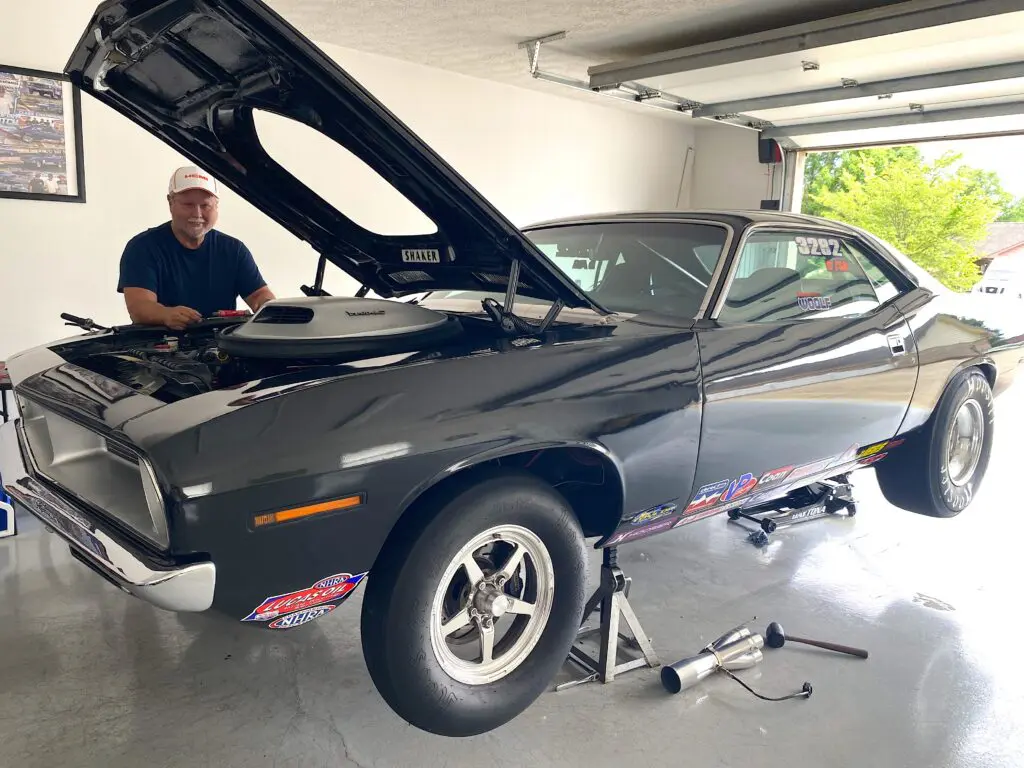
Mark Woolf has been into Mopar muscle for more decades than he can count.

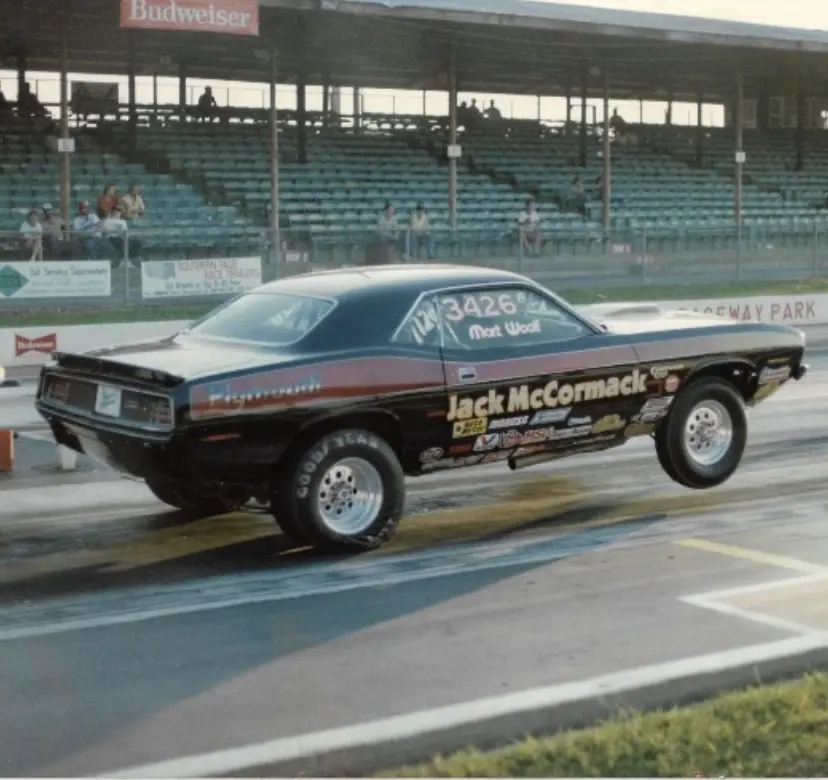
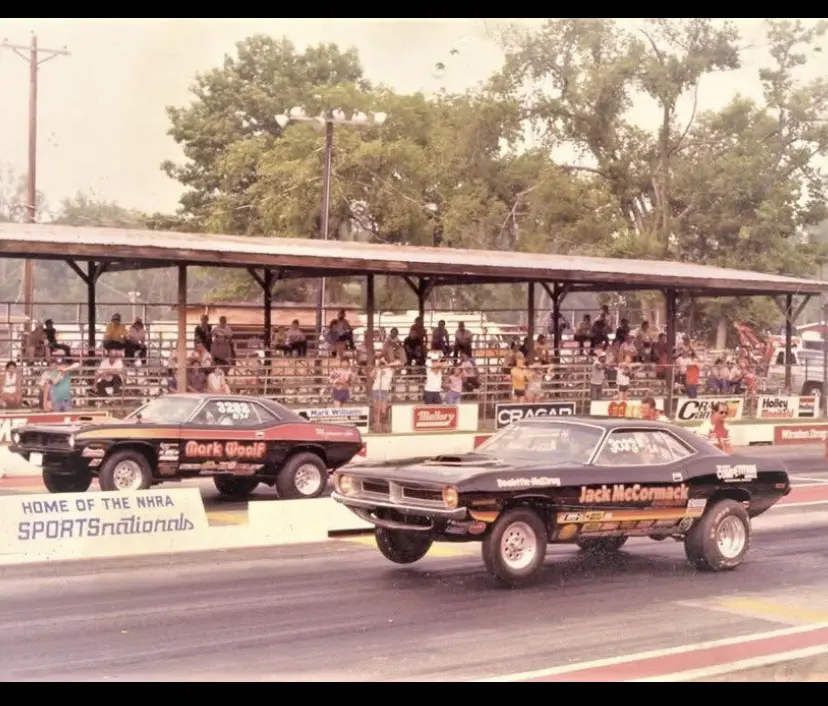
This Indianapolis resident has been at virtually every NHRA U.S. Nationals drag race for over five decades, and it’s no mystery why he’s been hitting the drag strip in his familiar Plymouth ‘Cuda he’s had since Nixon was president.

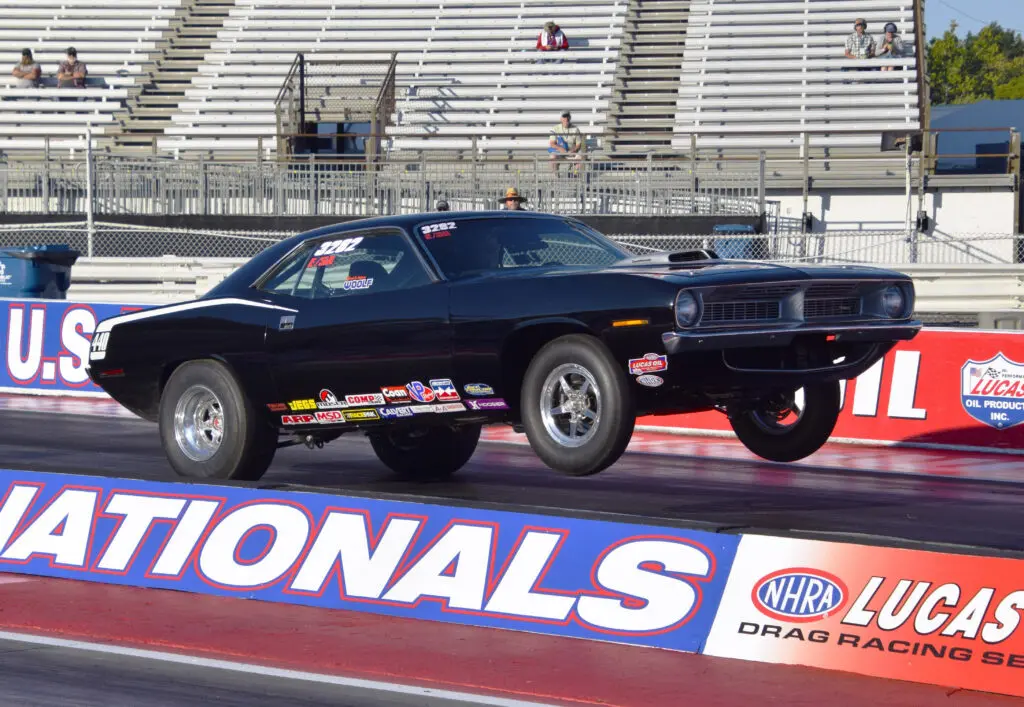
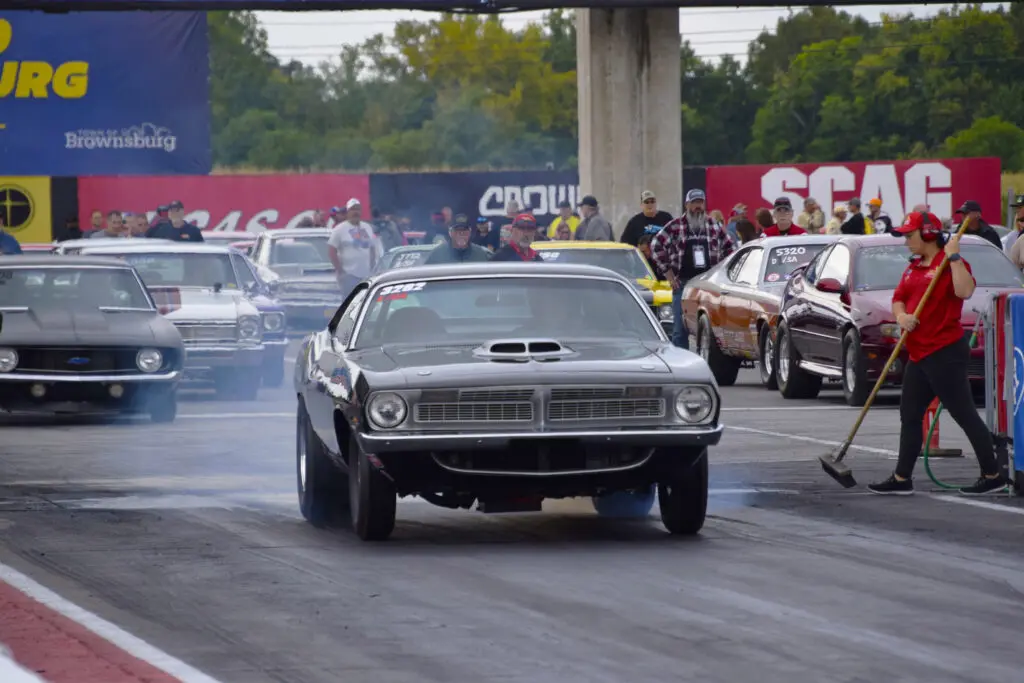
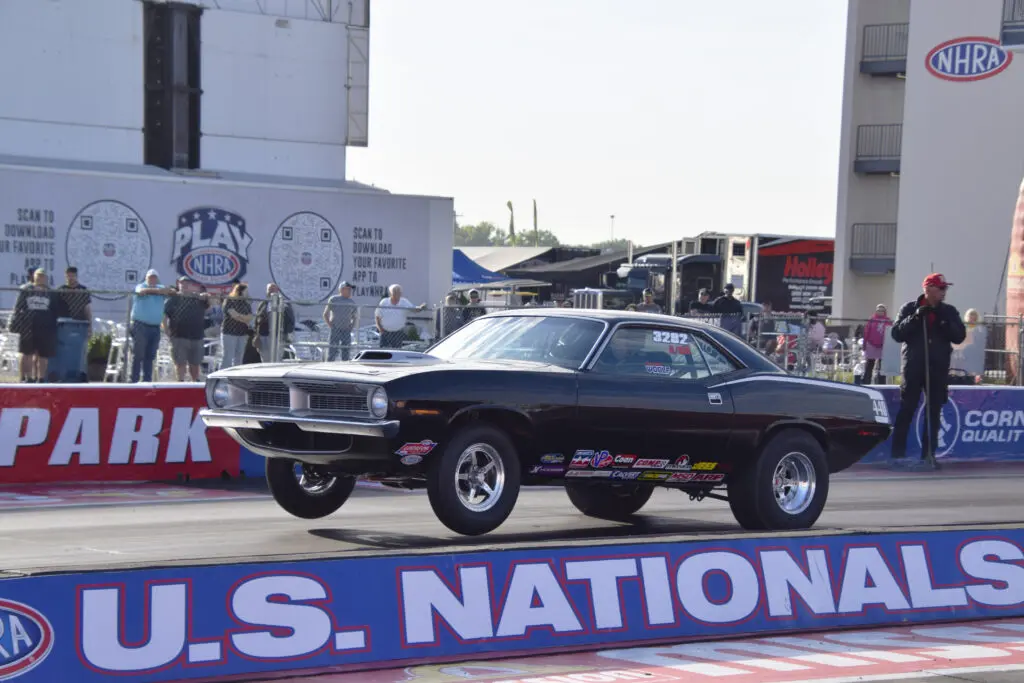
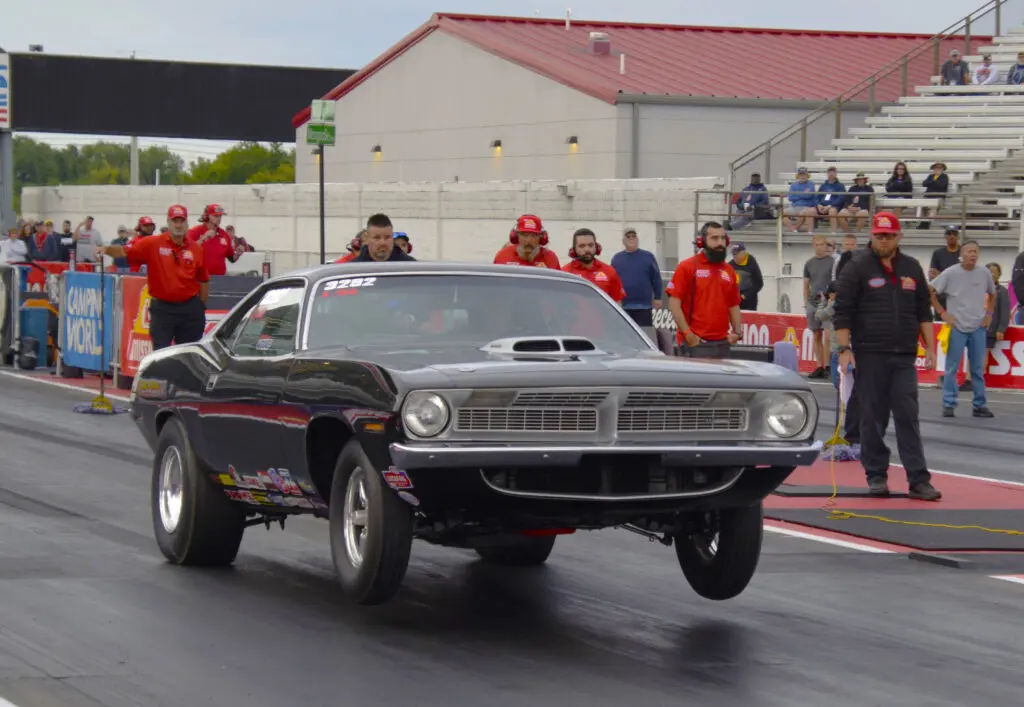
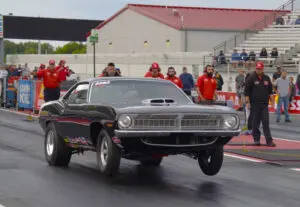
This passionate Mopar enthusiast was turned on to Dodge and Plymouth muscle cars at an early age, and for the past four-plus years, he and his stunning 1970 ‘Cuda have competed in NHRA’s super-competitive Stock Eliminator class. While Mark’s love affair with all things Mopar is not too uncommon, it’s his drive to compete and work harder than the next guy that has earned him a reputation among other racers.

“I was 12 years old in 1968, and the neighbors wanted to take my older brother to the U.S. Nationals. I asked if I could go along. They said they didn’t have room for me, and I cried like a baby, so my father said he would take me next year. So in 1969, my father took me to my first NHRA U.S. Nationals and the rest is history, and I’ve been there going ever since,” said Mark.

But there was much more that would leave an indelible stamp, as prior to the U.S. Nationals, back in the day of the factory wars, both Dodge and Plymouth Super Stock and Pro Stock teams would hold performance clinics and seminars at the local dealers. A young Mark hopped on his bike and rode over to Shadeland Dodge, which was only three blocks from his house, to check out a Dick Landy Dodge Performance/Safety clinic.

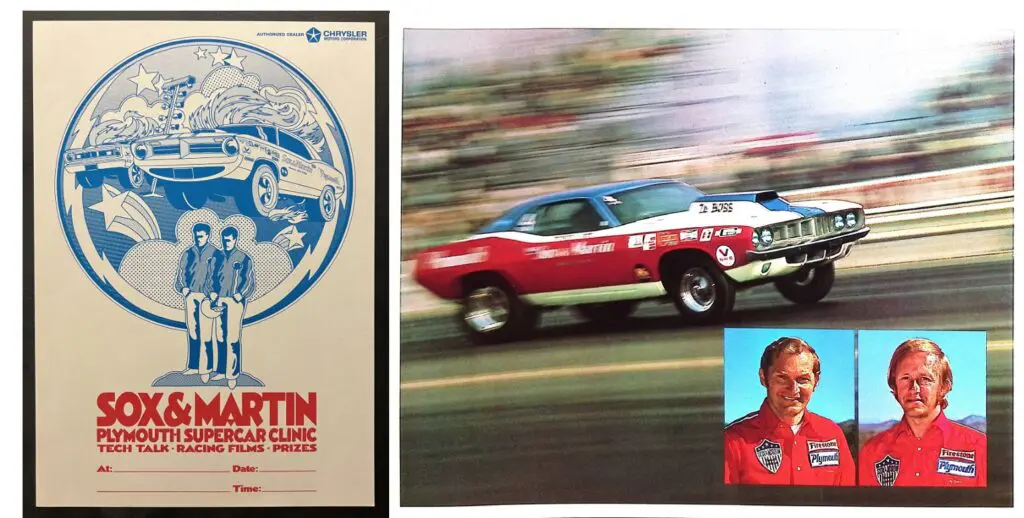
“I remember seeing Landy’s silver Super Stock HEMI® Dart and Charger. The cool paint jobs, shiny Cragar S/S mag wheels, and that big HEMI engine were seared into my memory banks. At that point, I became a Mopar guy,” reflected Mark. “My racing heroes were Don Garlits, Sox & Martin. It was fun for a 13-year-old boy to go to the races in the day and go to the dealers at night. My father even took me over to Hoosier Chrysler/Plymouth to see Sox & Martin and their Supercar Clinic around 1970.”

By the mid-1970s, the muscle car era was over, and used performance cars were cheap. For many teenagers with high-octane gas going through their veins, it was a rite of passage and something that was attainable.

“Back in 1974, I was going through the Auto Trader magazine and found a guy on the south side of Indianapolis who had a Lime Green AAR ‘Cuda for sale for $1,500. I purchased the car, which happened to be my first car. I was only a junior in high school and asked my father if he would co-sign, and he said, ‘Yes, on one condition, if you miss a payment, the car is gone.’ Well, as you can see, I never missed one,” smiled Mark.

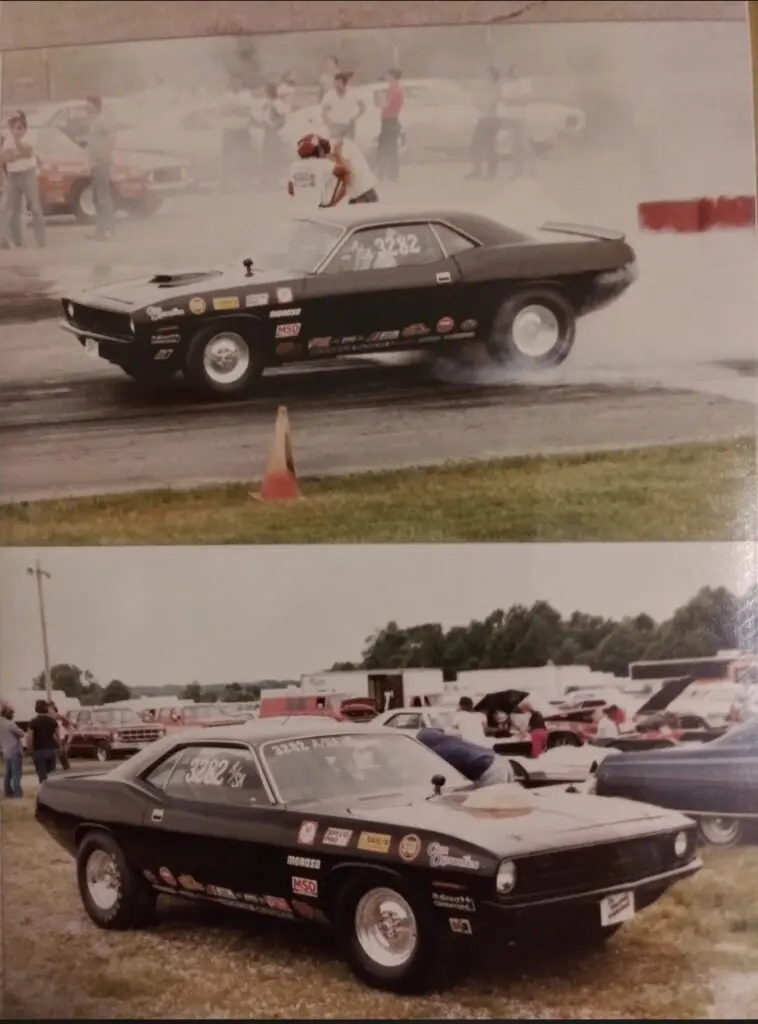
While the car originally started out as a street car, Mark drove it to school and work. “I was working at a Shell gas station/car wash at that time, making a whopping two dollars an hour. I did a little street racing and said, ‘Hey, this isn’t going to work. I need a race car,’ so I took it off the street in 1976,” noted Mark. “I started to build the ‘Cuda as a bracket car but later decided to turn it into a legal NHRA Stock Eliminator car.”

By 1978, Mark entered his first NHRA U.S. Nationals as a competitor racing in the A/Stock Automatic class with his ‘Cuda. He pitched the small-block for a 426 Street HEMI, the King Kong of Mopar engines. He was only 22 years old, still living at home, and recently unemployed.
“I had lost my job, so I asked my father if I could just take the summer off and finish my car, and after the U.S. Nationals, I would go back to work,” stated Mark. “So, I finished the car on my unemployment checks and went to the 1978 U.S. Nationals and competed.”

The reason Mark chose to race in Stock Eliminator is that it’s one of the highest levels of Sportsman drag racing. “My father was my biggest influence, and he always taught me, son, you’re only as good as the competition you race. So that is why I run Stock Eliminator, a great category. I’ve had the chance to rub elbows with the best in the sport. That’s why playing around on the streets or even bracket racing wasn’t going to get it for me. I had many people and friends who would tell me you’ll never be able to be successful at that. Well, I guess I proved them wrong by winning the 1986 NHRA Springnationals and being Class champ at the NHRA U.S. Nationals in 1987,” commented Mark.

While Mark’s ‘Cuda may have rolled off Chrysler’s Hamtramck Assembly Line with a 340 Six Barrel under the hood, he has raced his Plymouth with an assortment of engines over the past 40-plus years.

“I ran a 426 Street HEMI in the car from 1978 to 1989, but when I broke my last HEMI engine, it was time for an economical change,” grinned Mark. “A good friend of mine, Ron Browning, was driving a 1970 ‘Cuda with a 440 Six Barrel for Jack McCormack. After a few seasons, Ron (Browning) gave the car back to McCormack, but Jack said I could have the 440.”

After years of racing, Mark took a much-needed break from the endless grind of racing, but he never lost the desire and was going to get back out there on his terms.

“When I began running this engine combination back in the early 1990s, I was trying many things. Some worked, some didn’t, but over the decades I have learned a lot.”

And while Mark is really different from other racers in Stock Eliminator, he is at the mercy of the NHRA Tech Department and Stock/Super Stock Committee. The folks constantly monitor the on-track performance of many Stock Eliminator and Super Stock engine/body combinations.

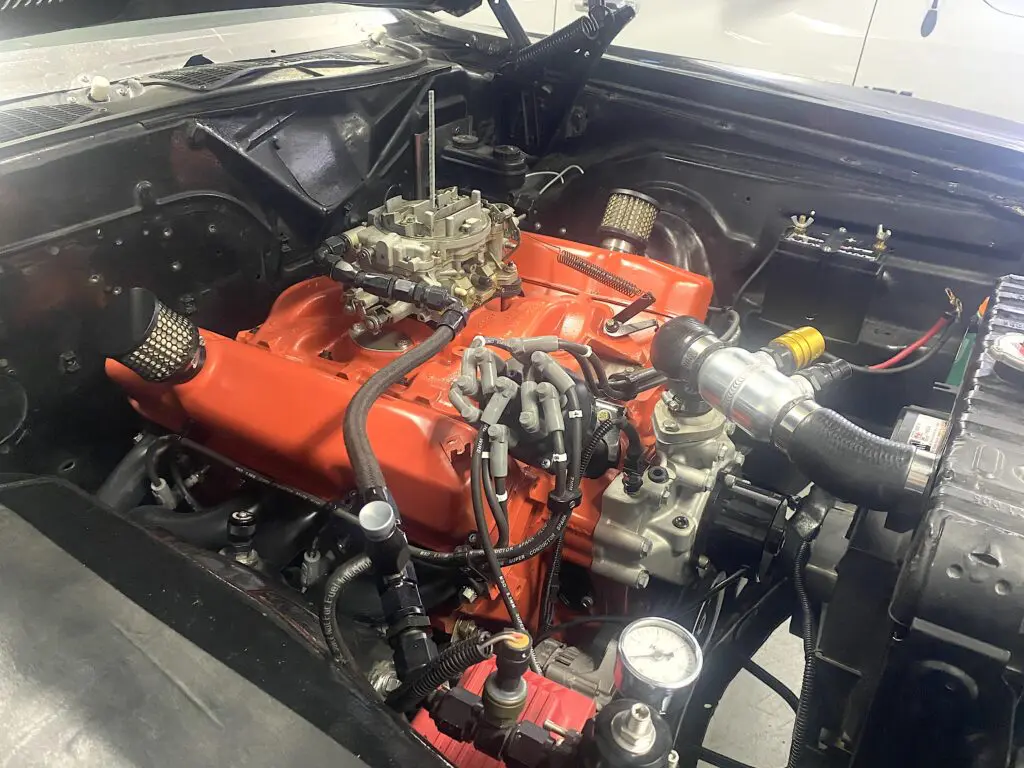
It’s a very common practice for the weight ratings and horsepower factors to frequently change during midseason to make sure one brand doesn’t have a competitive edge over another. Since the 440 Six Barrel/Six Pack combo has been beaten to death with an increased horsepower factor requiring the car to carry more weight (the enemy of any race car), Mark wanted to try something new and different and went with a single four-barrel setup on the 440

“A lot of things have changed in NHRA as far as the horsepower ratings, so as I brought my ‘Cuda back out, I wanted to go with the 440 four-barrel as it has a favorable rating at the moment,” noted Mark.

Mark’s 440 four-barrel ‘Cuda has run a quarter-mile ET of 10.48 seconds at 3,350 pounds. With the current D/SA index at 11.55 seconds, Mark is just getting warmed up.

When asked about the differences in racing a 440 four-barrel versus a 440 Six-Barrel, Mark had this to say: “With the four-barrel combo, you have to run different rear gearing, ignition timing, and other things to make the engine come alive. However, both 440 combos are great!”

Now in his late 60s and retired, Mark has more time to race his ‘Cuda.

“I run about eight races a year, mostly NHRA Lucas Oil Division points races and of course, the U.S. Nationals. But, if it wasn’t for my good friends and sponsors, I couldn’t do it. Guys like Jeff Welch, Ron Browning, and Mike Brammer deserve credit for all their help on the car and at the races. My engine builder, Jeff Taylor, who’s the best of the best, and my transmission guy, Rick Allison at AA Transmission, are all simply the best. Finally, if it wasn’t for my family, I wouldn’t be the person I am. My late father and mother greatly encouraged me, and today my wife Adrina, daughters Heather, Ashley, and granddaughters Blakeleigh and Oakleigh love and support my racing 100%.”

Mark’s 1970 ‘Cuda might be more docile these days than when he ran it with a HEMI almost a half-century ago, but even with a 440 under that Shaker hood, it’s still a ‘Woolf’ in wolves’ clothing!

Share the Insights?

Click here to share the article.

ad space x ad space

ad space x ad space

Competition Plus Team

Since our inception, we have been passionately dedicated to delivering the most accurate, timely, and compelling content in the world of drag racing. Our readers depend on us for the latest news, in-depth features, expert analysis, and exclusive interviews that connect you to the sport’s pulse.


Sign up for our newsletters and email list.

This field is for validation purposes and should be left unchanged.
Name

MARK WOOLF AND HIS 1970 PLYMOUTH ‘CUDA KEEP MOPAR HISTORY RACING

Mark Woolf has been into Mopar muscle for more decades than he can count.

This Indianapolis resident has been at virtually every NHRA U.S. Nationals drag race for over five decades, and it’s no mystery why he’s been hitting the drag strip in his familiar Plymouth ‘Cuda he’s had since Nixon was president.

This passionate Mopar enthusiast was turned on to Dodge and Plymouth muscle cars at an early age, and for the past four-plus years, he and his stunning 1970 ‘Cuda have competed in NHRA’s super-competitive Stock Eliminator class. While Mark’s love affair with all things Mopar is not too uncommon, it’s his drive to compete and work harder than the next guy that has earned him a reputation among other racers.

“I was 12 years old in 1968, and the neighbors wanted to take my older brother to the U.S. Nationals. I asked if I could go along. They said they didn’t have room for me, and I cried like a baby, so my father said he would take me next year. So in 1969, my father took me to my first NHRA U.S. Nationals and the rest is history, and I’ve been there going ever since,” said Mark.

But there was much more that would leave an indelible stamp, as prior to the U.S. Nationals, back in the day of the factory wars, both Dodge and Plymouth Super Stock and Pro Stock teams would hold performance clinics and seminars at the local dealers. A young Mark hopped on his bike and rode over to Shadeland Dodge, which was only three blocks from his house, to check out a Dick Landy Dodge Performance/Safety clinic.

“I remember seeing Landy’s silver Super Stock HEMI® Dart and Charger. The cool paint jobs, shiny Cragar S/S mag wheels, and that big HEMI engine were seared into my memory banks. At that point, I became a Mopar guy,” reflected Mark. “My racing heroes were Don Garlits, Sox & Martin. It was fun for a 13-year-old boy to go to the races in the day and go to the dealers at night. My father even took me over to Hoosier Chrysler/Plymouth to see Sox & Martin and their Supercar Clinic around 1970.”

By the mid-1970s, the muscle car era was over, and used performance cars were cheap. For many teenagers with high-octane gas going through their veins, it was a rite of passage and something that was attainable.
“Back in 1974, I was going through the Auto Trader magazine and found a guy on the south side of Indianapolis who had a Lime Green AAR ‘Cuda for sale for $1,500. I purchased the car, which happened to be my first car. I was only a junior in high school and asked my father if he would co-sign, and he said, ‘Yes, on one condition, if you miss a payment, the car is gone.’ Well, as you can see, I never missed one,” smiled Mark.
While the car originally started out as a street car, Mark drove it to school and work. “I was working at a Shell gas station/car wash at that time, making a whopping two dollars an hour. I did a little street racing and said, ‘Hey, this isn’t going to work. I need a race car,’ so I took it off the street in 1976,” noted Mark. “I started to build the ‘Cuda as a bracket car but later decided to turn it into a legal NHRA Stock Eliminator car.”

By 1978, Mark entered his first NHRA U.S. Nationals as a competitor racing in the A/Stock Automatic class with his ‘Cuda. He pitched the small-block for a 426 Street HEMI, the King Kong of Mopar engines. He was only 22 years old, still living at home, and recently unemployed.
“I had lost my job, so I asked my father if I could just take the summer off and finish my car, and after the U.S. Nationals, I would go back to work,” stated Mark. “So, I finished the car on my unemployment checks and went to the 1978 U.S. Nationals and competed.”

The reason Mark chose to race in Stock Eliminator is that it’s one of the highest levels of Sportsman drag racing. “My father was my biggest influence, and he always taught me, son, you’re only as good as the competition you race. So that is why I run Stock Eliminator, a great category. I’ve had the chance to rub elbows with the best in the sport. That’s why playing around on the streets or even bracket racing wasn’t going to get it for me. I had many people and friends who would tell me you’ll never be able to be successful at that. Well, I guess I proved them wrong by winning the 1986 NHRA Springnationals and being Class champ at the NHRA U.S. Nationals in 1987,” commented Mark.

While Mark’s ‘Cuda may have rolled off Chrysler’s Hamtramck Assembly Line with a 340 Six Barrel under the hood, he has raced his Plymouth with an assortment of engines over the past 40-plus years.

“I ran a 426 Street HEMI in the car from 1978 to 1989, but when I broke my last HEMI engine, it was time for an economical change,” grinned Mark. “A good friend of mine, Ron Browning, was driving a 1970 ‘Cuda with a 440 Six Barrel for Jack McCormack. After a few seasons, Ron (Browning) gave the car back to McCormack, but Jack said I could have the 440.”

After years of racing, Mark took a much-needed break from the endless grind of racing, but he never lost the desire and was going to get back out there on his terms.

“When I began running this engine combination back in the early 1990s, I was trying many things. Some worked, some didn’t, but over the decades I have learned a lot.”

And while Mark is really different from other racers in Stock Eliminator, he is at the mercy of the NHRA Tech Department and Stock/Super Stock Committee. The folks constantly monitor the on-track performance of many Stock Eliminator and Super Stock engine/body combinations.

It’s a very common practice for the weight ratings and horsepower factors to frequently change during midseason to make sure one brand doesn’t have a competitive edge over another. Since the 440 Six Barrel/Six Pack combo has been beaten to death with an increased horsepower factor requiring the car to carry more weight (the enemy of any race car), Mark wanted to try something new and different and went with a single four-barrel setup on the 440

“A lot of things have changed in NHRA as far as the horsepower ratings, so as I brought my ‘Cuda back out, I wanted to go with the 440 four-barrel as it has a favorable rating at the moment,” noted Mark.

Mark’s 440 four-barrel ‘Cuda has run a quarter-mile ET of 10.48 seconds at 3,350 pounds. With the current D/SA index at 11.55 seconds, Mark is just getting warmed up.

When asked about the differences in racing a 440 four-barrel versus a 440 Six-Barrel, Mark had this to say: “With the four-barrel combo, you have to run different rear gearing, ignition timing, and other things to make the engine come alive. However, both 440 combos are great!”

Now in his late 60s and retired, Mark has more time to race his ‘Cuda.

“I run about eight races a year, mostly NHRA Lucas Oil Division points races and of course, the U.S. Nationals. But, if it wasn’t for my good friends and sponsors, I couldn’t do it. Guys like Jeff Welch, Ron Browning, and Mike Brammer deserve credit for all their help on the car and at the races. My engine builder, Jeff Taylor, who’s the best of the best, and my transmission guy, Rick Allison at AA Transmission, are all simply the best. Finally, if it wasn’t for my family, I wouldn’t be the person I am. My late father and mother greatly encouraged me, and today my wife Adrina, daughters Heather, Ashley, and granddaughters Blakeleigh and Oakleigh love and support my racing 100%.”

Mark’s 1970 ‘Cuda might be more docile these days than when he ran it with a HEMI almost a half-century ago, but even with a 440 under that Shaker hood, it’s still a ‘Woolf’ in wolves’ clothing!

Picture of John Doe

John Doe

Lorem ipsum dolor sit amet consectetur adipiscing elit dolor

More Posts

Send Us A Message

Picture of Bobby Bennett
Bobby Bennett
Thank you for joining us on this journey. Your support and trust inspire us every day to deliver the best in drag racing journalism. We are excited about the future and look forward to continuing to serve you with the same dedication and passion that has defined CompetitionPlus.com from the very beginning.

Don’t miss these other exciting stories!

Explore more action packed posts on Competition Plus, where we dive into the latest in Drag Racing News. Discover a range of topics, from race coverage to in-depth interviews, to keep you informed and entertained.