

The NHRA U.S. Nationals is a marathon, not a sprint. And for NHRA, its annual Sportsman Appreciation Dinner provides the perfect first step into an event carrying a total of 865 entries.
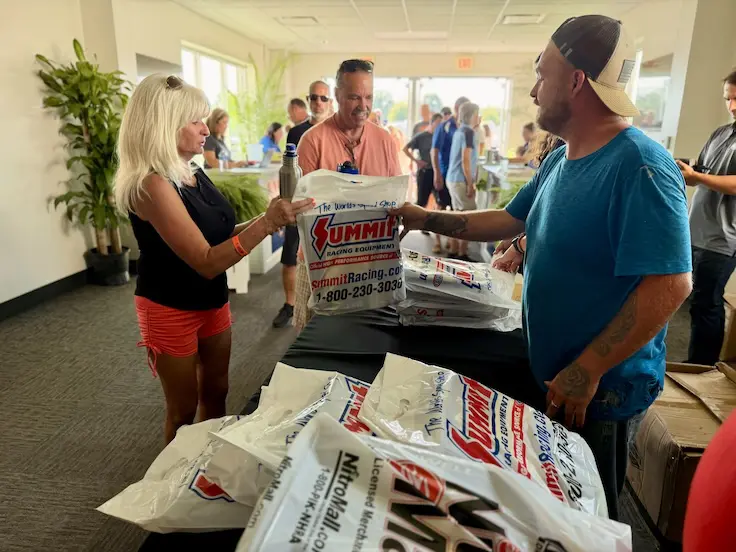
Before the first Sportsman cars rolled toward the Indianapolis Raceway Park starting line Wednesday, NHRA fed roughly 900 people Tuesday night and packed the TEC building with racers who will spend the better part of the next week chasing the sport’s most coveted trophy.
Jason Galvin, NHRA Sportsman Racing Manager, estimated approximately 70% of the entered Lucas Oil Series competitors attended. The percentage becomes more impressive considering some teams had yet to arrive in Indianapolis.
“I think we had a great night at the Sportsman Appreciation Dinner,” Galvin said. “We had basically 70% of the entered Lucas Oil Series competitors who came and inherently that number ends up skewed down a little bit because it’s Tuesday night and so many of our top teams just aren’t here yet.”
The dinner isn’t a new idea or something NHRA rolled out to answer a recent concern. It has been part of the U.S. Nationals routine for years, originating under NHRA President Glen Cromwell and other members of the organization’s leadership.
Galvin also credits his predecessor, Sarah Walker, with helping turn the dinner into what it has become. For many Sportsman racers, Tuesday night at Indy is now as much a part of the routine as parking the trailer and preparing the race car.
“Sarah Walker had a huge hand in building that event and helping to grow it,” Galvin said. “And it just kind of continues to get bigger and it’s become a stable item I think for racers who know that they’re coming to the US Nationals, know that Tuesday night they’re going to come have a good time and have a chance to win some cool stuff.”
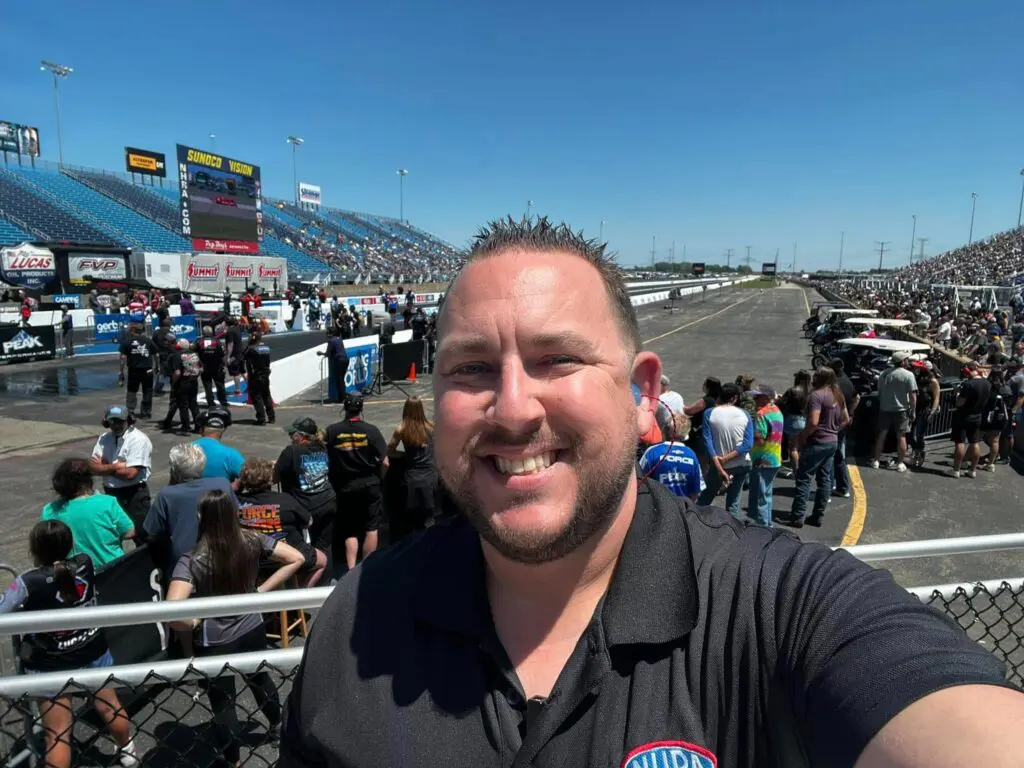
For Galvin, however, the dinner carries considerably more value than a free meal and a room full of door prizes. It is one of the few opportunities NHRA has during the season to put Sportsman racers from all seven divisions under one roof and tell them, face to face, what their participation means.
That message can get lost once the professional cars arrive and the U.S. Nationals moves toward its traditional Labor Day crescendo. Early in the week, however, Indianapolis belongs largely to the Sportsman racer.
“It’s so easy to say that our Sportsman racers are the backbone of the company and they are, but how do you show that?” Galvin said. “And with all due respect to the other stuff that’s happened in the drag racing world in the last couple of years and some of that stuff, some of those things have forced us to evaluate stuff and make stuff better for sure. But this event predates a lot of that and it’s a great way to show the most diverse set of racers we have all year.”
There are more than 750 Lucas Oil Series entries alone at Indianapolis this week, according to Galvin. They come from every NHRA division, some after racing the previous weekend and making an overnight haul just to get parked and begin another race.
For those racers, winning Indy can require the better part of two weeks away from work and home. There are hotel bills, diesel fuel, racing fuel, parts, entry fees and countless hours invested before anybody stages a car.
“There are people from around the country who spend weeks of their lives chasing a Wally on Monday here,” Galvin said. “You have to show those people that you respect them and appreciate them.
“And it’s not just the time and the race cars, it’s the money. It’s the time, it’s the effort, it’s the time away from family, from work. It’s the time that spouses give their husbands to go chase a 13-inch trophy on Monday.”
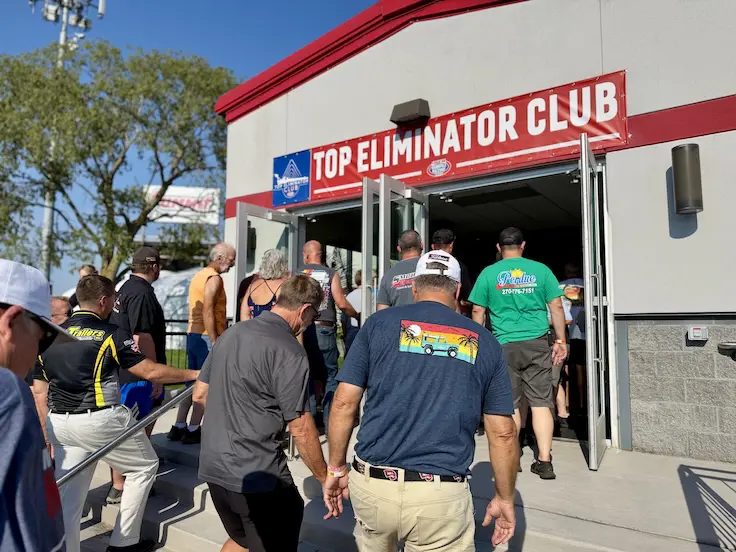
Galvin understands that grind from the other side of the microphone. Long before his role expanded within NHRA, he raced, drove for others and experienced what Indianapolis demands from competitors who can spend days trying to survive eliminations.
He once reached the final 16 at the U.S. Nationals. That experience makes the marathon description more than an announcer’s convenient line.
“Wednesday is a marathon. Thursday is a marathon,” Galvin said. “Nobody wakes up on Wednesday morning and goes, ‘Oh boy, I can’t wait to make my three time hits in Super Comp today.’ Because it’s just a long day and you know that going into it.”
That is why Tuesday night has become valuable.
Give racers dinner, let them see friends they may not have seen since the previous season and send a few of them back to their trailers carrying prizes. Then Wednesday morning, everybody gets back to work.
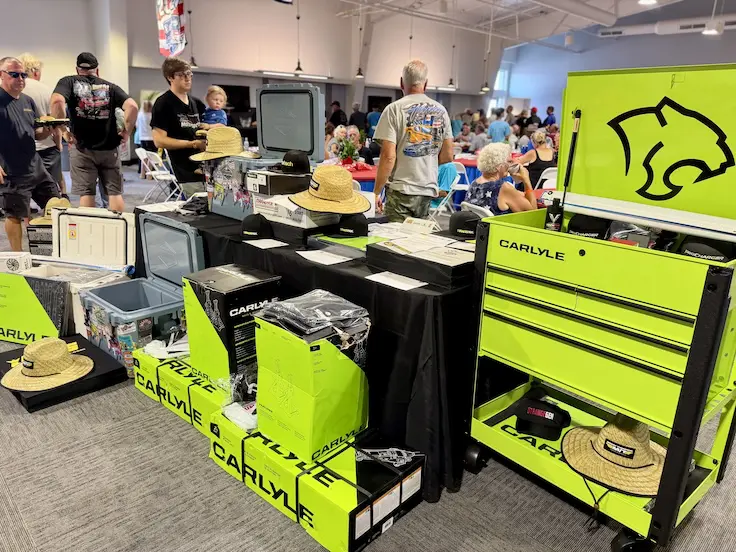
NHRA made changes to this year’s dinner, including bringing in a different caterer, and Galvin believed the difference was noticeable. Corporate partners also supplied tens of thousands of dollars in products and giveaways.
Cornwell Quality Tools provided something for everyone who walked through the door, according to Galvin, while other longtime drag racing companies also contributed products.
For one evening, however, Galvin wanted the corporate labels pushed into the background.
“None of them care about any of that stuff,” Galvin said. “It’s not about, oh, we’re the official partner of this or the event sponsor of this or the category sponsor of that. It’s about how can we make these 750 plus racers feel like they’re the biggest stars in the sport because especially early in this week, they are.”
That philosophy has spread beyond Indianapolis. NHRA added a Sportsman appreciation gathering at Gainesville two years ago, and Galvin said it grew from a happy-hour-style event with snacks into a full dinner in its second year.
A similar gathering was held at Pomona this season. Those events are smaller than Indy, but the purpose remains the same.
There is also a practical reason Indianapolis stands apart.
Few NHRA events assemble this many Sportsman competitors from this many parts of the country at the same time. For an organization trying to maintain a relationship with racers whose experiences can differ dramatically from division to division, Tuesday provides something an email, survey or rules bulletin cannot duplicate.
Galvin’s position gives him an unusual view of that relationship. In addition to his announcing and spokesperson duties, he and Matt Larner oversee Sportsman programs involving awards, championship regalia, sponsor obligations and racer-focused events.
The job has also made Galvin one of the people Sportsman racers seek when they have a problem, suggestion or complaint. His background as a racer gives those conversations a different starting point because he knows what it means to make the haul, wait through a long day and come back the next morning to do it again.
On Friday Night, the professional categories will eventually command the headlines. Before that happens, hundreds of Sportsman racers will have already spent days racing for the same thing everybody else came to Indianapolis to get – a U.S. Nationals Wally.
Tuesday night was NHRA’s opportunity to acknowledge those racers before Wednesday started asking something from them.
Galvin considers those two hours one of the most valuable things NHRA does during the entire season.
“It’s the single most important thing that we do from an event standpoint all year, as far as I’m concerned, is those two hours on Tuesday night at the US Nationals because it’s the one way that we can touch racers from all seven divisions that we have and beyond and let them know that we see them, we appreciate them, we care about them and we are thankful that they are here to help make this event the most special drag race in the world.”