

Drag racing has evolved through every decade Pat Musi has spent in it. The New Jersey native who became one of the sport’s most influential engine builders has evolved with it, trading one role for another without ever stepping away from the work that made his reputation.

The headset doesn’t hang around his neck nearly as often anymore.

These days, Musi spends more time developing engines, supporting customers and expanding partnerships than hustling from race car to race car, but anyone believing he has slowed down hasn’t spent five minutes around him.

Last weekend at Bristol Dragway offered another reminder.

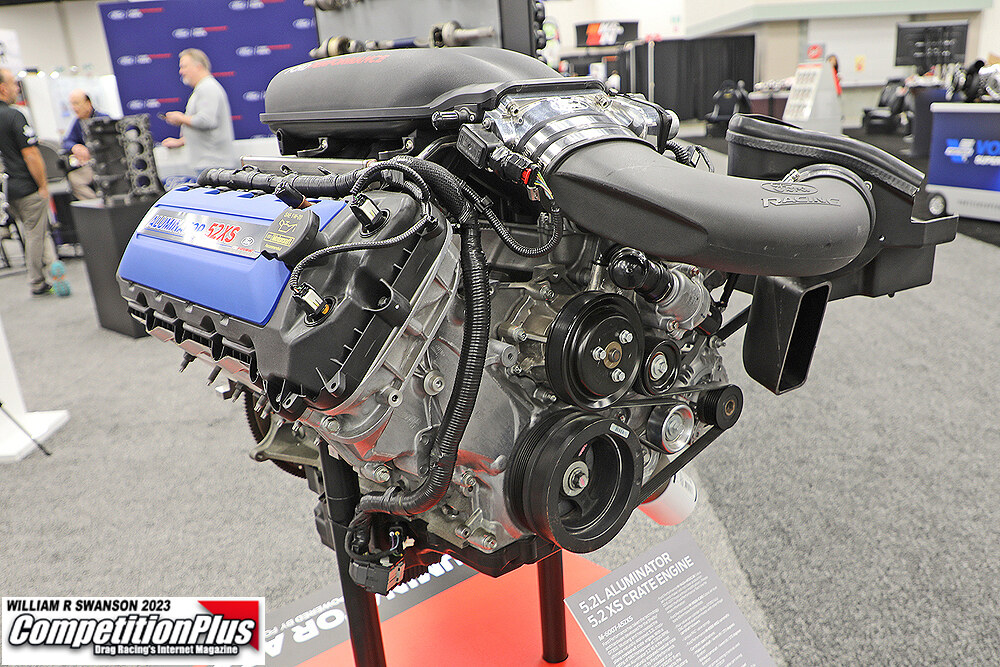
Musi was at the PDRA Thunder Valley Throwdown promoting the new Edelbrock Musi 555 crate engine, a collaborative project between one of drag racing’s most recognizable engine builders and the company that has backed him for decades. It represents another chapter in a career built on adapting to whatever direction performance racing demanded next.

The race cars may have changed, but the business certainly has.
His work ethic certainly hasn’t.

“It ain’t laid back,” Musi said. “I’m wide open because I took on this whole restomod deal and we do a lot with Edelbrock. So, besides the Pro Nitrous, we are just slam busy. But, I love it. That’s what I do, so I ain’t going to quit now.”
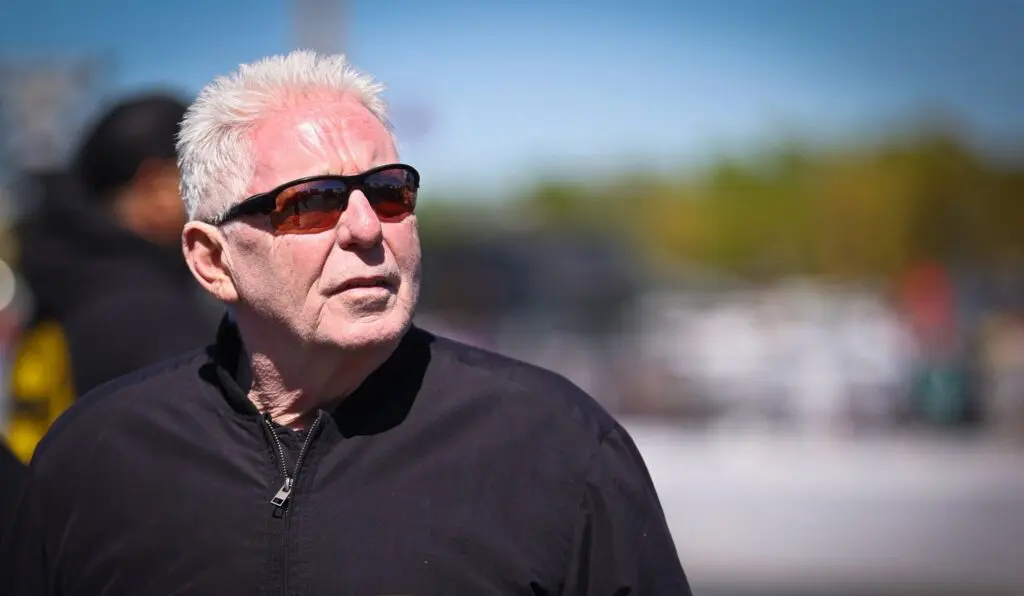
musi pat license bristol25

That answer explains why Musi has remained relevant through multiple generations of drag racing. Many racers define themselves by what happens on race day. Musi built his legacy by making sure everyone else’s race day started with horsepower under the hood. He had more than half of the cars in Pro Nitrous running his horsepower.

Musi’s fingerprints are all over modern Pro Nitrous racing. Long before electronic fuel injection became the accepted standard, Musi believed the combination offered advantages others either dismissed or didn’t fully understand. Years of testing and data convinced him that removing weight while improving control over fuel delivery would eventually give him the fast lane to develop his approach.

It wasn’t a popular opinion at the time.

“We’ve worked hard on our nitrous program,” Musi said. “And like I tell them, there’s new guys coming around trying to do these engines. We got data from 20 guys out here on our engines. We’re going to be tough to beat. You get yourself to that position, but, hey, this is what I tell them, old school. The water’s fine. Go ahead, jump in.”

Experience became his greatest advantage. While competitors chased individual combinations, Musi accumulated information from dozens of customers across multiple tracks, weather conditions and combinations. Every run expanded the notebook that continues to separate his program from newer builders entering the market.

That database also gave him confidence when electronic fuel injection remained an unpopular choice in nitrous racing.

“Well, we ran it way before,” Musi said. “So, I was the first EFI car to win an NHRA national event. I only won one race. My racing was sidelined from the business. If I raced only, it’d be a different story.

“Back then when I won that race, if you had a nitrous engine, you didn’t put fuel injection on it.”
pat musi pdra 01

For Musi, the issue was never whether electronic fuel injection could work. The question was whether racers were willing to abandon decades of accepted thinking.

“That was the turning point, 2010,” Musi said. “But we had started running nitrous in 2000 with the Popeye car. So we had a lot of data. And we knew if we took that weight out of the car, we knew it would… The nitrous guys that were running, ‘The weight does make a difference.’ It don’t make a difference.”

“Weight, horsepower, that’s it. We all know that.”

History eventually sided with Musi. Today, electronic fuel injection has become the standard throughout elite Pro Nitrous competition. Many of the concepts now considered common practice trace their roots to programs Musi developed years earlier while others questioned whether the approach made sense.

His longtime relationship with fellow racer Rickie Smith helped accelerate that evolution.

The two spent decades racing one another, helping one another and occasionally giving each other grief along the way. Their friendship became one of drag racing’s enduring partnerships, built on mutual respect earned in competition.
Musi still laughs remembering the conversations that followed his early EFI experiments. Smith was not immediately sold on the concept.

“So came out. We were immediately fast,” Musi said. “And it’s funny, me and Rickie, everybody knows we got a friendship for years, raced against each other. And he went to Vegas to help me with the Stratus.

“And then we went for dinner and he said, ‘If you get that EFI crap off of there, we can make that car fast.’ I said, ‘Well, we’ll see.’ And then, right after the Norwalk win, I got the phone call, ‘Hi, what do we need to do to get EFI on?’ And it’s been great.”

Musi credits another longtime partner for helping make those developments possible.

Rather than bouncing from one electronics company to another, he stayed committed to EFI Technology and worked directly with Graham Western to tailor software specifically for nitrous racing. That collaboration produced a system Musi still believes outperforms better-known competitors.

“That’s what we use,” Musi said. “All this guys said, ‘This [system] could do this and this one. We could do anything we want.’ Graham writes his own software.

“So if you look at this deal, just take a step back, okay? All the hype, all the marketing, all the other fuel injection companies other than what we run, you got the ET record with an EFI Technology box.

“And you got the speed record, Marcus Butner with the speed record that finally got taken, which they were pretty happy, and they honored Lizzy on that speed record. They chased that for seven, eight years.”

“She had it at 209 and some change, and it went 209 a little bit faster. We were happy for them as a customer. But bottom line is I ain’t seen any of this fancy marketing outrun our fuel injection, our standard EFI Tech that we run in our brand.”
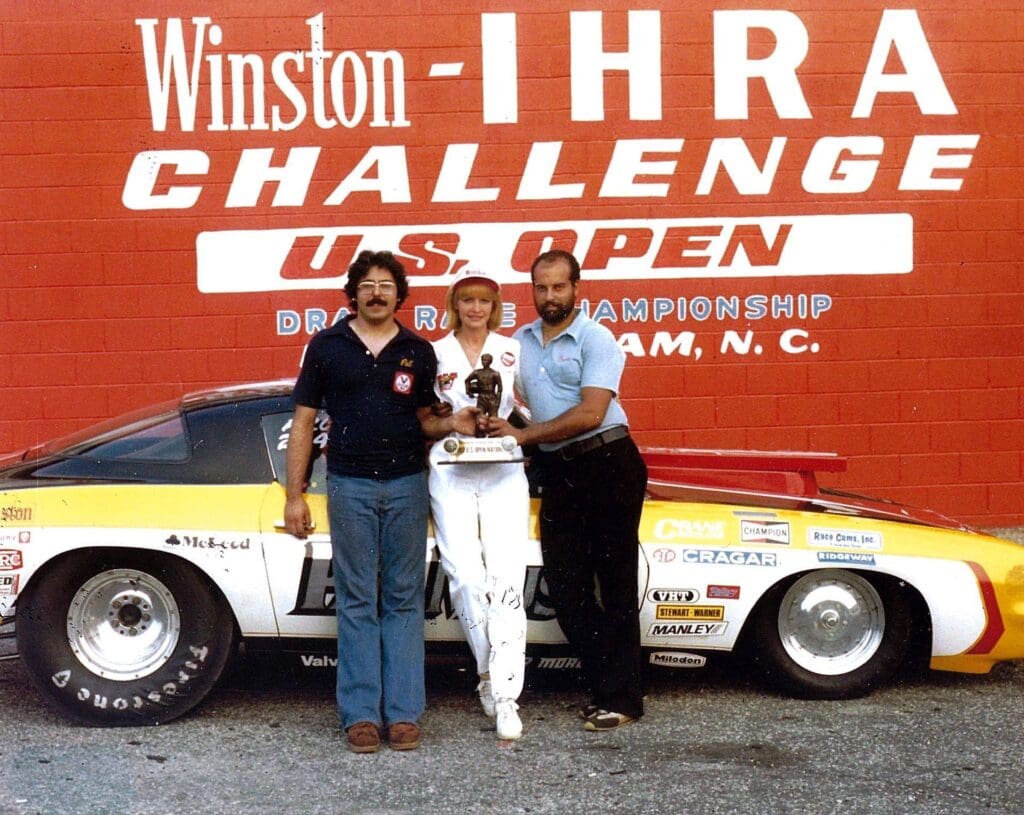
musi pat prostock 1980

That confidence shapes how Musi works with customers today.

“I tell my customers, ‘You can take the engine without EFI,’ and a lot of them do,” Musi said. “Tommy Franklin’s successful kind of tuner. But if you want my help, any kind of input, it’s got to be EFI. That’s what I know inside and out.”

Even with business demands limiting his own driving career, Musi found another path back into competition through daughter Lizzy Musi.

Instead of sitting behind the steering wheel, he found himself calling the shots as part of the crew while trusted employees handled many of the day-to-day responsibilities inside the company.

“It was tough to run a business and race,” Musi said. “But now when Lizzy came along, that’s when I got to be part of the crew. We had help. Everybody put in there. We had a lot of help because I’m an engine guy. She won a lot of races.”

The changing rules forced another adjustment. Blower combinations gained advantages, tire rules changed and tuners once again found themselves learning new ways to make horsepower reach the racetrack. Musi embraced that challenge the same way he always had.

“And then, of course, here comes the rules,” Musi said. “They bring the blowers. They take the tire away from the nitrous cars. But the evening factor there with the blower cars in the Street Outlaw deal was the surface. So you can only apply X amount of power. I had to learn a whole new tuning deal. But Lizzy was a driver. I can tell you that.”

Lizzy passed in June of 2024, but for Pat it was one of the toughest adjustments he had to overcome in life.

His willingness to keep learning explains why Musi continues to matter long after many of his contemporaries have scaled down or stepped away.

It’s about finding another way to stay in the race.

Share the Insights?

Click here to share the article.

ad space x ad space

ad space x ad space

Competition Plus Team

Since our inception, we have been passionately dedicated to delivering the most accurate, timely, and compelling content in the world of drag racing. Our readers depend on us for the latest news, in-depth features, expert analysis, and exclusive interviews that connect you to the sport’s pulse.

Sign up for our newsletters and email list.

This field is for validation purposes and should be left unchanged.
Name

PAT MUSI NEVER STOPPED RACING — HE JUST CHANGED WHAT HE WAS BUILDING

Drag racing has evolved through every decade Pat Musi has spent in it. The New Jersey native who became one of the sport’s most influential engine builders has evolved with it, trading one role for another without ever stepping away from the work that made his reputation.

The headset doesn’t hang around his neck nearly as often anymore.

These days, Musi spends more time developing engines, supporting customers and expanding partnerships than hustling from race car to race car, but anyone believing he has slowed down hasn’t spent five minutes around him.

Last weekend at Bristol Dragway offered another reminder.

Musi was at the PDRA Thunder Valley Throwdown promoting the new Edelbrock Musi 555 crate engine, a collaborative project between one of drag racing’s most recognizable engine builders and the company that has backed him for decades. It represents another chapter in a career built on adapting to whatever direction performance racing demanded next.

The race cars may have changed, but the business certainly has.
His work ethic certainly hasn’t.

“It ain’t laid back,” Musi said. “I’m wide open because I took on this whole restomod deal and we do a lot with Edelbrock. So, besides the Pro Nitrous, we are just slam busy. But, I love it. That’s what I do, so I ain’t going to quit now.”

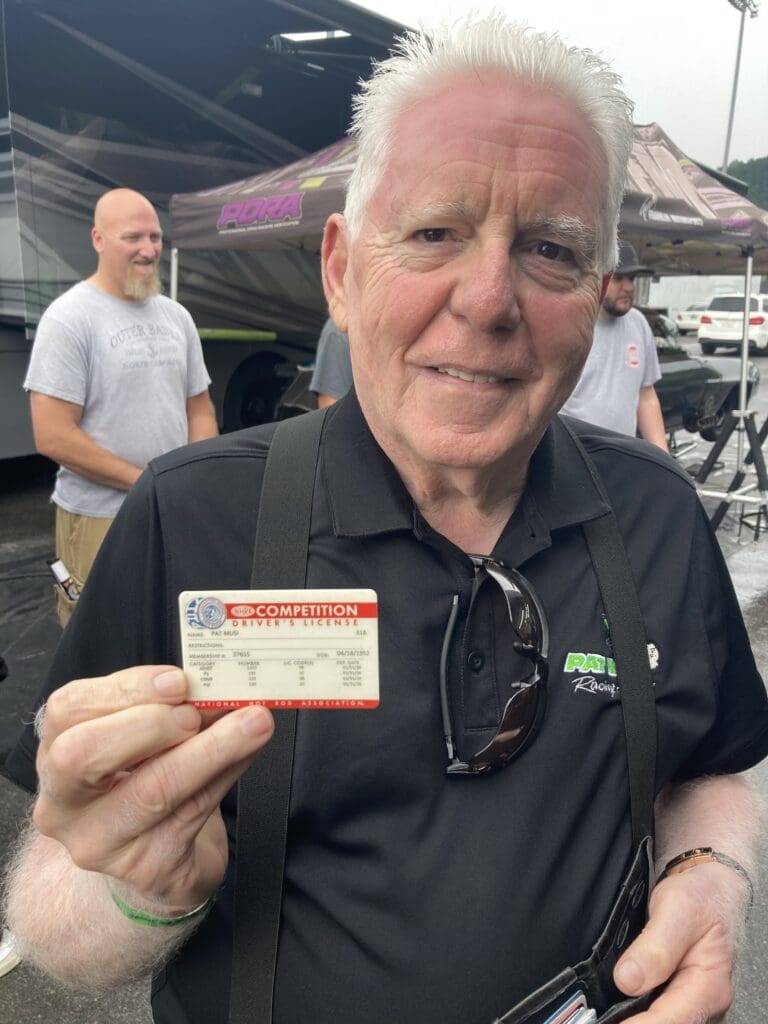
musi pat license bristol25

That answer explains why Musi has remained relevant through multiple generations of drag racing. Many racers define themselves by what happens on race day. Musi built his legacy by making sure everyone else’s race day started with horsepower under the hood. He had more than half of the cars in Pro Nitrous running his horsepower.

Musi’s fingerprints are all over modern Pro Nitrous racing. Long before electronic fuel injection became the accepted standard, Musi believed the combination offered advantages others either dismissed or didn’t fully understand. Years of testing and data convinced him that removing weight while improving control over fuel delivery would eventually give him the fast lane to develop his approach.

It wasn’t a popular opinion at the time.

“We’ve worked hard on our nitrous program,” Musi said. “And like I tell them, there’s new guys coming around trying to do these engines. We got data from 20 guys out here on our engines. We’re going to be tough to beat. You get yourself to that position, but, hey, this is what I tell them, old school. The water’s fine. Go ahead, jump in.”

Experience became his greatest advantage. While competitors chased individual combinations, Musi accumulated information from dozens of customers across multiple tracks, weather conditions and combinations. Every run expanded the notebook that continues to separate his program from newer builders entering the market.

That database also gave him confidence when electronic fuel injection remained an unpopular choice in nitrous racing.

“Well, we ran it way before,” Musi said. “So, I was the first EFI car to win an NHRA national event. I only won one race. My racing was sidelined from the business. If I raced only, it’d be a different story.

“Back then when I won that race, if you had a nitrous engine, you didn’t put fuel injection on it.”

pat musi pdra 01

For Musi, the issue was never whether electronic fuel injection could work. The question was whether racers were willing to abandon decades of accepted thinking.

“That was the turning point, 2010,” Musi said. “But we had started running nitrous in 2000 with the Popeye car. So we had a lot of data. And we knew if we took that weight out of the car, we knew it would… The nitrous guys that were running, ‘The weight does make a difference.’ It don’t make a difference.”

“Weight, horsepower, that’s it. We all know that.”

History eventually sided with Musi. Today, electronic fuel injection has become the standard throughout elite Pro Nitrous competition. Many of the concepts now considered common practice trace their roots to programs Musi developed years earlier while others questioned whether the approach made sense.

His longtime relationship with fellow racer Rickie Smith helped accelerate that evolution.

The two spent decades racing one another, helping one another and occasionally giving each other grief along the way. Their friendship became one of drag racing’s enduring partnerships, built on mutual respect earned in competition.

Musi still laughs remembering the conversations that followed his early EFI experiments. Smith was not immediately sold on the concept.

“So came out. We were immediately fast,” Musi said. “And it’s funny, me and Rickie, everybody knows we got a friendship for years, raced against each other. And he went to Vegas to help me with the Stratus.

“And then we went for dinner and he said, ‘If you get that EFI crap off of there, we can make that car fast.’ I said, ‘Well, we’ll see.’ And then, right after the Norwalk win, I got the phone call, ‘Hi, what do we need to do to get EFI on?’ And it’s been great.”

Musi credits another longtime partner for helping make those developments possible.

Rather than bouncing from one electronics company to another, he stayed committed to EFI Technology and worked directly with Graham Western to tailor software specifically for nitrous racing. That collaboration produced a system Musi still believes outperforms better-known competitors.

“That’s what we use,” Musi said. “All this guys said, ‘This [system] could do this and this one. We could do anything we want.’ Graham writes his own software.

“So if you look at this deal, just take a step back, okay? All the hype, all the marketing, all the other fuel injection companies other than what we run, you got the ET record with an EFI Technology box.

“And you got the speed record, Marcus Butner with the speed record that finally got taken, which they were pretty happy, and they honored Lizzy on that speed record. They chased that for seven, eight years.”

“She had it at 209 and some change, and it went 209 a little bit faster. We were happy for them as a customer. But bottom line is I ain’t seen any of this fancy marketing outrun our fuel injection, our standard EFI Tech that we run in our brand.”

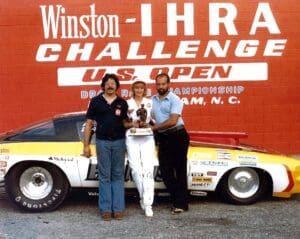
musi pat prostock 1980

That confidence shapes how Musi works with customers today.

“I tell my customers, ‘You can take the engine without EFI,’ and a lot of them do,” Musi said. “Tommy Franklin’s successful kind of tuner. But if you want my help, any kind of input, it’s got to be EFI. That’s what I know inside and out.”

Even with business demands limiting his own driving career, Musi found another path back into competition through daughter Lizzy Musi.

Instead of sitting behind the steering wheel, he found himself calling the shots as part of the crew while trusted employees handled many of the day-to-day responsibilities inside the company.

“It was tough to run a business and race,” Musi said. “But now when Lizzy came along, that’s when I got to be part of the crew. We had help. Everybody put in there. We had a lot of help because I’m an engine guy. She won a lot of races.”

The changing rules forced another adjustment. Blower combinations gained advantages, tire rules changed and tuners once again found themselves learning new ways to make horsepower reach the racetrack. Musi embraced that challenge the same way he always had.

“And then, of course, here comes the rules,” Musi said. “They bring the blowers. They take the tire away from the nitrous cars. But the evening factor there with the blower cars in the Street Outlaw deal was the surface. So you can only apply X amount of power. I had to learn a whole new tuning deal. But Lizzy was a driver. I can tell you that.”

Lizzy passed in June of 2024, but for Pat it was one of the toughest adjustments he had to overcome in life.

His willingness to keep learning explains why Musi continues to matter long after many of his contemporaries have scaled down or stepped away.

It’s about finding another way to stay in the race.

Picture of John Doe

John Doe

Lorem ipsum dolor sit amet consectetur adipiscing elit dolor

More Posts

Send Us A Message

Picture of Bobby Bennett
Bobby Bennett
Thank you for joining us on this journey. Your support and trust inspire us every day to deliver the best in drag racing journalism. We are excited about the future and look forward to continuing to serve you with the same dedication and passion that has defined CompetitionPlus.com from the very beginning.

Don’t miss these other exciting stories!

Explore more action packed posts on Competition Plus, where we dive into the latest in Drag Racing News. Discover a range of topics, from race coverage to in-depth interviews, to keep you informed and entertained.