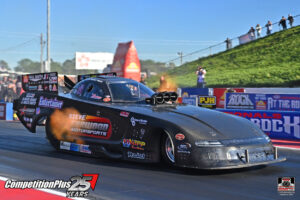

Paul Smith is 80 years old, has been racing nitro cars longer than some of his competitors have been alive and knows exactly when he plans to retire.
When he’s gone.
Until then, there are Funny Cars to tune, races to make and money to scrape together. Last weekend brought Smith back to Rockingham Dragway, a place that has been part of his racing life since Funny Car racing was considerably rougher around the edges.
“We love this track and the people around it,” Smith said. “My buddy Steve Earwood and I have history here, and we love to come into Rockingham.”
Smith has raced in AHRA, IHRA and NHRA competition, winning three IHRA races in 11 final rounds. He finished second in the 1974 NHRA Funny Car championship and later won NHRA national events as a team owner and tuner.
He has also survived long enough to watch his kind of nitro team nearly disappear.
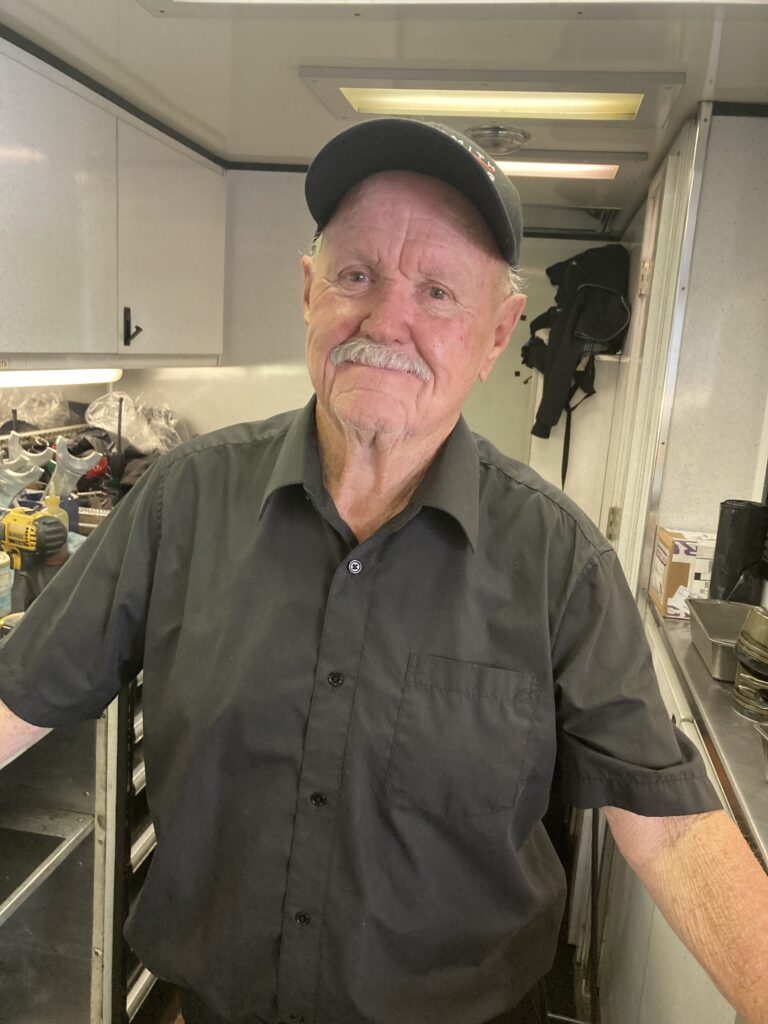
Smith came from an era when the guy strapped into the Funny Car might also be the guy deciding how much fuel, clutch and blower it could stand.
There wasn’t necessarily a driver, crew chief and collection of specialists. Sometimes there was a racer, a few crew members and whatever parts hadn’t broken yet.
Smith points to Dale Armstrong and Ken Veney as examples. Both drove and tuned their own cars, just as Smith did.
“Yeah, because you didn’t have, it’s like Dale Armstrong,” Smith said. “He drove his car and Ken Veney drove his car and tuned it and didn’t have all the stuff because you had to be Billy Meyer for somebody else to have a crew chief and have three motors lined up.”
Smith remembers showing up with one good engine and considering yourself fortunate. The bigger operations might have two or three engines and eight crew members while the independents tried to make do with three people.
It wasn’t nostalgia then, as much as it was survival.
Smith remains one of the last links to that breed of Funny Car racer, even though he no longer suits up. But he still prepares the car as if he were. The problem isn’t that Smith’s way stopped working as much as the price of trying it became brutal.
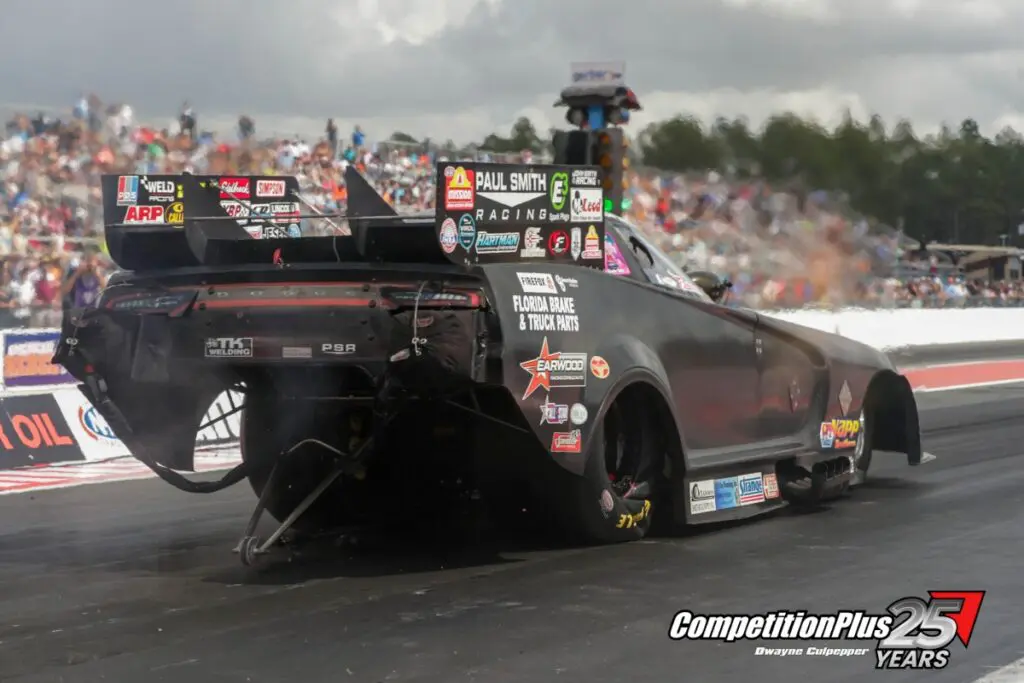
Smith might bring out his team eight or 10 times a year. Today’s leading Funny Car teams can test more in a relatively short period than an independent operation like his might race over multiple seasons.
Parts don’t live the same lives, either. Smith remembers when a supercharger might go approximately 15 runs before requiring service. Now, he says, five can be enough.
“It’s just that it’s a million-dollar sport and the funding and it just takes a lot to do it and a lot of time to test and a lot of this and a lot of that to make things happen the right way for you,” Smith said. “I’m not crying poor. We’re not poor or nothing, but I mean if you want to take two million dollars and turn it into one million, buy a funny car.”
Nobody needs a spreadsheet after that. Smith understands exactly what he’s up against. He also understands that without sponsors and friends willing to help, an independent Funny Car like his becomes a very expensive piece of garage furniture.
That’s where Earwood came in.
The two go back to the 1970s, when Smith was racing and Earwood was promoting. Earwood is out of the track business now, but over the weekend his name was attached to Smith’s effort at Rockingham.
For Smith, calling it sponsorship almost undersells it.
“Well, when you know a guy like Steve Earwood, it ain’t about the money,” Smith said. “It’s about friendship and he’s always helped us in certain ways with sponsors and buying shirts for the crew members and buying this and buying that.”
Their friendship has outlived race cars, sanctioning-body wars, promoters, sponsors and more than a few broken parts. Smith said when Earwood comes to Florida, they’ll sit along the Intracoastal, eat dinner and watch the yachts go by.
“Steve’s just been, I mean, you know a guy back in the ’70s, man,” Smith said. “You know what I’m saying? I mean that long and we dealt together and dealt together and we always talk.”
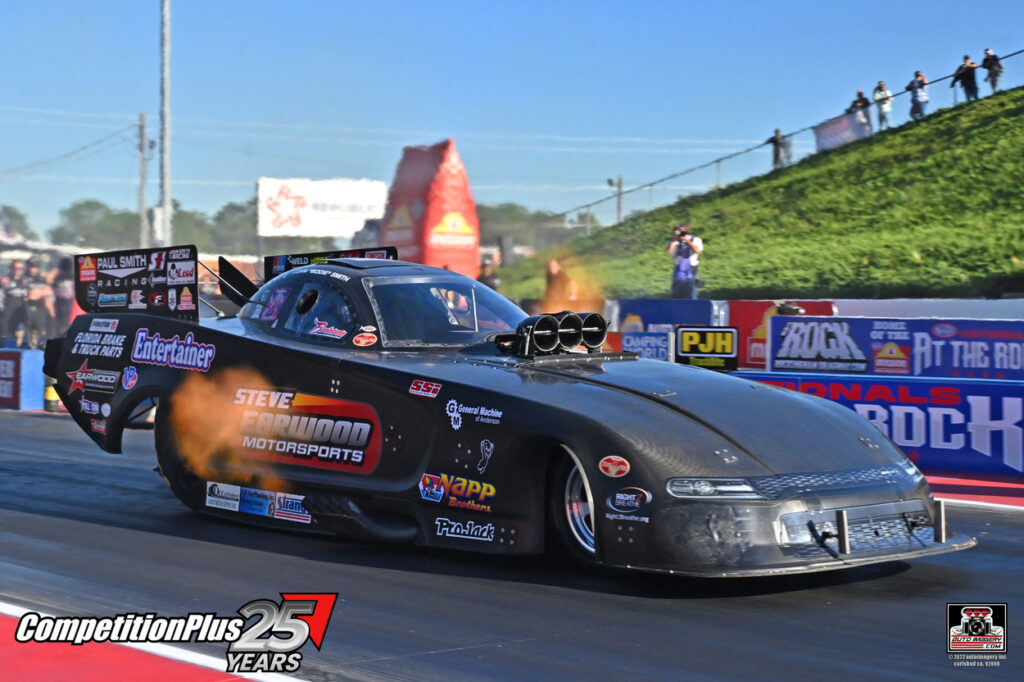
Smith has always had his own description for the drag racing life.
It’s a carnival.
Years ago at a rain-soaked Maple Grove Raceway, Smith watched track dryers make laps while water kept returning through the racing surface. He finally asked then-NHRA executive Graham Light why he didn’t “shut this carnival down.”
Smith’s Funny Car with Jeff Arend driving eventually won the race. When he went to collect his money, Light was waiting with Smith’s Social Security number and a bag of peanuts.
Smith swears he still has the peanuts.
There probably isn’t a better souvenir from the life Smith chose.
Drag racers roll into town, unload their equipment, put on the show, collect whatever is waiting at the pay window, pack everything back into the trailer and move to the next stop. The trailers got bigger, the technology became staggering and the cost of admission climbed into another tax bracket.
Smith still sees the carnival.
“We are,” Smith said. “We come here, we put up our chance, ride our rides, and get paid our peanuts.”
And he keeps coming back.
At 80, Smith is still chasing enough money to race, still tuning Funny Cars and still showing up at places like Rockingham because somewhere along the way the carnival stopped being something he attended. It became what he does.
“People say, ‘When are you going to quit or when are you going to retire?’” Smith said. “I says, ‘When I’m gone. If I can keep scraping up the money, I’m going to keep doing it.’”