
The 1970s belonged to kids with orange Hot Wheels tracks stretched across bedroom floors, Cox gas-powered racers screaming through neighborhood streets and shelves lined with Revell model kits waiting for glue, paint and imagination. Then came junior high, when playing with toy cars suddenly wasn’t considered cool anymore.

Revell Model Company saw something almost nobody else recognized.

The California company understood those same youngsters weren’t abandoning cars. They were becoming drag racing fans, and instead of asking them to leave the hobby behind, Revell gave them another way to stay connected by putting their heroes inside cardboard boxes hanging from hobby shop walls.

Millions of model kits later, Revell had accomplished far more than filling hobby shop shelves.

The company quietly created one of drag racing’s earliest merchandising programs, helped finance race teams from coast to coast and proved race cars could continue earning money long after they were pushed back into the trailer.

Ironically, the program that changed the business of drag racing wasn’t started by an automotive company or a speed equipment manufacturer.

It began because Funny Car racer Ed McCulloch asked a tire company one simple question.

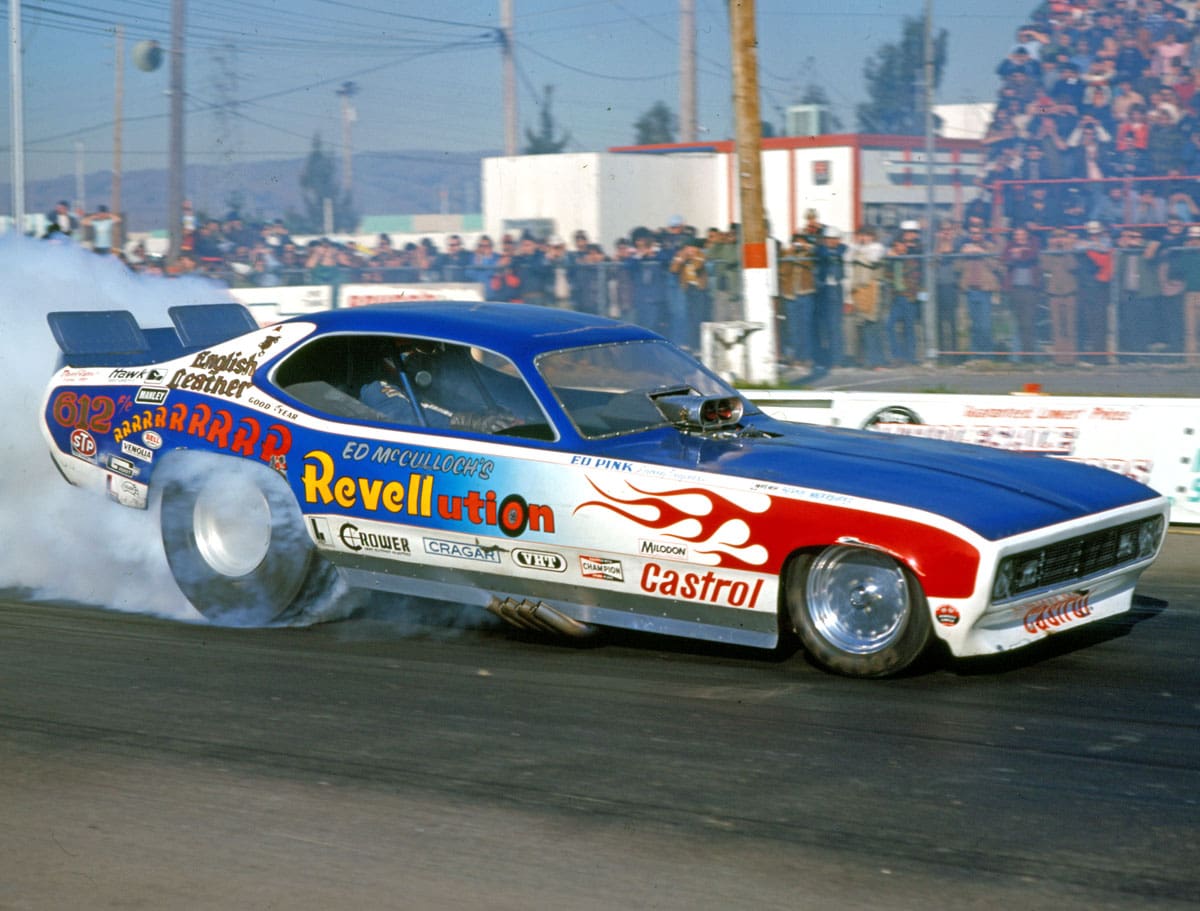
“We actually were the first Revell sponsored car,” McCulloch recalled. “It came about… It’s a bit of a story how that happened.”
McCulloch wasn’t trying to reinvent sponsorship.

He wanted to understand why companies poured money into Indianapolis racers while drag racers couldn’t even get through the tire line.

The story started at the 1970 NHRA Winternationals in Pomona.

McCulloch and partner John “Whipple” Green arrived with a competitive Funny Car only to learn they couldn’t buy the M&H slicks everyone wanted because established racers received priority. Instead of packing up, McCulloch crossed the pits and bought Firestone tires, unknowingly beginning a relationship that would change not only his own career but the fortunes of dozens of drag racers.
The 1970s belonged to kids with orange Hot Wheels tracks stretched across bedroom floors, Cox gas-powered racers screaming through neighborhood streets and shelves lined with Revell model kits waiting for glue, paint and imagination. Then came junior high, when playing with toy cars suddenly wasn’t considered cool anymore.

Revell Model Company saw something almost nobody else recognized.
The California company understood those same youngsters weren’t abandoning cars. They were becoming drag racing fans, and instead of asking them to leave the hobby behind, Revell gave them another way to stay connected by putting their heroes inside cardboard boxes hanging from hobby shop walls.

Millions of model kits later, Revell had accomplished far more than filling hobby shop shelves.

The company quietly created one of drag racing’s earliest merchandising programs, helped finance race teams from coast to coast and proved race cars could continue earning money long after they were pushed back into the trailer.

Ironically, the program that changed the business of drag racing wasn’t started by an automotive company or a speed equipment manufacturer.
It began because Funny Car racer Ed McCulloch asked a tire company one simple question.

“We actually were the first Revell sponsored car,” McCulloch recalled. “It came about… It’s a bit of a story how that happened.”
McCulloch wasn’t trying to reinvent sponsorship.

He wanted to understand why companies poured money into Indianapolis racers while drag racers couldn’t even get through the tire line.

The story started at the 1970 NHRA Winternationals in Pomona.
McCulloch and partner John “Whipple” Green arrived with a competitive Funny Car only to learn they couldn’t buy the M&H slicks everyone wanted because established racers received priority. Instead of packing up, McCulloch crossed the pits and bought Firestone tires, unknowingly beginning a relationship that would change not only his own career but the fortunes of dozens of drag racers.

Working with Firestone as a tire tester eventually gave McCulloch the opportunity to ask the question every independent racer wanted answered.

“Hey, listen, I don’t understand something,” McCulloch remembered telling company officials. “You pay the Firestone driver guys, IndyCar guys and all that. You pay them tons of money. How come we can’t get some sort of a deal with Firestone?”

Firestone didn’t have a sponsorship program for drag racing.
Instead of simply saying no, company officials asked one of their promotional representatives to find McCulloch outside backing.
The answer came from two companies with little connection to drag racing.

Neither Castrol nor Revell built race cars. One sold motor oil and the other plastic model kits but together, they helped launch what became one of the first merchandising-driven sponsorship programs in professional drag racing.

“That’s what got us going back then,” McCulloch said. “Right after we got the Revell deal, then Gene Snow was, I think, the second guy to get a deal.”

McCulloch’s agreement differed from almost every one that followed.
He received guaranteed sponsorship money along with royalties from model-kit sales. Most of the racers who followed accepted royalty-only agreements because the opportunity to earn money every time a youngster bought their model was unlike anything drag racing had seen.

“Back then, any money was good money,” McCulloch said. “We got paid a contract plus a royalty. Snow might’ve got some money, but almost everybody else was just all a royalty. That’s why you saw so many cars out there is, ‘Okay, we’ll do a model of your car and we’ll pay you a royalty.’ And everybody jumped on it.”

Every model kit sold represented more than another toy on a hobby shop shelf.

It helped buy nitromethane, clutch discs, blower belts and diesel fuel for the transporter headed to the next national event or match race.
Revell was in the business of selling model kits, not saving drag racing. The sponsorship program became one of those rare business decisions that benefited everyone involved.
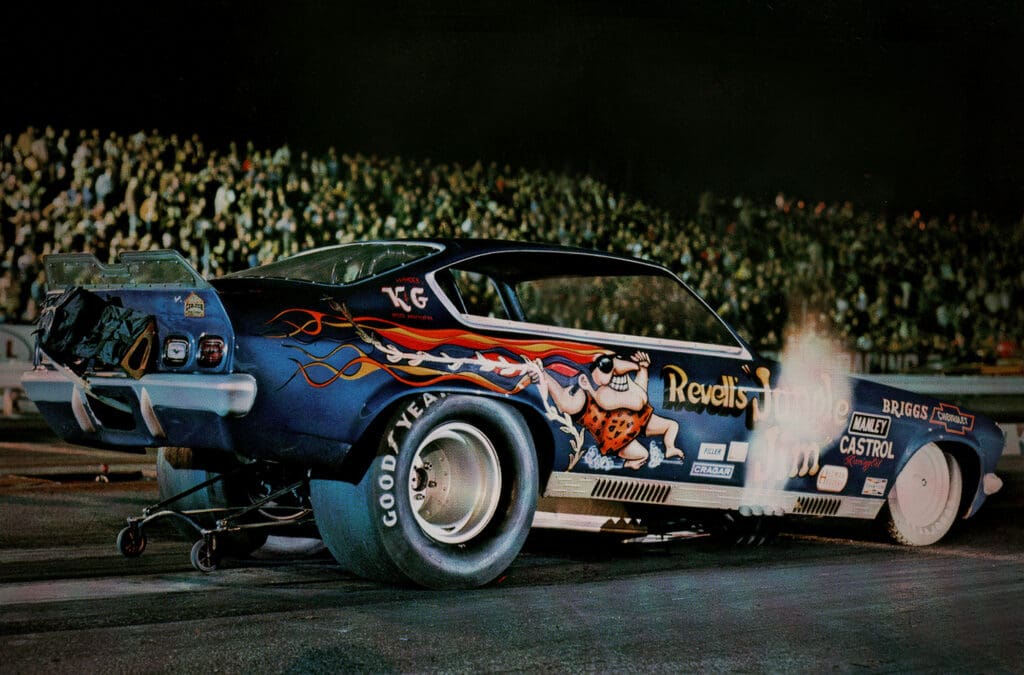
Drag racers weren’t just competitors. They were brands. And, back in the day there was no stronger brand than “Jungle” Jim Liberman, whose larger-than-life personality helped prove that fans weren’t just buying model cars.

They were buying the people who drove them. Jungle” Pam Hardy had a front row seat for the transformation.

Standing beside Liberman during the height of his popularity, Hardy watched Revell’s influence spread far beyond hobby shops. What began as another sponsorship quickly changed the way Funny Cars looked, introducing personalities and graphics that became as recognizable as the drivers themselves.

“I just know that they stepped up with money and a design and put it on the car and all of a sudden sort of a little era in Funny Car paint jobs took off,” Hardy explained. “Everybody had to have Revvvolution and the Snowman and they had to have characters on their car.”

Revell wasn’t betting on race cars. Instead, it was betting on the kids standing against the fence watching them. Hardy’s recollection underscores why Revell became so much more than a model company.

The process was more than just putting its logo on race cars. It encouraged racers to build memorable identities that looked just as good on the shelf of a hobby shop as they did sitting in the staging lanes.

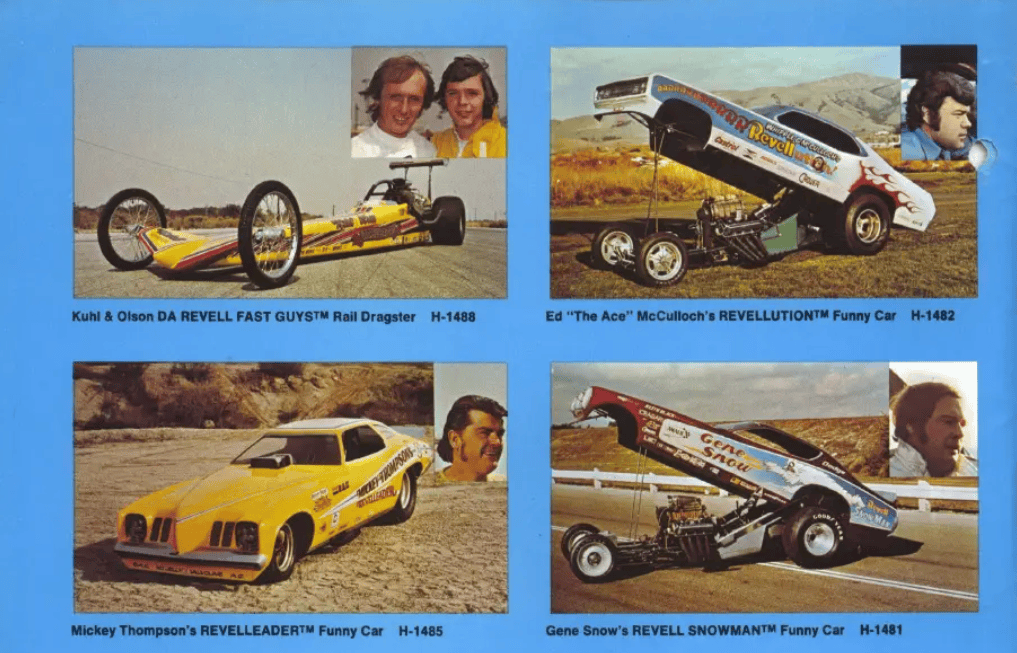
Within a few seasons, Funny Cars no longer needed only horsepower to stand apart. They needed identities. McCulloch had Revellution. Gene Snow had the Snowman. Suddenly everyone wanted a name, a character and a paint scheme fans could recognize before the engine ever fired.

Steve Reyes Photo

Drag racers weren’t just competitors. They were brands. And, back in the day there was no stronger brand than “Jungle” Jim Liberman, whose larger-than-life personality helped prove that fans weren’t just buying model cars.

They were buying the people who drove them. Jungle” Pam Hardy had a front row seat for the transformation.

Standing beside Liberman during the height of his popularity, Hardy watched Revell’s influence spread far beyond hobby shops. What began as another sponsorship quickly changed the way Funny Cars looked, introducing personalities and graphics that became as recognizable as the drivers themselves.

“I just know that they stepped up with money and a design and put it on the car and all of a sudden sort of a little era in Funny Car paint jobs took off,” Hardy explained. “Everybody had to have Revvvolution and the Snowman and they had to have characters on their car.”

Revell wasn’t betting on race cars. Instead, it was betting on the kids standing against the fence watching them. Hardy’s recollection underscores why Revell became so much more than a model company.

The process was more than just putting its logo on race cars. It encouraged racers to build memorable identities that looked just as good on the shelf of a hobby shop as they did sitting in the staging lanes.

Within a few seasons, Funny Cars no longer needed only horsepower to stand apart. They needed identities. McCulloch had Revellution. Gene Snow had the Snowman. Suddenly everyone wanted a name, a character and a paint scheme fans could recognize before the engine ever fired.
Carl Olson watched the phenomenon from another angle.

While McCulloch opened the door, Olson saw how quickly racers embraced a sponsorship program unlike anything drag racing had experienced.

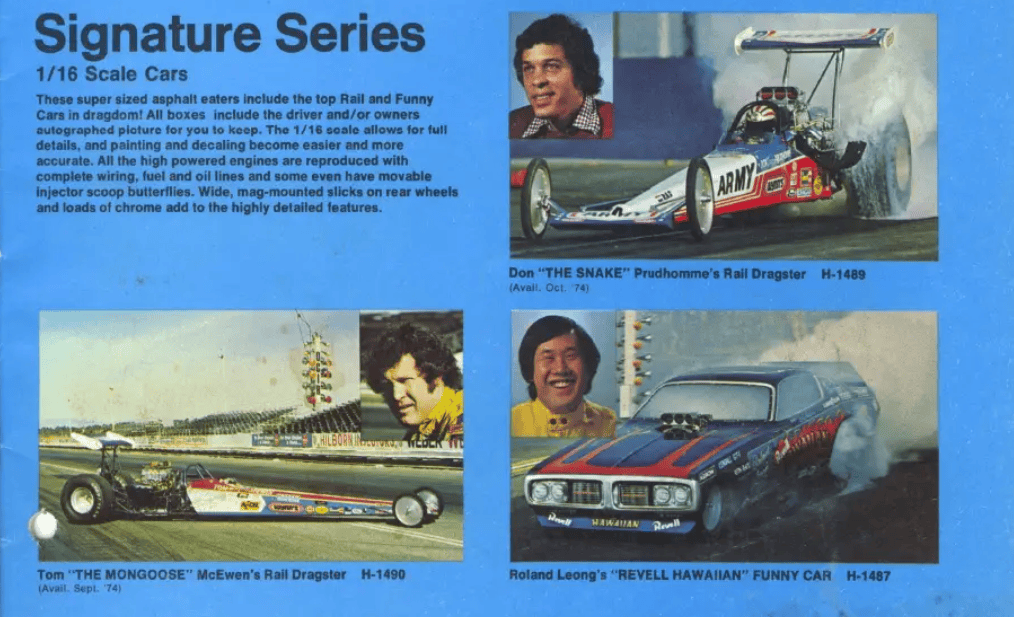
“I think they struck gold with the drag racing thing because it was so popular,” Olson said. “And then Mattel had the Hot Wheels thing with Prudhomme and McEwen. Kids would graduate from Hot Wheels to the Revell models because they were more sophisticated. You glued them together, painted them and put the decals on them. They were just more realistic.”

Revell did more than create fans; it retained them for a lifetime.

The kids outgrew die-cast toys, and because of that Revell offered a deeper connection to the sport. Every model required an investment of time.

Olson’s program with Revell was different than McCulloch’s in that he didn’t receive guaranteed sponsorship money. He was paid entirely through royalties, creating an unusual partnership by generating income due to popularity.

“I didn’t get a contract like Ed did,” Olson said. “Mine was strictly royalty. But it turned out to be the best cash sponsorship I ever had because those models sold.”
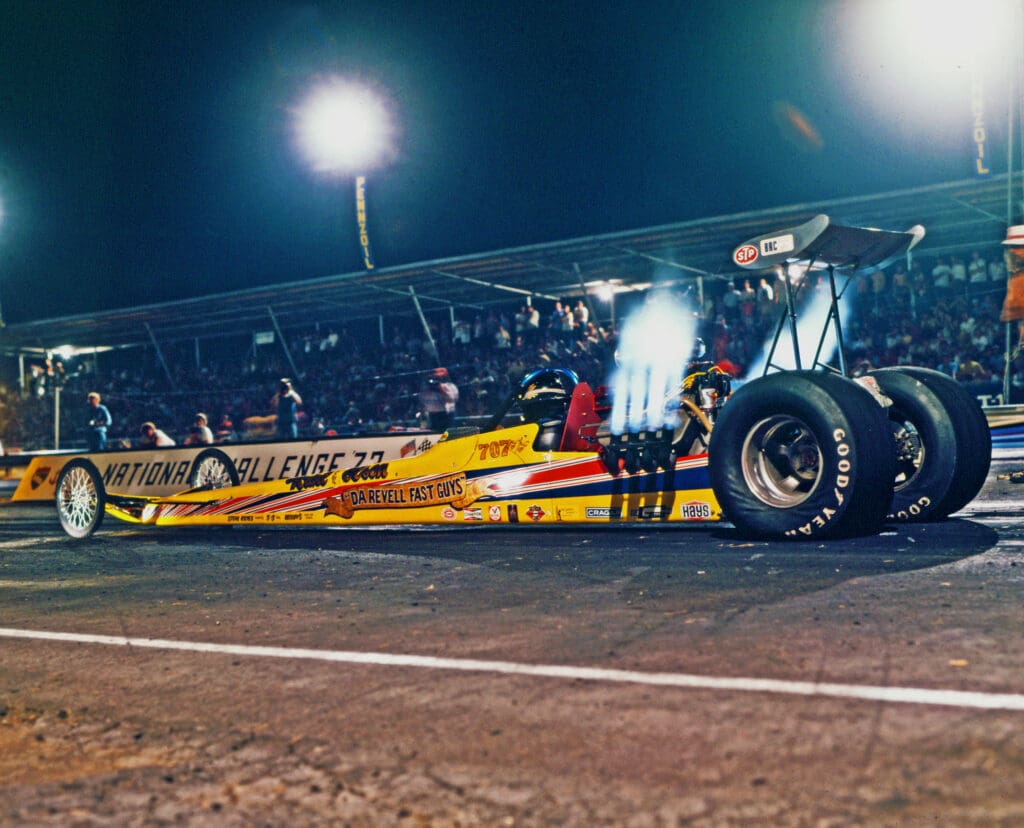
Steve Reyes Photo

The royalty checks were important, but the promotional value may have been even greater.

Every decal sheet inside the box featured the companies supporting the real race car. Every youngster carefully applying those decals was unknowingly learning the names of the businesses that helped make professional drag racing possible.

The sponsors lined up to take advantage of the extra branding. Instead of reaching only spectators in the grandstands, their logos now traveled into homes across America. Revell had created a way for sponsors to remain in front of consumers long after race weekend ended.

“They could see their name on every one of those boxes and every one of those models,” Olson said. “It helped everybody.”

While racers and sponsors discovered a new revenue stream, photographer Steve Reyes helped create the images that sold the dream.
The iconic artwork covering Revell boxes wasn’t artwork at all.
It began as iconic drag racing photographs.

Reyes photographed many of the sport’s biggest stars for Revell packaging, including Gene Snow, Don Prudhomme, Mickey Thompson’s Funny Cars and numerous other headline attractions. Those photographs became the face of drag racing for thousands of youngsters who had never attended a national event.

“I was getting $750 a car,” Reyes recalled.

For a freelance motorsports photographer in the early 1970s, Revell assignments represented some of the best-paying work available.
Then racing economics intervened, and the nature of that beast for the straight-line sport entered the picture.

Another photographer offered to shoot the same projects for a fraction of the price.

“Les Lovett went in there and said he’d do them for $150,” Reyes said. “That pretty much ended my Revell work.”

Reyes laughs about the experience today because it reflected racing’s reality. Someone was always willing to do the same job for less.
Still, he never forgot what those assignments meant.

“They definitely paid the rent,” Reyes said.
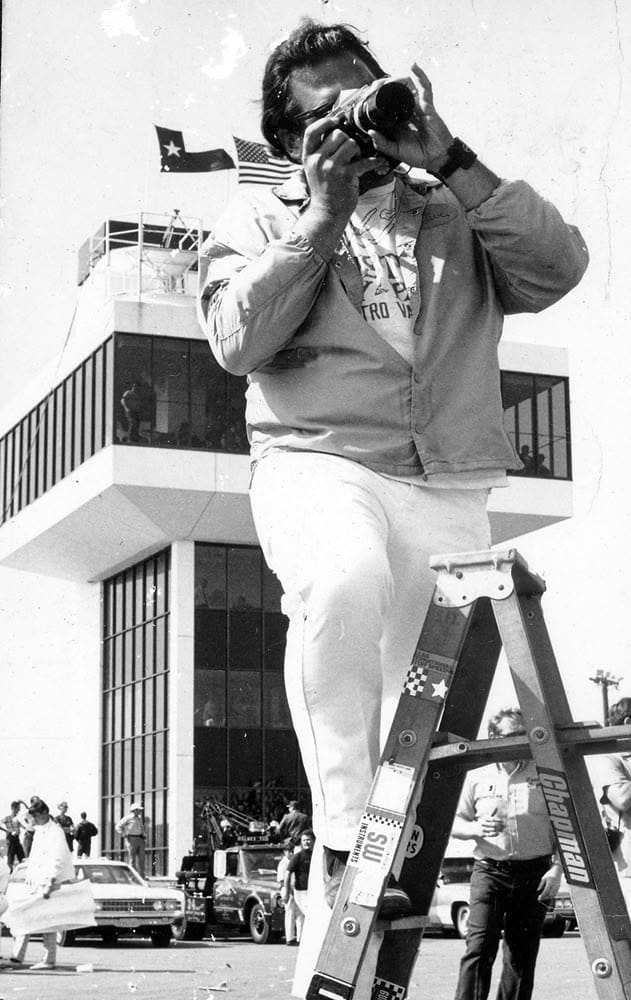
It was the legendary Steve Reyes who photographed the majority of the early Revel model box designs before he waas undercut on the gig. (DD Cleveland Photo)

By the end of the decade, Revell had accomplished something few companies had imagined possible. It had proven that drag racers could become marketable personalities whose value extended far beyond the finish line.

Then popular culture shifted.

McCulloch remembers when Revell officials explained the company’s future no longer revolved around Funny Cars and Top Fuel dragsters.

“They told me, ‘We’re going to Star Wars,'” McCulloch recalled.

Drag racing hadn’t stopped selling. America had moved on to its next obsession.

Revell’s impact on drag racing, however, never disappeared.

It helped build a business model that forever changed how drag racing marketed itself, proving that sometimes the most influential innovations don’t begin in a race shop.

Sometimes they begin in the toy aisle.

Share the Insights?

Click here to share the article.

ad space x ad space

ad space x ad space

Competition Plus Team

Since our inception, we have been passionately dedicated to delivering the most accurate, timely, and compelling content in the world of drag racing. Our readers depend on us for the latest news, in-depth features, expert analysis, and exclusive interviews that connect you to the sport’s pulse.

Sign up for our newsletters and email list.

This field is for validation purposes and should be left unchanged.
Name

REVELL BUILT MORE THAN MODEL CARS – IT HELPED BUILD DRAG RACING

The 1970s belonged to kids with orange Hot Wheels tracks stretched across bedroom floors, Cox gas-powered racers screaming through neighborhood streets and shelves lined with Revell model kits waiting for glue, paint and imagination. Then came junior high, when playing with toy cars suddenly wasn’t considered cool anymore.

Revell Model Company saw something almost nobody else recognized.

The California company understood those same youngsters weren’t abandoning cars. They were becoming drag racing fans, and instead of asking them to leave the hobby behind, Revell gave them another way to stay connected by putting their heroes inside cardboard boxes hanging from hobby shop walls.

Millions of model kits later, Revell had accomplished far more than filling hobby shop shelves.

The company quietly created one of drag racing’s earliest merchandising programs, helped finance race teams from coast to coast and proved race cars could continue earning money long after they were pushed back into the trailer.

Ironically, the program that changed the business of drag racing wasn’t started by an automotive company or a speed equipment manufacturer.

It began because Funny Car racer Ed McCulloch asked a tire company one simple question.

“We actually were the first Revell sponsored car,” McCulloch recalled. “It came about… It’s a bit of a story how that happened.”

McCulloch wasn’t trying to reinvent sponsorship.

He wanted to understand why companies poured money into Indianapolis racers while drag racers couldn’t even get through the tire line.

The story started at the 1970 NHRA Winternationals in Pomona.

McCulloch and partner John “Whipple” Green arrived with a competitive Funny Car only to learn they couldn’t buy the M&H slicks everyone wanted because established racers received priority. Instead of packing up, McCulloch crossed the pits and bought Firestone tires, unknowingly beginning a relationship that would change not only his own career but the fortunes of dozens of drag racers.

The 1970s belonged to kids with orange Hot Wheels tracks stretched across bedroom floors, Cox gas-powered racers screaming through neighborhood streets and shelves lined with Revell model kits waiting for glue, paint and imagination. Then came junior high, when playing with toy cars suddenly wasn’t considered cool anymore.

Revell Model Company saw something almost nobody else recognized.
The California company understood those same youngsters weren’t abandoning cars. They were becoming drag racing fans, and instead of asking them to leave the hobby behind, Revell gave them another way to stay connected by putting their heroes inside cardboard boxes hanging from hobby shop walls.

Millions of model kits later, Revell had accomplished far more than filling hobby shop shelves.

The company quietly created one of drag racing’s earliest merchandising programs, helped finance race teams from coast to coast and proved race cars could continue earning money long after they were pushed back into the trailer.

Ironically, the program that changed the business of drag racing wasn’t started by an automotive company or a speed equipment manufacturer.
It began because Funny Car racer Ed McCulloch asked a tire company one simple question.

“We actually were the first Revell sponsored car,” McCulloch recalled. “It came about… It’s a bit of a story how that happened.”
McCulloch wasn’t trying to reinvent sponsorship.

He wanted to understand why companies poured money into Indianapolis racers while drag racers couldn’t even get through the tire line.

The story started at the 1970 NHRA Winternationals in Pomona.
McCulloch and partner John “Whipple” Green arrived with a competitive Funny Car only to learn they couldn’t buy the M&H slicks everyone wanted because established racers received priority. Instead of packing up, McCulloch crossed the pits and bought Firestone tires, unknowingly beginning a relationship that would change not only his own career but the fortunes of dozens of drag racers.

Working with Firestone as a tire tester eventually gave McCulloch the opportunity to ask the question every independent racer wanted answered.

“Hey, listen, I don’t understand something,” McCulloch remembered telling company officials. “You pay the Firestone driver guys, IndyCar guys and all that. You pay them tons of money. How come we can’t get some sort of a deal with Firestone?”

Firestone didn’t have a sponsorship program for drag racing.
Instead of simply saying no, company officials asked one of their promotional representatives to find McCulloch outside backing.
The answer came from two companies with little connection to drag racing.

Neither Castrol nor Revell built race cars. One sold motor oil and the other plastic model kits but together, they helped launch what became one of the first merchandising-driven sponsorship programs in professional drag racing.

“That’s what got us going back then,” McCulloch said. “Right after we got the Revell deal, then Gene Snow was, I think, the second guy to get a deal.”

McCulloch’s agreement differed from almost every one that followed.
He received guaranteed sponsorship money along with royalties from model-kit sales. Most of the racers who followed accepted royalty-only agreements because the opportunity to earn money every time a youngster bought their model was unlike anything drag racing had seen.

“Back then, any money was good money,” McCulloch said. “We got paid a contract plus a royalty. Snow might’ve got some money, but almost everybody else was just all a royalty. That’s why you saw so many cars out there is, ‘Okay, we’ll do a model of your car and we’ll pay you a royalty.’ And everybody jumped on it.”

Every model kit sold represented more than another toy on a hobby shop shelf.

It helped buy nitromethane, clutch discs, blower belts and diesel fuel for the transporter headed to the next national event or match race.
Revell was in the business of selling model kits, not saving drag racing. The sponsorship program became one of those rare business decisions that benefited everyone involved.

Drag racers weren’t just competitors. They were brands. And, back in the day there was no stronger brand than “Jungle” Jim Liberman, whose larger-than-life personality helped prove that fans weren’t just buying model cars.

They were buying the people who drove them. Jungle” Pam Hardy had a front row seat for the transformation.

Standing beside Liberman during the height of his popularity, Hardy watched Revell’s influence spread far beyond hobby shops. What began as another sponsorship quickly changed the way Funny Cars looked, introducing personalities and graphics that became as recognizable as the drivers themselves.

“I just know that they stepped up with money and a design and put it on the car and all of a sudden sort of a little era in Funny Car paint jobs took off,” Hardy explained. “Everybody had to have Revvvolution and the Snowman and they had to have characters on their car.”

Revell wasn’t betting on race cars. Instead, it was betting on the kids standing against the fence watching them. Hardy’s recollection underscores why Revell became so much more than a model company.

The process was more than just putting its logo on race cars. It encouraged racers to build memorable identities that looked just as good on the shelf of a hobby shop as they did sitting in the staging lanes.

Within a few seasons, Funny Cars no longer needed only horsepower to stand apart. They needed identities. McCulloch had Revellution. Gene Snow had the Snowman. Suddenly everyone wanted a name, a character and a paint scheme fans could recognize before the engine ever fired.

Steve Reyes Photo

Drag racers weren’t just competitors. They were brands. And, back in the day there was no stronger brand than “Jungle” Jim Liberman, whose larger-than-life personality helped prove that fans weren’t just buying model cars.

They were buying the people who drove them. Jungle” Pam Hardy had a front row seat for the transformation.

Standing beside Liberman during the height of his popularity, Hardy watched Revell’s influence spread far beyond hobby shops. What began as another sponsorship quickly changed the way Funny Cars looked, introducing personalities and graphics that became as recognizable as the drivers themselves.

“I just know that they stepped up with money and a design and put it on the car and all of a sudden sort of a little era in Funny Car paint jobs took off,” Hardy explained. “Everybody had to have Revvvolution and the Snowman and they had to have characters on their car.”

Revell wasn’t betting on race cars. Instead, it was betting on the kids standing against the fence watching them. Hardy’s recollection underscores why Revell became so much more than a model company.

The process was more than just putting its logo on race cars. It encouraged racers to build memorable identities that looked just as good on the shelf of a hobby shop as they did sitting in the staging lanes.

Within a few seasons, Funny Cars no longer needed only horsepower to stand apart. They needed identities. McCulloch had Revellution. Gene Snow had the Snowman. Suddenly everyone wanted a name, a character and a paint scheme fans could recognize before the engine ever fired.

Carl Olson watched the phenomenon from another angle.

While McCulloch opened the door, Olson saw how quickly racers embraced a sponsorship program unlike anything drag racing had experienced.

“I think they struck gold with the drag racing thing because it was so popular,” Olson said. “And then Mattel had the Hot Wheels thing with Prudhomme and McEwen. Kids would graduate from Hot Wheels to the Revell models because they were more sophisticated. You glued them together, painted them and put the decals on them. They were just more realistic.”

Revell did more than create fans; it retained them for a lifetime.

The kids outgrew die-cast toys, and because of that Revell offered a deeper connection to the sport. Every model required an investment of time.

Olson’s program with Revell was different than McCulloch’s in that he didn’t receive guaranteed sponsorship money. He was paid entirely through royalties, creating an unusual partnership by generating income due to popularity.

“I didn’t get a contract like Ed did,” Olson said. “Mine was strictly royalty. But it turned out to be the best cash sponsorship I ever had because those models sold.”

Steve Reyes Photo

The royalty checks were important, but the promotional value may have been even greater.

Every decal sheet inside the box featured the companies supporting the real race car. Every youngster carefully applying those decals was unknowingly learning the names of the businesses that helped make professional drag racing possible.

The sponsors lined up to take advantage of the extra branding. Instead of reaching only spectators in the grandstands, their logos now traveled into homes across America. Revell had created a way for sponsors to remain in front of consumers long after race weekend ended.

“They could see their name on every one of those boxes and every one of those models,” Olson said. “It helped everybody.”

While racers and sponsors discovered a new revenue stream, photographer Steve Reyes helped create the images that sold the dream.
The iconic artwork covering Revell boxes wasn’t artwork at all.
It began as iconic drag racing photographs.

Reyes photographed many of the sport’s biggest stars for Revell packaging, including Gene Snow, Don Prudhomme, Mickey Thompson’s Funny Cars and numerous other headline attractions. Those photographs became the face of drag racing for thousands of youngsters who had never attended a national event.

“I was getting $750 a car,” Reyes recalled.

For a freelance motorsports photographer in the early 1970s, Revell assignments represented some of the best-paying work available.
Then racing economics intervened, and the nature of that beast for the straight-line sport entered the picture.

Another photographer offered to shoot the same projects for a fraction of the price.

“Les Lovett went in there and said he’d do them for $150,” Reyes said. “That pretty much ended my Revell work.”

Reyes laughs about the experience today because it reflected racing’s reality. Someone was always willing to do the same job for less.
Still, he never forgot what those assignments meant.

“They definitely paid the rent,” Reyes said.

It was the legendary Steve Reyes who photographed the majority of the early Revel model box designs before he waas undercut on the gig. (DD Cleveland Photo)

By the end of the decade, Revell had accomplished something few companies had imagined possible. It had proven that drag racers could become marketable personalities whose value extended far beyond the finish line.

Then popular culture shifted.

McCulloch remembers when Revell officials explained the company’s future no longer revolved around Funny Cars and Top Fuel dragsters.

“They told me, ‘We’re going to Star Wars,'” McCulloch recalled.

Drag racing hadn’t stopped selling. America had moved on to its next obsession.

Revell’s impact on drag racing, however, never disappeared.

It helped build a business model that forever changed how drag racing marketed itself, proving that sometimes the most influential innovations don’t begin in a race shop.

Sometimes they begin in the toy aisle.

Picture of John Doe

John Doe

Lorem ipsum dolor sit amet consectetur adipiscing elit dolor

More Posts

Send Us A Message

Picture of Bobby Bennett
Bobby Bennett
Thank you for joining us on this journey. Your support and trust inspire us every day to deliver the best in drag racing journalism. We are excited about the future and look forward to continuing to serve you with the same dedication and passion that has defined CompetitionPlus.com from the very beginning.

Don’t miss these other exciting stories!

Explore more action packed posts on Competition Plus, where we dive into the latest in Drag Racing News. Discover a range of topics, from race coverage to in-depth interviews, to keep you informed and entertained.