In my mind, some of the best-looking and most appealing race cars to grace the quarter mile were Funny Cars of the late 1960s through the 1980s. During that time period, automotive and drag racing magazines loved to feature these cars on their color pages. Many of the editors considered Funny Cars to be a true art form of the time and, of course, the reason people bought the magazine.
And I made my living photographing and selling images of these works of rolling art. Back in those days, a magazine was limited in how many color pages it could use each month. The usual number was around six single pages and maybe a center spread. Now, if an advertiser came forward and wanted to purchase a color ad, then there were fewer color pages available for editorial content.
So, photographing the most colorful cars was a no-brainer for me. My choices reflect how a photographer chooses a subject for a color photo. The color of the car, the lettering and, of course, the action all played a part in selling an image to a magazine. I learned very quickly what style of paint and lettering not to photograph in color. The question I get asked the most is “Why didn’t you shoot more color?” That’s simple to answer, because I sold more black-and-white than color. Black-and-white paid the bills, and color for me was a bonus.
Okay, I’ve picked out 24 images of Funny Cars in color from the late 1960s through the 1980s. Some you’ll agree deserved to be featured in color, and some you’ll disagree with, but remember, “Beauty is in the eye of the beholder.”
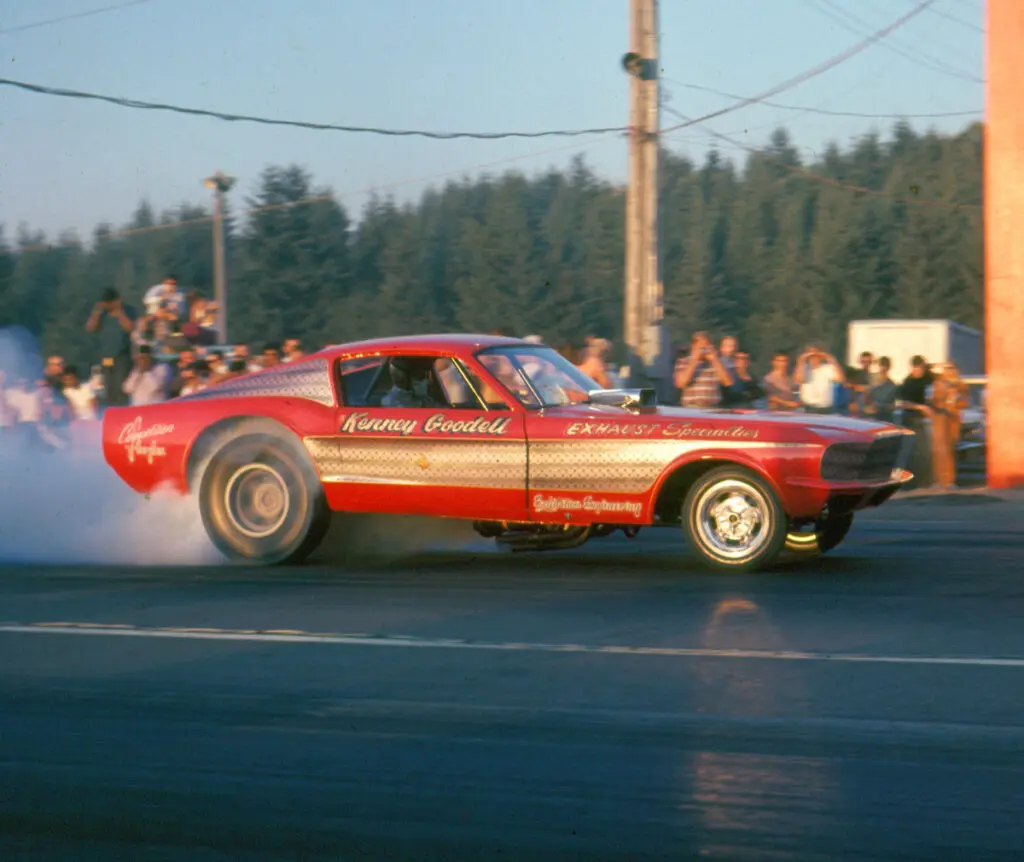
1967 saw Kenny Goodell racing his beautiful Ford Mustang in his home state of Washington. This was the first in a great lineup of Funny Cars over the next seven years.
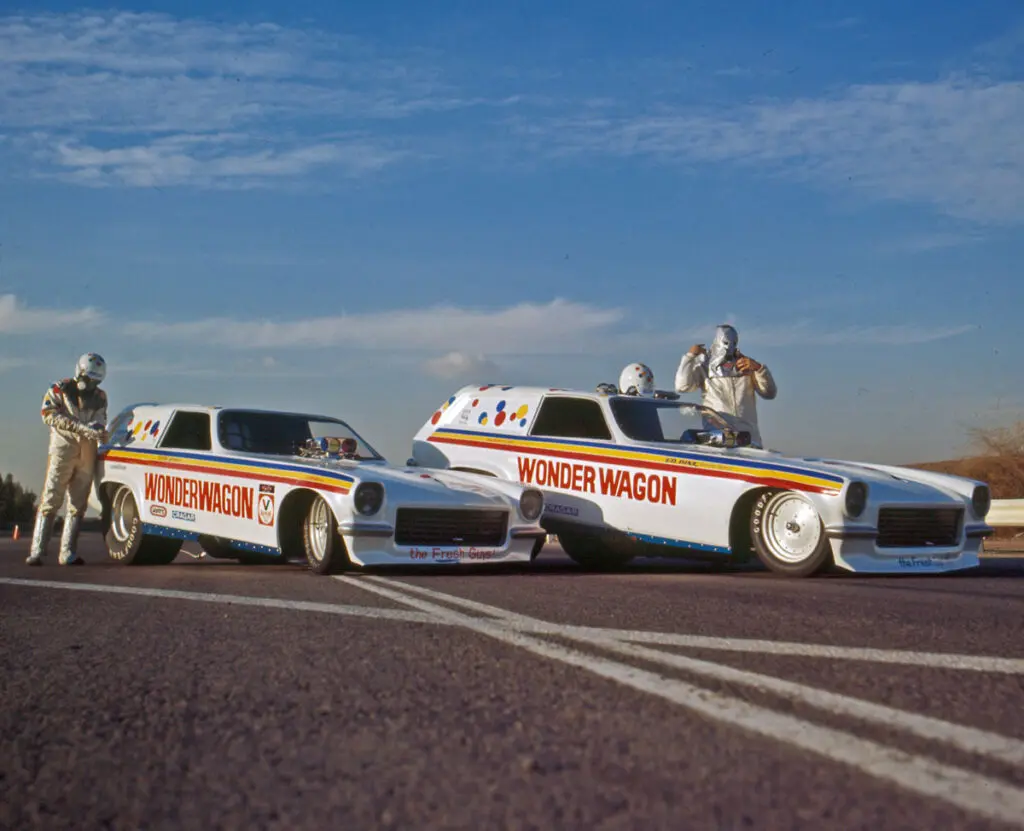
Funny Cars that looked like a giant loaf of bread? Heck, why not? The 1971 Wonder Wagon Funny Car team consisted of Kelly Brown (left) and Glen Way (right). Glen’s car was destroyed while testing and was not rebuilt. However, Kelly Brown and his Wonder Wagon raced the entire season in 1971 and 1972.
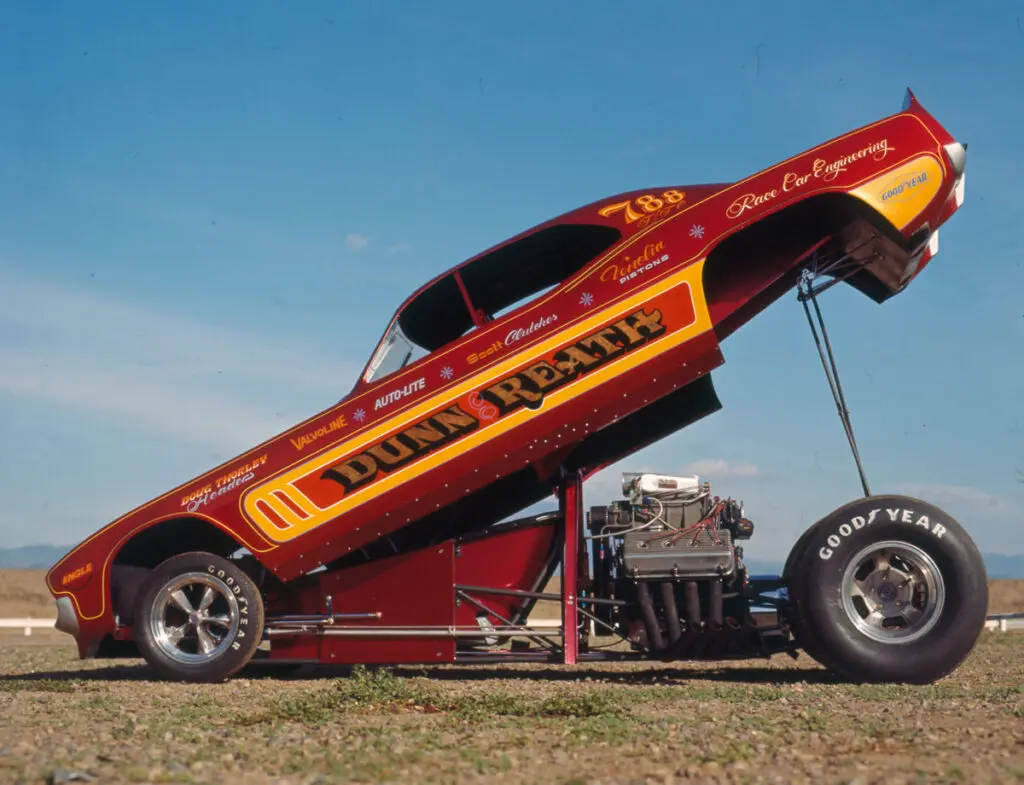
It’s a shame not a lot of fans got to see the terrific original paint scheme on the Dunn & Reath rear-engine AA/FC. Here’s the car as I photographed it at OCIR in 1972, right out of the paint shop. After only a few outings, they had the car repainted a flat, dull red. Boring … yawn.
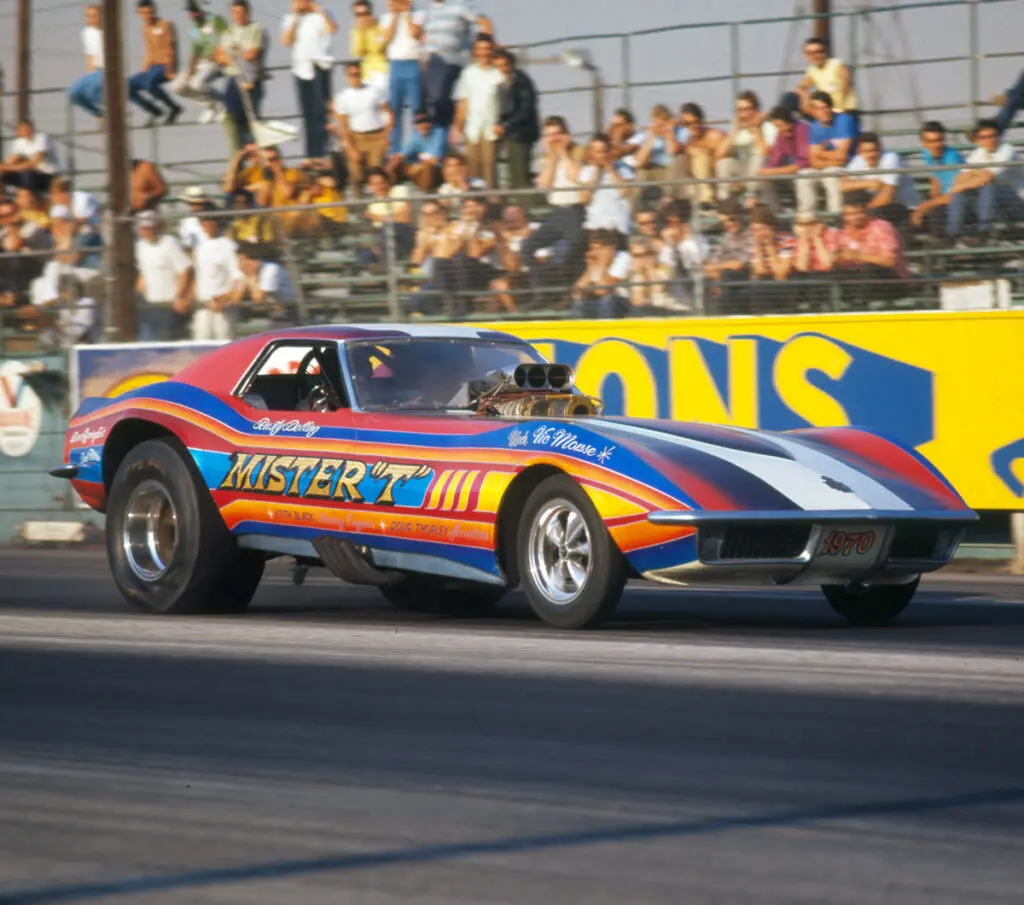
Sadly, this beauty wasn’t around for a long time. It’s 1970 at Lions, and the freshly repainted “Mister T” Chevrolet Corvette AA/FC is making its final pass down the racetrack. Driver Rusty Delling experienced a huge transmission explosion at the finish line, causing the car to veer head-on into the guardrail, destroying the car and leaving Delling seriously injured. Delling recovered, but the beautiful Corvette was not rebuilt.
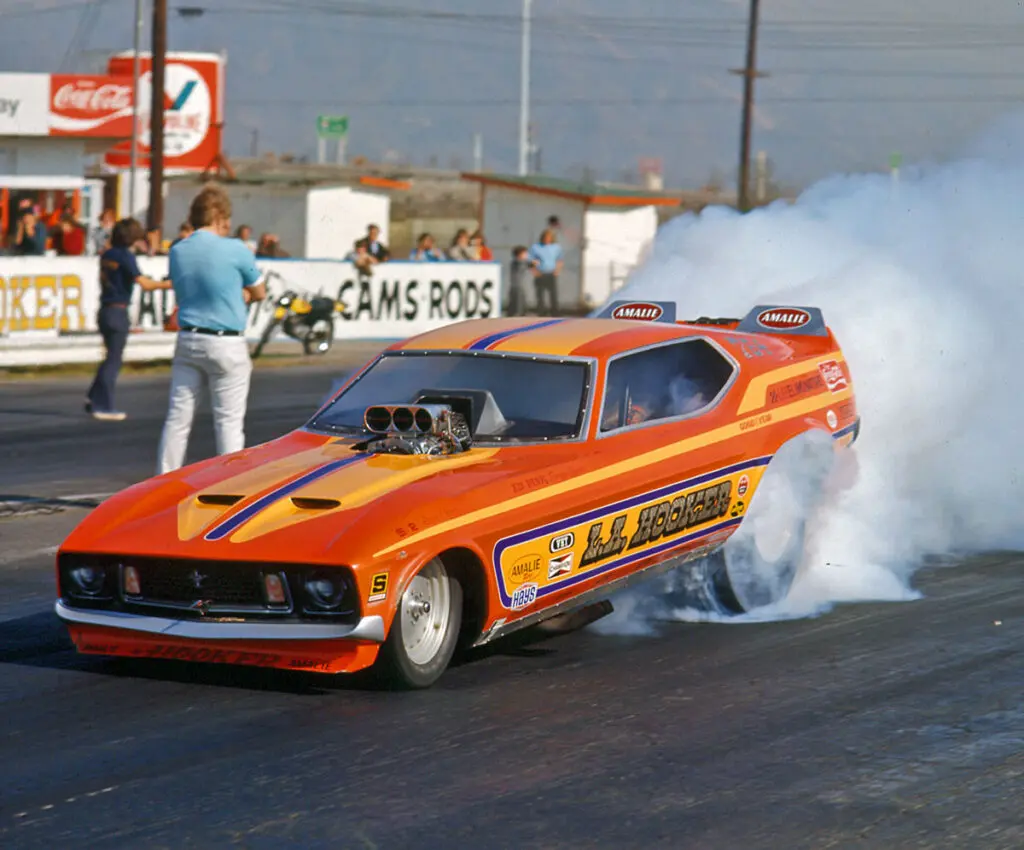
The Southern California-based Gene Beaver and the Condit Bros. did well with the color and lettering for their “LA Hooker” Ford Mustang AA/FC. Nice and bright with outstanding lettering, the “LA Hooker” became a favorite for photographers and race fans throughout the U.S. in 1972 and 1973. And yes, I sold many a color image of the “LA Hooker” to magazines back in the day.
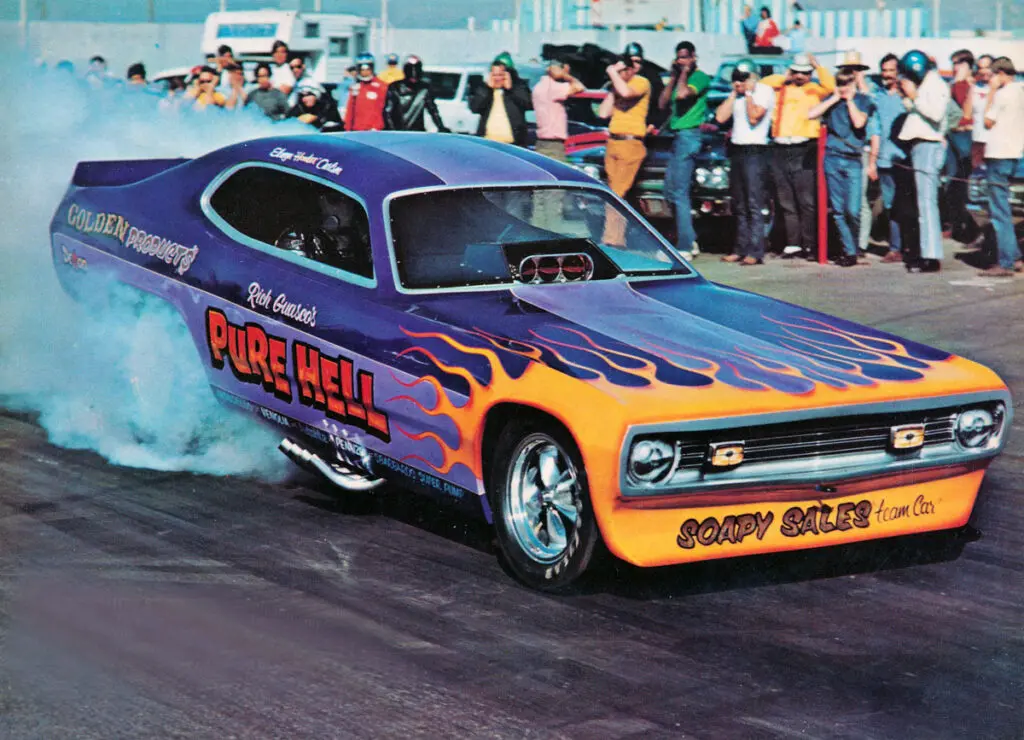
One of my Northern California guys who made my list was Rich Guasco’s “Pure Hell” Dodge Demon-bodied AA/FC. I think color film was made for photographing this car, LOL. This was Guasco’s second try at the world of Funny Car racing. His first car, which was unpainted, burned to the ground only a few months before this beauty hit the quarter mile with Elwynn “Honker” Carlson and then Dave Beebe at the controls.
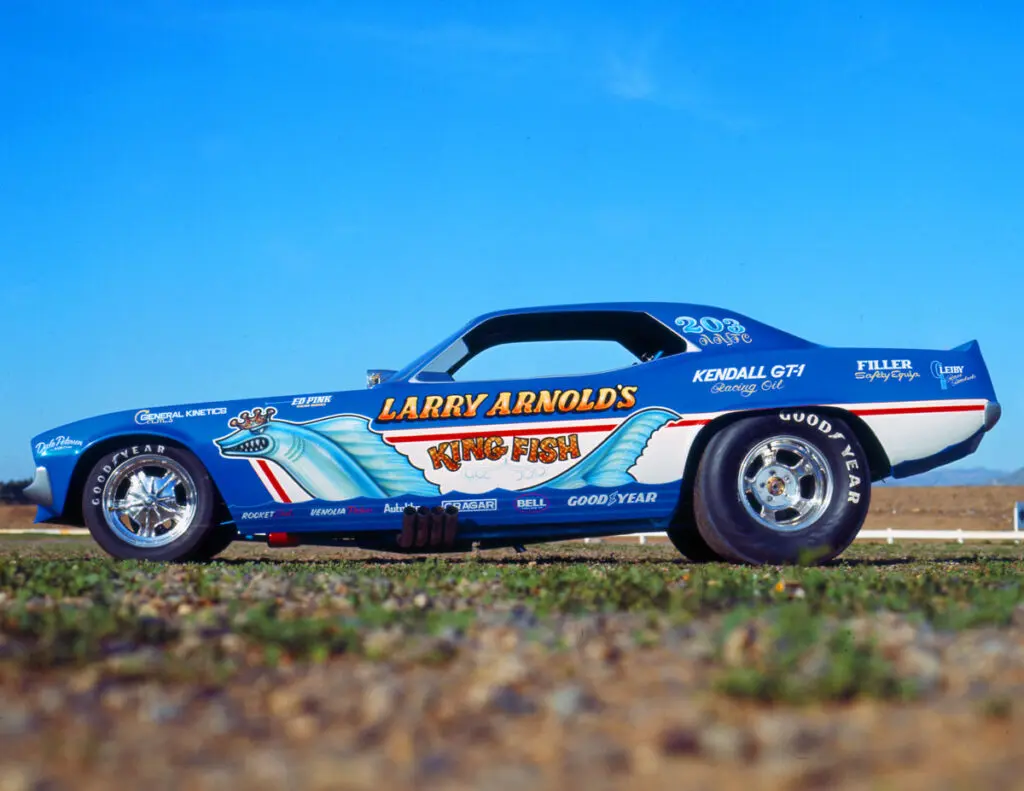
Memphis, Tenn.,-based Larry Arnold outdid himself with his “Kingfish” ‘Cuda AA/FC. His AA/FC got lots of attention with a great color scheme and some really cool graphics. Arnold’s design and overall appearance of his “Kingfish” made him a “wanted” man with fans and promoters nationwide in the early 1970s.
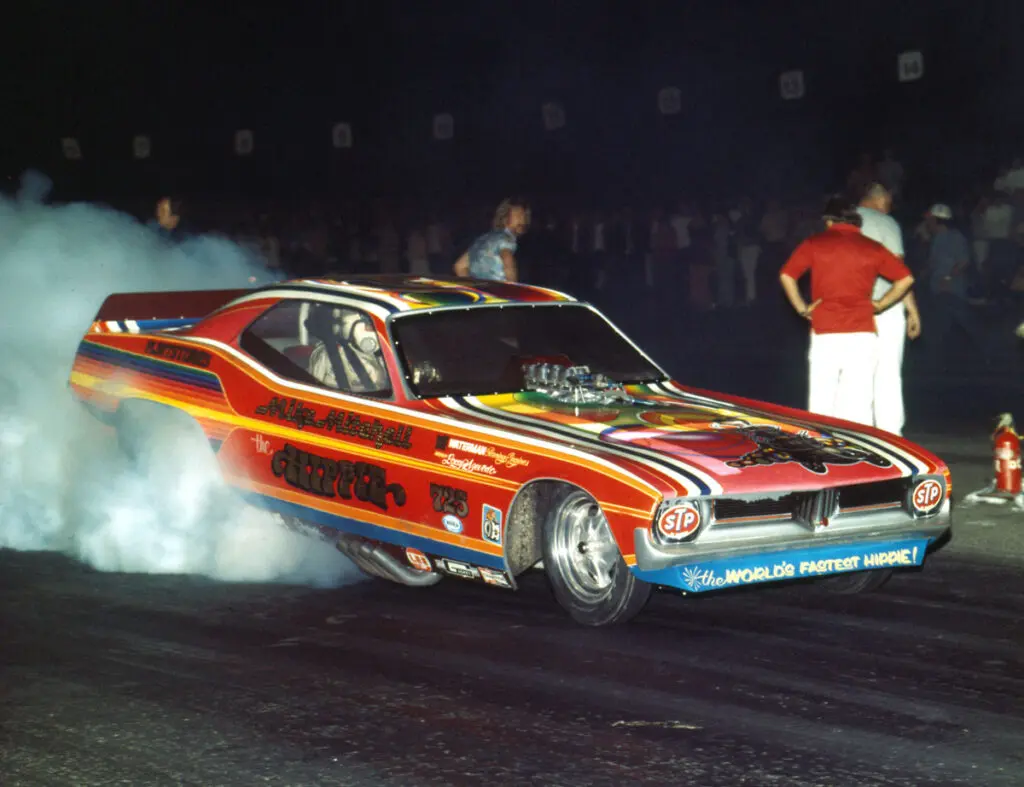
Another Northern California racer on my list is “the Hippie” Mike Mitchell and his multi-colored ‘**Cuda AA/FC. Mitchell carried his paint scheme over from his days racing his 1933 Willys AA/GS to his flopper. One of the highlights of his AA/FC was the painting of a “Hoo-Kah” water pipe on the hood of the AA/FC. But I must admit that I wasn’t a big fan of the “Hippie” lettering on the sides of the AA/FC.
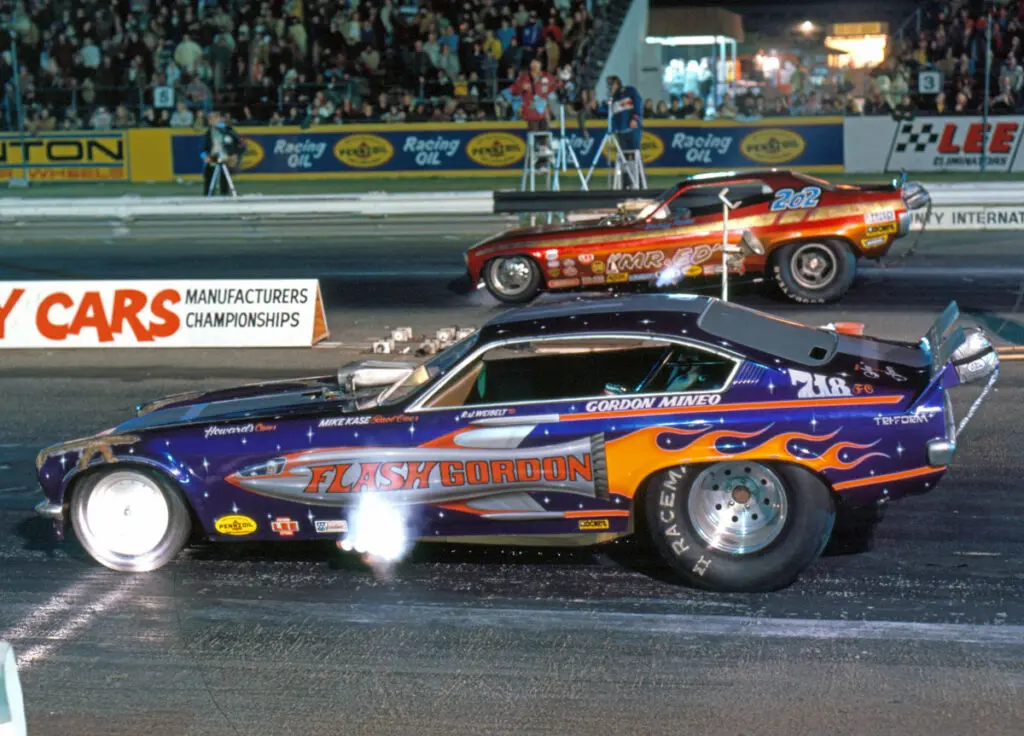
Two of Southern California’s finest-looking AA/FCs line up to race each other at OCIR. “Flash” Gordon Mineo and his Chevrolet Vega AA/FC and Ed Wills’ “Mr. Ed” Plymouth Satellite AA/FC. Both cars stood out day or night. Mineo’s graphics delighted young and old race fans across the U.S. while the “Mr. Ed” AA/FC mainly raced in Southern California not far from its base in Fresno Calif. Wills had a “who’s who” of drivers that included Mike Snively Dave Beebe and Bobby Rowe in his Satellite while Mineo did his own driving chores in the purple Vega.
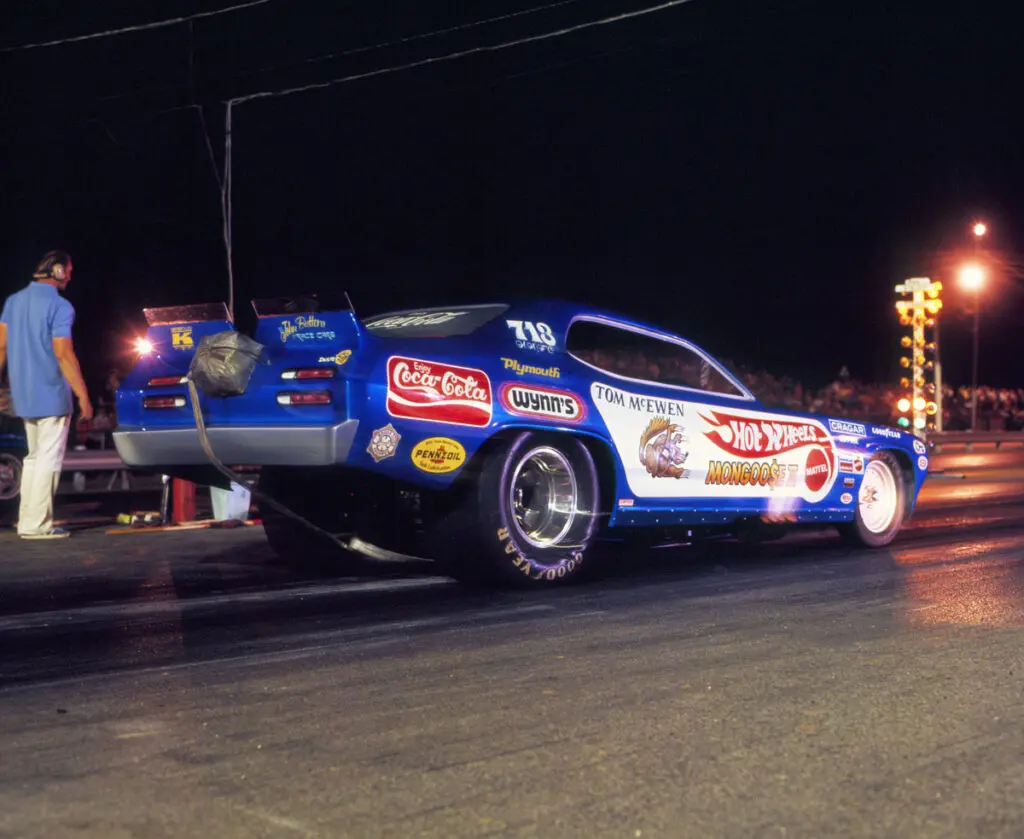
Plain and simple was the Mattel paint design for the 1972 version of Tom “Mongoose” McEwen’s AA/FC. For me this was a very nice look for “the Mongoose.” A great balance of color and lettering got Mattel and McEwen a lot of attention and ink in 1972.
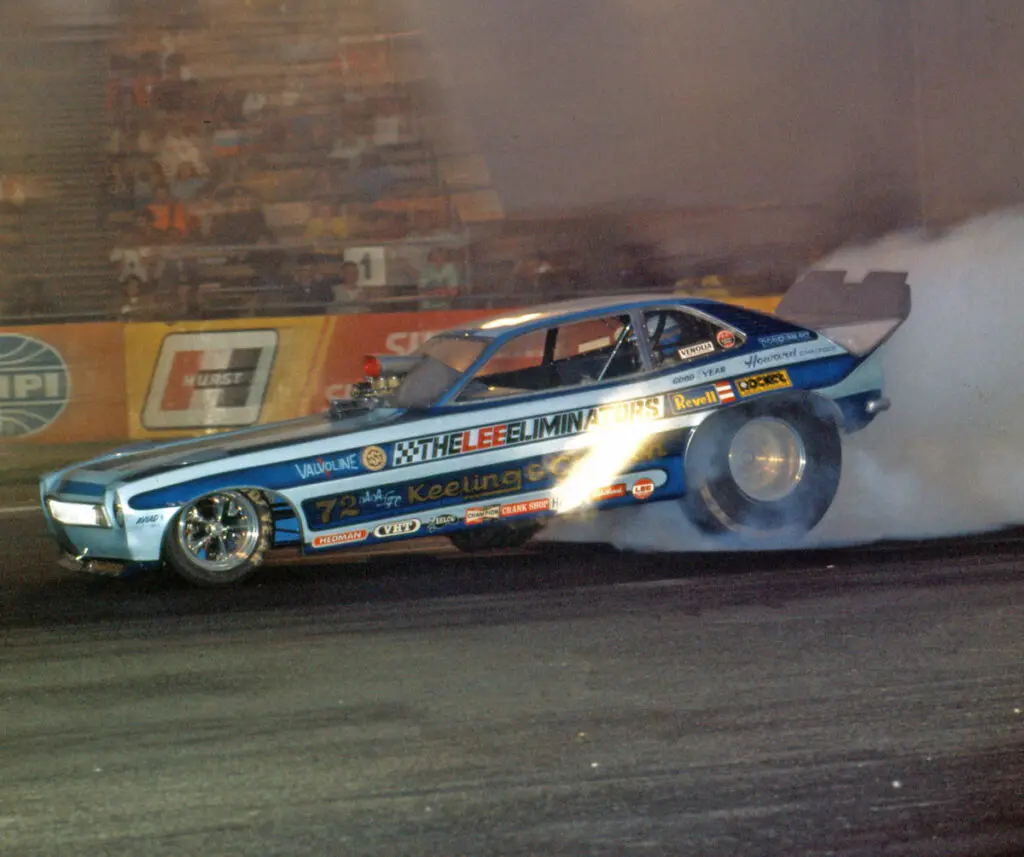
Everything Southern California’s John Keeling and Jerry Clayton put on the racetrack was great-looking and first class. That includes their Top Fuel dragsters and different-bodied Funny Cars. Their line of “California Chargers” was second to no one. This car was their Ford Pinto AA/FC driven by Rick Ramsey and then Tom Ferraro in the early 1970s. Their “California Charger” AA/FD was one of the first Revell drag racing model kits done by the Venice Calif.-based company. I know because I did the photos for the box.
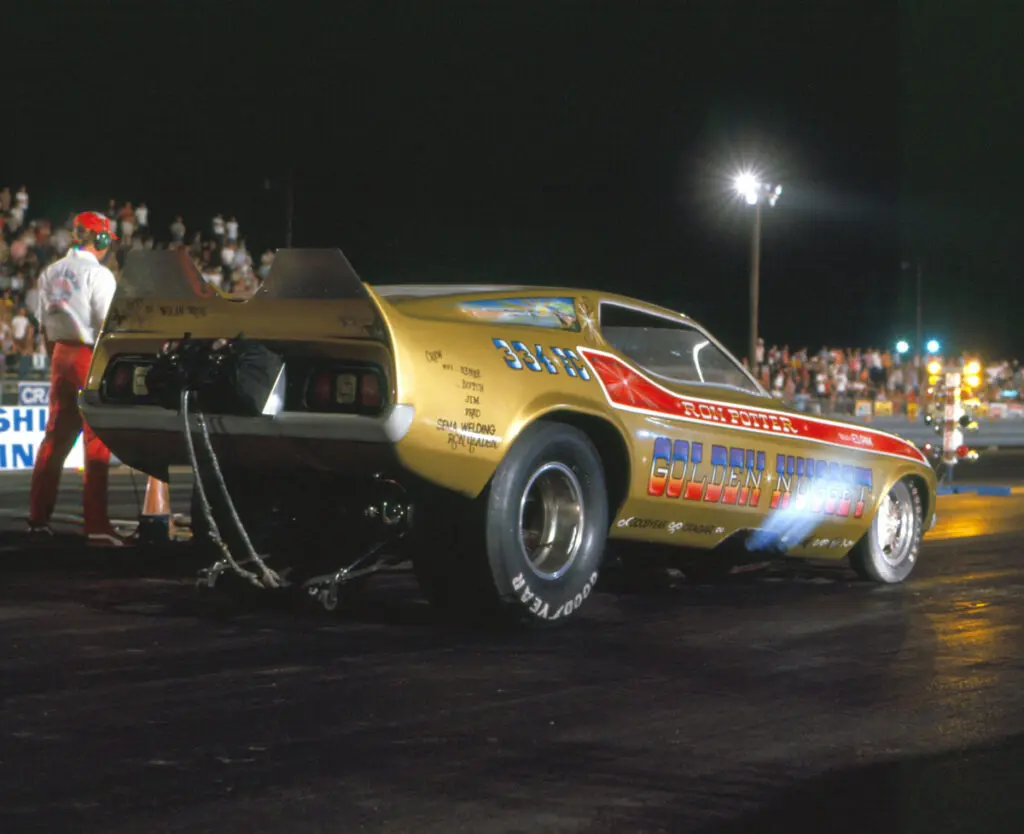
The color gold wasn’t a favorite of mine but the Midwest-based Ron Potter changed that with his “Golden Nugget” Ford Mustang AA/FC. Potter made the color work for him with a great layout of secondary colors and lettering on the Mustang. Night or day this car was a delight to photograph and I did both back in the day.
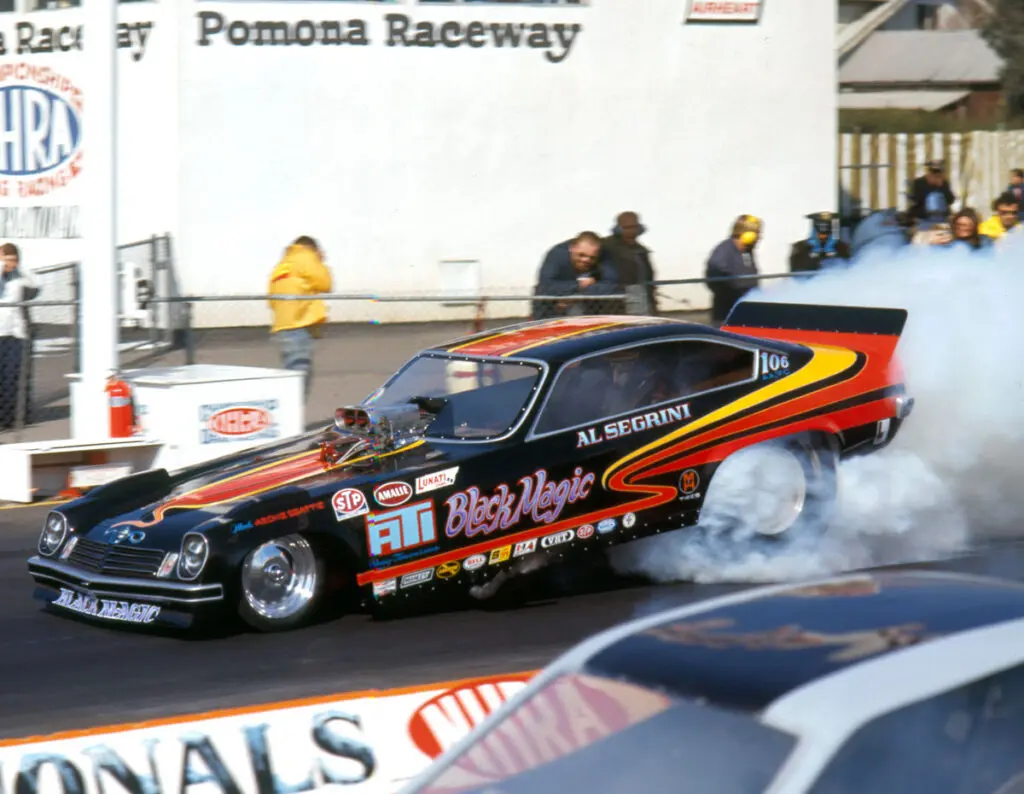
The color black was usually ignored on Funny Cars in the early 1970s but the East Coast-based ATI “Black Magic” Chevrolet Vega changed that line of thinking. The Al Segrini-driven and Jim Beattie-owned Vega was featured in various automotive magazines and was also available on a poster by the Newport Productions people in the early 1970s.
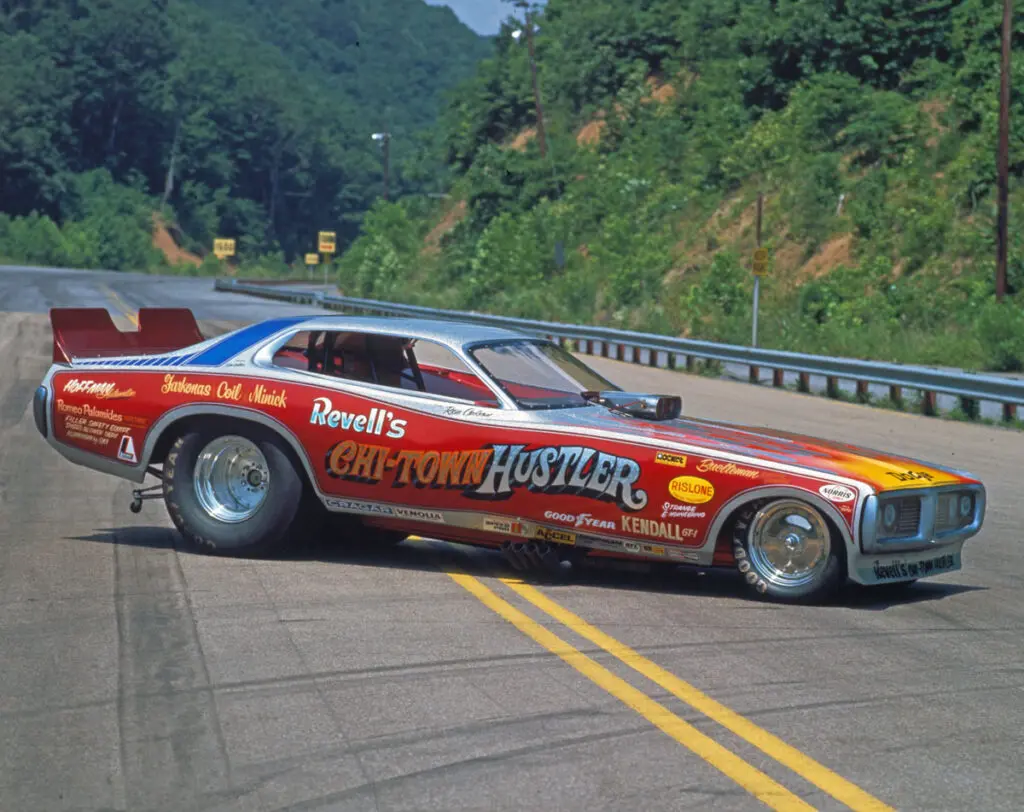
Revell’s design department did well with its overall design on the Chi-Town Hustler Charger AA/FC. The Chicago-based AA/FC driven by Ron Colson sold many model kits for the company. This car was featured on the cover of the “Funny Car Fever” book that I did for CarTech Publishing about 10 years ago. The CarTech editors really liked the eye-catching paint design on the car.
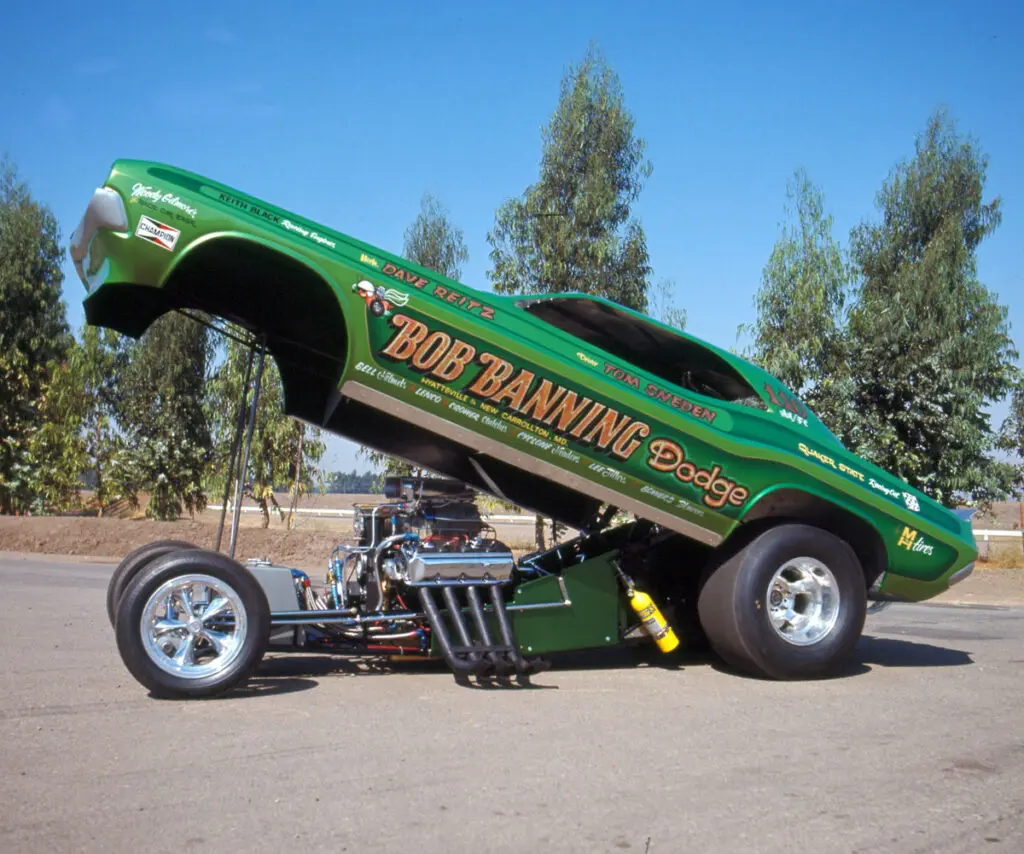
It was a “lean mean green machine” the Maryland-based Bob Banning Dodge AA/FC. The team ignored the so-called “green car curse” and produced this beauty in the early 1970s. Tom Sneden drove the beauty while Dave Reitz turned the wrenches.
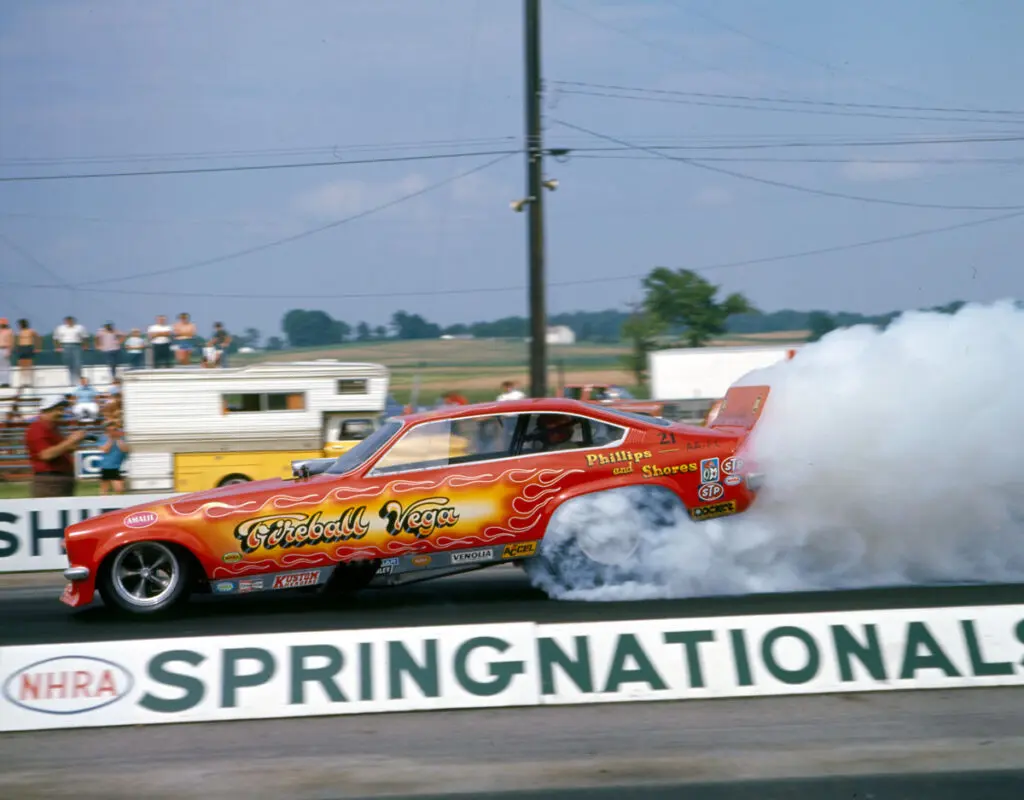
For me it was a toss-up between the Florida-based Phillips & Shores red “Fireball” Vega AA/FC or their white-flamed Vega AA/FC. I liked photographing either version of the Vega. Tom Crevasse or Paul Smith could be found behind the wheel of the Vega. These guys had some crappy things happen to their white version in 1973 and 1974. First at Lakeland Florida the car ran into the Tennessee Bo Weevil AA/FC with temporary driver Lou Azar at the controls. Then in 1974 at the New York Nationals PRA race Barry “Machine Gun” Kelly ran into the back of them in the shutdown area with his Vega AA/FC. Regular driver Tom Crevasse wasn’t injured in the mishap but again it was time to rebuild.
Minnesota’s Tom Hoover always had great-looking race cars with either his AA/FDs or Funny Cars. One of his Chevrolet Corvette AA/FCs was nice enough to earn a center spread in Popular Hot Rodding magazine and in a very rare move the car graced the cover of Hot Rod magazine.
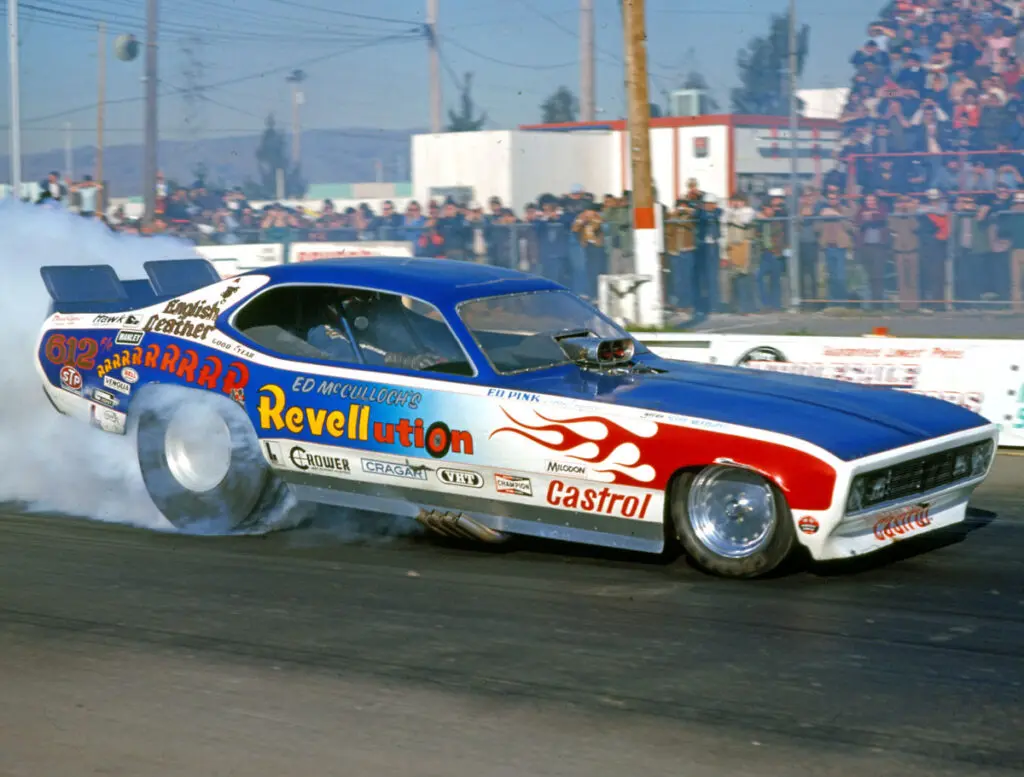
One of the original Revell model kit cars belonged to Art Whipple and Ed “the Ace” McCulloch. This is the Ed McCulloch-owned version of the “Revellution” AA/FC at Fremont Calif. Very nice paint design by the folks at Revell and this photo was featured on the box for the reissue of the “Revellution” model kit. The Revell design people really did their homework when it came to designing eye-catching paint schemes for the cars that they sponsored.
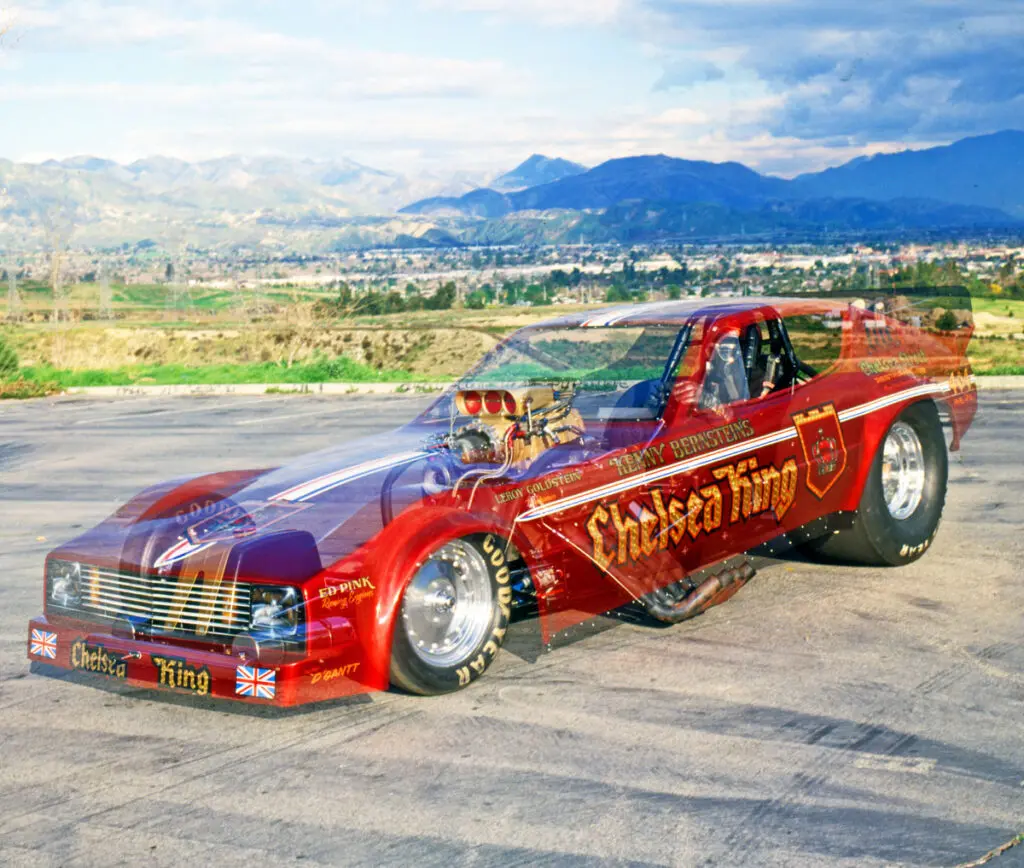
The first AA/FC that Kenny Bernstein owned and drove was first class all the way. His “Chelsea King” AA/FC featured a candy-red and gold-leaf lettering blanket of paint. This was one of only a few Funny Cars that featured this style of paint and lettering that photographed well during the day or night. If you’re wondering about this photo that’s crew chief Leroy Goldstein playing driver as we did a see-through the body photo.
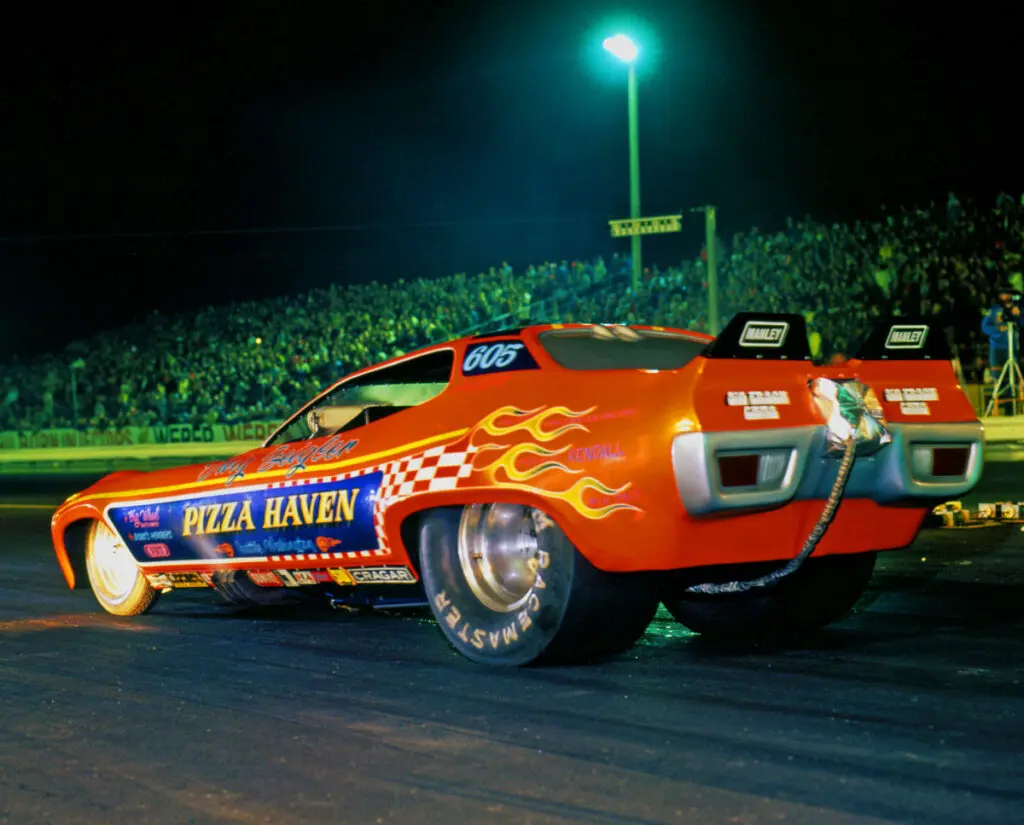
The Northwest-based Twig Zeigler raced some very pretty AA/FCs and his Plymouth Satellite was one of the best of the lot that he owned back in the day. His “Pizza Haven” AA/FC stood out at night and photographed great day or night. His car was well liked by magazine editors. The colors that Zeigler used came off great in the pages of drag racing magazines.
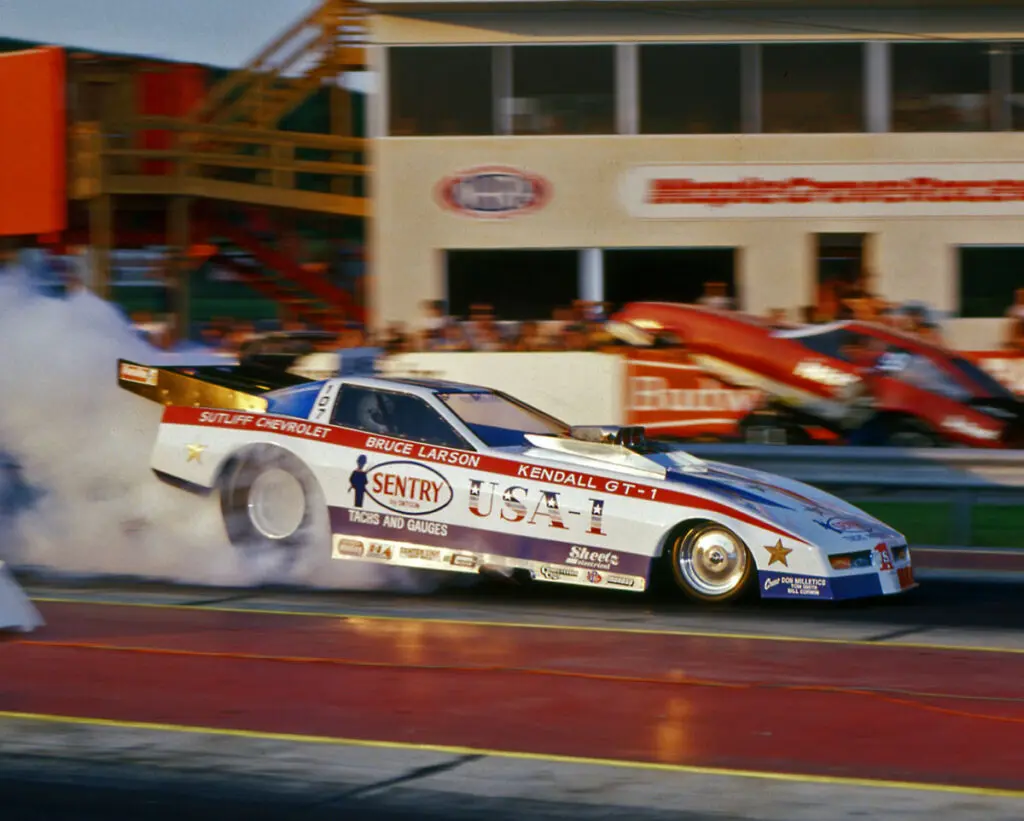
Pennsylvania-based Bruce Larson’s pretty much entire lineup of Funny Cars and Pro Stock cars carried the “USA-1” banner over the years. A very simple design that featured red white and blue colors that blended well on Bruce’s race cars. Very striking and simple lettering gave the car a nice balance. Wonderful to photograph any of Bruce’s race cars.
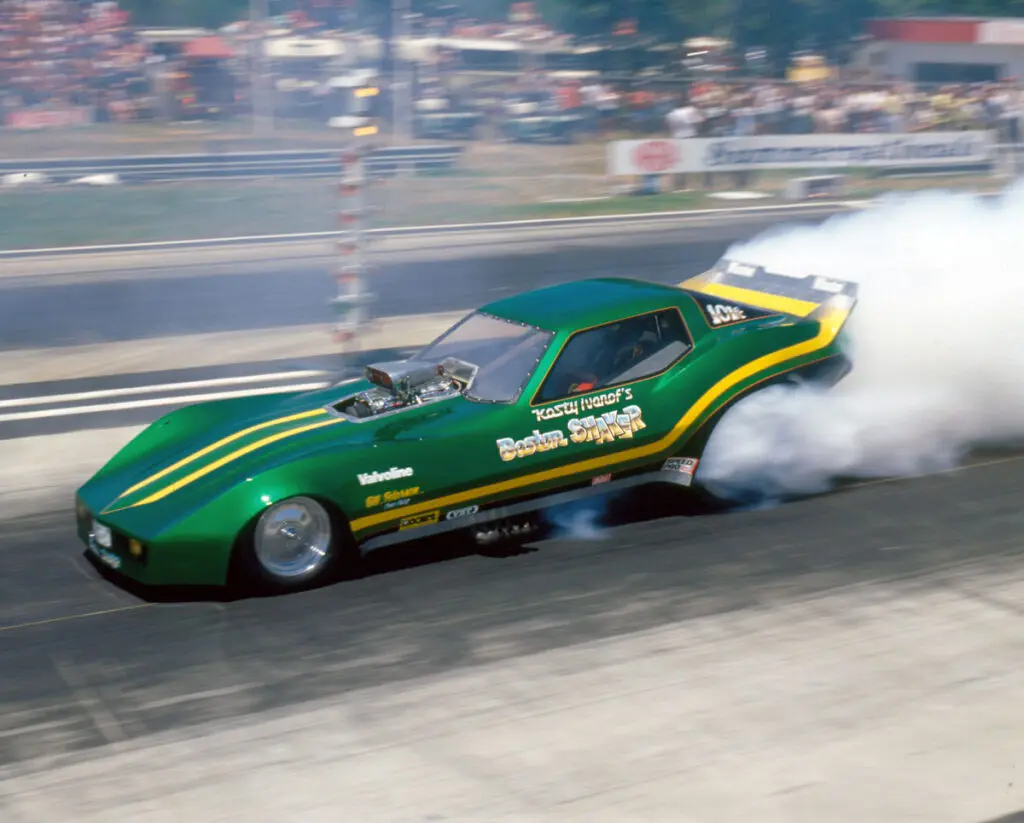
This is the best-looking AA/FC that Boston’s Kosty Ivanof ever owned and raced in his lineup of “Boston Shaker” AA/FCs. He had always raced green race cars but the candy green really was done well on his Chevrolet Corvette AA/FC in 1980 at Englishtown N.J. But I’m not a big fan of how the “Boston Shaker” logo was done on the side of the car.
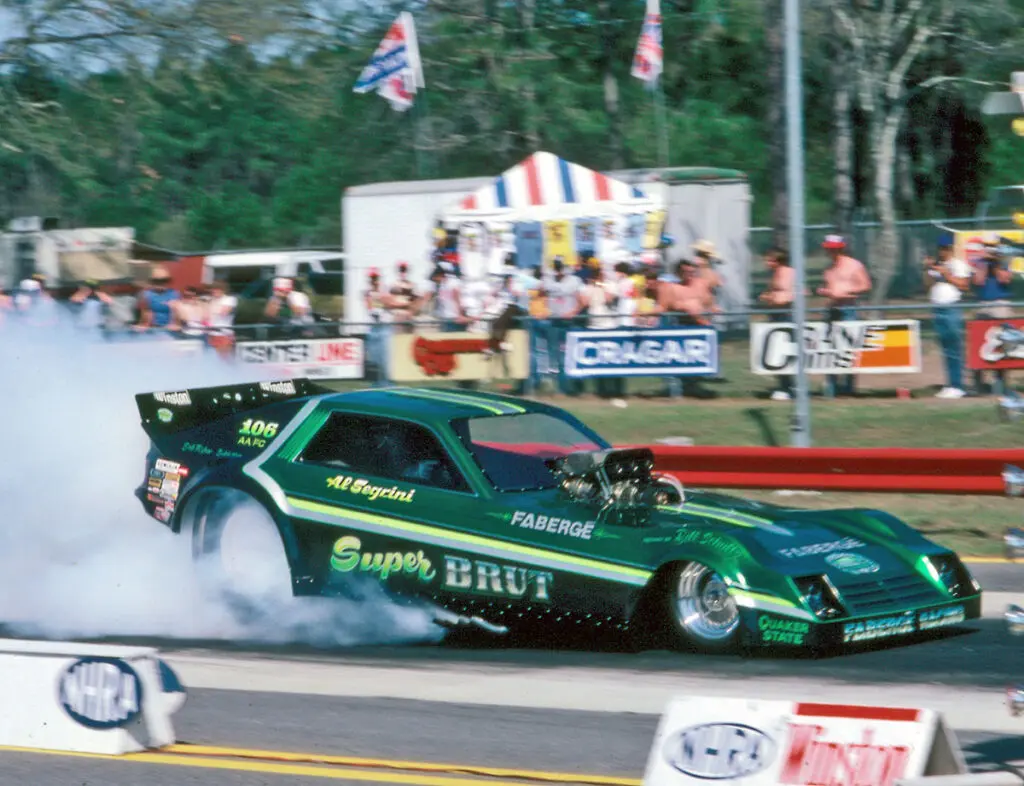
Another “lean mean green machine” was the “Super Brut” AA/FC driven by Al Segrini. This car even looked better in person with its glass-like finish and superb lettering. Any or all of the “Super Brut” Funny Cars raced by the Faberge people were first class and really adored by female Funny Car fans. Segrini would tell you it was him that drew the female fans to the car
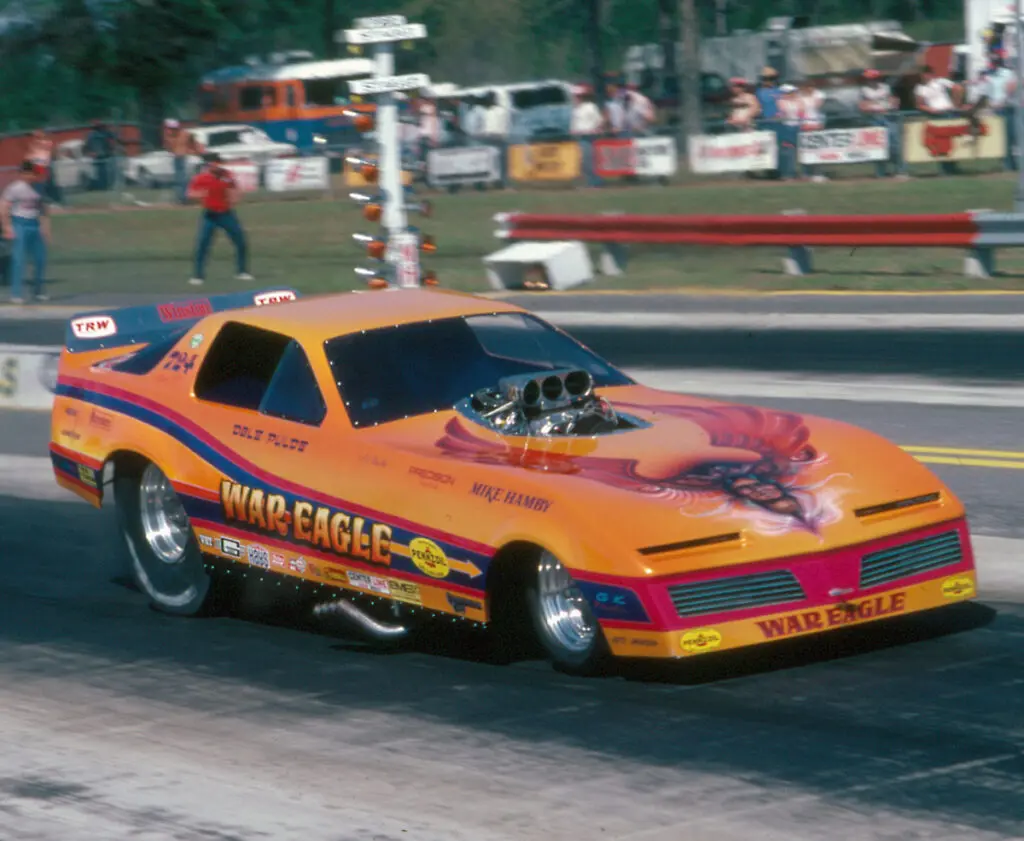
Arizona’s Mike Hamby and California’s Dale Pulde raced one of the most photographed Funny Cars ever to go down the quarter mile. Their “War Eagle” was a true rolling masterpiece of drag racing art. From its color scheme to the artwork on the hood of the AA/FC it was just perfectly done in the early 1980s.