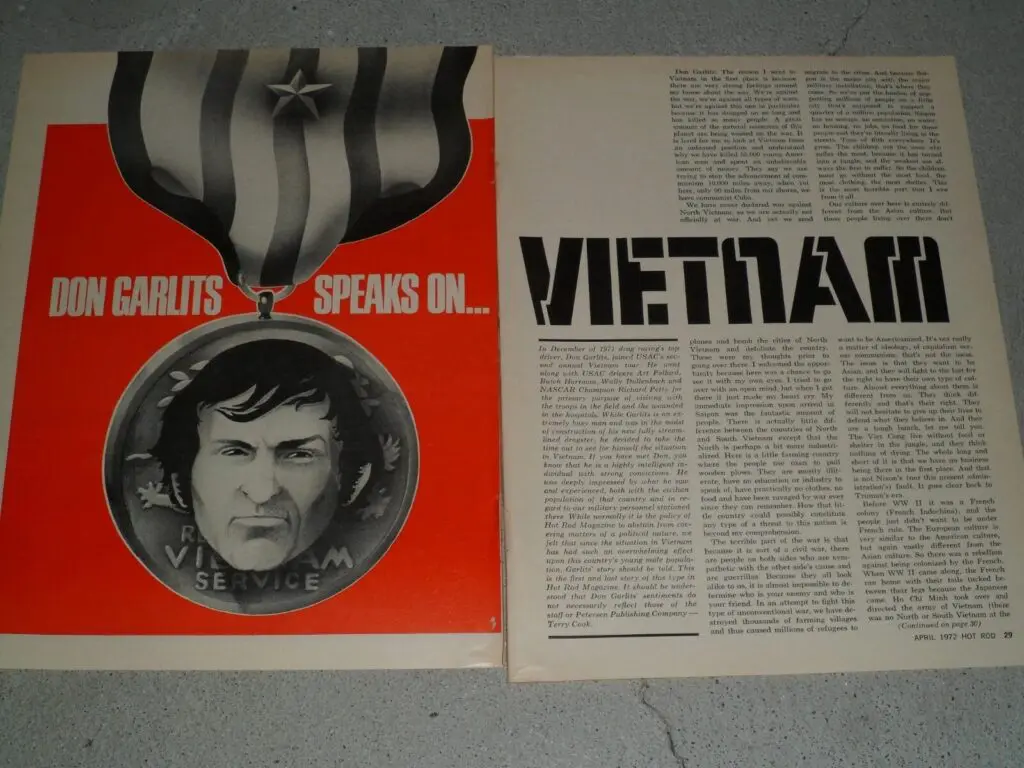
No one national incident made a greater impact on drag racing than the United States’ involvement in the Vietnam War.

Drag racing experts and historians believe that from 1962 to 1966, no other form of motorsports enjoyed a faster evolution of innovation, performance and popularity. By 1967, that growth had slowed dramatically.

In 1965, drag racing’s primary demographic audience was 18- to 24-year-old men. Then the Vietnam War began to escalate.

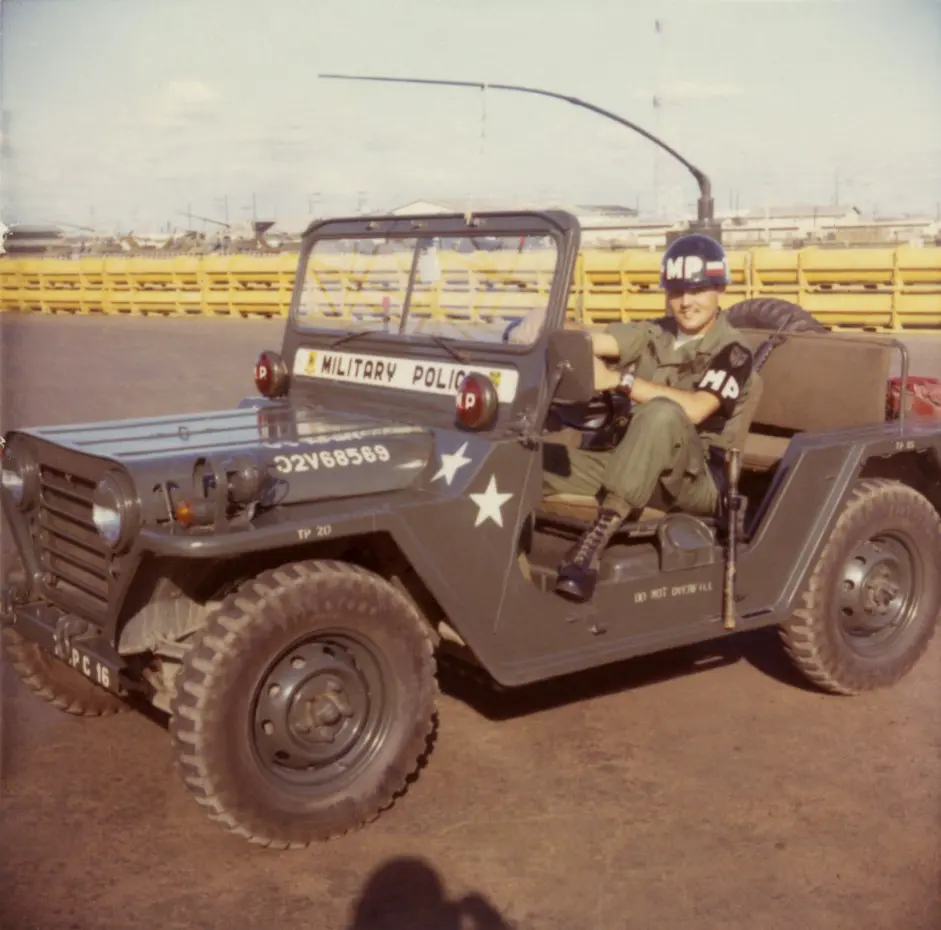
Longtime CompetitionPlus.com columnist Dave Wallace, a Hall of Fame drag racing journalist and Vietnam War veteran, watched the conflict reshape the sport before he ironically received his own draft notice just moments before finishing his Drag News column in 1969.

“When I was in Vietnam for 14 months and one week, the guys would have girls on their lockers like you would see in World War II, or they’d have cars or both,” Wallace said in an episode of Legends: The Series. “I’d say half of the guys in my company would have some kind of muscle car pictures on their locker. By 1969, the military was taking everyone who hadn’t been to college consecutively before the lottery came in.”

Wallace was assigned to a military police unit, the same one that had been decimated a year earlier during the Tet Offensive. However, before he reached Vietnam, he had already begun to see the effects of drafting more than 1.8 million young men into military service. A total of 2.7 million Americans served in Vietnam from 1965 to 1973.

“That’s where all the gearheads were,” Wallace explained. “They were mainly blue-collar, not headed to college. For every person in a combat zone, there were at least two support personnel somewhere else. You take over 2 million people out of the blue-collar community, and that was most of your gearheads.”

Wallace, who plied his trade as a journalist at legendary Southern California venues such as Lion’s and Irwindale, saw the war’s impact on both entry lists and grandstands. The effects extended well beyond attendance, as many veterans returned home carrying emotional scars that lasted for decades. According to the National Vietnam Veterans Longitudinal Study, approximately 271,000 Vietnam theater veterans continued to experience full or subthreshold war-zone PTSD more than 40 years after the conflict.

“I saw that happening when the crowds started to thin out before I went in 1969,” Wallace explained. “Before the muscle car thing was in full swing, the entries started to fall off. Even if you came back alive, not maimed or anything, most everyone was in a different place when they came back.

“My journalism career was interrupted, as were all of these other gearheads. It changed the nature of life for these gearheads, many of whom never re-engaged. After going through that, you just wanted life to be quiet.”

Wallace said that, as devoted as he was to drag racing, it took him nearly three years to fully reconnect with the sport.

“I pretty much had a three-year black hole,” Wallace said. “Most people who weren’t in the military at that time overlooked the effect this had. When you take that much of the blue-collar male population out of that demographic, it had an effect.”

The U.S. military lists 58,220 deaths from the Vietnam War, with those killed averaging 19 years old. More than 304,000 Americans were wounded in action, and more than 1,500 Americans remain listed as missing in action.

Share the Insights?

Click here to share the article.

ad space x ad space

ad space x ad space

Competition Plus Team

Since our inception, we have been passionately dedicated to delivering the most accurate, timely, and compelling content in the world of drag racing. Our readers depend on us for the latest news, in-depth features, expert analysis, and exclusive interviews that connect you to the sport’s pulse.


Sign up for our newsletters and email list.

This field is for validation purposes and should be left unchanged.
Name

UPDATED: VIETNAM WAR HAD A PROFOUND EFFECT ON DRAG RACING

No one national incident made a greater impact on drag racing than the United States’ involvement in the Vietnam War.

Drag racing experts and historians believe that from 1962 to 1966, no other form of motorsports enjoyed a faster evolution of innovation, performance and popularity. By 1967, that growth had slowed dramatically.

In 1965, drag racing’s primary demographic audience was 18- to 24-year-old men. Then the Vietnam War began to escalate.

Longtime CompetitionPlus.com columnist Dave Wallace, a Hall of Fame drag racing journalist and Vietnam War veteran, watched the conflict reshape the sport before he ironically received his own draft notice just moments before finishing his Drag News column in 1969.

“When I was in Vietnam for 14 months and one week, the guys would have girls on their lockers like you would see in World War II, or they’d have cars or both,” Wallace said in an episode of Legends: The Series. “I’d say half of the guys in my company would have some kind of muscle car pictures on their locker. By 1969, the military was taking everyone who hadn’t been to college consecutively before the lottery came in.”

Wallace was assigned to a military police unit, the same one that had been decimated a year earlier during the Tet Offensive. However, before he reached Vietnam, he had already begun to see the effects of drafting more than 1.8 million young men into military service. A total of 2.7 million Americans served in Vietnam from 1965 to 1973.

“That’s where all the gearheads were,” Wallace explained. “They were mainly blue-collar, not headed to college. For every person in a combat zone, there were at least two support personnel somewhere else. You take over 2 million people out of the blue-collar community, and that was most of your gearheads.”
Wallace, who plied his trade as a journalist at legendary Southern California venues such as Lion’s and Irwindale, saw the war’s impact on both entry lists and grandstands. The effects extended well beyond attendance, as many veterans returned home carrying emotional scars that lasted for decades. According to the National Vietnam Veterans Longitudinal Study, approximately 271,000 Vietnam theater veterans continued to experience full or subthreshold war-zone PTSD more than 40 years after the conflict.

“I saw that happening when the crowds started to thin out before I went in 1969,” Wallace explained. “Before the muscle car thing was in full swing, the entries started to fall off. Even if you came back alive, not maimed or anything, most everyone was in a different place when they came back.

“My journalism career was interrupted, as were all of these other gearheads. It changed the nature of life for these gearheads, many of whom never re-engaged. After going through that, you just wanted life to be quiet.”

Wallace said that, as devoted as he was to drag racing, it took him nearly three years to fully reconnect with the sport.

“I pretty much had a three-year black hole,” Wallace said. “Most people who weren’t in the military at that time overlooked the effect this had. When you take that much of the blue-collar male population out of that demographic, it had an effect.”

The U.S. military lists 58,220 deaths from the Vietnam War, with those killed averaging 19 years old. More than 304,000 Americans were wounded in action, and more than 1,500 Americans remain listed as missing in action.

Picture of John Doe

John Doe

Lorem ipsum dolor sit amet consectetur adipiscing elit dolor

More Posts

Send Us A Message

Picture of Bobby Bennett
Bobby Bennett
Thank you for joining us on this journey. Your support and trust inspire us every day to deliver the best in drag racing journalism. We are excited about the future and look forward to continuing to serve you with the same dedication and passion that has defined CompetitionPlus.com from the very beginning.

Don’t miss these other exciting stories!

Explore more action packed posts on Competition Plus, where we dive into the latest in Drag Racing News. Discover a range of topics, from race coverage to in-depth interviews, to keep you informed and entertained.