
Darrell Gwynn was only 19 when he and Chris Cunningham rolled up to the Canadian border in an 18-wheeler loaded with race cars, equipment and apparently enough young faces inside the cab to make a border agent suspicious.
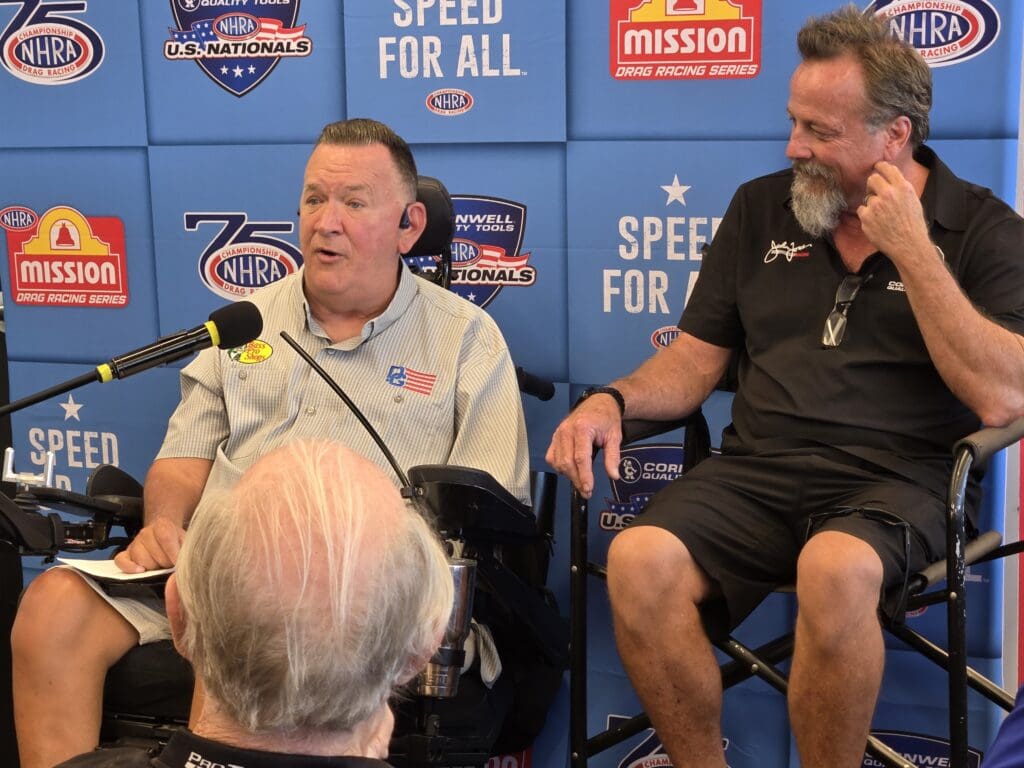
“They thought we had stolen everything and they’d never seen this many kids in a tractor before,” Gwynn said Friday during a press conference at the NHRA U.S. Nationals. “And I said to my dad and mom at the Hall of Fame in my speech, I’m like, ‘I don’t see too many 19-year-olds out here doing this. It was pretty normal back then, but what were you thinking, dad? Mom? What were you thinking, literally?’”
There was another moment from Gwynn’s youth when good judgment temporarily disappeared. He was 16, got caught doing a burnout in his mother’s car and tried to negotiate his punishment with his father, Jerry, a 6-foot-4, 250-pound former world champion.
Gwynn wrote his father a letter pleading his case, explaining that he understood what he had done and promising to straighten up. Then came the closing words that decades later still made Gwynn shake his head.
“Try me.”
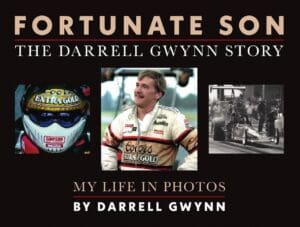
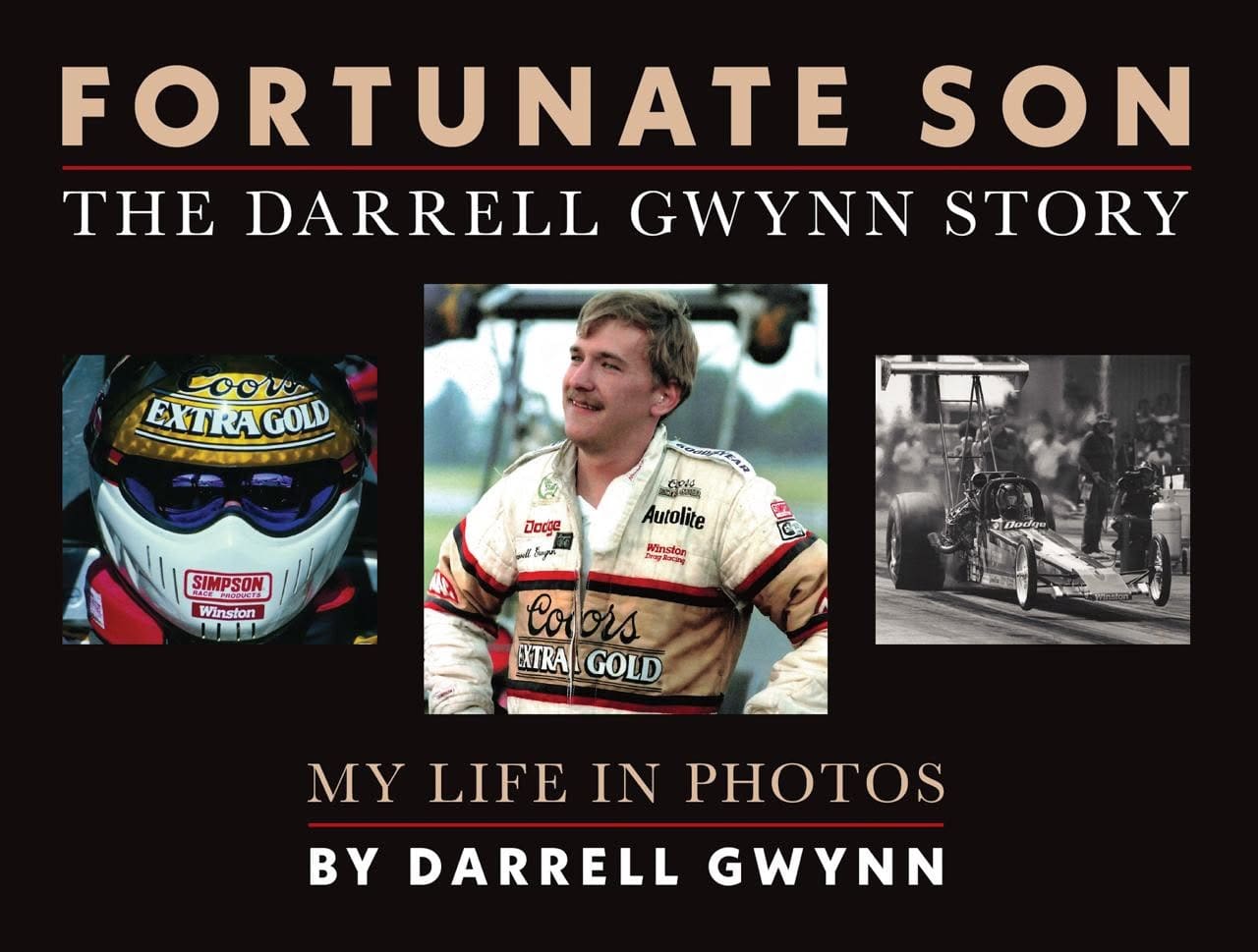
Those stories could have disappeared with time. Instead, they became two of hundreds of memories recovered for Fortunate Son: The Darrell Gwynn Story, Gwynn’s new photo-driven memoir chronicling a life that started in drag racing, was nearly ended by it and eventually became much larger than it.
“This book was a labor of love,” Gwynn said. “It took me a year and a half.”
Gwynn describes it another way that perhaps explains the project better than anything printed on the cover.
“And the name of the book is Fortunate Son,” Gwynn said. “And it’s not a racing book. It’s a book about a racer.”
This approach opens the door to a story reaching well beyond Top Fuel trophies.
Gwynn was born into racing. His father won the 1969 NHRA Super Eliminator world championship, and many of the newly uncovered photographs show just how modest the family operation was when Jerry Gwynn built winning race cars in a small North Miami, Florida, garage.
Gwynn spent those years watching his father race wherever there was a paycheck. Some of those tracks weren’t much to look at, but Jerry Gwynn had a knack for getting the car to the finish line.
Years later, Gwynn turned that lesson into one of his own weapons in Top Fuel.
“When I think of all the Wallys that I have in my house, a majority of those were holding the brake and that makes me really proud because we weren’t smart enough to get down the track,” Gwynn said. “We just loaded her up and held the brake, but it worked and it was a time and an era where it worked and it worked damn well.”
The photographs tell other parts of Gwynn’s education.
There is the teenage bedroom with virtually every inch of wall space covered by drag racing photographs. There is the clutch cooler he sold in the 1970s, sometimes making more money at a race than his father did driving.
There are images of Cunningham, who went on the road with Gwynn as a teenager and eventually became one of the sport’s premier tuners. Cunningham now has a leadership role at John Force Racing, an outcome neither could have envisioned when they were kids living in race shops and sleeping in friends’ homes while traveling the country.
“We were a bunch of kids and we didn’t realize it at the time,” Gwynn said. “None of us did, but we were having the time of our lives in our 20s.”
Gwynn carried that confidence into one of drag racing’s premier careers. He won the 1983 NHRA Top Alcohol Dragster world championship before emerging as one of Top Fuel’s leading drivers, including back-to-back Gatornationals victories in 1989 and 1990.

Then came April 15, 1990.
Only weeks after winning Gainesville, Gwynn’s dragster crashed during an exhibition run in England. The accident left him paralyzed and ended a driving career that appeared headed toward still greater accomplishments.
The book does not avoid that chapter.
Gwynn included photographs of the accident, the support that followed and his determination to return to Indianapolis later that year. He discharged himself so he could attend the U.S. Nationals, believing being back at the racetrack offered therapy no hospital could duplicate.
“I discharged myself and came here to Indy because I knew it was going to be the best therapy that I could possibly have,” Gwynn said. “And I set that goal for myself.”
The irony surrounding Gwynn’s relationship with The Miami Project to Cure Paralysis remains almost impossible to script.
Months before his accident, Gwynn placed the organization’s decal on his Top Fuel dragster after sponsor Coors expressed interest in supporting a charity. Six months later, the organization whose name he barely knew became central to his own survival and recovery.
Gwynn later returned to racing as a team owner, with Frank Hawley and Mike Dunn among the drivers who raced for him. He said getting back to the racetrack helped him move forward after the accident.
His work away from competition became every bit as significant.
Through his charitable efforts, Gwynn said more than $10 million worth of power wheelchairs were provided to people who needed them. His long relationship with The Miami Project and The Buoniconti Fund continues today.
“Feels really good,” Gwynn said. “We have pictures of every recipient, but I couldn’t put every recipient in the book. So I just kind of put a page of them just to give you an example because we helped a lot of people.”
Fortunate Son starts with a photograph of Gwynn’s parents leaving their wedding chapel and travels through Jerry Gwynn’s racing years, Darrell’s childhood, championships, Top Fuel career, accident, team ownership, fatherhood, charitable work and his induction into the Motorsports Hall of Fame of America.
The collection exists because relatives and friends began handing Gwynn photographs he hadn’t seen in decades. Suddenly, forgotten parts of his own life were sitting in front of him.
“I had no intention of doing a book,” Gwynn said. “But we pulled this off and it’s full of a lot of stuff. It’s very thick.”
Some photographs reminded him how crude early race cars were. Others showed a family succeeding from a garage in North Miami and a group of young racers who had no idea they were living through the days they would spend the rest of their lives talking about.
Gwynn can still think like a racer. He still quizzes Cunningham about clutch combinations and admits he lies in bed thinking about how he would make a Top Fuel car quicker if he were still doing it.
The photographs, however, ultimately show something the teenage Gwynn covering his bedroom walls with racing pictures couldn’t have anticipated.
The racing was only part of the story.
“We made a mark,” Gwynn said. “And I asked Chris the other day, because I taught him, now he’s teaching me, and I wanted to clear my head because I still lay in bed at night thinking about racing and how to make the car go quicker. And I’ve shared some things with him and he says, ‘If we were still racing, we’d be all right.’ And I said, ‘That’s all I needed to know. We’d be all right.’”