

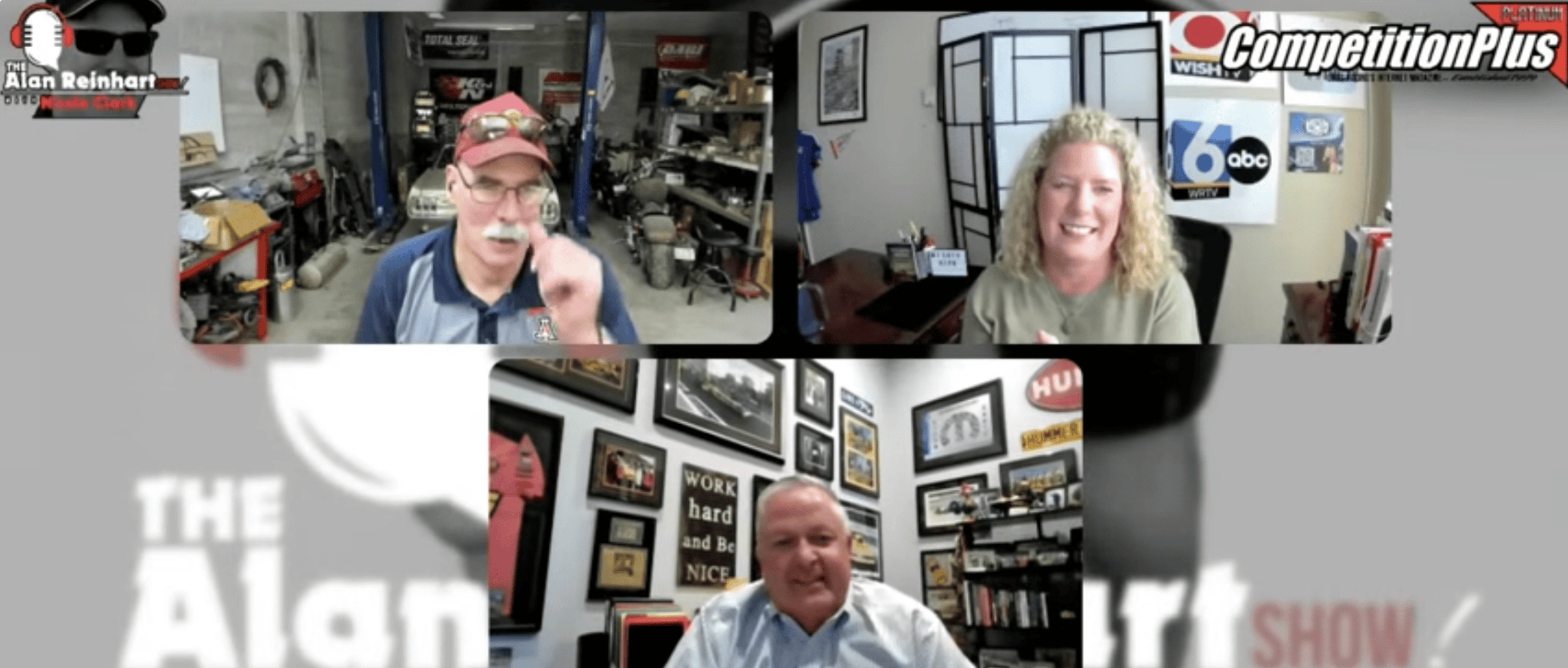

Long before uncertainty surrounding the IHRA’s future became one of drag racing’s biggest talking points, former series employees Alan Reinhart and Scott Woodruff said they recognized signs that the revived sanctioning body faced challenges beyond what fans could see from the grandstands.
The discussion focused on the two men’s personal experiences working for IHRA and their opinions regarding the organization’s direction during their tenure.
Speaking on The Alan Reinhart Show, the two former IHRA officials reflected on their experiences inside the organization and arrived at the same conclusion. They still believe the series had the people, the opportunity and the industry support to establish itself as a successful national alternative. Still, they said the organization never developed the stability needed to allow those efforts to take hold.
Reinhart said the volume of questions he received after recent developments surrounding IHRA prompted the discussion.
“My announcer email in my email box this week was inundated with IHRA questions,” Reinhart said. “Instead of answering them then, we’re going to answer them here.”
Throughout the conversation, neither Reinhart nor Woodruff suggested drag racing lacked room for another national touring series. Instead, both repeatedly emphasized they believed the opportunity existed, even if, in their view, the organization struggled to capitalize on it.
Their observations were based on their firsthand experiences working inside the organization. Reinhart had spent decades in race operations and broadcasting, while Woodruff built his reputation promoting events and developing racing programs that earned the respect of racers, sponsors and track operators.
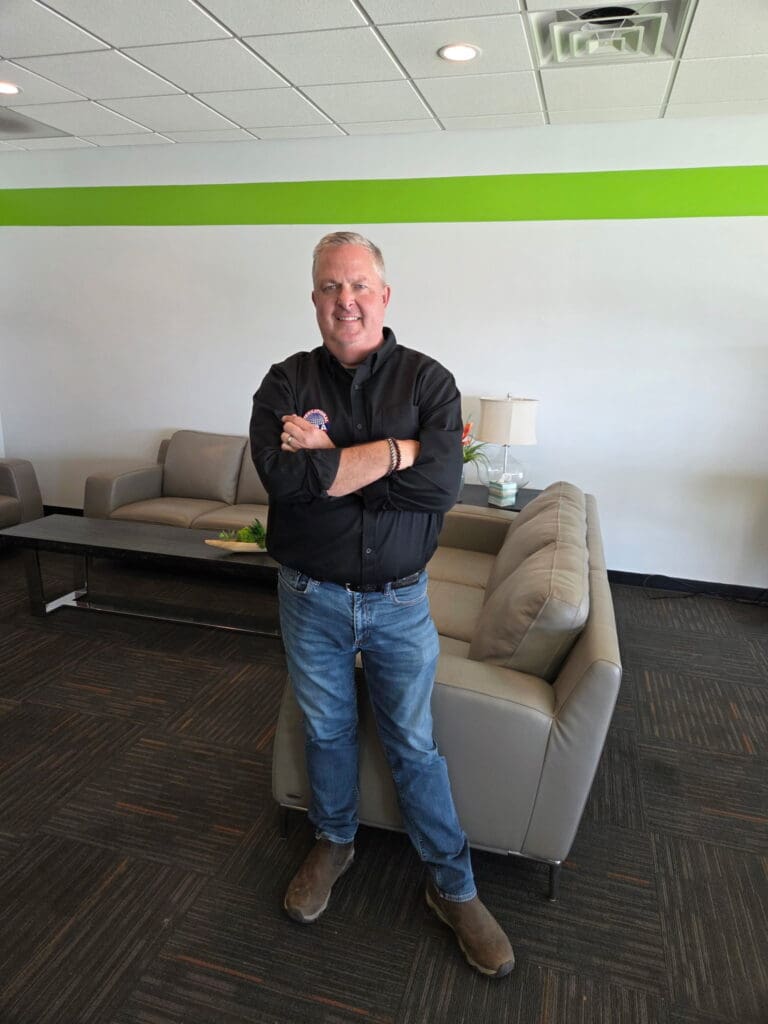
Their arrival led many to believe the rejuvenated IHRA could carve out its own place alongside NHRA rather than attempt to replace it.
For Reinhart, however, questions about the organization’s direction surfaced early.
He said he accepted the position of vice president of race operations believing he would oversee competition matters ranging from scheduling to race procedures and class structure.
“I was told, ‘You are in charge of everything at the racetrack,'” Reinhart said. “‘You’re in charge of what classes we run, what rules package we’re going to run, what schedules we’re going to run, what we’re going to do.'”
Reinhart said he soon found himself presenting plans that initially received approval before later being changed.
“I would present it and be told, ‘Yep, that’s it. Let’s go.’ And then a week later, somebody would call me and go, ‘Yeah, no, we hate that. We’re going to do something different.'”
He said those experiences eventually led him to question whether there was a clearly defined decision-making process.
“It finally got to the point where it’s like, ‘Look, why are you paying me if all you’re going to do is tell me what I can’t do?'”
One example Reinhart cited involved his proposal for IHRA’s opening event. Rather than launching every major category immediately, he said he recommended beginning with a smaller program featuring Pro Modified, Mountain Motor Pro Stock and a featured nitro match race involving Clay Millican and Tony Schumacher before expanding later in the season.
Reinhart said he viewed that approach as an opportunity to identify operational issues while showcasing categories that had traditionally been associated with IHRA competition. He said the proposal was initially well received but ultimately never moved forward.

As those experiences accumulated, Reinhart said he reached a point where he wanted clarity more than authority.
“When Rich [Shaefer, former IHRA President] was let go, and we had a meeting, and I said, ‘Just tell me who the boss is. Tell me who’s in charge. Tell me what we’re going to do here,’ and nobody had an answer to that question. And I said, ‘You know what? I’m out.'”
Woodruff served the organization in a different capacity, focusing on promotion, marketing and presenting the series to racers and fans. Yet despite approaching IHRA from another part of the operation, he said many of his observations mirrored Reinhart’s.
“Nobody was able to do their job,” Woodruff said.
Even so, Woodruff carefully separated his assessment of the organization’s management from his opinion of its potential.
He said he never believed IHRA needed to compete directly with NHRA to become successful. Instead, he said drag racing was capable of supporting another national platform that served racers, sponsors and fans in its own way.
“I think the opportunity was certainly there to have a successful drag racing series that would be an alternative to a premier series,” Woodruff said. “NHRA is always going to be looked at differently than IHRA, and that’s just the way that it is. So, having a stair step to get there is a good thing.”
That theme surfaced repeatedly throughout the discussion.
Rather than focusing on rivalry, Woodruff described what he believed was an opportunity to broaden professional drag racing by creating another destination for competitors and fans. He said that possibility never disappeared, even as internal challenges became more apparent.
“I really think it could have worked,” Woodruff said. “I think there was something there for everybody.”
As the discussion turned toward the broader impact of IHRA’s struggles, both men shifted their attention away from their own departures and toward others affected by the uncertainty surrounding the organization.
Woodruff said he felt for employees, racers, vendors and others he believes have been impacted by the situation.
“I feel like s*** for everybody that’s not going to get paid,” Woodruff said. “Because, just honestly, nobody’s going to get paid. That’s my opinion.”
CompetitionPlus has contacted IHRA on multiple occasions seeking clarification regarding payment of competitors from the Triple Crown event near Columbus. As of publication, those inquiries have not been answered.
He also reflected on communities that embraced the possibility of seeing drag racing return to facilities they considered part of their local identity.
Woodruff pointed to Atlanta Dragway as an example, recalling public meetings where residents shared stories about the role the track played in their lives and expressed optimism about its future.
“They wanted to tell a story,” Woodruff said. “They had an emotional attachment to this facility.”
Reinhart said he shared those memories, recalling conversations with local officials who, in his experience, expressed a willingness to help support efforts to revive the facility.
Both men said they believe rebuilding confidence within the drag racing community may prove as important as rebuilding schedules or facilities.
Neither predicted what the future holds for IHRA or its racetracks. Instead, they reflected on what they believe the sport lost when a project they once believed in failed to reach its potential.
The IHRA has appeared to deconstruct itself piecemeal by ending its various motorsports series schedules, as well as letting its divisional directors go. A previously announced plan to integrate IHRA Australia has also been put on hold.
IHRA has not announced plans regarding its Sportsman program beyond the current schedule.
Elite Motorsports owner Richard Freeman confirmed he submitted a letter of intent to purchase IHRA before withdrawing from negotiations.
Woodruff ultimately returned to the thought that surfaced throughout the conversation, one that Reinhart never challenged.
“I really think it could have worked,” Woodruff said. “I think there was something there for everybody.”




















REYES ON TOUR: INVASION OF THE CHEVROLET VEGA — PART 1